UGA CAES photo: UGA plant pathology graduate student Owen Hudson (left) and research scientist Emran Ali (right) helped develop a faster protocol for detecting Fusarium wilt disease through a PCR assay.
University of Georgia scientists have developed a rapid test to determine the presence of fusarium wilt in watermelons.
This test produces much faster and more efficient results and will facilitate research for breeders who are researching new varieties. They can produce options that have resistance to the disease.
Emran Ali, head of the Plant Molecular Diagnostic Laboratory at the University of Georgia Tifton campus, said in the UGA CAES Newswire that the process takes about three hours to diagnose races, which is a major upgrade since traditional bioassays can take more than a month.
“At the microscopic level, you can diagnose Fusarium, but you can’t differentiate the races,” said Ali in the UGA CAES Newswire. “Traditional bioassay methods have been used for this, but it takes weeks to grow watermelon plants and evaluate the disease, and watermelon cultivars used for the bioassay can be difficult to source. This method is not only inefficient, it is also sometimes inaccurate.”
Huge Help for Farmers
Fusarium wilt symptoms can appear at any growth stage.
Georgia is a consistent national leader in watermelon production. The crop’s farm gate value was $180 million in 2019. If farmers know the specific race of fusarium wilt that’s in their field, they can make the right management decisions. So far, four races of Fusarium oxysporum f. sp. niveum (FON) have been identified. Some commercial watermelon varieties are resistant to races zero and one, but not races two and three.
“Resistant watermelon varieties are effective against some races but not others,” said Ali in the UGA CAES Newswire. “If you quickly diagnose, growers can have more time in advance to know what’s going on in their fields. It’s good to know what’s going on. Watermelon varieties resistant to races zero and one are available, so you may grow resistant varieties to control disease caused by these races. Other races are more destructive and more difficult to control.”
The new molecular detection method allows differentiation of the different races of the pathogen.
Disease Symptoms
Fusarium wilt symptoms can appear at any growth stage. If they appear at the seedling stage, the plants will not make it to vines. Plants infected with the fusarium wilt pathogen will eventually die if the infection is severe. The plant can produce fruit if the infection is weak, but when it begins using the energy necessary to produce fruit, the plant will likely decline and slowly die.
Click here for more information from the UGA CAES Newswire story.
A Center for Produce Safety grant will fund University of Georgia (UGA) research aimed at studying human norovirus and its impact on leafy vegetables, in particular, lettuce.
Malak Esseili, an Assistant Professor at the Center for Food Safety on the UGA Griffin campus, is the lead investigator in the project, which spans from Jan. 1, 2021 through Jan. 1, 2023. Her objective is to study the survival rate of human norovirus in river water, which is commonly used in agricultural irrigation; analyze its die-off rate in relation to E. coli (a standard water quality fecal indicator organism); determine the survival of infectious virus on lettuce under pre-harvest; and on post-harvest lettuce following chlorine washes.
Human Norovirus Top Food-Borne Pathogen
Esseili
“Norovirus in the U.S. is the No. 1 food-borne pathogen; 58% of foodborne illnesses are caused by human norovirus. It’s very prevalent, but there is unfortunately no vaccine or antiviral drugs to treat norovirus infections. Most of the foodborne outbreaks, historically, are associated with leafy greens, particularly lettuce or frozen berries, such as strawberries. If it’s frozen, the virus will likely be preserved,” Esseili said. “It’s really important to understand whether norovirus on leafy greens, such as lettuce, remains infectious or not and to what level.”
Understanding Norovirus
She said that the human norovirus is excreted with feces. If infected, sick people can shed the virus in their feces, and all the feces travels down the sewer to a treatment plant. But the treatment plant is not 100% effective in removing this virus. This leads to contaminated river water, which can be used in watering crops like lettuce.
“The water that comes out after the treatment of human waste, that water is called effluent, and it goes into a river. Many studies around the world have detected genetic material of the virus in river water. However, because we did not have a cell culture method for norovirus, we could not determine whether finding virus-specific genetic materials indicate the presence of infectious virus or not. We don’t know how long the virus remains infectious in river water and this is what my grant will also be looking at,” Esseili said.
Esseili’s Experiment
Esseili said that her experimental work will consist of growing lettuce in greenhouses and adding drops of the virus on the lettuce leaves in small quantities. Then, she will monitor the infectivity of the virus using a recently discovered cell culture method for human norovirus. Some of the basic questions she wants to answer are, does the pathogen survive and for how long? And will regular water clean it off or does it require a sanitation step such as chlorine washings.
This research will help prevent illnesses associated with norovirus. It’s such a dangerous pathogen that even a low dose can be problematic.
“If you have even low quantities of the virus on the leafy greens or berries and the person eats it, there is a chance the person will get infected,” Esseili said.
Hops are grown on various sized trellises at the Gulf Coast Research and Education Center in Wimauma, Florida. Photo by Shinsuke Agehara
Craft beer brewed with Florida hops sounds very attractive. But can hops be grown in Florida? Will the crop produce high yields? The most important question is: Will it be profitable?
There are lots of rumors, myths and hype about growing hops in the Sunshine State. That’s probably because hops have never been grown commercially in Florida and other subtropical regions — at least not on a large scale. There simply was not enough information. The profitability of Florida hops is still unknown, but a lot of information is now available from ongoing research conducted at the University of Florida Institute of Food and Agricultural Sciences (UF/IFAS) Gulf Coast Research and Education Center (GCREC).
In 2016, a 1-acre hop yard with a trellis 19 feet high was built. In the first two years, yields were very low. The main reason was premature flowering that limited the vegetative growth. At that time, many plants grew only halfway up the trellis. This happened because the daylength in Florida is not long enough for hops. In general, the critical daylength for hops is 15 to 16 hours. Hops promote vegetative growth when daylength is above this threshold, and plants start flowering when daylength drops below this threshold. The optimal shift from vegetative to reproductive development is key to maximizing hop yields.
UF/IFAS researchers experienced lots of trial and error. In 2018, LED lights were installed in the hop yard. The daylight extension with LED lights was effective in controlling the timing of flowering. In other words, it can trick hop plants into thinking they are in the Pacific Northwest.
All trials were reestablished using tissue-cultured seedlings. Researchers have tested more than 20 varieties and various crop management practices, including fertilization, irrigation, plant spacing and pruning. The hop yard is also being monitored to identify pest issues, including diseases, insects and nematodes.
TRELLIS TRIALS AND HIGH YIELDS
Research continued in 2019, with another 1-acre hop yard built to test different trellis designs and heights. The straight trellis has only one cable per row, which is for installing both LED lights and twines. By contrast, the V-trellis has three cables per row: the middle cable is used to hang LED lights, and the other two are used to install twines. The most notable difference is that the straight trellis can have only two twines per hill, whereas the V-trellis can have four twines per hill.
Supplemental lighting is used to extend daylength hours.
Photo by Shinsuke Agehara
In the spring of 2020, researchers started a new trial to evaluate the two trellis designs with three different heights: 12, 15 and 18 feet. A record high yield was achieved. Cascade hops grown on the 18-foot V-trellis produced 1,130 pounds of dry hops per acre, which is more than 60 percent of the commercial average yield of this variety. Alpha acid of these hops, which is an important quality attribute for bitterness of beer, was at the commercial level or even slightly higher.
It’s important to note that 1,130 pounds per acre is just the first season yield. It normally takes a few years before hop plants can reach the full yield potential, so the yield is expected to go up over time. Furthermore, Florida can produce two crops a year because of the warm climate, whereas other production regions, including the Pacific Northwest, can harvest hops only once a year. Within the next few years, researchers will know if Florida can achieve above-average yields!
In the meantime, the economics of this new crop need to be investigated. The total material cost for the GCREC hop yard establishment was $15,780 per acre for the straight trellis and $18,687 per acre for the V-trellis. Labor and crop management cost information is now being collected. Budget analysis is expected soon and will determine the breakeven price and yield for each trellis design.
DEVELOPING A VIABLE INDUSTRY
In 2019, Florida ranked fourth in the nation for craft beer production, with 329 breweries producing 42.6 million gallons of beer and generating an economic impact of more than $3 billion. The UF/IFAS hops research goal is to develop a viable industry for Florida growers and brewers.
Florida’s hop industry is just forming. There are several growers producing and selling hops to local craft brewers, and the production is expanding. More than 15 craft breweries in Florida have brewed beer using Florida hops.
The viability of this new crop in Florida is still unknown. The hope is that research information can support the development of the new industry and help local brewers make more beer with locally grown hops. The latest hops research updates are available at www.facebook.com/GCREC.Hops.
Early results on low-chill varieties are expected next year from an olive research grove in Hardee County.
By Michael O’Hara Garcia
With weather and soils similar to the Mediterranean Basin, olives grow in Florida and throughout much of the southeastern United States.
Currently, Florida has approximately 800 acres of olives under active cultivation by 60 to 80 individual farmers in 20 counties. The groves range from backyard hobby plots with several trees to high-density commercial operations of 100 or more acres.
There are two modern olive mills, and several Florida nurseries propagate olive trees for fruit and ornamental purposes. A few miles over the Florida line, the Swiss agricultural management firm, Agrigrada, operates a 4,000-acre olive grove near Colquitt, Georgia, and a 300-acre olive grove and a modern olive mill serving growers near Valdosta, Georgia.
PRODUCTION AND VALUE
Thought to originate in the Fertile Crescent (Syria, Iraq and Iran), olive is the world’s oldest known continuously cultivated crop. For thousands of years, olives were gathered in the wild. The oil was crudely extracted by crushing fruit between stones and sieving or straining the pulp. Today, olive oil is a major commodity traded throughout the world and prized for its gastronomic and heart-healthy characteristics.
Michael O’Hara Garcia (left) and Don Mueller show off freshly harvested olives at Greengate Olive Grove in the Florida Panhandle.
Spain is by far the largest producer of olive oil, followed by Italy and Greece. In the United States, olives are commercially grown in California, Oregon, Washington, Texas, Arizona, Georgia and Florida. There are hobby and experimental olive plantings in Louisiana and Alabama.
The United States consumes 80 to 90 million gallons of olive oil per year or about 1 liter per person. Domestic farmers, going at full throttle, produced less than 5 percent of total annual consumption.
European Union market data from 2019 reveal 1 liter of olive oil sells for $5.56 or $21 per gallon. California Olive Ranch, the largest U.S. producer, retails 1 gallon of extra virgin olive oil (EVOO) for $67.36.
Organic certification brings even higher prices. Braggs organic EVOO (imported from Greece), sells for $70 per gallon. Apollo, a top California producer, retails its Mistral and Sierra organic blends for the equivalent of around $200 per gallon. Mistral oil is based on the Ascolana, an olive variety currently producing at Greengate Olive Grove near Marianna in the Florida Panhandle.
NEED FOR RESEARCH
Although the olive grows in Florida, it has been considered more of a curiosity than a commercial crop. While the University of Florida/Institute of Food and Agricultural Sciences (UF/IFAS) and Florida A&M University have olive observation plots, and agribusiness giants like Mosaic and Lykes Brothers have small experimental groves, little formal research on Florida olive cultivation is available to support industry development.
Bill Lambert shows an olive graft in a Hardee County research plot that includes 45 olive varieties under trial.
With the notable exception of work by the UF/IFAS Department of Entomology and Nematology, most information on the UF/IFAS Extension website dates from 2012 and is focused on California olive research and production. The Texas A&M University website provides significantly more information on growing olives in the Southeast.
The Florida Olive Council, a non-profit grower organization, conducts some research, and the Hardee County Industrial Development Authority has several thousand olive trees at its research facility near Wauchula, Florida.
Erroneously, some fear Florida’s humidity harms olive pollination, summer storms damage the olive crop, or disease prohibits profitable cultivation. While extreme weather impacts all crops, UF/IFAS researchers determined principal pests and diseases like olive fly, olive knot and peacock spot are not found in Florida.
The main problem cultivating olives for commercial purposes in Florida is the availability of varieties adapted to lower latitudes where there is less winter chill. Olive varieties (Arbequina, Koroneiki, Manzanilla, etc.) commonly used in commercial operations are native to northern Mediterranean countries like Spain, Italy and Greece (38° to 41° north latitude), where 300 to 400 hours of winter chilling are common. Olives must accumulate enough chill hours between November and March to bloom. A chill hour is one hour between 32 and 45° F.
While northern Mediterranean varieties grow throughout Florida and reliably produce in the Panhandle, they rarely bloom and fruit south of Interstate 4 (27° north latitude).
As Florida searches for a solution to citrus greening, many acres below Interstate 4 are fallow, and farmers need an alternative crop to augment citrus. New crop ideas like industrial hemp are popular, but the U.S. Department of Agriculture (USDA) suggests returns on industrial hemp are between $116 to $475 per acre compared with Florida citrus at $2,800 per acre and California olives at $2,688 per acre.
Responding to the need for olive research, the Hardee County Industrial Development Authority enlisted the support of the Florida Olive Council and UF/IFAS to begin research developing a market-viable, “low-chill” olive for southern Florida.
After installing several thousand mature olive trees on an old citrus grove, the Hardee County researchers secured 45 olive varieties from the USDA olive germplasm in California. Varieties were selected based on geographic origin. The researchers wanted olives adapted to areas around 27° north latitude.
100-year-old olive trees are growing in Ruskin, Florida.
In June 2018, the Hardee research team grafted 45 varieties from Morocco, Tunisia, Algeria, Syria, Pakistan, Egypt, Israel and several countries in the southern hemisphere (Chile, Peru, Argentina and southern Australia) onto mature olive trees at the 20-acre Hardee County research farm near Wauchula, Florida.
Bill Lambert, executive director of the Hardee County Economic Development Council, hopes to see some early results next year. “It takes at least three years for the grafts to mature enough to bloom, so we expect to start looking for our low-chill candidates next year,” Lambert said.
In addition to the grafting experiment, Lambert is in discussions with UF/IFAS to explore developing a low-chill variety using a new gene-editing process called CRISPR-Cas9.
Kevin Folta, a noted UF/IFAS genetic scientist, has begun basic research. He hopes to get the program fully funded soon. “The science is there, we just need to get to work,” he said.
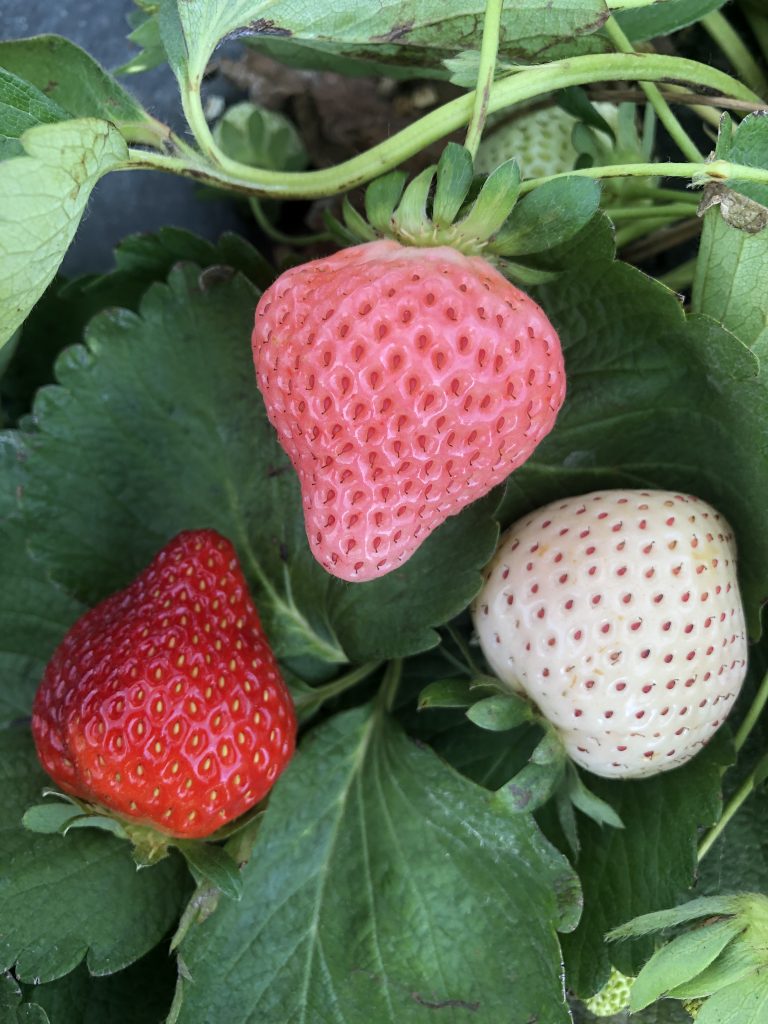
Figure 1. A new University of Florida strawberry variety is white with a slight pink blush and red seeds when fully ripe.
Photo credit: Cristina Carrizosa, UF/IFAS Communications
The University of Florida will soon commercialize a new strawberry variety. It doesn’t have a name yet, but it is already drawing attention for a very unusual characteristic. When it is ripe and ready to eat, it is white inside and out, with a slight pink blush on the exterior and red seeds. The flavor is very different from a typical strawberry, sweet but with a pineapple-like aroma. White strawberries have been popular for some time in Japan, but this is expected to be the first white strawberry on the market in the United States.
These unusual strawberries were not made in a lab. White strawberries are actually found in nature. Breeders have harnessed this naturally occurring trait, crossing white strawberries from the wild with modern strawberries to create something different in both appearance and taste.
WHY IT’S WHITE
The red color of the typical strawberry comes from pigments called anthocyanins. White strawberries produce much lower amounts of these compounds in their flesh than red strawberries. Recent research has shown that white strawberries of various types all have DNA sequence changes in a single gene called MYB10, which is involved in the synthesis of anthocyanins. These changes keep the gene from carrying out its normal function, essentially halting the chemical process in the fruit that produces red pigments.
HOW IT WAS DEVELOPED
In 2012, some strawberry seeds from fruit purchased in Japan were brought to the University of Florida. The seeds were sown, and a few small plants were recovered. The pollen from these plants were crossed with a Florida variety. The seedlings from this cross produced fruit that ranged from white to pink to red.
Further crosses with Florida varieties were made, ultimately resulting in a strawberry with similar hardiness and fruit characteristics to modern varieties but with white color. Commercial trials have been promising so far. Pickers can tell when the fruit is ripe when a slight pink blush develops on the sun-side of the fruit, and when most of the seeds turn red. By 2022, these new white strawberries should be available in U.S. grocery stores.
Figure 2. Florida strawberry varieties can be red, pink or white. Photo credit: Seonghee Lee
STRAWBERRY SPECIES
There are many different species of strawberry throughout the world, and white strawberries are naturally found within several of them.
Alpine Strawberry (Fragariavesca) Alpine strawberries are in the species F. vesca, which is an ancient ancestor of the modern strawberry. In Europe, this strawberry is referred to as “fraises des bois” and is prized among food connoisseurs for its aroma. While most members of the species have red fruits about the size of a fingernail, the fruits of some Alpine strawberries are yellow to white in color. More information is available from the University of Florida at edis.ifas.ufl.edu/hs1326 on how to grow Alpine strawberries.
Beach Strawberry (F. chiloensis) The beach strawberry is found in the wild along the Pacific coasts of North and South America. F. chiloensis is one of the most recent ancestors of the modern strawberry. Some of the beach strawberries found in South America are naturally white or pink. The fruit only grow about as large as a thumbnail and are very soft compared to modern strawberries. Some varieties of this species that are crossed between F. chiloensis and the modern strawberry (F. × ananassa) have been called “pineberries.” Some varieties of pineberries are available for home gardeners, but they are not large enough or firm enough to be produced and sold on a large scale.
Cultivated Strawberry (F. × ananassa) A white beach strawberry from Chile and another wild species from North America called F. virginiana with bright red fruits were collected by explorers and brought to Europe about 300 years ago. There they accidentally hybridized to produce the cultivated strawberry or “modern” strawberry, F. × ananassa, that we know today. Almost all the strawberries currently grown and produced in the United States are F. × ananassa. White cultivated strawberries have been bred for some time in Japan and sold at high prices as novelty items. However, white strawberries have not yet caught on as much in other areas of the world.
See programs.ifas.ufl.edu/plant-breeding/strawberry for more information on University of Florida strawberry breeding and genetics.
Blackberries are grown as a commercial crop in North Carolina.
By Zhanao Deng
Blackberry has emerged as an alternative crop in Florida. More and more Florida growers are growing or trialing blackberries for commercial production. They have indicated a dire need for suitable blackberry cultivars that can yield well and produce berries of good quality.
PAST CULTIVARS AND RESEARCH
In the 1950s, University of Florida (UF) released two blackberry cultivars, Flordagrand and Oklawaha. Both produced high yields of large, attractive berries, but their trailing growth habit and thorny canes made them unsuitable for commercial production.
The University of Arkansas has maintained an active blackberry breeding program for more than five decades and has released dozens of new cultivars. Essentially all the blackberry cultivars currently grown in Florida and other Southeast states are from this breeding program.
Some of the popular floricane-fruiting cultivars include Apache, Navaho, Natchez, Osage and Ouachita. They produce berries on second-year canes (floricanes). In 2005, the program released the first primocane-fruiting cultivars that can produce berries on the current-year canes (primocanes) as well as floricanes. Prime-Ark® 45, Prime-Ark® Freedom and Prime-Ark® Traveler have this new type of fruiting habit.
Flowers are pollinated for blackberry breeding.
With funding from the Florida Department of Agriculture and Consumer Services Specialty Crop Block Grant program, UF researchers began trialing these cultivars in 2017 in a blackberry orchard at the Gulf Coast Research and Education Center (GCREC). Prior to this, Shinsuke Agehara trialed Navaho, Natchez and Ouachita in wooden boxes and large containers. In his trials, Natchez outperformed Ouachita and Navaho. In the orchard trial, Osage had the highest yield among the five floricane-fruiting cultivars, with an average of 3.9 pounds of berries per plant. Among the three primocane-fruiting cultivars, Prime-Ark® Freedom had the highest yield, producing an average of 6.3 pounds of berries per plant.
Researchers used in-row spacing of 3 feet and between-row spacing of 10 feet in the trials. With this spacing, 1,452 plants could be grown per acre. The estimated per-acre yield would be 5,663 pounds for Osage and 9,148 pounds for PrimeArk® Freedom. Natchez showed significant variability in berry yield from year to year or site to site.
CURRENT CULTIVARS
In recent years, the University of Arkansas blackberry breeding program has released two new floricane-fruiting cultivars, Caddo and Ponca. Based on release documents, both cultivars are high yielding, thornless, erect and produce medium to large fruit. Ponca is the sweetest cultivar released to date and has good shipping and handling traits. Both cultivars have been introduced to Florida, and a new trial is being set at GCREC to test their performance. Stay tuned for trial data in the next two years.
In small trials conducted in Arkansas, these cultivars had the potential to produce 10,000 to more than 20,000 pounds of berries an acre. Why do these cultivars yield much less in Florida? Researchers think the primary reason is that chilling requirements were not met in Florida, especially in Central Florida. Very much like blueberries, blackberries need a period of chilling (temperature below 45° F) to break sufficient numbers of buds and develop enough flowers so that growers can have a decent crop.
The current blackberry cultivars grown in Florida were bred and initially selected in Arkansas, and they need 300 to 900 hours of chilling. On average, Central Florida only has about 100 to 300 hours of chilling. Without enough chilling, blackberry plants break much fewer buds, have much fewer fruiting laterals and flowers, and yield poorly with berries ripening over an extended period.
BUILDING A BREEDING PROGRAM
UF trials and growers’ experiences indicate a strong need for new blackberry cultivars that are better adapted to a low-chill environment. This need prompted UF researchers to breed blackberries. The breeding program received private funding and technical support from Coastal Varieties Management. The GCREC and the UF Institute of Food and Agricultural Sciences (IFAS) Dean for Research Office provided funding to cover expenses associated with facilities.
In spring 2015, UF researchers made the first batch of crosses to produce blackberry seeds. Newly produced seeds were treated with a strong acid to burn part of the seed coat and then they were kept cold for several months before they were germinated. The seedlings were then grown and selected in Florida. Researchers repeated this process each year since then.
So far, more than 10,000 blackberry seedlings or young plants have been screened in Florida. Dozens of plants were selected for further trials. Shoot tips have been collected from some of the most promising plants and cultured in test tubes for rapid propagation. The first batch of tissue culture-propagated blackberry young plants from one of the selected lines was sent to growers this past June for trialing.
Blackberry cultivar trials are underway at the Gulf Coast Research and Education Center in Wimauma, Florida.
In the meantime, researchers have set up the first replicated trials to test the new line’s berry yield and quality. Effort is being made to expand the blackberry orchard and produce additional liners for more field trials, which is warranted to select the best adapted cultivars for Florida growers.
As more Florida growers begin growing blackberries, they have more questions needing practical solutions. To better address growers’ needs, a UF/IFAS research and Extension team has been formed. It consists of six specialists from the GCREC and the Horticultural Sciences Department and two Extension faculty from Orange, Marion and Hillsborough counties. Team members are well experienced with berry breeding; variety selection and trials; plant management and manipulation; fertilization; disease, insect pest, nematode and weed identification and control, etc. The team has received great support from Florida growers and some seed funding from the UF/IFAS Support for Emerging Enterprise Development Integration Teams program and the GCREC.
UF plans to produce the first blackberry production and spray guide by early 2022 and provide growers and Extension agents with more training. The goal of the team and these efforts is to facilitate the development of the Florida blackberry industry and help growers produce profitable crops sustainably.
As a plant molecular biologist, I often hear tales of gardening mishaps or plant-related tidbits from my friends and family.
A few years ago, a friend excitedly relayed her experience at a Niagara wine tour, where the tour guide explained that they grow rose bushes at the end of each row not only for aesthetics, but as early warning systems for pests and diseases (such as powdery mildew). This piqued my curiosity, and I discovered that using plants as biosensors or sentinels is not a modern concept. Roses have been used this way for centuries.
However, the use of roses as sentinels has disadvantages:
1) Some pests or pathogens that target grapes do not affect roses.
2) By the time a rose shows signs of a fungal infection, it may be too late to protect the grapes.
Most modern vineyards employ more sophisticated integrated pest management strategies (e.g., forecasting disease outlooks using weather reports and tracking confirmed cases). But, this canary-in-a-coal-mine approach of using plants as warning systems still may prove useful, especially where other types of testing are unavailable or costly.
ADDRESSING SENSITIVITY AND SPECIFICITY
A diverse array of agricultural and human health hazards (pathogens, heavy metals, herbicide residues, radioactivity, even explosives, to name a few) could conceivably be detected using sentinel plants. But we first need to address the reasons why roses fall short: sensitivity and specificity.
The first attempts to bioengineer sentinel plants began in the late 80s with the discovery and development of reporter genes (think of them as biological red flags). By the 90s, engineered plants were designed that could detect genotoxins (chemicals or UV-C light that cause DNA mutations). Prolonged exposure to genotoxins causes mutations in the plants, which were measured by staining the plant tissue with a chemical that turns cells blue if the reporter gene is mutated.
These plants could detect heavy metals, herbicides and radioactivity just as effectively as conventional methods that use animals or chemical analysis. And these sentinel plants were cheaper, required less maintenance and avoided the ethical concerns of using animals. Despite being a big step in the right direction, prototypes had the same issues as their natural rose counterparts: The tests took weeks to months of exposure (sensitivity) and could not be used to identify the genotoxin, only to indicate that one was present (specificity).
Bioengineering has made huge progress in the past decades as scientists develop new technologies and a better understanding of how plants naturally detect and react to changes in their environment. Plant researchers are beginning to rethink biology in terms of computer programming, adopting concepts like modular system design and logic gates.
Simply put, biological components are being treated like modular parts used to build an input/output system. Plants and all living organisms use this kind of system already. A signal is detected (e.g., getting chewed on by a bug), that information is relayed in a game of telephone by enzymes and signal molecules, generally ending in the nucleus (the control center of the cell), which flips a genetic switch to bring about some response. The power of bioengineering is the ability to design a tunable system, one that is sensitive to a specific input.
In 2011, researchers tested this principle by building a TNT-detector plant. They integrated genetic parts from bacteria into a plant’s natural stress-response pathway. Their creation could sniff out and signal the presence of soil- or airborne TNT molecules (input) by causing leaf de-greening (output), and at equivalent levels to bomb-sniffing dogs. This landmark study was just the beginning. It demonstrated the potential for bioengineered sentinel plants to address the sensitivity and specificity limitations of their natural predecessors.
RESEARCH ADVANCEMENTS
Researchers have since been identifying and redesigning biological parts to build complex logic gates. Early bioengineered systems were only capable of binary on/off states. Building more complex systems by adding modular components that work together gives the plant the ability to make more nuanced ‘decisions’ (like computer logic gates: react to this and/or this, but not to that). This can reduce false positives and allow for more sensitive detection. Different reporter outputs can also be used to reduce testing times and avoid destroying the sentinel plant, such as engineering plants to produce fluorescent proteins in their leaves, which is easily visible under a UV lamp.
Researchers still have more work to do to make sentinel plants reliable enough for routine use in agriculture. But it’s not hard to foresee a future where genetically trained roses are a critical part of modern integrated pest management, and not just a nice story to tell guests on a wine tour.
BELLE GLADE, Fla. – Lettuce is one of the top 10 vegetables cultivated in the United States and for good reason. Romaine, iceberg, leaf and butterhead types of lettuce are staples in refrigerators around the world. Used as a basis for salads, as a topping for burgers and sandwiches, as a bread substitute for wraps, and even as a garnish for elegantly plated cuisines, lettuce serves as a recommended source of extra nutrition, much-needed fiber and fewer added calories to diets.
But the crop has experienced devastation nationwide with the emergence of the deadly Bacterial Leaf Spot (BLS). It’s a disease caused by a pathogen known as Xanthomonas campestris pv. vitians (Xcv). This unpredictable disease can cause severe economic losses and devastate entire harvests. Currently, there is no control method.
University of Florida scientists at Everglades Research and Education Center in Belle Glade, along with other land grant universities and federal agencies, have been at the forefront of research since the disease emerged. Focus has been on studying BLS and how it destroys lettuce.
An $850,816 grant will fund the continuation of research led by UF/IFAS scientists in a multistate endeavor with Pennsylvania State University and the United States Department of Agriculture – Agricultural Research Services (USDA-ARS) in Salinas, California. The grant, managed by the Florida Department of Agriculture and Consumer Service (FDACS) through the Specialty Crop Multistate Program of the USDA-AMS to UF/IFAS, is designated for the study of disease resistance in lettuce, to boost cultivar variations that are BLS-resistant through breeding and genetics, and to research BLS-lettuce interaction.
Germán V. Sandoya-Miranda, assistant professor of lettuce breeding and genetics at Everglades Research and Education Center, and overseer of the project as principal investigator, has been researching BLS since 2016.
Sandoya is joined by UF’s Calvin Odero, UF/IFAS associate professor of agronomy specializing in weed science as co-lead; UF/IFAS Extension Palm Beach staff; Pennsylvania State University’s Carolee Bull, a professor and department head of Department of Plant Pathology; Maria GorgoGourovitch, an Extension educator and Plant Pathology affiliate instructor at Pennsylvania State University; and lettuce plant breeder and geneticist Ivan Simko of the USDA-ARS in California.
“This is the first time that experts in plant breeding, genetics, bacteriology, and weed science partner to develop sustainable and long-term solutions to battle an unpredictable and devastating disease in lettuce”, said Sandoya. “I have intentionally brought together the leading experts representing the strongest possible group to work on this disease for a variety of geographic impacted areas and assorted farm-size growers.”
UF/IFAS picture of Industrial hemp. Photo taken 06-12-19.
By: Tory Moore, 352-273-3566, torymoore@ufl.edu
As the UF/IFAS Industrial Hemp Pilot Project moves into its second year, on-farm research trials begin with commercial growers across the state. Twenty farms across 12 Florida counties were selected for the UF/IFAS on-farm trials. These farms are in different agricultural regions to provide a variety of conditions to study the growth and success of hemp across the state.
The UF/IFAS Industrial Hemp Extension team and the UF/IFAS Industrial Hemp Pilot Project Advisory Group made up the 20-member panel that reviewed grower applications. Reviewers looked for farmers that could plant a hemp field, execute a coordinated field experiment, and share their farming knowledge to support the establishment of a hemp industry in Florida.
“When choosing growers, we looked carefully at each application to evaluate what each grower could bring to the project and if they could satisfy the objectives of the coordinated trial while meeting the required security measures,” said Zachary Brym, UF/IFAS agronomy assistant professor and hemp pilot project coordinator.
“The selected farms will work on a coordinated research trial on two acres per farm to understand the impacts of the environment, or their soil and access to water, on how hemp grows,” Brym said “Growers have the option to include another three acres for an independent research trial focused on industry development.”
If growers choose to add the additional three acres, they were asked to submit a plan that states a clear research topic, achievable goals and detailed methods for those three acres in the application, according to Brym. Examples of acceptable topics include variety trials, fertilizer trials, irrigation system design, equipment tests and others. Farmers will submit an annual report to the UF/IFAS Industrial Hemp Pilot Project of all activities pertaining to the UF/IFAS on-farm trial.
Hemp varieties will be planted at each farm to see how they perform under the differing conditions across the state.
“This is an excellent opportunity to grow our community with farmers that share the UF/IFAS mission to make information available broadly on growing hemp,” Brym said. “UF/IFAS Extension agents play a major part in this effort to work with the farmers in their area and help share the information we gain from this research.”
On-farm trials with growers are just one of the new additions to the research. Experiments alongside industry supporters develop and expand as the project moves into its next phase.
“Our relationship with each industry partner is founded on the common goal of increasing hemp knowledge for growers across Florida,” said Jerry Fankhauser, lead oversight manager of the UF/IFAS Industrial Hemp Pilot Project.
With the on-farm trials focused on the performance of different hemp varieties at farms around the state, the research with industry partners focuses on propagation, accumulation of cannabinoids during plant growth and commercialization of hemp genetics.
“The goal alongside our industry partners is to better understand propagation and commercialization of the crop in the state of Florida,” Fankhauser said. “With commercial licenses to cultivate hemp being issued by FDACS, we are in an exciting next phase of the program because we have the opportunity to learn by working together.”
DAVIE, Fla. – Jack Rechcigl has been appointed as interim Center Director of the UF/IFAS Fort Lauderdale Research and Education Center (UF/IFAS FLREC).
Jack Rechcigl. Photo taken 11-07-18.
On May 12, Rechcigl stepped in to oversee the operations and research at the UF/IFAS Fort Lauderdale Research and Education Center, previously led by retiring center director Robin Giblin-Davis. Giblin-Davis, who first took the helm of the facility in 2009 as acting co-director, transitioned in 2017 to serve as sole acting center director. He is an internationally celebrated scientist, whose area of study has been applied and basic research concerning soil, plant-parasitic and insect-associated nematodes and nematode biodiversity. He retires as an emeritus professor after 35 years at UF/IFAS.
“My role as Center Director is to support and mentor the award-winning scientists, faculty and graduate students who are dedicated to solving the local and regional agricultural, urban and wildlife issues that comprise southeast Florida’s unique make-up, while continuing the mission of FLREC,” said Rechcigl. “The caliber of research conducted by these dedicated scientists is impressive and addresses the unique needs and issues that growers and community residents face in South Florida’s combined agriculture and urban environment.”
Areas of research at FLREC include sustainable management for tropical and subtropical landscape systems. Scientists also aim to reduce the impact of invasive animals and plants on natural and highly urbanized habitats. Other areas of research include termite identification and distribution, wildlife ecology and conservation, palm production and maintenance, environmental horticulture, aquatic plant management, turfgrass science and sea level resilience in South Florida.
As interim Center Director, Rechcigl will serve double duty. As an internationally recognized professor in the soil and water sciences department at UF/IFAS for the past 34 years, Rechcigl served as the lead architect of the programs and is the current Center Director of UF/IFAS Gulf Coast Research and Education Center (GCREC) in Balm, Florida. since 2005. The state-of-the-art center operates from two sites. The 475-acre main facility in Balm, located in southern Hillsborough County, hosts most of the center’s research activities, including laboratories, field and greenhouse studies, a diagnostic lab, faculty offices and graduate student housing. The other site is home to the GCREC teaching program (UF/IFAS CALS), based at Hillsborough Community College’s Plant City campus. He currently oversees 200 employees, which includes faculty, biological scientists, staff, undergraduate and graduate students and international interns.
Historically, GCREC has been recognized as a premier research site with efforts since the mid-1920s in tomato, strawberry, vegetables, ornamentals and landscape crops. Over the last 20 years, Rechcigl has led the charge with faculty members in making substantial contributions for the continued production and health of these industries, as well as exploring new opportunities and alternative crops for the region that include pomegranate, blackberry, industrial hemp and hops. Rechcigl has established the highly successful Florida Agricultural Expo, which is attended by 1,000 farmers, politicians, government and university officials from around the country each year.
Research at GREC has also been focused on improving sustainability through the development of precision agricultural technology. Some examples include tractor software that can distinguish crops like tomatoes and strawberries from weeds for precise herbicide application and the use of ultraviolet light to treat and prevent Powdery mildew (Sphaerotheca macularis) on strawberries.