Georgia’s pecan crop accounts for 29% of the nation’s production.
By Clint Thompson
The United States Department of Agriculture National Agricultural Statistics Service released its findings for noncitrus fruits and nuts in the Southern Region for the 2019 crop year. These estimates were based on grower surveys.
Avocados: Florida’s production of avocados was up 88% from 2018. Its value of production was up 54%. Yields rebounded in 2019. Utilized production for the 2019 crop year was 25,540 tons.
Blueberries: Georgia led the nation with 21,700 harvested acres in 2019. Utilized production was up 76%, and value of production was up 52% from 2018’s hurricane-damaged crop. Georgia produced 95,900 pounds. Utilized production in Florida was up 16%, while value of production was up 3%. Florida produced 24,200 pounds.
Peaches: In Georgia, utilized production was up 44% and value of production was up 58% from the crop in 2018. Georgia utilized 33,780 tons of production. South Carolina’s utilized production was up 8%, while value of production was up 20%.
Pecans: Georgia’s pecan crop accounts for 29% of the nation’s production. It had a 4% increase in utilized production and a 21% increase in value of production in 2019. The lingering impact from Hurricane Michael in 2018 and the dry summer in 2019 impacted the crop. Georgia produced 73,000 pounds.
Strawberries: Florida’s utilized production was down 18% from last year, while its associated value of production was up 9%.
A severe drought in Mobile County, Alabama and Baldwin County, Alabama is not negatively influencing fruit and vegetable production, says Joe Kemble, Alabama Extension vegetable specialist.
“Most of the veggies down there are irrigated,” Kemble said. “I don’t know anyone that doesn’t irrigate, frankly, in that area.”
Irrigation is important in that area right now. In the most recent release of the U.S. Drought Monitor, parts of both counties are classified as ‘D2’ status or a severe drought.
“Mobile and Baldwin Counties, they’re opposite each other, Mobile Bay. They are definitely well under. I think there was a trending hashtag of #mobilethedesert or #desertmobile. Guys were saying how dry it is down there,” Kemble said.
There’s cause for concern, especially considering how much produce is grown in that area. Growers cater to a lot of road-side produce stands and farmers markets in that area.
“In that area, it’s pretty diverse, production wise. Large acreage wise, sweet potatoes are still a pretty important crop in that area, and to a lesser extent, some irish potatoes as well. After that it’s tomatoes, watermelons, corn are probably the staples in that area, as well as peppers,” Kemble said. “There’s a lot of road-side stands in those areas, farmer’s markets in that area. They tend to feed a lot of product into those. They’re always looking for a diverse background of crops. But I would say the major ones are still going to be the tomatoes, watermelons and sweet corn.”
Kemble said the crops are progressing well.
“I was speaking to a regional agent down there. He was saying things are on track,” Kemble said.
Several produce organizations, including the Georgia Fruit and Vegetable Growers Association, Florida Fruit and Vegetable Association and the Florida Tomato Exchange, issued a letter to legislative leaders in defense of accusations regarding the treatment of farm workers, amid COVID-19.
The letter was sent to Mitch McConnell, Senate Majority Leader; Nancy Pelosi, Speaker of the House; Charles Schumer, Senate Minority Leader; and Kevin McCarthy, House Minority Leader.
The joint letter reads as follows:
May 1, 2020
Dear Leader McConnell, Speaker Pelosi, Leader Schumer, and Leader McCarthy:
The fresh produce industry is committed to the safety of our workers, whether harvest crews in the field or employees in packing facilities, all while keeping the food supply chain moving. We are an essential part of feeding American consumers and the world at a time when our healthy fruits and vegetables are more in need than ever.
Recent accusations regarding the employee protections in agriculture are unfounded. With every stage of the emerging COVID-19 crisis, our industry has worked hard to embrace all public health advice for social distancing, personal and facility hygiene, face coverings and more. While there is no specific guidance for farms from the CDC, OSHA or FDA as of yet, producers have implemented protocols based on general guidance from these agencies, as well as USDA and state and local public health and agriculture officials. Some of these recommendations that have been implemented include but are not limited to those referenced here:
These efforts have resulted in changes to operations across the country in order to keep our workers safe while bringing food to the American people.
Furthermore, beyond the government guidance mentioned above, the produce industry has enhanced these government recommendations and provided our strongest commitment to workforce safety:
Produce employers have partnered with hospitals and health care officials to create a program where doctors and nurses visit worksites to discuss COVID-19 risks and provide educational services.
Grower organizations have sponsored Public Service Announcements in English, Spanish and other languages in communities with a high density of agricultural workers advising them about the proper safety steps to take not only on the job but in their communities.
Industry organizations have partnered with state extension service to produce educational videos and material in English and Spanish for workers to educate them about proper sanitation and healthcare practices.
Grower groups have partnered with worker advocates to develop guidelines for strong state enforcement of workplace and housing standards.
Beyond our farms and our own employee housing, companies are providing workers advice on in-home sanitation, social distancing, and recuperative services.
These steps reflect our continued commitment to the safety and well-being of our employees, the safety of the products they harvest, and the health of all Americans who must continue to consume healthy foods as part of our public health fight back against this virus. Without a safe and healthy work force, we could not continue to meet that challenge.
Going forward, we will continually update our safety protocols in accordance with all government guidance. We also look forward to working with lawmakers on both sides of aisle and with the administration to ensure a safe workplace for our employees and a safe and abundant food supply for our country. In that regard, we note that we need to secure additional personal protective equipment – farmers have some reserves of these supplies but as this crisis lingers, we are concerned about the ability to secure supplies in the future.
Sincerely
United Fresh Produce Association, Western Growers Association, National Potato Council, National Watermelon Association, US Apple Association, Florida Fruit and Vegetable Association, Georgia Fruit and Vegetable Growers Association, Florida Tomato Exchange, Northwest Horticultural Society, California Farm Bureau, National Council of Agricultural Employers
Clemson Extension and the South Carolina Department of Agriculture (SCDA) have scheduled two Produce Safety Rule Grower Trainings. They will be provided remotely for growers in May. They will be held over two days; May 19 and 20, and during May 27 and 28.
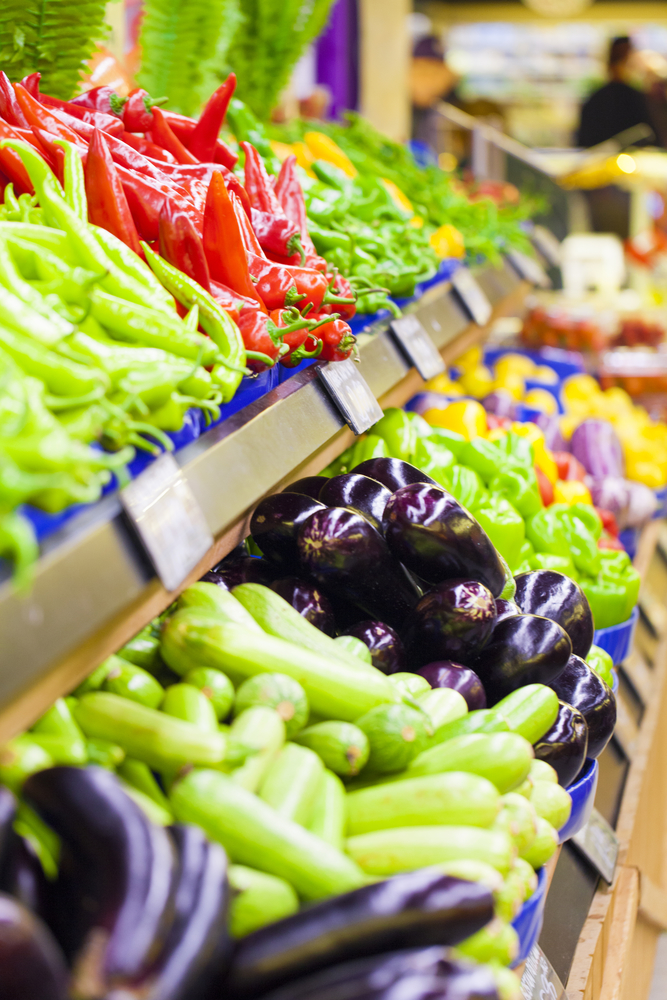
Produce on sale at a grocery store.
The in-person training in Sumter on June 23 has been canceled. If these trainings are successful, more online trainings will be offered in the future. The Produce Safety Alliance has made this option available until July 31.
Per the registration page: “Due to the COVID-19 pandemic, this training is being offered temporarily via remote delivery. In order to participate, individuals must have a webcam and audio capability, and will be required to have both operating during the full course of the training (May 19th 1PM – 5PM & May 20th 1PM-5PM). It is a Produce Safety Alliance requirement that participants are monitored in order to verify participants’ attendance and engagement. Participants will only be eligible for the PSA/AFDO Certificate of Course Completion if they are present for all modules of the course. The training will take place via Zoom, which does not require special software. Zoom does have system requirements, which can be found here:
Please make sure that your system meets the requirements for Zoom meetings.
In order to assure a smooth-running training, there is limited space available. Preference will be given to South Carolina growers. If space is available, the training will be open to out of state participants on a first-come, first-serve basis. Out of state participants, please email Brooke Horton to be placed on the waiting list – BHorton@scda.sc.gov.
The Produce Safety Rule Grower Training Manual v1.2 will be mailed to registrants prior to the training – please be sure that the address you provide at the time of registration is capable of receiving packages. Evaluations and a Zoom link for the training will be sent in a confirmation email prior to the training date.”
A Florida produce farmer is the latest to voice his concern over the impact Mexican imports are having on American farmers.
Will Hyatt, who farms bell peppers and cantaloupes in Lake Wales, Florida, said there are multiple reasons consumers should buy domestic. He also believes the idea of fair trade is a fantasy and not reality.
“I farmed in Mexico, and I know what it’s like. I know what the labor is like, and I know what the regulations are like; know Mexican government regulators are open to bribes to overlook or even assist violators,” Hyatt said. “To tell me, we have to compete against that, it’s not really fair. I think we can out-compete Mexico and Central America in a fair market if we have a fair regulatory market.
“If we could trade labor and trade resources, this wouldn’t be a problem.”
Florida blueberry farmer Ryan Atwood confirmed that just last week, Mexico exported 5 million pounds of blueberries into the U.S. last week. This happened despite it being the peak harvest season for Georgia, one of the country’s leading producers of blueberries.
According to the USDA, U.S. agricultural imports from Mexico equaled $25.9 billion in 2018.
What can change?
Hyatt believes nothing will change until voters make their voices known.
“Farmers are conservative as a rule, politically. The vast majority of us are conservative. But we are the first one to scream, please help us government when Mexico ships out a bunch of products. When the answer to me is to educate our fellow countrymen,” Hyatt said. “At the end of the day, our fellow countrymen vote with their dollars to purchase products that are produced internationally above purchasing domestically produced products. The farmers are a very small percentage of the community that will pay a price for that. At some point the greater population will pay a much steeper price, in my opinion.”
The boxes are $20 each and include sweet potatoes, cucumbers, bell pepper, onion, cantaloupe, green beans and collards. Boxes can be picked up on Wednesday, May 6 from 8:30 a.m. to noon or from 1:30 p.m. to 6 p.m. at the Quality Produce Packing shed on 217 TyTy Omega Road.
Order forms for next week’s boxed produce can be found here.
Bill Brim, a Tifton, Georgia fruit and vegetable farmer, was overwhelmed with the positive response his produce boxes generated last week. The co-owner of Lewis Taylor Farms said between 1,300 and 1,400 produce boxes were sold.
Like his brethren in Florida, Bill Brim’s farming operation has been impacted by the orders of self-quarantine amid the current coronavirus pandemic. The lack of a foodservice market led to a decrease in demand for fresh produce. This includes those grown at Lewis Taylor Farms in Tifton, Georgia.
Brim decided to offer boxed fruit to consumers in the South Georgia area.
Lewis Taylor Farms grows more than 6,500 acres of produce each year.
University of Georgia/Georgia producers eager to sell fresh produce are being connected with buyers who need their products through UGA Extension partnership with Georgia Grown.
By Maria M. Lameiras for CAES News
Georgia farmers and agricultural producers eager to sell fresh produce and other products are being connected with consumers and other buyers who need their products through a new partnership between University of Georgia Cooperative Extension and the Georgia Department of Agriculture’s Georgia Grown program.
Because of disruptions to the industry triggered by the COVID-19 crisis, many agricultural producers in Georgia — particularly smaller growers and producers — are experiencing difficulties getting their products out to those who can use them.
Through its Georgia Grown Ag-products Industry Promotion and E-commerce Promotion programs, Georgia Grown — a state membership program designed to help agribusinesses thrive by bringing producers, processors, suppliers, distributors, retailers, agritourism and consumers together — will waive all membership fees for the service until July to help producers affected by the crisis.
“The first step is facilitating connections between consumers and growers. There are many people who are looking for fresh produce and cannot find it, and we have producers who have produce and cannot sell it,” said Laura Perry Johnson, associate dean for Extension at UGA’s College of Agricultural and Environmental Sciences.
Types of Products
Types of agricultural products that qualify for the program include everything from vegetables, fruits and other produce. Also included are seafood, meats, dairy, poultry products and any other agriculture-related products, such as honey and prepared foods.
“We are getting a lot of interest from many types of buyers, including consumer, wholesale, food banks and some restaurants,” said Matthew Kulinski, deputy marketing director for Georgia Grown. “This is a good way for producers who normally sell to restaurants to have a new outlet for their produce.”
Georgia farmers who are keeping regular hours, providing curbside pickup, home delivery or e-commerce sales during the COVID-19 crisis can join the programs. They can visit the Georgia Grown Ag-Products Industry Promotion or Georgia Grown E-Commerce Promotion pages and fill out forms that will add their information to a statewide database of producers. It will be shared with consumers and buyers.
UGA Extension will support the program through its network of county agents and specialists throughout the state.
“This is a grassroots effort that starts with all of our Extension agents, specialists and coordinators who have the relationships with these growers, producers and farmers,” said Johnson. “We are working on several different ways to get this information out to producers and consumers, including our Extension website emergency resources page and through traditional and social media. Together we can make this into something that will not only help agriculture in Georgia but the people who need access to fresh food as well.”
Georgia Grown also provides a Pick your Own list of all producers who offer that option on their farms. This is for consumers who are interested in picking their own produce.
The Florida Department of Agriculture and Consumer Services (FDACS) is connecting the state’s farmers with local consumers. The results so far have been tremendous, according to Nikki Fried, Florida Ag Commissioner.
Fried highlighted the Florida Farm to You initiative that is designed to aid farmers, who are struggling to sell produce and other commodities during the ongoing coronavirus pandemic, while on a conference call Friday morning. FDACS established a website where producers can post information regarding available commodities that are accessed by the public. Commodities like citrus, strawberries, dairy, blueberries, tomatoes, sweet corn and squash are advertised along with the different counties throughout the state.
“It has been a tremendous hit. We’re seeing a lot of positive response and a lot of people going online and are very grateful for the connection we’re making with the consumers to the farmers directly. We have seen some very positive responses from the website. Of course, we’re only on week one,” Fried said. “Hopefully, this will not only continue through the pandemic, but I think some of the silver lining that we are seeing is some of this is going to continue after the pandemic.”
Nikki Fried
Florida’s produce farmers need local consumers more than ever since COVID-19 has shut down schools and restaurants. These are a huge market sources for the state’s fruit and vegetable growers.
According to Daren Hanshaw, a produce farmer in Immokalee, Florida, he has a fresh cut contract with two major companies. But just Monday did he receive the first three POs (purchase orders). Normally he should have had 15 loads per week. The demand for watermelons has dropped significantly and it shows in the market price. Hanshaw said the prices are 45% off what they have been the past three years.
Paul Allen, president of R.C. Hatton Farms in Belle Glade, Florida, said he’s left 2 million pounds of green beans and 5 million pounds of cabbage in the field. The reason is he just can’t sell them.
Already a difficult production season for Florida’s fruit and vegetable producers, some are unjustly being criticized for trying to manipulate the market and get government handouts, says Gene McAvoy, UF/IFAS Extension agent emeritus.
He defended growers and their farming operations amid scrutiny about criticism for not being more gracious with their crop.
“It is a very complex and tragic situation. It is easy to make suggestions without a thorough understanding of the matter,” McAvoy said. “What many people fail to realize is that picking, packing, cooling, storing and transporting vegetables costs money, and growers who have already lost millions of dollars are understandably reluctant to throw good money after bad.”
Many farmers have had to disk their produce in the field because markets have dried up due to the ongoing coronavirus pandemic. McAvoy said the collapse of the food service sector affects 60% to 80% of fresh vegetables produced in Florida.
“Not only can’t they afford to harvest the crop, they can’t afford to maintain it irrigate, fertilize, and spray for pest and diseases. Without these inputs, crops rapidly deteriorate and become a breeding ground for insects and diseases and threaten the small percentage of nearby crops for which a market remains,” McAvoy said. “Destruction of the crop prevents this from happening and protects the remaining fields.
McAvoy pointed out that many farmers have donated to local food banks and Meals on Wheels programs. They have been overwhelmed with demand due to a rise in unemployment. Here are a few examples:
Over the past few weeks, Wish Farms in Hillsborough County, Florida has donated 220,000 pounds of fresh strawberries — equivalent to 241 pallets/nine semi-trailer loads — to feeding Tampa Bay and the United Food Bank in Plant City, Florida.
Growers in Immokalee, Florida donated more than 3 million pounds of vegetables to the Harry Chapin Food Bank of Southwest Florida, “overwhelming their ability to store, transport and distribute the produce,” McAvoy said.
Farm Share, a food-distribution non-profit organization, works with more than 2,000 food pantries, churches, schools and other nonprofits throughout Florida. The agency is running at maximum capacity, despite having 25 refrigerated trucks, six warehouses between 10,000 and 35,000 square feet and nearly 50 drop-sites from Jacksonville to Florida City, Florida.
Pacific Tomato Growers recently donated 42,000 pounds of tomatoes to Meals on Wheels PLUS of Manatee, helping supply 100 food pantries and agencies,
DiMare Farms donated 400,000 pounds of tomatoes to Florida food banks
U.S. Sugar provided more than 120,000 servings of fresh, locally-grown green beans to South Florida churches, healthcare providers and food banks.
RC Hatton has been a generous donor of green beans, sweet corn, and other crops to Feeding South Florida
“Very few people comprehend the quantities of food we are dealing with, this time of year at the peak of harvest. Growers in South Florida collectively ship 50 to 60 million pounds of vegetables across the country,” McAvoy said. “With the closure of hotels, restaurants, schools and cruise ships, sales have declined as much as 80%.”
Vegetables like tomatoes, cucumbers and squash are highly perishable with a shelf life of only 7 to 10 days under ideal conditions. Heading into the fourth week of this crisis, much of what was in the field is ruined.
“Farmers work hard to grow this food, putting in a lot of time, money and sweat equity. Nothing breaks their hearts more than to see their efforts go to waste,” McAvoy said. “If people really want to help, they can help in the recovery effort through cash donations to food banks so that they can finance efforts to recover this food before it spoils.”
Submitted by Gene McAvoy, Regional Vegetable Extension Agent IV Emeritus with UF/IFAS
“Up to the end of Feb our growers were having a banner year and it looked like this season would be one of those homeruns that come around every 5-6 years.”
Here is a report that I prepared on the state of S Florida ag and shared with officials. (Long read but may shed some light on how COVID-19 is impacting agriculture in our area.)
Markets
On Tuesday, March 24, a local broker says, everything changed. From brokers, orders stopped and everything got quiet. On Wednesday, March 25, it got super quiet.
Since then tomato volumes are down 85%, green beans are like 50% and cabbage is like 50%.
R.C. Hatton has plowed under 100 acres of green beans, around 2 million pounds, and 60 acres of cabbage, or 5 million pounds.
Florida’s tomato growers target 80% of their production to restaurants and other food service companies, rather than to supermarkets. In this sector, growers are walking away from big portions of their crop.
Tony DiMare estimates that by the end of the growing season, about 10 million pounds of his tomatoes will go unpicked.
Some crops like potatoes and oranges are faring well, whileother produce isn’t selling like it used to.
With a lot of people staying home and buying mostly comfort foods, products like peppers, tomatoes and cucumbers have actually slowed down incrementally,” said Chuck Weisinger, president of Weis-Buy Farms, Inc.
“The biggest challenge we have right now is getting the stores to start buying,” said John Stanford, farm manager at Frey Farms.
As you know. produce is highly perishable and three weeks into this, many companies around Immokalee, Florida have already had to empty their coolers and dump produce. One dumped 20,000 pounds a day last week, let that sink in… 20,000 pounds of tomatoes a day. They dumped a total of 100,000 pounds so far. This is from one farm.
Three weeks in, most farms have exercised triage dumping and emptying coolers and are terminating fields for which they have no foreseeable markets. They are concentrating on maintaining fields that they still have demand for, unfortunately, depending on the crop – this is only 20-50% of the total planted.
Impacts on Ranchers
The cash market and futures prices are lower than anyone can remember. One local rancher sold calves this week and averaged $250 per head at the Arcadia auction barn. A few weeks ago he would have received $450 per head average, and that constitutes below breakeven.
In normal times, strategy would be to hold calves until the crisis is over, and hope prices will take an upswing. But there is huge uncertainty about how long this will last. A major compounding problem is the dry conditions, and lack of reserve forage. These weather patterns would normally dictate early weaning of calves. Hay costs, when available, and low market prices are a formula for hardship.
The extended impact on ranchers will be the cows not breeding back on schedule. Holding calves longer in hot and dry conditions puts a strain on a cow’s reproductive system. This has been well-documented by University of Florida researchers.
Many growers are exploring alternative methods of moving product.
Sam S. Accursio and Sons Farms’ in Homestead packing house opened direct sales to consumers, selling boxes at $10 in each of the past two weekends. They had cars stretched for half a mile in front of the packing house and were able to move 120,000 pounds of Redland-raised squash, tomatoes, beans and cukes. They also partnered with a farmer out of Mount Dora, Florida who had 30,000 flats of unsold blueberries and sold these at 12 pints for $20. Similar efforts were conducted by Alderman Farms in Bonita Beach, Florida, Farmers Alliance in Immokalee and others.
Martin County, Florida opened a pop-up drive-thru market that saw 500 cars in one day. Traditional commercial farms in South Florida have been overwhelmed by the support for the sales at their packinghouses – all fruit that would have otherwise gone unsold if waiting on traditional markets to purchase.
Growers are still concerned that a large amount of produce seen in the supermarket comes from Mexico.
According to Bill Braswell, since March 1, the start of the Florida blueberry season, Florida has produced 6.1 million pounds through last Thursday April 2. In that same time period, Mexico has imported 17.4 million pounds into the U.S., according to a USDA report. Mexico market price is $12 for a 6-ounce flat delivered to Chicago which translates to $2.60 per pound.
Labor
Growers are taking aggressive steps to protect workers from COVID-19, including keeping truckers separate from on-farm labor.
They have been taking advantage of training resources and posters supplied by IFAS Extension and others.
Agents have also shared information on essential services exemption and supplying growers with template essential services exemption letters to facilitate movement of their essential staff and labor.
Labor shortages – reports indicate that COVID-19 has delayed the U.S. government’s processing of H-2A work visas. This will impact growers in central and north Florida and up the coast.
Food banks
Last week, growers in Immokalee alone donated more than 3 million pounds of vegetables to Harry Chapin food bank, overwhelming their ability to store, transport and distribute the produce – they had to call a halt.
Farm Share, which partners with more than 2,000 food pantries, churches, schools and other nonprofits throughout Florida, is running at maximum capacity, despite having 25 refrigerated trucks, six warehouses of between 10,000 to 35,000 square feet and 40 to 50 drop sites from Jacksonville, Florida to Florida City, Florida. They usually help more than seven million pounds of food reach the hungry and now are faced with moving a lot more.
Over the past two weeks, Wish Farms has donated 220,000 pounds of fresh strawberries — equivalent to 241 pallets or nine semi-trailer loads — to feeding Tampa Bay.
Growers are having a tough time adapting because everything is happening so quick. Faced with a highly perishable product, growers are struggling to survive right now, with picking, packing and shipping everything that they can. Because of the coronavirus, things have changed. Buyers are demanding tight security, heavier sanitation, distancing and more.
We have heard many ideas and suggestions from the public and even local officials – what many people fail to realize is that picking, packing, cooling, storing and transporting vegetables costs money, and growers who have already lost millions of dollars are understandably reluctant to throw good money after bad. It also costs money to maintain fields with no hope of sales in sight. Growers are disking up fields and maintaining just what they feel they have markets for. Unfortunately, this is only about 20% to 30% of the total acreage. Each acre of tomatoes costs $10,000 to $12,000 to grow and $5,000 to $6,000 to pick and pack. Unmaintained fields rapidly succumb to pests and diseases and soon become a breeding ground threatening the health of nearby fields that growers are trying to save for their remaining markets.
It is not only veggies, as of yesterday about 7.7 pounds of milk has been dumped by one Central Florida co-op (there are a few in Florida). Milk is sold by the pound so that is 900,000 gallons.
While I don’t have the exact amount from the other co-op I would expect their numbers to match ours in north Central Florida and South Georgia. Unfortunately, we can easily say that 10 million pounds of milk has been dumped throughout Florida.
There are efforts to help farmers all over our state. In the dairy industry, there is a grassroots group of passionate producers, processors, promotion people, school representatives and Extension agents trying to get more milk moving. This group includes people from Florida and Georgia, that in normal times might view each other as the competition (different co-ops and different promotion boards). These efforts range from delivering school lunches, buying and delivering milk to food banks and those in need; contacting schools to increase their milk in each meal, contacting legislators to allow whole milk in school lunches (we need help with this), and asking stores to stop limiting the purchase of milk.
People really have no concept of the amount of food we are taking about – Immokalee alone ships approximately 400 to 500 semis of vegetables a day from March through mid-May. This is 15,750,000 pounds of vegetables headed to market every day. Add to this Belle Glade, Palm Beach Co, Homestead and the amounts are staggering. I know of one grower in Belle Glade who is disking up 1 million pounds of green beans every three days.
South Florida vegetable growers supply more than 150 million people in the eastern U.S., from Miami to Chicago, from late October to mid-May.
Here is a resource a producer may be interested in sharing – this is a clearing house for finding food – donating food etc.