Category: Produce

  • Watermelon Prices High, Supply Low

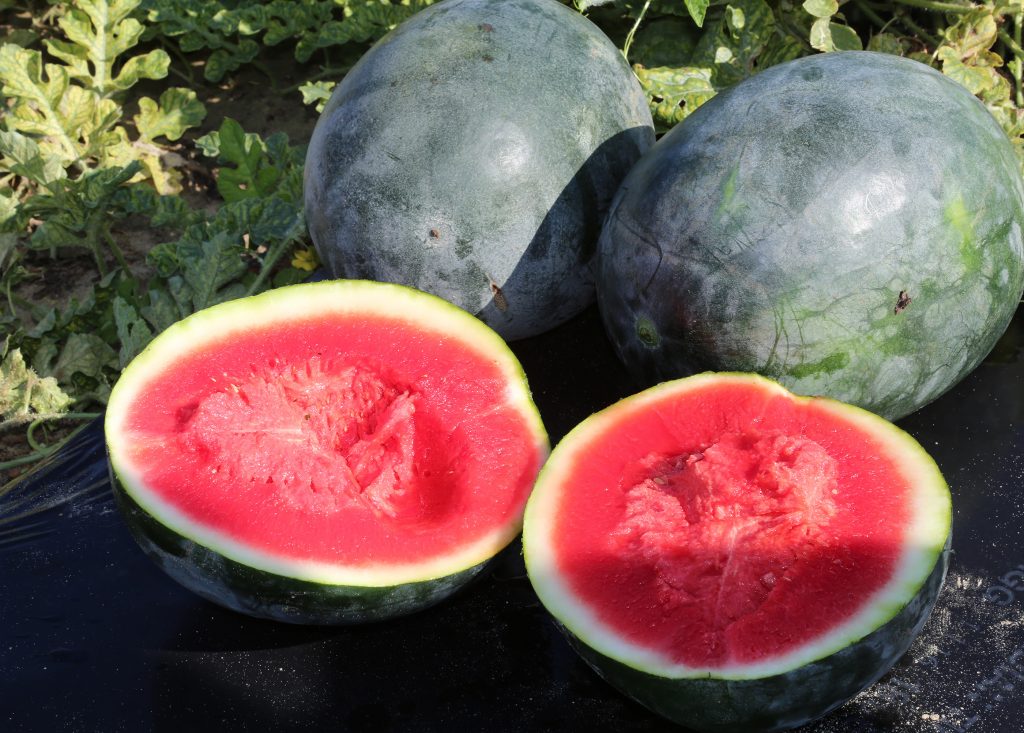
    University of Georgia pic/Watermelons on display at a farm on the UGA Tifton campus. 6-14-19

    By Clint Thompson

    Watermelon prices remain high for farmers in the Southeast. Unfortunately, there’s not enough crop ready for producers to take advantage, according to Bill Brim, co-owner of Lewis Taylor Farms in Tifton, Georgia.

    “Prices are still good. They’re around $155 to $160 a bin. There’s not many melons out there that’s ready right now. It’s unfortunate,” said Brim, who estimates individual watermelons are selling for an average of 24 cents per pound.

    He also believes the rainy weather has played a role in watermelons not maturing as quickly as they would in previous years.

    “Maybe too much water right now and they’re just not ripening as fast. We’ve got all of these showers in the afternoon, probably part due to that,” said Brim, who had to pause harvesting his own watermelon crop over the weekend.  “We had some stuff that was planted later, too than what we would normally plant; because the plants weren’t ready or the fields weren’t ready. It could be anything. Fumigants hadn’t been out of the soil long enough.

    “It’s quite a bit of difference from last year. Last year we were probably through by the (July) 4th.  We won’t be through for three weeks after the 4th (this year),” Brim said.

    This is typically a busy week for producers leading up to the July 4th Holiday on Saturday. Demand is normally very high this week.

    Drop in Georgia Acreage

    According to Samantha Kilgore, executive director of the Georgia Watermelon Association, acreage is projected to decrease this year to 19,000 acres. It would mark a significant drop from previous years’ harvests.  According to the National Agricultural Statistics Service, from 2016-2018, Georgia averaged a harvest of just more than 23,000 acres.

    Wet Planting Weather

    According to Andre da Silva, University of Georgia Cooperative Extension vegetable specialist, wet weather in February and early March could have delayed farmers’ planting window. If growers had to wait to plant their crop, it could have also impacted when their crop would be ready for harvest.

    He said that watermelon planting season in Georgia starts as early as March 1, but the bulk of farmers start March 15 and continue to the end of April. The watermelon market in Georgia begins in early June and usually concludes a week after July 4.

  • Florida Blueberry Farmer: USMCA Not a Good Deal For Vegetable, Specialty Crop Producers

    By Clint Thompson

    One of the most vocal critics of Mexican imports into the U.S. is adamant that the United States-Mexico-Canada Agreement will not help or protect vegetable or specialty crop producers.

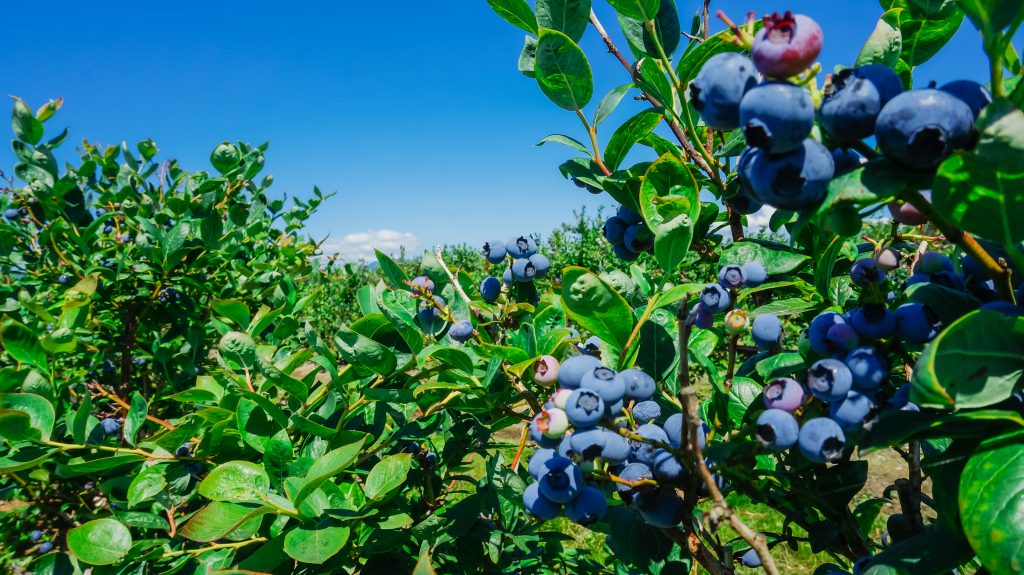
    Blueberries are a popular commodity in the U.S. but also as an import from Mexico.

    “No, that’s not a good deal for specialty crops. They didn’t really address our issues at all. That was not a good deal for us,” said Ryan Atwood, blueberry farmer, who lives in Mount Dora, Florida, and is one of the state’s blueberry leaders. He farms 56 acres of blueberries, manages another 350 acres and is part-owner of the largest packing house in the Southeast United States.

    USMCA Background

    According to the USMCA, the agreement, once it enters into force on July 1, will support mutually beneficial trade leading to freer markets, fairer trade and robust economic growth in North America. But critics of the agreement will point to lack of protection for specialty crop farmers who already have to compete against imports of Mexican produce. U.S. Secretary of Agriculture Sonny Perdue even acknowledged concerns by specialty crop growers.

    The idea of fair trade seems more like a fantasy than reality for growers in the Southeast who, not only had to overcome the coronavirus pandemic this year but had to compete against the constant influx of Mexican imports.  

    “They don’t have the regulations we have. They don’t have to abide by the same rules. Their labor is definitely cheaper. They pay somebody $12 per day. I’ve got to pay them $12 an hour to get labor. It’s hard to compete with that. It’s real hard to compete with that,” Atwood said.

    Domestic Supply of Food

    Atwood commented in late April that he was “a fan of having our own domestic supply of food.” Agricultural imports from Mexico may be cheaper, but they’re not American grown. Atwood and Florida vegetable farmer Sam Accursio continue to preach the importance of supporting the American farmer.

    “I think it’s a security issue for our country,” Atwood said in late April. “We’ve got to grow our own food. You saw what happened 10 or 12 years ago when we used to import all that oil and then we got our own domestic supply going again. Other countries are going to be able to control you if they control your food supply.”

    Accursio added, “If you take Florida and California away in the winter, what do you have? You have third-world countries feeding this great nation, and I’m not going to eat it. I’m not going to do it.”

  • Extension’s Mobile Farmers Markets Rolling Again in Metro Atlanta

    Fulton County Extension staff and volunteers prepare to distribute produce bags through curbside pickup at a Fulton Fresh mobile market stop in Atlanta. (Photo by Molly Woo)

    By Josh Paine for UGA CAES News

    Mobile farmers markets are rolling again in metro Atlanta to continue serving fresh produce and delivering nutrition education to communities through curbside pickups and digital content.

    University of Georgia Cooperative Extension agents and staff have modified the markets to reduce contact, loading mixed bags of produce like corn, onions, squash, potatoes, tomatoes and various fruit right into vehicles for citizens in Fulton and DeKalb counties to reach areas where fresh food can be hard to find or cost-prohibitive for some families.  

    The Fulton Fresh mobile market runs from now until July 9 and again from July 14 to August 13. The new van, furnished by the county government, will make six stops a week on Tuesdays, Wednesdays and Thursdays throughout the county.

    The Fresh On DeK mobile farmers market will be held from now until September 18 and will make eight stops per week on Tuesdays, Wednesdays and Fridays.

    Both markets are open to the public, but preregistration online is preferred to assist with contactless pickup. Onsite registration is available for Fulton Fresh for citizens who are unable to register online.

    In addition to produce, the markets provide recipe cards and information about online Extension resources to educate consumers about healthy preparation methods and lifestyles.

    “The organizations we partner with are always excited to see us,” said Laurie Murrah-Hanson, a 4-H agent in Fulton County. “In the past, people really enjoyed the food demonstrations, and we still wanted to offer similar resources.”

    Fulton Fresh, which began in 2012, started a dedicated, grant-funded Kids Market program this year to disseminate smaller bags of produce with recipes and at-home science experiments for youth. Videos of farm tours will be released on social media weekly in conjunction with the mobile market.

    UGA Extension staff have also partnered with the Fulton County Library System to provide digital resource lists for students in kindergarten through 12th grade.

    “I think stronger partnerships like this are going be a benefit that comes out of the current situation,” said Murrah-Hanson, who is coordinating the Kids Market.

    Fresh on DeK, now in its sixth year of operation, has made updates to the market in sourcing and delivery by switching to a free pickup system rather than a walk-up, fee-based model.

    “This year, we’re also partnering with a nonprofit called Global Growers to source culturally relevant food for our Clarkston community, which is one of the most diverse parts of the county,” Jamille Hawkins, a Family and Consumer Sciences agent and coordinator of the market.  

    The mobile markets are an office-wide endeavor across Extension program areas, and support for the programs comes from county governments. Fresh on DeK was made possible with additional funding from the Centers for Disease Control and Prevention and the DeKalb County Board of Health.

    For more information about Fulton Fresh and to preregister, visit extension.uga.edu/county-offices/fulton/fulton-fresh and follow on Facebook at facebook.com/UGAExtensionFultonCounty.

    Connect with Fresh on Dek by visiting extension.uga.edu/county-offices/dekalb/fresh-on-dek, following on Facebook at facebook.com/FreshonDeK or calling 404-298-4080.  

  • Georgia Farmers Want Additional Commodities added to CFAP

    By Clint Thompson

    The Coronavirus Food Assistance Program (CFAP) excludes 90% of Georgia’s specialty crop growers with its timeline restrictions of January 1 to April 15. Georgia Fruit and Vegetable Association Executive Director Charles Hall hopes additional commodities added to the list covered under CFAP will aid Georgia growers.

    Kale is one of the commodities that Georgia farmers want added to CFAP.

    “We are looking at commodities in Georgia that didn’t get into the commodity list,” Hall said. “We’re trying to determine what data we need to provide to USDA to get those listed. Primarily, it is within the greens area; kale, mustard, collards, turnips, and we’ve got a couple of growers we found that had some specialty lettuce for the Atlanta restaurant market. We’re looking at those commodities, too.”

    CFAP Background

    CFAP applications will be accepted through Aug. 28. There is a Notice of Funding Availability (NOFA) where stakeholders and producers of other commodities can submit information and data for consideration to be included in the program. These must be submitted by June 22. This is specifically for data on any commodity not currently eligible for CFAP.

    CFAP will benefit mostly Florida farmers who have had to overcome produce loss and low market prices as a result of the coronavirus pandemic striking the U.S. in mid-March.

    In a previous VSCNews story, Hall was hopeful that Congress would pass another stimulus package and that his growers would be sufficiently covered. It would provide a boost to farmers as the economy tries to recover from the current recession.

    “The bill that passed the House would cover Georgia specialty crop growers because it covered the first two quarters of the year. Most of our growers’ harvest will be through the end of June. That will be helpful from that standpoint,” Hall said.

  • Clemson Extension Agents Provide Updates on Various Crops

    According to this week’s edition of The South Carolina Grower, Clemson Extension agents responded how different crops are progressing this production season.

    Coastal

    Zack Snipes reports, “It’s the time of year when crops are starting to look ugly. We are in the middle of tomato harvest and it seems to be a pretty good crop this year. Bacterial spot is starting to spread up the plants due to a heavy fruit set, perfect weather, the inability to spray, and constant handling by pickers. Keep up with spray programs as the last few weeks of development are critical to size and taste. Rabbiteye blueberries are coming in strong right now and look really good with the occasional berry having Exobasidum. Stink bug pressure has been very high this year and I’m seeing damage on a multitude of crops.”

    Rob Last reports, “In our area, we are seeing some good quality watermelons and cantaloupes coming to harvest. We are seeing some manganese toxicity related to low pH in both crops. Also given the sporadic storms we have seen leaf potassium levels have been lower than ideal. It would be recommended to monitor tissue nutrient levels and adjust fertilizer applications accordingly.”

    Midlands

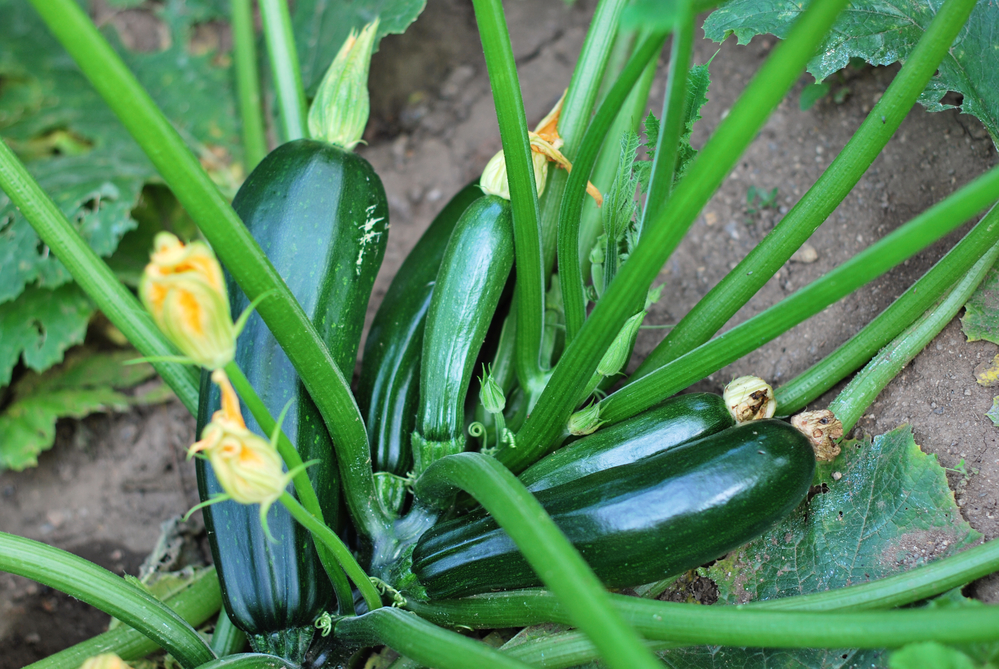
    File photo shows zucchini plants.

    Justin Ballew reports, “We got a little much-needed rain last week. Crops are developing quickly and growers have started harvesting the oldest planted sweet corn as well as squash, zucchini, cucumbers, beans, and what’s left of spring brassicas. Cucurbit downy mildew has not yet been found in the midlands, but it probably won’t be long. Keep applying preventative fungicides.”

    Sarah Scott reports, “Peach season is in full swing. Bacteriosis and brown rot continue to show up in many fields. Warm temperatures during an extended bloom period as well as rain and cold at critical times in the early season are likely the culprits for these issues.”

    Pee Dee

    Bruce McLean reports, “Cucumbers are being harvested in good numbers. Squash and zucchini yields are increasing. Sweet corn will be ready to begin harvest in a few days. Disease pressure is increasing in cucumbers, primarily Cucurbit Downy Mildew (CDM). CDM has caused significant damage and severely reduced the crop in two locations. Forecasted rains for the next 7-10 days will make it extremely difficult to spray fungicides (as well as applying insecticides, herbicides, and fertilizer). Fruit crops are being negatively impacted by the weather, as well. Reduced fruit quality is caused by increased disease pressure and wet field conditions. And, the forecast over the next 7-10 days is for more rain.”

    Tony Melton reports, “Cucurbit downy mildew is increasing rapidly with the rain, glad we started spraying Ranman or Orondis 2 weeks ago. With the rain, ponds have returned to our fields. As one of my vegetable farmers said “Not a good year to be in the Pee Dee vegetable business.” Hundreds of acres of beans, squash, cucurbits, and peas have drowned. Farmers are probably tired of me saying “Potassium Phosphide will help.” Regretfully, on brassicas, the yellowed margined beetle has become established in the Pee Dee, and downy mildew is awful. However, sweet potatoes are growing like a weed (its close kin morning glories).”

  • Was Your Crop Not Eligible for the Coronavirus Food Assistance Program?

    United States Department of Agriculture

    town hall

    Was your crop not eligible for the Coronavirus Food Assistance Program (CFAP), or COVID-19? There is still a chance to try to get that crop on the list of eligible commodities. (Stephanie Ho and Latrice Hill, FSA Director of Outreach)

  • UGA, Georgia Department of Agriculture to Offer Digital Marketing Webinar for Agribusinesses

    With limited to no in-person contact with customers during the COVID-19 pandemic, for many growers, expanding online capabilities is crucial to business continuity. Join Georgia Grown and UGA Extension on June 17 for an e-commerce workshop featuring experts from the UGA Small Business Development Center.

    By Kelly Simmons for UGA CAES News

    The University of Georgia is partnering with the Georgia Department of Agriculture to present a free digital marketing webinar for agribusiness owners looking for alternate ways to sell their products.

    The webinar will be held on Wednesday June 17 at 10 a.m. by the UGA Small Business Development Center (SBDC), the Department of Agriculture’s Georgia Grown division and UGA Cooperative Extension.

    Agriculture-related businesses from across the state have had trouble getting their fresh produce, meat and seafood to market during the COVID-19 pandemic.

    The webinar will introduce participants to e-commerce, best practices for social and email marketing, and suggestions for packaging products for shipping.

    “We’ll provide good takeaways on ways to market their business online,” said Bill Boone, SBDC entrepreneur outreach specialist. “If they need additional help or resources to implement the techniques covered in the class, the SBDC is available to assist.”

    Additional webinars may be scheduled as needed, he said.

    Georgia Grown helps agribusiness thrive by bringing producers, processors, suppliers, distributors, retailers and agritourism together to increase their exposure to customers suppliers and partners through an online searchable database. Find out more at georgiagrown.com/find-georgia-grown.

    UGA Extension assists producers and consumers with information and resources through its network of county agents and specialists throughout the state. Visit the Extension website for more information at extension.uga.edu or call 1-800-ASK-UGA1.

    Registration for the webinar is required and available at georgiasbdc.org/marketing-georgia-grown-ecommerce.

  • FFVA President: CFAP Payment Amount Falls Short

    By Clint Thompson

    The Coronavirus Food Assistance Program (CFAP) will bring much-needed relief to farmers impacted by COVID-19. Unfortunately, the funds allocated per farmer is not enough, says Florida Fruit and Vegetable Association (FFVA) President Mike Joyner.

    florida fruit
    Joyner

    “Florida agriculture was just crushed by the pandemic. A lot of our members have had some really, really big losses. When that direct payment was first mentioned with that $250,000 cap, we were extremely disappointed. We are very appreciative that the cap has been raised,” Joyner said. “We’re grateful for the increase. But it still falls short because we did have members that lost millions. These are family farms.

    “We still wish we could get a little bit more. We might try to do that as they begin to talk about a CARES (Act) 4 package. We’ll push to see if we can get that cap raised a little bit more and some more money into Florida.”

    CFAP Background

    According to https://www.farmers.gov/cfap, CFAP provides vital financial assistance to producers of agricultural commodities who have suffered a 5%-or-greater price decline or who had losses due to market supply chain disruptions due to COVID-19 and face additional significant market costs. Many of the fruits and vegetables, including tomatoes, watermelons and strawberries are covered under CFAP and were in production in Florida when the coronavirus struck in mid-March.

    Much of the produce season for this year is completed in Florida, especially in the southern portion of the state. Many are already thinking about next season and need CFAP funds in place so they can proceed accordingly. Thankfully, CFAP payments are already being issued.

    “We just hope they turn those checks around pretty quickly because these growers in south Florida are going to make decisions on inputs into July, first part of August.That’s when they’ll start ordering seed and fertilizer and all that kind of stuff,” Joyner said.

  • Economist Fearful CFAP Funds Won’t Be Enough

    blueberry
    Blueberries are one of the many commodities covered by CFAP.
    File photo of blueberry production.

    By Clint Thompson

    One agricultural economist fears there might be insufficient funds to cover farmers who apply for the Coronavirus Food Assistance Program.

    Max Runge

    Max Runge, Extension specialist in agricultural economics and rural sociology at Auburn University, believes the 80% of maximum total payment allotted for applicants will not be enough considering the number of producers impacted by the coronavirus pandemic.

    “I don’t think that will be enough. I think it’ll be short. Agriculture’s big across the U.S. The program covered a lot of it,” Runge said. “I hadn’t sat down and tried to put any kind of numbers to it. But I would be surprised if there’s enough money there to cover it.”

    CFAP Background

    According to www.farmers.gov, CFAP will provide $16 billion in direct support for agricultural producers where prices and market supply chains have been impacted and will assist producers with additional adjustment and marketing costs resulting from lost demand and short-term disruptions for the 2020 marketing year caused by COVID-19.

    To ensure funds will be available throughout the application period, producers will receive 80% of their maximum total payment upon approval of the application. The remaining portion of each payment, not to exceed the payment limit, will be paid at a later date as funds remain available.

    “I know that it was a daunting task to try to come up with something to cover everything. I thought it was a good effort. It’s like everything else, you can always look back and say, ‘They should have done this.’ Or ‘This should have been done differently,’” Runge said. “It’s not perfect, but it is something.”

    While the program will largely aid vegetable and specialty crop producers in Florida, Georgia and Alabama farmers are hurt by the timeframe. Charles Hall, executive director of the Georgia Fruit and Vegetable Association, says the program’s end date of April 15 doesn’t help his farmers much. Not much is on the market then. The same is true for Alabama farmers.

    “We don’t have that much produce maturing at that time and ready for market during that time frame,” Runge said.

  • United Fresh Says Produce Buying Climbed During COVID-19

    Fresh market produce for sale.

    United Fresh Produce released its first quarter of 2020 issue of Fresh Facts on Retail report that details the rising number of fresh produce purchases in 2020. The unprecedented rise in food and beverage consumption at home was brought about by shelter-in-place orders issued to slow the spread of the coronavirus.

    “Those closures have led to consumers drastically restructuring their eating habits, especially increasing their consumption of meals and snacks at home,” says Miriam Wolk, Vice President of Member Services with United Fresh. “Our current and future Fresh Facts reports will help the produce industry in leveraging current consumer behaviors and fresh produce purchasing trends.”

    First-quarter data highlights show that with health as a top concern, consumers continued to buy fresh food with immune-boosting properties, while also supplementing with shelf-stable and frozen food options. Strawberries and raspberries benefited by extending their reach into more U.S. households. Among vegetables, potatoes, tomatoes, and cucumbers were purchased in higher amounts by U.S. consumers. The report also shows a variety of fruits and vegetables continue to influence overall organic growth, presenting many opportunities to innovate and attract health-conscious consumers.

    (From the National Association of Farm Broadcasters)