Category: Produce

  • United Fresh Releases 2020 Fourth Quarter Report

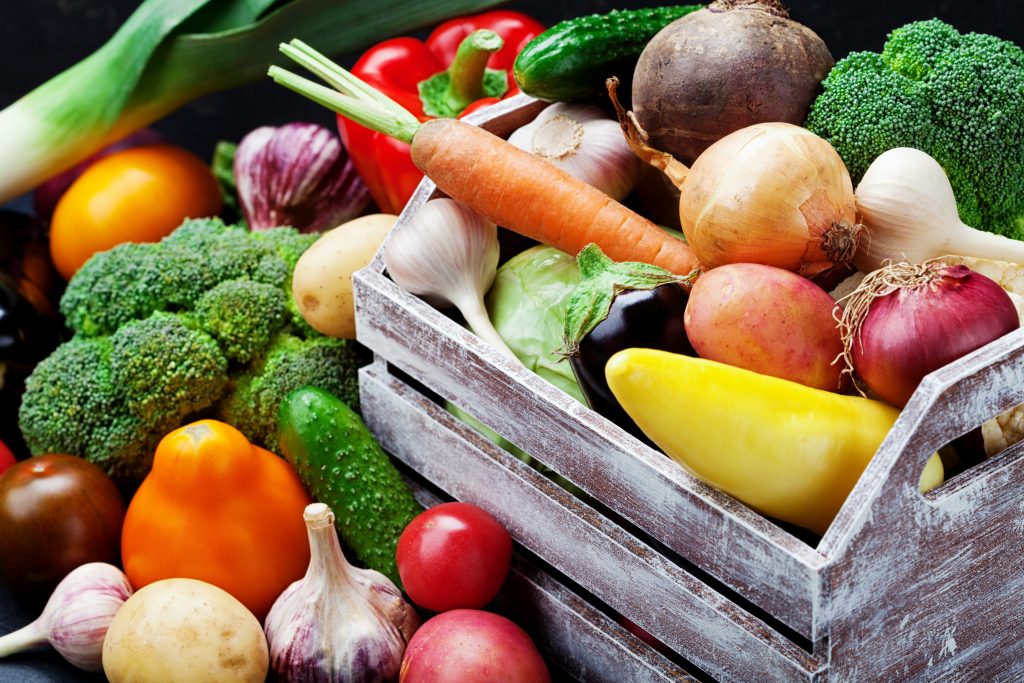
    Fresh produce continues its steady growth at retail, with increased sales for fruits and vegetables during the fourth quarter of 2020. That’s according to a new report from United Fresh, detailing the fourth quarter of last year and the 2020 year-end report.

    Among the fourth quarter highlights, both fruits and vegetables continued to grow as sales surged across categories driven by consumers making more shopping trips and spending more during those trips. Total fruit sales generated $7.3 billion in the last quarter of 2020, representing 7.7% growth over the previous year. Vegetable sales grew 14% during the quarter, reaching $8.8 billion.

    Some of the key numbers from the Year-End report show produce departments generating $7.1 billion in 2020, accounting for 33% of total fresh sales, second only to the meat department.

    Total fruit sales in the U.S. reached $33.7 billion and were 14.4% higher than the previous year. Apples, grapes and bananas ranked as the top three categories in sales.

    Vegetable sales reached a new high of $35.8 billion and were 14% higher than in 2019. Pre-packed salads, tomatoes and potatoes were the top three categories in sales.

    (From the National Association of Farm Broadcasters)

  • United Fresh Launches 2021 Produce Industry Compensation Survey

    The United Fresh Produce Association launched its 2021 Compensation Survey on Monday for the fresh produce industry. The data collected will be published in a report that will assist produce industry employers in understanding critical compensation benchmarks.

    For 2021, additions to the survey include two new positions focused on sustainability and a series of questions related to how companies have changed their salary and benefit practices in the wake of COVID-19. The survey also will collect compensation and benefits data from produce companies for more than 30 full-time positions.

    The survey is open to any U.S. or Canadian-based produce employer, including grower-shippers, brokers, wholesaler-distributors, importers, exporters and fresh-cut processors. The survey is administered every two years, and the results will be published this June in a detailed report designed to help produce companies directly compare their salaries and benefits for more than 30 full-time positions.

    The survey is open at www.unitedfreshsurvey.com to any U.S. or Canadian-based produce company until March 12.

    (From the National Association of Farm Broadcasters)

  • Registration Closes Soon for Virtual Georgia Produce Safety Alliance Training

    Registration will close soon for the virtual Georgia Produce Safety Alliance Training, which will be held Feb. 23 and 24 from 8 a.m. to noon. Registration closes Tuesday, Feb. 16 and is limited to 15 participants.

    This two-day online workshop is offered to produce growers. The training will cover the standardized curriculum designed by the Produce Safety Alliance, which meets the regulatory requirements of the Produce Safety Rule under FSMA (Food Safety Modernization Act). The course will provide a foundation of Good Agricultural Practices (GAPs) and co-management information, FSMA Produce Safety Rule requirements and details on how to develop a farm food safety plan. Individuals who participate in this course are expected to gain a basic understanding of:

    • Requirements in the FSMA Produce Safety Rule and how to meet them successfully;
    • Microorganisms relevant to produce safety and where they may be found on the farm;
    • How to identify microbial risks, practices that reduce risks, and how to begin implementing produce safety practices on the farm; and
    • Parts of a farm food safety plan and how to begin writing one.

    Further information is available on www.georgiaproducesafety.com or by viewing this detailed flyer. For questions, please email Maggie Brown or Elizabeth Danforth.

  • Marketing Your Crop: Be Better Prepared

    As vegetable and specialty crop producers near another spring harvest season, marketing their product remains a focal point of their farming operations.

    Adam Rabinowitz, Assistant Professor and Extension Economist at Auburn University, implores producers to be better prepared this year amid the ongoing coronavirus pandemic.

    “I really recommend producers think about their marketing and distribution earlier and really at the forefront. That was one of the things that really caught a lot of people off guard (last year) when large institutions started closing down, and restaurants were closing down. It became more and more difficult to market through those channels,” Rabinowitz said.

    “Knowing that, seeing these opportunities, seeing where we are right now, just planning ahead and having contingency plans will be highly recommended.”

    Pandemic’s Impact

    When the pandemic first impacted the United States last March, it shut down the country, in particular, restaurants. A lot of which, southeast producers sell their produce to.

    The lack of a food service option crippled certain sectors of the agriculture industry, including tomatoes. Bob Spencer, President of West Coast Tomato in Palmetto, Florida, said last April that his company farms between 3,500 and 4,000 acres every year. But he was losing 90% of his business. About 70% to 75% of the state’s tomato crop is designated for the food service market.

    Florida farmer Paul Allen said in early April that they had left about 2 million pounds of green beans and 5 million pounds of cabbage in the field just because the demand had diminished.

    As the pandemic continues to be problematic across the country, producers should be better prepared for what to expect and know what worked and what didn’t work.

    Farmers like Bill Brim in Georgia boxed their produce and sold direct to consumers to offset decreased demand. While it did not completely offset the decreased demand, it provided consumers a chance to buy local and raise awareness about buying local especially during a time of crisis. Community Supported Agriculture (CSA) was another option that paid off for some producers.

  • Georgia Department of Agriculture to Host Produce Safety Alliance Training

    The Georgia Department of Agriculture will host the Georgia Virtual Produce Safety Alliance Training on Jan. 26 and Jan. 27 from 8 a.m. to noon. The two-day workshop covers the standardized curriculum designed by the Produce Safety Alliance, which meets the regulatory requirements of the Produce Safety Rule under the Food Safety Modernization Act (FSMA).

    Individuals who participate in this course are expected to gain a basic understanding of:

    1. Requirements in the FSMA Produce Safety Rule and how to meet them successfully;
    2. Microorganisms relevant to produce safety and where they may be found on the farm;
    3. How to identify microbial risks, practices that reduce risks, and how to begin implementing produce safety practices on the farm;
    4. and Parts of a farm food safety plan and how to begin writing one. (ers.usda.gov/arms): ers.usda.gov/arms
           
      Further information is available on www.georgiaproducesafety.com or by viewing this detailed flyer. For questions, please email Maggie Brown or Elizabeth Danforth.

    Registration ends today.

  • On Farm Readiness Reviews for Produce Growers in Georgia

    On Farm Readiness Reviews (OFRR) are now available for Georgia produce farmers. Schedule your OFRR by clicking the button below to visit georgiaproducesafety.com or by contacting Maggie or Elizabeth.

    Maggie H. Brown
    Produce Safety Education and Outreach Coordinator
    Maggie.brown@agr.georgia.gov
    Elizabeth S. Danforth
    Produce Safety Education and Outreach Associate
    Elizabeth.Danforth@agr.georgia.gov

    An OFRR is not an inspection but a method of educating before regulating. The goal of an OFRR is to provide farmers with useful information so they can comply with the federal Food Safety Modernization Act. We’re here to help.

  • Farm Share Wants to Buy Your Produce

    covid
    File photo shows fresh produce.

    Farm Share, a nonprofit organization that distributes food to those in need, is looking for Florida farms with bulk produce available for purchase immediately. The organization received funding from the CARES Act to use for food purchases for distribution to families affected by the pandemic.

    If you have bulk produce available for purchase, contact John Delgado, Farm Share’s inventory operations manager, at 786-261-7907 or by email at John@farmshare.org.

  • First Virtual Georgia Produce Safety Alliance Grower Training

    The Georgia Department of Agriculture Produce Safety Team is offering a virtual two-day Produce Safety Alliance Grower Training via Zoom on Oct. 21 and Oct. 22 from 8 a.m.-noon.

    Any produce grower who grows, packs, harvests and/or holds covered produce, makes more than $25,000 in annual produce sales (on average, based on the past three years of sales), and does not qualify for a Produce Safety Rule exemption is required to attend this training under new federal regulations.

    This PSA Grower Training course satisfies the FSMA Produce Safety Rule requirement outlined in §112.22(c), which requires ‘At least one supervisor or responsible party for your farm must have successfully completed food safety training at least equivalent to that received under standardized curriculum recognized as adequate by the Food and Drug Administration.’

    Further information is available on www.georgiaproducesafety.com. For questions, please email Maggie Brown or Elizabeth Danforth.

  • U.S. Department of Labor Announces Award of More Than $80 Million to Provide Grants for Training, Safe Housing for Farmworkers

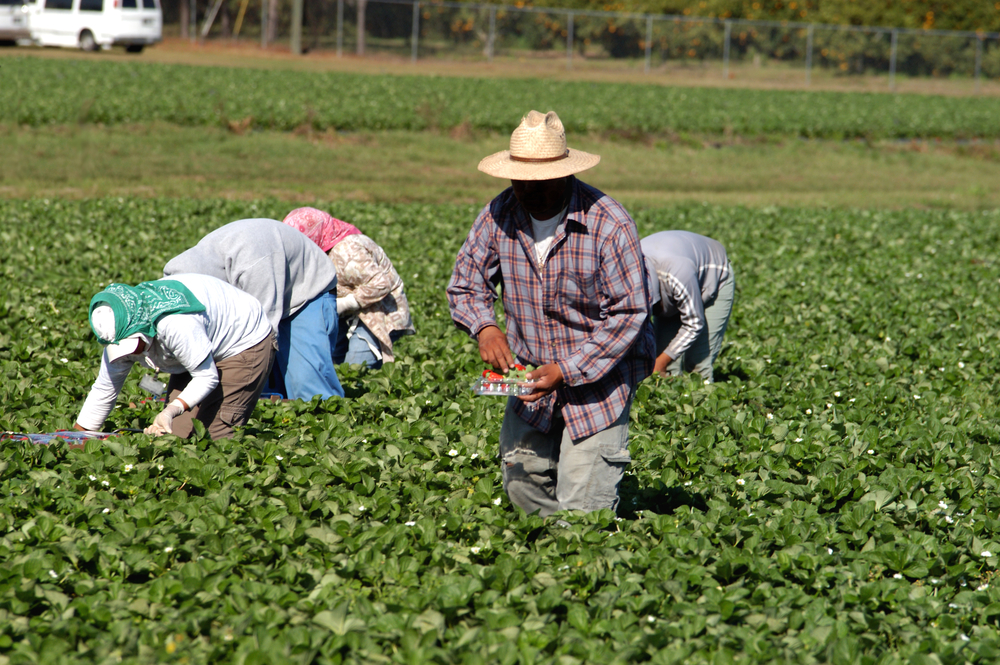
    WASHINGTON, DC – The U.S. Department of Labor announced the award of $80,684,142 in grants through the National Farmworker Jobs Program (NFJP) to provide career services, training services, youth services, related assistances and housing services to eligible migrant and seasonal farmworkers and their dependents.

    These awards fall into two categories: NFJP Career Services and Training Grants, aimed to help farmworkers retain their current jobs in agriculture and to acquire new skills to start careers that provide higher wages and stable-year-round employment, and NFJP Housing Grants, which help create safe and sanitary housing for farmworkers.

    The Department will award $74,562,142 for Career Services and Training Grants to fund 47 grants. The Department is also awarding $6,122,000 in NFJP Housing Grants to fund nine organizations in regions needing farmworker housing services.

    “The Department of Labor is focused on investing in quality career services and training opportunities that lead to industry-recognized credentials in agriculture or other sectors, and ultimately better earnings and quality of life,” said Assistant Secretary for Employment and Training John Pallasch. “Communities that invest in their farmworkers are investing in America’s economic strength.”

    Learn more about the National Farmworker Jobs Program.

    ETA administers federal job training and dislocated worker programs, federal grants to states for public employment service programs and unemployment insurance benefits. These services are provided primarily through state and local workforce development systems.

    The mission of the Department of Labor is to foster, promote, and develop the welfare of the wage earners, job seekers, and retirees of the United States; improve working conditions; advance opportunities for profitable employment; and assure work-related benefits and rights.

  • Soil Sample for Nematodes Now

    UGA Extension photo/Stubby root-knot nematode on onion plants in 2017.

    The time is now to soil sample for nematodes, says Pablo Navia, Adama Technical Development Leader for East Region.

    “This is the best time since populations of nematodes are really high right now in the soil. There’s still some roots that they are feeding on. This is the best time to sample,” Navia said. “It’s a good way to know what enemy you’re dealing with next season.”

    Navia said growers need to coordinate with the Extension agents in their county to take samples and arrange to take their samples to the appropriate lab.

    “Each state’s Extension agent will know where to send the sample. Each university will have their lab and you can send the sample to their lab,” Navia said.

    Navia recommends that producers take between 4 and 8 samples in a field, which will provide growers a good representation of the entire field.

    There are different types of nematodes that impact vegetables, with root-knot nematodes being the most widespread and can cause the most damage. Nematodes are especially troubling because of the wide range of potential hosts. In addition to vegetables, nematodes cause problems in cotton, peanut and tobacco plants.

    “It’s one of the most damaging pests out there,” Navia said. “It’s as important as a soil-borne disease or a foliar disease. There are many diseases that can affect a particular crop. But nematodes will make everything worse. If you have nematodes, then you have high chances of losing your crop.”

    Soil sampling better prepares growers for the following season and will help them know if numbers are beyond threshold and if further action is warranted.

    “If you have root-knot nematode and you find one nematode in your sample, that means you may be in trouble next season. Nematodes, like stubby root for example, the threshold is 200. Depending on the crop, like the citrus nematode, the threshold is 1,000,” Navia said. “It really depends on the species.”