Category: Pests

  • What to Look for With Corn Earworm

    According to a University of Florida/IFAS blog, the corn earworm is especially concerning to corn and tomato growers. It causes serious damage when it feeds on corn silk and kernels and tomato fruit.

    Corn earwom adult. Photo credit: J. Capinera, University of Florida

    In corn, eggs are laid on silk and the caterpillar hatches and feeds on silk and kernels. In tomato, eggs are laid on leaves, flowers or fruit. The caterpillar feeds by burrowing into tomato fruit. The corn earworm prefers warmer climates. Adult moths migrate north from southern states and can overwinter as far north as Ohio and Kansas.

    Caterpillars are a common pest of vegetable plants. They can reduce fruit quality and yield by feeding on leaves or fruit. One important caterpillar pest is the corn earworm (Helicoverpa zea). This caterpillar develops into a relatively harmless nondescript moth, but the caterpillar causes major crop damage in corn and tomato. It is also known as the tomato fruitworm, cotton bollworm, soybean podworm, and sorghum headworm. Some experts consider it one of the most damaging pests in the United States.

    Identification

    Identification of caterpillars can be difficult and may require the assistance of an expert. Caterpillar body color is variable and can change as it grows older. They can be brown, green or even pink. There is usually a pair of narrow stripes that run down the back. There is also usually a white net pattern on the head. Adults are also difficult to identify. They have brown to yellow forewings with a dark spot in the center.

    Lookalike

    The corn earworm is established in the United States, but it looks identical to the old world bollworm (Helicoverpa armigera) which is considered an invasive pest. In order to distinguish the two species, DNA molecular analysis or dissections must to be performed by an expert. If you find a caterpillar that you are unsure is the corn earworm or the invasive old world bollworm, contact the FDACS-DPI help line at: DPIHelpline@FDACS.gov or 1-888-397-1517.

    By Benjamin Waldo
  • FMC Launches Avaunt eVo Insect Control Formulation to Tackle Key Pests Affecting Fruit, Vegetable Growers

    Advanced formulation of the only Group 22 insecticide for agricultural use delivers improved control and performance consistency. 

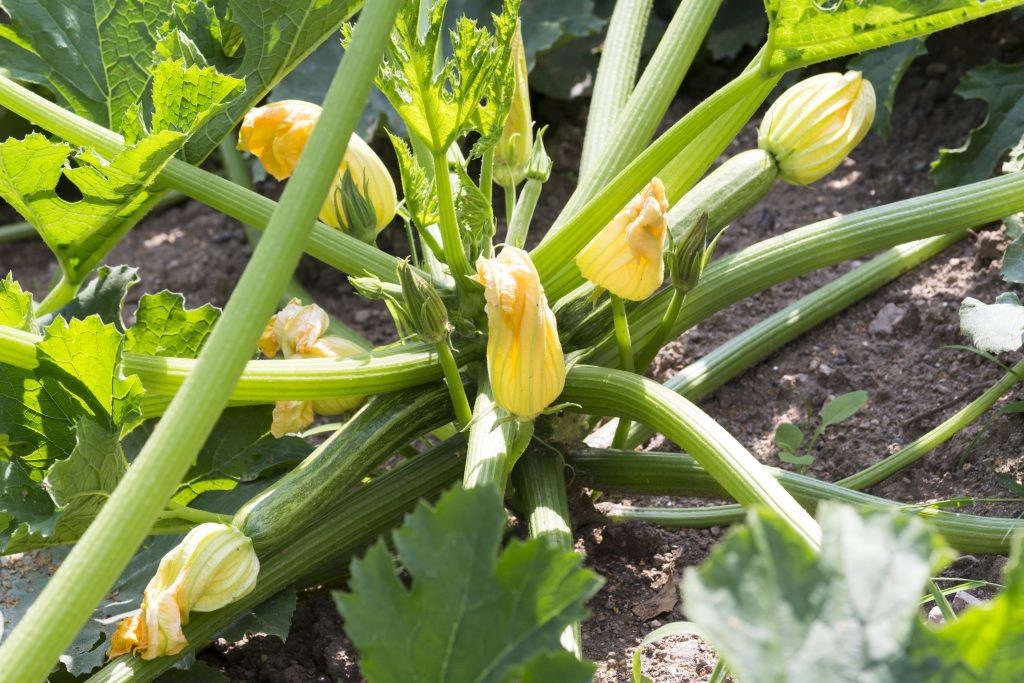
    Squash is one of the crops that respond well to Avaunt eVo insect control.

    PHILADELPHIA, July 14, 2020 – FMC has just released and made available for immediate use a new insecticide formulation, Avaunt eVo insect control, in a range of crops including brassicas, pome and stone fruits, cucurbits, leafy vegetables, low-growing berries and dried and succulent beans.

    Avaunt eVo insect control is an advanced formulation of Avaunt insecticide that provides improved mixability and rainfastness, an expanded label and an updated package size for easier handling.

    “This is the next evolution of our indoxacarb-based insecticides for specialty crop growers. Avaunt insecticide has been a proven tool, and now we’ve evolved the formulation to enhance its capabilities,” says John McCool, FMC insecticide product manager. “Strengthening existing technology is another way FMC is continuing to bring innovation to the market and advance agriculture.”

    Avaunt eVo insect control delivers effective control of labeled Lepidopteran pests, including several species of weevils, beetles and other chewing and sucking pests. Its expanded label also allows for higher application rates in certain crops, as well as new crop additions including dried and succulent beans, low-growing berries and small fruit vine climbing subgroups.

    The new formulation delivers significantly improved residual control, mixability and rainfastness. Avaunt eVo insect control is completely rainfast once it has dried on vegetation.

    “Enhancing these three attributes directly translates to better overall performance in the field,” explains Hector Portillo, insecticide product development manager for FMC. “For example, when we look at Avaunt eVo insect control trials nine days after the initial application, we’re still getting 80-90% control; a 10-20% improvement in control over the original Avaunt insecticide during the same post-application window.”   

    In addition to better performance, the improved mixability of Avaunt eVo insect control equates to less downtime and greater flexibility for growers. The product dissolves faster in the tank than the original Avaunt insecticide and other wettable granular insecticides. It also has a reduced mixing process, which alleviates the requirement for a set mixing cadence. 

    Strong, Resilient Rotational Tool

    Indoxacarb, the active ingredient in Avaunt eVo insect control, belongs to the unique and proven oxadiazine class of chemistry in IRAC Group 22. Indoxacarb is the only Group 22 insecticide labeled for this crop and pest spectrum, making Avaunt eVo insect control an ideal rotational partner for growers.

    “Being this is the only mode of action registered for use in this segment, it’s a strong fit in crops where growers make multiple insecticide applications per season. It provides rotational flexibility to help growers manage resistance and protect existing chemistries from resistance development,” Portillo states.

    Avaunt eVo insect control is a resilient option for growers operating under hot, intense environmental conditions since it is unaffected by pH, UV, high sunlight and temperature, which are the primary factors for insecticide breakdown and failure.

    For more information about Avaunt eVo insect control, visit your FMC Star Retailer or ag.fmc.com to learn more. 

  • SWD Management Key for Grape Producers

    By Clint Thompson

    In his UGA Extension blog, Brett Blaauw, Assistant Professor in the University of Georgia Department of Entomology, alerted grape farmers that management for spotted wing drosophila (SWD) is approaching soon.

    Brett Blaauw

    SWD flies are active year-round but near veraison, as the brix levels in wine grapes reach 15 degrees Brix, the grapes become attractive and susceptible to SWD. SWD and other drosophila flies can spread and exacerbate sour rot.

    Management is key. Proper sanitation of the vineyard can reduce populations. If farmers harvest grapes frequently and remove fallen or unmarketable fruit, it will prevent the buildup of ripe or rotting fruit. This reduces sour rot inoculum and potential breeding areas for the flies.

    Insecticides are effective at killing adult flies and are recommended if you have a history of SWD in your vineyard or have prior issues with sour rot. Insecticide treatments should begin when grapes are near 15 degrees brix. Treatments should be applied at least every seven to 10 days. Rotating insecticides with different modes of action is very important.

    Make sure to read the label and check the pre-harvest intervals before applying any chemical.

    Note that the combination of an insecticide and Oxidate 2.0 significantly reduced SWD and sour rot prevalence in treated plots.

    If you are unsure whether SWD is a problem at your vineyard, it is easy to monitor for the flies. Traps can be made from plastic cups with lids.

    As always, management recommendations can be found at: https://smallfruits.org/files/2019/06/BunchGrapeSprayGuide.pdf.

  • Clemson Extension Agents Provide Updates on Various Crops

    Clemson Extension agents provided updates in The South Carolina Grower this week about the status of various crops being produced throughout the state.

    Coastal

    Spider mites have been reported on beans, tomato and melon in the Coastal Region.

    Zack Snipes reports, “It was a warm week with some sprinkled in showers along the coast. All crops are coming in right now with heavy watermelon volume. What’s left of the tomato crop is ripening fast. As far as pests go, I have seen a good amount of bacterial leaf spot in pepper, squash bugs and cucumber beetles in squash, and spider mites on beans, tomato, and melon.”

    Midlands

    Justin Ballew reports, “We got a little more rain last week and the temperatures were a little warmer than previous weeks. We’re still harvesting tomatoes, sweet corn, peppers, eggplant, peaches, squash, zucchini, beans, etc. Since the environment has been warm and wet, we’re starting to see diseases pick up. Seeing lots of powdery mildew and anthracnose on cucurbits and bacterial spot on tomatoes. Stay on your fungicide programs and rotate modes of action as much as possible. I’ve also been getting some reports of heavy spider mite activity on tomatoes.”

    Sarah Scott reports, “We’ve had hot and, for the most part, somewhat dry conditions in the past week. Some areas received an inch of rain, but it was very spotty. Tomatoes, peppers, squash, corn, cucumbers, and melons are all being harvested now.  Plums, peaches, and nectarines are also still being picked. The peach crop is about 10 days ahead of schedule.”

    Pee Dee

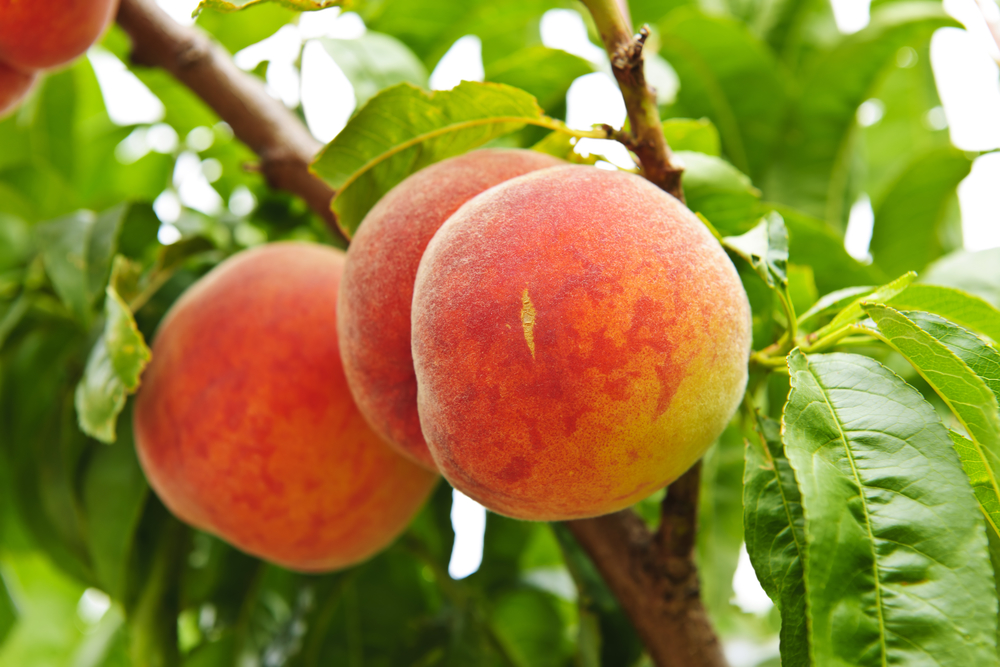
    File photo shows ripe peaches ready to pick on tree branches.

    Bruce McLean reports, “Vegetable crops are maturing nicely, even though some are exhibiting heat stress from the recent hot weather. Cucurbit Downy Mildew (on cucumbers) has been reported throughout the Pee Dee Region. Powdery Mildew is widespread on zucchini and yellow squash. Sweet corn is looking good, with good volumes being produced. Tomatoes, other than being stressed from the heat and the humidity, look pretty good and are bearing well. Sweet potatoes are still being planted. Muscadines are beginning to size and look to be a very good crop. Blueberries are winding down, with only the latest varieties being harvested now.”

    Tony Melton reports, “Processing peppers and tomatoes are beginning to be harvested and they look good.  With all the early winds and excessive rain, it was difficult but as my daddy would say ‘we made a silk purse out of a sow’s ear.’ Second and third crop pickles are yielding much better than the weather-beaten first crop. Processing peas will begin harvest this next week, so we badly need some dry weather, but the forecast is not favorable.  Also, the amount of cowpea curculio is increasing rapidly, and an intense/timely spray program is needed to prevent what most call “stings (maggots) in the peas.” One grower got slack on his spray program and this week had to discard $6,000 worth of peas. Spray with a pyrethroid at or before the first flower, then every week until flowering is finished. The first spray is the most important because if you wait too late, the curculios are already in the field. Curculios are very hard to kill. When disturbed they ball up inside their protective coat, and your spray is repelled. My program repels them and attempts to keep them out of the field. Also, rotation is very important to keep down the population of curculios surrounding your fields.”

    File photo shows a muscadine vineyard. Muscadines are beginning to size in the Pee Dee Region.

    Upstate

    Kerrie Roach reports, “Upstate peaches are beginning to ripen! While exciting, we have seen some physiological issues with sizing and softening that we attribute back to a late-season cold spell. While the peaches originally appeared to pull through without damage, we are now seeing peaches that are not sizing and those that do size up, only ripen on the very outer portion. It is a waiting game to see how each variety ends the season. In the meantime, market vegetable production is in full swing and the apple crop is looking fabulous.”

  • UGA Entomologist: Whiteflies Not as Bad as 2017 But Still Bad

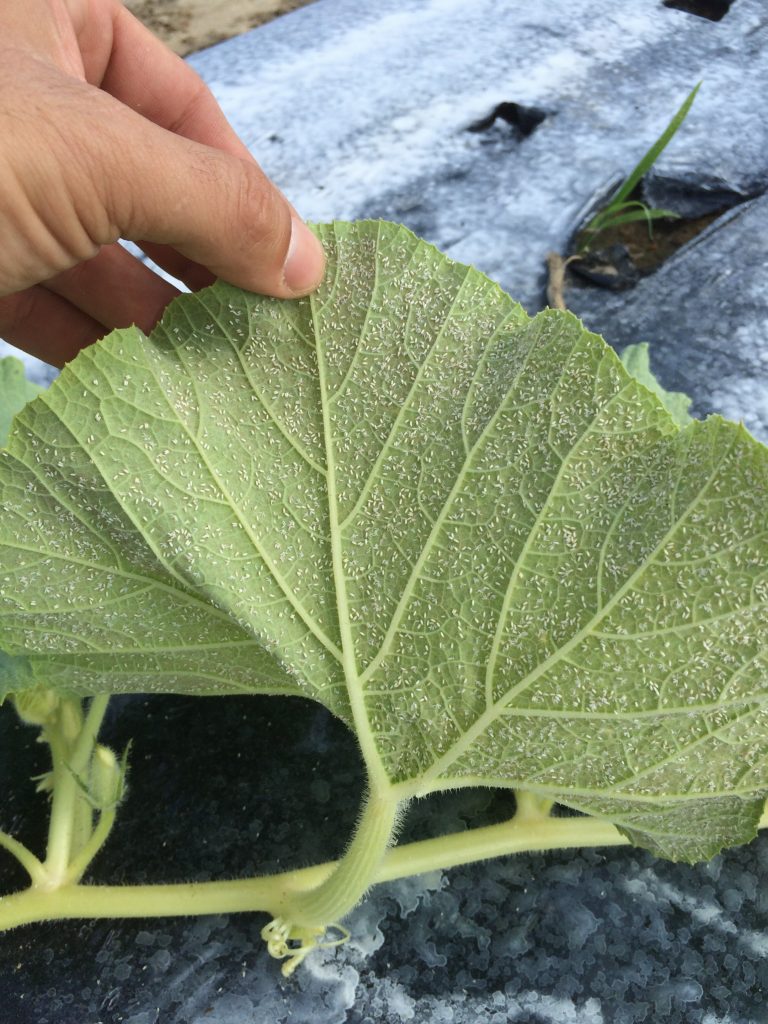
    File photo shows whiteflies infesting fall cucurbits.

    By Clint Thompson

    University of Georgia Cooperative Extension vegetable entomologist Stormy Sparks confirmed this week that whiteflies are back with a vengeance on susceptible vegetable crops and Georgia’s cotton, which is still just a few weeks old.

    “I’ve been holding off a long time on saying it looks bad. But about a week ago, it’s just hard to say it doesn’t look bad,” Sparks said. “There’s still some things that could happen, but I saw some populations in some cantaloupe that you don’t usually see for another month or two. They’re already treating some cotton, apparently.

    “We’re probably a month behind 2017, but we’re at least a month ahead of our normal year.”

    Sparks said in May that whiteflies were already present in Georgia vegetables.

    Why So Early?

    While colder temperatures do not eliminate whiteflies, they do kill many of their wild hosts. They also slow population development in cultivated hosts. Warmer temperatures this winter allowed for larger whitefly populations to overwinter and become mobile earlier.

    “We already had the populations, there’s no doubt about that, earlier than normal in some areas, particularly coming out of kale. There’s a lot of things that can happen as far as weather and everything else that can impact it. There’s still some things that could happen to keep it from getting as bad as it did in 2017,” Sparks said. “If they get to a certain level, those rain events don’t have the same impact than they would at lower populations. I think we’re probably far enough long now that they’ll rebound fairly rapidly. That’s what I’m afraid of.”

    Rain is expected all week in South Georgia, but Sparks believes a tropical storm-type system is what is needed to suppress whitefly populations.

    UGA cotton entomologist Phillip Roberts said farmers are already treating for whiteflies in cotton which is month to a month and a half earlier than normal.

    What Can Be Done?

    Sparks, Roberts and other specialists continue to preach sanitation with whitefly management. Farmers have done better in recent years in getting rid of their vegetables once they are done harvesting. That needs to continue this summer.

    “If the vegetable growers get rid of those crops that are infested, if you’re done with them; if you get done with watermelon fields and cantaloupe fields … get rid of them. Don’t let them keep reproducing. The cotton guys just need to be keeping an eye on infestations and don’t let them build up there,” Sparks said.

    Whiteflies migrate from winter vegetables to spring vegetables to agronomic crops, like cotton, to fall vegetables and back to winter vegetables. Whiteflies cause feeding injury issues in vegetables and transmit two new viruses: cucurbit leaf crumple virus and cucurbit yellow stunting disorder virus. Vegetables like squash, zucchini, cucumber, cantaloupe and snap beans are highly susceptible to these viruses.

  • San Jose Scale Problem for Peach Producers

    Photo from Brett Blaauw/University of Georgia/Shows San Jose scale crawlers.

    By Clint Thompson

    Brett Blaauw, University of Georgia assistant professor in the Department of Entomology, says the time is now to treat San Jose scale crawlers which are peaking in peach orchards.

    “Right around late June, early July and then again in August, we see these real high populations of their larvae, the crawlers. Crawlers are also susceptible to insecticides. They do not have that waxy coating yet. They’re the mobile stage of the scale. They’re leaving their mothers and searching for another part of the plant to settle down and start to feed. These crawlers have a few days of vulnerability so we can also try to time our insect sprays to target those scale crawlers,” Blaauw said.

    He said in his blog that he expected this week to see a peak in crawler activity. South Carolina producers should expect to see crawler activity in the next week or two.

    What is San Jose Scale?

    San Jose scale is a tiny insect that has a waxy coating. It covers and protects the whole body of the insect. It protects them from the environment. It protects them from other insects that would eat them. And unfortunately, it protects them from insecticides. Once these insects create their waxy covering, they are hard to kill, according to Blaauw.

    They also reproduce at an extremely high rate. It does not take long for a minimal problem to balloon to a major concern for peach producers.

    “Females can produce hundreds of offspring. Just from one female, she can produce almost 300 offspring. Of those 300 offspring, if they’re female, can go on to have 300 more offspring. The population can get quickly out of hand,” Blaauw said. “When you have thousands of these little insects feeding on the branch of a peach tree, it can quickly kill or reduce the vigor of that branch. If the problem goes untreated, you lose branches, and then you lose limbs and eventually you lose whole trees.”

    Another Management Option?

    Blaauw said another management option is to apply two dormant sprays of horticultural oil. It is best to spray once the trees are dormant and then before bloom next growing season. The high-volume sprays will suffocate the San Jose scale.

    “That usually works pretty well and significantly reduces the scale population. But even when the growers are doing that, we’re seeing the numbers skyrocket about now. I can go out there and monitor almost any time of the season and find San Jose scale in the trees,” Blaauw said.

    The San Jose scale can be traced back to the 1800s. With modern insecticides, the scale was not a problem in the 1900s. But it has come back with a vengeance in the 2000. It thrives in Georgia’s warm summers and winters and can be active all year long.

    Another issue is that complicates farmers’ management options is that the scale may not impact the whole orchard. It could be clustered in one area or part of the orchard. It can be hard to manage if a grower has many acres of peach trees.

  • Valent U.S.A. Offers Fast, Long-Lasting Insecticide

    Whiteflies on a squash plant.

    By Clint Thompson

    Valent U.S.A. is offering a new insecticide that offers fast and long-lasting control of soft-bodied insects of vegetable and citrus crops.

    This is the first year that producers will have access to Senstar Insecticide. It provides farmers with two effective modes of action for control of soft-bodied insects, including whiteflies, aphids, thrips and pysillids.

    “Southeast vegetable and citrus growers have a new tool this year to protect their crops from damaging insect pests,” said Craig Campbell, regional Valent Field Market Development Specialist. “Senstar has two modes of action, and both have translaminar and systemic activity in the plant. That allows Senstar Insecticide to control all stages of the insect life cycle, providing powerful, long-lasting pest control.

    “By controlling all the life cycle stages, including insect eggs, Senstar offers a unique benefit. It breaks down the insect population cycle, resulting in less potential for reinfestation. The growers see a lower pest count and better marketable yields.”

    Senstar is very effective at reaching pests on the underside of the leaves, which are hard to reach with a spray. Its translaminar action means it can move up and down the leaves and manage those pests that feed on the underside.

    Campbell said two sprays of Senstar are allowed through the season.

    Pest Management is Key

    Pest management in vegetables and citrus is extremely important for producers. Not only do they feed on the plants and the crops themselves, pests can transmit diseases that can be detrimental to the plant. Thrips can transmit tomato spotted wilt virus in tomatoes. Psyllids vector Huanglongbing (HLB) disease, also known as citrus greening disease.

    “Growers know this very well. Virus diseases can take down a vegetable crop. That’s a serious problem every year,” Campbell said.

    About Valent U.S.A.

    Valent U.S.A. LLC, headquartered in Walnut Creek, Calif., develops and markets products in the United States and Canada that advance sustainable agriculture, protect crops, enhance crop yields, improve food quality, beautify the environment and safeguard public health. Valent products include a well-known line of quality herbicide, insecticide, fungicide and plant growth regulator products for agricultural, seed protection and professional use. Valent is a leader in marketing and sales of both traditional chemical products and biorational products developed by its affiliate, Valent BioSciences LLC.  For more information about Valent or our full product line, please call 800-6-VALENT (682-5368) or visit valent.com.

  • Root Borers a Danger to Grapes in the Southeast

    University of Georgia Extension/Pictured is a grape root borer.

    By Clint Thompson

    The time is now for grape producers to protect their crop against the grape root borer, said Brett Blaauw, assistant professor in the Department of Entomology at the University of Georgia. He said usually in north Georgia, the grape root borers will emerge in early July.

    According to the UGA Extension Viticulture Blog, if farmers have not deployed their pheromone dispensers as part of the mating disruption tactic, it is time to get those distributed.

    University of Georgia Extension/Pictured is a grape root borer monitoring trap.

    “Our mating disruption is probably our best option. That’s using a pheromone that basically confuses the male moths. It blocks them from finding the female moths so they can’t mate. No mating, no mates, no eggs, no larvae and then, hopefully, no disruption of the roots,” Blaauw said. “But because of its two-year life cycle, it takes a least two years for the mating disruption to start to show that it’s working in a vineyard. That can be tough because when you use something management you want to see it working right away. But the main disruption takes a couple of years to see any benefit.”

    What Impact Does Grape Root Borers Have?

    As the name implies, the grape root borer larvae feed on the roots. Blaauw said they have a two-year life cycle and will feed underground on the roots for almost 22 months. Unfortunately, it is out of sight, out of mind for many grape producers. Being underground, the borers go unnoticed until the vine begins to deteriorate.

    “Previous research has shown that by having these larvae feeding on the roots it can reduce the vine’s yields by 50%. That’s just having one larvae,” Blaauw said. “The mature larvae are almost an inch long so they’re pretty good size larvae, a little bit like root boring caterpillars feeding for two years. Just having one can reduce yield by 50%. If you have more than one feeding on a vine, that could easily significantly reduce the survivability of the vine; it can reduce the fruit quality and eventually lead to vine death.

    “Growing fruit in the Southeast is tough enough with diseases and other insects. Growing grapes is really tough. Grape vines, at least the vonifera type grapes are often subject to different diseases. One is Pierce’s Disease. Pierce’s Disease can take down vines pretty quickly, too. A lot of growers, when they have a vine that dies, they kind of assume it’s due to a disease. They’re not usually thinking about grape root borer just because it’s underground. You don’t really see what’s going on until you pull that vine out and see the roots all chewed up. Then it’s obviously too late.”

    Effective Management Tool

    Another effective way to manage grape root borers is to suppress the weeds under the vines. This can significantly reduce the success rate of the eggs hatching and the larvae making it to the roots. If weeds are present, they serve as protective barriers for the little caterpillars. They protect them from the sun and protect them from other insects that are going to be feeding on them.

    “If you get rid of those weeds, you create a pretty harsh environment. Bare soil is not a good place for an insect, especially if you’re a tiny little caterpillar,” Blaauw said.

  • Watch Out for Green June Beetle in Fruit Crops

    Alabama Extension photo/Green June beetles feeding on maturing Seyval Blanc grape berries.

    Elina Coneva, Extension Specialist & Professor at Auburn University, said now is the time for fruit crop producers to scout for adult Green June beetle emergence. According to the Extension News Release, the beetles are considered a serious pest and can injure fruits of numerous crops including grapes, apple, pear, quince, plum, apricot, peach, nectarine, blackberry and raspberry.

    Adult beetles are attracted to the ripening grape clusters and fruits as the sugar content increases and fruit soften. Green June beetle populations vary from year to year. The damage caused to fruit crops ranges from negligible in some years to considerable in other years.

    Adult Green June beetles are identified as ¾ to 1 inch long and ½ inch wide. Their color varies from dull brown with irregular stripes of green to a uniform velvet green. The margins of the body can range from light brown to orange yellow. The underside of the beetle is a metallic greenish or yellow.

    The larva is a typical white grub, about 2 inches long when mature. The larva are easily distinguished by their habit of crawling on their backs. The larvae overwinter in the soil. Sandy soils high in humus or organic matter are preferred habitats. In the spring, Green June beetles tunnel near the surface. The beetles pupate in June. The adults emerge in July and August.

    Refer to the Southern Region Small Fruit Consortium IPM Guide for control options.

  • Cowpea Curculio Consistent Problem of Southern Peas

    Pictured is a cowpea curculio.

    According to Alabama Extension, southern peas are commonly grown crop in the Southeast. Peas have many different pests such as aphids, thrips, leaf-footed bugs, stink bugs, and various caterpillar species. However, the one pest that causes growers the most trouble is the cowpea curculio. There are control remedies for most of these other pests, but the cowpea curculio has become resistant to many pyrethroids.

    In this video, Neil Kelly, an Alabama Extension commercial horticulture regional agent, discusses the background and anatomy of this pest, as well as ways to stay on top of controlling them.

    For more information about cowpea curculio, see click here.