Insect pressure is high right now throughout Alabama. Ayanava Majumdar, an Auburn Extension Professor in Entomology and Plant Pathology, wants producers to be aware of the difference between squash vine borer larvae and pickleworm larvae. Complaints have increased significantly for both insects.
Squash vine borer larvae are found inside hollow stems at the soil surface. Eventually, they pupate in the ground. Squash vine borer larvae are creamish in color and plump. They spend their entire time in the stem tunnels filling them up with a profuse amount of excreta. Vines that are infested with the squash vine borers will suddenly droop in dry weather conditions, which leads to yield loss.
Pickleworm larvae are found in flowers, fruits and upper stems. Larvae have spots when they are small, and the large ones eventually pupate in leaf fold.
Other IPM observations:
Insects on the rapid rise: Fall Armyworm, Corn earworm, and Soybean Looper, Squash Vine Borer (cucurbit vegetables). Moth numbers have increase 1.5 to 2 times for these species.
This is one of the lightest years for tobacco budworm on row crops in recent years, whereas we have experienced very high levels of corn earworm moth activity and larval numbers in vegetable crops in Alabama.
Bell pepper roots (left) show severe galling caused by the southern root-knot nematode compared with healthy roots (right) treated with Pic-Clor 60.
By Abolfazl Hajihassani and Chinaza Nnamdi
The majority of vegetable production in Georgia is located in multiple counties in the southern region of the state. Vegetables are grown year-round on both raised beds covered with polyethylene plastic mulch and on bare ground.
Using a comprehensive survey conducted in 2018, we have documented that root-knot nematodes, Meloidogyne spp., are the No. 1 nematode pest in vegetable crops in Georgia, infecting 67 percent of the fields surveyed. Therefore, proper management practices need to be developed or optimized for successful control.
CONTROL OPTIONS
Chemical control is currently the best option for managing nematodes in vegetable-producing systems. Optimizing chemical control methods is a must for vegetable growers in the Southeast. Growers often fumigate the soil prior to planting the first crop in the spring or in the fall, but the issue with root-knot nematodes is particularly important in the second, third or fourth crop grown on the same plastic mulch. Reusing mulch favors nematode buildup in coarse-textured soils.
In Georgia, 1,3-dichloropropene (Telone II), chloropicrin, mixtures of 1,3-dichloropropene and chloropicrin (e.g. Pic-Clor 60), metam sodium (Vapam) and dimethyl disulfide (Paladin) have been the common fumigants for the control of soilborne pathogens, weeds and nematodes in vegetable-production systems.
In a field study conducted at the University of Georgia Tifton campus in 2019, we evaluated the effects of different soil fumigants on the southern root-knot nematode and yield of bell pepper. Treatments included Telone II (125 pounds per acre), Dominus (250 pounds per acre), Pic-Clor 60 (175 pounds per acre), Paladin (167 pounds per acre) and an M. incognita-resistant pepper cultivar (Carolina Wonder).
RESEARCH RESULTS
Results showed that all soil fumigants and the resistant cultivar reduced root galling compared to the untreated check at harvest. Pic-Clor 60 had numerically better control of root galling compared to the other fumigants. At the end of the season, second-stage juveniles of the nematode in the soil were only lower than the untreated check in the resistant pepper treatment. Among the fumigant treatments, Paladin had numerically lower nematode numbers in comparison with the other fumigants. We also found that Pic-Clor 60 and the resistant cultivar had the highest and lowest pepper fruit yield, respectively.
Based on our data, treatments with Dominus and the resistant variety had the highest weed density. Plots treated with Pic-Clor 60 had the lowest weed density. There was no difference in weed density among Paladin, Telone II and the untreated check. The weed population in the Dominus treatment was higher than the check plot. Soil fumigation with Pic-Clor 60 reduced southern blight disease, caused by the fungus Athelia rolfsii, as compared to other treatments.
Paladin, though effective in suppressing nematode juveniles in the soil, was withdrawn from the market in 2019, further restricting the already limited number of tools for managing nematodes. Pic-Clor 60 is likely an ideal fumigantfor control of root-knot nematodes and other soilborne pathogens in multi-cropping systems of vegetables. However, root-knot nematode population densities in plots treated with Pic-Clor 60 were increased by the end of the growing season. This may suggest that combined use of fumigants and post-plant nematicides through drip irrigation could provide enough root protection against high densities of root-knot nematodes in the first and subsequent crops grown on the same plastic mulch.
In collaboration with county Extension agents, two on-farm trials are currently being conducted in Brooks and Lowndes counties in Georgia. The objective is to examine whether the combined application of both fumigant and non-fumigant nematicides in the first crop can result in a more effective control of root-knot nematodes and higher crop yield, compared to the use of only fumigants in the first crop and only non-fumigant nematicides in the second crop grown on the same plastic mulch.
According to the Alabama Extension Commercial Horticulture Facebook page, insect pressure has increased significantly over the past two months. This was reported in 20 locations across Alabama, where moth counts from pheromone traps were collected.
For example, the beet armyworm moth numbers were 823 as of Aug. 15, a 1.2X increase from the 682 reported on July 31. Host plants include corn, cowpea, eggplant, pepper, tomato, cotton, peanut and soybean. The fall armyworm saw a 1.6X increase from 88 to 149 over that same timeframe. It prefers to feed on grasses then move to crops.
The southern armyworm also saw a 1.6X increase from 197 to 307. Moths are active throughout the year in Florida. Larvae have reddish brown head with white line on the body.
The moth most widespread right now is the lesser cornstalk borer. It increased from 4,000 on July 31 to 5,060 on Aug. 15. The squash vine borer, corn earworm, soybean looper and yellow striped armyworm experienced the largest increase of 2X each.
The squash vine borer increased from 152 to 311. It is worse on organic farms. The corn earworm feeds on corn, tomato and cotton.
The cabbage looper increased from 192 on July 31 to 286 on Aug. 15. Its host plants include sweet potatoes, beans, peas, squash, tomato and watermelons.
Heat and dry weather conditions make this a peak time for insect pressure. Ayanava Majumdar, an Auburn Extension Professor in Entomology and Plant Pathology, cautions fall vegetable growers about insect pests and to scout regularly.
Pictured is a fall armyworm.
“Insects love the heat because they grow through their life cycle faster because of the extra heat. They grow faster. They mate and reproduce faster plus the plants are stressed. It’s like a perfect storm and it leads to massive crop losses for farmers,” Majumdar said.
Armyworms
There are various insect pests the growers need to be mindful of this time of year. Majumdar is concerned with caterpillars, in particular, the armyworm sisters: beet armyworm, fall armyworm, yellow striped armyworm and southern armyworm.
“These four, often times there’s mixed populations in the field. They can be very difficult to identify when they’re small. As they grow bigger it’s easier to identify. Those armyworms have very distinct patterns and head structures,” Majumdar said. “Those armyworms, along with horned worms, loopers; everything is just exploding right now. This is the peak of insect activity now.; August and then into September, to some extent. We are constantly telling farmers to watch; caterpillars on tomatoes and then you will see sucking insect pests, which cause quality loss like stink bugs, leaf footed bugs.
“Often, it’s hard to tell the yield loss from just the weight of the produce, but they will destroy the appearance or the taste of the produce. There’s a huge quality loss with the sucking insect pests. Those are increasing as well.”
Squash Bugs
He also warns of squash bugs on squash. They feed on the crop and can transmit yellow vine disease. This can shut down plants during harvest and is exacerbated by the current drought-like conditions.
While scouting is important, knowing when to apply insecticides can be just as key to pest management. Majumdar implores farmers to always consider the current weather conditions.
“We can not do calendar-based spraying anymore, at least not in Alabama. We go from drought to extreme wet weather in a week. That has a huge effect on insects,” Majumdar said. “Have some flexibility in the IPM plan. That’s very important to check the weather patterns. I’ve described flash drought versus prolonged drought. There’s different kinds of drought we’re experiencing now. That affects our pest management.”
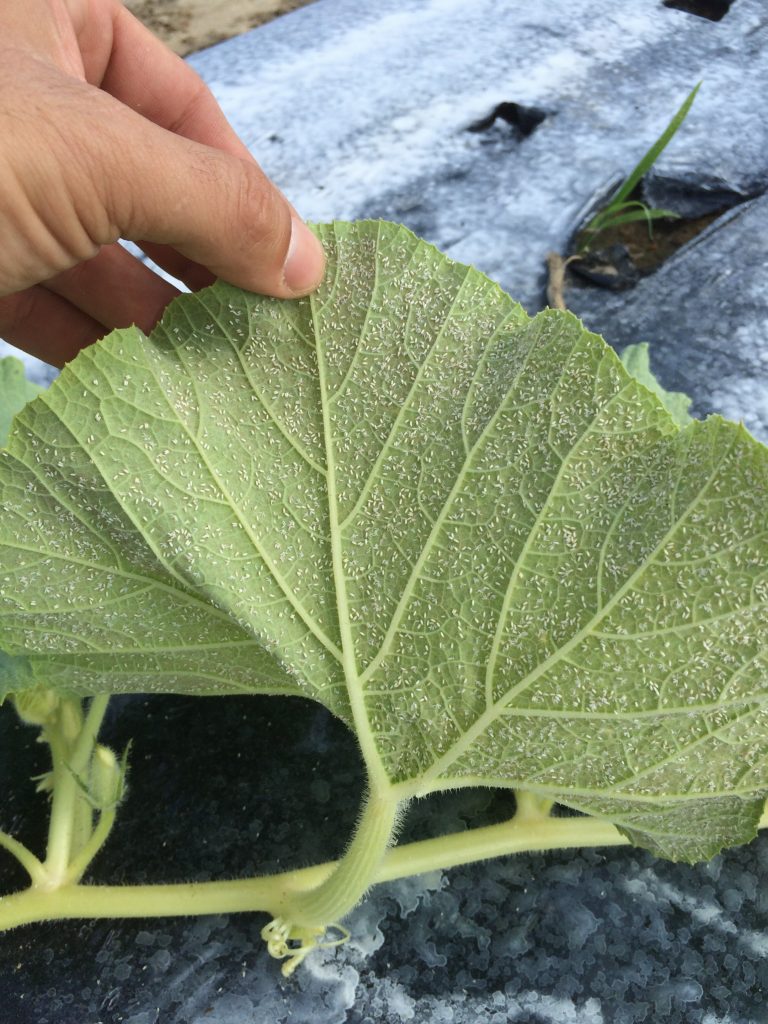
File photo shows how whiteflies infest fall cucurbits.
Unless more rain in the upcoming weeks can knock back populations, whiteflies are a huge concern for fall vegetable growers, according to Stormy Sparks, University of Georgia (UGA) Extension vegetable entomologist.
“Right now, it’s looking pretty bad. It could be devastating. The populations are really high, and we’re just now getting started,” Sparks said. “I’ve got squash where the adult counts are 200-plus per leaf. We’re just starting to see some virus. It’s pretty low, but that can increase rapidly.”
According to the most recent release of the US Drought Monitor, about half of Georgia’s counties are classified as ‘abnormally dry,’ including Tift County where Sparks is based at the UGA Tifton campus.
“They love hot, dry weather. I saw some cotton the other day. I haven’t seen cotton that looked that bad since I was in Rio Grande Valley of Texas,” Sparks said. “Those bad spots are very spotty right now, but if we stay hot and dry, it can get ugly in a hurry. It’s already ugly in some spots.”
Rainfall is needed to, not only help the crops grow, but knock back some of the whitefly populations.
Whiteflies Everywhere
Alabama Extension cotton entomologist Ron Smith said they’re finding whiteflies as far north as Quitman County (Georgia), which is just across from Eufala, Alabama. There’s also some in the Panhandle of Florida and in some fields in the corner of Alabama down in the extreme tip between Georgia and Florida. For more information about whiteflies’ impact in cotton, click here.
Crop Devastation
Whiteflies are especially dangerous since they can also transmit cucurbit leaf crumple virus and cucurbit yellow stunting disorder virus. According to UGA crop loss estimates for fall 2017, these viruses caused between 30% and 50% of crop loss in squash and cucumbers and nearly 80% of crop loss in snap beans. While this year’s whitefly infestation does not rival 2017 yet, the numbers are still bad and a concern for growers in the middle of planting this fall’s crop.
“We can battle the whitefly, it gets real ugly and real expensive but we can battle the whitefly in most crops. It’s those crops where we have virus problems where we don’t have resistance to that are the greatest concern,” Sparks said. “The yellow squash is extremely sensitive. Zucchini is tolerant but not really resistant. Cucumbers, you can produce a crop despite the virus. Tomatoes, we’ve got tomato yellow leaf curl, if you’re not growing a leaf curl resistant variety, you have the potential to losing the crop. But most people now are growing leaf curl resistant varieties in the fall.”
Lack of Cold Winter Temperatures
While colder temperatures do not eliminate whiteflies, they do kill many of their wild hosts. They also slow population development in cultivated hosts. Warmer temperatures this winter allowed for larger whitefly populations to overwinter and become mobile earlier.
Figure 1. Stunted ‘starving’ strawberry plants (foreground) caused by sting nematodes in Florida.
By Johan Desaeger
Florida’s subtropical climate offers unique opportunities to grow crops outside of the typical growing season of other states. Such is the case for strawberries and many vegetables. There are high expectations that hemp could be another such crop, although nematodes may have something to say about that.
Plant-parasitic nematodes, such as root-knot and sting nematodes, can cause severe damage to many of Florida’s crops, especially in sandy soils, which comprise much of the state (Figure 1). Nematodes are microscopic roundworms that live in the soil and are one of the least-known and most difficult-to-manage pests that growers can face. Because of nematodes’ small size, belowground nature and lack of easily recognizable symptoms, nematode damage is often not recognized as such. Symptoms typically occur randomly in a field and are easily confused with other pests and diseases, nutritional deficiencies, plugged drip tapes or too much or too little water.
Figure 2. Swollen and galled roots caused by root-knot nematodes on tomato (left) and hemp (right).
The most important nematodes in Florida are root-knot nematodes. They can cause damage to a wide variety of crops and are extremely widespread throughout the state (Figure 2).
HEMP HAS SOME NEMATODE TOLERANCE
With the considerable interest that hemp is gaining in Florida, the Gulf Coast Research and Education Center (GCREC) nematology lab started to investigate how root-knot and other nematodes may affect this new crop. The hemp-nematode research is the focus of Jackie Coburn, a master’s student in the nematology lab.
Coburn screened several hemp cultivars in the greenhouse at the GCREC, including fiber, seed and CBD (cannabidiol) hemp types, originating from Europe, China and the United States. Initial data show that hemp is a good host for root-knot nematodes (Figure 2). However, the crop appears to be relatively tolerant, meaning the nematodes can feed and reproduce, but do not seem to negatively affect hemp growth.
Figure 3. Hemp plots at the Gulf Coast Research and Education Center have strings with LED lights and hops in the background.
Certain CBD varieties showed less nematode root damage than others, which will be useful for future breeding efforts. Currently, Coburn is screening hemp varieties for sting nematode, another important nematode in Florida, especially in strawberry fields (Figure 1).
In addition to the greenhouse studies, hemp research was also initiated in the field at the University of Florida Institute of Food and Agricultural Sciences (UF/IFAS) farm in Balm. Here, hemp cultivars are planted throughout the year. In addition to nematode sampling, plants are being monitored for other pests and diseases.
HEMP-HOPS INTERCROP
An interesting feature in the field trials here is that hemp is grown with and without adding supplemental light, a practice that has worked well for hops in Florida (Figure 3 and Figure 4). It quickly became clear that adding supplemental light during the vegetative state makes a huge difference when growing hemp. In field trials, hemp was intercropped with hops, and both crops received the same light and fertilizer regimen.
Figure 4. Hemp (left) and hops (right) at night at the Gulf Coast Research and Education Center.
Hops and hemp belong to the same plant family, and in addition to both being daylength-sensitive plants, they also share many of the same flavor and aroma compounds. The field trials at the GCREC showed that with supplemental light, a hops-hemp intercrop can be an attractive option, as both crops will similarly benefit, allowing for two hop harvests per year and two to three hemp harvests per year.
MORE RESEARCH RESULTS TO COME
With increasing interest in hemp as an alternative crop, we will continue to provide updates on the hemp research at the GCREC. Future focus will be on CBD varieties and how to integrate hemp in the high-value cropping systems (vegetables and strawberries) in our area.
Finally, in order to help researchers better understand the real importance of nematodes in commercial hemp fields, we invite any hemp grower in Florida to contact us if they notice abnormal plants in their field, or simply wish to have their fields analyzed for nematodes.
According to an Alabama Extension blog, new pesticides have been approved for use on hemp production in Alabama.
The Alabama Cooperative Extension Service worked with the Alabama Department of Agriculture and Industries (ADAI) to release an approved pesticide list for use on hemp in Alabama. Several more products have been recently approved for legal application to hemp. It is the sole responsibility of the grower to verify processor requirements for chemical applications on hemp.
Cosmetic damage of western flower thrips on tomatoes by (A) oviposition and (B) feeding (flecking).
By Xavier Martini and Joe Funderburk
Thrips are important pests of tomatoes for two reasons. First, they damage fruit directly by egg-laying or feeding (Figure 1). More importantly, some species also vector tospoviruses that include tomato spotted wilt virus, groundnut ringspot virus and tomato chlorotic spot virus.
These tospoviruses can considerably decrease the crop yield if thrips are not controlled. Thrips acquire tospoviruses during the nymphal stage only, but once acquired they can transmit them to plants throughout their lifetime.
IMPORTANCE OF IDENTIFICATION Two thrips species are of concern to tomatoes in the Southeast: western flower thrips (Frankliniella occidentalis) and tomato thrips (Frankliniella schultzei). Both are particularly good vectors of tospoviruses.
However, other thrips with less economic impact on tomato, such as Florida flower thrips (Frankliniella bispinosa) and flower thrips (Frankliniella tritici),are often found in tomato flowers, sometimes at a higher density than the more damaging thrips. In fact, F. bispinosa and F. tritici compete against the other thrips species that transmit tospoviruses and therefore prevent the spread of tospovirus-associated diseases.
If insecticides are applied when these undamaging species are dominant, the insecticides will eliminate them, and they will be replaced by the invasive species, such as western flower thrips. Therefore, it is of critical importance to identify thrips before applying an insecticide to tomato crops.
Thrips identification is based on specific characteristics only visible under a microscope. For most growers, the best method is to collect tomato flowers in ethanol and send them to a scout, an Extension agent or a state specialist for identification.
CHEMICAL TREATMENTS Different insecticide treatments are available against thrips. Neonicotinoids applied at transplant might be an option in areas where tospovirus-related diseases occur every year. Spinosyns offer some of the best control for thrips. They have the advantage of being compatible with biological control and sometimes with organic agriculture.
It is important to rotate insecticide modes of action during a season to avoid the development of insecticide resistance in thrips populations. The mode of action of each insecticide can be found on the Insecticide Resistance Action Committee website (https://irac-online.org/).
NON-INSECTICIDAL CONTROLS Because identification of thrips is highly recommended before applying an insecticide, it is better to manage thrips using non-insecticidal methods. The addition of companion flowers (such as bidens or coreopsis) on the border of tomato crops increases the density of natural enemies.
Orius species minute pirate bugs are very efficient thrips predators, and they use pollen in companion flowers as a nutritional supplement. Under field conditions, about one predator to 180 thrips is enough for suppression of thrips populations. When the ratio reaches about one predator to 40 thrips, thrips populations are controlled.
It is important that the companion plants flower prior to the tomato crops to ensure the buildup of the natural enemies’ population before they are needed to control the thrips population. Natural enemies are available commercially for thrips control in greenhouses and other protected-culture systems.
The use of UV-reflective mulch instead of the regular black or white mulch is also recommended. UV-reflective mulch disrupts thrips’ host location and reduces significantly the settling of thrips on tomatoes. UV-reflecting mulch is particularly efficient at the earlier stages of the tomato crop (Figure 2). However, as the crop grows, leaves will cover the UV-mulch, and the benefits of the UV-mulch will decrease. At this point, kaolin clay can be applied on tomato crops. Kaolin clay has a repellent effect on thrips and works better on expended leaves.
The combined use of minute pirate bugs, companion plants, UV-reflective mulch and kaolin (Figure 3) has been shown to be highly effective in controlling thrips in field trials conducted at the University of Florida Institute of Food and Agricultural Sciences (UF/IFAS) North Florida Research and Education Center. If the timing of these different elements is correct, the need for insecticide to control thrips will be sporadic.
Xavier Martini (xmartini@ufl.edu) is an assistant professor and Joe Funderburk is a professor, both at the UF/IFAS North Florida Research and Education Center in Quincy.
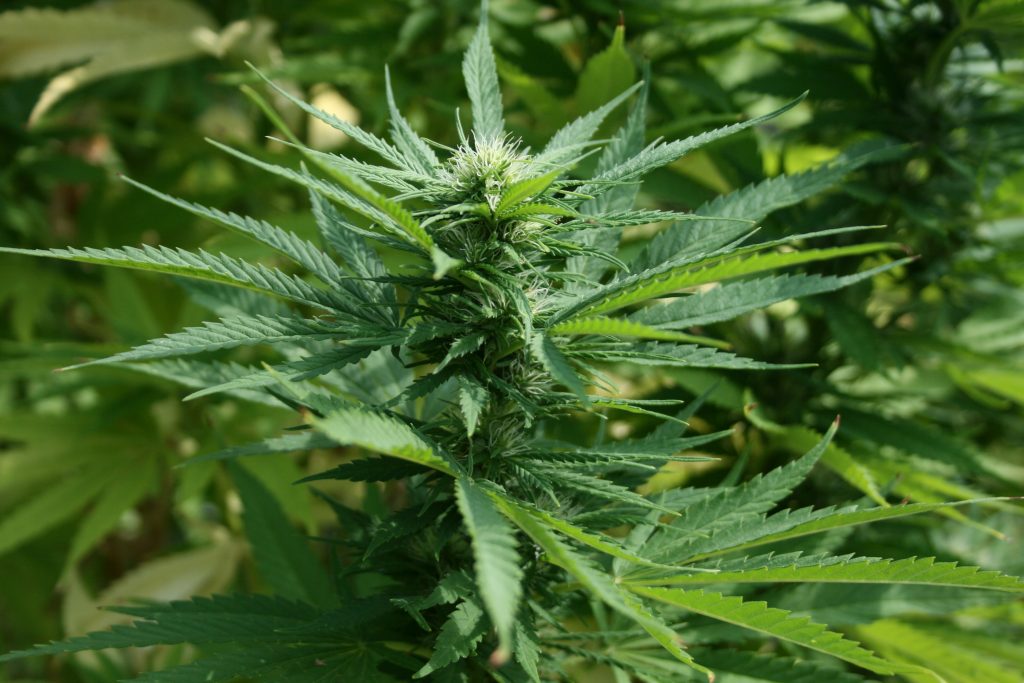
Alabama hemp is at a stage in the growing season when it is vulnerable to caterpillar damage, says Katelyn Kesheimer, Auburn University Assistant Professor and Extension Specialist. She said a lot of the hemp in the state is starting to flower, which is when it is most susceptible.
“We’re gearing up for corn earworm for caterpillars. A lot of the hemp int he state is starting to flower and that’s really when it’s vulnerable to caterpillar damage. We’re waiting on some boll worm flights and scouting the flowering of the hemp plants, especially pretty regularly to make sure there aren’t any small caterpillars so we can get rid of them before they get too big,” Kesheimer said.
The caterpillars feed on the buds and can cause significant yield loss just because they eat a lot as they grow. As they are chewing on it, they are also opening up that plant and some pathogens can get in and you could end up with bud rot.
“The other issue is because they’re caterpillars and just walking stomachs, they’re going to be eating and defecating on the plant. Then you have reduced quality if you’re growing raw flower and it’s covered in caterpillar poop,” Kesheimer said. “I’m telling growers to scout and check and make sure they don’t have any caterpillars especially as they go into flower.”
The other concern right now for Alabama hemp producers is the dry weather. According to the U.S. Drought Monitor, various parts of the state are classified as abnormally dry, specifically along the Alabama-Georgia border in Barbour, Dale and Henry Counties. Kesheimer is confident that Alabama could receive significant showers soon.
“It got real dry, real quick. It was a shock to the ground, the plants, everybody because it hadn’t been too hot all summer. Then (last) week it was pretty miserable,” Kesheimer said. “I think there is some (plants) stressed out there,” Kesheimer said. “They need water, depending on what stage they’re in. I think we’re headed for some storms. It’s cloudy where I am right now. That certainly should help.”
By Ayanava Majumdar, Rammohan Balusu and Neil Kelly
Many pests feed on squash from seedling to harvest. They are generally broken down into two groups: the chewing insects and the sucking insects. Chewing insects of squash consist of common pests like cucumber beetle, squash vine borer larva and pickleworm. Sucking insect pests consist of aphids, squash bugs and whiteflies. The pests a squash grower experiences may depend on location.
PREVENTION STRATEGIES
Remember that prevention of pests is the No. 1 goal of organic integrated pest management (IPM) systems. Rapid control after pest establishment becomes a difficult aim later in the production season. Cultural control tactics that include selecting virus-resistant varieties, timely planting and harvest (reduces pickleworm buildup), crop rotation and timely removal of crop debris after harvest (reduces squash vine borer buildup), consistent irrigation and trap cropping are some basic preventive approaches, also called Level 1 control.
Perimeter trap cropping with Baby Blue and New England Hubbard squash in a mixed system is effective in reducing cucumber beetle and squash bug damage to yellow squash (main crop).
PEST EXCLUSION FABRIC
For Level 2 control, growers should use temporary or permanent pest exclusion fabric to create a barrier between insect pests and the main crop. Two lightweight materials tested in Alabama include the Super-Lite Insect Barrier (Gardens Alive, Inc.) and AgroFabric Pro 19 (Seven Springs Farm, Inc.). Both these materials look like lighter versions of the common row cover used for frost protection, but these materials are much lighter with 85 to 95 percent light and rain penetration.
The trick is to put these light fabrics on low hoops (inverted loops) almost immediately after transplanting or after the seeds have germinated. These materials deflect much of the aphids and squash vine borers that fly early in the season. Squash plants can be grown inside the fabric for several weeks and removed or partially opened when flowering begins. Growers can also release beneficial insects like lacewings and lady beetles under the fabric for controlling accidental pest infestations.
Growers also have a wide range of organic insecticides to choose from (Level 3 control). See the Organic Materials Review Institute website (www.omri.org) to find hundreds of approved organic products.
Remember to scout squash crops for timely pest detection and identification, then use insecticides per the label with equipment that gives good coverage. For example, highly mobile squash bug adults are difficult to control with natural pyrethrin and spinosad, but the flightless small nymphs are far better targets for organic spray applications.
Several premix insecticides are available commercially today in a variety of packaging, making them affordable for farmers. Squash vine borer and pickleworm larvae are internal pests, which are difficult to manage with topical spray applications. Initiate timely sprays with targeted placement where insect pests are hidden.
Don’t quit spraying too soon since weather patterns can reduce insecticide persistence. Always spray in the evening hours when bees are not around and so that the solution can dry out overnight. Stop spray applications of organic materials when pests become inactive. You can save on the cost of insecticides and protect natural enemies this way.
Finally, it is recommended that growers get in touch with Extension personnel in their state to develop an IPM strategy suitable for their farm. Producers in Alabama can download the Farming Basics mobile app to keep in touch with Alabama Extension. Subscribe to the Alabama IPM Communicator e-newsletter (www.aces.edu/ipmcommunicator) to stay informed throughout the season.