Asian bean thrips (ABT) continue to be problematic for vegetable producers in South Florida. According to the University of Florida/IFAS, populations are increasing consistently across the region.
Reports from the Homestead region indicate Asian bean thrips are the predominate species, though have decreased from 100% ABT to 70% ABT and 30% F. palmi. Other thrips species are increasing north of Homestead. Most farms are reporting thrips infestations besides ABT.
ABT populations increased to 1.0 ABT per bloom in northeastern Hendry County, with an increase during vegetative stages. In the southeastern part of the county, base populations range from 0.2 to 0.8 ABT per bloom in plantings that are at full bloom. Populations of up to 1.3 ABT per bud were also reported. Later plantings have also reached 4.2 ABT per bloom in early pod development.
ABT was reported at 0.4 ABT per bloom in plantings in northern Collier County, reaching 2.2 ABT per bloom in plantings nearing harvest.
Aggressive insecticide programs have slowed populations to 0.3 ABT per bloom in eastern Palm Beach County.
Corn silk fly maggots injure sweet corn silks and kernels.
Photo by Julien Beuzelin, UF/IFAS
By Julien Beuzelin
Corn silk flies are the most damaging insects of sweet corn in southern Florida. Adults of three species(Euxesta stigmatias, Euxesta eluta and Chaetopsis massyla) are commonly observed in commercial fields where they lay eggs on sweet corn silks. Maggots feed on silks and kernels before leaving the ear and falling onto the soil surface, under which they pupate. Adults emerge from the soil ready to mate and lay eggs within days, thus completing the pest’s life cycle.
Corn silk fly maggot infestations and associated injury are responsible for crop losses every year, particularly in the spring. Losses occur because a small proportion of sweet corn loads might be rejected, but also because growers forgo harvest of portions of fields and sometimes entire fields when infestations are expected to lead to load rejections. These losses occur in spite of intensive pest management. In addition, corn silk flies have become increasingly challenging to manage over the past 20 years.
Research conducted at the University of Florida Institute of Food and Agricultural Sciences (UF/IFAS) has focused on determining why corn silk flies are challenging to control and on developing improved management tactics.
PYRETHROID RELIANCE AND SUSCEPTIBILITY
Pyrethroids have become the cornerstone of corn silk fly management because effective alternatives in other insecticide classes have been phased out. Chlorpyrifos, methomyl and spinetoram also play a role currently. However, chlorpyrifos, which might lose its registration in the near future, can only be applied at a reduced rate within 21 days of harvest when sweet corn is susceptible to flies. In addition, methomyl has limited residual activity, and spinetoram is extremely expensive. Thus, chlorpyrifos and methomyl are frequently co-applied with pyrethroids to increase efficacy, and spinetoram is seldom used.
Corn silk fly control is challenging because available insecticides are effective only if the insects are exposed to sprays or treated surfaces. Thus, only adults are the targets of management. Maggots and pupae are protected within ears and under the soil surface, respectively. Female adults escaping insecticide control or moving into sweet corn fields from adjacent habitats can lay eggs on susceptible ears, resulting in maggot infestations that cannot be further controlled.
Repeated use of a single insecticide mode of action may lead to the development of insecticide resistance in pest populations. Therefore, pyrethroid resistance is a concern and may contribute to difficulties in controlling corn silk flies.
Graduate student Eric Schwan Resende at the UF/IFAS Everglades Research and Education Center in Belle Glade has recently developedan adult vial assay for corn silk flies. This method involves coating the inner surface of small glass vials with a pyrethroid and introducing adults into the vials for 24 hours to record mortality as affected by different insecticide concentrations. It has been used to determine pyrethroid susceptibility for populations occurring in Florida sweet corn fields.
Seven corn silk fly populations collected in sweet corn fields of the Everglades Agricultural Area and Homestead region in 2020 were evaluated using beta-cyfluthrin as a representative pyrethroid. The LC50, which is the estimated concentration killing 50 percent of the population, was determined for each population.
In the laboratory, researchers are studying corn silk fly adults in vials to learn the effects of insecticide ingestion.
Photo by Victoria Dunkley, UF/IFAS
Two E. stigmatias populations from non-treated experimental fields had LC50s of 0.4 and 0.8 microgram (µg) per vial. Four E. stigmatias populations from commercial fields had LC50s between 1.5 and 3.5 µg per vial. One E. eluta population from a commercial field had an LC50 of 0.2 µg per vial. In addition, one E. eluta population maintained in the laboratory and serving as susceptible reference had an LC50 of 0.02 µg per vial.
These results provide further evidence that E. eluta is more susceptible to pyrethroids than E. stigmatias. Thus, management should be more aggressive if E. stigmatias is present. Results suggest that E. stigmatias populations in non-treated fields are more susceptible to pyrethroids than populations in commercial fields that were intensively treated with insecticides. However, there is little variability in E. stigmatias pyrethroid susceptibility among populations in commercial fields. Thus, difficulties in controlling E. stigmatias are likely the result of high population levels, environmental conditions and the selection of less susceptible individuals in field populations.
THE SEARCH FOR ALTERNATIVES
Laboratory protocols were developed in 2020 to determine corn silk fly mortality associated with contact and ingestion exposure to insecticides including non-registered active ingredients. Preliminary experiments using E. eluta adults showed that whereas pyrethroids are effective via topical exposure, alternatives including neonicotinoids, diamides, abamectin and indoxacarb do not cause observable lethal effects. Via ingestion of insecticides at 1 percent of high field rates, the non-registered neonicotinoids thiamethoxam, clothianidin and dinotefuran caused 60 to 90 percent mortality.
Although results need to be confirmed, these experiments show that potential alternatives to pyrethroids are not effective via topical exposure. However, some neonicotinoids are effective via ingestion. Thus, these insecticides cannot be direct replacements for pyrethroids, but they should be considered with baits forcing corn silk fly ingestion of insecticides.
CONCLUSIONS
High levels of pyrethroid resistance do not appear to be the main reason why corn silk flies are extremely challenging to control under current sweet corn production conditions. However, observations suggest reduced susceptibility in commercial field populations. Thus, adult vial assays are a newly developed method that will be used routinely to test field populations and monitor for pyrethroid resistance.
With large corn silk fly populations building up, additional insecticides and new modes of insecticide delivery are needed. The use of baits and neonicotinoids have potential to control silk flies and will be further evaluated. In addition to insecticides, UF/IFAS entomologists will continue studying corn silk fly ecology, in particular the role of habitats adjacent to sweet corn fields to reduce or even prevent adult movement from adjacent crop and non-crop habitats.
Acknowledgments: Corn silk fly research is partially supported by Florida Department of Agriculture and Consumer Services Specialty Crop Block Grants. Crop consultants and Dak Seal (UF/IFAS Tropical Research and Education Center, Homestead) assisted with insect collections.
Julien Beuzelin is an assistant professor at the UF/IFAS Everglades Research and Education Center in Belle Glade.
South Florida continues to be a hot spot for Asian bean thrips (ABT). According to UF/IFAS, the insect that feeds on wild cowpea is increasing across the region. Charlotte County is the latest county in which the ABT has been identified.
UF/IFAS photo.
Populations have also been observed in West Palm Beach.
Other species of thrips have increased as well. Multiple farms have thrips of other species. However, it’s ABT that seems to be the prevailing problem for many producers.
“One scout noted that after a swarm of thrips moved into blooming plants, the grower sprayed and only ABT was left. This highlights the potential difficulty of managing ABT after the budding stage,” according to this week’s UF/IFAS scouting report.
Prevention is an important foundation of an Integrated Pest Management program. These measures include cultural control, such as sanitation, utilizing resistant varieties and establishing crop free periods. One aspect of preventative measures that must be taken by growers to sufficiently reduce populations of an insect pest is eliminating its alternate hosts.
Root samples of the rootstock Solanum sisymbriifolium (left) and Roadster tomato (right) are from a field infested with southern root-knot nematode M. incognita. Galls produced by the nematode are visible on the tomato root, while the rootstock root is free from nematode damage.
By Abolfazl Hajihassani
Tomato is the most economically important vegetable crop in the United States and has a history of heavy dependence on pesticides.
PATHOGEN PAIR
Root-knot nematodes and southern blight disease are among the most damaging pathogens of tomato. Pre-plant soil fumigation is often, but not always, effective at minimizing yield losses due to soilborne nematode and fungal pathogens. The fumigant 1,3-dichloropropene is only effective against nematodes and is not effective against soilborne fungal diseases. In contrast, the nematicidal efficacy of the fumigant chloropicrin is not the primary reason for its application against nematodes, as it mainly has fungicidal activity.
Fumigants for control of these pathogens are diminishing due to environmental concerns and increasing regulations and restrictions on the use of these chemical treatments. Therefore, alternative control strategies have been extensively investigated over the past decade. Grafting tomato onto rootstocks with resistance to multiple root-knot nematode species combined with application of non-fumigant nematicides could offereffective management strategies that would provide growers with additional tools for managing root-knot nematodes. Moreover, using resistant rootstocks is one of the most effective methods to manage southern blight disease.
Using a three-year award funded in 2019 by the U.S. Department of Agriculture National Institute of Food and Agriculture Methyl Bromide Transitions program, the University of Georgia (UGA) is investigating the effectiveness of a rootstock (Solanum sisymbriifolium) in managing root-knot nematodes and southern blight disease of tomato. Replicated field trials under experimental and commercial production conditions in Georgia are underway.
Root-knot nematodes (Meloidogyne spp.) are tiny parasites that feed inside roots, induce galls (which contain nematode eggs) and disturb water and nutrient uptake from the soil into the plant, thus reducing crop yields. Root-knot nematodes cause approximately $15 million in damage annually to U.S. tomato production.
In Georgia, five species of root-knot nematode are among the most important problems in tomato production. Tomato varieties with resistance to the most common species of root-knot nematodes (M. incognita, M. arenaria and M. javanica) have been released in the past, but these cultivars often lack resistance to other nematode species like M. enterolobii and M. haplanaria and to southern blight disease. Heirloom cultivars are particularly sensitive.
Southern blight, caused by the fungus Athelia rolfsii, is a necrotrophic pathogen commonly found in many areas of the southeastern United States. Tomato plants infected with A. rolfsii wilt permanently in soil with a high level of pathogen inoculum, resulting in significant economic losses to growers.
Roadster tomato grafted onto the rootstock Solanum sisymbriifolium (left) and non-grafted tomato (right) in the field are infested with southern blight. More than 80 percent of the non-grafted plants were dead by the end of the growing season.
ROOTSTOCK TO THE RESCUE
Grafting onto rootstocks resistant to southern blight can reduce the disease incidence and increase yield. Currently, the Maxifort rootstock, which carries resistance to southern blight, is commercially available. It also contains the Mi-1 gene that confers moderate resistance to species of M. incognita, M. arenaria and M. javanica.
In UGA greenhouse studies, S. sisymbriifolium was challenged with M. incognita, M. arenaria, M. haplanaria and M. enterolobii. Results showed that it confers a high level of resistance to all four root-knot species. These results were also confirmed in microplot and field experiments using M. incognita species. The data suggest the importance of using S. sisymbriifolium as a resistant rootstock for effective management of these devastating nematodes in infested tomato fields.
However, since grafted tomatoes are more expensive than non-grafted ones, growers will probably want to use rootstocks with resistance to multiple pathogens to minimize the production costs associated with application of multiple pesticides. Using a field study conducted in the summer of 2020, S. sisymbriifolium rootstock was found to be resistant to A. rolfsii. Field plots grown with tomato grafted on therootstock had significantly fewer dead plants compared to plots transplanted with non-grafted tomatoes.
The next step in the research studies will be to evaluate the combined use of grafting and nematicides and/or fungicides to manage effectively both root-knot nematode and southern blight in tomato. Efforts will also include a cost-return analysis of the control practices developed in this project to compare with growers’ practices for disease management.
AUBURN UNIVERSITY, Ala. – Whether you’re an amateur gardener or seasoned agriculturalist, there is no denying that pests can sometimes sneak in and ruin a crop. These pests may appear in the form of insects, weeds or plant diseases — and all can be detrimental. Current and former Alabama Cooperative Extension System entomologists, weed scientists, plant pathologists and a pesticide education specialist have compiled an updated list of 2021 integrated pest management guides to keep these pests out of your crop.
Sikora
What Are IPM Guides?
IPM guides, or integrated pest management guides, are updated annually with information usually pertaining to herbicides, insecticides and fungicides that can be used to manage pests on plants.
“They may also include other pest management techniques such as cultural practices and disease resistant varieties that may be appropriate for certain insect pests and plant diseases,” said Alabama Extension plant pathologist and alumni professor Ed Sikora.
The 2021 IPM guides are available for access and download on the Alabama Extension website. The guides include recommendations for commercial horticultural crops; commercial turfgrass; homeowners’ lawns and ornamental and garden crops; houses, buildings and grounds; major row crops; noncropland, commercial trees and ornamental crops; pastures and forage crops and small and stored grains.
Why Are They Important?
The availability of pesticides, as well as application recommendations, are constantly changing, ensuring the need for these annual IPM guides and their up-to-date information. Each guide contains information about the selection, rates, application and proper use.
The 2021 IPM guides allow for the best management decisions to be made for crops or gardens. They are there to help avoid what Sikora warns are “unnecessary and sometimes expensive mistakes.”
“These guides are an excellent resource, and anybody that uses pesticides should have a copy in their truck or have the website easily accessible on their phone or computer,” Sikora said.
Anyone applying these pesticides should make sure to read the manufacturer’s label for directions on proper use and product restrictions. Reading labels ensures the safest application of the product in combination with recommendations included in the IPM guides.
More Information
For more information and access to the integrated pest management guides, visit the IPM page on the Alabama Extension website.
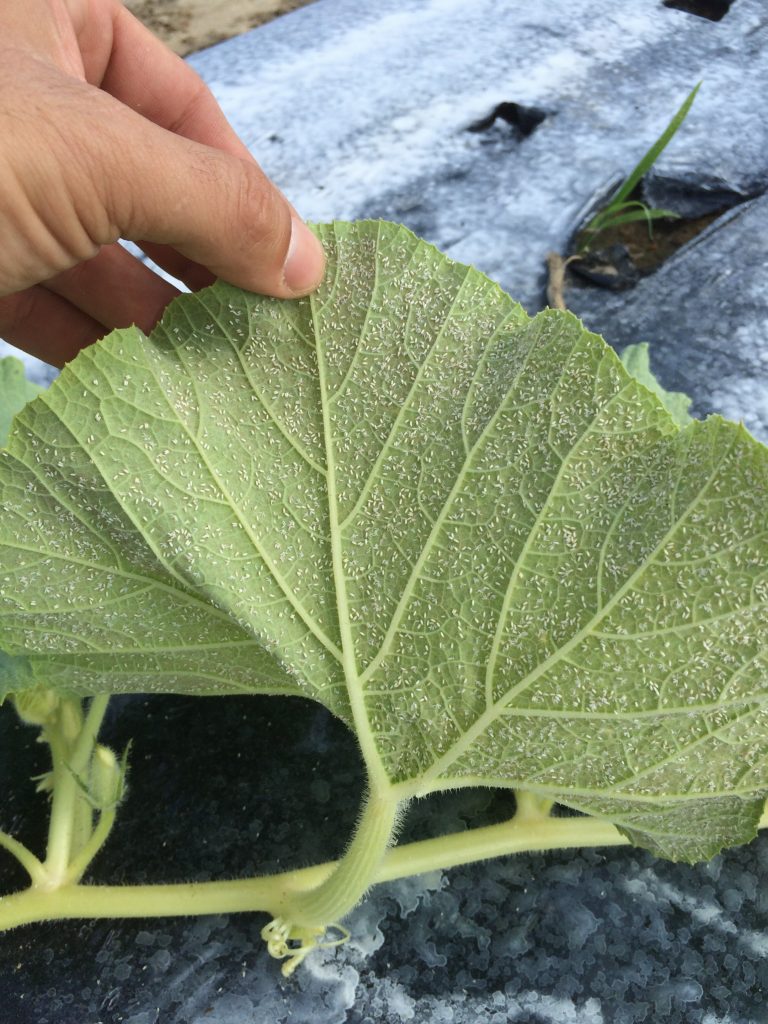
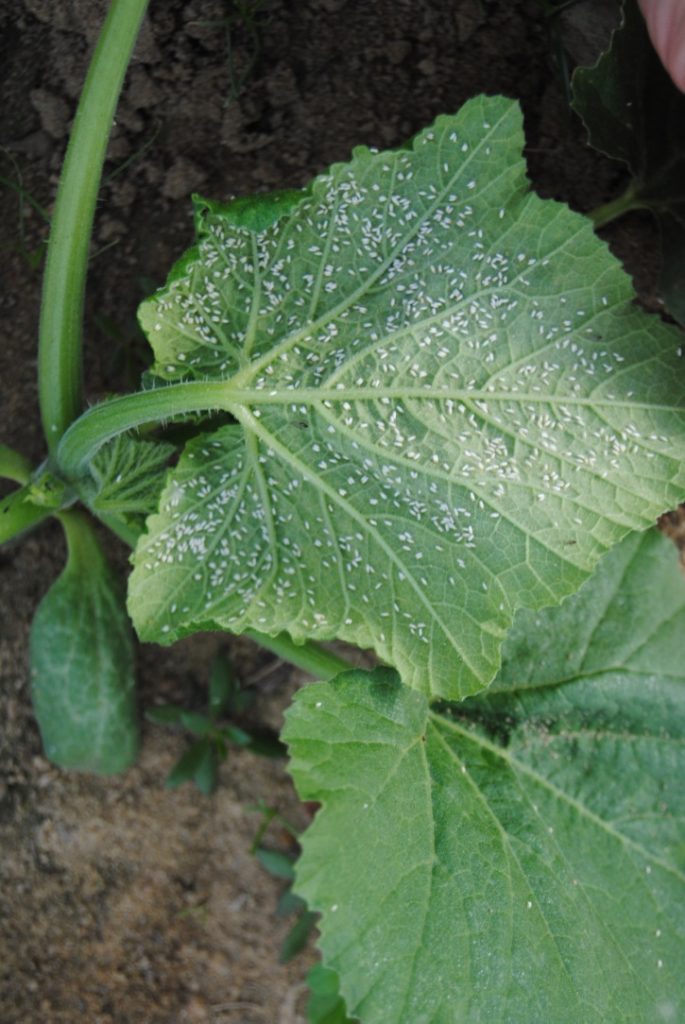
According to today’s release of the South Florida Pest and Disease Hotline, whitefly numbers are increasing in some older tomato fields across the southwest Florida region. As many as 5 to 10 whiteflies per leaflet have been detected.
Whiteflies are also present in high numbers in cucumbers, squash and eggplant. They are beginning to show up in some young tomato and watermelons as well.
Pressure remains light in the Manatee Ruskin area, though growers are just now planting.
Whitefly infestations are high in some older eggplant and reaching moderate levels in tomato along the East Coast. In Homestead, Florida, whiteflies are increasing in various crops. There are also reports that Tomato Yellow Leaf Curl Virus, a disease caused by whiteflies, is widespread in tomato.
Management of whiteflies later in the season depends on suppression of whitefly populations early in the season. Growers need to be aggressive with the best systemic materials such as Venom, Sivanto Prime and Verimark.
Whiteflies are difficult to control because of their prolific reproductive cycle. A female can lay between 150 and 200 eggs. It only takes those whiteflies two to four weeks to mature into the adult stage and begin reproducing.
According to the University of Georgia Extension Pecan blog, now is the time of year where producers need to be wary of ambrosia beetles. This is especially important for farmers with trees that are less than 5 years old.
Photo by UGA’s Andrew Sawyer shows ambrosia beetle damage to a pecan tree.
Winter rains mean some trees are prone to flooded conditions, where they are susceptible to ambrosia beetle attacks. Angel Acebes-Doria, University of Georgia Cooperative Extension pecan entomologist, said that if the soil remains wet for several days, growers need to scout trees in those areas for signs of attacks once beetle activity has been detected or when temperature consistently reaches 68 degrees Fahrenheit or higher.
Beetle activity is identified by the toothpick-sized sawdust tubes they leave sticking out of holes bored in pecan trees. Farmers are strongly encouraged to deploy traps, which help to indicate when beetles are active. Immediate action is required if growers detect beetles and suspect their trees are damaged.
If trees are being attacked, producers can apply pyrethroids at the trunk of the tree. The more often beetles attack a tree, the less likely that tree will survive an attack.
In her blog, Acebes-Doria said traps have been deployed in the Cook County, Georgia area, though beetle activity has not been observed yet. Activity normally starts in early February and peaks in late February to mid-March.
Click here to see what traps to use and when to put them out.
The best way to protect your trees from ambrosia beetle attacks is to maintain healthy trees.
Insect pressure is currently quiet in Alabama. But infestations could increase dramatically if producers don’t take the proper precautions, says Ayanava Majumdar, Extension Professor in Entomology and Plant Pathology at Auburn University.
“At this point, things are kind of calm and quiet, except perhaps for people who have greenhouse crops or are trying to start their seedlings or trying to get them. I just want to caution and bring those prevention points again to focus; how to prevent some things,” Majumdar said. “Always get transplants from good sources. If they’re being bought from out of state or a store, check for small insects like aphids. That’s the one that comes to mind that hitchhikes a lot on transplants that are bought outside.
Armyworms are also an insect to look out for.
“For the conventional farmers, they have to look at their systemic drench insecticides, make sure they have those. There might be some areas down south where they still have maybe armyworms. Watch out for caterpillars. They may show up if someone’s having a particularly warm winter,” Majumdar said.
Insecticides are available for growers managing whitefly populations. But they need to be applied early in the season when whiteflies are young and immature.
“Most of the things we use primarily target immatures. That’s where our best control is. We’ve only got a couple of products that are really good on adults,” said Stormy Sparks, University of Georgia Cooperative Extension vegetable entomologist. “Most of them, I can’t say for certain, but most of them probably are most efficacious on very little N-star immatures.”
Managing whiteflies when they’re young is a producer’s best management strategy considering how quickly they will reproduce.
Whiteflies can grow by a generation in just two weeks in the heat of the summer when temperatures routinely exceed 90 degrees Fahrenheit. The time for these insects to develop is related to temperature. When temperatures are cooler, development takes longer.
During hot and muggy conditions, which are common in Georgia and Alabama in July and August, development time for whiteflies decreases.
“Whiteflies are one of those things you don’t want to get behind on,” Sparks said.
Southeast producers grow cole crops, like broccoli, kale and cabbage, from September through May. Cucurbits grow in the summer, and cotton grows in the early fall. All of these crops serve as host plants for whiteflies.
Whiteflies can also transmit cucurbit leaf crumple virus and cucurbit yellow stunting disorder virus.
Stink bugs are a diverse species that can wreak havoc on Florida’s tomato crop. With a piercing-sucking mouthpart, stink bugs pierce the fruit and suck out fluids. They also secrete enzymes while doing so, which damages the cells right under the skin of the fruit. This leads to little spots forming all over the fruit.
Picture submitted by Craig Frey/Shows a brown stink bug.
It is more visible once the fruit ripens, but packinghouses can identify it on green fruit as well. Ultimately, the fruit is unmarketable for producers to sell.
But for farmers, it is important to identify what stink bug species are on their crop. Some are predators, others are minor pests, while a few can cause major economic loss. Life cycles in tomatoes can range from five to 10 weeks, which is another important reason for proper identification.
“If it’s a 5-week life cycle versus a 10-week life cycle, a producer will have to spray twice as a frequently. It’s therefore critically important to know what species it is so we can know what their life cycle is and make sure our management fits accordingly,” said Craig Frey, University of Florida/IFAS Hendry County Extension Director.
Two Most Problematic Species
The two species tomato producers must contend with the most are the brown stink bug, Euschistus servus, and southern green stink bug, Nezara viridula.
“It was interesting to see that what I found in my master’s research in 2016-2017 correlated with what Dr. Amanda Hodges has seen in her traps over the last couple of years of surveying. There appears to be higher numbers of those two species than anything else,” Frey said.
Proper identification is key, but it is also essential to start management early and avoid playing catch-up.
Frey said stink bugs are more of an issue for grape tomatoes. Producers harvest them more frequently, and due to the required intervals between pesticide application and harvest, it is harder to find time to make an appropriate chemical application and keep the pest in check.