Category: Pests

  • UGA Entomologist: Potential Is There for Whitefly Outbreak

    By Clint Thompson

    It is too early to say if this year’s whitefly impact on vegetables and cotton will rival 2017. But University of Georgia (UGA) Cooperative Extension vegetable entomologist Stormy Sparks insists the potential is there.

    Sparks estimates that the whitefly population is about the same as a month ago. There have been some reports of populations existing primarily in kale. But there’s also low populations in winter crops that are still out there; namely cabbage and collards.

    “The only reports I’ve had of anybody talking about any significant populations have been in kale,” Sparks said. “We haven’t heard of any populations in spring vegetables yet of any significance.”

    Growers should have a better idea of this year’s whitefly effect next month once all the cotton has been planted and starts to grow.
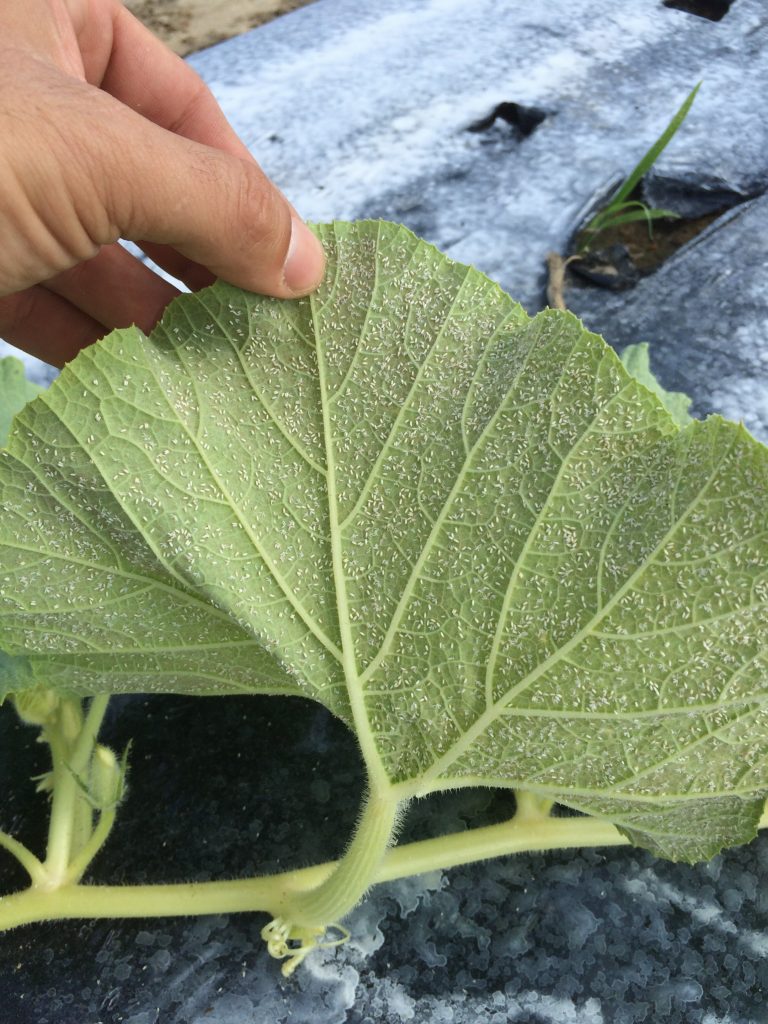
    File photo shows whiteflies on a cucurbit crop.

    “The potential is there. I was on the phone call (the other day) with everybody that does whitefly stuff. Everybody was talking about how it looks like 2017. The truth of the matter is the potential is there, but until you go through the weather conditions to see what happens with weather with management with those crops and management of those crops, you don’t really don’t know what happens,” Sparks said. “(UGA cotton entomologist) Phillip Roberts has for decades been telling me, if he sees whitefly populations in cotton in July, we’re in trouble. You’ll find whiteflies in cotton. But it’s really if you get into populations that are of concern in July, it’s going to be ugly.”

    In 2017, whitefly populations showed up as early as May and June.

    Whitefly Background

    While colder temperatures do not eliminate whiteflies, they do kill many of their wild hosts. They also slow population development in cultivated hosts. Warmer temperatures this winter allowed for larger whitefly populations to overwinter and become mobile earlier.

    Whiteflies cause feeding injury issues in vegetables and transmit two viruses: cucurbit leaf crumple virus and cucurbit yellow stunting disorder virus. Vegetables like squash, zucchini, cucumber, cantaloupe and snap beans are highly susceptible to these viruses. Commercial cultivars that have resistance or tolerance to these pathogens are not available.

    Sparks and other specialists continue to preach sanitation with whitefly management. He said farmers have done better in recent years in getting rid of winter vegetables once they are done harvesting. That needs to continue with the spring crops once they are done.

    “When you’re done with it, get rid of it. And that’s irrespective of what crop it is or the population level,” Sparks said.

  • Japanese Beetles Active in Georgia Vineyards

    Photo by University of Georgia/Shows Japanese beetle.

    According to the UGA Extension Viticulture Blog, Japanese beetles are starting to become more widespread in west Georgia vineyards. University of Georgia entomologist Brett Blaauw says the pests are only beginning to emerge but expects the populations to increase exponentially over the next few weeks.

    “In large enough numbers, Japanese beetles can be a severe pest of grapes during the summer, feeding mainly on foliage and (thankfully) rarely on the berries,” Blaauw said. “More problematic is Japanese beetles feeding on new plantings. Older, established vines can withstand some feeding damage, but young vines can quickly become defoliated from these beetles. Special attention should be given to newly-planted vineyards.”

    As temperatures continue to heat up as we progress throughout the summer, this is ideal weather conditions for beetles to be active. They love warm, sunny days and congregate in groups on vines to feed and mate near the top of the canopy.

    There are no thresholds for Japanese beetle leaf damage. However, management is required when feeding damage is below the top trellis wire or about 15% of the leaves are damaged.

    “Growers should rely on their judgment and experience to determine whether beetle abundance and/or injury warrants chemical control,” Blaauw said.

    For more information, see UGA Extension Viticulture Blog.

  • Pepper Weevils a Problem for Vegetable Growers Again

    Photo by UGA/The pepper weevil is one of the most serious pests of peppers.

    By Clint Thompson

    Pepper weevils are once again a problem for pepper growers in the Southeast. Weevils are a problem wherever present, whether it is in high populations or low populations.

    “Anytime you have pepper weevil it’s a problem and in very low populations because of the contamination. High populations can cause fruit abscission. It can hurt your yields considerably. But even low populations just because the potential contamination causes marketability problems,” University of Georgia Cooperative Extension vegetable entomologist Stormy Sparks said. “We’ve had some fields where we’ve had enough to collect populations which is pretty bad.”

    Prevention Is Key

    Sparks said there are a limited number of pesticides available that are relatively effective.

    “Pepper weevil is difficult to control just because it’s a weevil, its biology. The only stage you can control is the adults. Once it lays an egg, you don’t get a shot at that particular insect until it’s an adult again,” Sparks said. “The egg is inside the fruit. The larvae is inside the fruit. It pupae inside the fruit. It emerges inside the fruit. Then when it comes out looking for a mate, you’ve got to try to kill it before it mates and starts laying eggs,” Sparks said. “With pepper weevil, it’s basically preventative. You try to prevent establishment in a field. Once they become established in a field, it’s almost impossible to spray your way out of it.”

    According to a prior story on pepper weevils, they were out of control in Florida vegetable fields along the East Coast.

    “Pepper weevil, which five years ago was not a consistent problem, but it’s been a consistent problem the last three years. We’re overwintering them,” Sparks said. “Pepper growers are fighting pepper weevils on a consistent basis.”

  • Fire Ant Swarms a Danger to Hemp

    Pictured is a field of hemp.

    By Clint Thompson

    Hemp producers in the Southeast need to be mindful of fire ants. They will damage the stems of hemp plants if not treated, said Katelyn Kesheimer, Auburn University Assistant Professor and Extension Specialist.

    “My phone has been ringing off the hook with fire ant problems the last seven days, really. A couple of weeks ago, we had all of those storms that came through; a lot of rain and temperatures are increasing. We started seeing fire ant swarms about two weeks ago. All of those swarms led to newly mated females that became queens that started mounds and now are chewing on the stems of hemp,” Kesheimer said. “It’s very quick because these seedlings are no more than 20 centimeters tall in some instances. They’re just a couple of inches, not that big. The fire ants make a mound at the base of the plant and start stripping the bark and tunneling through the stem.

    “I don’t even know if I was onboard with hemp this time last year, but this just seems kind of early for fire ant problems in hemp. I was caught off guard with how many issues we were having.”

    Growers have already started planting this year’s crop. Fortunately, there are management practices growers can implement to control fire ant issues. But they need to do them.

    “I’ve been recommending people get out there and bait because that’s going to take at least a couple of weeks but also do individual mound treatments. We have some products approved for hemp by the Department of Ag. I think a lot of growers did not heed my warning to put out bait in the fall,” Kesheimer said.

  • Pest Alert: Mummy Berry Disease in Blueberries

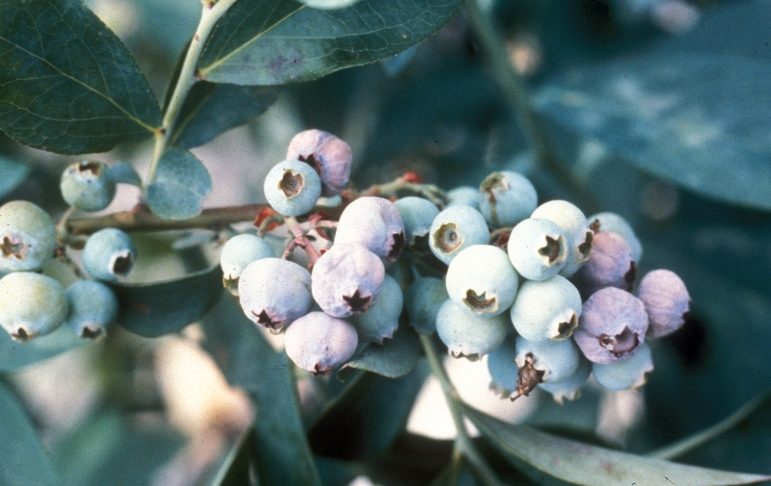
    Mummyberry
    Mummy berry disease is caused by the fungus Monilinia vacciniicorymbosi and is an important fungal disease of blueberries.

    Posted by Elina Coneva and Ed Sikora (Alabama Extension)

    Current wet and cooler than normal conditions are conducive for mummy berry disease in blueberry, according to Alabama Extension. Mummy berry disease is caused by the fungus Monilinia vacciniicorymbosi and is an important fungal disease of blueberries that can cause yield losses of up to 50% when conditions are favorable for disease development.

    The pathogen can infect shoots, flowers and fruit. The fungus overwinters in the previous year’s berries that have fallen to the ground. In early spring, a mushroom-like spore cup emerges from the infected berries near the soil surface. Fungal spores are released from these structures when bud swell begins and green tissue is present. Spores are spread via wind and rain. Early detection and control is necessary to reduce the impact of this disease on a crop.

    Symptoms and Disease Development

    Early season infection of flower buds and stems is promoted by wet conditions and cooler than normal temperatures. The earliest symptoms of mummy berry include drooping of developing leaves and shoots in the spring followed shortly by browning of the upper side of bent shoots, midribs and lateral veins of leaves. The bend in twig tips can resemble a shepherd’s crook. Vegetative shoots, leaves, and infected flowers are killed within four days after discoloration begins.

    After initial infection, the pathogen produces conidial spores that appear as tan-gray tufts on blighted shoots. Conidia are then dispersed by wind, rain and insect pollinators to healthy flowers. Once the fungus has been introduced to the flower, it will germinate with the pollen and infect the developing fruit. Evidence of blossom infection does not appear until the fruit begins to ripen. As normal berries ripen, the infected berries begin to shrivel and turn a pinkish color. Shriveled berries drop to the ground.

    Control Strategies

    An integrated pest management program including both cultural and chemical control strategies is needed for best results. For new orchards, select resistant varieties or late blooming cultivars, if available. Also avoid wet sites and/or improve drainage to reduce conditions that favor mummy berry development. Remove wild blueberries or unwanted plants from the vicinity of the orchard to reduce overwintering inoculum.

    If mummy berry is detected in an orchard, try to remove or destroy infected fruit at the end of the harvest season. This could include covering mummies with at least 2 inches of soil or mulch.  Limit or delay overhead irrigation until petal fall during the growing season.  Follow a fungicide spray program that is effective for controlling mummy berry from green tip until petal fall.

    For additional information consult the Southeast Regional Blueberry Integrated Management Guide. Apply all pesticides according to label rates and instructions.

    For more information, see Alabama Extension.

  • Diversification Key for Nutsedge Control in Vegetable Fields

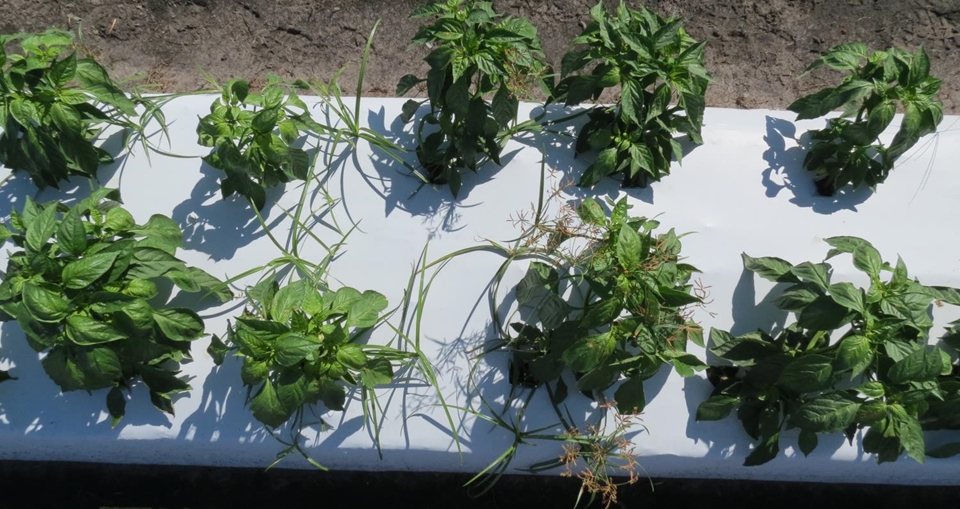
    An overhead view of a plasticulture vegetable bed shows nutsedge weeds emerging through the plastic.

    By Clint Thompson

    University of Georgia Cooperative Extension weed specialist Stanley Culpepper encourages vegetable growers to diversify their management programs against nutsedge. This protects against potential resistance and provides adequate control.

    “In general, I would say with our guys, I’m not overly concerned because our fields with our most nutsedge, they get fumigation, they get tillage and they get herbicides,” Culpepper said. “My guys are quite diverse. Will we have resistance one day? Sure, we will, but we are quite diversified in our management approach. We’re not selecting for resistance, say compared to an agronomic guy who goes out and sprays roundup or dicamba three times.”

    According to Alabama Cooperative Extension, purple nutsedge and yellow nutsedge are prevalent in most areas where vegetables are grown. Both are perennial weeds that propagate mainly by the production of tubers. While growers maintain control of nutsedge, it comes at a cost, says Culpepper.

    “That pest is still the most problematic. Doesn’t necessarily mean we’re not controlling it, but we’re spending a lot of money to control it that we wouldn’t have to spend if it wasn’t so problematic,” Culpepper said. “The one that’s causing us the most money without a doubt in the plasticulture system is nutsedge.”

    Why Is It So Problematic?

    Farmers who implement plasticulture still struggle with nutsedge because it can penetrate mulch.

    “Even if you haven’t poked a hole in the mulch, nutsedge can penetrate it itself. It can damage the mulch and be there before you plant. It can come at any time even if your plant is shading out the plant hole. It’s very unique that way,” Culpepper said. “Is it killing us? Is it hurting our guys? No, I think we’re doing a pretty daggum good job. It’s a repetitive challenge and costing us a lot of money to try to manage.”

    Diversification is key since there are very few herbicides that are effective regardless of the vegetable crop being grown. It is not like peanuts where farmers can apply Cadre or cotton where Roundup can be applied. Nutsedge control in vegetables is limited to a couple of products.

    “It’s there and probably in every single field but they’re doing a really good job controlling it. It’s not like some disease that jumped on us last week and is going to wipe us out. That’s not it at all,” Culpepper said. “But that’s the one I still say is most challenging for our vegetable growers in plasticulture systems.”

  • Whiteflies not yet a concern for Alabama producers

    Apurba Barman, a post-doc researcher on the UGA Tifton campus, examines a cotton plant with whiteflies in his lab. By University of Georgia 8-24-18

    By Clint Thompson

    Whiteflies have already been reported in Georgia vegetables this spring. They are not yet a concern for Alabama producers, however.

    Extension Entomologist Ron Smith said as cotton continues to be planted in Alabama, the focus right now is managing grasshoppers and thrips. Their focus will turn to whiteflies in early July.

    “I knew they overwintered at some level over there somewhere around Tifton (Georgia). It’s the winter vegetables that are causing them to be able to overwinter over there. We don’t have a lot of vegetables down in the southeastern corner of the state. They have damage and problems at least a month before we do,” Smith said.

    University of Georgia Cooperative Extension vegetable entomologist Stormy Sparks said in early May that whiteflies were already present in Georgia vegetables. This is not good since cotton farmers are currently planting their crop in Alabama and Georgia. Whiteflies like to feed on cotton plants as well.

    While colder temperatures do not eliminate whiteflies, they do kill many of their wild hosts. They also slow population development in cultivated hosts. Warmer temperatures this winter allowed for larger whitefly populations to overwinter and become mobile earlier.

    “We have the potential of having another outbreak like 2017 or 2018 this year because of the mild winter. A lot of things can happen between now and then that can make the problem worse or better. One of the things is planting date, getting our cotton planted on time. Another is how dry it is during the season. Things like that can impact it,” Smith said. “We will really start focusing on what’s happening in Georgia about the first of July.”

    Smith said whiteflies’ impact in Alabama is normally felt about a month later than Georgia.

    “It is one thing that we’re concerned about because of the mild winter and we will be focused on it a little bit later,” Smith said.

    Whiteflies cause feeding injury issues in vegetables and transmit two viruses: cucurbit leaf crumple virus and cucurbit yellow stunting disorder virus. Vegetables like squash, zucchini, cucumber, cantaloupe and snap beans are highly susceptible to these viruses. Commercial cultivars that have resistance or tolerance to these pathogens are not available.

    Will They Get Worse?

    The weather patterns over the next couple of months will determine if the whiteflies continue to worsen. How much rain will there be? How heavy are the rains and when will they occur? This is especially important as farmers move from winter crops to spring crops and then to cotton. Freezes in the winter and a tropical storm-type of weather system really impact populations.

    Sanitation is also key with whitefly management. Farmers need to get rid of spring vegetables once they’re done harvesting.

    “If you’ve got crops where you know you’ve got them, if you’re done with the crop, get rid of that crop,” Sparks said. “I think, overall, we’ve been doing a better job with sanitation. That’s something we always need to hammer on and remind them that sanitation is critical.”

  • Managing Diamondback Moth Larvae

    Diamondback moth larvae

    By Hugh Smith

    Diamondback moth (Plutella xylostella) larvae only feed on plants in the crucifer family, including cabbage, broccoli, kale, mustards, radish, turnips, watercress and Brussels sprouts.

    Diamondback moth adult

    Diamondback moth larvae are small green caterpillars with a pair of prolegs on their posterior end that form a V shape. This helps distinguish them from other caterpillars commonly found attacking crucifers, including imported cabbage worm and cabbage looper. It takes about four weeks from egg to emergence of adult from the pupa for this pest.

    In Florida, diamondback moth is primarily a problem in green cabbage and Napa cabbage. Young diamondback moth larvae feed on the surface of the leaf, producing “windowpane” type damage. There are many weeds in Florida in the crucifer family that serve as hosts for diamondback moth, including yellow rocket, shepherd’s purse, pepperweed and wild radish.

    There are at least three types of parasitic wasp in Florida that attack either the larval or pupal stage of diamondback moth. Early-season reliance on Bacillus thuringiensis (Bt) products does not interfere with the activity of these natural enemies and can offset the severity of infestations.

    Diamondback moth develops resistance to insecticides easily, particularly pyrethroids. Rotation of insecticide modes of action and avoidance of pyrethroids are important for managing diamondback moth. Resistance develops when successive generations of diamondback moth are treated with the same modes of action. A way to avoid or delay the development of resistance in diamondback moth is to group insecticides by mode of action in time intervals that correspond to the 30-day life cycle of the pest.

    EFFICACIOUS INSECTICIDES

    Table 1 lists some of the insecticides that demonstrated efficacy against diamondback moth collected from Florida cabbage fields in the spring of 2019. The mode of action number for each group is indicated in the central column. Insecticides with the same mode of action group can be applied more than once within a 30-day treatment interval, which starts when the first application of a given mode of action is made. Distinct modes of action should be used for each 30-day interval once insecticide applications are initiated.

    The diamide insecticides (mode of action group 28) are important for management of diamondback moth larvae. If cabbage is being planted when diamondback moth populations are known to be present, the grower should consider a transplant tray treatment of Verimark (cyantraniliprole) or an at-plant treatment of Verimark or Coragen (chlorantraniliprole). At-plant treatments in cabbage would typically be applied with a water cart.

    Verimark and Coragen can also be applied near the root zone via shank injection. However, this is not optimal because these two insecticides are not highly mobile in the soil. Application via drip tape is another option, but the use of drip tape in cabbage is not common.

    Diamondback moth damage on cabbage

    Diamide insecticides that can be applied to the foliage are Coragen, Exirel and Harvanta 50SL (cyclaniliprole). The active ingredient in Exirel is cyantraniliprole, the same as in Verimark, which can only be applied via transplant tray or in the soil. Consult the insecticide labels for specific rates and instructions and remember applications of diamides should be confined to a 30-day interval, after which distinct modes of action should be used.

    Bt remains a useful tool for controlling young diamondback moth larvae. It is advised that application of products with the aizawai strain of Bt (Agree WG or XenTari DF) be alternated with products formulated with the kurstaki strain of Bt (Biobit HP, Crymax WDG, DiPel DF or Javelin WG).

    Other insecticides that have proven effective against diamondback moth larvae in Florida include Radiant (spinetoram, mode of action group 5), Proclaim (emamectin benzoate, mode of action group 6, a restricted-use insecticide), Torac (tolfenpyrad, mode of action group 21A) and Avaunt (indoxacarb, mode of action group 22A).

    Florida diamondback moth populations tested in 2019 were not very susceptible to pyrethroids (mode of action group 3A) or Lannate (methomyl, mode of action group 1A).

    MORE INFORMATION

    For a fuller list of insecticides registered for management of caterpillars in brassicas, see the 2019–2020 Vegetable Production Handbook of Florida. For additional information on diamondback moth, including images and links to help distinguish it from imported cabbage worm and cabbage looper, visit http://entnemdept.ufl.edu/creatures/veg/leaf/diamondback_moth.htm.

  • Keeping Spotted-Wing Drosophila Under Control

    Figure 1. Male and female spotted-wing drosophila

    By Ashfaq Sial

    Since its first detection in 2008, spotted-wing drosophila (SWD) has emerged as a devastating pest of berry and cherry crops throughout the United States.

    IDENTIFICATION AND DEVELOPMENT

    Male SWD have dark spots on the outer margins of their wings. Female SWD have saw-like ovipositors used to cut the skin of ripe or ripening fruit and deposit eggs inside the fruit (Figure 1).

    Figure 2. Spotted-wing drosophila damage progression in blueberry

    Larvae feed inside the berries and develop through three stages within the fruit, causing it to degrade (Figure 2). Larger larvae are visible to the naked eye, and if they are detected in the fruit, distributors may reject contaminated loads of fruit. SWD injury also increases the risk of damage by other pests and fungal infections.

    In regions with mild winter climates (e.g., Georgia, Florida and California), SWD adults can be captured in traps year-round and can infest ripe fruit. Females lay over 300 eggs that develop to adult flies in eight to 10 days during the growing season, completing several generations per year (Figure 3). High populations build up over a short period of time. A wide host range, fast generation time, ability to lay eggs directly into the fruit, and larvae being sheltered from insecticide applications while feeding inside the fruit make this pest a challenge to manage.

    Figure 3. Spotted-wing drosophila life cycle
    CONTROL COMPONENTS

    A multi-regional team of researchers I lead has investigated behavioral, cultural, biological and chemical strategies to effectively control SWD. This team was funded by the U.S. Department of Agriculture National Institute of Food and Agriculture through the Organic Agriculture Research and Extension Initiative (Project # 2015-51300-24154 and 2018-51300-28434). Based on the team’s findings, SWD control programs should consist of three major components: 1) monitoring and identification, 2) preventative tactics such as exclusion, sanitation, frequent harvest intervals, pruning, mulching and resistant varieties and 3) curative tactics such as the judicious use of insecticides.

    While a number of insecticides provide good SWD control in conventional production systems, organic management of SWD is really challenging. However, the research team developed a list of National Organic Program-approved insecticides that can be used to control SWD. Although insecticides are typically needed to maintain fruit quality on commercial farms, organic growers should integrate cultural, physical, behavioral and biological tactics into their SWD management programs as much as possible to help ensure effective control and prevent insecticide resistance development.

    10 TIPS

    Based on research findings, implementation of the following strategies is recommended to effectively control SWD and protect fruit.

    1. Planting regionally appropriate early-ripening varieties and varieties with thicker-skinned fruit can help decrease the chances of SWD infestation.
    2. SWD adults are very sensitive to desiccation (drying out) and do not perform well at high temperatures and low humidity. Heavy pruning of blueberries will allow more light to penetrate through the canopy, which may lower humidity and increase temperature leading to less SWD infestation.
    3. SWD larvae often emerge from fruit to pupate in a suitable protected place, usually under the soil surface. Using black plastic weed mat as mulch on the ground provides an effective barrier that prevents larvae from pupating underneath the soil surface, reducing SWD survival in the field.
    4. Physically excluding SWD from the crop is very effective in preventing SWD infestation. Timely installation of insect netting to high tunnel infrastructure (side walls and ends of tunnels) provides a physical barrier to SWD.
    5. Over-ripe and damaged fruit act as a reservoir for SWD and other pests in the field. Do not leave waste piles of fruit in the open. They should be bagged, burned or frozen. If bagging the fruit, use a clear trash bag and leave it in the sun for at least 48 hours to kill the larvae.
    6. SWD has a broad host range and will infest other non-crop plants, especially those that produce small fruits. A list of plants that can serve as SWD hosts is available at https://bit.ly/2JeVDwd. If these alternate plant hosts are present on the edge of the field, removing them could decrease the onset and severity of the SWD infestation.
    7. Ripe berries serve as a strong attractant for SWD. Frequent harvesting of the ripe fruit will decrease risk of SWD infestation in the fruit.
    8. Once SWD is detected in traps, insecticide applications need to be made to protect fruit from SWD infestation. Conventional management programs rely on the frequent use of pyrethroid, spinosyn, organophosphate, carbamate or diamide insecticides. Of these chemical classes, only the spinosyn insecticide spinosad is approved for use in organic systems. This means that other non-chemical control measures must be implemented to control SWD in organic berries. Among the organic insecticides, Entrust (spinosad) is the most effective but must be rotated with other insecticides to decrease resistance development and meet current label requirements. Products that can be used in a rotation program with Entrust include Pyganic, Grandevo, Venerate and Azera. Agricultural sanitizers such as Jet-Ag and OxiDate 2.0 used in tank-mix or rotation with insecticides also show some promise for use in organic integrated pest management programs.
    9. Spray coverage and timing of applications are critical to achieving good control. Sprayers should be calibrated at least annually, and appropriate spray volumes used to achieve excellent coverage. Initial research suggests that SWD are more active in the field during cooler parts of the day, in the morning and at dusk. Targeting sprays during these times may increase efficacy. When bees are present in the crop, avoid insecticide applications. If control is needed, use insecticides less toxic to bees and do not spray when they are active.
    10. After harvest, cool fruit as soon as possible to maintain quality. Cooling the fruit to 35°F for three days has been shown to kill SWD larvae. If fruit is sold directly to consumers, advise them to keep it in the refrigerator. Freezing the fruit will kill eggs and larvae of SWD.
    SUMMARY POINTS

    In a nutshell, controlling SWD requires a rigorous, persistent and diverse management plan. Using as many control techniques as possible will help to reduce SWD infestation. Continue to evaluate your management program by monitoring SWD populations. Sample ripe and ripening fruit regularly to determine whether your management program is working and respond in a timely manner if needed. Always stay informed of your regional SWD pressure and new management techniques by contacting your local research and Extension personnel and utilizing the resources recommended by them.

  • New UF Researcher Brings Latest Research Techniques for Integrated Pest Management

    Tolulope Morawo working in a lab.

    By: Robin Koestoyo, Koestoyo@ufl.edu  

    FORT PIERCE, Fla. — The first time Tolulope Morawo heard about the ability of beneficial insects to protect food crops from pest insects, he knew he had found his lifelong career.

    In 2009, Morawo learned from a lecture that phorid flies kill fire ants by laying their eggs inside the ants. When the next generation of flies emerge from inside the ants’ heads, the ants die. At the time of the lecture, Morawo was an undergraduate university student in his native Nigeria. The moment was pivotal; it drew Morawo to the multifaceted field of entomology.

    Tolulope Morawo

    In mid-April, Morawo began a new position as an assistant professor of entomology at the University of Florida’s Institute of Food and Agricultural Science’s (UF/IFAS) Indian River Research and Education Center (IRREC) in Fort Pierce. He joins UF’s statewide effort to protect crops and natural environments with integrated pest management (IPM) strategy.

    “Dr. Morawo’s contribution to Florida’s food producers and caretakers of native flora is valuable because he brings the most current research techniques and perspectives to our IFAS team of biological control research scientists,” said Ronald D. Cave, director of IRREC. Morawo succeeds Cave as entomologist and research scientist at UF’s Norman C. Hayslip Biological Control Research and Containment Laboratory. The lab is one of only three facilities in Florida that include both non-quarantine and containment laboratories for the study of exotic insects that may be beneficial to Florida food production and protection of natural resources. 

    Cave said Morawo will lead invasive insect research at the Hayslip laboratory and will introduce the latest IPM research techniques, including chemical ecology. The phorid fly against fire ants is an example of how an insect’s natural enemy controls its negative impact on our environment. Similarly, a wasp imported from Asia is an effective enemy against the Asian citrus psyllid. When scientists import and introduce an invasive insect’s natural enemies into an environment, the practice is called classical biological control. Biological control plays an increasing role in integrated pest management for crop protection. Other elements IPM include natural fungi, cultural practices, and chemical controls when necessary.

    Chemical ecology helps us identify natural compounds that insects use to find plants or other insects. The compounds can be used to modify insect behavior to achieve pest management. In 2017, Morawo completed a Ph.D. in Entomology at Auburn University, where chemical ecology of parasitic wasps was the focus of his doctorate thesis to protect cotton from caterpillar pests.

    “Chemical ecology is one of the many tools that can be used to better understand host selection and ecological interactions of invasive arthropods and biological control agents,” said Morawo. “That makes it a useful tool both in classical biological control and conservation biological control.”

    Morawo earned a Master of Science in Entomology at Auburn University, and a Bachelor of Technology in Biology at the Federal University of Technology, in Akure, Nigeria. His master’s thesis also involved biological control agents. Morawo received several awards, including the Friends of Southern IPM Award in 2017. He comes to UF/IFAS from Auburn University where he was a postdoctoral fellow.

    Morawo’s vision for IPM in Florida is underway. Aspects of his research will focus on the management of citrus pests such as the Asian citrus psyllid and Lebbeck mealybug. Both insects are invasive and impact the state’s citrus industry. The psyllid carries a pathogen to citrus trees that causes citrus greening, a devastating tree crop disease. He joins a team of four scientists at IRREC who are working on the pathogen, its transmission, and the impacts the disease has on trees. Morawo will focus on the interactions among trees, psyllids, and their natural enemies such as parasitoids, predators and fungi. Other research projects will involve biological control of new invasive pests, development of new pest detection tools and statewide monitoring for invasive insects.

    “The recovery of the citrus industry from citrus greening or any other tree stressors will be a multidisciplinary collaborative effort,” Morawo said. “The good news is those efforts are already ongoing and yielding results.”