Category: Pecan

  • Poor Pecan Season Worse for Some Growers

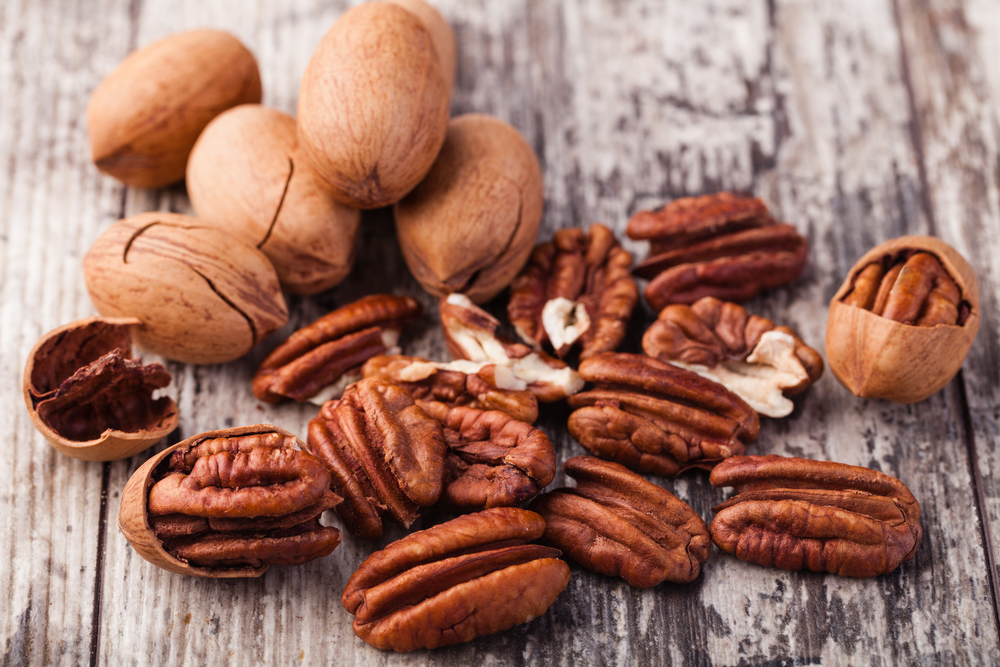
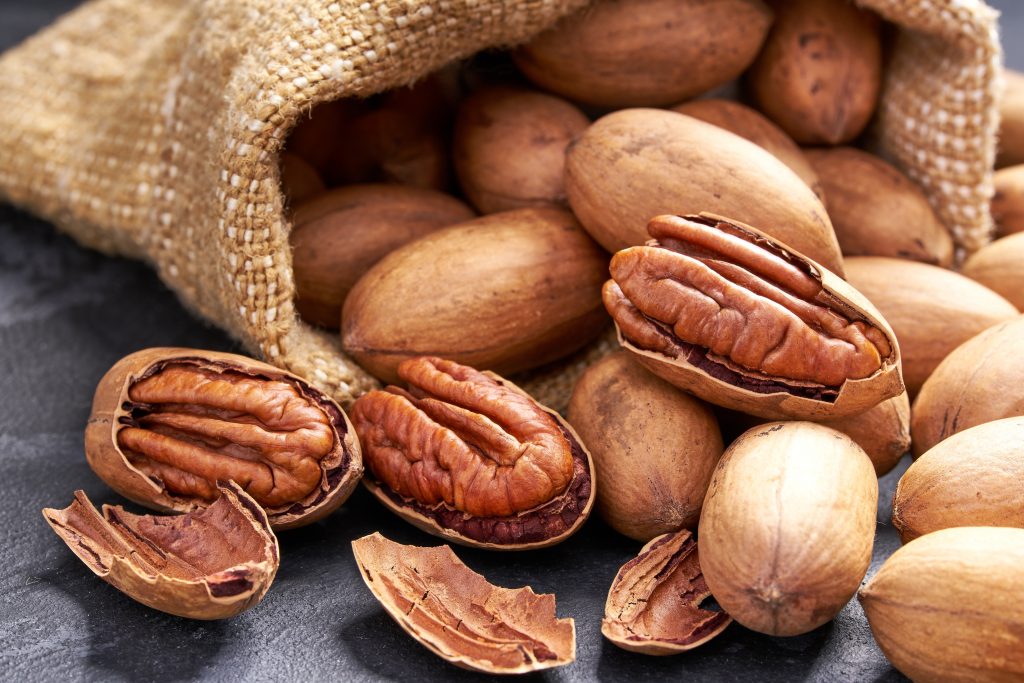
    File photo shows pecans.

    A difficult pecan season was challenging for all and painful for a few. Some farmers compensated for the extremely low prices that lingered all season with bountiful harvests.

    However, some producers were not as fortunate. They either had a short crop or marginal crop that were amplified by some of the lowest prices producers haven’t experienced in decades.

    Georgia pecan farmer Randy Hudson, who also works with the American Pecan Council, serves on the Pecan Export Trade Committee and is a member of the Georgia Pecan Growers Association, said producers who had a short crop are hurting.

    “Not a lot of (the short crop), but there’s some of it. Then we had some growers with some marginal crops that would have paid for themselves had prices been 50 to 75 cents a pound higher or 50 (cents) to a dollar a pound higher. They would have been okay. They would have covered,” Hudson said. “But with the prices that we had and continue to have on marginal crops or short crops or young trees that are just coming into production, they did not cover their experiences.”

  • Be on Alert: Pecan Producers Watch Out for Ambrosia Beetles

    According to the University of Georgia Extension Pecan blog, now is the time of year where producers need to be wary of ambrosia beetles. This is especially important for farmers with trees that are less than 5 years old.

    Photo by UGA’s Andrew Sawyer shows ambrosia beetle damage to a pecan tree.

    Winter rains mean some trees are prone to flooded conditions, where they are susceptible to ambrosia beetle attacks. Angel Acebes-Doria, University of Georgia Cooperative Extension pecan entomologist, said that if the soil remains wet for several days, growers need to scout trees in those areas for signs of attacks once beetle activity has been detected or when temperature consistently reaches 68 degrees Fahrenheit or higher.

    Beetle activity is identified by the toothpick-sized sawdust tubes they leave sticking out of holes bored in pecan trees. Farmers are strongly encouraged to deploy traps, which help to indicate when beetles are active. Immediate action is required if growers detect beetles and suspect their trees are damaged.

    If trees are being attacked, producers can apply pyrethroids at the trunk of the tree. The more often beetles attack a tree, the less likely that tree will survive an attack.

    In her blog, Acebes-Doria said traps have been deployed in the Cook County, Georgia area, though beetle activity has not been observed yet. Activity normally starts in early February and peaks in late February to mid-March.

    Click here to see what traps to use and when to put them out.

    The best way to protect your trees from ambrosia beetle attacks is to maintain healthy trees.

  • Georgia Pecan Production Season Best Since 2007

    Photo courtesy of UGA College of Agricultural & Environmental Sciences

    Georgia pecan producers enjoyed a banner production season, according to the USDA National Agricultural Statistics Service. Georgia, which accounts for 47% of the nation’s pecan production, showed a 23% increase in value of production for 2020.

    Georgia produced 142 million pounds, compared to just 73 million in 2019 and 70 million in 2018. Those two years were down because of Hurricane Michael’s impact in October, 2018. The value of Georgia’s utilized production was $168.9 million, compared to $137.2 million in 2019 and $113.4 million in 2018.

    Favorable conditions aided Georgia producers. Utilized production would be the highest since 2007.

    United States’ utilized production in 2020 totaled 302 million pounds, up 18% from 2019.

  • Georgia Pecan Producer: Cautiously Optimistic About Future Market Prices

    georgia pecan

    One South Georgia pecan producer is cautiously optimistic farmers will soon experience an increase in market prices. Coming off a season where pecan yields were the best in years and prices were the worst in some time, growers like Randy Hudson are hopeful prices will soon rebound.

    “The old saying about the cure for low prices is low prices. The cure for high prices is high prices. When prices are low, people come in the market and buy a lot of pecans. Supply goes down. Demand goes up because the prices are cheaper. On the other hand, when prices are really high, demand has a tendency to really taper off. Supermarket sales, retail sales begin to go down. As a result of high prices, we typically follow it with low prices. It’s all kind of cyclic in nature any way,” said Hudson, who also works with the American Pecan Council, serves on the Pecan Export Trade Committee and member of the Georgia Pecan Growers Association

    “It’s not a good year for growers, it’s a really good year for processors. I hope next year is a really good year for growers, and it may not be quite as good of a year for processors.”

    The recent surge in interest from other countries has Hudson excited about the future market prices. Price increase is desperately needed considering the amount of Georgia crop that is in storage. Hudson estimates between 25 million and 35 million pounds are currently being stored.

    “We’re already beginning to see in the last several days, we’re seeing some real interest in China, specifically, but around the world in general. Getting China back into this market is going to be a real positive. They’re back into, particularly, the Georgia market. They’re out here now competitively bidding on loads. We’re beginning to see the prices increase,” Hudson said.

    “I’m very cautiously optimistic about the remainder of this market season. I know there’s a lot of growers in Georgia that have a lot of inventory on hand. I think it’s going to bring a little higher price than back during harvest season.”

    High Yields

    According to the latest USDA numbers, Georgia was projected to produce approximately 135 million pounds in 2020. It was amazing production and one growers were looking forward to following Hurricane Michael in 2018. However, prices were devastatingly low which hampered producers’ optimism and forced many to store their crop.

    “It’s the best of times, it’s the worst of times. It was the best of times harvesting because we just had a great harvest season. We had outstanding yields. The quality was superb, probably the best quality we’ve seen in years. The weather was very important because the quality sustained itself all the way through second harvest. That was the best of years,” Hudson said. “The worst of years as a grower, though, when we started having to price this and getting paid for the crop, prices in some cases were half of what they were a year ago.”

    Alabama Production

    It was a devastating year for Alabama producers as well. Not just because of low prices but of two hurricanes that wiped out a substantial amount of this year’s crop. Winds from Hurricanes Sally and Zeta also uprooted many trees, creating countless future losses for the state’s producers.

  • Export Markets Remain Key for Southeast Pecan Producers

    With the 2020 pecan season in the books, growers in the Southeast are looking to write a new chapter in 2021, one they hope will have a better ending.

    The story of this past season’s crop centered on devastatingly low prices and low morale among farmers still trying to recover from Hurricane Michael in 2018. The biggest question remains, what can be done to improve market prices? It starts with the potential export markets that need to be explored, especially since China currently remains a non-buyer.

    UGA Extension Pecan Specialist

    “Southeastern growers should be able to see now what their markets look like if we don’t have a large in-shell export market in play. It’s not a pretty sight,” University of Georgia Cooperative Extension pecan specialist Lenny Wells said. “I hope that we will see more efforts from some of the grower organizations in the state to take on and actively get involved in some of this export marketing work for in-shell nuts.

    “I think whether we’re talking about China or South Korea or India, Turkey, even Egypt’s being talked about now; there’s a lot of places we need to be working on for in-shell export markets. That’s really where southeastern growers are going to benefit.”

    Domestic Market Competition

    Additional export options are needed considering the domestic market has increased competition from Mexico.

    “I just really don’t see anything on the horizon that’s going to affect the volume of nuts coming in from Mexico. That competition for the domestic market is here to stay. There’s no question that Southeastern growers are at a disadvantage in that market,” Wells said.

    According to the final Georgia Pecan Price Report released last week, growers are cleaning up orchards and preparing for the 2021 season. Growers are still bringing pecans onto the market. But the volume has dropped, and there is a wide range of quality.

  • Latest Pecan Prices

    According to the USDA Federal-State Market News Service, pecan prices remain low throughout Georgia. Growers are picking up what is left in the orchards and bringing in what they have not put into cold storage. Rain and wet orchards have left some areas with excess moisture and damage from rot.

    Growers are working those lots harder to clean them out and have them ready for testing and sampling. Prices remain about steady with a moderate interest from domestic buyers. Retail and gift pack purchasers are still looking for top quality pecans, while the export business to Asia has been virtually non-existent and slow as compared to previous years past. The season is rapidly winding down in Georgia. Most lots are blended varieties.

    Blends with (nut count 50-65) meat yield 48% to 50% are selling for about $2.50-2.65 per point; meat yield 45% to 47% sold for about $2.40-2.50 per point; and Blends with meat yield 41% to 43% sold in a range of about $2.00-2.25 per point.

    Prices paid to growers (late afternoon Tuesday, December 22, 2020 through late afternoon Tuesday, January 5, 2021) at buyers delivery point or F.O.B. the orchard including direct sales to end users, cents per pound in-shell of generally good quality in lots of 20,000 pounds or less unless otherwise stated:

    Cape Fear (deliveries insufficient to establish market)

    Desirables (deliveries light) yard tree lots, 80-100

    Elliott (deliveries very light) yard tree lots, 90-100

    Farley (deliveries very light) yard tree lots, 70-80

    Moneymakers (deliveries very light) yard tree lots, 40, occasional higher

    Native/Seedlings (deliveries light) yard tree lots, 40-50, occasional lower

    Schley (deliveries light) yard tree lots, 70-85

    Stuarts (deliveries light) yard tree lots, 50-75, mostly 70-75, few high as 90

    Sumner (deliveries light) yard tree lots, 70-80

    Lots over 20,000 pounds including truckloads:

    Cape Fear, Desirables and Sumner (most lots are Blends, see prices above)

  • UGA Pecan Specialist: Morale is Really Low Right Now

    georgia pecans

    The pecan harvest season is in the books. When farmers and industry experts reflect on the 2020 season, what will be the story?

    Will it be an overwhelming crop that produced record yields for some farmers? Or will it be the low market prices that discouraged producers and forced many to store this year’s crop?

    University of Georgia Cooperative Extension pecan specialist Lenny Wells offers insight into a season unlike any other.

    “I think it’ll be the prices. Even though it was a huge crop, just the morale out there is really low right now. They didn’t get a lot for the crop,” Wells said.

    “The volume was there enough to where I think most of them are going to be okay. My concern is, if we’re seeing low prices again like this next year and we don’t have that volume, that’s when we’ll really start to feel the pain. But we’ve got a long time to go between now and then. Who knows what will happen with China and all that in the meantime?

    “There are a lot of nuts that are stored out there. That’s certainly going to play into whatever the price turns out to be next year.”

    Low Prices All Season

    Pecan prices were shockingly low all season. South Georgia farmer Randy Hudson said prices were anywhere from 30% to 50% less than what they’ve experienced the previous three years. All while fixed and variable costs continue to be extremely high.

    During the middle of harvest season in early November, Stuart varieties sold for 75 cents per pound. Sumners were selling for $1.30 to $1.41 per pound. Even with minimal scab disease pressure, Desirable varieties sold for just $1.35 to $1.40 per pound.

    Massive Yields

    Wells said the latest USDA numbers estimate that Georgia pecan farmers produced about 135 million pounds. It’s an astounding number considering the state is recovering from Hurricane Michael in 2018. Trees and acres of production were lost during the October storm. Who knows how high this year’s production would have been if not for the storm?

    “If we still had the acreage before we had the hurricane, this would have been a record crop, no doubt. A lot of growers had a record crop for their farm. But just because there was so much acreage lost, I think that brought it down some,” Wells said.

    Alabama farmers were hurt by hurricanes that destroyed acreage and greatly reduced their crop this year.

  • UGA Pecan Production Meetings Virtually in 2021

    The University of Georgia Cooperative Extension will hold pecan production meetings virtually in January, February and March.

    UGA Pecan Team members include Lenny Wells (Extension pecan specialist), Angel Acebes (entomologist), Andrew Sawyer (Area Pecan Agent-Southeast District) and Jason Brock (plant disease diagnostician). All will give presentations and be available for questions over Zoom. Tentative dates for the meetings are as follows:

    Jan. 21-6 p.m.

    Feb. 9-9 a.m.

    March 9-6 p.m.

    According to UGA Extension, the various times are provided so people have the options of the best times that may work for them.

    “We are still working out the details of setting things up for this with regard to registration, pesticide credits, etc., but I will be posting more information here as the plan comes together,” Wells said.

  • Georgia Pecan Producers Nearing End to Harvest Season

    According to the USDA Market News Service, Georgia pecan producers are about 90% finished with harvesting this year’s crop, while prices have improved some since last week.

    Amid the lack of export opportunities, many growers are continuing to store their top quality and larger sized pecans in hopes of selling for better prices at a later date. Holiday retail and domestic sales have improved as buyers from other areas have actively pursued Georgia pecans.

    Prices paid to growers (late afternoon Tuesday, December 8, 2020 through late afternoon

    Tuesday, December 15, 2020) at buyers’ delivery point or F.O.B. the orchard including direct sales to end users, cents per pound in-shell of generally good quality in lots of 20,000 pounds or less unless otherwise stated.

    Cape Fear (deliveries light) meat yield 52-53%, 129-140

    Creek (deliveries very light) meat yield 53-54%, 121-129

    Desirables (deliveries light) (nut count 47-52) meat yield, 47-51% 113-138, yard tree lots 80-100

    Elliott (deliveries very light) meat yield 51% 133, yard tree lots 90-100

    Excel (deliveries very light) meat yield 53-54%, 139-140

    Farley (deliveries very light) yard tree lots 70-80

    Moneymakers (deliveries very light) yard tree lots 40 occasional higher

    Native/Seedlings (deliveries light) yard tree lots 40-50 occasional lower

    Schley (deliveries light) yard tree lots 70-85

    Stuarts (deliveries light) (nut count 51-57) meat yield 48-49%, 119-128, yard tree lots 50-75, mostly 70-75 few high as 90

    Lots over 20,000 pounds including truckloads

    Cape Fear (deliveries light) meat yield, 52% 140

    Desirables (deliveries light) (nut count 47-50) meat yield, 49-52% 123-140

    Sumner (deliveries insufficient to establish market)

  • Alabama Pecan Industry Forever Changed

    Picture from Adam Bertolla/Shows massive pecan tree uprooted by Hurricane Sally.

    Alabama pecan producers in Baldwin and Mobile Counties are still cleaning up debris left behind from Hurricane Sally more than three months ago. What many are not going to be doing, though, is replanting trees that were destroyed on Sept. 16, says Bryan Wilkins, Alabama Extension Research Associate.

     “The older guys, they told me they’re done. Some of them, they’re in their early-to-mid-60s, they told me, ‘I’ll be 70 or 75-years-old before they start bearing, these new ones.’ I don’t know that they’re going to replant but they’re going to keep working what’s up. They’re going to keep working their orchards and what survived,” Wilkins said.

    “I don’t know how much replanting is going to go on, to be honest. I know some of the younger ones are replanting and trying to get back up to speed that had some smaller orchards. But a lot of the older orchards, like those 90-year-old orchards, those guys are not going to replant that I know of.”

    Farmer Testimonials

    Pecan producers like Gary Underwood were hammered by the Category 2 storm. Underwood, who is based between Mobile, Ala. and Pensacola, Fla., lost a substantial amount of his pecan crop. He estimated he lost 600 trees.

    Adam Bertolla lost 250 trees or a third of his pecan operation. He verified that he wasn’t going to replant.

    “People say, ‘You going to replant?’ I say, ‘Hell no, I’m not going to replant,’” said Bertolla, referring to Hurricane Sally that made landfall in Alabama on Sept. 16. “No. 1, there’s going to be some more storms come; No. 2, I’m too old, even though I’m in my early 50s. There’s just not any use in doing it.”

    Growers have another reason to be pessimistic about replanting their crop. Prices are devastatingly low this year.

    “Right now, prices are low. That’s another thing that some of them are looking at and it doesn’t look like it’s going to change in the near future,” Wilkins said. “(But) they’re saying mostly it has to do with age. They’re aging out and they don’t have anybody coming on that wants to replace them.”