Category: Peaches

  • Alabama Extension Offers Planting Tips for Fruit Trees

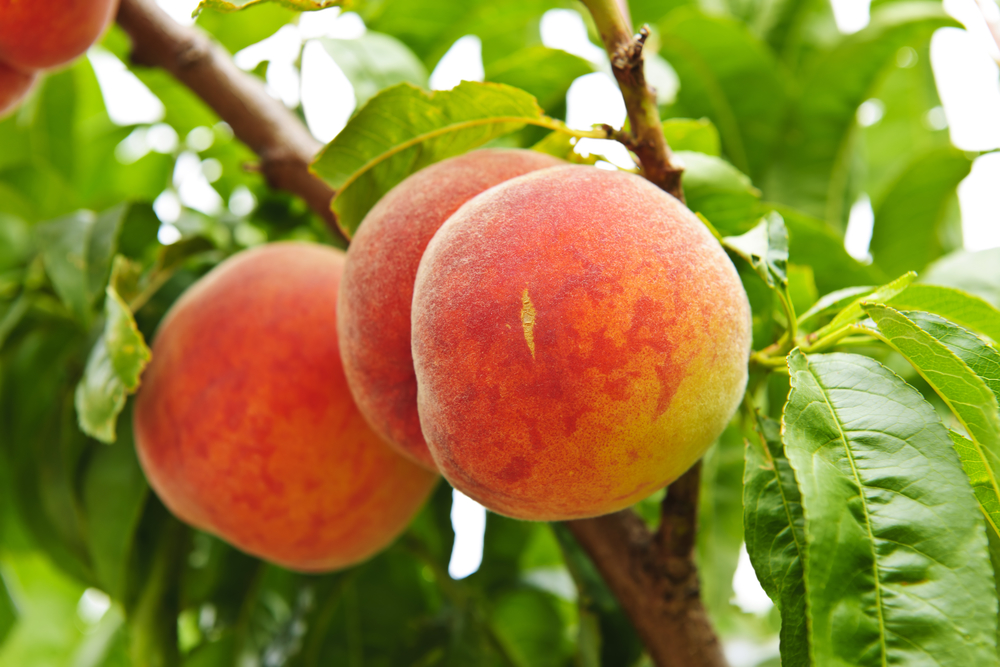
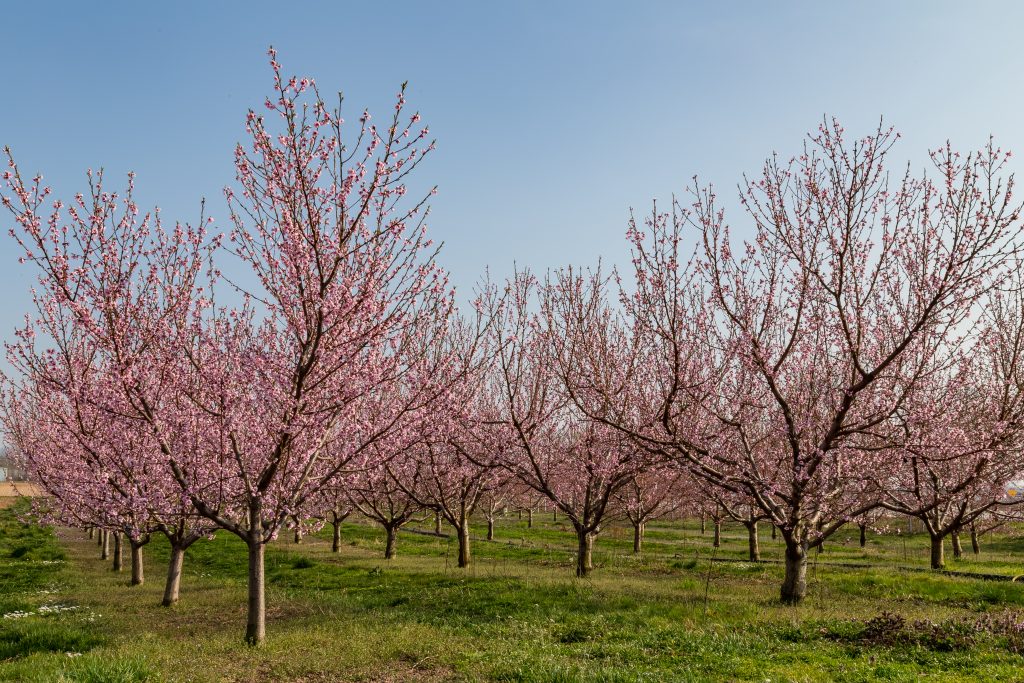
    File photo shows peach orchard.

    Soon it will be time to plant fruit trees in Alabama. Edgar Vinson, assistant research professor and Extension specialist in the Department of Horticulture at Auburn University, reminds growers about basic planting tips they need to be mindful of when planting trees this winter.

    Variety Selection

    Variety selection is the most important and practical way to manage diseases and other environmental constraints, no matter what crop you’re planting, according to Vinson.

    “(For example) If you’re planting in a region that’s really high in summertime temperatures and a region that’s prone to drought, you’ll want plant crops that can withstand those high temperatures, and you’ll also want crops that are drought tolerant if possible,” Vinson said.

    Full Sun

    It’s also important to remember that fruit crops require full sun to produce at maximum efficiency.

    “Once your shade starts to diminish then your productivity diminishes. It’s really important to get them as much sunlight as possible, maybe a minimum of 12 hours or so or around 12 hours of sunlight,” Vinson said. “Also, the placement of trees on a particular site, you want to avoid frost pockets. In cases of like fruit trees like peach or plum or apple, in low lying areas where cold areas tend to collect, it’s really important to avoid those.

    “Cold air flows downhill. It’s heavier than warm air and flows downhill. Often times it collects in frost pockets in low lying areas. You’ll also want to avoid any structures like a fence row that has vegetation on it. Something as simple as that could be enough to block the flow of air away from these crops and cause frost damage.”

    Chill Hour Requirements

    Chill hour requirements is also an important factor to consider. Vinson said that in order to alleviate dormancy in the spring, trees have to be exposed to a certain amount of cool temperatures during the winter.

    “If they don’t get the recommended requirements for their particular type or variety, they have long protracted flowering periods with small frequent harvests in the spring and summer and that really hits the farmer’s bottom line. The harvests are frequent but they’re small,” Vinson said. “They’re not really getting the return from the harvests that they otherwise would with the larger more concentrated harvests. Each time you harvest you have to send a crew out to the field and that costs money.”

    It’s important to remember that fruit trees need to be planted during the winter time when the trees are dormant. Vinson said you can plant an actively growing tree but it really adds a lot of stress to it.
  • Remember to Plant Fruit Trees During Dormancy

    developing
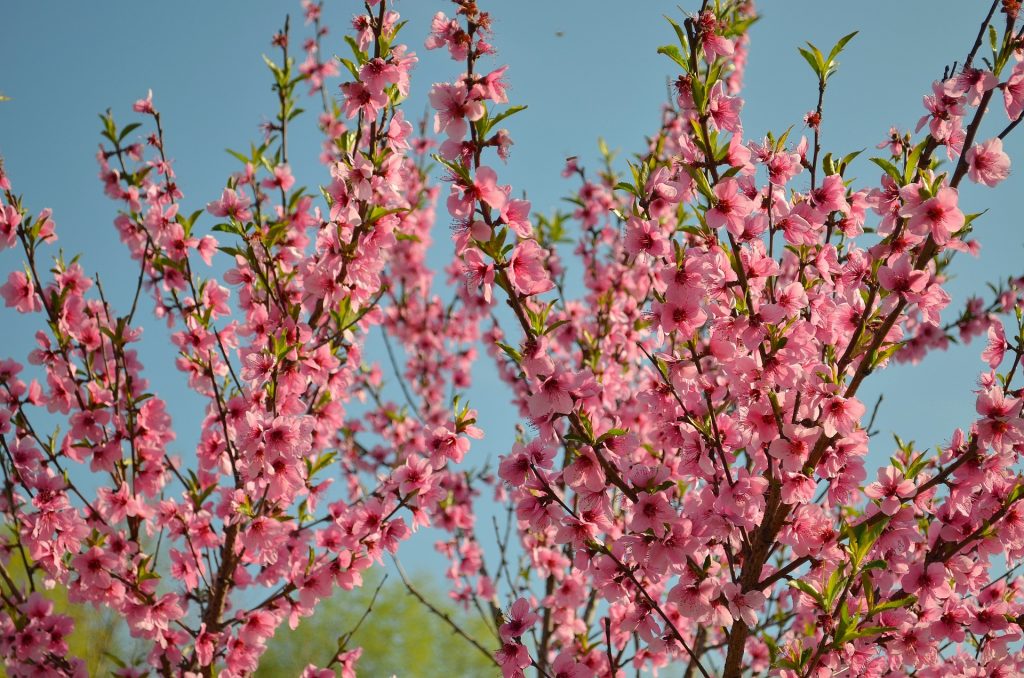
    File photo shows peach tree in bloom.

    Soon it will be time for homeowners and commercial growers to plant their fruit trees in Alabama.

    Edgar Vinson, assistant research professor and Extension specialist in the Department of Horticulture at Auburn University, reminds producers, whether they’re planting peach trees or apple trees, the time to do so is during the late fall or winter when the plants are dormant.

    “You can plant an actively growing tree but it really puts a lot of stress on it. The idea is you want to keep as much moisture in the plant. If you’ve got a plant that’s got leaves, it’s transpiring and losing water. The roots aren’t really developed to the point that it’s extracting enough water and nutrients to keep up with the water that’s being lost,” Vinson said.

    Soil Factor

    Vinson

    One of the most important factors to consider, whether you’re planting peach trees, apple trees, blueberries or figs, is the soil. Soil testing is crucial and needs to be done well in advance.

    “You definitely want to be mindful of your soil. Soil tests are really important. You want to know how much nutrients are in the soil,” Vinson said. “If there’s any deficiencies, you want to be able to correct those especially with a perennial crop like fruit tree crops.

    “It’s very difficult to course correct once you get those in the ground. Having a soil test is important. If there’s anything that has to be changed, like if the pH is off, it’s really good to know so you can apply lime.”

  • Peach Producers Have New Tools in Fungicide Toolbox

    File photo shows peaches growing on a tree.

    Southeast peach producers have new tools in the fungicide toolbox for the 2021 season. According to the UGA Peach Blog, Cevya, Miravis and Miravis Duo and Chairman are new products that growers need to implement in a way that will allow for efficient and protect against resistance development.

    University of Georgia Extension fruit disease specialist Phil Brannen said Cevya is a DMI (DeMethylation Inhibitors) fungicide that was registered for use last year by BASF.

    However, because it is a DMI, growers need to treat it like any other DMI since there has been DMI resistance in previous years. Brannen prefers that Cevya be used only in late-season sprays for brown rot disease.

    Miravis and Miravis Duo

    Miravis and Miravis Duo are Syngenta products. They are extremely active against peach scab, a fungal disease that thrives in a wet environment. Scab is the second most impactful disease that peach farmers deal with ranking just behind brown rot. Miravis and Miravis Duo also provide brown rot control that is comparable to Merivon or Luna Sensation.

    If growers are not having any issues with peach scab, then they are encouraged to still use chlorothalonil (e.g. Bravo and generics).

    Chairman

    Chairman, another product from Syngenta, is a post-harvest packing line that is similar to Scholar. Brannen said it is basically a combination of Scholar and propiconazole, which is a DMI. The addition of the DMI provides potential sour rot management. This is the last opportunity to manage sour rot as the fruit goes to market, so growers are to consider Chairman if it is a concern. It may also broaden brown rot efficacy.

    Resistance management remains a top priority for peach producers, especially when incorporating new chemical applications.

    “With brown rot being the kind of fungus it is, we know it can develop resistance; thankfully, we’ve been able to develop some good programs that even where we’ve had some DMI resistance, we can still get good control and incorporate some DMIs. But we try to use only one class of chemistry if possible once or twice per year,” Brannen said. “We try to utilize the old chemicals like chlorothalonil, like captan, like Sulfur and save all of the other classes of chemistries where there can be resistance until the very end where we have such a problem with brown rot. Then we try to utilize them only once or twice per class.”

  • Oak Root Rot Biggest Threat to Peach Industry

    Vinson

    The most dangerous threat to the peach industry in the Southeast is Oak Root Rot, a soil-borne fungus that can wipe out peach trees, according to Edgar Vinson, Alabama Extension Professor of Horticulture.

    Oak Root Rot or Armillaria Root Rot, causes stunted leaves, yellow defoliation, chlorotic leaves, death of branches and, ultimately, death of the tree.

    Unfortunately for peach producers, there’s not many management options available to offset the death sentence for peach trees that are planted in a field with this disease.

    “As far as we know, once it’s in the soil it’s there probably for good,” Vinson said. “Once the tree starts to succumb to it, there’s no remedy for it. There’s some things to delay it, if you have a tree that’s planted in the soil that has Oak Root Rot. If you’re planting into soil that has Oak Root Rot, there’s really no remedy for it. It will eventually take over the tree and take the tree out.”

    One Option

    Farmers can implement a root collar excavation. This is a management tactic that producers utilize to remove soil from the crown of the tree to prevent the fungus from growing on the crown. This only delays the inevitable. Eventually the tree will succumb to the disease, but this practice extends the life of the tree so the grower can get more harvests out of it.

    The best option would be to plant a resistant root stock. However, one is not broadly available yet.

    “Most peaches don’t come from the nursery on their own roots. They’re budded onto a rootstock that’s tolerant to a particular soil condition or diseases. You have a desirable peach variety that’s grafted onto a resistant rootstock. That’s typically how we receive our peaches, apples and a number of other crops,” Vinson said.

    Oak Root Rot symptoms usually appear between 5 to 7 years after planting.

    “It’s a disease that’s recognized all over the Southeast. We’re currently working on ways to mitigate the damage,” Vinson said.

  • Producers Be Aware of Phony Peach Disease

    Phillip Brannen

    Peach producers need to be mindful of Phony peach disease. According to the UGA Peach Blog, Phil Brannen, University of Georgia Cooperative Extension plant pathologist, cautions growers that if a tree is diagnosed with the disease, they need to destroy the tree immediately. They also need to remove it from the orchard to prevent further spread of the Xylella fastidiosa bacterium by sharpshooter insects, the predominant vector of the pathogen in the Southeast.

    Infected trees are initially stunted due to shortened internodes between the leaves and limited growth. Less fruit are produced over time, and the fruit size diminishes as well. Given enough time, the tree will die as a result of the pathogen or indirectly due to stress and other factors.

  • Georgia Peaches Nearing End to ’20 Season

    Photo taken by Clint Thompson/Shows a box of recently purchased Georgia peaches.

    Time is running out on Georgia’s peach crop this year. Jeff Cook, University of Georgia Cooperative Extension Agriculture and Natural Resources agent for Peach and Taylor counties, confirmed that the state’s producers only have about a week left before they are done harvesting this year’s crop.

     “We’ll still ship, maybe for another week. We’re getting to the end here,” Cook said.

    Cook said Georgia peach producers normally harvest through the second week in August. Some varieties were harvested earlier this season. High temperatures in the springtime were a likely factor.

     “I think a lot of it was the heat in March, the heat directly after bloom,” Cook said. “But it wasn’t across the board that everything acted the same. Some things were early, some things were normal time. Some things held on.  I’ve got a Scarlet Prince (variety) in my research orchard that we usually pick the last couple of days of June and first of July. We were picking the second week of June through the first week in July. We picked them for three weeks and they were good, commercially acceptable peaches.”

    Good Year Overall

    He added that it has been a good year overall for farmers.

    “We had some speedbumps early on with some early varieties that got a little cold damage,” Cook said. “It looks like quality has been good because I haven’t seen a lot of dump trucks leaving packing sheds.

    “I was actually at Lane’s yesterday with my son and he was like, ‘What is that thing coming out of the packing shed?’ I was like, ‘That’s the conveyor belt that takes all of the bad peaches.’ All that was coming off the conveyor belt was leaves, that’s all that was falling through. That’s always a good sign.”

    According to UGA Extension, Georgia produces more than 130 million pounds of peaches every year. There are two commercial peach-growing regions in Georgia. The central region is the largest with about 1.6 million peach trees, which comprises 75% of the state’s production. The southern region produces about 30 million pounds of peaches annually.

  • Clemson Extension Agents Provide Updates on Various Crops

    Clemson Extension agents provided updates in The South Carolina Grower this week about the status of various crops being produced throughout the state.

    Coastal

    Spider mites have been reported on beans, tomato and melon in the Coastal Region.

    Zack Snipes reports, “It was a warm week with some sprinkled in showers along the coast. All crops are coming in right now with heavy watermelon volume. What’s left of the tomato crop is ripening fast. As far as pests go, I have seen a good amount of bacterial leaf spot in pepper, squash bugs and cucumber beetles in squash, and spider mites on beans, tomato, and melon.”

    Midlands

    Justin Ballew reports, “We got a little more rain last week and the temperatures were a little warmer than previous weeks. We’re still harvesting tomatoes, sweet corn, peppers, eggplant, peaches, squash, zucchini, beans, etc. Since the environment has been warm and wet, we’re starting to see diseases pick up. Seeing lots of powdery mildew and anthracnose on cucurbits and bacterial spot on tomatoes. Stay on your fungicide programs and rotate modes of action as much as possible. I’ve also been getting some reports of heavy spider mite activity on tomatoes.”

    Sarah Scott reports, “We’ve had hot and, for the most part, somewhat dry conditions in the past week. Some areas received an inch of rain, but it was very spotty. Tomatoes, peppers, squash, corn, cucumbers, and melons are all being harvested now.  Plums, peaches, and nectarines are also still being picked. The peach crop is about 10 days ahead of schedule.”

    Pee Dee

    File photo shows ripe peaches ready to pick on tree branches.

    Bruce McLean reports, “Vegetable crops are maturing nicely, even though some are exhibiting heat stress from the recent hot weather. Cucurbit Downy Mildew (on cucumbers) has been reported throughout the Pee Dee Region. Powdery Mildew is widespread on zucchini and yellow squash. Sweet corn is looking good, with good volumes being produced. Tomatoes, other than being stressed from the heat and the humidity, look pretty good and are bearing well. Sweet potatoes are still being planted. Muscadines are beginning to size and look to be a very good crop. Blueberries are winding down, with only the latest varieties being harvested now.”

    Tony Melton reports, “Processing peppers and tomatoes are beginning to be harvested and they look good.  With all the early winds and excessive rain, it was difficult but as my daddy would say ‘we made a silk purse out of a sow’s ear.’ Second and third crop pickles are yielding much better than the weather-beaten first crop. Processing peas will begin harvest this next week, so we badly need some dry weather, but the forecast is not favorable.  Also, the amount of cowpea curculio is increasing rapidly, and an intense/timely spray program is needed to prevent what most call “stings (maggots) in the peas.” One grower got slack on his spray program and this week had to discard $6,000 worth of peas. Spray with a pyrethroid at or before the first flower, then every week until flowering is finished. The first spray is the most important because if you wait too late, the curculios are already in the field. Curculios are very hard to kill. When disturbed they ball up inside their protective coat, and your spray is repelled. My program repels them and attempts to keep them out of the field. Also, rotation is very important to keep down the population of curculios surrounding your fields.”

    File photo shows a muscadine vineyard. Muscadines are beginning to size in the Pee Dee Region.

    Upstate

    Kerrie Roach reports, “Upstate peaches are beginning to ripen! While exciting, we have seen some physiological issues with sizing and softening that we attribute back to a late-season cold spell. While the peaches originally appeared to pull through without damage, we are now seeing peaches that are not sizing and those that do size up, only ripen on the very outer portion. It is a waiting game to see how each variety ends the season. In the meantime, market vegetable production is in full swing and the apple crop is looking fabulous.”

  • San Jose Scale Problem for Peach Producers

    Photo from Brett Blaauw/University of Georgia/Shows San Jose scale crawlers.

    By Clint Thompson

    Brett Blaauw, University of Georgia assistant professor in the Department of Entomology, says the time is now to treat San Jose scale crawlers which are peaking in peach orchards.

    “Right around late June, early July and then again in August, we see these real high populations of their larvae, the crawlers. Crawlers are also susceptible to insecticides. They do not have that waxy coating yet. They’re the mobile stage of the scale. They’re leaving their mothers and searching for another part of the plant to settle down and start to feed. These crawlers have a few days of vulnerability so we can also try to time our insect sprays to target those scale crawlers,” Blaauw said.

    He said in his blog that he expected this week to see a peak in crawler activity. South Carolina producers should expect to see crawler activity in the next week or two.

    What is San Jose Scale?

    San Jose scale is a tiny insect that has a waxy coating. It covers and protects the whole body of the insect. It protects them from the environment. It protects them from other insects that would eat them. And unfortunately, it protects them from insecticides. Once these insects create their waxy covering, they are hard to kill, according to Blaauw.

    They also reproduce at an extremely high rate. It does not take long for a minimal problem to balloon to a major concern for peach producers.

    “Females can produce hundreds of offspring. Just from one female, she can produce almost 300 offspring. Of those 300 offspring, if they’re female, can go on to have 300 more offspring. The population can get quickly out of hand,” Blaauw said. “When you have thousands of these little insects feeding on the branch of a peach tree, it can quickly kill or reduce the vigor of that branch. If the problem goes untreated, you lose branches, and then you lose limbs and eventually you lose whole trees.”

    Another Management Option?

    Blaauw said another management option is to apply two dormant sprays of horticultural oil. It is best to spray once the trees are dormant and then before bloom next growing season. The high-volume sprays will suffocate the San Jose scale.

    “That usually works pretty well and significantly reduces the scale population. But even when the growers are doing that, we’re seeing the numbers skyrocket about now. I can go out there and monitor almost any time of the season and find San Jose scale in the trees,” Blaauw said.

    The San Jose scale can be traced back to the 1800s. With modern insecticides, the scale was not a problem in the 1900s. But it has come back with a vengeance in the 2000. It thrives in Georgia’s warm summers and winters and can be active all year long.

    Another issue is that complicates farmers’ management options is that the scale may not impact the whole orchard. It could be clustered in one area or part of the orchard. It can be hard to manage if a grower has many acres of peach trees.

  • So Far So Good For Peach Worker Safety

    By Clint Thompson

    Georgia peach workers are staying safe and nobody has been stricken from the coronavirus pandemic yet, says Jeff Cook, University of Georgia Cooperative Extension Agriculture and Natural Resources agent for Peach and Taylor counties.

    “Nobody’s having any real hiccups with this virus. I guess everybody’s staying far enough away from each other to be safe,” Cook said.

    Workers are essential in harvesting Georgia peaches.

    Cook said all the precautions and safety guidelines that are already in place jive with the safety practices that are necessary with the current coronavirus pandemic.

    “In the packing sheds and in the close proximity, all of the ladies and gentlemen, they’re all wearing masks. They started wearing gloves in the past anyway packing, just for food safety sake. All of their food safety side of stuff, it just translates over to public safety, too.

    “Every day, at the end of the day, they clean the packing shed and then they disinfect it. Then they come back in the morning and do the same thing in the morning. They’ve all got stores, and all have got retail space where they sell products. They’ve got all of the regular signage up.”

    Cook said in April that farmers are trying to keep their peach crews a little more separated this year. Farmers limit the workers to the amount of time they’re exposed to other people that are not part of their specific crew.

    It would be extremely challenging if a worker got sick from COVID-19.

    “If they lost one guy on a crew or had one with it, they’d probably have to lose that crew for at least a two-week quarantine period,” Cook said.

  • N.C. Peach Season Kicks off Summer Season

    Pictured are baskets of peaches.

    North Carolina Department of Agriculture and Consumer Services

    RALEIGH – The first day of summer may be right around the corner, but fresh North Carolina peaches are already available at farmers markets and roadside stands across the state. While not a bumper crop, local growers do expect to have plenty of peaches through Labor Day.

    “North Carolina grows more than two dozen varieties of peaches,” said Agriculture Commissioner Steve Troxler. “Growers are harvesting clingstone peaches now and will begin harvesting freestone varieties later this month. No matter which you prefer, peach lovers should be able to find plenty of peaches this summer.”

    Most of the peaches grown in North Carolina are sold directly to consumers at peach orchards, roadside stands and farmers markets. N.C. peaches are tree-ripened when harvested giving them a fresher and sweeter taste than store-bought peaches. While the majority of peaches are grown in the Sandhills, consumers can find peach orchards in about two-thirds of the state’s counties.

    This year, growers are taking special precautions in response to the COVID-19 outbreak. Roadside stands have required employees to wear protective gear such as masks and gloves. In addition, many growers have installed protective plastic shields at their registers to protect consumers.

    To find local peach orchards near you, go to  www.buyncpeaches.com.