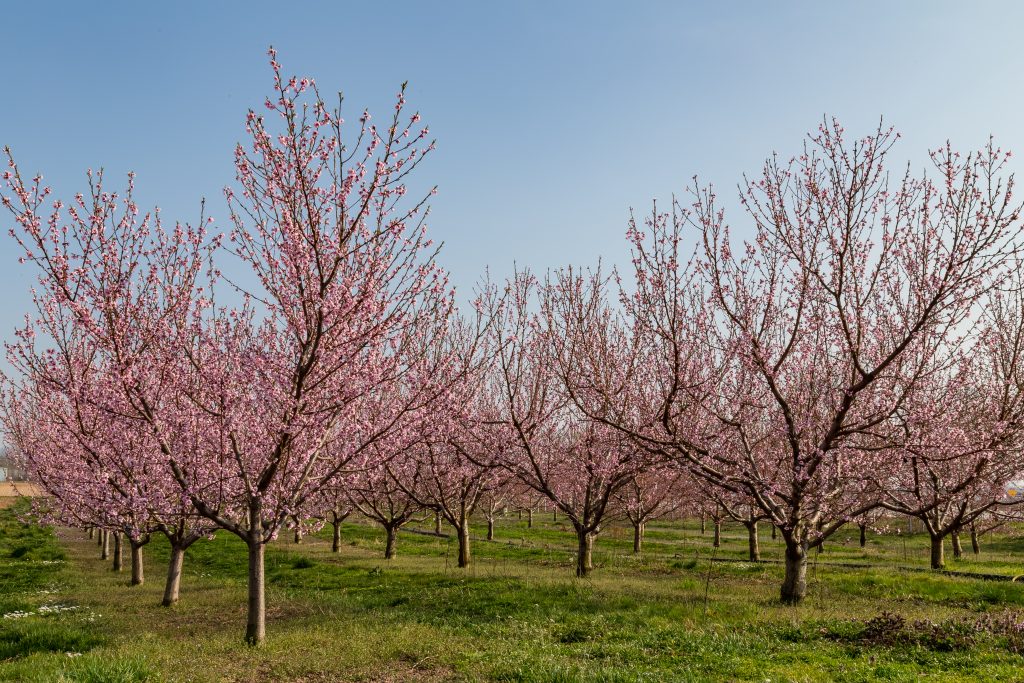
Chill hours are no longer a concern for peach growers in Alabama and Georgia. So, what is their biggest worry heading into the spring?
“March 28, the full moon in March. We always tend to have some cold in that full moon in March. But with it being later, maybe we’ll be out of the woods and in the clear. You just never know. March can be so up and down. Even the last few years, February has gotten pretty warm,” said Jeff Cook, University of Georgia Cooperative Extension Agriculture and Natural Resources agent for Peach and Taylor counties.
Cook said there are early varieties that begin to bloom towards the end of the third week in February.
Growers in both states are cautiously optimistic about the state of the peach crop. The cold winter temperatures provided enough chilling hours for the trees to make a crop this year. But what will happen if temperatures warm up? Trees will be vulnerable to a late-season freeze.
“We’ve got some peach producers around. They’re not all in one area, they’re kind of spread out. When I talked to them, they’ve done some pruning,” said Eric Schavey, Alabama Regional Extension agent in Northeast Alabama. “They’re just hoping we don’t get one of those late freezes. Their early varieties, they’re not blooming but they’re swelling. Those buds are swelling. That’s because we had those 68 and 70-degree days.
“I guess that early crop is always kind of a gamble here in our area.”
That makes what happened on Feb. 2 so important for farmers eyeing the upcoming weather forecast. Punxsutawney Phil saw his shadow and predicted six more weeks of winter.
“When the groundhog saw his shadow, it was like, ‘Okay, that’s good. Stay cool,’” Cook said.
Chill hours are no longer a concern for one Alabama peach farmer. The biggest worry that Jeremy Calvert has is that his trees will bloom early and be impacted by a late freeze.
“We get a week of 60, 70-degree weather and then go back down in the 20s, that’s just not what you want to see,” said Calvert, whose J Calvert Farms is in Cullman, an hour north of Birmingham, Ala. “Everything we’ve got in north Alabama, we’ve got a good amount of chilling in. Everything looks good. I think we have a good bud set on most everything. They definitely have got all of their chilling in. It’s been good quality chilling. When we do get a warm streak, they’re going to take off like a racehorse. That’s my opinion.”
According to Alabama Extension, chill hours are up across the state. As of Tuesday morning, the Auburn University Turf Unit had received 716 standard chill hours, compared to 617 last year. There was 919 hours recorded at the Chilton County REC in Thorsby, Ala., compared to 778 a year ago. At the EV Smith Research Center HQ in Shorter, Ala., there were 824 chill hours compared to 645 last season.
“Chilling is not going to be an issue for us this year. I think South Alabama could still have a little bit of a deficiency but still probably not going to be a big issue for them,” Calvert said.
Calvert said cold temperatures started around mid-December and have not let up. He is hopeful warm temperatures will hold off as long as possible.
“I would love it if we don’t have any bloom until the first of March, but that doesn’t always happen,” Calvert said.
Alabama peach trees continue to receive high chill hours to help make a crop this upcoming spring.
File photo shows peaches growing.
According to the Alabama Extension, chill hours remain high at various locations throughout Alabama.
As of early Friday morning, there were 678 standard chill hours at the Auburn University Turf Unit in Auburn, Alabama, compared to 617 last year. There were 860 chill hours at the Chilton County REC in Thorsby, Alabama, compared to 778 last season. There was 781 chill hours at the EV Smith Research Center HQ in Shorter, Alabama, compared to 645 last year. There was 1,182 chill hours at the Upper Coastal Plain Substation in Winfield, Alabama, compared to 1,084 last year.
Cool temperatures are expected to continue through next week. According to weather.com, temperatures are expected to drop in the 20s next Friday (Feb. 12) through Sunday (Feb. 14).
Peaches need chill hours to mature. The required chill hours depend on the peach variety.
Chill hours remain an integral part of a peach producer’s hope for a successful year. If the current numbers are any indication, Alabama growers could be in line for a productive season.
During a webinar last week, Edgar Vinson, assistant research professor and Extension specialist in the Department of Horticulture at Auburn University, said there was 737 chill hours or 38 chill portions recorded at the Chilton Regional Research and Extension Center. He was confident that the chill hours will continue to rise heading into February.
“Over the next several days or weeks we should have enough opportunity for chilling accumulation so that we can have enough chilling to satisfy most of the varieties that we grow,” Vinson said.
He said 43 degrees Fahrenheit is the optimal temperature for when chill accumulation will occur.
Chill Management
There are multiple ways that producers can manage chilling. The first thing is to do your research before planting. Growers need to plant peach varieties that fall in line with the historical chilling accumulation for their areas. Areas in north Alabama are going to receive more chill than south Alabama.
“You don’t want to plant varieties that have too high a chill requirement or too low. Too high, you threaten not to have enough to sufficiently eliminate dormancy. Too low, then you could break dormancy too early and be subject to late-season frost,” Vinson said.
While this year’s cooler winter has contributed to more chill accumulation potential, that hasn’t always been the case.
“In our area, we’re experiencing a lot of warming trends each winter. Winters are becoming increasingly warmer. It’s becoming more and more difficult to accumulate chilling. With these varieties that have a high chill requirement, they’re vulnerable to not having enough chilling,” Vinson said.
Peaches need chill hours to mature. The required chill hours depend on the peach variety. Contender, a well-known peach variety, has 1,050 chill hour requirements.
A tree (left) with phony peach disease has shortened internodes, a flattened top and darker green foliage compared to a healthy tree (right).
By Ashley Robinson
Peach trees are plagued by several different diseases throughout the growing season. But one disease is causing noticeable losses within orchards in Georgia.
Phony peach disease, caused by the bacterium Xylella fastidiosa, has been challenging for growers ever since its first detection in 1885 near Marshallville, Georgia.
Recently, growers across the southeast have reported an increase in disease prevalence, which is a threat to production. The disease results in stunted tree growth and reduced fruit size and quality.
Kendall Johnson, a graduate research assistant at the University of Georgia (UGA), discussed phony peach disease during the 2021 virtual Southeast Regional Fruit and Vegetable Conference. According to Johnson, warmer winters may be to blame for increased disease pressure. Phony peach disease is vectored by sharpshooter insects, which are widespread in warm southeastern climates.
Through on-site surveying, Johnson confirmed phony peach disease is very much prevalent in the central and southern parts of Georgia, Alabama and Florida. However, the disease was not found in north Georgia or South Carolina, likely due to higher altitudes and cooler temperatures.
Johnson reported that phony peach incidence in sample orchards ranged from 12.12% to 30.5%.
Since phony peach is not a curable disease, control is directed toward prevention and minimizing the spread. To date, the most often used detection method is visual assessment. However, according to Johnson’s research, this method may not be an effective form of management as experts can’t accurately identify symptomatic trees. Non-symptomatic trees are often infected.
Visual detection is highly dependent on an isothermal DNA amplification and detection system, which through field trials, proved to be 95.5% accurate in detecting the disease.
Although a 4.5% error rate may not seem devastating, infected trees that are not detected and left in the orchard could serve as inoculum sources for additional disease spread throughout the orchard, disrupting production.
Currently, Johnson is working with UGA to utilize hyperspectral imaging for early detection of the disease. She is also working to develop a phony peach disease identification training session for growers, scouts and Extension agents in hopes of better controlling disease spread.
AUBURN UNIVERSITY, Ala. — When picking up a peach from the store, consumers often don’t think about the intricate growth process fruit endures to be store ready. Peach farmers know the importance of nurturing and monitoring the peach growing process. The most important part of a peach’s growth are chill hours. These hours serve as the make or break point for tasty, store quality peaches.
Chill Hours
A chill hour is the exposure the peach or fruit has to chilling temperatures by hour. According to Alabama Extension specialist Edgar Vinson, peaches and other temperate fruits are required to meet a certain number of chill hours. This allows the fruit to break dormancy in the spring when temperatures are warm.
“It’s like an internal clock that lets the plant know that warm weather in on the way,” Vinson said. “It will soon be time to bloom and produce leaves.”
Peach Hours
Peach varieties have different chill hour requirements. Some require as few as 50 chill hours, while others need as many as 1,400 chill hours. However, the number of hours each peach requires is dependent on the specific variety.
“The early season variety ‘June Gold’ requires 650 chill hours, whereas the ‘Contender’ requires 1,050 chill hours,” Vinson said.
In the Southeast, chilling measurements begin Oct. 1 and end on Feb. 15 the following year, depending on the region. Chill hours are traditionally measured using the Weinberger model. This model measures chilling at 45 degrees Fahrenheit and below. However, the modified Weinberger measures chilling between 32°F and 45°F. Another model, the Dynamic model, measures chilling in terms of chill portions where the optimum chill occurs at 43°F. As temperatures rise above or fall below 43 degrees, chilling accumulation becomes less efficient according to this model. It also shows that chilling can be lost as a result of exposure to warm temperatures in the winter.
If peach trees receive an excess number of chill hours, the buds will bloom too early. This will then make the blooms vulnerable to late season frosts.
Complex issues occur when peaches receive too few chill hours. If chill hours are deficient, it will delay the bloom period causing a protracted harvest season. The marketability of the fruit will substantially diminish with too few chill hours. While there are a few solutions to inadequate chill hours, they cannot have the same effect as the chill hours themselves.
Solutions to Inadequate Chill Hours
It is important to first research the amount of chilling your area historically receives if you are growing peaches.
“It is not advisable to plant a tree that requires 1,050 chill hours when your area historically only receives 650,” Vinson said.
If there comes a late-season frost and the peaches received too many chill hours, simply delay pruning. Pruning invigorates the trees to help stimulate bud break in the case of low chill accumulation.
If there are too few hours, some farmers will use rest breaking chemicals to stimulate bud break. The efficiency of these chemicals relies on weather conditions and the degree to which the tree is deficient in chilling.
“Research is still being conducted to determine optimal methods of applying these chemicals,” Vinson said.
More Information
For more information on peach chill hours, visit the Alabama Extension website, www.aces.edu.
Cooler temperatures so far in 2021 should be an encouraging sign for Alabama fruit producers who need chilling hours to make a crop this year.
“I’m a little more encouraged,” said Edgar Vinson, assistant research professor and Extension specialist in the Department of Horticulture at Auburn University. “We did accumulate more and more than we originally thought by the end of December. It was still a little bit short. It could be made up in January or later this month and into February. It’s not the problem it was shaping up to be.”
Vinson said in mid-December that chill hour accumulation was a concern. He added that peach producers needed to have between 450 and 500 chill hours by the end of 2020. Vinson said last week that chill hours in Central Alabama were around 400. While he is encouraged, Vinson believes there is still more to catch up before producers don’t have to worry about chill hour accumulation.
“We’re still a little concerned. We’d like to see a little more towards the end,” Vinson said. “What we’re looking for are warming trends. We didn’t see very many of those, so that’s good. Especially those warming trends of short duration, those tend to be a little more costly when it comes to chill accumulation, like those 24-hour warming cycles.”
Peaches need chill hours to mature. The required chill hours depend on the peach variety, but most growers hope to get around 1,000 chill hours before spring.
Temperatures do not need to reach below freezing for chill accumulation to occur. Optimal chilling is at 42 degrees Fahrenheit.
Photo submitted by Phil Brannen/Shows bacterial spot disease on a peach.
Susceptible peach varieties make bacterial spot disease a problem that continues to linger for growers in the Southeast.
That was a message that Phil Brannen, University of Georgia Cooperative Extension plant pathologist, presented during last week’s Southeast Regional Fruit and Vegetable Conference.
“A lot of the varieties that people really want the fruit from are susceptible. Unfortunately, that’s the reality. We do have some resistant varieties or at least some that are much more tolerant of this disease, but those are the ones that don’t have the color that you might want because they’re going to the market and stuff like that. That’s where we run into issues,” Brannen said.
Why are Varieties so Vulnerable?
He added that most of the varieties that producers in Florida, Georgia and Alabama are using originate out of the breeding program in California. But those varieties are grown and developed under much different environmental conditions than in the Southeast.
“They’ll have beautiful peaches. They’ll be very colorful and all the things that the market would demand. That’s great, but they breed these in a dry environment in California. They don’t have bacterial spot because they’re basically growing these things in the desert. They use irrigation under the trees in order to keep them alive,” Brannen said.
“For California, this is not an issue or not a major issue. But you take those same varieties from those breeding programs and say we want those because they produce a beautiful fruit and that’s what we want and you bring them here, they have never been developed in the presence of these diseases as far as their breeding program. Then all of a sudden you realize, ‘Wow, these are really susceptible to bacterial spot.’”
What is Bacterial Spot?
Bacterial spot is a sporadic leaf-spot disease that can cause defoliation in certain cultivars. Spots can also appear on the fruit, causing damage and leaving fruit unmarketable.
Producing peaches in the Southeast can be tricky for growers. They understand that consumers are used to buying certain peaches that exhibit certain traits. That’s why producers are content with growing varieties that are vulnerable to bacterial spot disease.
“There’s two things that sell peaches and neither one of them really have to deal with taste. Taste is variable based on the acidity and sweetness you have in the peach. People like taste based on what they like. The color is strictly a visual type of thing. A lot of people really love a red color or a lot of blush on a peach. You can take a peach that’s very yellow and it would taste maybe better than that red peach. But people are still going to seek that color,” Brannen added.
“The second thing is size. People want a large peach. A smaller peach will taste just as good, maybe better. But people want a large, red luscious peach. That’s what the market demands. That’s what we’re trying to provide.”
A new year means a new set of peach cultivars for producers to choose from for the upcoming season. According to UGA Extension peach blog, the USDA at Byron, Georgia has released a trio of “Joy” peach cultivars, named ‘Crimson Joy’ (early mid-season), ‘Liberty Joy’ (mid-season), and ‘Rich Joy’ (late season).
The three main-season cultivars have self-fertile showy pink flowers that produce large, firm, melting and freestone fruit with high blush, yellow flesh, normal acidity and pleasant eating quality. The cultivars are suited for trials in areas with medium to high chilling accumulation.
‘Crimson Joy’ requires ~700 chill hours (CH) and typically ripens approximately with ‘Harvester’ and ‘Redhaven’ and about a week after ‘GaLa’ in mid to late June at Byron. The fruit are redder, more attractive and firmer than the three cultivars in the similar harvest window.
‘Liberty Joy’ requires ~650 CH and typically ripens in late June to early July at Byron. It could be a reliable lower-chill alternative to ‘Fireprince’, ‘Blazeprince’, ‘Scarletprince’ and ‘Redglobe’, some current commercial cultivars in the harvest window that all require ~850 CH and do not crop well when chilling accumulation is insufficient.
‘Rich Joy’ requires ~850 CH and typically ripens about a week after ‘Julyprince’ and approximately 2 weeks before ‘Flameprince’ at Byron, which can fill the harvest gap between the two cultivars. At maturity, ‘Rich Joy’ fruit have high percentage of bright red blush, making it more attractive and preferable to older, less blushed ‘Cresthaven’ and ‘Early Augustprince’, which are in the same harvest window. The freestone fruit develop excellent melting texture and pleasant rich flavor, and soften slowly on the tree as they ripen, allowing them to be picked over a relatively longer period compared to other typical melting cultivars.
The pedigrees of the three cultivars are different, so are their chill requirements, ripening days relative to ‘Elberta’ and harvesting seasons.
Peach trees need chill accumulation every fall and winter to produce a substantial crop the following season. Edgar Vinson, assistant research professor and Extension specialist in the Department of Horticulture at Auburn University, is concerned Alabama producers may be lagging behind.
“We’re still a little concerned about having enough chill by the end of this month. Typically, we’d like to have about half of the recommended chilling for our area by the end of the year,” Vinson said on Friday. “So far, we have about 172 hours, I think last time I checked. Looking at the extended forecasts, we don’t really see as many opportunities to collect chill as we’d like.”
Optimal Chilling Temperature
Vinson said peach growers long to have between 450 and 500 chill hours by the end of the year. He added that temperatures do not need to reach below freezing for chill accumulation to occur. Optimal chilling is at 42 degrees Fahrenheit.
“Just as an example, you can have a relative warm winter and still get the recommended chilling for your area. The temperature does not have to be at freezing. In fact, anything below freezing, you’re not getting much chill at all. Anywhere below 29, you’re not getting any chill accumulation,” Vinson said.
“You’re not losing any, but you’re not gaining any. You can have a relatively warm winter where you’re hovering around mid-40s, low 50s; somewhere around there and still get the recommended amount of chilling. It doesn’t have to be bitter cold to get chilling.”
Peaches need chill hours to mature. The required chill hours depend on the peach variety, but most growers hope to get around 1,000 chill hours before spring.
Temperatures were relatively warm in Alabama towards the end of last week and weekend which did not help with chill accumulation.
“Warm days like that, especially at 24-hour cycles at a time like that tend to be pretty detrimental to chill accumulation. Looking at extended forecasts, at least right now, we’ll keep checking extended forecasts and they’ll likely change, but as we look now at the extended forecasts, there doesn’t appear to be as much of an opportunity to collect chill,” Vinson said. “Not saying that there won’t, but we’re a little bit concerned about that.”