Category: Peaches

  • Twig Dieback: What to Look for and How to Protect Peaches

    Photo by Alabama Extension

    While peaches can be a sweet summertime treat, if trees are impacted by twig dieback, that can leave a sour taste in producers’ mouths.

    Plant diseases cause the twigs, branches and shoots of a peach tree to die. Alabama Cooperative Extension System Plant Pathologist Ed Sikora offers tips about what causes twig dieback, its symptoms and how to manage the disorder in peach trees.

    Why Does it Happen?

    Either bacterial blight disease or blossom blight disease lead to twig dieback. They are not uncommon to producers who contend with these diseases every spring. Bacterial blight is a bacterial disease that can cause dieback of twigs. Also known as brown rot, blossom blight – caused by a fungal pathogen – is a fruit tree disease that can also cause twig dieback in the spring, as well as fruit rot later in the production season.

    Symptoms

    Infected leaves can dry up and cling to their sticky branches. Cankers can also form at the base of the leaf buds and flowers. Especially in the spring, gummy sap can often be found exuding from these cankers.

    During wet weather, brown-to gray spores of blossom blight can appear on dead flowers, indicating the fungal disease is the cause and not bacterial blight. If these spores are lacking, however, the Auburn University plant diagnostic lab can confirm which disease is the culprit.

    According to Sikora, trees that are growing under stressful conditions are more susceptible to both diseases.

    If weather is cool and wet, bacterial blight thrives. Blossom blight is associated more with warm, moist weather.

    Management

    The first step in management of twig dieback is removing infected twigs from infected trees. Sikora advises pruning out affected tissue during dry weather to avoid the spread of bacterial blight, blossom blight or other pathogens.

    It’s also important to disinfect pruners between trees. Soak the pruners in a 70% alcohol solution or a 10% bleach solution.

    Later in the season, untreated blossom blight can lead to fruit rot, also known as brown rot. Once this occurs, it is crucial to remove and destroy all the affected fruit from the ground. This will reduce the spread of the pathogen.

    “If affected fruit remains on the ground, fungal spores produced on the fruit surface can spread to healthy fruit in the tree,” Sikora said.

    More Information

    For more information, see the Alabama Extension content piece Causes of Twig Dieback in Peach Trees at www.aces.edu. People can also contact the Extension commercial horticulture agent that serves their area.
    Source: Alabama Extension

  • February Freeze: Event Left Mark on Alabama Peach Crop

    developing
    File photo shows peach trees blooming.

    An Alabama freeze event has left its mark on the state’s peach crop. But it’s not the Alabama freeze event you might be thinking of.

    Edgar Vinson, assistant research professor and Extension specialist in the Department of Horticulture at Auburn University, believes the freezing temperatures experienced in February when the trees were dormant did more damage than the late-season freeze during Easter weekend when the trees were blooming.

    “It’s not the crop they were expecting initially. We did get sufficient chill for most varieties. But the February freeze did do some damage. It did do some fairly significant damage, but we’re expecting a pretty decent crop,” Vinson said. “It didn’t get as cold (Easter weekend) as we had thought initially. I think it got just above freezing. The ambient temperatures got just above freezing. It did do some damage, but I don’t think it did the damage that it did back in February; the freeze that we had in February.

    “If some growers had some wind machines to help protect, they would use them. The wind machines would help in those situations, whereas during the last freeze that occurred in February, it was windy, really cold temperatures; wind machines are not very useful in those cases. A lot of growers would not have even thought to use them because the crop was still so dormant. It was just unexpected that it would do the damage that it did.”

    Vinson expects peach growers to begin harvesting this year’s crop at the end of May, first part of June.

  • Peachy: UF Scientists Find Rootstocks That Survive Flooding

    Ali Sarkhosh is pictured looking over peaches. The photo is courtesy of Ali Sarkhosh, UF/IFAS.

    Flooding can be problematic for Florida peach producers. It can cause permanent damage to peach trees and lead to tree death. Ali Sarkhost, a UF/IFAS Assistant Professor of Horticultural Sciences, said floods will increase as climate change continues to challenge growers across the world.

    “If peach farmers experience flooding, the fruit size and quality can be adversely affected, and the tree may prematurely drop fruit yield,” Sarkhosh said. “We’re searching for flooding tolerance for peaches before a storm wipes out any farms.”  

    A few hundred acres of Florida peaches were lost due to flooding due to Hurricane Irma in 2017.

    New research from Sarkhosh and one of his doctoral students shows three peach rootstocks that can survive flooding.

    Peaches are often produced using a scion-rootstock system, in which growers can select the best compatible scions, which are the above-ground portion of the tree, with rootstocks, the below-ground portions of the tree to fit their operation. Scientists and nurseries join scions and rootstocks by grafting them together.

    Peach Research

    Sarkhosh leads a lab of graduate students. They study issues faced by the state’s stone fruit and grape growers, including those who produce peaches. One of his students, Trequan McGee, led recently published research to try to find peach rootstocks with increased resistance to flooding.

    In the UF/IFAS-led study conducted in Gainesville, researchers tested six peach rootstocks to see whether they would survive flooding. Researchers measured variables like photosynthesis, nutrient content and activity of the rootstock’s antioxidant system.

    Scientists found three rootstocks worked better than ‘Flordaguard,’ the one that is used mostly in Florida. The rootstocks are known as ‘MP-29’, ‘P-22’ and ‘R5064-5’.

    “In Florida, peach growers have relied on ‘Flordaguard’ rootstocks, because for years, this was the only rootstock available that is resistant to the Florida peach root-knot nematode,” Sarkhosh said.

    Damage from flooding translates into visible symptoms like leaf yellowing, leaf drop and eventual death of the scion portion of the crop, Sarkhosh said.

    Source: UF/IFAS

  • Chill Effect: Cold Temperatures Impact North Alabama Crops

    Cold temperatures provided a scare for vegetable and fruit producers in north Alabama last weekend. They were especially concerning for peach farmers, said Eric Schavey, Alabama Regional Extension agent in Northeast Alabama.

    File photo shows blooming peach trees.

    “We’re probably taking a little bit of a hit. But growers often leave more than they should at times. Maybe it’s just a little natural thinning, because we haven’t done our thinning yet,” Schavey said. “We like to thin them when they’re like grape size. Now it’ll be a little selective there on your thinning. In the past I’ve had these peach growers talk about these freezes and they think, ‘Man, I’m not going to have anything.’ It ends up being one of their best peach production years because it did thin a lot of peaches off their tree. It put all of that energy into the ones that are viable there.”

    Schavey is optimistic largely because the outcome could have been a lot worse. There was plenty of wind during last weekend’s cold snap. Schavey believes the wind held some of the frost back in various places.

    “Frost didn’t start laying until around 5 a.m. We only had a brief window of that frost being on there before we started getting that radiant heat from the sun melting it,” Schavey said.

    North Alabama Temperatures

    Schavey is based in northeast Alabama and is responsible for Blount County, Cherokee County, Cullman County, DeKalb County, Etowah County, Jackson County, Madison County and Marshall County. He said temperatures dropped as low as 26 degrees Fahrenheit in Valley Head, north of Fort Payne.

    Cold temperatures impacted some other crops in north Alabama as well.

    “Strawberries, not as bad, we still had row covers and everything on. Plums took a big hit. A lot of our plums were in full bloom. They’ve taken a big hit on that,” Schavey said. “Some of our high tunnel producers that had some tomatoes out already are seeing a little bit of cold damage. Mainly that’s due from their high tunnels not being as tight, air flow wise, as they did when they closed it down.”

  • Chilly Forecast: Georgia Peach Producers Brace for Upcoming Temperature Drop

    UGA CAES file photo/ Shows peach trees blooming in middle Georgia.

    Georgia peach producers are eyeing the weather, as temperatures are expected to dip into the 30s later this week. It could impact this year’s crop.

    Jeff Cook, University of Georgia Cooperative Extension Agriculture and Natural Resources agent for Peach and Taylor counties, said Georgia’s peach crop is post bloom on most everything with fruit forming on most of the varieties. They are susceptible to cold damage if temperatures drop considerably.

    “When you get post bloom and the shucks gone, your flower’s gone and you’ve got exposed fruit, if frost forms on that fruit, then you’ll get damage,” Cook said. “It’s not always on every fruit, not every fruit’s exposed. I’ve never seen frost destroy a crop. We are more worried about getting down below 30 (degrees) for a few hours. That would be more of a killing type cold. Right now, I think forecasts are 32 to 34 depending on which one you look at. And then it’s going to vary, depending on the orchards.

    “I tell everybody, most of the planning goes in way before the cold comes. You put the orchard in a place where that cold air’s going to (go) away and you’ve got warm air left behind. That’s what we always hope.”

    Copper Applications

    Cook also said there has been research done with copper applications and their impact in keeping frost from forming.

    “There’s bacteria that will help take cold water and form ice. If you can spray copper, it’s been proven that it can help reduce ice formation,” Cook said.

    Temperatures are expected to drop to 33 degrees Thursday night and Friday night, according to weather.com.

    With the cold winter temperatures, peach trees across the Southeast received sufficient chilling hours. But now producers are hoping to avoid cold temperatures that could impact this year’s harvest.

  • Alabama Extension to Host Weed Management Webinar for Fruit Growers

    Li

    Alabama Extension will hold a virtual webinar on weed management in strawberry, peach and blueberry production systems on Tuesday, May 4 at 11 a.m. (EST). Alabama Extension specialist Steve Li will discuss weed management on blueberry, peach and strawberry farms.

    This meeting will be held via zoom. It is free but those interested must pre-register. Click here to pre-register: https://www.aces.edu/go/regionalfruitmeetings.

  • Alabama Peaches Progressing Following Recent Freeze

    Alabama peaches are progressing but there was some damage from a freeze in February, said Doug Chapman, Alabama Extension agent for Commercial Horticulture in North Alabama.

    Peach tree blooming in Georgia.

    “We’re in full bloom right now, maybe in central and south Alabama, a little post bloom. I doubt there’s any shucks split just yet in central Alabama,” Chapman said. “The freeze hurt us to some degree. We’re still going to have peaches. Some varieties are just going to be real light crop this year. Interestingly, we got hurt worse in central Alabama than we did in north Alabama.”

    Chapman made the comments during the Alabama Extension Commercial Horticulture Facebook Live Q&A event on Friday.

    “The damage that we got in February was actually damage to the buds. It was the dormant buds that got hurt worse than the buds that got swollen or maybe had a little pink showing,” Chapman said. “We’ll still have some peaches.”

    Peach producers are concerned about late-season freeze events that could impact this year’s peaches. Crops in both Georgia and Alabama received adequate chilling hours this winter to produce a crop.

  • Feeling Peachy: Florida Crop Nearing Harvest

    Domestic options will soon be available for consumers yearning for that sweet, delicious peach. The first of Florida’s peach crop will be ready in late March, according to Jose Chaparro, UF/IFAS Associate Professor in the Horticultural Sciences Department.

    He said the peach trees have produced their strongest bloom in the last five years. It is due in large part to colder winter temperatures, something the peach trees have missed out on in recent years.

    “We’ve been really taking it on the chin the last four years, and the same thing happened in central Georgia last year. Everybody’s suffering from the lack of chill symptoms, so crops have been light. Fruit sizes have been small. Fruit shape has suffered significantly,” Chaparro said. “This is more like what we would like in terms of chilling. In central Florida along the I-4 corridor, we were very near, if not equal to, historical averages.”

    Hopefully for Florida growers, a strong peach bloom will translate into a productive season. Florida peaches are the first to hit the market every year. Producers hope they can take full advantage.

    “We cannot compete toe-to-toe with Georgia because we don’t have the volume. And because of our temperatures and soil, we’re going to always be slightly smaller in size,” Chaparro said. “For us, our competitiveness is based on earliness.”

  • Chilling Out: Early Alabama Peach Varieties Look Good Following Freeze Event

    developing
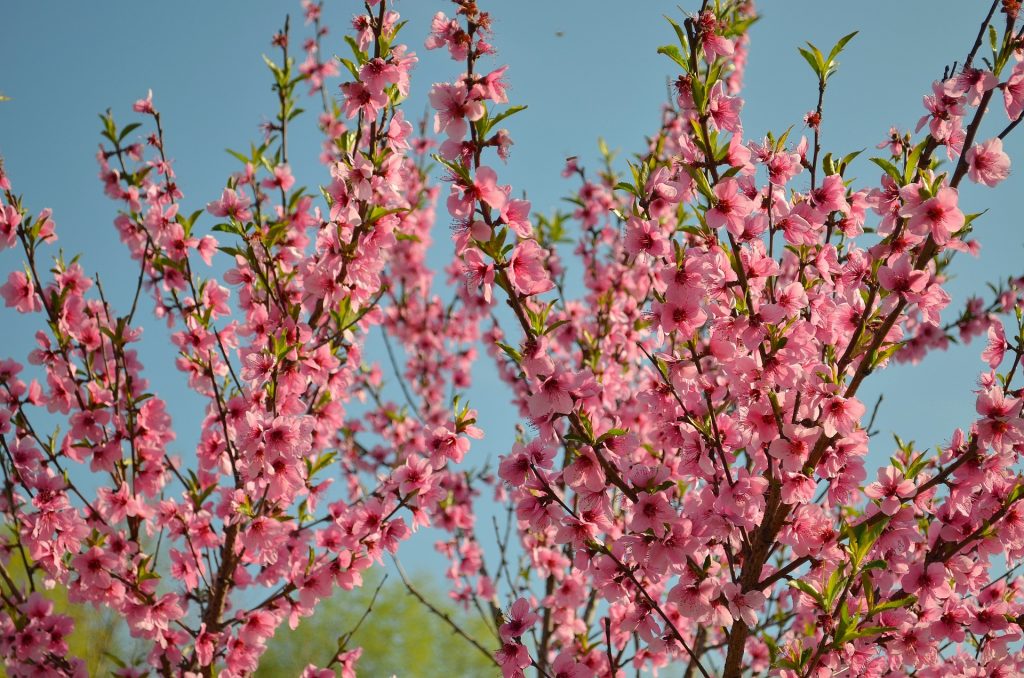
    This is what peach trees are beginning to look like in the Southeast; blooms everywhere.

    Chilling hours is not a concern for Alabama peach producers for the upcoming season. Potential damage from freezing temperatures is, however, something that may impact this year’s crop, according to Elina Coneva, Extension specialist in the Horticulture Department at Auburn University.

    “Feb. 15 was an important day for all fruit growers in the state. There were two things that were accomplished on that day. First of all, we have reached, at least in Chilton County, we have reached 1,009 chilling hour accumulation,” Coneva said during a ‘Q&A Friday’ segment on the Alabama Extension Commercial Horticulture Facebook page.

    “We thought, ‘Wow, our peaches are going to produce this year.’ We won’t have those concerns like in previous years when we were experiencing insufficiencies in chilling accumulation.

    “Good news comes with a caveat (however). On the night of the 15th of February and throughout the 16th, the same county, Chilton County, experienced temperatures of 15 degrees Fahrenheit. There are consequences, especially for our peaches, but for fruit crops to some extent.”

    Freeze Impact

    Extreme low temperatures have the potential to impact fruit tree production, especially if those trees have already started blooming. However, Alabama producers may have dodged the proverbial bullet with respect to susceptibility of those early varieties.

    Coneva said Edgar Vinson, an assistant research professor and Extension specialist in the Department of Horticulture at Auburn University, conducted a survey on 85 cultivars and their status following the freeze event.

    Results indicated that the early ripening cultivars that are more advanced and expected to be damaged higher seemed to fare better than cultivars that were completely dormant.

    “Our theory is that probably the humidity in those buds that were more advanced at this point of time helped overcome the wind effect that came with that cold. Flower buds on more advanced cultivars were faring better as well as the buds that were distributed on the lower part of the canopy. They did better than the middle and upper part of the trees, which was kind of unusual,” Coneva said.

    Peaches need chill hours to mature. The required chill hours depend on the peach variety, but most growers hope to get around 1,000 chill hours before spring.

  • Frozen: Peach Producers Have Limited Options Against Late Freeze

    Some things are inevitable every year for Southeast peach producers. That late-season frost event that could damage peach production for the upcoming season unfortunately tops the list.

    Pictured are peach blossoms.

    Even though chill hours are no longer a concern, peach farmers are worried that if temperatures warm up in the next several weeks their crop would be vulnerable to a late freeze.

    “Unfortunately, that’s exactly what happens every year to a different extent. How bad it’s going to be is going to depend on two major factors. What exact temperatures we’re going to experience and what is going to be the phenological stage of flower and development at this point of time,” said Elina Coneva, an Extension specialist in the Horticulture Department at Auburn University.

    Management Options

    Producers have limited options if they encounter a late-season freeze. Coneva said the best protection against high wind speeds is to establish barriers. When establishing orchards, try to plant near wooded species like pine trees. These serve as wind breaks against high winds.

    If a freeze event occurs and temperatures are higher during the day and diminish during the evening, heaters can be used. Producers can also utilize wind machines that provide air inversion, taking warm air from higher elevations and pushing it down to the trees.

    Growers can also protect against future frost events by planting orchards near water sources, like a pond or lake. Water retains higher temperatures longer. During such events, it can radiate some of those temperatures, added Coneva.

    “If the trees are dormant, we can expect some damage, if it’s 5 to 20 degrees Fahrenheit. But if they’re in the next stage of calyx green or calyx red, temperatures of 21 to 23 degrees Fahrenheit can cause some damage,” she said. “If the trees have already experienced some temperature fluctuation, like cold temperatures followed by warming periods of time and then experiencing some cold again and then warm-up events, this is pre-disposing the trees to advancing their development… we can expect more damage to occur.”