Policies and regulations can impact a farmer’s ability to make a living. The 2020 Florida, Georgia and Alabama legislative sessions have officially wrapped up, and the June issue of VSCNews magazine will tell readers how agriculture fared in each state.
Adam Basford, director of state legislative affairs for Florida Farm Bureau, discusses the successes and progress that has been made this legislative session.
Mary Ann Hooks, director of governmental affairs with the University of Florida Institute of Food and Agricultural Sciences (UF/IFAS), gives an update on how the UF/IFAS budget fared this year.
Georgia Lawmakers pressed the pause button on the 2020 legislative session due to COVID-19.
Georgia Agribusiness Council President Will Bentley discusses the Ag bills that were still in play when the session paused.
Furthermore, Ashley Robinson, AgNet Media communications intern, dives deeper into the Alabama session based on an interview with Leigha Cauthen, executive director of the Alabama Agribusiness Council.
Farmworker safety is also highlighted in the June issue. Amy Wolfe, president and CEO of AgSafe, discusses precautions that farm owners and managers should implement to ensure the safety of their farmworkers as the industry navigates through the COVID-19 pandemic. However, Wolfe warns not to trade out one risk for another. On top of additional COVID-19 precautions, growers shouldn’t overlook other tried-and-true general farm safety measures.
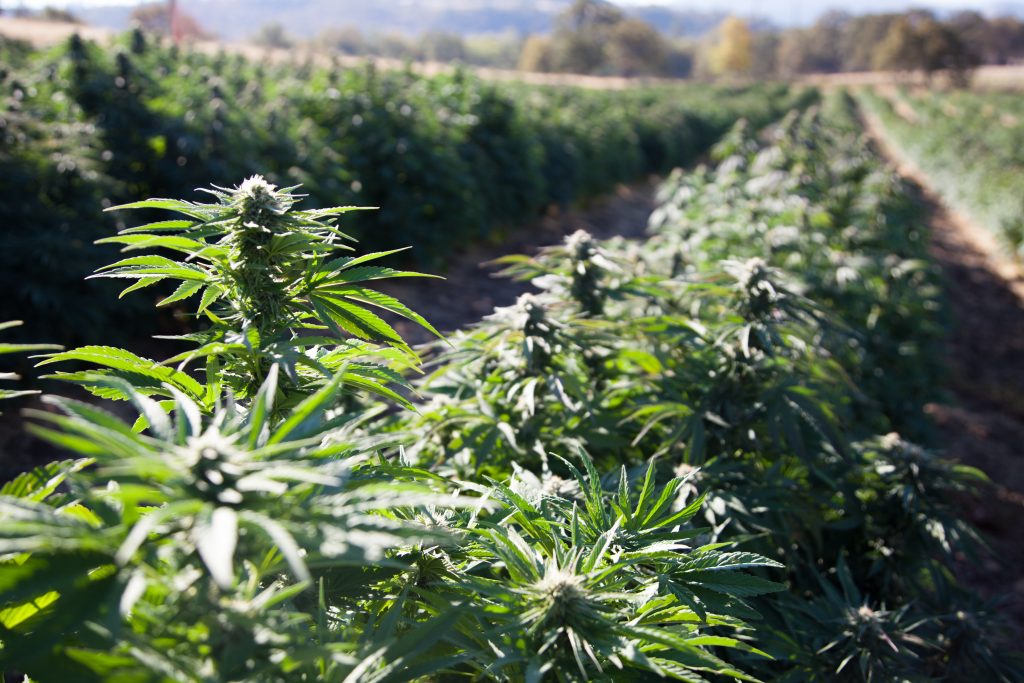
Hemp interest is still strong in the Southeast. Clint Thompson, AgNet Media multimedia journalist, looks at the impacts of COVID-19 on the hemp industry. Thompson also addresses the rules and regulations for producing hemp in Florida, Georgia and Alabama.
Lastly, Jaya Joshi, a postdoctoral associate at UF, discusses the future of meeting the demand for meat with plant proteins. According to Joshi, there is rising interest among consumers who want to eat less meat and dairy and more fruits and vegetables without compromising their protein intake. Plant-based protein may be the answer for these individuals.
To receive future issues of VSCNews magazine, visit click here.
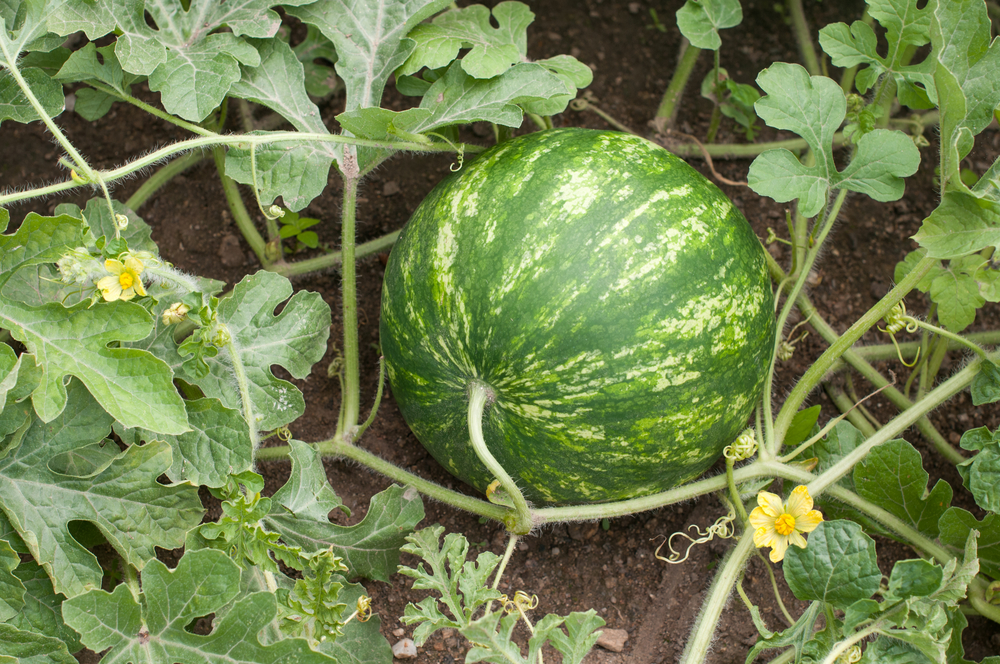
File photo shows a watermelon in a field ready to be harvested.
Winter Springs, FL — May 20, 2020 – The new National Watermelon Promotion Board (NWPB) Watermelon Supplier Database is the perfect platform to connect retail and foodservice buyers with suppliers as the summer season takes off for America’s favorite melon.
Each year the NWPB staff promotes watermelon to retail and foodservice audiences, both in person and digitally. When a contact asks where they can get watermelon, this new database with help connect the dots. The new Watermelon Supplier Database is based on the new watermelon.org in the Industry, Retail and Foodservice sections and at watermelon supplier database, so all interested groups can easily access the database.
The Board is still working to populate the database so if a member of the watermelon industry is interested, please visit watermelon supplier database. Multiple roles in the industry are encouraged to be a part of the database including wholesalers, growers, importers, brokers, processors, seed, transportation companies and more. Please reach out to supplierdatabase@watermelon.org with any questions.
The North Carolina Industrial Hemp Commission will hold a public hemp meeting via conference call so Commission members can review and approve applications.
It will be held on Friday, May 29 at 10 a.m. Access to the conference call can be made at http://go.ncsu.edu/industrialhemp or by calling 1-929-205-6099 (U.S. toll) or 1-699-900-6833 (U.S. toll). The meeting ID is 962-3632-5388. Participants will be prompted to enter their name and email address to enter the meeting via the website or prompted for unique participant ID for the call. They should press # to access the call.
For N.C. Industrial Hemp Commission questions, contact Beth Farrell at 919-707-3014 or beth.farrell@ncagr.gov. For questions about the N.C. Industrial Hemp Program, go to Hemp.
Broccoli is one of the specialty crops covered under CFAP.
Details of the Coronavirus Food Assistance Program (CFAP) were announced this week. It’s a program that will provide up to $16 billion in direct payments to deliver relief to America’s farmers and ranchers impacted by the coronavirus pandemic. In addition to this direct support, USDA’s Farmers to Families Food Box program is partnering with regional and local distributors to purchase $3 billion in fresh produce, dairy, and meat and deliver boxes to Americans in need.
According to Under Secretary of Agriculture for Marketing and Regulatory Programs Greg Ibach, CFAP does include specialty crops.
For eligible specialty crops, the total payment will be based on the volume of production sold between January 15 and April 15, 2020; the volume of production shipped, but unpaid; and the number of acres for which harvested production did not leave the farm or mature product destroyed or not harvested during that same time period, and which have not and will not be sold. Specialty crops include, but are not limited to, almonds, beans, broccoli, sweet corn, lemons, iceberg lettuce, spinach, squash, strawberries and tomatoes. A full list of eligible crops can be found on farmers.gov/cfap.
Beginning Tuesday, May 26, USDA’s Farm Service Agency (FSA), will be accepting applications from agricultural producers who have suffered losses.
Rain was widespread in April in North Carolina. According to the N.C. State Climate Blog, the National Centers for Environmental Information (NCEI) reports a statewide average precipitation of 5.15 inches, which ranks as the 17th-wettest April since 1895.
The highest totals came in the Mountains from a series of moisture-rich cold fronts that moved in from the west and southwest. The wettest site in the state, Highlands, recorded 12.73 inches for the month, while in the northern Mountains, Boone had its wettest April since 1982 with 11.70 inches.
The western Piedmont also picked up heavy rainfall. In Mount Airy, it was the wettest April out of 120 years of observations with 8.84 inches of precipitation. Charlotte had 7.10 inches and its 6th-wettest April on record, and Gastonia had 6.33 inches for its 5th-wettest April since 1931.
Latest U.S. Drought Monitor shows North Carolina is drought free.
Dry Areas
The driest spots were across parts of the Coastal Plain that didn’t see the same coverage of heavy rainfall, but even these sites finished the month close to normal. In New Bern, the monthly precipitation total of 2.84 inches was just 0.3 inches below normal.
The southern coast did see the bulk of the severe weather activity on April 13 during that morning’s tornado outbreak. A total of 16 tornadoes were confirmed across the state that day, including nine EFOs, six EF1s, and one EF2.
While those were the only tornadoes in North Carolina last month, it was still an active month for thunderstorms. The National Weather Service issued a total of 473 severe thunderstorm warnings across the state — the most in a single month since last August. It’s also an impressive total considering there were just five severe thunderstorm warnings in the state in March.
Drop in Temperatures
March may have ended with temperatures approaching 90 degrees F in parts of the state, but that extreme heat was non-existent in April. NCEI notes the statewide average temperature last month was 57.5°F, which was the 53rd-coolest April out of the past 126 years.
Most sites finished the month with average mean temperatures within a degree or two of normal. The coolest sites were in the rain-soaked parts of the Mountains, including Jefferson, which tied for its 4th-coolest April out of 88 years with data.
Along with cloudy, wet weather keeping temperatures down, pronounced troughing in the jet stream over the eastern US persisted throughout the month, which contributed to the overall unsettled April pattern.
(Washington, D.C., May 19, 2020) – U.S. Secretary of Agriculture Sonny Perdue today announced details of the Coronavirus Food Assistance Program (CFAP), which will provide up to $16 billion in direct payments to deliver relief to America’s farmers and ranchers impacted by the coronavirus pandemic. In addition to this direct support to farmers and ranchers, USDA’s Farmers to Families Food Box program is partnering with regional and local distributors, whose workforces have been significantly impacted by the closure of many restaurants, hotels, and other food service entities, to purchase $3 billion in fresh produce, dairy, and meat and deliver boxes to Americans in need.
“America’s farming community is facing an unprecedented situation as our nation tackles the coronavirus. President Trump has authorized USDA to ensure our patriotic farmers, ranchers, and producers are supported and we are moving quickly to open applications to get payments out the door and into the pockets of farmers,” said Secretary Perdue. “These payments will help keep farmers afloat while market demand returns as our nation reopens and recovers. America’s farmers are resilient and will get through this challenge just like they always do with faith, hard work, and determination.”
Beginning May 26, the U.S. Department of Agriculture (USDA), through the Farm Service Agency (FSA), will be accepting applications from agricultural producers who have suffered losses.
Background:
CFAP provides vital financial assistance to producers of agricultural commodities who have suffered a five-percent-or-greater price decline due to COVID-19 and face additional significant marketing costs as a result of lower demand, surplus production, and disruptions to shipping patterns and the orderly marketing of commodities.
Farmers and ranchers will receive direct support, drawn from two possible funding sources. The first source of funding is $9.5 billion in appropriated funding provided in the Coronavirus Aid, Relief, and Economic Stability (CARES) Act to compensate farmers for losses due to price declines that occurred between mid-January 2020, and mid-April 2020 and provides support for specialty crops for product that had been shipped from the farm between the same time period but subsequently spoiled due to loss of marketing channels. The second funding source uses the Commodity Credit Corporation Charter Act to compensate producers for $6.5 billion in losses due to on-going market disruptions.
Non-Specialty Crops and Wool
Non-specialty crops eligible for CFAP payments include malting barley, canola, corn, upland cotton, millet, oats, soybeans, sorghum, sunflowers, durum wheat, and hard red spring wheat. Wool is also eligible. Producers will be paid based on inventory subject to price risk held as of January 15, 2020. A payment will be made based 50 percent of a producer’s 2019 total production or the 2019 inventory as of January 15, 2020, whichever is smaller, multiplied by the commodity’s applicable payment rates.
Livestock
Livestock eligible for CFAP include cattle, lambs, yearlings and hogs. The total payment will be calculated using the sum of the producer’s number of livestock sold between January 15 and April 15, 2020, multiplied by the payment rates per head, and the highest inventory number of livestock between April 16 and May 14, 2020, multiplied by the payment rate per head.
Dairy
For dairy, the total payment will be calculated based on a producer’s certification of milk production for the first quarter of calendar year 2020 multiplied by a national price decline during the same quarter. The second part of the payment is based a national adjustment to each producer’s production in the first quarter.
Specialty Crops
For eligible specialty crops, the total payment will be based on the volume of production sold between January 15 and April 15, 2020; the volume of production shipped, but unpaid; and the number of acres for which harvested production did not leave the farm or mature product destroyed or not harvested during that same time period, and which have not and will not be sold. Specialty crops include, but are not limited to, almonds, beans, broccoli, sweet corn, lemons, iceberg lettuce, spinach, squash, strawberries and tomatoes. A full list of eligible crops can be found on farmers.gov/cfap. Additional crops may be deemed eligible at a later date.
Eligibility
There is a payment limitation of $250,000 per person or entity for all commodities combined. Applicants who are corporations, limited liability companies or limited partnerships may qualify for additional payment limits where members actively provide personal labor or personal management for the farming operation. Producers will also have to certify they meet the Adjusted Gross Income limitation of $900,000 unless at least 75 percent or more of their income is derived from farming, ranching or forestry-related activities. Producers must also be in compliance with Highly Erodible Land and Wetland Conservation provisions.
Applying for Assistance
Producers can apply for assistance beginning on May 26, 2020. Additional information and application forms can be found at farmers.gov/cfap. Producers of all eligible commodities will apply through their local FSA office. Documentation to support the producer’s application and certification may be requested. FSA has streamlined the signup process to not require an acreage report at the time of application and a USDA farm number may not be immediately needed. Applications will be accepted through August 28, 2020.
Payment Structure
To ensure the availability of funding throughout the application period, producers will receive 80 percent of their maximum total payment upon approval of the application. The remaining portion of the payment, not to exceed the payment limit, will be paid at a later date as funds remain available.
USDA Service Centers are open for business by phone appointment only, and field work will continue with appropriate social distancing. While program delivery staff will continue to come into the office, they will be working with producers by phone and using online tools whenever possible. All Service Center visitors wishing to conduct business with the FSA, Natural Resources Conservation Service, or any other Service Center agency are required to call their Service Center to schedule a phone appointment. More information can be found at farmers.gov/coronavirus.
The Coronavirus Food Assistance Program (CFAP) has brought more questions than answers with respect to financial aid for growers in response to the ongoing coronavirus pandemic.
The $19 billion program includes $16 billion in direct payments for farmers and ranchers. CFAP has payment restrictions of $125,000 per commodity and a total of $250,000 per applicant for all commodities. Growers and industry leaders hope that cap on payment restrictions gets removed.
“For specialty crop growers, $125,000 is a drop in the bucket for most of their losses,” said Charles Hall, executive director of the Georgia Fruit and Vegetable Growers Association.
“The biggest thing right now is the government allocated per crop a cap of $125,000, which is nothing. We’re really working trying to get the USDA to see and understand the massive hit that Florida is taking and raise the direct payment caps,” Allen said. “What is fair is not always equal.
“It costs 10 times to grow vegetable crops what it does regular commodity crops.”
Pandemic Punishes Producers
In a previous interview in early April, Allen said he left about 2 million pounds of green beans in the field and about 5 million pounds of cabbage. All due to the coronavirus pandemic that shut restaurants down and closed off a major supply chain to foodservice industries.
Perdue
According to an AgNet West story, a group of lawmakers, which included 28 members of the U.S. Senate and 126 members of the U.S. House of Representatives, issued a letter to President Donald Trump and USDA Secretary Sonny Perdue. They asked for the removal of payment caps from CFAP before the final program details are announced. The letter points out that the payment restrictions would limit the effectiveness of the program. This is especially true for livestock, dairy and specialty crop producers.
Another concern is how payments will be divided between losses sustained before and April 15. An 85% payout will be issued for losses sustained from January 1 to April 15 but only 30% after April 15.
“Our concern was what’s the difference in a loss after April 15 and before April 15. After April 15, that grower has got the same loss as before April 15. Most of our growers’ losses will come after April 15,” Hall said. “We’ve been told that’s going to be fixed, too. I haven’t seen anything firm from the USDA on that.”
Watermelons are in short supply and high demand right now.
By Clint Thompson
Watermelons are in short supply and high demand right now. Alabama produce farmer Art Sessions hopes to capitalize when his crop becomes ready the first week in June.
“We’ve been getting watermelons out of Florida and they are scarce. Everything coming out of Florida is really tight on account of this virus deal,” said Sessions, who also said there’s high demand for tomatoes as well. “It’s really affecting the supply chain pretty bad. A lot of the product are short, like tomatoes. Tomatoes are as high as I’ve ever seen them for this time of year. From what I’ve gathered, a lot of the pickers left on account of this virus.”
Sessions Farm is in Grand Bay, Alabama. It produces approximately 50 acres of watermelons, starting with a few yellow-meat varieties in the next couple of weeks. He has had to buy watermelons from Florida and can attest to the high costs farmers can sell their crop for.
“They’re pretty high right now, sure are. They aren’t outlandish. They’re pretty reasonable. We’ve been buying a lot of Florida. They are higher than normally what we would sell ours for,” Sessions said.
Shortage by Memorial Day?
Carr Hussey, a watermelon farmer in Florida and Alabama and chairman of the board of the Florida Watermelon Association, confirmed on Tuesday that watermelons are in short supply and there could be a shortage by Memorial Day. He said prices are around 20 cents per pound right now but could improve to 22 or 24 cents around Memorial Day weekend.
This could lead to continued higher prices for farmers in North Florida, Alabama and Georgia when they start harvesting their crops in June.
Sessions wonders if the current coronavirus pandemic impacted the supply chain.
“I think a lot of guys, when this thing hit, they backed out of planting. They didn’t plant as much,” Sessions said. “We had already planted when this thing hit, or we would have backed way off. Just the uncertainty of not knowing if you’re going to be able to sell your crop. A lot of folks we sell to shut down and they are just now opening things back up. That’s one reason the prices on some of this stuff is strong because everybody now is wanting stuff and it’s hard to get.”
North Carolina State small fruits Extension specialist Mark Hoffmann confirmed that grapes in his state experienced frost damage during last weekend’s cooler temperatures. The state’s strawberries appear to have escaped damage.
Hoffmann
“We got lucky for the most part and didn’t see a lot of damage in strawberries. Still a pretty strong strawberry season,” Hoffmann said. “But we had more frost damage in the mountains on grapes. I expect some crop loss this year due to frost damage on grapes.”
Freeze warnings and frost advisories were issued for different parts of North Carolina. Heading into the weekend, Hoffmann expected that strawberry growers would implement row covers on their crop. Row covers help reduce radiation in the field and provide adequate frost protection from temperatures in the 30s. Strawberry production is currently in mid-season. If row covers were not used, the low temperatures could have harmed the open blossoms that are still on plants, which lead to late-season fruit. Temperatures could also harm the actual fruits in popcorn stage and other green fruits.
He also confirmed this was the third frost event for the state’s grape crop. It was especially vulnerable this time since it is late in the season.
Hoffmann estimates that more than 1 million bottles of wine are produced every year in the state and there are 1,500 acres of grape in state.
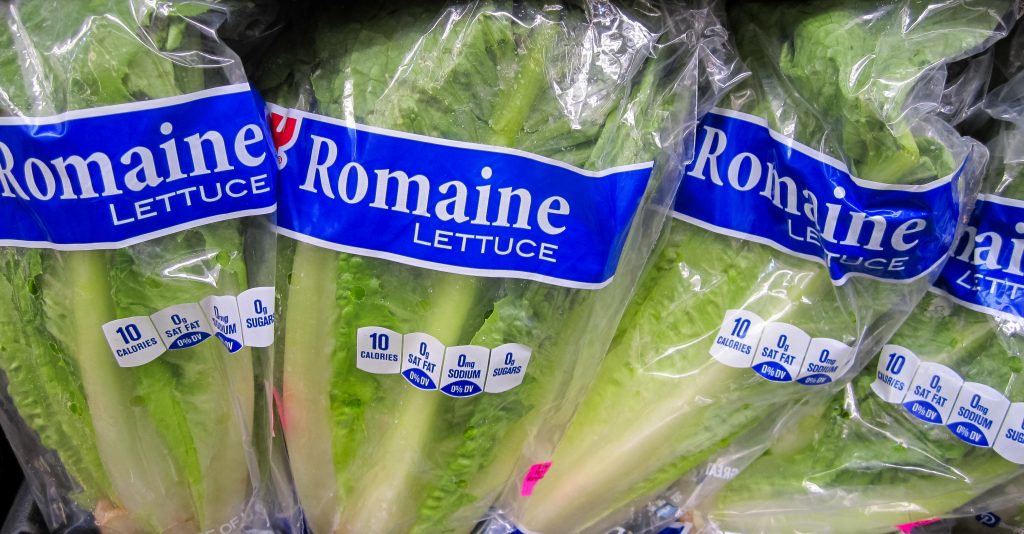
Fresh romaine lettuce on display at local grocery store. Credit: The Toidi / Shutterstock.com
ARS News Service
SALINAS, CALIFORNIA, May 13, 2020—Agricultural Research Service (ARS) scientists have identified five Romaine lettuce varieties that both brown less quickly after fresh-cut processing and are slower to deteriorate postharvest.
They also are determining the genetic basis for deterioration. The researchers have identified the location of genes associated with postharvest deterioration of fresh-cut lettuce, and are in the process of identifying genes associated with browning, two economically important traits. This will speed up development of new Romaine varieties with better shelf-life because now lettuce breeders will be able to check that offspring carry these genes without needing to grow out and destructively test for browning and deterioration resistance.
Lettuces are the most popular, commercially produced, leafy vegetables in the world. They have a farmgate value of more than $2.5 billion in the United States in 2017, making them one of top ten most valuable crops for the country. But fresh-cut lettuce is a highly perishable product.
“The inability to evaluate for deterioration early in the process of developing new varieties has been a real impediment to breeding advances. Now having these molecular markers means that slow deterioration and eventually less browning can be more easily integrated into lettuce breeding, traits that are important economic considerations,” said research geneticist Ivan Simko with the ARS Crop Improvement and Protection Research Unit in Salinas, California, who led the deterioration study.
When you consider browning and deterioration ratings together, the best breeding lines for commercial production, and also for use as parents to develop new varieties are (in alphabetic order): Darkland, Green Towers, Hearts Delight, Parris Island Cos, and SM13-R2, which is a breeding line developed at the ARS lab in Salinas.
In addition, the researchers found the chromosome region that contains the genes for slow deterioration also contains four genes (Dm4, Dm7, Dm11, and Dm44) and one DNA region (qDm4.2) that code for resistance to downy mildew—one of the most-costly lettuce disease.
This colocation indicates a strong linkage between one or more of the four genes and the rate of deterioration. DNA-based markers can be used to develop new breeding lines with slow rate of deterioration and desirable combinations of resistance genes.
Deterioration is the rupture of cells within lettuce leaves, leading to waterlogging and the lettuce turning to mush. Browning is the discoloration of the edges of lettuce after cutting or tearing. Either development can spoil the leafy vegetable’s value by decreasing shelf life.
In an effort to control browning and prolong shelf life, lettuce processors have been turning to modified atmosphere packaging and flushing bags of cut lettuce with nitrogen gas to reduce oxygen levels in the bags.
But these practices are costly. They also can lead to other problems such as off-odors and, when coupled with high storage temperatures that promote anerobic bacteria growth on the bagged lettuce.
“Our study was aimed at finding lettuces that possessed low browning potential without the need for limiting the oxygen supply,” explained research food technologist Yaguang (Sunny) Luo, who led the browning study. Luo is with the ARS Food Quality Laboratory in Beltsville, MD.
Like deterioration, there was significant correlation between high resistance to browning and pedigree, which gives promise that lettuce breeders will be able to improve the trait and incorporate it into new varieties, Luo added.
The Agricultural Research Service is the U.S. Department of Agriculture’s chief scientific in-house research agency. Daily, ARS focuses on solutions to agricultural problems affecting America. Each dollar invested in agricultural research results in $20 of economic impact.