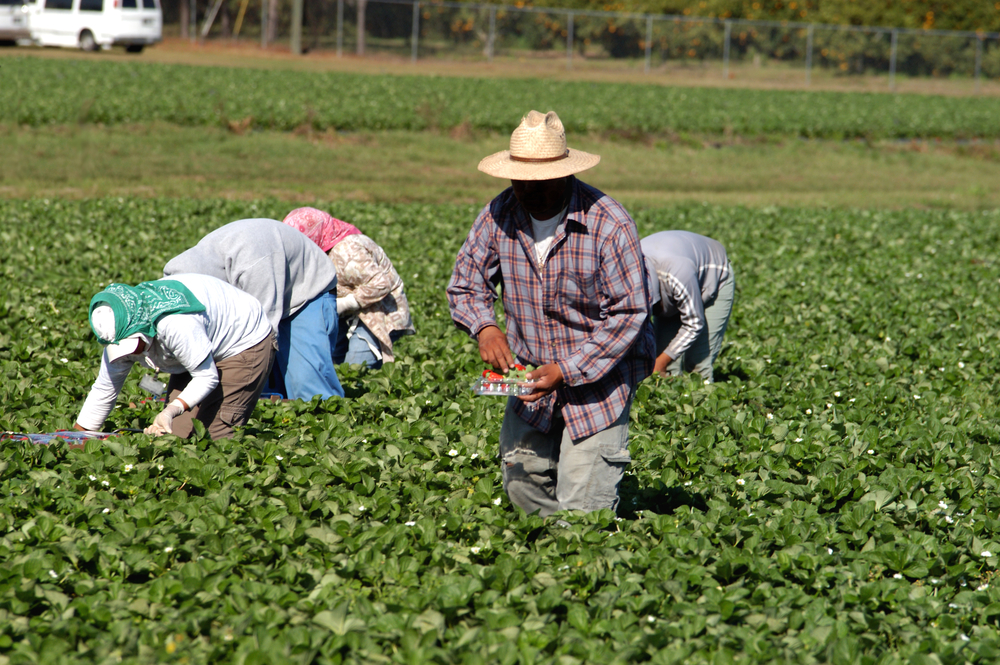
A national coalition of 64 organizations representing specialty crop producers sent a letter to Congressional leadership this week on safety protocols within the industry during COVID-19. They want Congress to know the steps agricultural employers are taking to protect their workers.
“Farmers and ranchers across the country moved quickly to implement new employee safety protocols early in the crisis,” says National Council of Agricultural Employers President Michael Marsh. “While America was being placed on lockdown, agricultural employers were already at work trying to figure out how to best protect their employees and the public.”
The letter details the collaboration between the agriculture industry, public health experts, and regulatory officials to develop the best safety practices in the field and packing. As future rounds of COVID-19 pandemic legislation is debated, the coalition is asking congressional leaders to acknowledge the widespread employee protection protocols that are already in place, as well as provide additional support to help agricultural employers continue to meet the needs of their employees.
The Western Growers Association, a member of the coalition, is asking Congress to “extend current relief efforts for agriculture, and to include additional funding for personal protective equipment and other measures to offset the costs of maintaining an essential workforce during COVID-19.”
(From the NationalAssociation of Farm Broadcasters)
RALEIGH – As North Carolina begins to open up, state officials are reminding shoppers at the four state-operated farmers markets in Asheville, Charlotte, Colfax and Raleigh to continue practicing social distancing and other safety measures while visiting the markets.
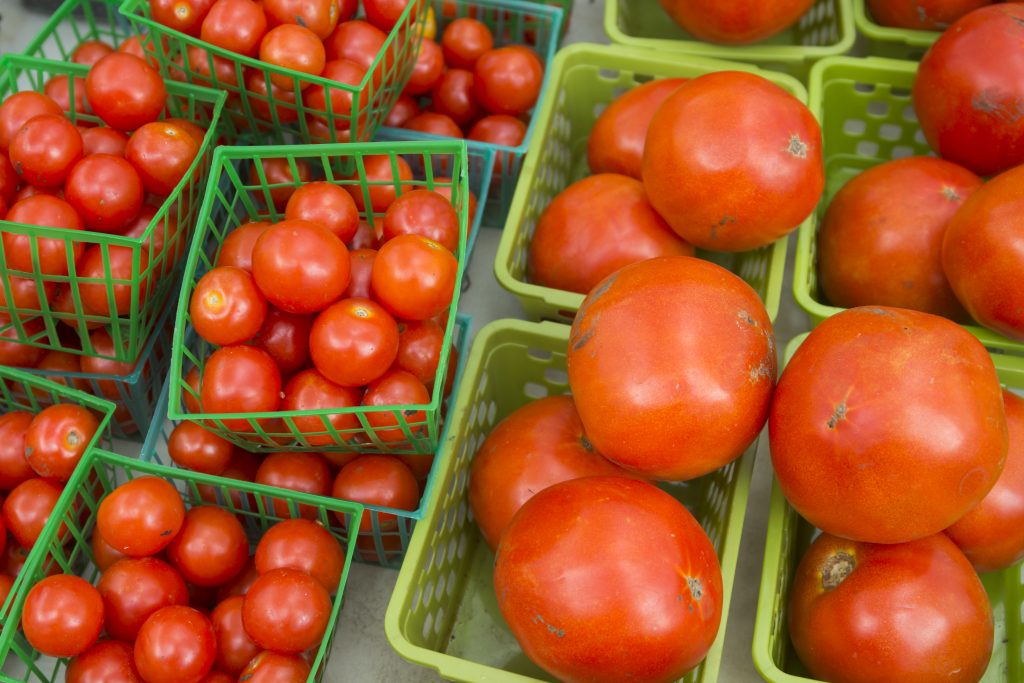
Tomatoes on sale at a farmers market. Photo taken 07-17-17
“We have taken every precaution to ensure the safety of both farmers and shoppers at the market,” said Agriculture Commissioner Steve Troxler. “Now, we need the public to do their part by practicing social distancing and continuing to follow the recommendations of the CDC and public health officials.”
Many changes have already been made at farmers markets to ensure the safety of shoppers. These changes include limiting the number of vendors at the market, increasing spacing between vendors, adding additional hand sanitizer stations, and providing masks and gloves for market vendors. In addition, the department is asking families to designate a family shopper and limit their time at the market.
“We love seeing entire families spend a Saturday morning at the market, but now is not the time for that,” Troxler said. “We encourage people to designate a family shopper, make a shopping list before they come, purchase what they need and go home.”
About our markets:
State Farmers Market, 1201 Agriculture St., Raleigh Hours: Monday through Saturday, 5 a.m. to 6 p.m. and Sunday, 8 a.m. to 6 p.m. Special Days for At-Risk Population: Mondays and Tuesdays Note: State Farmers Market Restaurant, N.C. Seafood Restaurant, Market Grill, 321 Coffee are closed.
WNC Farmers Market, 570 Brevard Road, Asheville Hours: Open seven days a week from 8 a.m. to 5 p.m. Special Days for At-Risk Population: Mondays and Tuesdays Note: The Moose Café is closed.
Charlotte Regional Farmers Market, 1801 Yorkmont Road, Charlotte Hours: Open Tuesday through Saturday from 8 a.m. to 6 p.m., and Sunday, 12-6 p.m. Special Days for At-Risk Population: Tuesdays-Thursdays
Robert G. Shaw Piedmont Triad Farmers Market, 2914 Sandy Ridge Road, Colfax Hours: Open seven days a week from 7 a.m. to 6 p.m. Special Days for At-Risk Population: Mondays and Tuesdays Note: The Moose Café is closed. For more information follow the markets on Facebook or visit www.ncagr.gov/markets/facilities/index.htm.
Potential freezing temperatures this weekend in North Carolina could impact strawberry production. Unless farmers utilize row covers for protection.
According to Mark Hoffmann, North Carolina State small fruits Extension specialist, row covers, which help reduce radiation in the field should provide adequate frost protection from temperatures in the 30s on Saturday and Sunday.
“It looks like in most areas, what’s happening is that if the wind slows down Saturday night to Sunday and we have no cloud cover, that’s probably the most critical time. When it’s Sunday morning and still dark and there’s a lot of radiation, that’s probably the most critical time. With row covers, they will be safe,” Hoffmann said.
Low Temps
According to weather.com, temperatures are forecast to drop to as low as 39 degrees on Sunday morning in Raleigh, North Carolina. Temperatures that low are abnormal this late into May for that part of the world.
“It’s pretty late. I wasn’t expecting it. We were not recommending taking the covers out of the field because we had seen such odd weather patterns this year. It’s very, very late,” Hoffmann said. “Most of the growers had taken their row covers out of the field. They have to put them back in over this weekend.”
Strawberry production is currently in mid-season. If row covers are not used, the low temperatures could harm the open blossoms that are still on plants, which lead to late-season fruit. Temperatures could also harm the actual fruits in popcorn stage and other green fruits.
The drop in degrees this weekend could also impact the state’s grape production.
“This is the third frost event to affect grapes this year already. Usually they grow out of it. This is pretty late in the season again. Unless you have a sprinkler system or wind machine, there’s not a lot you can do, unfortunately,” Hoffmann said.
Written By Chris Gunter, N.C. State Extension Vegetable Production Specialist
Weather predictions for this weekend include clear skies with minimal or calm winds, which are conducive to cold temperatures and could lead to freeze or frost conditions in North Carolina.
On Sunday morning, May 10, low temperatures are predicted to drop into the 30s with some temperatures possibly below freezing in low lying rural areas. Record low temperatures for May 10 are in the lower 30s at the Greensboro and Raleigh-Durham locations, and 39 ºF at Fayetteville. Not only are daily low-temperature records threatened, but the latest spring freeze on record is May 10 for Raleigh (31 ºF) and May 8 for Greensboro (32 ºF).
As cold temperatures are threatening, agents and specialists are getting calls from concerned vegetable growers worried about potential damage on their crops. A frost occurs when temperatures dip to 32 ºF and water starts to freeze on low lying surfaces. If water within the plant cell or between the plant cells freeze, this can result in damage to plant tissue. The following vegetable crops can be grouped according to their cold tolerance based on their physiology. It is important to remember that cold damage results from the actual temperature and the duration of that temperature.
We usually think of frost as occurring at temperatures from 31-33 ºF and this will result in damage or killing the foliage of warm-season plants like beans, corn, cantaloupe, cucumbers, eggplant, okra, southern peas, peppers, potatoes, sweet corn, sweetpotatoes, squash, tomatoes, and watermelon.
When temperatures dip below 26-31 ºF, this is a hard frost or freeze. There are cool-season crops that will tolerate a temperature dip to these temperatures for a limited period of time. These include broccoli, cabbage, cauliflower, chard, English peas, lettuce, mustard, onion, radishes, and turnips. They will likely show foliage damage due to the cold and this may result in a yield reduction later in the season, but the plant will survive.
In the event that the temperature drops below 26 ºF during a hard freeze for a longer period of time, there are some vegetables that will survive these temperatures. Cold season crops like Brussels sprouts, beets, collards, kale, parsley, and spinach should survive.
Charlotte Glen wrote a great article about seeds and seedlings surviving cold temperatures. We encourage you to check it out here:
Protecting from these cold temperatures can be a little more difficult to answer. Growers who have solid set irrigation in place and have experience with frost protection using overhead water applications, may be planning to use this method. This requires large volumes of water and continuous applications throughout the cold event. For most vegetable growers however, overhead solid set sprinkler irrigation is less common than drip irrigation or travelling guns and pivot irrigation systems.
Usually maintaining good soil moisture prior to the event can be helpful, as the water in the soil retains heat longer and releases it slowly during the cold event. For this reason, it is also recommended not to cultivate just prior to a frost or freeze, so that as much water can be retained in the soil as possible. The cultivation can damage plant roots and increase stress on the plants. In addition, cultivation opens additional spaces in the soil, allowing cool air to penetrate deeper into the soil profile.
Other methods for frost protection include using row covers, which come in various lengths and thicknesses depending upon the level of protection needed. Growers can also use waxed paper cups, to cover the transplants in the field, during an overnight cold period. These are labor-intensive methods, but may be an option if areas are small enough and the farm has sufficient labor to put on and remove the covers as temperatures warm back up. If coverings are used, it is important to monitor temperatures under the covers. Be prepared to remove the covers before temperatures under the cover rise too high and result in heat stress.
With unemployment rates hitting record levels in the United States and North Carolina, hunger-relief agencies and nonprofit organizations are encouraging donations. At NC State, Extension Small Fruit Specialist Mark Hoffmann is heeding the call.
For each of the past three weeks, Hoffmann has harvested between 75 and 100 pounds of strawberries from his experimental plots in Clayton and delivered them to the Inter-Faith Food Shuttle Farm along Tryon Road.
The need is greater than we have ever seen as an organization.
Farm Manager Kayla Clark says the donation meets an important and timely need in central North Carolina, contributing to the food shuttle’s efforts to end hunger in Wake, Durham, Johnston, Orange, Chatham, Nash and Edgecombe counties.
The food shuttle provides not only shelf-stable food but also healthy, fresh produce, and the organization has been “low on produce these days,” Clark says.
“With the unemployment rate rising so quickly, the need is greater than we have ever seen as an organization,” she says.
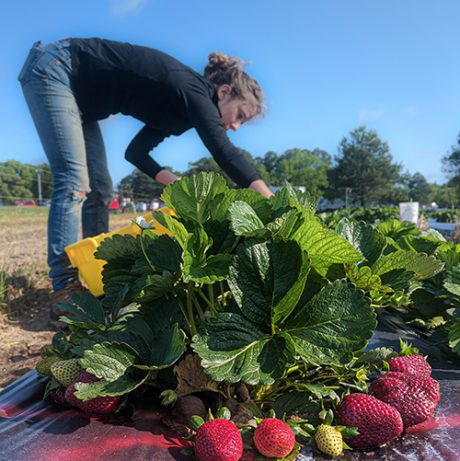
Technician Emma Volk examines strawberry plants at the Central Crops Research Station in Clayton.
Hoffmann passes the nonprofit’s farm on his way home from work, where he conducts research and extension education programs aimed at helping growers improve the economic and environmental sustainability of their farms. It occurred to him that donating the berries to the food shuttle would mean that they would benefit not just those growers but also families and individuals hard hit by the economic downturn associated with the COVID-19 pandemic.
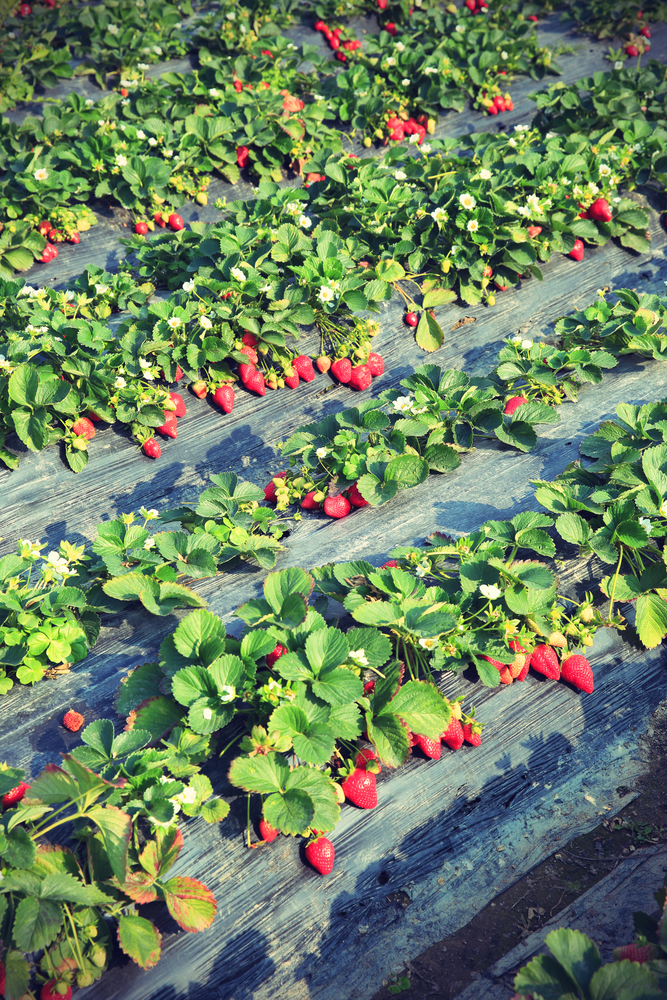
A warm winter set the stage for a strawberry season that’s the best the state has seen in years, Hoffmann says. Production has hit its stride, and the crop has been both beautiful and bountiful.
In fact, the harvest has been so good that Hoffmann wasn’t sure what he could do with hundreds of pounds of strawberries he’s been harvesting from his research plot at the Central Crops Research Station.
We have a bumper crop …, and I didn’t want to throw them away.
Normally, Hoffmann and his associates would distribute the berries to others on campus to acknowledge their support of the university’s small fruits team and their research and Extension work.
“The strawberries were really good this year, and the season has gone well so we have a bumper crop. It’s a lot of strawberries, and I didn’t want to throw them away and didn’t see any other option,” Hoffmann says.
“I’m actually eating strawberries every day right now, but they’re way too many strawberries for me to eat by myself,” he adds. “Even if I could distribute them among my students, there’d still be too many left over.”
Small but important
Hoffmann expects the crop will amount to 450 to 550 pounds – a small fraction of the 6 million pounds of food that the food shuttle distributes each year to people with low incomes.
Still, Clark says the donation makes a significant difference – and so does the advice he’s provided the farm on managing and expanding its muscadine grape operation.
Clark says she’s happy “that our neighbors in need will be able to enjoy the freshest and sweetest strawberries that they possibly could.”
File photo shows muscadine grapes. North Carolina producers need to be ready for colder temperatures.
North Carolina strawberry and grape producers need to be wary of colder temperatures this week, according Mark Hoffmann, North Carolina State Small Fruits Extension Specialist, in his message to producers.
Temperatures will fall significantly this week, with a slight chance of rain in North Carolina on Friday and Saturday, and clouds coming in from the Northwest. These weather conditions will lead to minimum temperatures below 40 degrees during the night from Saturday to Sunday in the mountains and wide areas of the Piedmont.
Hoffmann said to check your local weather if you are in an area that can get a lot of frost. If there is a chance of frost, please use row covers to protect your blooms from Saturday to Sunday.
The North Carolina Industrial Hemp Commission met on Friday.
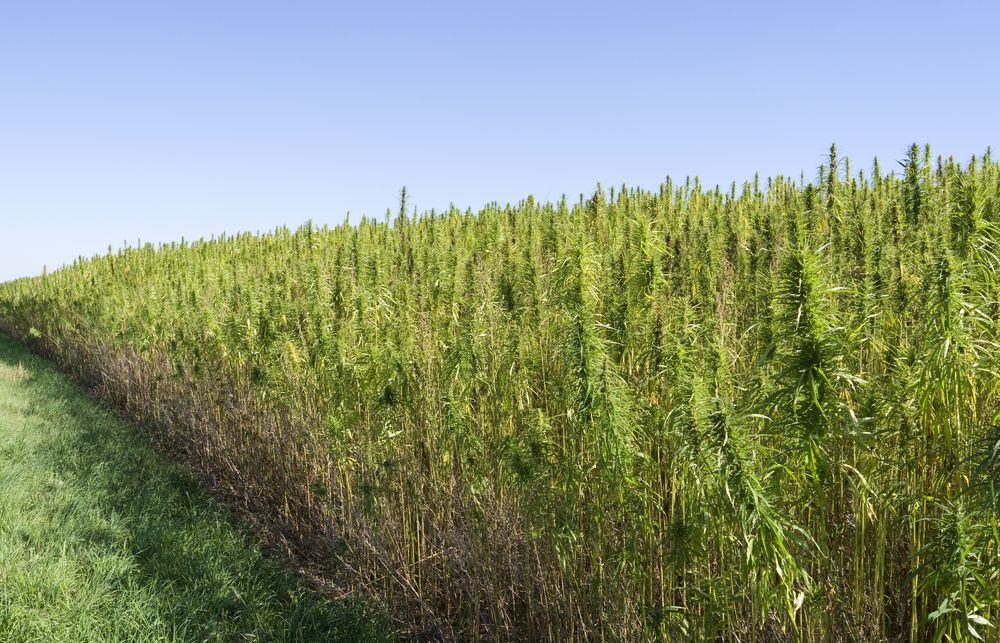
According to Paul Adams, with the North Carolina Department of Agriculture and Consumer Services, there are 1,481 licensed hemp growers, 17,167.3 licensed acres, 7.2 million licensed square feet of greenhouse space and 1,061 registered processors.
North Carolina is still operating under the state’s pilot program, just as it has since 2017 when the program started. If you want to grow hemp, you will need to apply for a license from the North Carolina Department of Agriculture and Consumer Services (NCDA&CS). However, that will all change soon.
“Something is going to have to happen by Nov. 1,” says Jeanine Davis, Extension specialist and researcher in the Department of Horticultural Science at North Carolina State University.
The state’s pilot program expires October 31, 2020, which leaves two options moving forward: North Carolina can submit a state plan to the United States Department of Agriculture (USDA) for approval, in which case the (NCDA&CS) would continue to regulate hemp licensing; or the state can go under the USDA’s plan, which would mean that growers would apply for a license directly from the USDA.
Davis said a final decision hasn’t been made yet, but growers are waiting in anticipation.
N.C. Hemp Pilot Program Sees Success
Since the state’s pilot program began in 2017, hemp has proven to be a successful and exciting crop for North Carolina.
“We can grow beautiful hemp all across North Carolina,” says Davis. “It takes some time and experience to learn how to grow it. But we see good crops being produced all across the state.”
According to Davis, the issues growers have seen haven’t been in crop production but rather in areas such as financing and markets.
“Hemp is unique because we’re all learning it together. We didn’t have established markets or a lot of information to draw on. So our markets are developing right along with the growers,” Davis said.
She advises new growers to focus on efficiency.
“In our first couple of years, if you were able to grow good hemp, you could probably sell it. But this year, you’re really going to have to concentrate on being a very efficient grower and doing things well.”
In the first couple of years, growers had to rely on hand labor because of the lack of appropriate equipment to grow and harvest hemp. Now, growers need a specialty, niche market lined up that will pay high enough prices to cover those labor costs. If not, growers are going to have to mechanize and increase efficiency to stay competitive.
Overall, Davis is excited about what hemp means for agriculture in the state.
“It’s a very exciting time to be in agriculture. I love seeing a new crop such as hemp that has been embraced by so many. It’s been interesting to see this crop develop and to see it engage people of all ages and all walks of life,” Davis said.
Article written by Mark Hoffmann (mark.hoffmann@ncsu.edu) and Chip Simmons (odsimmon@ncsu.edu); NC State University
The following describes actions a grower should take if there is a positive COVID-19 case is on the farm:
Preparation and Prevention:
Have an emergency plan for how you will (1) care and (2) isolate COVID-19 infected workers. Identify the nearest healthcare facility that provides free or low-cost care to uninsured people.
Promote Social Distancing, Protection and Hygiene
Educate yourself and workers about hand hygiene, respiratory etiquette and emergency responses (Spanish and English).
Social distancing between farm workers can encompass differences in work flow as well as potentially impacting worker responsibilities. All of this information should be captured in an emergency plan. To protect your work force as well as yourself, the implementation of social distancing and other safety measures is highly recommended.
Provide weekly supplies to each farmworker to fight COVID-19, such as alcohol-based hand sanitizer (if available), disinfectants and lined trash cans. Hand washing is a key to preventing the spread of COVID-19, and growers should always provide adequate hand wash facilities, stocked with soap and disposable towels for hand drying.
Active Prevention
Screen arriving workers for symptoms of COVID-19 such as fever, cough, or shortness of breath.
Clean and Sanitize your farm: COVID-19 and small produce farms. In addition to routine cleaning and sanitation, it is recommended that if there is a COVID-19 positive on the farm, all common touch surfaces, such as door knobs, bathrooms, touchscreens, etc. be disinfected with a dilute bleach solution (1,000 ppm – 5 tablespoons / gal water) or a disinfectant listed in the EPA List N: Disinfectants for Use against SARS-COV-2. (SARS-COV-2 is the virus that causes COVID-19.)
If a worker has symptoms or is confirmed COVID-19
This worker should stop working immediately.
If there is an onsite room designated for ill workers, suspect COVID-19 cases should be directed to that room at the time of symptom onset until appropriate isolation plans can be carried out.
Contact your local health department as required by OSHA.
Arrange for ill workers to be evaluated by a medical provider.
Make sure every worker has enough food and water as they will be quarantined and unable to leave the farm.
Frequently check on the ill worker in isolation to monitor for worsening symptoms. About 20% of infected people will develop severe respiratory symptoms that may require hospitalization.
Instruct workers who have had close contact with a COVID-19 patient to self-monitor for symptoms of COVID-19 (fever, cough, or shortness of breath) for 14 days. Those exposed should be separated from non-exposed workers for 14 days (e.g. sleep in a separate room, work in a separate area, use a separate bathroom and cooking facility). Workers can continue to work unless they have tested positive for COVID-19 or are exhibiting any symptoms (fever, cough, shortness of breath, etc.) according to the FDA – see these guidelines. If they develop symptoms of COVID-19, they should immediately be quarantined and you should contact your local health department.
Additional steps such as deep cleaning of facilities or complete closure of the business are not mandatory, but can be taken if the business owner believes it is safer for all workers and customers.
Failure to provide separate housing for infected workers could reasonably be expected to cause death or serious harm to the uninfected workers, which violates the Migrant Housing Act of North Carolina that requires housing providers to immediately provide safe housing.
It is unlawful for employers and migrant housing providers to retaliate/take any adverse employment action against any worker who files a complaint or otherwise asserts their right to safe working and/or migrant housing conditions in NC under the NC Retaliation Employment Discrimination Act.
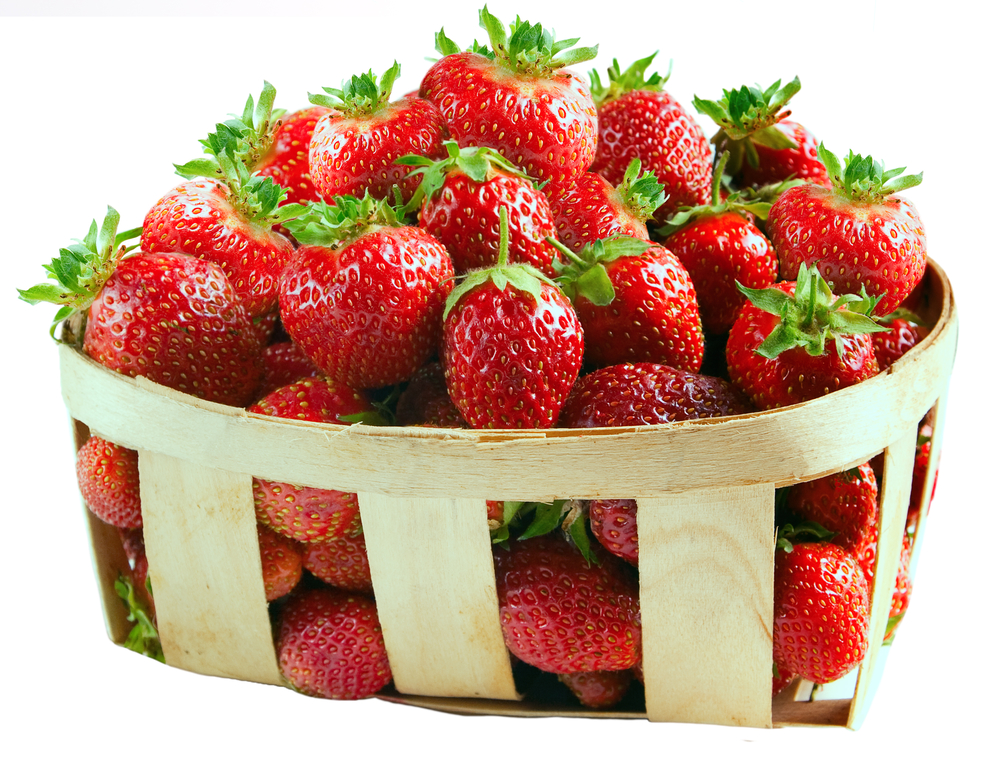
Basket with fresh strawberries isolated on white background.
By Clint Thompson
The president of the North Carolina Strawberry Association is excited about this year’s crop.
Jim Warenda, who is also the sales representative for Fresh Pick Produce in Kenly, North Carolina, exuded optimism when discussing the prospects of this year’s crop.
“Everything’s great. We are a hair behind, just due to, it’s been a little bit cooler spring than what we’re normally used to,” Warenda said. “A normal strawberry flower will ripen in about 30 days. They’re ripening at about 37, 38 right now.
“We’re probably a couple of days behind on some things. Overall, the crop looks good. We really haven’t hit any real big volume yet. We foresee that happening (this) week.”
He said the normal window for harvesting strawberries is April 20 through June 15.
Warenda is not alone in having hopes for this year’s strawberry crop in North Carolina. In a previous VSCNews story, Mark Hoffmann, North Carolina State small fruits Extension specialist, said he is expecting a “bumper crop” this year.
“If the weather holds up, it’s going to be one of the best strawberry years in a long time,” Hoffmann said.
While the crop appears bountiful, the strawberry market appears in good shape as well. This despite the ongoing coronavirus pandemic.
“We do some chain store business as well as roadside market stuff in the northeast. There has been a little bit of a decline in market, just because they’ve closed off some of these islands for this month. We haven’t really hit any volume yet, so everything’s been smooth so far. I don’t foresee any hiccups in the next couple of weeks. But this produce business can always change,” Warenda said.