Alabama Commissioner of Agriculture and Industries Rick Pate announced that the U.S. Department of Agriculture (USDA) has designated 13 Alabama counties as primary disaster areas, due to damage and losses caused by Hurricane Zeta Oct. 28–29.
USDA reviewed the Loss Assessment Reports and determined that there were sufficient production losses to warrant a Secretarial natural disaster designation. In accordance with section 321(a) of the Consolidated Farm and Rural Development Act, additional areas of Alabama and adjacent states also have been named as contiguous disaster counties.
Primary Disaster Designation Areas (13 counties): Autauga, Cherokee, Chilton, Choctaw, Clarke, Dallas, Elmore, Lowndes, Marengo, Mobile, Monroe, Washington and Wilcox
A Secretarial disaster designation makes farm operators in primary counties and those counties contiguous to such primary counties eligible for certain assistance from the Farm Service Agency (FSA), provided eligibility requirements are met. This assistance includes FSA emergency loans. Farmers in eligible counties have eight months from the date of a Secretarial disaster declaration to apply for emergency loans. FSA considers each emergency loan application on its own merits, taking into account the extent of production losses on the farm and the security and repayment ability of the operator.
(NSF) — Gov. Ron DeSantis backed a controversial reservoir being built in the Everglades while announcing the state will use a pool of environmental money to help Miami-Dade County protect Biscayne Bay from continued degradation.
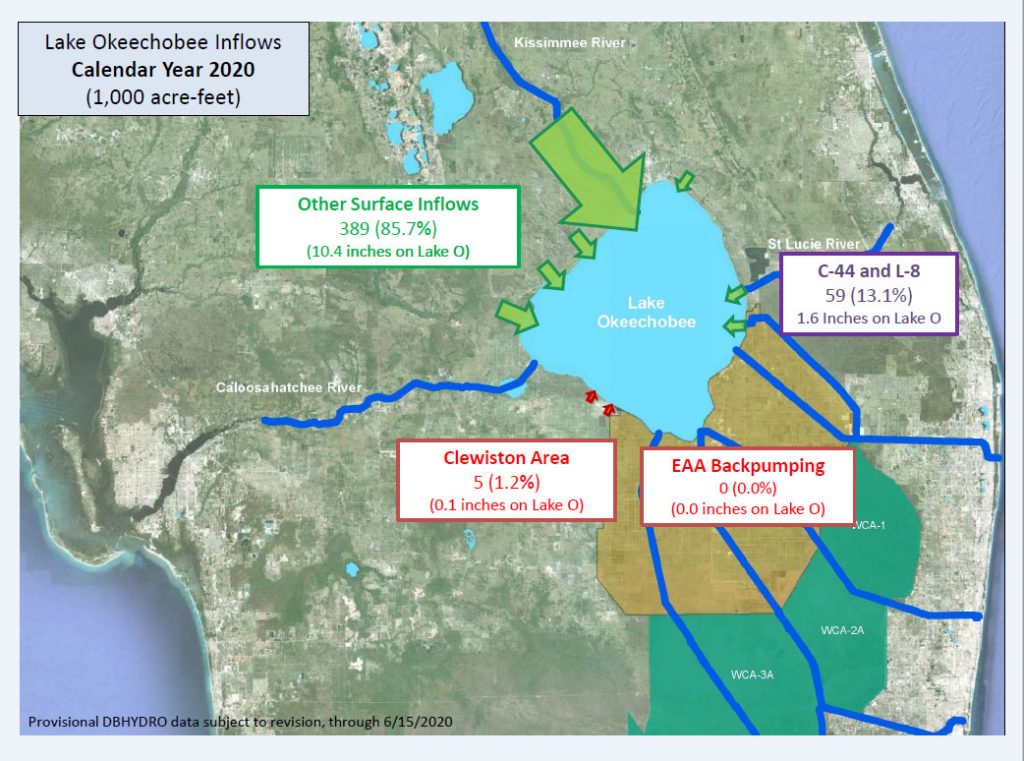
DeSantis said his office will continue to support the $1.6 billion Everglades Agricultural Area reservoir, which was approved by the Legislature in 2017 but has recently been questioned by new Senate President Wilton Simpson, R-Trilby. DeSantis addressed the issue as he outlined plans to provide a $10 million match for local efforts to restore Biscayne Bay.
“The EAA reservoir remains a top environmental priority for my administration, and we look forward to pressing ahead as quickly as possible,” DeSantis said while at Bill Baggs Cape Florida State Park in Key Biscayne.
Simpson, during a Florida Chamber of Commerce event on Dec. 8, described the man-made lagoon — intended to redirect water south from Lake Okeechobee — as a “mistake.”
Simpson, who became president last month, added that as lawmakers face a $3 billion to $4 billion shortfall in the next budget, the state “probably should stop building” the reservoir.
The 2017 law provides $64 million a year for the reservoir, requiring it to be built on state-owned land rather than private farmland in the Everglades Agricultural Area. The law also allows Florida to boost funding for the work by issuing up to $800 million in bonds.
The state anticipates half the funding for the work to come from the federal government.
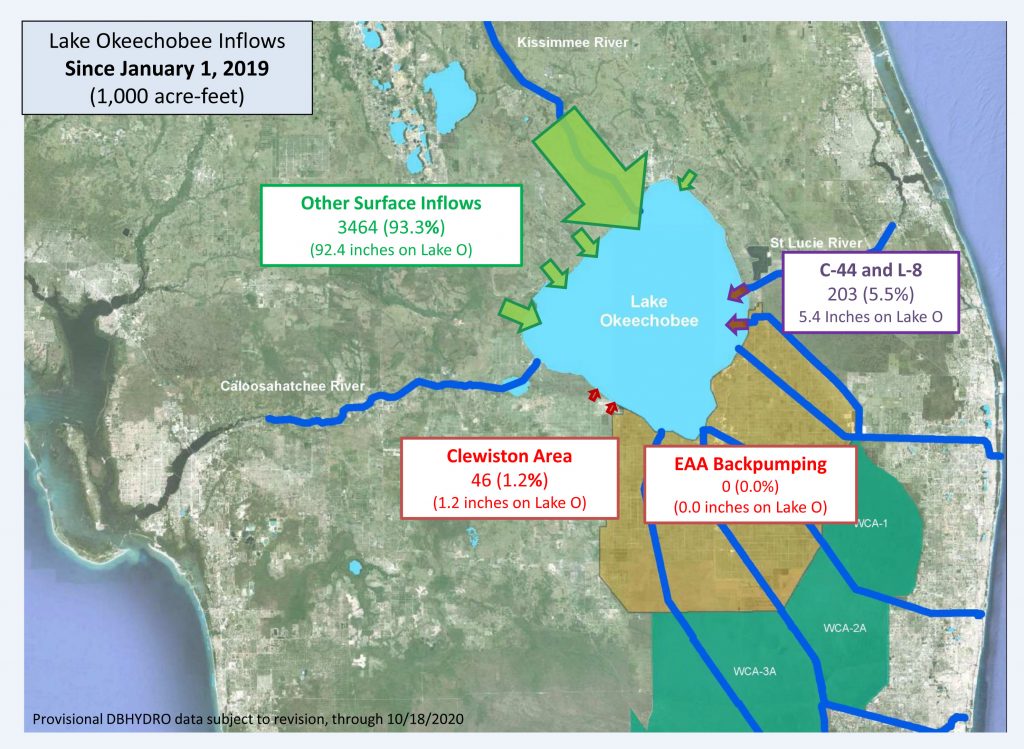
Simpson said the state’s approach to improving water quality in South Florida should be through deep injection wells on the north side of Lake Okeechobee, where more water enters the lake.
Simpson’s comments have drawn blowback from several Treasure Coast lawmakers.
The reservoir was pushed by former Senate President Joe Negron, R-Stuart, because water discharged from the lake into waterways to the west and east was causing algae problems.
DeSantis on Monday called the reservoir “one of the most important Everglades restoration projects in history.”
“The project provides significant ecological benefits, reduces harmful discharges to the St. Lucie and Caloosahatchee estuaries, and importantly sends more clean water south to the Florida Everglades,” DeSantis said.
DeSantis went to Biscayne Bay to highlight work that will be undertaken to protect the bay, with the state money matching funding by Miami-Dade County.
“In the coming weeks, the county and state will work collaboratively to identify worthwhile projects and pursue them without delay,” DeSantis said.
Money for the match is coming from $625 million in the current fiscal year budget for water projects and the Everglades.
Miami-Dade County Mayor Daniella Levine Cava, a Democrat, said the bay, vital to the region’s tourism, has been in a near collapse for years. That stems from nutrient pollution, in part due to a historic over-reliance on septic systems rather than sewers, and the region’s aging water system infrastructure.
“We’ve seen the impacts of this crisis firsthand, especially in recent months,” Levine Cava said. “Our seagrass meadows are in retreat. There are algae blooms that are plaguing the formerly crystal-clear waters, and the fish kills were literally bringing the crisis off our shores vividly to the surface, all too recently. And our beautiful coral reefs are in jeopardy as well.”
Miami-Dade County has already proposed six projects that will cost about $5 million. Among those projects will be converting some homes and businesses from septic tanks to sewer systems and helping scientists understand Stony Coral Tissue Loss Disease, which has affected the region’s coral reef system.
Cannabis and its usage. Marijuana leaf and marijuana products. Cosmetics, hemp milk, hemp oil, cookies, brownies and nutritional supplements.
(FDACS) — The U.S. House of Representatives passed H.R.3884, the Marijuana Opportunity Reinvestment and Expungement (MORE) Act, by a vote of 228-164. This comprehensive, bipartisan cannabis reform package would decriminalize marijuana and take much-needed steps to address the racial injustices of prohibition. As of November 2020, a record-high 68 percent of Americans support marijuana legalization.
Florida Agriculture Commissioner Nikki Fried, a noted cannabis advocate, offered the following statement:
“This vote marks the monumental progress our country continues to make as states – and now the U.S. House of Representatives – recognize the urgent need to end the federal government’s misguided cannabis prohibition, and begin to right the wrongs of the War on Drugs and its damage to communities of color. I applaud the leadership of cannabis’ congressional champions and the diverse group of organizations whose tireless work made this historic legislation and vote happen. I am hopeful that this long overdue measure will be prioritized in the 117th Congress, on behalf of the countless families whose lives were upended by the War on Drugs, patients who need safe and secure access to medical marijuana, and the diverse array of entrepreneurs seeking the economic potential of this growing industry, including hemp farmers right here in Florida.”
(NSF) — Measures are in place to offset potential blue-green algae blooms after the U.S. Army Corps of Engineers started Wednesday to schedule water releases from lower Lake Okeechobee, according to the state Department of Environmental Protection.
A news release late Wednesday said the department and the South Florida Water Management District are prepared to use “innovative technology” if needed and noted that algae bloom conditions on the lake have improved in recent weeks. “Harmful algal blooms have a debilitating effect on our ecosystems and our communities,” Gov. Ron DeSantis said in a prepared statement. “That is why, for the first time, I made it a priority to secure dedicated funding to deploy innovative technology to mitigate blue-green algae blooms.”
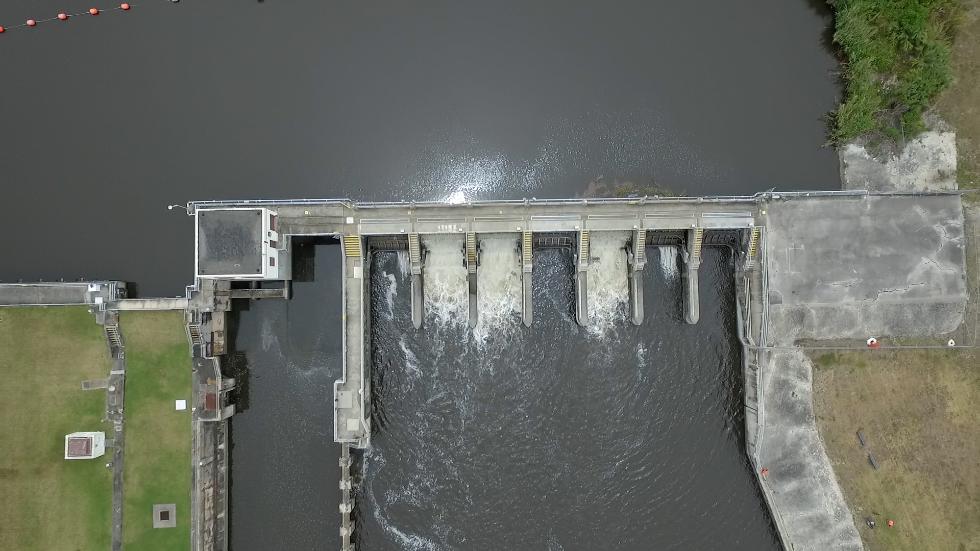
On Wednesday, the U.S. Army Corps of Engineers Jacksonville District announced it would start releasing water from the lake as heavy inflows from Central Florida and rains across South Florida have caused the lake to reach 16.21 feet, a 1.33 foot increase over the past 30 days, while six weeks remain in hurricane season. The water releases will go through the Moore Haven Lock and Dam on the southwest part of the lake, and the St. Lucie Lock near Stuart. Such releases are closely watched because of harmful algae blooms that have occurred in the past in waterways to the east and west of the lake.
The releases will be evaluated weekly and adjusted as conditions evolve, the Army Corps said. “We haven’t made large volume releases from Lake Okeechobee since March 2019, but the rapid rise in the lake level combined with an already active hurricane season that lasts until Nov. 30 has left us with no options in ensuring the safety of those living and working around the Herbert Hoover Dike,” Col. Andrew Kelly, Jacksonville District commander, said in a statement.
The state allocated $10 million in both the current budget and in the 2019-2020 budget to invest in technologies to detect and combat algae blooms.
The U.S. Supreme Court on Monday indicated it will hear oral arguments in the long-running water battle between Florida and Georgia but did not specify when. The court issued an order that said the dispute is “set for oral argument in due course.”
The case involves divvying up water in the Apalachicola-Chattahoochee-Flint river system, which stretches from northern Georgia to Apalachicola Bay in Franklin County. Florida contends that Georgia uses too much water from the system, in part damaging a critical Apalachicola Bay oyster fishery.
Florida is seeking an order that could lead to more water flowing south, but Georgia disputes that its water use has caused damage in Florida.
A special master appointed by the Supreme Court sided with Georgia in December, but justices will have final say. Florida filed the lawsuit in 2013, though the two states have fought for decades about water in the river system.
Florida Farmers Team with State Leaders to Launch Farm to Inmate Program
Harvested produce crops feed Florida Department of Corrections’ (FDC) more than 87,000 inmates; action saves food costs while reducing COVID-19 related supply chain impacts.
(FFA) — Florida farmers are uncovering new solutions to address supply chain disruptions during the COVID-19 pandemic. With Florida’s emergency order to shutter businesses who routinely have a need for fresh produce, a pilot team of South Florida producers will supply and distribute more than 380,000 pounds of locally-grown squash, green beans, cucumbers, and lettuces directly to 35 correctional facilities across the state.
Produce from Accursio & Sons Farm of Homestead and TKM Bengard Farms of Belle Glade will be handled and distributed by 5 Brothers Produce Company of Florida City to FDC directly. This collaborative effort will serve as a future model as more producers work together in efforts to maximize capabilities and drive-down pricing for locally-grown foods.
Due to pandemic impacts, Florida agriculture will continue to suffer grave economic and environmental impacts as harvesting continues across the state. Florida producers estimate that at least 10 million tomatoes will go unpicked this year while hundreds of thousands have already gone unused or plowed back into Florida soil. In addition to produce growers, many ranchers are also unable to break even on their livestock and are looking for alternative markets.
Tyra Phillips, Executive Director of Dade County Farm Bureau, expects that more public-private partnerships will emerge as producers seek opportunities to update their supply chains for resiliency: “It is imperative for state leadership to maintain inclusion of local producers in state procurement,” she said. “Working with the FDC would not be possible without State Senator Jeff Brandes and the Florida Department of Agriculture and Consumer Services whose commitment raised the awareness and the focus needed for the team to execute quickly.”
Although local producers tend to be more competitive on pricing than their imported counterparts, some farmers are concerned that pipelines to new markets, such as the inmate population, could decrease once the pandemic subsides, leaving producers’ supply chains vulnerable to the next disaster. Commissioner Nikki Fried has advised that all producers interested in competing for public contracts register with the State’s eProcurement platform “MyFloridaMarketPlace.”
“Whether it’s hurricanes or viruses, we must have access to serve our own communities with goods from our respective regions and be more resilient to change, working together locally,” said Steve Mathis CEO of Mathis Farms. Although Mathis has yet to participate in any public bids, he is following suit of many other producers and has registered his business in the State’s online marketplace in preparation for future opportunities.