Category: Hemp

  • Florida Interest in Hemp Production is High

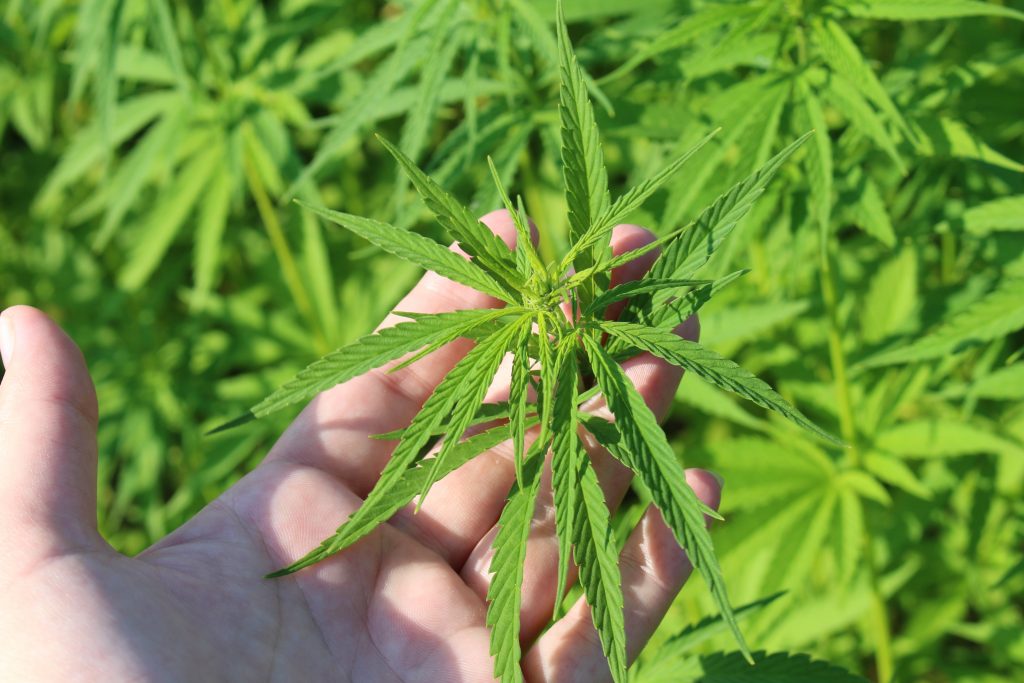
    Hemp trial by the University of Florida. Photo by Luis A. Monserrate

    By Clint Thompson

    When the hemp cultivation application process officially becomes available for farmers in Florida around April 25, expect a huge amount of interested applicants, according to Jeff Greene, director of business development at the Florida Hemp Council.

    “The (Florida Department of Agriculture) put out on their website, to put in your name and email address if you are interested in growing it. There were over 1,500 farmers that put their information in. I know that we’ve got in the Florida Hemp Council over 800 that have expressed interest,” Greene said. “The first year of any hemp program is going to be predominantly around low acreage, experimentation. Then as we’ve seen with Kentucky and a lot of the other states, it ramps up. It’s just like any other crop. You’ve got to get used to how to grow it.”

    Greene thinks hemp’s footprint will not be restricted to just one area of the state but expects interest from all producers and sectors from different regions across Florida.

    “I think we’re looking at it from all different levels. We’ve got tomato farmers in Homestead, Florida. The sugar industry is looking at it. The citrus industry is looking at it. The tree farmers up in the Panhandle are looking at it. Everybody’s looking at it,” Greene said.

    However, if there is a concern is that interest in hemp is so great and that it’s open to anybody in Florida, if they have not been convicted of a drug-related crime in the past 10 years, Greene said.

    “My fear is that we’re going to have a supply and demand issue here like we’ve had everywhere else,” Greene said.

    There is also not a licensing fee for producing hemp in Florida.

  • UF/IFAS Seeking Partners for Hemp On-Farm Trials

    The University of Florida Institute of Food and Agricultural Sciences (UF/IFAS) hemp program is seeking 20 qualified partners across Florida for on-farm trials.

    Pictured is a field of hemp.

    Zack Brym, agronomist at the Tropical Research and Education Center in Homestead and research coordinator of the UF/IFAS Industrial Hemp Pilot Project, says partner farms will conduct a coordinated field planting on 2 acres with variations in land preparation. In addition, partners will have the option to submit a plan for industry development research on an additional 3 acres.

    Applications are due at 11:59 p.m. on April 13, 2020. Growers can apply here.

    “Applications will only be accepted through the online form up to the deadline,” notes Brym. “You must complete the application in one session. You can advance through the form without answering the questions (after answering question 1) to review the application questions before completing submission.”

    For more information, see Citrus Industry News.

  • UGA Specialist not Concerned About Oversupply of Hemp in Georgia

    industrial hemp
    There have been a total of 166 applications sent to the Georgia Department of Agriculture with interest of growing hemp this year.

    By Clint Thompson

    Tim Coolong, associate professor in the UGA College of Agricultural and Environmental Sciences, said oversupply of hemp at the national level remains a concern. He’s not as worried with Georgia, however, due to rules and regulations in place.

    “I think on the bulk wholesale market, I’m still worried about oversupply. In Georgia, I think we’re in a slightly different position. As a grower, you must have some sort of agreement with a processor in order to be approved to have a license to grow,” Coolong said. “I think at least for the growers here who are contracting with a processor in Georgia, I think some of that overproduction should be mitigated. Our processors, ideally, are working closely with growers and are not going to sign growers up for a lot more acreage than they can handle.”

    UGA’s Tim Coolong discussing hemp in Georgia.

    Coolong said that last year, in other states where there’s not a farmer-processor agreement in place, flooding the market was the unfortunate result. Farmers produced hemp with no places to sell.

    “They produced a lot of biomass and then there was no one to buy it. I think on the greater wholesale market, oversupply can still be an issue. I think within Georgia, because of the way the system is set up, I think that will be less of a problem,” Coolong said. “Some people are upset because they think I should be allowed to grow this crop and sell it to whoever I want, and I get that. I understand that. On the other hand, when that happens and it’s not coordinated, it leads to issues of oversupply. I think that even though this may ultimately reduce the amount of acreage and the number of growers in this state, I’m hopeful that those who do grow it are more profitable.”

    According to Mike Evans, director of plant industries who oversees the hemp program at the Georgia Department of Agriculture, they have received 166 applicants from farmers who are interested in growing hemp.