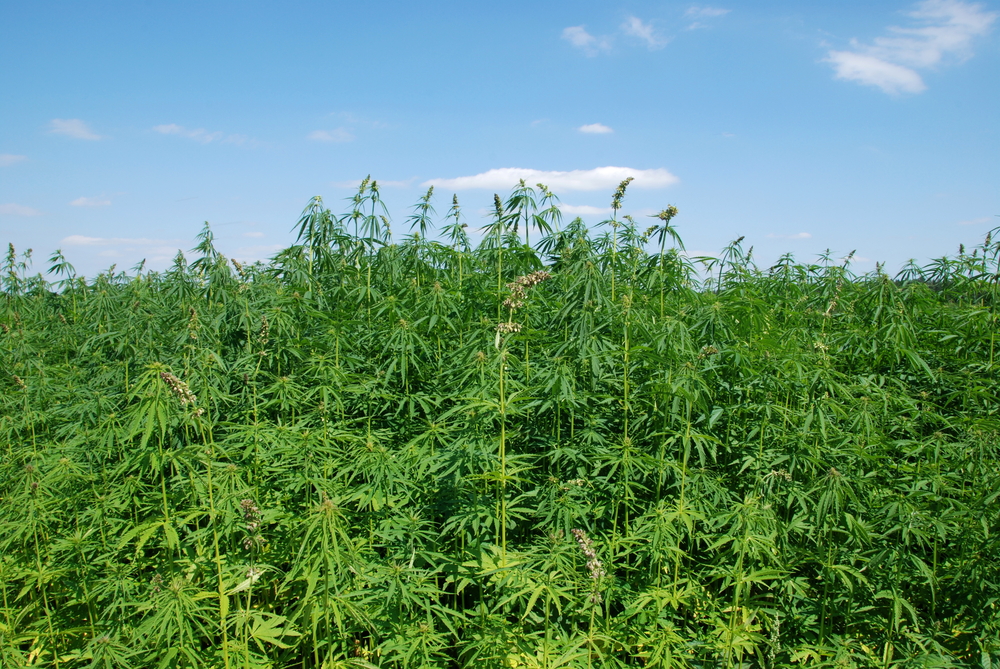
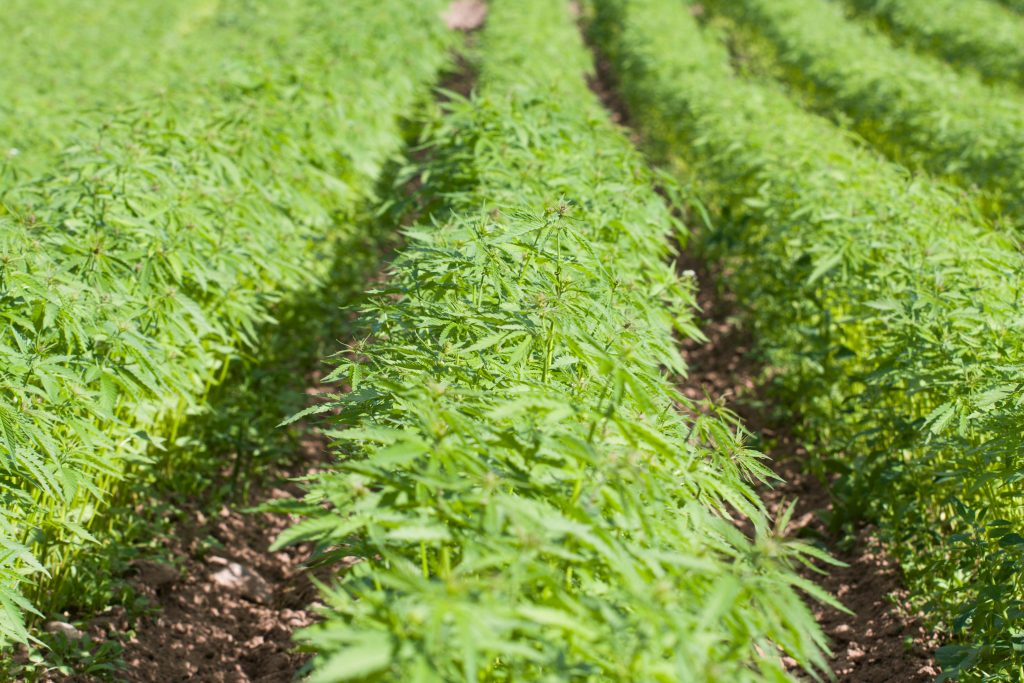
Georgia farmers are expected to soon plant this year’s hemp crop, said University of Georgia Cooperative Extension hemp specialist Tim Coolong. He predicts early June for when hemp will be planted commercially for the first time in Georgia.
“I’ve talked to some people that as of last week everything was a go for their license. They just hadn’t physically received it yet. I am under the assumption, as are a lot of other people that they should be getting licenses pretty quickly so we can go ahead and plant,” Coolong said. “I figure they will start in June, I would imagine. I think some of the potential growers I’ve talked to, maybe they’ve put some pre-orders in for plants, but they wanted to make sure they got a license before they dropped several thousand dollars. I think there may be a little bit of a delay for some of these guys before they get their plants in.”
According to Mike Evans, director of plant industries who oversees the hemp program at the Georgia Department of Agriculture, they received 166 applicants from farmers who are interested in growing hemp.
Coolong said recently that he is not worried about oversupply of hemp in Georgia. He believes enough rules and regulations are in place to prevent that from happening.
Hemp Regulations in Georgia
Permits or licenses issued will expire at the end of the year and must be renewed. Evans said the Georgia Hemp Farming Act mandates that a Georgia producer can only sell to a Georgia processor. Out of state sales are not permitted.
The license fee for growers is $50 per acre and is capped at $5,000. The cost is $25,000 for a processor’s permit.
Coolong will continue different research projects to evaluate hemp’s effectiveness in growing in Georgia. He started a planting date trial last month to see how early growers can plant without inducing flowering. Other major trials include variety testing and fumigation. Coolong will resume planting next week and continue through the second week in June.
South Carolina farmers are expected to start planting hemp this week.
By Clint Thompson
The first hemp plantings in South Carolina will be conducted this week, according to David DeWitt, Hemp Program Coordinator with Clemson University Extension. He believes there will be more hemp growers this year with smaller acreage compared to previous years.
“I think we shifted some from last year at this time when we were getting started. Everybody was jazzed up and we had some good-sized farmers that were getting ready to plant larger acres; 30 to 40 acres of hemp,” David DeWitt said. “I think a lot of that has subsided this year. The lack of demand, backlog in farms to the processor is the kind of thing we’re experiencing. Some of that has calmed down.”
This is the third year that South Carolina farmers will be able to produce hemp. Interest has grown each year the crop has been produced. Eva Moore, communications director for the South Carolina Department of Agriculture, said there were 350 interested applicants this year. The Department of Ag issued the permits during the last week in April.
DeWitt said the planting window last year was from late-May to mid-June, though he said there were some who planted the first week in May and produced a pretty good crop.
He’ll also be a part of some hemp research this year. The research is mainly designed to assist growers with hemp management decisions. The research will evaluate weight, CBD content and harvest time, as well as test chemical products on hemp mites.
Industrial hemp samples at the Everglades Research and Education Center. Photo taken 11-07-19.
Just past the midpoint of a pilot project to study if industrial hemp grows well in Florida, University of Florida Institute of Food and Agricultural Sciences (UF/IFAS) researchers are already looking ahead to see what more they can learn.
The UF/IFAS Industrial Hemp Pilot Project team of scientists is engaged in a two-year research project started with hemp plantings in the spring of 2019. A report on the project’s findings will go to the Florida Legislature at the project’s completion but are heading out to growers in the state interested in industrial hemp.
“Our call to action is to help growers and investors make an informed choice whether to take a chance on hemp and how to grow it,” said Zachary Brym, assistant professor of agronomy at the UF/IFAS Tropical Research and Education Center (TREC) in Homestead and research lead for the pilot project. “The fact remains that Florida is an entirely new environment for industrial hemp.”
Among other research objectives, UF/IFAS scientists are working to identify varieties suitable for growing in Florida and develop management practices and cropping systems that are economically sustainable. They’re also identifying risk factors such as insects, disease and the invasive properties of hemp.
“The long-term goal of the project is to produce hemp crops in an environmentally conscious and socially responsible way while maximizing both plant health and yield,” said Brym.
PRELIMINARY FINDINGS
As the UF/IFAS Industrial Hemp Pilot Project team begins its second year of studies, researchers are warning growers of potential challenges that can affect the crop’s chances of success.
“Be cautious,” said Brym. “There remains a conspicuous lack of consistent science and support for genetics and management practices of hemp for Florida. Our work from 2019 looked at 45 or so varieties across the state. We cannot yet name any variety that did everything a farmer needs to grow a marketable product. We did see some hemp grow well in our trials, so we have something to work with.”
According to Brym, some varieties do not match the amount of daylength in the regions tested and flowered too soon. Some showed extremely high variability in growth and productivity. Many exceeded the 0.3 percent total delta-9 tetrahydrocannabinol (THC) limit at harvest.
“Each of these preliminary findings point to a risk for farmers,” said Brym. “I am also concerned about the risk to the environment.”
Reliable or consistent science-based information on fertilizer and irrigation needs for the plant do not yet exist.
“I worry that farmers will apply too much fertilizer or irrigation,” said Brym. “Our early work also begins to confirm the risk of hemp to escape from cultivation through errant seed banks and dispersal.”
Brym stressed the preliminary nature of these results and the opportunities to improve the outlook in the second year of the project. Given the need for more information and consistent results, scientists, like Brym, seek support for continued research.
“I hope that folks see the value in our preliminary findings. It’s important to report what we see from the science for better or worse,” Brym shared. “There’s a lot more work to be done.”
TRIALS AND EXPANSION
As part of the project, UF/IFAS established variety trials representing various uses (fiber, grain and CBD) from regions of origin throughout North America, Europe and Asia.
The trials were planted outdoors at three UF/IFAS research locations including the TREC in South Florida, the Agronomy Forage Research Unit in Hague and the North Florida Research and Education Center in Quincy. The first locations represented the broad range of environments, climates and farming regions of Florida. They provided the ability to assess the genetics, management practices, cropping systems and potential risks of growing in those regions, said Brym.
An invasion risk assessment at the Bivens Arm research site, located near UF’s main campus in Gainesville, has been assessing natural conditions and habitats where hemp might establish and spread outside of cultivation. The study looks at the risk of any hemp plants becoming invasive threats to Florida’s landscapes.
According to Brym, research has expanded with industrial hemp currently being grown at eight permitted UF/IFAS locations. Cultivation now includes greenhouse propagation as well as outdoor planting. Following the initial screening of varieties, additional trials were planted to improve seed emergence, pre-plant seed treatments, herbicide control and soil drainage.
What started with a core team of seven faculty members from three departments and the College of Pharmacy has expanded to 20 faculty members from a greater variety of disciplines.
Researchers from the expanded team looked into the basic physiology of hemp in a controlled environment and monitored for pests and diseases on hemp outdoor trials. Their involvement was critical when two propagation greenhouses went under quarantine for pests that appeared on transplants from outside of the state after initial delivery inspections.
“We can thank the continued industry support and investments that helped us meet our research milestones. Our research efforts to date have made great strides in making information available to this emerging industry,” said Brym. “We’re geared up to complete the pilot project in 2020 and look forward to continued engagement with the industry.”
The North Carolina Industrial Hemp Commission met on Friday.
According to Paul Adams, with the North Carolina Department of Agriculture and Consumer Services, there are 1,481 licensed hemp growers, 17,167.3 licensed acres, 7.2 million licensed square feet of greenhouse space and 1,061 registered processors.
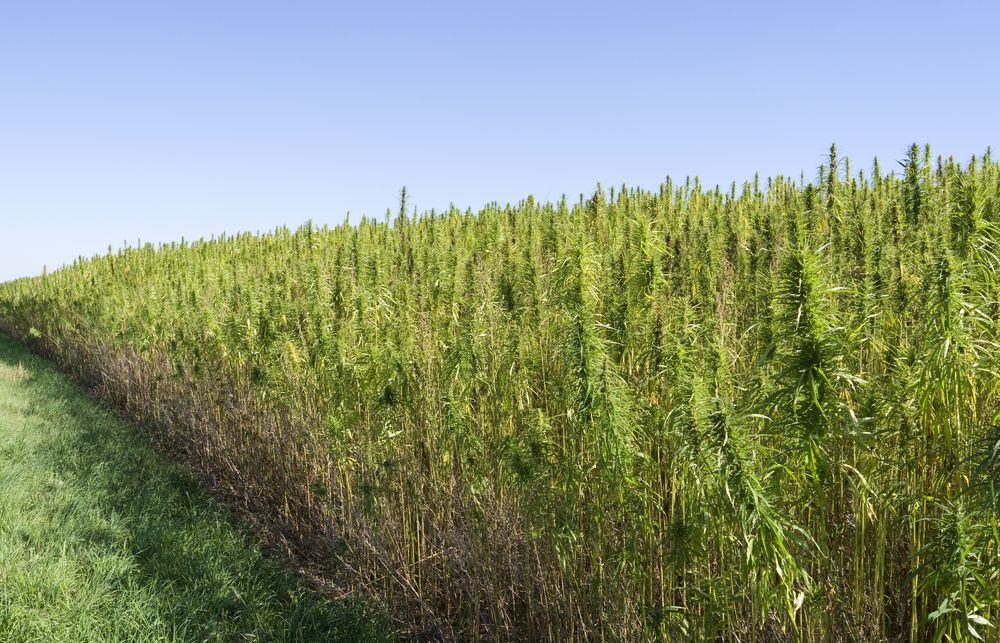
Pictured is a hemp field that UGA’s Jason Wallace and Matthew Johnson studied hemp at.
By Clint Thompson
Georgia farmers can begin growing industrial hemp this year. Many Georgia growers are enthusiastic about the new opportunity. But most varieties have not been selected for Georgia’s climate. There is little information about which ones will do well.
University of Georgia scientists are hoping their research will help hemp producers profit for many years to come. UGA scientist Jason Wallace and student Matthew Johnson are studying the genetics of different varieties. They hope to improve them to better adapt to the Southeast region.
“The first step is finding something that actually works [in Georgia] and survives,” says Wallace, a member of UGA’s Department of Crop and Soil Sciences. “Once we have that, the next goal is to ask, ‘How do we make this better? What do we want to change to make it more profitable, less likely to go over the legal limits [of THC], and require fewer inputs?’”
Breeding Trials
UGA grew a collection of 60 hemp varieties in several locations around the state last year. They scored how well each did to identify the best varieties and began breeding trials to produce even better ones.
Johnson, a graduate student in UGA’s Institute of Plant Breeding, Genetics, and Genomics, believes many of hemp’s traits need to be improved if it is to be adapted to growing conditions in the Southeast.
“During these past 100 years when this crop’s been pushed off for legal reasons, the most advanced work that has ever happened in plant genetics and in fruit cultivar development happened,” Johnson said. “Corn has gone from maybe 20 to 30 bushels an acre to yields of 200 to 300 bushels per acre. Hemp has had no improvement [for large-scale production]…. You need to make it a plant that can be harvested with a machine and stay within legal limits…. Those are more long-term goals and do need to be approached from the genetics research.”
Wallace is confident that hemp research can be accelerated with the technology he and Johnson have access to.
“With the technology we have now, you can develop tools in just 2 or 3 years that took corn or wheat 30 or 40 just because the technology has come so far, so fast,” he said.
Challenging Research
Hemp research is still a challenge since the crop has been illegal for decades. With limited prior studies in genetics, Johnson has had to develop and validate a lot of the foundational data on his own.
“There aren’t a lot of well-known protocols,” he says. “If I want to know how to do something in corn, I can call up 100 different researchers and they can tell me how to do [it]. If I want to know how to cross two hemp plants together, I have to figure that out. Not much is set up. I’ve had to figure out how to make my plants produce pollen, how to cross them, how to control them. I’ve (also) had to figure out what nutrients to use.”
Despite those challenges, Johnson is excited about the crop’s potential.
“To be honest, this [industrial hemp] is what got me interested in agriculture genetics in the first place. I’ve been studying this crop for 10 years, since I was in high school. To be in this position and to be able to do this research is a dream come true.”
Although industrial hemp is the same species as marijuana, it lacks the high concentrations of a chemical–tetrahydrocannabinol, or THC–required to give people a high.
North Carolina is still operating under the state’s pilot program, just as it has since 2017 when the program started. If you want to grow hemp, you will need to apply for a license from the North Carolina Department of Agriculture and Consumer Services (NCDA&CS). However, that will all change soon.
“Something is going to have to happen by Nov. 1,” says Jeanine Davis, Extension specialist and researcher in the Department of Horticultural Science at North Carolina State University.
The state’s pilot program expires October 31, 2020, which leaves two options moving forward: North Carolina can submit a state plan to the United States Department of Agriculture (USDA) for approval, in which case the (NCDA&CS) would continue to regulate hemp licensing; or the state can go under the USDA’s plan, which would mean that growers would apply for a license directly from the USDA.
Davis said a final decision hasn’t been made yet, but growers are waiting in anticipation.
N.C. Hemp Pilot Program Sees Success
Since the state’s pilot program began in 2017, hemp has proven to be a successful and exciting crop for North Carolina.
“We can grow beautiful hemp all across North Carolina,” says Davis. “It takes some time and experience to learn how to grow it. But we see good crops being produced all across the state.”
According to Davis, the issues growers have seen haven’t been in crop production but rather in areas such as financing and markets.
“Hemp is unique because we’re all learning it together. We didn’t have established markets or a lot of information to draw on. So our markets are developing right along with the growers,” Davis said.
She advises new growers to focus on efficiency.
“In our first couple of years, if you were able to grow good hemp, you could probably sell it. But this year, you’re really going to have to concentrate on being a very efficient grower and doing things well.”
In the first couple of years, growers had to rely on hand labor because of the lack of appropriate equipment to grow and harvest hemp. Now, growers need a specialty, niche market lined up that will pay high enough prices to cover those labor costs. If not, growers are going to have to mechanize and increase efficiency to stay competitive.
Overall, Davis is excited about what hemp means for agriculture in the state.
“It’s a very exciting time to be in agriculture. I love seeing a new crop such as hemp that has been embraced by so many. It’s been interesting to see this crop develop and to see it engage people of all ages and all walks of life,” Davis said.
Tallahassee, Fla.– Today, the Florida Department of Agriculture and Consumer Services (FDACS) launched the state’s online Hemp Cultivation Licensing Portal, allowing interested growers to apply for licenses. The portal’s user-friendly interface provides applicants with a checklist of recommended steps to allow for a quick and easy application process.
“As we continue building our state hemp program into a national leader, our new online application portal will help growers quickly and easily apply for hemp cultivation licenses, as well as manage, renew, and view any current hemp applications,” shared Commissioner Nikki Fried. “We’re working to ensure that applying for a license is streamlined and simple, so Floridians interested in growing hemp can quickly get started.”
The online Hemp Cultivation Licensing Portal can be accessed at Hemp.FDACS.gov, or on the FDACS hemp webpage. The page also contains a link to an application checklist, so interested growers have the necessary information for a quick, easy application process.
As part of the hemp cultivation permitting process, applicants are required to complete a background check which includes fingerprint submission along with the ORI number (Originating Agency Identifier) that the Florida Department of Law Enforcement has assigned to FDACS: FL925080Z. The ORI number is currently active and may be used at locations that complete the fingerprinting and submission process (Livescan service providers).
For a list of Livescan service providers, click here. To locate a Livescan service provider in your area, click here. Some Livescan service provers’ operations may be impacted due to the COVID-19 pandemic. We recommend applicants contact Livescan service provers prior to visiting a location.
Today’s Hemp Cultivation Licensing Portal launch follows the U.S. Department of Agriculture’s formal approval of Florida’s state hemp program on April 16, 2020. Commissioner Fried and FDACS have been hard at work building the framework for Florida’s state hemp program, announcing new food safety and animal feed rules in January, forming a Hemp Advisory Committee to help guide rulemaking and industry development, and ensuring public input was heard during workshops held around the state to provide information on the draft rules.
The University of Florida/IFAS Hemp Program is seeking qualified partners across the state to permit 20 farms for on-farm trials. The application link has been extended with late submissions due tonight by 11:59 p.m.
Partner farms will conduct a coordinated field planting on two acres with variations in land preparation. Partners will also have the opportunity to submit a plan industry development research on an additional three acres.
Application Details
Applications will only be accepted through the online form up to the late submission deadline. Only submissions through this online application form will be considered by the review panel. Past submission attempts via email using draft application or permit forms will not be considered. Applications for nurseries or indoor production facilities will not be accepted for this application period.
You must complete the application in one session. You can advance through the form without answering the questions (after answering question 1) to review the application questions before completing submission.
Recommended preparation for application
You will need a Google account to upload images required for the application.
Draft and/or log your answers in a separate file on your computer as a backup in case of technical difficulties.
Select a contiguous 2-to-5 acre field. Obtain GPS coordinates for the center of the field and annotated satellite image (.JPG, .PDF).
You may also permit an on-site propagation facility (e.g., greenhouse, shadehouse, high tunnel). Obtain separate GPS coordinates and annotated satellite image (.JPG, .PDF).
Identify farm supervisor and contact information.
Identify additional personnel by name and positions.
Consider limited access control points, storage capacity, and environmental containment procedures. You will have 500 characters to describe each of these points.
Determine your farm soil and source of water.
Consider the availability of irrigation and cultivation equipment.
Reflect on your farming experience, research experience, and industry engagement. You will have 1000 characters to describe each of these points.
Design an industry development plan for up to three acres. This is optional. You have 5000 characters to detail the goals and methods of the plan.
Frequently Asked Questions
When will selected farms hear back about selection? What will the permitting process be like? When is the expected planting date? About two weeks for initial response. The first round of applications are currently with the review panel. Late submissions will follow shortly. It is my goal to make selection recommendations late next week to UF/IFAS Research for approval the following week. Selection announcements and permitting procedures will be handled through UF/IFAS Research. My goal is to have permits in place and farms ready to plant mid to late May.
Why are you asking partners to pay? The main objective of this on-farm trial is to establish a network of knowledgeable farmers and industry professionals associated with rigorous research trials. The UF/IFAS Industrial Hemp Pilot Project needs the support of the industry and generous donors to complete that work. We will be asking partner farms and others in the community to contribute to the program through a volunteer donation.
Will partners be able to sell hemp produced during the trial? I do not know yet but am getting closer to a situation that would make that possible. If the crop was to be sold it will likely be done so through a commercial cultivation permit from the Florida Department of Agriculture and Consumer Services linked to the research permit. So, given that situation, we expect partner farms to also obtain a commercial permit for the trial field.
Where will we get seed or hemp material to plant? This is another area of uncertainty. I am working many angles for exactly where seed or plants come from and how or if it will be paid for. I ask a question of applicants to describe relationships with hemp genetics companies and possible acquisition scenarios through those relationships. Regardless, seed and plant material acquisition will have to be routed through UF/IFAS Research.
South Carolina producers interested in growing hemp this season will be issued permits by May 1, according to Eva Moore, communications director for the South Carolina Department of Agriculture.
South Carolina farmers will be able to produce hemp for the third straight year. Moore said interest has grown each year.
“We got a lot of support very early on from the South Carolina Legislature to help launch this hemp industry in South Carolina. It was 20 farmers that grew hemp that first year of the program. Last year we ended up with 114, and we’ll have more than that this year. We’ve definitely seen it expand from year to year. Folks get more and more interested,” Moore said. “Obviously, the market for CBD has been what most farmers are growing for so far. We hope to see that diversify a little bit. As the industry grows, maybe some folks will start growing for fiber or potentially like culinary uses, once that all gets worked out.”
Moore said there are 350 interested applicants this year. Permits are $1,000 each. Farmers also had to pay $100 to apply.
The state’s focus in increasing its number of processors helped the industry to grow last year.
“Early on, I don’t think we had enough processors. That was a concern the first year of the program, in particular. Last year we really focused on licensing processors as well so farmers would have a market to sell the hemp to,” Moore said. “We ended last year with 43 licensed processors in the state which was up from one at the beginning of the year. That was a help, I think, to farmers.”
“It’s a new industry. It’s a risky one. I think this year we are hoping that the farmers that have some experience can really hit their stride and see it work,” Moore said.
Tallahassee, Fla. – Today, the U.S. Department of Agriculture formally approved Florida’s state hemp program, clearing the way for Florida growers to begin cultivating hemp later this month. Agriculture Commissioner Nicole “Nikki” Fried, who will oversee Florida’s state hemp program through the Florida Department of Agriculture and Consumer Services (FDACS), offered the following statement:
“After months of incorporating feedback from the public, growers, and industry stakeholders, we are thrilled that Florida’s hemp industry officially begins now. I thank the USDA for their swift review and approval of our state hemp program. By working closely with our farmers, processors, retailers, and consumers, Florida’s state hemp program will become a model for the nation, will set a gold standard for this emerging industry, and will create billions in economic opportunity for Florida. As our economy deals with the impacts of COVID-19, this approval will give our agriculture industry a new alternative crop for many years to come.”
Growing in Florida: With the state hemp program’s rules now filed for adoption and approved by USDA, FDACS will begin accepting applications to grow industrial hemp on April 27, the first day authorized under the state filing timeframe, online at FDACS.gov/Cannabis. More information about growing hemp in Florida may be found here.
Commissioner Nikki Fried has been a consistent champion of Florida’s emerging hemp industry, appointing in 2019 the state’s first-ever Cannabis Director, hosting five workshops and public hearings across Florida on hemp state rulemaking, and working ahead of USDA to finalize rule development. Earlier this week, FDACS had submitted the state’s hemp program to USDA for review and final approval.