Category: Hemp

  • Hurricane Sally Another Challenge for Alabama Hemp Producers

    Another week, another challenge for Alabama’s hemp producers.

    Kesheimer

    The excessive rainfall that some areas in the state experienced because of Hurricane Sally, should impact the hemp crop, according to Katelyn Kesheimer, Auburn University Assistant Professor and Extension Specialist.

    “The issue is there’s that 15-day testing window. So, you have to get an Ag inspector to come take a sample of your crop and make sure it’s not hot, not above 0.3% THC,” said Kesheimer. “Then you have within 15 days of that testing, you have to harvest. If you miss it, you have to get tested again after that 15 days; if you miss it. You don’t want to be pulling soaking wet plants out of the field because they have to dry. We’re already struggling this year with diseases primarily in hemp. We’re dealing with issues of corn earworm and stuff but because it’s been so wet and humid, we’re having Ag inspectors go do their inspections and then the growers have a whole host of disease issues.

    “It’s probably only going to get worse. It’s not great timing for an already tough year for folks.”

    Rude Awakening

    Some Alabama hemp producers who were able to plant their seeds by April or May should be ready to begin harvesting their crop. But Kesheimer noted that one issue that farmers have encountered is the cost associated with drying and processing the hemp. The dire reality has even forced some farmers to get rid of their crop.

    “It’s going to cost more for some folks to pay for that than they’re going to make (in) a profit. So, they’re just plowing their crop under,” Kesheimer said. “There’s one particular farmer in southern Alabama, it was going to cost him $300,000 to get his plants processed on 15 acres and he was only going to make $90,000. He just plowed it under. That was about a $30,000 investment in terms of seed and inputs.”

    Kesheimer said most growers throughout the region didn’t have contracts established before the season – consequently, another problem.

    “They’re finding out the harsh reality of cost to process, distance, time and all that stuff. It’s a big learning experience, and if I were a grower, I’d want to get my crop out of the ground as soon as possible, which may be difficult with the rain,” Kesheimer said. “It’s just one more delay that’s going to make an already bad year more tough.”
  • Alabama Hemp Producers Need to Apply Bait to Avoid Fire Ant Problems Next Season

    hemp
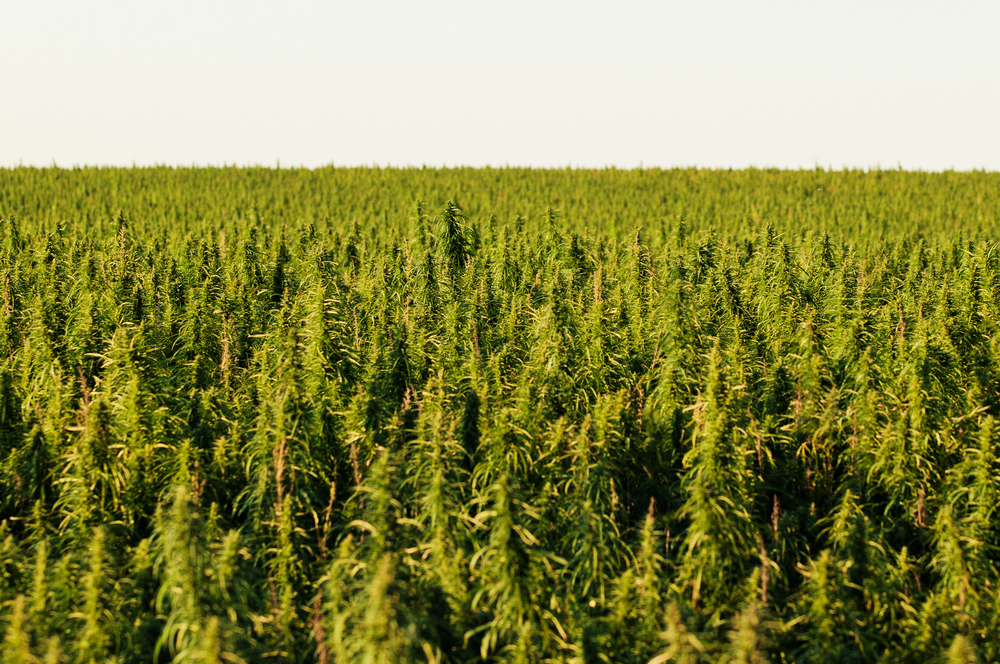
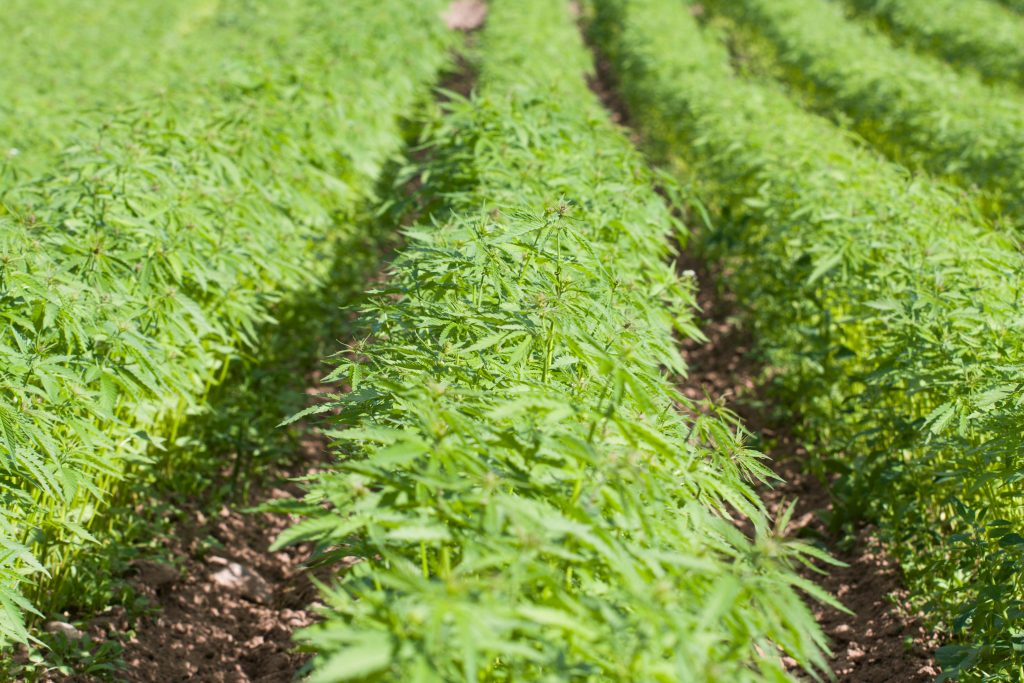
    File photo shows field of hemp.

    Fire ants continue to be a problem for Alabama hemp producers. It started early in the season and has not let up with more young plants being put in the ground at the end of July.

    “We have a real staggered kind of planting date going on because hemp’s a new crop and everyone’s getting their land prepped and seeds approved. There were still fields going in as late as a couple of weeks ago at the end of July,” said Katelyn Kesheimer, Alabama Extension entomologist. “The plants are especially susceptible when they’re really young, short seedlings. With all of the rain we’ve had, there’s been a lot of mating flights of fire ants. You look the morning after a rain, there’s brand new mounds everywhere. That was our first major pest in hemp earlier in the season and it’s continued through.”

    So how can farmers avoid a similar fate next season? Kesheimer implores farmers to act this fall.

    “If you plan on growing hemp next year, I would highly recommend you take care of your fire ant problem by putting out a bait this fall and maybe again in the spring before you plant. (Otherwise) by the time your plants are in the ground and if you have fire ants nearby, they will find it and you will most likely lose substantial yield to them,” Kesheimer said.

    Kesheimer recommends that growers apply bait in October when the weather has cooled and then in April or May.

    “I think a lot of people got caught off guard with how bad the ants are. I’ve been getting calls from all different states across the Southeast that have fire ants issues,” Kesheimer said. “With fire ants, I just think they never really stopped. We’ve had some rains and these big mating swarms. They’ll just move around and around so there’s more plants that they’re destroying.”

  • Alabama Hemp Producers Tripled From Last Year

    hemp program
    File photo shows a field of industrial hemp.

    The number of Alabama hemp producers has tripled this year. However, that does not necessarily mean acreage has increased as well, says Katelyn Kesheimer, Auburn University Assistant Professor and Extension Specialist.

    “Last year we had, just for comparison, about 150 licensed growers approved for 10,000 total acres. According to the (Alabama) Department of Ag, they think about 7,000 of those acres got planted. This year we have closer to 500. I think it’s 450 approved growers,” Kesheimer said. “I don’t have an estimate on approved acres. I’m sure I’ll get those numbers from the Department of Ag soon but a lot of people, from last year, they downsized.

    “Also, I think with the uncertainty with getting your seeds and you’re planting right when COVID started; some people were approved and got the license but decided not to move forward with any plantings. Even though we had triple the number of growers, I’d be surprised if there was the same increase in acreage.”

    Starting to Flower

    Some of the hemp acreage in Alabama has plants that are starting to flower, which means harvest time will not be too far behind.

    “There’s quite a bit out there flowering. We did have some auto-flower varieties go in so those are much quicker to flower than the standard day-length dependent. But yeah, we certainly have some crops where the plants are 6 or 7 feet tall; they’re in full flower,” Kesheimer said. “I imagine we’ll start to see some harvests not too long from now depending on how early people got their plants in. There are certainly some good-looking flowering hemp out there.

    “I know some growers that are quite far along, they planted in May and are getting ready to harvest probably at the end of September/October.”

    According to a recent interview with VSCNews, Kesheimer indicated that corn earworms remain a problem for all hemp producers. The caterpillars can feed on the buds and cause significant yield loss if not managed correctly. Since hemp is flowering across the state, that makes the crop more susceptible to infestations.

  • Florida Setting the Bar for Hemp Programs

    state hemp plan

    By Tacy Callies

    Holly Bell, director of cannabis for the Florida Department of Agriculture and Consumer Services (FDACS), gave an update on Florida’s hemp program as part of the Citrus Expo virtual general session.

    “Florida is becoming the leader in the country — if not the world —on how we’re getting our hemp program rolled out and the standards that we’re setting,” she said.

    On April 27, FDACS began issuing hemp cultivation permits. As of mid-August, 550 permits were issued and another 400 were being processed. The 550 permits encompass 18,000 acres of indoor- and outdoor-grown hemp. Bell said applying for a permit is a quick and easy process that can be done online. She noted that there is no fee for a hemp cultivation permit in 2020. Questions about the permit process can be sent to DPIhemp@FDACS.gov.

    Bell reported that FDACS has been inspecting hemp products for consumer safety and checking to ensure that what is listed on the labels is what is found in the products.

    “We found some alarming trends in samples that we pulled,” Bell said. “We have found high levels of lead in a lot of the tinctures that are in bottles (CBD oil) and sold across the state.”

    FDACS is working with the Food and Drug Administration to remove tainted CBD oil from Florida shelves and in other states where the products are sold.

    “We really are setting the bar in the United States for testing and quality control,” Bell said. “Several people with hemp businesses in other states now want to come to Florida to do business here. Florida is setting an example.” She added that several states have reached out to FDACS to help them get their hemp programs up and running.

    For help, questions or concerns regarding Florida’s hemp program, Bell encouraged reaching out to cannabis@FDACS.gov or directly to her at holly.bell@FDACS.gov. “We are eager and here to help you, and we’re looking forward to building this industry up,” she concluded.

    Watch Bell’s Citrus Expo video presentation here.

  • Georgia Hemp Crop Beginning to Flower

    georgia
    File photo shows a hemp plant.

    Georgia’s hemp crop is beginning to flower and could be ready for harvest starting in a little more than a month, says Tim Coolong, University of Georgia Cooperative Extension specialist.

    “I’ve got trials that started flowering about (2 weeks) ago on some of the early material. We’re seeing that around the state. I suspect we’re going to continue to see more of that,” Coolong said.

    Hemp harvest in Georgia should commence around late September or early October.

    Coolong said the crop is doing well despite the hot and humid temperatures this summer.

     “Right now, the crop overall, we’ve got some disease here and there, but I would say overall it’s looking okay,” Coolong said. “I was in some fields in South Georgia actually and the plants were 7 and 8 feet tall. They looked really good. And the stuff we have up here (north Georgia), even though it’s not quite as hot as south Georgia, it’s still pretty warm; the stuff here is growing pretty well, too.”

    Coolong estimates between 300 and 400 acres were planted this year with 108 licenses issued by the Georgia Department of Agriculture. Some of those, though, may be processors and others may be farmers who decided not to plant.

    “While we do have some bigger growers, particularly in South Georgia, a lot of them are pretty small,” Coolong said.

  • Corn Earworms Remain Key Pest for Alabama Hemp Producers

    Alabama hemp producers are tackling one pest after another this growing season. They started with fire ants not long after the crop was planted. Now, according to Katelyn Kesheimer, Auburn University Assistant Professor and Extension Specialist, the key insect is corn earworm.

    Photo shows corn earworm adult.

    “They’re really hard to control because they start small. Then they’ll be eating and eating and eating and you don’t see them until you see the damaged buds, or you really do some destructive sampling to get at those tiny first n-stars. Instead of having one big egg lay, it’s kind of like a sustained egg lay that we’ve seen in the last couple of weeks,” Kesheimer said.

    The caterpillars feed on the buds and can cause significant yield loss, because they eat so much as they grow. As they chew, they also open that plant and some pathogens can get it and farmers could end up with bud rot.

    Hemp is flowering throughout the state, which makes it most susceptible to infestations. It is the perfect time of year for corn earworms to be a problem as well. They move from crop to crop.

    “Corn is being harvested, cotton is drying down and it’s the same flights that started a few months ago. They start in corn and they move to cotton and now they’re going to hemp,” Kesheimer said. “It’s a nice, lush green crop for them to lay eggs in. I think it’s just the timing and we have just a lot of insects in the system. It was kind of slow for a little bit but the last couple of weeks have really picked up.”

    Kesheimer noted that producers have a plethora of products to utilize but spray coverage remains the key factor in managing the worms.

    “Here in Alabama we have probably almost 100 products labeled for hemp. But the most important thing for the worms is getting really good coverage. You have to get really high volumes to get into those dense canopies where the buds are where the worms are hiding,” Kesheimer said.

  • CFAP Expansion Doesn’t Include Hemp; Growers Respond

    File photo shows field of hemp plants.

    U.S. Hemp growers are disappointed the recent Coronavirus Food Assistance Program commodity expansion does not include hemp. Last week, the Department of Agriculture expanded the commodities covered under the program that provides COVID-19 relief to producers. CFAP includes commodities that USDA can prove saw losses of 5% or more in the first quarter of 2020.

    The U.S. Hemp Growers Association (USHGA) says, “We believe our farmers did present evidence of losses to our growers that were 5% or more in the first quarter of 2020.”

    Hemp is such a newly legal crop that it does not have the advantage of data gathered by USDA agencies. Currently, the data available to understand the market is gathered privately by several data companies. USHGA believes two datasets showed a 5% pricing decrease and more in hemp and hemp products in the first quarter of 2020.

    The statement says, “All hemp farmers are now wondering what kind of treatment they will receive should there be future problems.”

    (From the National Association of Farm Broadcasters)

  • Hemp Scouting Important This Time of Year

    File photo shows a field of hemp.

    Heat and humidity in the Southeast means hemp producers face challenges this season with regards to pests and diseases.

    Matthew Brecht, cannabis grower, hemp expert and plant pathologist with Marrone Bio Innovations, said scouting is essential for growers especially since not much research has been done with this relatively new crop.

    “Right now (hemp) should be transitioning to flowers. You should be having some pre-flowers maybe or about to be there. This is a time when you could have anything come in the Southeast. The east coast, Southeast, specifically is hot and humid with lots of rain events or tropical depressions that come through. You have all kinds of bugs and diseases that show up because of the humidity and pressures you have,” Brecht said.

    Be on the Lookout for Worms

    He noted that the worst pests for hemp are worms, especially corn earworms.

    “The insects will get into the newly formed colas (cluster of buds) and basically start chewing on them. They kill the flower or parts of the flower. Once they start doing that, you could lose a good percentage of your crop. Farmers want to think about scouting for these little caterpillars and looking for either the moths or the eggs and try to time some of these applications, products that are for caterpillars during that time,” Brecht said. “Because of high humidity, you also get leaf spot. You could have hemp stem rot. You could have powdery mildew and (bud rot) towards the end.”

    Brect emphasized that there wasn’t great research done in hemp prior to 2019. Hemp farming is still in its early stages, especially in Alabama, Florida and Georgia. It’s still very new with not a lot of understanding of the different pests and diseases that can be of impact.

    Products are also sporadic from state to state in what growers can utilize, which could mean a challenging growing season for some farmers.

    “If you don’t have proper tools to control these pests and diseases, you could potentially lose a good portion of your crop,” Brecht said. “I would say growing hemp on the east coast or the Great Lakes, anywhere that has a more humid or rainy environment during the summer time is much more difficult than it is on the west coast, much more difficult.”

  • Schumer Asks Perdue to Delay Hemp Regulations

    Chuck Schumer

    Senate Minority Leader Chuck Schumer rarely gets involved in agricultural issues. However, the Hagstrom Report says he asked Ag Secretary Sonny Perdue to delay issuing a U.S. Domestic Hemp Production final rule until 2022. That move would allow hemp growers and producers in his home state of New York and across the country to continue to operate under the 2014 Farm Bill Pilot Program until that time.

    Schumer notes that COVID-19 is a solid reason for the delay. He also knows about some criticism for the interim final rule and says a delay “will allow USDA to address some of the more pressing regulatory critiques while giving states and producers additional time to come into compliance.”

    Allan Gandleman is President of the New York Cannabis Growers and Processors Association. He says the more than 700 registered hemp farmers in Schumer’s home state of New York would be negatively affected by USDA’s interim final rule on hemp.

    (From the National Association of Farm Broadcasters)

  • Hemp growers: Be on the Lookout for Nematodes

    Figure 1. Stunted ‘starving’ strawberry plants (foreground) caused by sting nematodes in Florida.

    By Johan Desaeger

    Florida’s subtropical climate offers unique opportunities to grow crops outside of the typical growing season of other states. Such is the case for strawberries and many vegetables. There are high expectations that hemp could be another such crop, although nematodes may have something to say about that.

    Plant-parasitic nematodes, such as root-knot and sting nematodes, can cause severe damage to many of Florida’s crops, especially in sandy soils, which comprise much of the state (Figure 1). Nematodes are microscopic roundworms that live in the soil and are one of the least-known and most difficult-to-manage pests that growers can face. Because of nematodes’ small size, belowground nature and lack of easily recognizable symptoms, nematode damage is often not recognized as such. Symptoms typically occur randomly in a field and are easily confused with other pests and diseases, nutritional deficiencies, plugged drip tapes or too much or too little water.

    Figure 2. Swollen and galled roots caused by root-knot nematodes on tomato (left) and hemp (right).

    The most important nematodes in Florida are root-knot nematodes. They can cause damage to a wide variety of crops and are extremely widespread throughout the state (Figure 2).

    HEMP HAS SOME NEMATODE TOLERANCE

    With the considerable interest that hemp is gaining in Florida, the Gulf Coast Research and Education Center (GCREC) nematology lab started to investigate how root-knot and other nematodes may affect this new crop. The hemp-nematode research is the focus of Jackie Coburn, a master’s student in the nematology lab.

    Coburn screened several hemp cultivars in the greenhouse at the GCREC, including fiber, seed and CBD (cannabidiol) hemp types, originating from Europe, China and the United States. Initial data show that hemp is a good host for root-knot nematodes (Figure 2). However, the crop appears to be relatively tolerant, meaning the nematodes can feed and reproduce, but do not seem to negatively affect hemp growth.

    Figure 3. Hemp plots at the Gulf Coast Research and Education Center have strings with LED lights and hops in the background.

    Certain CBD varieties showed less nematode root damage than others, which will be useful for future breeding efforts. Currently, Coburn is screening hemp varieties for sting nematode, another important nematode in Florida, especially in strawberry fields (Figure 1).

    In addition to the greenhouse studies, hemp research was also initiated in the field at the University of Florida Institute of Food and Agricultural Sciences (UF/IFAS) farm in Balm. Here, hemp cultivars are planted throughout the year. In addition to nematode sampling, plants are being monitored for other pests and diseases.

    HEMP-HOPS INTERCROP

    An interesting feature in the field trials here is that hemp is grown with and without adding supplemental light, a practice that has worked well for hops in Florida (Figure 3 and Figure 4). It quickly became clear that adding supplemental light during the vegetative state makes a huge difference when growing hemp. In field trials, hemp was intercropped with hops, and both crops received the same light and fertilizer regimen.

    Figure 4. Hemp (left) and hops (right) at night at the Gulf Coast Research and Education Center.

    Hops and hemp belong to the same plant family, and in addition to both being daylength-sensitive plants, they also share many of the same flavor and aroma compounds. The field trials at the GCREC showed that with supplemental light, a hops-hemp intercrop can be an attractive option, as both crops will similarly benefit, allowing for two hop harvests per year and two to three hemp harvests per year.

    MORE RESEARCH RESULTS TO COME

    With increasing interest in hemp as an alternative crop, we will continue to provide updates on the hemp research at the GCREC. Future focus will be on CBD varieties and how to integrate hemp in the high-value cropping systems (vegetables and strawberries) in our area.

    Finally, in order to help researchers better understand the real importance of nematodes in commercial hemp fields, we invite any hemp grower in Florida to contact us if they notice abnormal plants in their field, or simply wish to have their fields analyzed for nematodes.

    This story was from the August edition of VSCNews Magazine. To subscribe, see http://vscnews.com/subscribe/.