Category: Hemp

  • Alabama Producers Feeling Pressure from Low Quality Hemp, Decreased Prices

    File photo shows industrial hemp. Photo taken 06-12-19.

    Many Alabama hemp farmers are either sitting on their crop following harvest or have decided to plow their crop under, due to low quality and decreased prices, according to Katelyn Kesheimer, Auburn University Assistant Professor and Extension Specialist.

    “I spoke to a grower on Friday and he said he couldn’t find a processor that had the right price to make it worthwhile for his crop. So he’s going to sit on it a little bit, which I think a lot of people are going to do just because they’re not sure of the actual process of finding a buyer and what to do with it. They really didn’t think it through before they grew the crop,” Kesheimer said. “Honestly, I think a lot of people are going to be sitting on it or destroying their crop because it’s not even worth it to harvest.”

    Kesheimer reported on Oct. 21 that Alabama hemp was expected to be low quality due to disease, insects, rain and late plantings. She received calls from buyers looking for smokable flower grade hemp and couldn’t find enough. Not much has changed two weeks later. 

    “There’s not a lot of great quality flower out there for smokable hemp, so I think a lot of it will get extracted into oil. But the cost associated with it might be prohibitive for some growers. They’re trying to work through that right now,” Kesheimer said. “I imagine we’ll be sitting on a little bit of hemp for the next few months, if not longer.”

    2019 Hemp Still Being Held

    Producers holding on to their hemp crop is not uncommon in Alabama. Kesheimer believes farmers still have hemp from 2019 because the market price never rebounded.

    “It never got back up to where everyone thought it was to make it worthwhile to grow,” Kesheimer said.

    Kesheimer and Regional Extension agent Jessica Kelton plan to host listening sessions with hemp producers over the next three weeks to gauge opinions and hear about the potential challenges of the industry moving forward. The first one will be this week on Thursday in Cullman.

    “People tried to go big. We had a lot of new growers. There was a lack of information. There’s a lack of buyers, processors, markets. It was wet, so disease just ramped up. I don’t think people realized how quickly, whether it was southern blight or caterpillars, could take out a crop,” Kesheimer said.
  • Georgia Hemp Producers Excel in Staying Within Legal Limits

    hemp
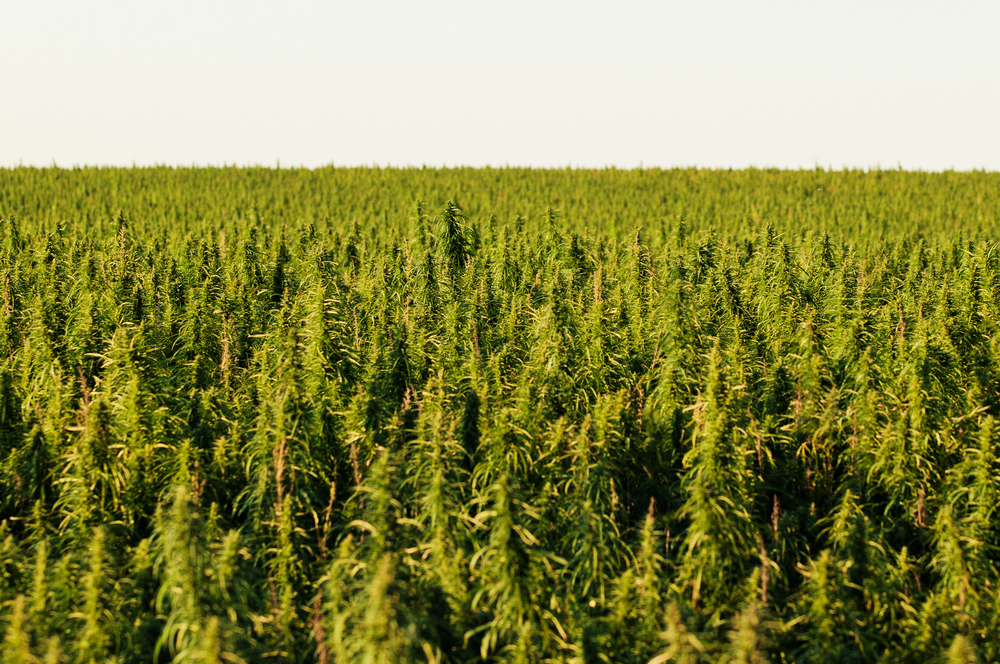
    File photo shows hemp field.

    Hemp harvest is nearing an end in Georgia. According to Tim Coolong, associate professor in the UGA College of Agricultural and Environmental Sciences, the state’s hemp producers appeared to have stayed within the legal parameters of hemp production.

    What distinguishes hemp from marijuana is the amount of THC or tetrahydrocannabinol present in the plant. It is the main compound in cannabis that produces the “high” sensation.

    Legal hemp must contain no more than 0.3 percent of THC. Otherwise, the THC is at an unacceptable level, and the crop must be destroyed. That doesn’t appear to have been the case this year, though.

    “I haven’t heard many reports of people going above the limit. For the most part, at least for the growers I’ve interacted with, they were testing regularly. When they had gotten their test back for harvest they were completely legal and ready to go,” Coolong said.

    THC levels must be officially tested within 15 days of anticipated harvest.

    If growers regularly tested their hemp samples, it prevented a disastrous scenario of if the officials tested the crop before harvest, and it exceeded legal limits, catching the farmers off guard. All of the work done to produce that crop would be for naught.

    “We stressed that a lot last year at our county meetings. Terry Hollifield, with Georgia Crop Improvement, they were doing the sampling for the growers, and he made a specific effort to do orientations with them. During the summer, he would go out and visit the growers and explain to them the process and everything,” Coolong said.

    “Almost every grower I had spoken to this summer was doing some testing on their own before the state would come in.  I would be surprised if there were very many growers who were just like, ‘Oh, I didn’t know about this.’”

  • 2021 Alabama Hemp Grower Applications Now Available

    georgia
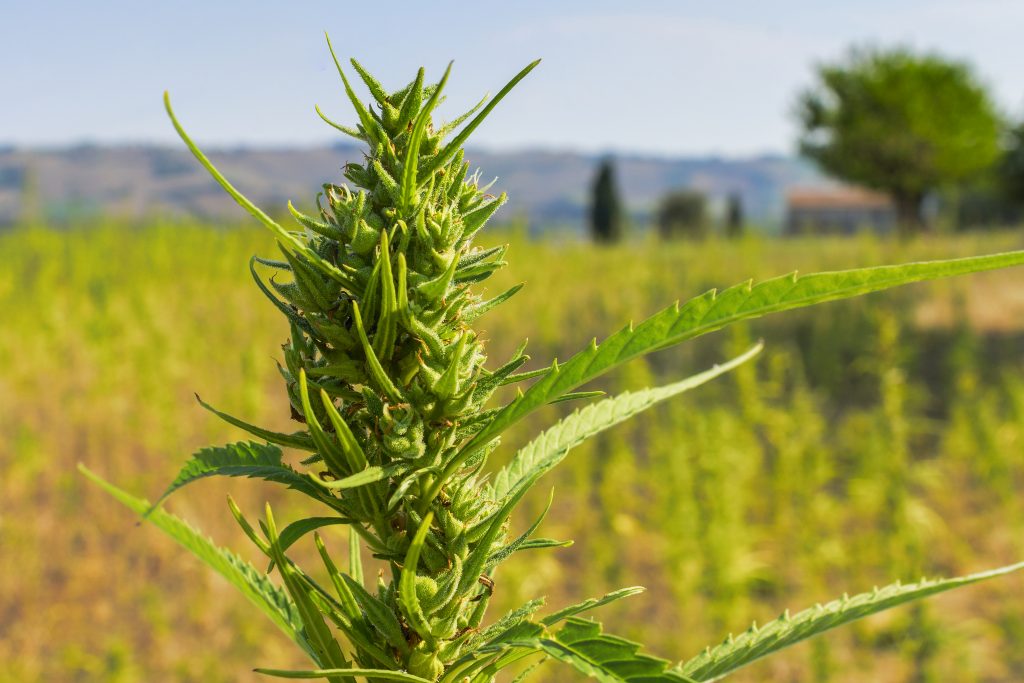
    File photo shows hemp plant.

    By Katie Nichols

    AUBURN UNIVERSITY, Ala.— Alabama hemp grower applications and processor/handler applications are available for the 2021 growing season through Nov. 30. Applications can be found on the Alabama Department of Agriculture and Industries (ADAI) website.

    Applications

    Full applications, including supporting documents, must be complete before the Nov. 30 deadline to receive approval consideration. Seasoned and new growers alike must complete annual applications.

    Katelyn Kesheimer, an Alabama Cooperative Extension System entomologist and member of the hemp action team, anticipates the number of growers in Alabama will hold steady.

    “In 2018-2019 there was a huge increase in the number of growers, both in Alabama and the U.S.,” Kesheimer said. “In 2019-2020 there was still an increase, but it wasn’t as drastic.”

    She anticipates approximately 500 applications, which is similar to the application numbers for the 2020 season.

    Find more information about the grower applications on the Alabama Cooperative Extension System website.

    Listening Sessions

    Kesheimer said Extension professionals are offering three in-person sessions for those who need assistance with application completion.

    “The sessions will be hybrid sessions with a limited number of people allowed to attend in person,” she said. “Others will be able to join on Zoom. Registration is free, but attendees must complete registration so attendees can choose to attend in-person or on Zoom.”

    A representative from ADAI will also be present to answer questions regarding grower applications.

    Thursday, Nov. 5
    North Alabama Hemp Roundtable – Register.
    9  – 11 a.m.
    Camp Meadowbrook
    2344 County Road 747
    Cullman, Alabama 35058
    Max attendees: 30

    Friday, Nov. 13
    Central Alabama Hemp Roundtable – Register.
    9 – 11 a.m.
    Richard Beard Building
    1445 Federal Drive
    Montgomery, Alabama 36107
    Max attendees: 30

    Friday Nov. 20
    South Alabama Hemp Roundtable – Register.
    9 – 11 a.m.
    Wiregrass Research and Extension Center
    167 AL-134
    Headland, Alabama 36345
    Max attendees: 33

    Background Check

    Applicants and any key participants of a partnership seeking a hemp license are still required to submit a current background check within 60 days of application. Checks are completed through the Alabama Law Enforcement Agency (334-353-4340). The background check application can be found online. Growers must submit these reports no later than 14 days after the Nov. 30 deadline.

    Requirement Changes

    Kesheimer said there are several changes for the 2021 growing season, including requiring a farm number for the farm growing hemp. Growers can obtain a farm number from the local FSA office. Other changes slated for implementation in 2021 can be found on the ADAI website.

    Hemp Grower Applications

    Prior to completing the application, growers should read all rules and regulations regarding hemp production and handling. ADAI does not offer assistance with completing hemp grower applications and cannot offer guidance to individuals on production aspects of hemp.

    County Extension offices can provide growers with the names of personnel who can assist with hemp production questions. Growers may also visit the Alabama Industrial Hemp Program webpage for the Alabama Cooperative Extension System. Growers will find resources, as well as personnel contacts.

  • Alabama Extension Economist Tries to Clear Up Misconception about Hemp

    File photo shows field of hemp.

    A misconception between hemp and marijuana has Adam Rabinowitz concerned about how consumers view an up-and-coming agricultural commodity in the Southeast.

    Rabinowitz

    Rabinowitz worked as an Extension economist at the University of Georgia before he moved to Alabama this summer to become an Auburn University Assistant Professor and Extension economist. At UGA, Rabinowitz helped conduct a survey to gauge consumer knowledge of hemp. The results were staggering.

    “I feel like there really hasn’t been any education to really make that distinction. Hemp has gotten that stigma of being the same as marijuana because we haven’t had the production. We haven’t had the products that really have taken hold in our society. It’s resulted in a lack of knowledge of what the crop really is,” Rabinowitz said.

    Hemp Production Across the Southeast

    However, farmers in Alabama, Florida and Georgia farmers understand the significance of the hemp crop.

    The USDA approved Florida’s state hemp program in April, which paved the way for growers to cultivate hemp this year. According to the University of Florida/IFAS, the UF/IFAS Industrial Hemp Pilot Project is under way across the state at three production locations in Quincy, Hague and Homestead to examine variety selection, cropping system development, production economics and invasion risk assessment.

    According to Mike Evans, director of plant industries who oversees the hemp program at the Georgia Department of Agriculture, they received 166 applications from farmers who were interested in producing hemp this year.

    Hemp production in Alabama is in its second year. Katelyn Kesheimer, Auburn Assistant Professor & Extension Specialist in Entomology and Plant Pathology, there were 150 licensed growers with 10,000 acres approved last year. This year there are close to 500 official licensed growers throughout the state. 

    What Distinguishes Hemp From Marijuana?

    What distinguishes hemp from marijuana is the amount of THC or tetrahydrocannabinol present in the plant. It is the main compound in cannabis that produces the “high” sensation. Legal hemp must contain no more than 0.3 percent of THC. Otherwise, the THC is at an unacceptable level. When hemp contains more than 0.3 percent THC, the crop must be destroyed. THC levels must be tested within 15 days of anticipated harvest.

    According to healthline.com, marijuana refers to cannabis that has more than 0.3 percent THC by dry weight.

    Rabinowitz believes initially, the hemp awareness and education he’s trying to spread will not necessarily lead to more acreage in the future. In fact, he doesn’t expect hemp acres to increase in 2021.

    “The hope is that it leads to better informed consumers about what is actually happening. I think what’s going to really drive the acres discussion is the market for the product. If we talk about like fiber products and some of the other uses, the price of hemp to be produced for those products is very, very low,” Rabinowitz said. “It was really the CBD market that got the attention of some farmers but a lot of folks that are not even in agriculture to think about, ‘Hey, is it possible I could make tens of thousands of dollars per acre on this crop?

    “I think now we’re starting to get more towards the core of these are the farmers that are going to be engaged in the actual production. But we still need to see what the consumer side looks like.”

    Rabinowitz also said he is part of a recently funded USDA grant that will look at the marketing aspect for hemp-based products which will continue to focus on the consumer side.

  • Alabama Hemp Growers Dealing With Low Quality Crop

    Photo by Luis A. Monserrate shows hemp.

    Hemp harvest is under way in Alabama, but quality may not be what farmers had hoped for in their second year of production.

    It’s understandable, though, considering the challenges that producers dealt with during the growing season, says Katelyn Kesheimer, Auburn University Assistant Professor and Extension Specialist.

    “It’s not fantastic. I wouldn’t say there’s a lot of good quality hemp out there, just between disease, insects and rain and late plantings. I fear that we’re not going to have the quality that a lot had hoped for,” Kesheimer said. “I’ve gotten calls from buyers that are looking for smokable flower grade hemp and they can’t find enough. Folks from Georgia are looking in Alabama and I was like ‘eh’; a lot of it is going to be harvested and extracted but the flower, and quality just isn’t there that I think a lot of the buyers are looking for.”

    Kesheimer said the price of CBD oil has dropped significantly, which doesn’t make it economically feasible to extract the oil and then sell. This has forced buyers to consider other options.

    Tough Growing Season

    Hot and dry conditions highlighted last year’s production season. But it’s been much different this year with the wet environment the hemp has grown in. It’s led to countless battles with plant diseases. Ant swarms were also problematic throughout the season.

    “The price of CBD oil has gone down so much and it’s going to cost you to extract that oil and it’s not always economically feasible to pay someone to get the oil out of that plant and then sell it. You can’t afford it. You’re not going to make a profit,” Kesheimer said. “The other option is large quantities of high grade smokable flower, but it can’t be full of bud rot or have caterpillar damage or any other disease. I think some of the large groves didn’t end up with the great quality that some buyers are looking for, and then there are some people that will process it but they won’t buy your end product. We’ve been talking about this for a year but the supply chain, it’s not there yet.”

  • Extension Economist Doesn’t Expect Hemp Acres to Increase in Southeast in 2021

    File photo shows a field of hemp

    With hemp harvest beginning across the Southeast, predictions are already being made about what next year’s crop might look like. One Extension economist believes there will not be an acreage increase in 2021.

    Auburn University Assistant Professor and Extension economist Adam Rabinowitz does not expect acres in the Southeast to increase until the market shows significant recovery.

    Rabinowitz

    “I don’t think we’ll see more acres in the Southeast. We’re not seeing the price rebound back up to the point to where there was this huge interest of getting into that production,” Rabinowitz said. “I think we’re going to have to see a little bit more of the market really play out in terms of what the real consumer demand is and get a better understanding of that, and then potentially, try to find some efficiencies in the production practice before we’ll see an acreage increase.”

    Alabama Hemp Applications

    Hemp applications for the 2021 season are already being accepted in Alabama. They are available at agi.alabama.gov/hempapp.  The final day to apply for a hemp license is Nov. 30, 2020 by 5:00 pm (CST).

    It will be the third year that the Alabama Department of Agriculture and Industries has administered the program.

    Georgia Hemp

    According to Tim Coolong, University of Georgia Cooperative Extension specialist, he estimates that between 300 and 400 acres were planted this year with 108 licenses issued by the Georgia Department of Agriculture. Some of those, though, may be processors and others may be farmers who decided not to plant.

    Florida Hemp

    According to Holly Bell, director of cannabis for the Florida Department of Agriculture and Consumer Services (FDACS), “Florida is becoming the leader in the country – if not the world – on how we’re getting our hemp rolled out and the standards we’re setting.” On April 27, FDACS began issuing hemp cultivation permits for the 2020 growing season. As of mid-August, 550 permits were issued and another 400 were being processed. The 550 permits encompass 18,000 acres of indoor- and outdoor-grown hemp.

  • ADAI Launches 2021 Applications for Growing, Processing Industrial Hemp

    Alabama Department of Agriculture and Industries photo.

    MONTGOMERY, Ala.- The Alabama Department of Agriculture and Industries (ADAI) will accept hemp applications from eligible growers and processors/handlers, using a new online application system starting, today, Oct. 13, 2020. Applications are available at agi.alabama.gov/hempapp.  The final day to apply for a hemp license is Nov. 30, 2020 by 5:00 pm (CST).

    In 2016, the Alabama Legislature passed the Alabama Industrial Hemp Research Program Act, Section 2-8-380 Code of Alabama 1975, tasking ADAI with the development of a licensing and inspection program for the production of industrial hemp. The program launched in 2019, after The Agriculture Improvement Act of 2018 (i.e. Farm Bill) declassified hemp as a schedule I drug and deemed hemp as an agriculture commodity. This legislation defines hemp as all parts of the plant containing less than 0.3% THC, including derivatives, extracts, and cannabinoids. 

    “As the hemp industry continues to grow in Alabama, critical research data is being collected and evaluated,” said Commissioner of Agriculture and Industries Rick Pate.  “This is the department’s third year to administer the hemp program. It has always been our goal to manage the program in a fair and timely manner to benefit Alabama farmers and hemp producers and develop industrial hemp as an alternative crop.” 

    The 2021 university/college affiliation license application information will be forthcoming before the first week in November 2020.

    For more information and updates, please visit agi.alabama.gov/hempapp. ADAI will receive Industrial Hemp applications until 5 pm (CST) on Nov. 30, 2020.

  • Treadwell Farms Partners with Largest Independent Pharmacy in Lake County with CBD Hemp Extract Products

    UMATILLA, Fla. (October 5, 2020) – Treadwell Farms, a Florida family hemp company, has announced its hemp CBD extract product line can now be purchased in Bay and Lake Pharmacy, a 58-year family-owned independent pharmacy in Eustis, Fla. This marks the company’s first pharmacy partnership, which is offering the 1200mg bottles of the Treadwell Farms Essential Blend Hemp CBD Extract Oil and Treadwell Farms Citrus Spice Hemp CBD Extract Oil to its customers.

    “We are so excited to announce Bay and Lake Pharmacy as our first pharmacy partner,” stated Jammie Treadwell, co-owner of Treadwell Farms. “They truly care about the community and the people who live here. By carrying our Treadwell Farms hemp CBD extract product line, they will make a lasting impact on those who are looking for a more natural option for their body’s wellbeing.” 

    Treadwell Farms officially launched the first of its CBD product line in May 2020, in tandem with the announcement of receiving one of the first hemp cultivation licenses in Florida. After receiving its food permit in February 2020, the company was able to process the first of its high potency, artisanal CBD line – 1200mg bottles of Essential Blend Hemp CBD Extract Oil and Citrus Spice Hemp CBD Extract Oil. Both are infused with organic MCT oil and Sunflower Lecithin. The Citrus Spice Extract also contains organic Orange, Cinnamon, Turmeric and Ginger.

    “We are excited to be working with a locally-owned CBD company who’s embodies high quality and production of its products,” said Gordon Punt, registered pharmacist for Bay Pharmacy. “Treadwell Farms high potency CBD, combined with essential oils, provide a unique product to offer our patients. Supporting local businesses is important to us, especially supporting our local farmers. We’re looking forward to a successful future – together – with Treadwell Farms.”

    All the Treadwell Farms CBD Hemp Extract tincture droppers come with .25mL, .50mL, .75mL, and 1mL measurements to help manage dosage intake. “We approach our products with purposeful intent – especially for the clients of our trusted partners like Bay and Lake Pharmacy,” said Jammie Treadwell, co-owner of Treadwell Farms. “Each bottle contains 1200mg of CBD, and that’s a beautiful thing because it means you’re receiving high potency, high-quality CBD oil every time. It’s also by design because it makes dosing easy – 10mg per quarter dropper.”

    All Treadwell Farms products are produced in the company’s processing facility in Umatilla, Fla. The company’s ultimate plan is to be a cultivator of the hemp industry for the region by advising local farmers through the planting, harvesting, and processing of the plants, and then ultimately extracting the cannabinoids (CANNA-BIN-OIDS), including CBD, from Florida-grown hemp plants for packaging and sale. 

    For more information about Treadwell Farms, visit www.TreadwellFarms.com. Follow the Treadwell Farms blog, which provides insightful information about CBD and the hemp plant – amongst other details throughout the year. Follow on Facebook and Instagram at Treadwell Farms.

  • North Carolina to Continue Under Industrial Hemp Pilot Program

    According to the North Carolina State Extension, the NC Industrial Hemp Pilot Program was set to expire on Oct. 31, 2020. However, Congress passed a law (Wednesday) that allows states to continue their pilot programs until Sept. 20, 2021.

    For the time being the rules for growing hemp, licensing, compliance testing, etc. will remain the same in NC. NCDA&CS has notified all growers who currently hold a hemp license of this update. There is additional detail in the letter NCDA&CS sent to growers, which is posted below:

    “Dear North Carolina Hemp Licensee, Today, the United States Congress passed a continuing budget resolution which included a provision to extend the ability for states to continue operating a hemp pilot program under the provisions of the 2014 Farm Bill until Sept. 20, 2021. This was originally put forward by the North Carolina Department of Agriculture and Consumer Services (NCDA&CS) at the annual meeting of the National Association of State Departments of Agriculture in February of 2020. NCDA&CS and others in NC hemp industry have worked with our NC congressional delegation on this issue since that time and am thankful to them for their attention on this issue. NCDA intends to continue operating our North Carolina Industrial Hemp Pilot Program as we have been until at least Sept. 30, 2021. NCDA&CS does not currently have statutory authority from the General Assembly to submit a state plan to USDA to operate under the Interim Final Rule (IFR) for hemp as issued by United States Department of Agriculture (USDA). Moreover, several provisions in the IFR are problematic for hemp farmers and exceed the resources of NCDA&CS to administer. USDA has reopened the comment period for the IFR and we encourage hemp farmers to submit comments. So, what does that mean for NC hemp licensees? Until at least September 30, 2021, we anticipate operating the NC Industrial Hemp Pilot Program as it has been operated in past years. If your license will expire during that time frame and you want to continue growing hemp, you will need to renew your license with the NCDA&CS Plant Industry Division. If circumstances change, we will provide you with as much notification as possible. NCDA&CS will continue to engage with USDA and other federal agencies on issues surrounding hemp production. We will advocate for reasonable federal guidelines and development of the overall market. Thank you for your continued support of the hemp industry in North Carolina. For new applicants, the Industrial Hemp Commission will resume meeting to approve qualifying individuals for licenses to cultivate industrial hemp.

  • Cover Crops Helpful for Alabama Hemp Producers

    Cover crops are important tools and have various advantages for farmers transitioning from one season to the next. Eric Schavey, Alabama Regional Extension agent in Northeast Alabama, encourages hemp producers to plant their cover crops now before it’s too late in the season.

    Schavey

     “If you get into November, you’re a little late. Your cereal rye will do a little better than your clover. That clover likes temperatures between 65 degrees F and 75 degrees F. Your grains are a little more hardy to cold temperatures,” said Schavey, who encourages producers to plant in late September or October. “I’m a big a fan of a cover crop. It just holds in moisture. It’s going to add to your organic moisture. It slows down erosion. To me, a cover crop is there and with our hemp farmers especially, there’s not those weed control options that our row crop farmers have. That’s been some of the challenges that they have is controlling weeds in our in-row in hemp.”

    Cover crops planted in the row middles prevent sunlight from penetrating and allowing weed seeds to germinate.

    Schavey said such problematic weeds include pigweed and goose grass. He also has certain recommendations when talking about cover crop implementation.

    “I like using a cereal rye, not a rye grass but your cereal grains; also, your crimson clover is a good one. With those two, there’s the biomass that you get and their ease of growing there. They’ll grow in a lot of different soil types. That’s what I recommend,” Schavey said.

    According to a prior Alabama Extension news article, cover crops are crops grown to benefit the following crop as well as improve the soil. They can protect the soil, feed the soil eco-system, increase soil organic matter and supply nutrients to the following crops.

    The right cover crop can improve yields, soil and water conservation and quality and your bottom line.