Risks come with any crop farmers attempt to produce in the Southeast. Between diseases, pests, input costs, unpredictable weather and instability in the marketplace, producing a crop and making a profit is not a guarantee.
Hemp production is no different. Producers need to do the appropriate research before planting their crop next spring. This is especially important since hemp is a newer crop that is trying to find its footing.
Adam Rabinowitz, Assistant Professor and Extension Economist at Auburn University, implores interested producers to do their homework. They need to know who they are contracting with before seeds are planted.
“It is important that if you are going to get involved in hemp production that you not just understand the production risks involved, how difficult it is to grow and the labor needed to grow in this region but make sure that you’re contracting with a reputable company for the inputs,” Rabinowitz said.
“Whether it be for your seed or your transplants but also for your finished product, most of that product in this area is going to CBD oil; for that oil production, you need to have a reputable company. We know where there have been contracts where even though a contract existed, processors have gone out of business or just didn’t honor it. That is a concern making sure you know who you’re dealing with.”
Applications for new Georgia Hemp Grower Licenses and Hemp Processor Permits will be accepted beginning in January, 2021. Hemp applications and registrations are closed for Alabama.
That is the message Jerry Frankhauser is preaching. The assistant director of the Florida Agricultural Experiment Station who oversees the University of Florida hemp research program stresses that like other projects at other universities, the UF/IFAS Industrial Hemp Pilot Project will take between 3 and 5 years before they have a handle on how hemp will grow throughout the state.
“Our UF-IFAS Pilot Project is actively working to get this information out on the street as soon as possible,” Frankhauser said.
There is a lack of scientific data to provide to farmers interested in producing hemp, since the crop is still in its infancy stage of being produced in the Southeast region.
The USDA approved Florida’s state hemp program this past year as growers started submitted applications to produce hemp on April 27. But UF advises interested producers that since hemp has not been available to grow for decades, there is a lack of research information available. Farmers need to proceed with caution.
“We like other states, whether it is the University of Georgia or University of Kentucky are actively trying to play catch up scientifically to better understand how hemp grows and develops,” Frankhauser said. “For us it’s very important because we have a sub-tropical environment with shorter day lengths. There’s some unique challenges to research and to grow hemp in the state of Florida.”
Early Observations
He has already deduced that while hemp can grow in Florida, not all hemp varieties are adaptable to Florida’s climate.
“Most hemp varieties are daylength sensitive. Our daylight here in the Sunshine State is less than in the northern states during the summertime. This was one of the reasons that our team lead, Dr. Zach Brim from our UF/IFAS Tropic and Education Center, he sought out diverse hemp genetics from all around the world. This included varieties bred for grain, fiber and of course, what people know as high cannabinoid type varieties like CBD or CBG,” Frankhauser said.
“Another challenge and objective from our initial pilot project was to better understand how to grow grain, fiber and high cannabinoid type hemp. We’re looking at the management systems for these types of hemp and the importance of the data planting or transplanting into the field; looking at fertilization, irrigation, the use of other inputs and efforts in order for our stakeholders, our growers to produce a profitable crop. That’s indeed a challenge. We’re still learning on the go. Of course, we’re still working with our growers now who can get commercial licenses to grow industrial hemp.”
According to N.C. State Extension, the USDA National Institute of Food and Agriculture (NIFA), has announced a new round of grant funding that specifically includes support for hemp projects. The Agriculture and Food Research Initiative (AFRI) Competitive Grants Program is intended to fund projects related to research, extension and education. The purpose of AFRI’s Sustainable Agricultural Systems (SAS) grants is to increase agricultural production while reducing the environmental impact of agriculture. The request for proposals (RFP) specifically states that projects should take a systems approach.
Grants can be used to address a number of goals. One goal is the development of rural economies. In particular, the RFA states that, “Of interest in this theme are industrial hemp projects that examine the supply chain as a system, including breeding, cultivation, feedstock logistics, industrial processing of products and market analysis.” https://nifa.usda.gov/sites/default/files/rfa/FY21-AFRI-SAS-RFA-508.pdf
Funding for projects ranges from $1-10 million. Letters of intent are due by Jan. 7, 2021. The deadline for the full application is April 1, 2021.
Alabama Extension’s message to potential hemp producers back in March was, “Know what you’re getting into.”
Nothing has changed nine months and one harvest season later. Following the state’s second commercial production season, the take-home message remains the same for hemp growers already planning for next year’s crop.
“It sounds like some people got burned. They planted a lot of plants and someone said, ‘Yeah I’ll buy that at the end of the year.’ Then they reneged and didn’t,” said Auburn University Assistant Professor and Extension Specialist Katelyn Kesheimer.
“I’m surprised that people are still getting into this without thinking it through. You need a plan from day one and day one is going to be filling out that application, all the way to (knowing) how will that product be harvested from your field and where is it going to go and what money are you going to recoup from that? I think the long-term thought process, or lack thereof, still surprises me.”
Know Who You’re Dealing With
Kesheimer met with hemp growers over the past month to discuss challenges that producers are facing and will encounter moving forward into 2021. With the industry still in its infancy, Kesheimer cautions growers about doing business with the wrong people, which unfortunately happened this year.
“There’s also some folks that are problem children in the industry. They’re selling seed without a dealer license. They’re putting plants that are not good out there. They don’t come from reputable sources,” Kesheimer said.
“I think a lot of it is, it’s such a new industry and there’s all this dollar signs attached to it, so shady players got involved. I had one grower tell me they bought some seed, had poor germination and they called the seed dealer back, and I say seed dealer in quotes, and the phone was disconnected.”
NIHC Becomes First Hemp Organization Officially Recognized by USDA Foreign Agricultural Service as Market Access Program (MAP) Partner
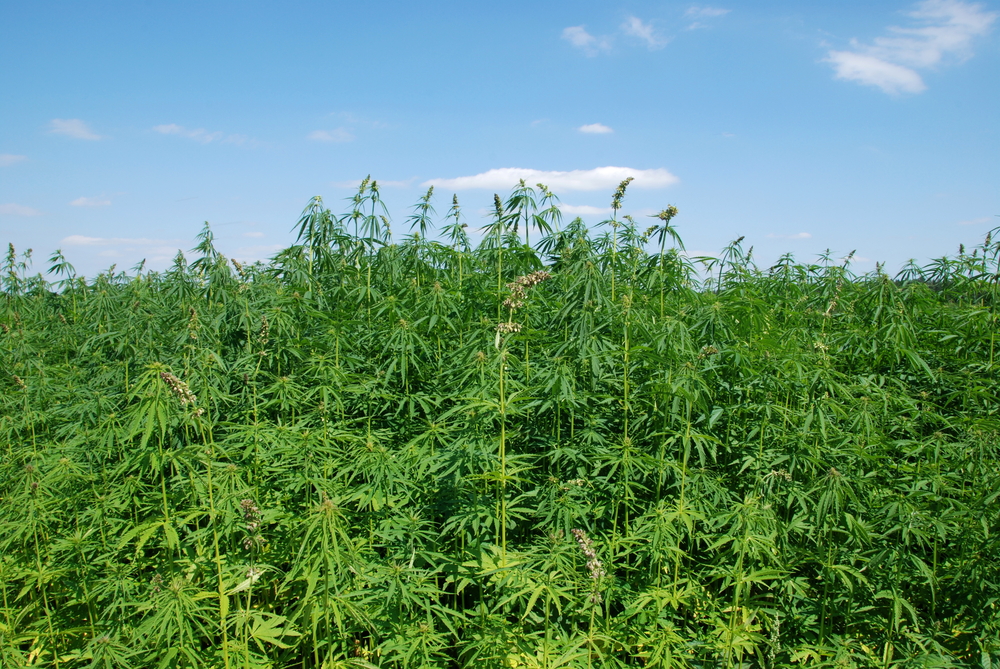
File photo shows hemp field.
WASHINGTON – The National Industrial Hemp Council announced it received $200,000 in U.S. Department of Agricultural (USDA) Market Access Program (MAP) funding to support export market development of industrial hemp.
“We are grateful for USDA confidence and the recognition of NIHC as the industry leader in industrial hemp trade and marketing,” said Kevin Latner, NIHC’s Senior Vice President for Trade and Marketing who will be responsible for implementing the program. “Today’s announcement makes NIHC a trusted partner to USDA for hemp fiber, feed, food and CBD companies looking to break down trade barriers in markets overseas.”
MAP funds are administered through USDA’s Foreign Agricultural Service (FAS). Through the MAP program, FAS partners with U.S. agricultural trade associations, cooperatives, state regional trade groups and small businesses to share the costs of overseas marketing and promotional activities that help build commercial export markets for U.S. agricultural products and commodities. These funds can be used for facilitating trade missions and meeting with industry stakeholders and government regulators overseas.
NIHC programs will focus on Europe and China and include market research, trade policy and trade facilitation. The global industrial hemp and products market was estimated at $11.1 billion in retail sales in 2019. With an annual growth rate of 52%, driven by continued strength in textiles, food and industrial uses and hemp-derived cannabidiol (CBD), the global market is forecast to be worth $89 billion by 2025.
Hemp for industrial use, textile and CBD market is expected to quickly expand and be the primary driver of global industry growth. By 2021, the global trade of hemp is forecast $8.1 billion across all markets, representing a three-year compound annual growth rate (CAGR) of 83%. Europe, China, and Canada are currently the primary sources of industrial hemp. With the passage of the 2018 Farm Bill, the U.S. has become the world’s third largest producer of industrial hemp.
Europe has rapidly developed a robust hemp and CBD market. Europe is also a strong producer of industrial use hemp products with $424 million in industrial product sales. China has led global markets in textiles with almost 80% of the $1.7 billion hemp textile market in 2019.
In addition, National Industrial Hemp Council members will now have unprecedented access to United States trade negotiators; foreign government counterparts; and a network of international hemp industry association counterparts. Foreign governments understand that NIHC is now supported by the U.S. government and represents U.S. industry interests.
Market Access Program funds can be used by NIHC throughout the world to support market access and trade policy work, international trade promotion including supporting business-to-business facilitation and consumer and brand marketing.
MAP funds for 2021 will be administered to NIHC through the Food Export Association of the Midwest USA.
“We’re extremely confident and trust that NIHC will represent the best interests of U.S. industrial hemp abroad. We’re excited to be working with them as part of the USDA cooperator community,” said Tim Hamilton, Executive Director of Food Export Association of the Midwest USA.
About the National Industrial Hemp Council: The National Industrial Hemp Council provides high-quality networking and resources for its members, from farm to consumer. Its leadership is composed of leading international, federal, state, private industry, and government professionals throughout the sector. The organization is dedicated to furthering market development, assisting members in entering the industry, and educating consumers on industrial hemp and its applications. For more information please go to www.hempindustrial.com.
Georgia’s first year of commercial hemp production was a success, though, there were some growers who had plants that exceeded the 0.3 THC level required for crop production.
Mike Evans, director of plant industries who oversees the hemp program at the Georgia Department of Agriculture (GDA), expects a big change next year to come with more frequent testing from the growers throughout the summer.
“One thing I think the growers are looking at, they’re going to do more testing of their crop as the crop progresses and starts getting closer to maturity. Unfortunately, we had 17 disposal orders, where the hemp had been tested and found over the limit,” Evans said. “The retest said the same thing, so that cannabis needed to be disposed of. That was 11 growers, but that was a lower percentage than what several other states had their first year.
“A lot of the growers said they’re going to be testing more frequently.”
Hemp Statistics
Evans said there 144 licenses issued in 2020 with 1,450 acres intended for hemp production and 186 greenhouses.
“Talking with the growers, and I didn’t talk with everyone but a fair number, several of them were planting small acres. There were a lot of one to two acre plots. There were some others that had larger. But a lot of them were of the mindset, ‘I want to figure out how to do this in 2020, and then I’ll decide what I want to do after the season,’” Evans said.
2021 Applications
Renewal applications are being accepted now from farmers who grew hemp this year and are interested in producing it again in 2021. The deadline to renew a current license is Dec. 1. The Georgia Department of Agriculture (GDA) will begin accepting new applications for 2021 in January.
“Overall, I think the first year was successful. From our perspective, we were able to issue licenses, and the growers were able to get the licenses and they were able to get a crop in the ground,” Evans said.
According to the Georgia Department of Agriculture, under the authority of the Georgia Hemp Farming Act, the GDA is authorized to regulate the cultivation and processing of hemp in the State of Georgia.
As the University of Florida Institute of Food and Agricultural Sciences (UF/IFAS) Industrial Hemp Pilot Project research continues, growers around the state have begun growing hemp on their own farms. Researchers from the UF/IFAS Mid-Florida Research and Education Center (MREC) in Apopka have important considerations for Florida growers contemplating or currently growing hemp. Research lessons learned and new findings are the focus of this article.
FLOWERING REQUIREMENTS
Understanding hemp genetics, specifically flowering requirements, before you plant is vitally important.
Hemp is predominantly a short-day, photoperiod-sensitive plant. In controlled environments like greenhouses, hemp is commonly grown under 18 hours of light to keep plants in a vegetative phase and then transitioned to 12 hours of light to initiate flowering. Supplemental lighting is necessary to maintain plants in a vegetative state when natural daylength is below the daylength that initiates flowering. Photoperiod requirements vary among hemp varieties and cultivars.
Genetics determine whether flowering in a particular variety or cultivar is daylength dependent or daylength neutral (known as autoflowering).
Daylength-dependent varieties and cultivars flower when daylength shortens to a critical threshold and triggers flowering. This is somewhere between 12 to 15 hours of daylight, depending on the variety or cultivar. Florida has between 13 to 14 hours of daylight on the longest day of the year, the summer solstice on June 21, which limits optimal planting time to within a few weeks of the solstice. Beyond optimal planting dates, plants can reach a desirable size if grown vegetatively under lights for three to six weeks prior to transplanting or removal from supplemental lighting. However, this is dependent upon the growth rate and plant architecture of the variety or cultivar.
Daylength-neutral or autoflowering varieties and cultivars will flower after a specific maturity time, commonly 30 to 50 days after sowing. Autoflowering hemp plants are generally smaller and can be planted at higher densities, with some reports of seeding rates of up to 26,000 plants per acre.
Take time to learn what the early stages of flowering look like so you can accurately track flower development. Flower bulking is noticeable starting around two to three weeks.
Weekly or twice weekly, sampling of upper plant flowers and other plant tissue should be conducted after flowering has begun. Sample to ensure the crop does not exceed the 0.3 percent limit for total Delta-9 THC, commonly known as “going hot.” High floral density can be achieved by six to eight weeks after floral initiation.
This illustration is representative of one cultivar’s flowering process. The transition can appear different across cultivars.
Source: UF/IFAS Industrial Hemp Pilot Program
Most high-cannabinoid hemp cultivars are dioecious, meaning plants are either male or female. Only female hemp plants produce desirable flowers and high-cannabinoid extract. When fertilized by male pollen, female plants produce seeds and produce less oil. It is critical to determine plant sex when cultivating essential oil-type hemp to prevent accidental production and pollination by male plants, which would reduce high-cannabinoid production ideal for CBD and CBG products.
PEST MANAGEMENT
Consider pest management early and evaluate pest pressure in your hemp crop often.
You will encounter pests within your hemp crop. Commonly found pests include aphids, mites, arthropods (grasshoppers) and worms (tobacco budworm, corn earworm and beet armyworm).
Weekly scouting for pests is recommended with special attention being made during flowering. Worm pressure is most noticeable during flowering and can devastate a hemp crop. If you identify your plants transitioning, be prepared for worm pressure.
Pesticides available for use in hemp are limited. UF/IFAS recommends testing approved pesticides on a few plants to see if the products cause harm before treating the entire crop. Growers will want to be prepared to spray as soon as they see a need, so conducting this testing before a problem arises is critical. Since there are a lack of conventional pesticides available for use in hemp, be sure to know what pest control products are approved by the Florida Department of Agriculture and Consumer Services.
Fungal issues in hemp have been observed both in greenhouse and field trials.
IRRIGATION AND FERILIZATION
Hemp needs adequate water for optimal growth but does not like “wet feet.” Hemp sitting in water for just a day or two can promote virulent fungi and kill plants.
Selection of appropriate growth media or field space is critical to keep plants healthy. Keep in mind that hemp cultivars have varying water demands and tolerance. Dialing in your irrigation will be critically important for success.
Preliminary findings for greenhouse-grown hemp suggest that plants can be grown in a wide variety of substrates. Hemp in container production seems to favor substrates with greater porosity (air space). Plants perform poorly in substrates that stay too wet, as root rot has been observed in other substrates.
If fertigating, low fertigation on a consistent basis is advised to reduce leaching through the soil.
In potted studies, significant losses were seen at soil electrical conductivity of 1.9 or greater. If fertigation is not possible, consistent results can be achieved with appropriate amounts of granular fertilizer.
ADDITIONAL ADVICE
If taking vegetative cuttings of the crop, the selection of proper rooting media is critical. Always use a rooting hormone to increase rooting success. Hormone concentrations that are too high can reduce rooting success; 1,000 parts per million indole-3-butyric acid tends to work well.
Florida has unique growing conditions and pressures that make producing any new crop a challenge. Along with UF/IFAS Industrial Hemp Pilot Project information, rely on those successfully growing hemp in your area to provide data-driven and specific production advice. If you have not yet begun to grow hemp, consider the rules and regulations as well as the inherent risks of growing any new crop.
Hemp production lacks a body of knowledge validated by years of scientific research and data, much of which the UF/IFAS Industrial Hemp Pilot Program actively seeks to develop. UF/IFAS researchers recommend growers make hemp cultivation and management decisions and choose genetics based on information appropriate to their region and backed by science.
UF/IFAS Extension agents across the state are available for support and to answer questions tailored to your region and farm. The UF/IFAS Industrial Hemp Pilot Project website (programs.ifas.ufl.edu/hemp) is updated regularly with the latest research results and ways to learn more about growing hemp in Florida.
Acknowledgments: Steven Anderson, Brandon White, Brian Pearson and Roger Kjelgren contributed to this article.
Georgia’s 2020 hemp season is nearing an end as harvests wind down across the state. It’s never too early, though, to start thinking about next year’s production season.
According to the Georgia Department of Agriculture (GDA), applications for new Georgia hemp grower licenses and hemp processor permits will be accepted beginning in January, 2021.
Growers licensed by the GDA are authorized to grow and handle hemp in Georgia.
For More Information
Current Georgia hemp grower licensees and hemp processor permittees can contact hemp@agr.georgia.gov for renewal information.
Under the authority of the Georgia Hemp Farming Act, the Georgia Department of Agriculture is authorized to regulate the cultivation and processing of hemp in the state of Georgia.
Mike Evans, the director of plant industries who oversees the hemp program at the GDA, said they had received 166 applicants from farmers who were interested in growing hemp in early April.
Within Legal Limits
According to Tim Coolong, associate professor in the University of Georgia College of Agricultural and Environmental Sciences, the state’s hemp producers stayed within the legal parameters of hemp production.
What distinguishes hemp from marijuana is the amount of THC or tetrahydrocannabinol present in the plant. It is the main compound in cannabis that produces the “high” sensation.
Legal hemp must contain no more than 0.3 percent of THC. Otherwise, the THC is at an unacceptable level, and the crop must be destroyed. That doesn’t appear to have been the case this year, though.
Hemp research is still in its infancy across the Southeast. But as more data is developed and information is processed, an already growing market could continue to explode in popularity.
“If you look around the country, there’s now a Professor of Cannabis position open in Illinois. There’s one in Tennessee. There is money and energy going to research,” said Katelyn Kesheimer, Auburn University Assistant Professor and Extension Specialist.
More Years of Research Needed
More years of data are needed to provide growers the information they need to be successful long term.
“In Alabama, we’ve had one year. It’s going to be a long road,” Kesheimer said. “Once we start working with fiber or grain, I think that’s going to be a whole another set of questions and information we can get out.”
Kesheimer’s Research Focus
Kesheimer said some of the research studies she has been a part of this year include a focus on fertility, plant spacing trials, phytotoxicity and insecticide efficacy research in the greenhouse; and weed control and ant control.
It’s been a difficult growing season for Alabama hemp farmers. Fire ant swarms were a problem throughout the summer and into early fall. Low hemp quality has also been a concern with farmers, who just concluded harvesting their crop.
Kesheimer said between disease, insects and late plantings, they contributed to the crop being less-than-stellar quality.
She expects producers to be more aware and cautious moving forward.
“I think instead of just diving in head first they’re just waiting through and seeing. We don’t have all the answers yet, but I think people realize there are resources and to be more cautiously optimistic than anything, which is good. I hate for people to lose money,” Kesheimer said.
Alabama hemp producers looking ahead to the 2021 season are invited to participate in roundtable discussions with Alabama Cooperative Extension agents and specialists.
Alabama Extension is hosting three discussion events with producers over the next three weeks, beginning this Thursday at Camp Meadowbrook in Cullman, Ala. One will be held on Nov. 13 at the Richard Beard Building in Montgomery, Ala. The other will be held at the Wiregrass Research Center in East Headland, Ala.
They will be held from 9 a.m. through 11 a.m.
The sessions are designed for hemp farmers to discuss the challenges and potential opportunities in the industry. Anyone with an interest in hemp is welcome to come and share their experiences from this year’s growing season and ask questions.
A representative from the Department of Agriculture and Industries will also be available to answer any specific questions regarding Alabama rules and regulations.
A maximum of 30 people will be allowed at each event, though everyone else is welcome to attend via zoom.
Click here to register for this week’s hemp discussion.