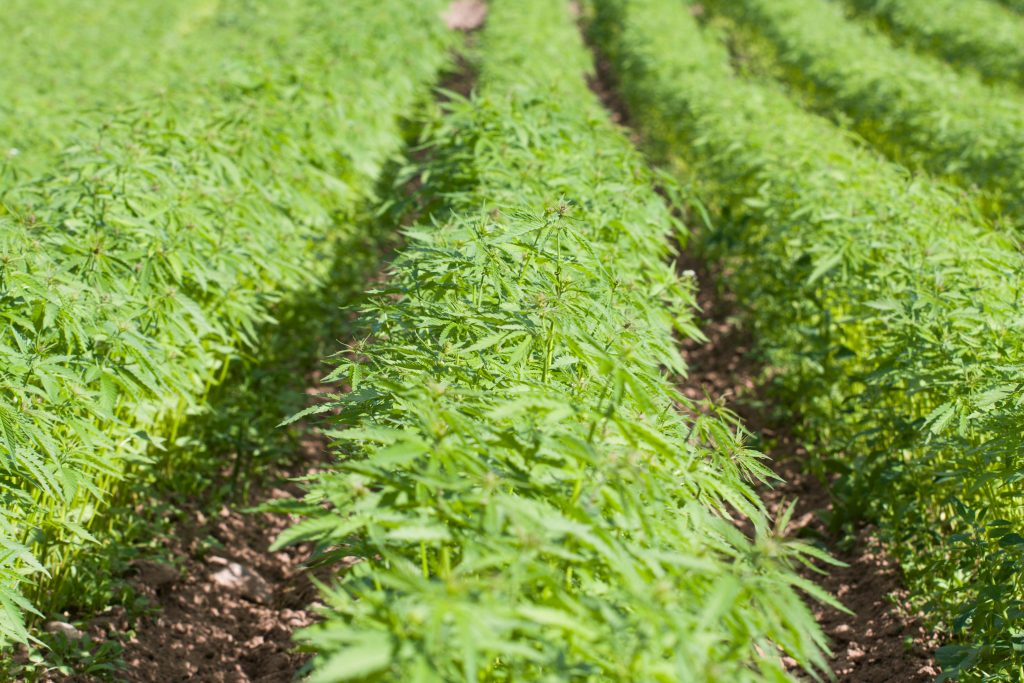
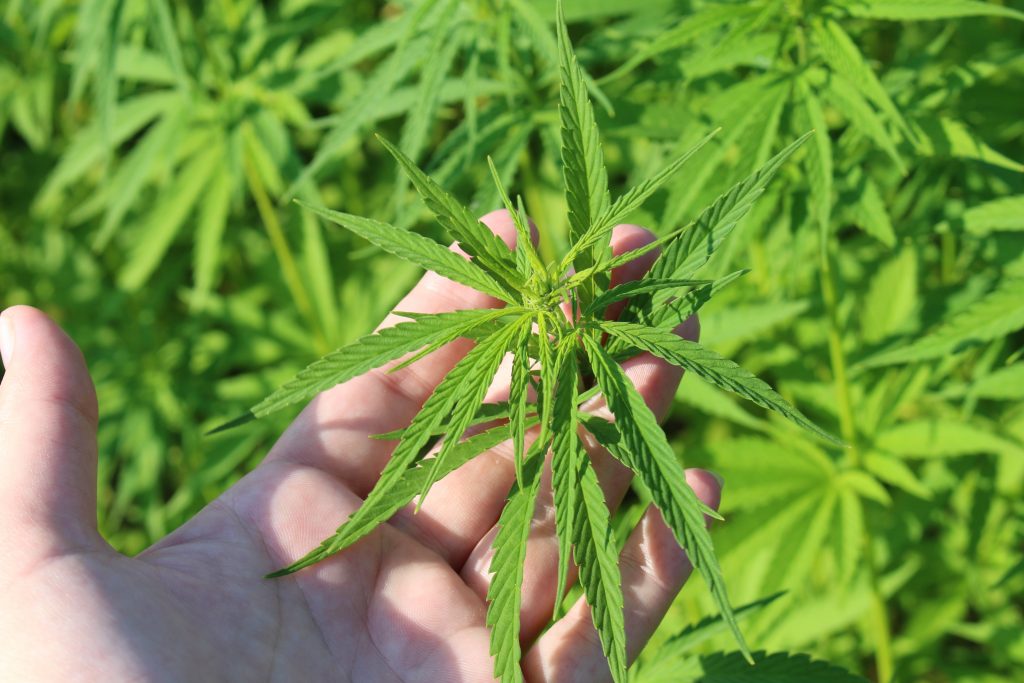
Georgia’s hemp production is expected to decrease in 2021. Tim Coolong, associate professor in the UGA College of Agricultural and Environmental Sciences, believes there are various factors that will contribute to hemp acreage being down compared to last season.
“I think a lot of growers are going more towards, kind of, I’ll say smokable flower. It’s more of a boutique product,” Coolong said. “The flower bud that you’re selling has to have a great appearance; has to have a good smell. In order to do those kinds of products, it’s very hard to do large acreage. It’s very labor intensive. You’re going to be more apt to see people just doing a few acres of that type of market.”
Oversupply Problem
Then there’s overproduction and the impact last year’s oversupply had on market prices.
“You can actually produce quite a bit of CBD from one acre of hemp. When you have hundreds or thousands of hemp planted, that actually equates to a lot of CBD isolates. I think like many things, farmers overproduced,” Coolong said. “We’re very good at growing stuff. We’re excellent at growing a lot of high-yielding crops. I do think we overproduced so people want to cut back to let the market catch up.
“Just like a lot of other veggie crops, if we cut back on acreage a little bit, it’d probably increase the prices.”
Mike Evans, director of plant industries who oversees the hemp program at the Georgia Department of Agriculture, said there were 144 licenses issued in 2020 with 1,450 acres intended for hemp production and 186 greenhouses.
As of mid-March, Coolong said there were about 90 growers who had received licenses to grow hemp in 2021.
Hemp production in Alabama had its challenges in 2020. From ant problems to plant diseases, hemp producers struggled to produce a crop.
Kassie Conner, an Alabama Extension specialist II, discussed some of the obstacles farmers faced last year during an Alabama Extension Commercial Horticulture Facebook Live Q&A session on Friday.
“I think probably the main disease we saw was southern blight, which is a soil-borne fungal disease. It really likes hemp, but it’s also real common in tomatoes,” Conner said. “I think a lot of growers switched over from growing tomatoes to growing hemp. The disease just switched over with them.”
Insect pressure was also widespread throughout Alabama’s hemp crops. Some led to issues with additional diseases.
“There was a lot of problems with fire ant damage. They stripped bark off the base of the plant to tunnel holes through the plants,” Conner said. “There was also a lot of corn earworms that feed on flower buds. After you get a lot of insect feeding damage on the buds, you get a secondary fusarium infection that comes in and causes bud rot. It was so rainy at the end of last season that we just saw bud rot everywhere.
The final rule for hemp production went into effect Monday, March 22. The U.S. Department of Agriculture announced the final rule, which includes modifications to regulations established under the interim final rule published in October 2019.
Key provisions of the final rule include licensing requirements; record-keeping requirements for maintaining information about the land where hemp is produced; procedures for testing the THC concentration levels for hemp; procedures for disposing of non-compliant plants; compliance provisions; and procedures for handling violations.
Florida Agriculture Commissioner Nikki Fried offered the following statement:
“I appreciate the USDA’s implementation of important improvements to its hemp program regulations, and for hearing and addressing the majority of our concerns regarding certain provisions previously issued – providing both flexibility and certainty to our producers. Given the USDA’s responsiveness to our comments, Florida’s program will require only minimal changes to come in line with the federal program to the benefit of our industry. I applaud the Biden Administration for implementing these needed modifications without delay, helping this emerging industry continue to grow. I hope Congress has been listening just as closely to industry concerns and will swiftly take the legislative action needed to raise the arbitrary THC cap of 0.3% mandated by the 2018 Farm Bill – that continues to be the greatest impediment to growth for hemp farmers and those manufacturing hemp-derived products.”
Negligent violation – producers must dispose of plants that exceed the acceptable hemp THC level. However, if the plant tests at or below the negligent threshold stated in the rule, producer will not have committed a negligent violation. The final rule raises the negligence threshold from .5 percent to 1 percent and limits the maximum number of negligent violations that a producer can receive in a growing season (calendar year) to one.
Disposal and remediation of non-compliant plants – the final rule allows for alternative disposal methods for non-compliant plants that do not require using a DEA reverse distributor or law enforcement and expands the disposal and remediation measures available to producers. AMS will provide acceptable remediation techniques in a separate guidance document.
Testing using DEA-registered laboratories – there are an insufficient number of DEA-registered laboratories to test all the anticipated hemp that will be produced in 2020 and possibly 2021. DEA has agreed to extend the enforcement flexibility allowing non-DEA registered labs to test hemp until Jan. 1, 2022 and is processing lab registration applications quickly to get more labs testing hemp DEA-registered.
Timing of sample collection – the IFR stated a 15-day window to collect samples before harvest. The FR extends this requirement to 30 days before harvest.
Sampling method – stakeholders requested that samples may be taken from a greater part of the plant or the entire plant. They also requested sampling from a smaller number of plants. The FR allow states and tribes to adopt a performance-based approach to sampling in their plans. The plan must be submitted to USDA for approval. It may take into consideration state seed certification programs, history of producer compliance and other factors determined by the State or Tribe.
Extent of Tribal Regulatory Authority over the Territory of the Indian Tribe – the IFR did not specifically address whether a tribe with an approved USDA plan could exercise primary regulatory authority over the production of hemp across all its territory or only lands over which it has inherent jurisdiction. The final rule provides that a tribe may exercise jurisdiction and therefore regulatory authority over the production of hemp throughout its territory regardless of the extent of its inherent regulatory authority.
More information about the provisions of the final rule is available on the Hemp Production web page on the Agricultural Marketing Service (AMS) website.
Alabama Extension is ensuring hemp producers have all the relevant data throughout the season in hopes they’ll experience a more profitable season in 2021.
The Alabama Extension H.E.M.P. (Hemp Education and Management Program) webinar series is a one-hour webinar held twice monthly. It provides information on various topics pertaining to hemp production. The next meeting will be held Wednesday at 11:30 a.m. Click here to register.
Gail Ellis from the Alabama Department of Agriculture and Industries will provide information on how to submit a grow plan for the upcoming season. Grow plans are due April 30.
“There’s going to be different topics each time, pretty much based on the most questions we get from growers,” said Katelyn Kesheimer, Auburn University Assistant Professor and Extension Specialist. Hemp webinars will be held on the first and third Wednesdays of each month. “The first one we had, there was a risk management extension specialist talking about the USDA Final Rule for hemp. (This) week, Gail is going to talk about the logistics in submitting a grow plan to the Department of Ag.
“Then we will have a grower presenting what’s worked for him to create high CBD plants. We have folks from the U.S. hemp co-op talking about fiber. As we move into May and June, we’ll have someone talk about weed control and then insect control.”
Kesheimer said they are trying to make the webinar meetings regional if possible, so there will be speakers participating from outside of Alabama. Then some are going to be Alabama specific in terms of rules and regulations; how to do the paperwork and how to follow the guidelines and regulations.
The U.S. Department of Agriculture Hemp Production Program’s Final Rule will go into effect March 22.
Some of the key provisions include raising the negligence threshold from 0.5% to 1% and limits the maximum number of negligent violations that a producer can receive in a growing season to one. Also, the normal 15-day window to collect samples before harvest has been extended to 30 days.
States who wish to manage hemp programs must have a plan approved under the new final rule. They have until Dec. 31, 2021 to transition to the new provisions under the Final Rule.
The final rule provides regulations for hemp production in this country and includes modifications based on public comments and lessons learned during last year’s growing season. More information about the provisions of the final rule is available on AMS’s Hemp Production webpage.
A 30-minute presentation on mites can be viewed at the following website, Mites of Industrial Hemp in Florida. Osborne narrates the video, while Juanita Popenoe, a UF/IFAS Extension agent specializing in commercial fruit production for Lake, Orange and Marion counties, and research entomologist Cindy McKenzie of the U.S. Department of Agriculture Agricultural Research Service (USDA/ARS) at the U.S. Horticulture Laboratory, co-authored the new document.
“The video explores the most important groups of mites, how to identify them, latest research available on chemical and biological control methods and more,” Osborne said.
Producers can learn how to prevent mites from entering their greenhouses and how to scout for them in fields. Growers can also learn about symptoms to look out for.
According to the Alabama Extension Commercial Horticulture Facebook page, recent samples of hemp seedlings sent to the Auburn University Plant Diagnostic Lab yielded discouraging results.
Photo from Alabama Extension Commercial Horticulture Facebook page/Shows gray mold on hemp.
The seedlings and clones were infected with gray mold or Botrytis cinerea. The fungus favors a cloudy and cool environment. Hemp that is produced in greenhouses in conditions that are high in humidity are at risk to be infected by the fungus.
Gray mold develops primarily in flower buds and plant parts that are tightly-packed. The fungus is commonly found in and between buds where microclimates are humid and air flow is restricted. Bud blight is the most common symptom of gray mold observed.
Botrytis cinerea is dependent on a wound or opening in the plant tissue for infection to occur.
Proper sanitation is essential in controlling gray mold. It is especially important to start with clean plant materials.
Scouting on a regular basis will help identify potential problem areas in the greenhouse early before the disease is firmly established. If symptoms of gray mold are observed, producers need to prune and discard any tissue that is dead, dying or diseased.
Use adequate plant spacing to ensure air is properly circulated. Maintain humidity levels near 50%. Avoid irrigating the leaves and canopy, and do not over-fertilize, especially with nitrogen. Monitor and manage insects that can create wounds for the fungus to enter the plant.
Alabama producers who plan to produce hemp in the future need to have a clue about what their production is intended for, says Gail Ellis, hemp program manager at the Alabama Department of Agriculture and Industries (ADAI).
“What I’ve tried to tell everybody that gets in hemp, the more you know about what you want to do in hemp is better known before you put in a license application. A lot of people get in here and just want to grow hemp. They don’t even know if they want to grow for any of the oils or fiber, grain; they have no idea,” Ellis said. “They’re at a disadvantage immediately upon getting their application approved.”
She said that growers should have already researched a seed source or a plant source, whether they’re from Alabama or out-of-state, before applying for a license.
“That’s not something that we tell you. We don’t give you a list of seed dealers or plant nursery growers. That’s stuff you guys, unfortunately, have to find out from yourself, other growers or maybe Katelyn (Kesheimer) with the Extension Service; maybe they know of people in those counties that they deal with,” Ellis said. “That’s just information that you guys have to glean yourself.”
ADAI Approval
Each grower must also wait until they receive an ADAI approval email for the sources and varieties they intend to purchase.
“The reason we do this is we first make sure that source is a licensed hemp person in whatever state they’re operating in. They also have to have a seed dealer permit in Alabama if they’re selling seeds,” Ellis said.
Growers are also required to submit an online seed acquisition form for each source they intend to purchase from. A new source and/or variety requires submission of another form.
UF/IFAS, in partnership with Roseville Farms, has established a program that provides a science-based evaluation of industrial hemp varieties. As a crop new to Florida, all industrial hemp material must be approved prior to production and sale within the state per state law and Florida Department of Agriculture and Consumer Services (FDACS) rules.
The approval program is led by Brian Pearson, assistant professor of crop management at the UF/IFAS Mid-Florida Research and Education Center.
“The ultimate goal with this program is for growers to have knowledge of that plant and its performance when they purchase it,” Pearson said. “What’s unique about the UF/IFAS approval program is that we are growing all of these plants indoors under very closely controlled environmental conditions. We hope growers feel confident in the high standards and rigor that UF/IFAS puts into this program and know that they can rely on our results and efficacy when approving these varieties, or cultivars as they are called per state statute and FDACS rules.”
Growers interested in having their hemp varieties or cultivars approved by UF/IFAS will visit the Clonally Propagated Hemp Cultivar Approval Program website at https://mrec.ifas.ufl.edu/research/HempApproval/ to access and submit an online application.
Once approved to participate in the UF/IFAS program, producers will submit rootless cuttings and pay a one-time fee that covers the THC testing portion of the approval process. The cuttings are grown under a controlled environment at Roseville Farms for 12 weeks and evaluated for THC levels to ensure the submitted cultivars test at or below the 0.3% total THC levels required by state statute.
Cultivars that meet this requirement will be approved by UF/IFAS and the approval will be sent to FDACS. This approval allows the owner of the approved hemp variety or cultivar to legally propagate and sell the vegetative cuttings here in Florida.
“Transparency with hemp genetics and the potential for the industry to thrive with adapted genetics is extremely important,” said Jerry Fankhauser, lead oversight manager of the UF/IFAS Industrial Hemp Pilot Project. “We don’t have a good handle on what hemp cultivars will grow and develop well here in the state of Florida under our sub-tropical environmental conditions. We are trying to understand that by employing science in a consistent, controlled, 12-week grow process we may better understand which cultivars may be suitable for the Florida market.”
Hemp industry stakeholders announced this week survey results regarding industry attitudes towards a hemp checkoff program.
The results, announced by the National Industrial Hemp Council and the Hemp Industries Association, show that nearly eight out of every 10 farmers and processors support the checkoff program for research, promotion and consumer education. More than six out of 10 farmers and processors support being assessed to fund a program.
NIHC Chair Patrick Atagi says, “This is exciting news for our industry and exciting that there is such wide consensus in our industry to support such a program.”
Funded through assessments on the produced commodity at the first point of sale, checkoff programs allow producers of commodities to pool resources for research, education and promotion efforts to expand sales and improve production efficiencies.
The survey received 270 responses and was conducted online via Nov. 30, 2020, until Dec. 31, 2020.
(From the National Association of Farm Broadcasters)