Category: Georgia

  • Liking Lakota: Pecan Variety Generates Interest in UGA Trial

    One pecan variety could be a valuable option for producers seeking a low-cost input variety to plant.

    Photo by Lenny Wells/UGA: Shows Lakota pecans.

    Lakota is a low-input variety where producers don’t have to spray much to manage it throughout the season. It has thrived in research trials on the University of Georgia (UGA) Tifton campus, according to UGA Cooperative Extension pecan specialist Lenny Wells.

    “The yields on Lakota have been very impressive. You can see this year, we’re looking at about 4,300 pounds per acre. I think 159 pounds per tree was the average. Yields have been phenomenal. The count has been good; 63 nuts per pound. It’s a smaller nut than what you see with Desirable and Pawnee, but it’s in the range that shellers would like,” Wells said.

    UGA Tifton Research

    In 2020 low-input test trials at UGA Tifton, Lakota yielded 4,296 pounds per acre at just $1,124.08 per acre. Selling at $1.35 per pound, the gross total was $5,799.60 with a net income of $4,675.52. By comparison, Desirable yielded 1,434 pounds at $1,448.90 per acre and generated just $2,249.10 gross income and $800.20 net income.

    “Our gross income off Lakota was $5,800 roughly per acre. The net was around $4,700 per acre. I don’t know of many crops you can grow, much less pecan varieties, that are going to generate that kind of income,” Wells said.

    Potential Problems

    Wells cautions pecan producers about a few issues that pertain to growing the Lakota variety. Overbearing is an issue so fruit thinning is required for consistent yields. Also, the kernel’s color is darker, especially when compared to a comparable variety like Excel.

    “It seems like every variety has some problems. One thing that is an issue is the color. The kernel color of Lakota is much darker than it is for Excel. That is a red flag to me,” Wells said. “I have run this by a few shellers. Two of them have told me it’s not a problem. One had a concern with it. I’ve seen nuts come out of Mexico and some out of the western U.S. that had this same kernel color; Wichita, Western Schley; shellers buy like crazy and are not too concerned with. Maybe it’s not as big of an issue as I feel like, but I still wonder how much of this the market can take.”
  • Additional Despair: USITC Blueberry Verdict a Sign for Vegetable Producers?

    The U.S. International Trade Commission’s (USITC) decision regarding blueberry imports dealt a disheartening and devastating blow to Southeast producers claiming serious injury to the domestic industry.

    But does the verdict foreshadow additional despair for vegetable farmers who are also claiming imports have hurt their respective commodities; namely, squash, peppers and cucumbers?

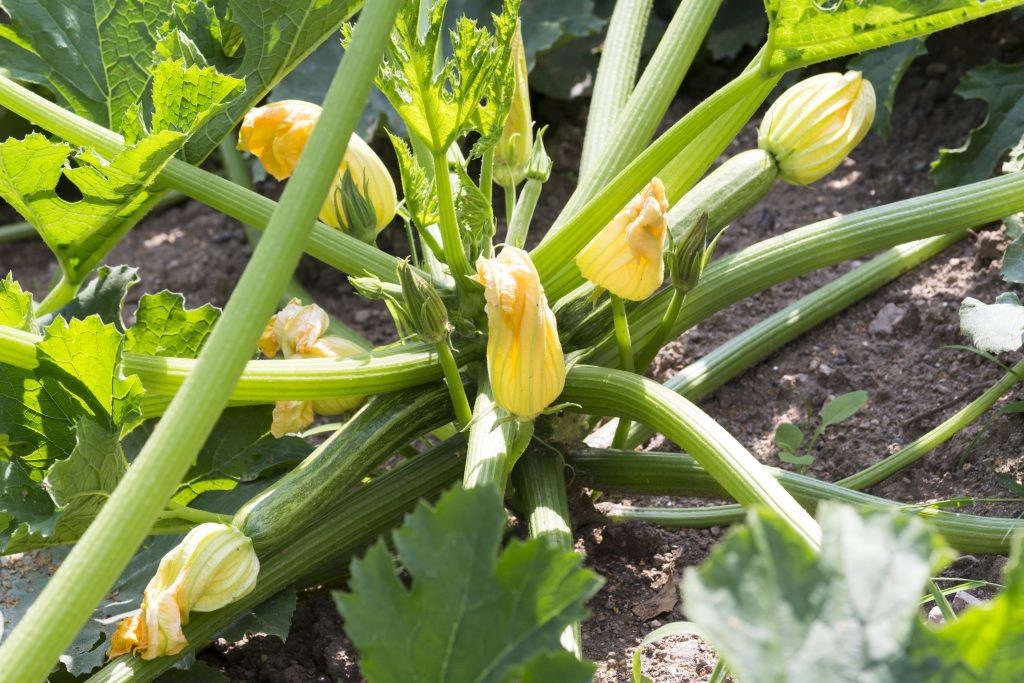
    File photo shows a squash plant.

    “There is concern. Each case is kind of held on its own. As I understand it, they look at the evidence presented and judgements are made at that point,” said Charles Hall, executive director of the Georgia Fruit and Vegetable Growers Association.

    “We felt like blueberries did have a very strong case and very strong data. We’re trying to evaluate how the others will be handled. It’s concerning but not discouraging.”

    Last Week’s Verdict

    The USITC voted unanimously last Thursday that imports of fresh, chilled or frozen blueberries are not a serious injury to the domestic industry. The decision was made despite staggering statistical evidence of how the rise of imports in previous years has driven down prices for such growers in Florida and Georgia.

    Additional Investigations

    The USITC is currently seeking input for two additional investigations regarding the impact of imported cucumbers and squashes on the U.S. seasonal markets. The U.S. Trade Representative (USTR) requested the investigations in a letter. The USITC will hold a public virtual hearing regarding the investigations on April 8 at 9:30 a.m.

    The USITC has also agreed to monitor the imports of fresh or chilled strawberries and bell peppers. The USTR requested those investigations in a letter.

    While the commodities are not the same, the premise behind the investigations are similar: Imports are devastating the futures of Southeastern farmers. For cucumber, squash and bell pepper farmers, the main culprit is Mexico.

    “When you start looking at the nature of the imports, where blueberries had heavy imports from multiple countries like Canada, Mexico, Chile, Peru; our (vegetable) imports are primarily from Mexico. The ITC will have to look at all the various imports,” Hall added. “I’m assuming if you look at the percent of imports in peppers and squash and cucumbers, Mexico is going to be your largest importer whereas they were not as large of an importer with blueberries as some of the other countries.”

  • Essential Workers: Response Requested for Survey

    The Georgia Fruit and Vegetable Growers Association (GFVGA) is actively working to be the voice of Georgia’s produce industry.

    Agricultural workers are essential. The Georgia Department of Public Health is working to create a plan to get your agricultural workers vaccinated.

    The GFVGA wants COVID-19 vaccines available to them at the earliest possible date and needs your help.

    Most of the decisions about how the vaccinations will be distributed will be made at the local level by the Georgia health department staff and district director as well as local hospitals, pharmacies, etc. The information that the GFVGA hopes to gather via a survey will be used to help inform local Georgia health districts about the overall essential Ag worker presence they will have in their district during the Spring 2021 season. This should include family and full-time employees, as well as seasonal employees made up of domestic, migrant and H-2A employees.

    When the plan is enacted in your community, the GFVGA wants to ensure that local officials have the information needed to prioritize vaccinations for Ag workers. Your participation in this brief survey will help GFVGA achieve this critical goal. If you have any questions about how GFVGA has been working for you or how this information will be used, please contact the GFVGA office at (706) 845-8200.

  • Point Made: Financial Impact of Imports of Fruits and Vegetables

    Southeast fruit and vegetable farmers have had a point all along. Imports of fruits and vegetables, which have long been the source of producers’ ire in recent years, have significantly impacted the domestic industry.

    Produce coming in from countries like Mexico, Chile and Peru have driven down prices and put producers’ futures at risk.

    Blueberries were the source of a recent Section 201 investigation by the International Trade Commission.

    It was the source of the recent Section 201 investigation by the U.S. International Trade Commission into blueberries where producers claimed serious injury to the domestic industry.

    Statistically Speaking

    According to the USDA Economic Research Service, recent statistics show how much imports have increased over the past several years, especially in 2020.

    Imports of fresh or frozen fruits totaled $15.2 million, up from $15.06 million in 2019. Imports of prepared or preserved fruits totaled $3.28 million, up from $3.07 million in 2019.

    Mexico was the top exporter of fresh or frozen fruits, followed by Chile and Peru.

    The financial impact is significant considering that in 2015, the imports of fresh or frozen fruits totaled $11.3 million.

    Imports of fresh or frozen vegetables totaled $12.72 million, up from $11.38 million in 2019. Imports of prepared or preserved vegetables totaled $3.8 million, up from $3.46 million in 2019.

    Mexico was the top exporter of fresh or frozen vegetables, followed by Canada and the UK.

    Again, when compared to 2015, the financial impact of imports has been staggering. Imports of fresh or frozen vegetables totaled $8.81 million in 2015.

  • Costs Cutting Essential for Pecan Producers

    It’s a matter of survival for pecan producers. After a season in which prices were drastically low, farmers need to cut costs, not corners.

    UGA File Photo/Shows spraying being done in a pecan orchard.

    Lenny Wells, University of Georgia Cooperative Extension pecan specialist, emphasizes the importance of reducing input costs, starting with lime applications.

    “Of course, we know orchard soils need to be around 6 to 6.5; that’s where your pH needs to be. If you’re in that range, there’s never been a study that has shown any advantage to liming beyond that. Once you get that pH to 6 to 6.5, if you check your soil samples every year and you’re in that range, you don’t necessarily have to apply any lime,” Wells said. “I think probably in most cases, we could go to applying lime maybe every third year or just look at your soil samples and see and do it when it falls below 6.0.”

    If growers only apply lime every third year, it could save producers as much as $27 per acre.

    “On really sandy soils a lot of times, pH is going to drop faster. So, you’re going to want to keep any eye on that,” Wells said. “Of course, your herbicide strip is going to drop faster than in the middles where you have some vegetation. I would do your sampling based on the herbicide strip.”

  • Soggy Soils: Excessive Rains Concern Onion Producers

    Photo by Chris Tyson/UGA: Shows an onion field that’s saturated from the excessive rains.

    The wet winter weather has Georgia Vidalia onion producers concerned about not getting into their fields to apply fungicide sprays or make fertilizer applications. Certain diseases could soon become problematic considering how much rain the Vidalia onion region has received this year.

     “They’re just not able to get caught up with their applications or get out there and do what they need to do,” said Chris Tyson, University of Georgia Extension Area Onion Agent at the Vidalia Onion & Vegetable Research Center in Lyons. “We are always concerned about disease. This is the time of the year when we’re spraying for fungal diseases like Botrytis and Stemphylium. They’re actually not as bad right now as they normally are. But because of the weather, we’ve had below-average temperatures, and they just haven’t gotten fired up and going like they normally would at this time of the year.

    “They’re definitely creeping up on us out there. We just hope it will dry out and we can and try to play catch-up with everything. That’s the biggest concern right now.”

    Rainy Conditions

    Vidalia, Georgia received 9.73 inches of rain from Jan. 1 to Feb. 14 with 25 rainy days, according to the UGA Weather Network. That’s almost triple what it received in 2019 when it amassed 3.83 inches. That doesn’t even account for cloudy, overcast days when it is not raining. Sunny days have been few and far between lately.

    “Looking at some of the weather data, we got almost two inches over the weekend and we were already wet. We had a half-inch to an inch last weekend and some during last week. We haven’t been able to dry out,” Tyson said.

    The onions continue to progress, though, through the adverse conditions.

    “The onions that are out there look good. They’re a little smaller than they usually are. But overall, I think we have a good-looking stand of onions out there across the industry. They’re a little on the smaller side right now,” Tyson said. “We know that can change real fast. We’re just looking for a little bit of warmer weather and sunny days to help them do that.”

  • Freeze Effect: Peach Producers Wary of Late-Season Frost

    File photo shows a peach bloom blossoming.

    Chill hours are no longer a concern for peach growers in Alabama and Georgia. So, what is their biggest worry heading into the spring?

    “March 28, the full moon in March. We always tend to have some cold in that full moon in March. But with it being later, maybe we’ll be out of the woods and in the clear. You just never know. March can be so up and down. Even the last few years, February has gotten pretty warm,” said Jeff Cook, University of Georgia Cooperative Extension Agriculture and Natural Resources agent for Peach and Taylor counties.

    Cook said there are early varieties that begin to bloom towards the end of the third week in February.

    Growers in both states are cautiously optimistic about the state of the peach crop. The cold winter temperatures provided enough chilling hours for the trees to make a crop this year. But what will happen if temperatures warm up? Trees will be vulnerable to a late-season freeze.

    “We’ve got some peach producers around. They’re not all in one area, they’re kind of spread out. When I talked to them, they’ve done some pruning,” said Eric Schavey, Alabama Regional Extension agent in Northeast Alabama. “They’re just hoping we don’t get one of those late freezes. Their early varieties, they’re not blooming but they’re swelling. Those buds are swelling. That’s because we had those 68 and 70-degree days.

    “I guess that early crop is always kind of a gamble here in our area.”

    That makes what happened on Feb. 2 so important for farmers eyeing the upcoming weather forecast. Punxsutawney Phil saw his shadow and predicted six more weeks of winter.

    “When the groundhog saw his shadow, it was like, ‘Okay, that’s good. Stay cool,’” Cook said.

  • Victorious Verdict: Blueberry Coalition Applauds ITC Decision

    File photo shows blueberries.

    While blueberry farmers and industry leaders were disappointed and disheartened with Thursday’s vote by the International Trade Commission (ITC), the Blueberry Coalition for Progress and Health responded with applause for the ITC.

    The group issued a statement following the ITC’s unanimous vote in which it deemed that imports of fresh, chilled or frozen blueberries are not a serious injury to the domestic industry, ending the Section 201 investigation.

    “The Blueberry Coalition for Progress and Health applauds the U.S. International Trade Commission’s (ITC) determination that imported blueberries have not injured the domestic industry. The U.S. blueberry industry is healthy and thriving. 

    “Together with imports, the U.S. industry is working hard to keep up with the year-round and growing marketplace demand for this healthy and nutritious fruit. U.S. per capita consumption of blueberries has experienced a more than 300% since 2005 and is now at an all-time high of 1.79 pounds per person.

    “Restricting blueberry imports into the U.S. would have limited consumers’ access to these healthy, delicious and nutritional berries with no benefit to U.S. producers. 

    “We look forward to continuing to provide the American market with our healthy and delicious fruit.”

    The verdict was rendered in the coalition’s favor despite overwhelming evidence by the American Blueberry Growers Alliance against imports.

  • Decreased Results: Vegetable Production Down Slightly in 2020

    File photo shows tomatoes.

    According to the USDA National Agricultural Statistics Service, vegetable production throughout the country decreased in 2020 from 2019.

    Production for the 26 estimated vegetable and melon crops totaled 720 million cwt, down slightly from 2019. Area harvested last year was 2.33 million acres, down 1% from 2019.

    The top three vegetables, relating to harvested areas, were sweet corn, tomatoes and snap beans. The three largest crops in terms of total production were tomatoes, onions and sweet corn. They combined for 53% of all the vegetables.

    Florida and Georgia ranked second and fourth respectively in value of utilized production nationally. They accounted for 13.4% of the total value of utilized production. The value of utilized production in Florida totaled $1.17 billion, down 4% from 2019. Tomatoes were the state’s leading crop with a $463 million value.

    The value of utilized production in Georgia totaled $583 million, up 13% from 2019. Sweet corn was the state’s leading crop with $138 million.

  • Saturated Soils: Rainy Winter Provides Hope of No Drought This Summer

    Photo taken by Clint Thompson/Shows wet, muddy conditions in a field in Tifton, Georgia.

    Excessive winter rains have kept some Georgia farmers out of the field because of saturated conditions. But they provides hope that a potential summer drought is less likely than originally feared.

    “We were expecting a more typical La Nina winter which is usually warm and dry in that part of the country. It has not been that way so far this year,” said Pam Knox, University of Georgia Extension Agricultural Climatologist. “La Nina winters, anytime we make a forecast, it’s based on statistics, but this has not been a very typical year.  Instead of having that storm track farther to the north, it’s been perched right over that area.

    “It’s good because usually when we have a La Nina winter, it means that we’re much more likely to go into a drought next summer. For me at least, this has alleviated some of the worries about going into drought early in the season. Now, it brings up a whole set of other issues. It delays people getting out into the field and they’re late planting. That could run into issues at the other end of the growing season.”

    Wet Winter

    According to the University of Georgia Weather Network, Tifton, Georgia has received almost twice as much rainfall (9.86 inches) so far this year than in 2020 (4.94) and 2019 (5.24).  The same can be said for Moultrie, Georgia where rainfall totals 9.15 for 2021, compared to 4.87 in 2020 and 5.87 in 2019.

    “The weather pattern this year has sort of gotten stuck in place. There’s this band of rain that’s gone from southwest Georgia stretching up to the northeast all the way through North Carolina and Virginia. I’ve heard from farmers all along that band that they’re having a lot of trouble getting out into the field,” Knox said.

    Farmers had La Nina concerns last November. Since the weather pattern’s normal tendency is to bring warm and dry weather conditions, there were concerns of insufficient chilling hours for fruit farmers and lack of moisture in the soil prior to vegetable and specialty crop producers planting the spring crops. Chill hours are no longer a concern. Neither is soil moisture.

    “Even if we go into a more typical La Nina situation at this point, that moisture’s not going to go away, at least not immediately,” Knox said.