Category: Georgia

  • Mummified: Blueberry Growers Watch Out for Fungal Disease

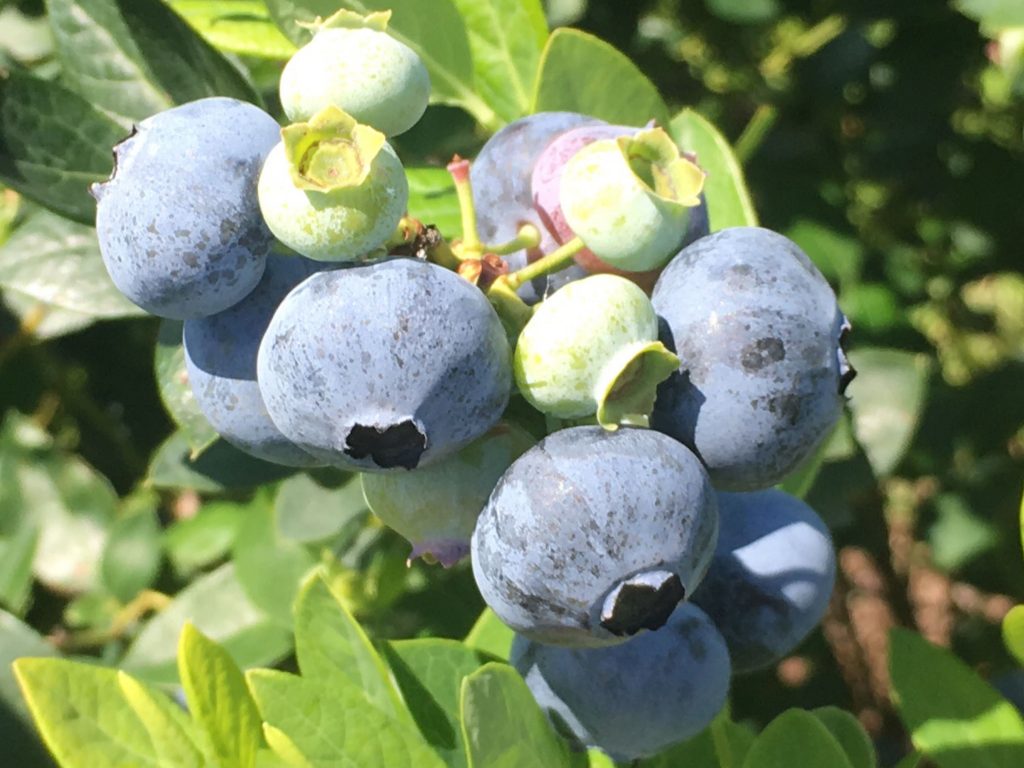
    UGA photo/Mummy berry disease is caused by the fungus Monilinia vacciniicorymbosi and is an important fungal disease of blueberries.

    South Georgia blueberry producers need to be wary of mummy berry disease. University of Georgia Extension advises growers to initiate sprays for the disease to protect plants that are vulnerable.

    “Growers usually know around green tip, when new leaves are developing and then through bloom, they need to be putting out effective fungicides for control of mummy berry,” said Jonathan Oliver, University of Georgia (UGA) assistant professor and small fruits pathologist. He added that while the disease typically impacts rabbiteye blueberries, it may be a problem this year for southern highbush varieties as well.

    “On southern highbush blueberries, those berries tend to develop a little earlier than rabbiteye, and usually, the mummy berry life cycle doesn’t quite match up right with the southern highbush life cycle. Usually our southern highbush (varieties) escape,” Oliver said. “But our blueberry development right now is several weeks behind where it’s been the last couple of years, and so a lot of our southern highbush happen to fall right in the window where perhaps they also could get infected with mummy berry this year. While it’s usually not a problem for southern highbush, this year maybe a year where it could be.”

    Symptoms

    “It’s a fungus species that first will infect the young leaves and then it will spread to the blooms. After it infects the blooms, any blooms that get infected that produce berries, those berries will be filled with fungus tissue,” Oliver said. “A fungus will grow in the berry and suck all of the moisture out. It basically ends up with a mummified berry. That’s where the disease name comes from.”

    Additional information on fungicides that are available to control mummy berry can be found in the Southeast Regional Blueberry Integrated Management Guide at www.smallfruits.org.

    “Growers of southern highbush don’t always spray, I mean they spray fungicides that probably are going to have efficacy against mummy berry but they don’t spray, specifically targeting mummy berry, usually because they don’t have to. But this year may be a year where they need to,” Oliver said.

  • Heritage Orchard Reclaiming Georgia’s Forgotten Apples

    UGA Extension agents (left to right) Ashley Hoppers, Josh Fuder and Clark MacAllister plant one of the Heritage Orchard’s trees. They located many of the orchard’s varieties through their contacts with local apple growers and other farmers and tree owners. (Photo by Mike Terrazas)

    By Michael Terrazas for CAES News

    The names tick off like racehorses or colors from some fancy catalog: Carolina Red June, Duchess of Oldenburg, Hewe’s Crab and Rabun Bald, Limbertwig and Nickajack and Parks’ Pippin and many more. They’re apples, hundreds of varieties that thrived in orchards across North Georgia a century ago, before an evolving apple industry swept them off shelves and tables, never to return.

    Until now. With the help of a dedicated group of University of Georgia researchers, UGA Cooperative Extension agents and volunteer enthusiasts, Georgia’s lost apple varieties are making a comeback. The newly planted Heritage Apple Orchard, located at UGA’s Georgia Mountain Research and Education Center in Blairsville, is meant to reclaim many of those bygone cultivars and demonstrate why Georgia once was at the center of the U.S. apple industry.

    The Heritage Orchard will soon provide another educational agritourism attraction for the Mountain Research and Education Center, a unit of the College of Agricultural and Environmental Sciences. But it will also yield satisfying produce for Georgia consumers and researchers.

    “One very basic benefit is simply to reconnect Georgians with the history, and the agricultural history, of their state,” said Stephen Mihm, associate professor of history in the Franklin College of Arts and Sciences. “But there’s another, very important virtue to this work, which is that the apple cultivars that thrive in Georgia are not typical in their tolerance for heat and humidity. There’s growing interest in tapping into those traits genetically, and that’s not only restricted to apples.”

    Click here for the full story.

  • Pecan Pest: Ambrosia Beetles Are Active

    A main insect pest of pecan trees is active right now.

    University of Georgia Cooperative Extension specialist Lenny Wells cautions producers that Asian Ambrosia beetles are active in young pecan trees. Beetle activity has been reported from Cook County, Fort Valley and different sites in Eastern Georgia, according to the UGA Pecan Extension Blog. Activity will only increase as temperatures warm up this week.

    UGA Extension photo shows damage done by ambrosia beetles in a pecan tree.

    “Due to excessive rain in February, many fields are very wet, and planting was delayed,” Wells said in the blog. “These late-planted trees, especially in wet areas, are the most likely to be affected. They will still be under considerable transplant shock and will be the most attractive to beetles.”

    Producers can identify beetle activity by the toothpick-sized sawdust tubes the beetles leave sticking out of holes bored in pecan trees. The less likely a tree is to survive an attack, the more often that tree is attacked by the beetles.

    Wells advises growers, who have experienced past issues with the beetles or who have new trees planted in the past two or three weeks, to apply a pyrethroid like Bifenthrin.

  • Farming’s Future: Ag Labor Reform Needed Now More Than Ever

    usmca

    The future of the American farmer is bleak.

    Farmers themselves are hinting that the end is near for their career in the field, amid increasing costs, decreasing prices and steady imports from Mexico.

    One significant help would come in reform to the current H-2A guestworker program, according to Allison Crittenden, Director of Congressional Relations at the American Farm Bureau Federation. American farmers need it now more than ever.

    “Without addressing Ag Labor reform and without making changes to the H-2A program to enable farmers to have access to a workforce and still be able to make the business structure work and enable them to become competitive; if we don’t fix these problems, then American agriculture is in danger,” Crittenden said. “If we don’t have a workforce, how can we produce crops in this country?”

    Rising Wage Prices

    Reform is mainly needed because prices have risen significantly over the past five years. Crittenden said the national average for the Adverse Effect Wage Rate has increased by 20% in the last five years. Following the latest wage increase, Florida’s hourly rate is $12.08, while Georgia and Alabama are $11.81. That’s not counting additional costs for housing and transportation.

    “This is all occurring against the backdrop that prices are rather stagnant in terms of labor-intensive crops. There’s a lot of downward pressure from imports from other countries where those employees in those countries get paid in a day where American H-2A workers get paid in an hour here,” Crittenden said. “We have to find a way to enable farmers to remain competitive while providing them access to that labor force that we so desperately need.”

    Potential Solution?

    Two members of the House of Representatives introduced a potential solution last week with the Farm Workforce Modernization Act. It would reform H-2A wages to better reflect real-world wages while protecting against sudden wage increases.

    “We need an immediate solution, but we have to be careful about what we consider to be a solution. We haven’t addressed Ag Labor reform in a substantive way in over 30 years. It’s critically important that we get it right this time around when we do,” Crittenden said.

  • Grape Diseases: Mildews a Concern for Producers

    No matter what environmental conditions grape producers face this season, they are likely to encounter either downy mildew or powdery mildew.

    Early powdery mildew on a grape leaf in this UGA photo. Note the white fuzzy patches on the upper side of the leaf (photo courtesy of Brooke Warres; UGA Plant Pathology).

    “Powdery mildew actually does better in a drier environment. That’s why it’s a major problem in places like California. But when we have dry conditions, it can be worse for us. Even in wet conditions, we have it,” said University of Georgia Cooperative Extension Fruit Disease Specialist Phil Brannen.

    “Downy mildew is one that we deal with year in, year out. They don’t even have it in California because it’s too dry out there. With our wet environment, it’s the one we have the most of on a year-in, year-out basis and gives us the most trouble trying to control.”

    Comparing the Two

    While the two diseases sound similar, they are much different.

    Downy mildew is not a fungus, but powdery mildew is caused by a fungal organism.

    Downy mildew attacks all the green parts of the vine, but the leaves are especially susceptible. The disease can cause up to 100% crop loss if unmanaged. Oil spots will develop on the top of the leaves, which can lead to desiccation and defoliation.

    Powdery mildew causes issues on the leaves and fruit. It opens channels into the fruit which allows other organisms to rot the fruit. Signs of white powdery growth will show up on the surface of the fruit and leaves. Any amount of the disease will cause an off-flavor in wine production.

    Potential Resistance

    What is especially concerning for grape growers is the pathogens that cause both diseases are developing resistance to several fungicides in use. According to Brannen, downy mildew Qol resistance is widespread in Georgia vineyards. Resistance development has also been reported in powdery mildew in Qols, DMIS and SDHIs in various parts of the world.

    “The pathogens that cause those diseases are developing resistance to quite a bit of the fungicides we utilize for controlling them. They’re becoming more and more of a challenge to manage from the standpoint of developing a spray program,” Brannen said.

  • Georgia Blueberry Growers to Vote on Continuation of Assessment

    blueberry

    Georgia’s blueberry producers can vote until March 30 on the continuation of the Georgia Commission Blueberry Marketing Order. This allows for the assessment of blueberries produced in Georgia.

    Growers who annually produce and market 2,000 pounds or more of blueberries are eligible to vote. The current assessment amount is set at $5 per ton.

    Growers can vote and return the addressed envelope with the ballot by March 30, 2021. They must also sign and fill out the back of the envelope to certify they are a qualified Georgia blueberry producer, so the ballot can be counted.

    A percentage of two-thirds of the returned eligible ballots are required for the continuation of the market order.

    The Georgia Agriculture Commodity Commission for Blueberries uses the funds for research, education and promotion of Georgia blueberries.

    If a grower does not receive a ballot, please contact:

    Andy Harrison
    Manager, Commodity Commissions
    Georgia Department of Agriculture
    Andy.harrison@agr.georgia.gov
    (404) 710-1196

  • H-2A Reform: Is Farm Workforce Modernization Act the Answer?

    If it’s not at the top of the list of concerns for vegetable and specialty crop producers, it’s near the top – immigration reform, specifically H-2A reform.

    One potential remedy could be on the way. The Farm Workforce Modernization Act, introduced last week by two members of the House of Representatives, is the latest attempt to help farmers who are utilizing the H-2A guestworker program.

    Allison Crittenden, director of Congressional Relations at the American Farm Bureau Federation, commented on this potential solution.

    “Our organization acknowledges that there are severe shortcomings in the Farm Work Modernization Act. While this is a bill introduced in the House, we recognize that in the Senate, there’s a real opportunity for an Ag Labor Bill to come forward that better meets agriculture’s needs,” said Crittenden. “With that being said the main points of the Farm Work Modernization Act are that it does provide legal status to undocumented farm workers; it seeks to make some changes to the H-2A program; and then it also requires farmers in the agriculture industry to adhere to mandatory E-Verify after a certain time period.”

    State of Crisis

    Farm labor is in a state of crisis. Farmers in states like Florida and Georgia are largely dependent on foreign workers to meet the demands on the farm, especially since the supply of U.S. workers is low.

    Reforms to the current H-2A program are mainly needed because wage rates have increased dramatically.

    “What we hear from our membership about is the Adverse Effect Wage Rate (AEWR). AEWR is calculated by regions, but if you create a national average, that national average has increased by 20% in the last five years. But we know that the prices that farmers are receiving for their crops has not kept up at that same rate,” Crittenden said. “Your labor costs have increased so drastically but what you’re getting paid for your product has not kept up. It’s getting to a point where a farmer’s ability to stay in business is becoming harder.”

    Wage Impact

    The Farm Workforce Modernization Act would reform H-2A wages to better reflect real-world wages, while protecting against sudden wage increases. It would disaggregate wages for agricultural occupations and freeze wages for one year and cap wage fluctuations for most of the country at 3.25% for the next nine years.

    That may be too little too late, though, with respect to the recent AEWR.

    “We see there’s a financial benefit to freezing the AEWR and capping those increases, but we’re already starting at a rate that has increased so drastically over the past five years. Farmers are already struggling with the 2021 AEWR,” Crittenden said.

    Click here for a full text of the bill. U.S. Representatives Zoe Lofgren, D-CA, and Dan Newhouse, R-WA, reintroduced the Farm Workforce Modernization Act, H.R. 1537 on Wednesday, March 3.

  • Disease Management: Onions Vulnerable Amid Rainfall, High Temperatures

    UGA Extension photo/Shows botrytis disease in onion plants.

    Field conditions are conducive for disease pressure to increase in Vidalia onion fields in Southeast Georgia. That’s why Chris Tyson, University of Georgia Extension Area Onion Agent at the Vidalia Onion & Vegetable Research Center in Lyons, Georgia, is imploring farmers to stay on top of their fungicide sprays.

    “Looking around the fields last week, we definitely saw more disease showing up. Some of the fungal diseases like botrytis and stemphylium, we saw them showing up. That is expected this time of year,” Tyson said. “But they’re definitely showing up now that we’ve had warmer weather. We just want everybody to stay on track to manage that and all the other diseases, too.”

    Excessive Rainfall

    Like most of South Georgia, the Vidalia onion region received its fair amount of rainfall during February. According to the University of Georgia Weather Network, Vidalia, Georgia received 6.35 inches between Feb. 1 and Feb. 22. Then temperatures increased a week later. But this week, there was more rain, especially on Tuesday and Wednesday where 2.51 inches were recorded.

    Despite the weather challenges, the onion crop looks good, overall, says Tyson. But as harvest nears, now is not the time to let up.

    “We’re at a period of time in the crop where harvest for some of the early maturing onions is probably just about a month away. It seems like it’s right here, but we still have a long way to go even for those onions that will be ready soon; and then for some of the longer season ones that will be ready in six weeks or seven weeks. We still have a long way to go,” Tyson said. “We’re not out of the woods yet. We know from past experience that a lot can happen in the final few weeks before harvest. We’re keeping our fingers crossed right now because everything does look good at this point.”

  • Immigration Reform: Ag Leaders Sound Off on Timely Topic

    A farmworker cuts romaine for harvest.

    The USDA’s Agricultural Outlook Forum recently highlighted various topics surrounding the future of the industry.

    Two agricultural leaders discussed one issue that has been at the industry’s forefront in the Southeast – immigration reform.

    National Council of Farmer Cooperatives President and CEO Chuck Conner said immigration reform has long been a hot issue discussed in Washington D.C. but has failed to yield any change over the last decade; despite a shortage of farm workers and increasing wages within the H-2A program.

    “This problem is still out there. In fact, it’s getting worse. We’ve got a lot of undocumented workers on our farms and ranches. They need some kind of legal status. We talk about the amazing accomplishments of American agriculture throughout COVID,” Conner said. “We couldn’t do what we do every day without the existence of these workers, pure and simple, so we need to keep them on our farms and ranches. We need to pull them out of the shadows and give them the legal authority to work on those places.”

    American Farm Bureau President Zippy Duvall echoed Conner’s sentiments.

    “It’s the biggest limiting factor that agriculture has. We’ve got young people coming out of college that want to have jobs in agriculture. We’ve got farmers that are ready to bring their children back home. They’ve got the land and resources and the water. But they don’t have the labor to expand to be able to afford to bring their children back home with them,” Duvall said. “We’ve got to solve this program. I hope that Congress will take it head on and find some solutions to it.”

    H-2A Program

    The H-2A program allows farmers who meet specific regulatory requirements to bring foreign nationals to the United States to fill temporary agricultural jobs. But H-2A wages for 2021 just increased and are threatening to skyrocket if the Biden Administration gets its $15 minimum wage. As costs increase and Mexico continues to dump produce and drive market prices down, farmers are struggling to stay afloat.    

    “We have a vibrant guest worker program in this country where we temporarily bring people into the country to do agricultural work. This is a very difficult and cumbersome program for our farmers, and in particular, for our smaller farmers who are trying to make ends meet,” Conner added. “The bureaucracy and the cost of our H-2A guest worker program is just making it almost prohibitive for them to survive. We need reform for that guest worker program.”

    Duvall added, “It’s got to be affordable. Our employees deserve to be paid a good salary. But our farmers have got to be able to afford it because we’re price takers, not price makers. They’ve got to be able to afford it so we can continue to provide those jobs and continue to grow food on our farms.”

  • Brighter Days: Sunshine Sparks Growth in Vidalia Onions

    Georgia Vidalia onion producers experienced much-needed sunshine last week. It allowed them to get back into the field and apply fertilizer and fungicide sprays, says Chris Tyson, University of Georgia Extension Area Onion Agent at the Vidalia Onion & Vegetable Research Center in Lyons, Georgia.

    Photo by UGA/Shows Chris Tyson in an onion field.

    “Growers were wide open last week trying to get caught up with fertilizer and with fungicides. I feel like, for the most part, we got caught up or close to being caught up with what we needed to be,” Tyson said. “If we had another rainy week, we would have probably been in trouble then, if we weren’t able to get in the fields last week.”

    Plants had been slowed a bit amidst the excessive rainfall Georgia experienced most of February. But they showed encouraging signs of growth during the 70- and 80-degree temperatures.

    “I tell you, they really have made some headway in the last week with the warm weather and sunshine. They have grown a lot,” Tyson said. “They have that ability to catch up really fast when we get favorable weather. We are still a little below average on our size of the crop and where we should be, but we’ve gained a lot of ground in the last 10 days.”

    Main Concern Now

    Tyson said growers’ biggest concern now is staying up to date on their fungicide applications.

    “We just want to make sure we’re caught up in managing our diseases with our fungicide sprays to the best of our ability. As we enter into this second phase of the crop where it’s going to start to get big tops and start bulbing, we’re watching for Botrytis and Stemphylium, (Center Rot) and Downy Mildew. That’s the main thing really, that’s on a lot of their minds I think,” Tyson said.