Category: Georgia

  • COVID-19 Keeps Georgia Produce Farmers From Hiring Labor, Exporting Crops

    One University of Georgia Extension economist is concerned about labor availability this year.

    By Sharon Dowdy, University of Georgia, College of Agricultural and Environmental Sciences

    Georgia produce farmers are used to fighting plant diseases on their crops, but planting resistant varieties or spraying pesticides won’t keep Coronavirus (COVID-19) away. This disease has shut down borders and reduced access to the markets where farmers sell their crops, is keeping essential farm labor out of the country, and prevents produce from being imported, too, according to University of Georgia Cooperative Extension experts.

    “The difference between Covid-19 and plant diseases, thrips, tariffs and hurricanes, is that, while the others affected the specialty crop industry directly, COVID-19 will indirectly affect the entire industry,” said Greg Fonsah, UGA Extension agricultural economist for vegetables, fruit and pecans. “Since COVID-19 became a pandemic, most countries including the United States have shut down their borders and imposed travel restrictions.” 

    Georgia agriculture has a farm gate value of about $14 billion. Most of the state’s fruits and vegetables are handpicked by seasonal, migrant or immigrant labor. 

    On March 20, the U.S. Department of Homeland Security, U.S. Customs and Border Protection placed restrictions on travel to land ports of entry and ferry services between the U.S. and Mexico until April 20, 2020.

    “The announcement that the U.S. Embassy in Mexico will stop interviews of seasonal workers has sent another wave of panic to the existing COVID-19 pandemic fear,” Fonsah said. “Common sense tells us that if this happens, chances are that there will be huge labor shortages, not only for Georgia farmers but for the Southeast region and the entire country, especially if the decision is not reversed or relaxed in a timely manner.”

    Fonsah and his colleague, Justin Shealey, UGA Extension coordinator in Echols County, have determined that a shortage of migrant and/or immigrant seasonal workers would result in the following:

    1. Huge field crop loss for some handpicked fruits and vegetables as some growers may not have enough seasonal or permanent labor force to harvest their crops.
    2. Social distancing, although necessary for safety reasons, will also delay the harvesting process and increase the loss incurred since these are mostly perishable food crops.
    3. Georgia could lose over a billion dollars if hypothetically, only 50% of its specialty crops are harvested. Nationwide, the entire fresh food industry may lose billions of dollars in crop loss.
    4. Although the U.S. exports significant amounts of specialty crops to Mexico and Canada, the U.S. also imports more from these two countries than it exports to them. Thus, shutting down the boarders and restricting visas to migrant labor deprives entry of fresh imported food from Mexico and Canada to subsidize what the U.S. produces.
    5. The huge shortage of both domestic and imported food would affect the entire fresh food value supply chain and result in a nationwide food crisis.
    6. Price could exponentially spike due to the limited domestic quantity.
    7. The lack of seasonal and/or permanent labor force needed for harvesting might put enormous financial pressure on farmers and may put some out of business without any form of government assistance, and;
    8. The U.S. Department of Labor relaxed the rigidity of some provisions of the H-2A program requirement on April 1, including contract possibilities, workers who arrive after the start date and application fees. The policies of origin of migrant labor may still deprive qualified workers from entering the U.S., Fonsah said, and others may be afraid to apply given the number of COVID-19 infections and deaths reported in the U.S.

    For more information on the economics of Georgia agriculture, go to www.agecon.uga.edu/extension.  Sharon Dowdy is a news editor with the University of Georgia College of Agricultural and Environmental Sciences.
  • Using Control Release Fertilizer in Vidalia Onion Production

    By Ashley Robinson

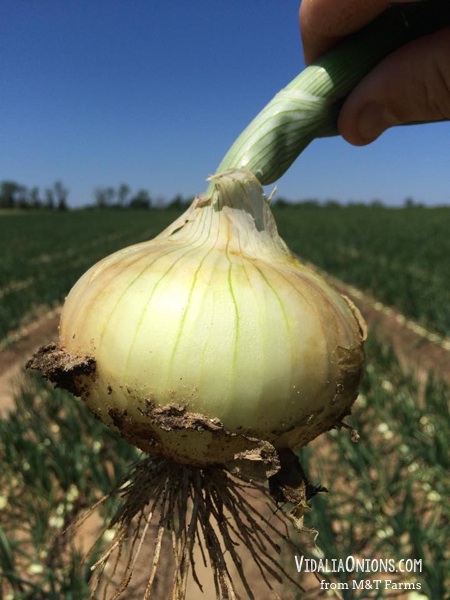
    Photo courtesy of M & T Farms, Lyons, GA, and Vidalia Onions.com

    Appropriated timing of fertilizer application during crop development ensures soil nutrient availability thorough the onion growing season. Typically, fertilizer is applied five times for Vidalia onion production in Georgia. However, researchers have found that control release fertilizer applications can significantly reduce the number of fertilizer applications while maintaining crop yield.

    RESEARCH RECOMMENDATIONS

    During the 2018-19 Vidalia onion growing season, researchers at the University of Georgia (UGA) conducted a field experiment to evaluate different fertilizer strategies, including control release fertilizer for Vidalia onion production.

    According to Andre da Silva, UGA Cooperative Extension vegetable specialist, the field experiment compared grower standard practices with five control release fertilizer strategies. After harvest, statistical analyses were performed comparing total yield and bulb size distribution of the onions among treatments.

    “Based on our findings, all of the control release fertilizer strategies increased yields compared to the standard practice used by growers,” da Silva says.

    On average, control released fertilizer treatments proved to increase total yields by 25% compared to the grower standard practice. While all of the control release fertilizer strategies showed yield increases, applying the fertilizer once or twice throughout the season allowed for less fertilizer applications and nutrient requirements.

    “When applying the fertilizer once or twice during the season, we applied only 96 pounds of nitrogen per acre versus 126 pounds,” da Silva says. He also mentioned that these strategies allowed for additional savings due to a reduction in tractor use and labor.

    In addition to higher yields, the study also proved that control release fertilizer programs had an impact on bulb size, producing more colossal and jumbo bulbs compared to medium bulbs.

    According to da Silva, control release fertilizer applications will be especially helpful to growers during the rainy seasons to ensure nutrient availability during the year and provide high crop yields.

  • UGA Specialist not Concerned About Oversupply of Hemp in Georgia

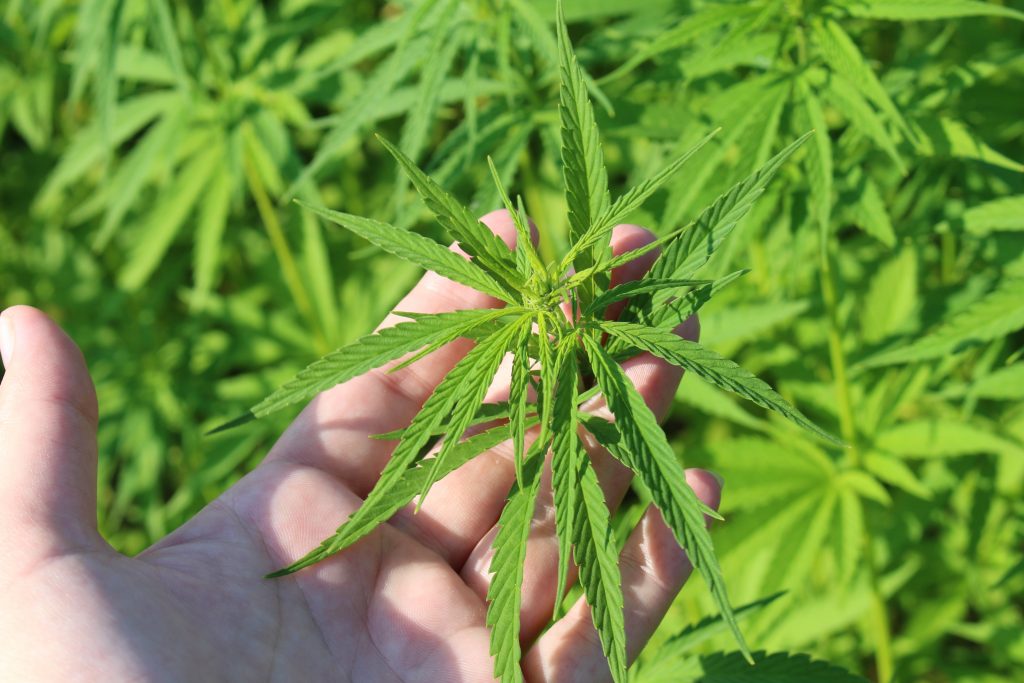
    industrial hemp
    There have been a total of 166 applications sent to the Georgia Department of Agriculture with interest of growing hemp this year.

    By Clint Thompson

    Tim Coolong, associate professor in the UGA College of Agricultural and Environmental Sciences, said oversupply of hemp at the national level remains a concern. He’s not as worried with Georgia, however, due to rules and regulations in place.

    “I think on the bulk wholesale market, I’m still worried about oversupply. In Georgia, I think we’re in a slightly different position. As a grower, you must have some sort of agreement with a processor in order to be approved to have a license to grow,” Coolong said. “I think at least for the growers here who are contracting with a processor in Georgia, I think some of that overproduction should be mitigated. Our processors, ideally, are working closely with growers and are not going to sign growers up for a lot more acreage than they can handle.”

    UGA’s Tim Coolong discussing hemp in Georgia.

    Coolong said that last year, in other states where there’s not a farmer-processor agreement in place, flooding the market was the unfortunate result. Farmers produced hemp with no places to sell.

    “They produced a lot of biomass and then there was no one to buy it. I think on the greater wholesale market, oversupply can still be an issue. I think within Georgia, because of the way the system is set up, I think that will be less of a problem,” Coolong said. “Some people are upset because they think I should be allowed to grow this crop and sell it to whoever I want, and I get that. I understand that. On the other hand, when that happens and it’s not coordinated, it leads to issues of oversupply. I think that even though this may ultimately reduce the amount of acreage and the number of growers in this state, I’m hopeful that those who do grow it are more profitable.”

    According to Mike Evans, director of plant industries who oversees the hemp program at the Georgia Department of Agriculture, they have received 166 applicants from farmers who are interested in growing hemp.

  • Georgia Watermelon Farmer: What’s Worrying me the Most is the Labor

    For one Georgia farmer, the watermelon season lasts from June 10-week of July 4.

    By Clint Thompson

    Terrell Rutland is preparing for the upcoming watermelon season just like other Georgia farmers. And like his fellow producers, Rutland is uncertain as to what to expect from this year’s crop, amid the coronavirus pandemic.

    “Nobody knows. That’s the end of the story, nobody knows,” Rutland said. “We don’t know about labor. We don’t know about price, whether the market’s going to be there. If folks can’t go town, they aren’t going to buy one.”

    Rutland’s biggest concern, though, is having normal workforce on site to harvest the 50 acres he produces in Tift County, Georgia and Cook County, Georgia. Rutland shares the same packing facility and crew with another farmer who also produces 50 acres. But there’s been growing concern among farmers that obtaining labor could be problematic.

    Amid the COVID-19 pandemic that has caused fear across the globe, it was initially announced that the U.S. Embassy in Mexico would stop interviews of seasonal workers, who are essential help in harvesting fruit and vegetable crops, like watermelons, in the U.S.

    According to AgNet West, after hearing concerns from several agricultural groups about how the restrictions would negatively impact the agriculture industry, the State Department and the Department of Homeland Security worked to ensure that labor needs are met by issuing certain waivers for eligible first-time and returning H-2A and H-2B applicants.

    But Rutland remains concerned and will be until he sees his labor force intact when watermelon harvest begins around June 10.

    “The biggest thing that is pushing us right now, that’s worrying me the most is the labor. We got to get them picked,” Rutland said. “It doesn’t matter about anything else. That’s where it starts at, getting them out of the field.

    “Our broker called me, the folks who sell our melons, they called me three weeks ago and told us to try make sure we get our labor tied up.”

    Rutland estimates that he uses approximately 30 workers to harvest his watermelons. Watermelon harvest season typically lasts through the week of July 4.

  • Florida Farmer: We’ve Left About 5 Million Pounds of Cabbage in the Field

    By Clint Thompson

    One of the largest produce farmers in the Southeast has already lost quite a bit of his spring crop and fears what the future might hold amid the ongoing coronavirus pandemic.

    Cabbage growing in a field.

    “We’ve left about 2 million pounds of green beans already (in the field) and about 5 million pounds of cabbage,” said Paul Allen, president of R.C. Hatton Farms in Belle Glade, Florida and chairman of the Florida Fruit and Vegetable Association. “Hopefully the (government is) going to help us some. They’ve done a good job and allocated money to help specialty crops. We’re going to need it. Here we are harvesting in Florida but we’re planting in Georgia. We don’t know what that’s going to look like.”

    R.C. Hatton Farms produces 12,000 acres of vegetables and specialty crops, including sweet corn, green beans, cabbage, sugar cane and corn silage. While most crops are produced throughout Florida, some are grown in Poulan, Georgia, which is in Worth County.

    Like other fruit and vegetable farmers in Florida, Allen’s spring crop was dealt a devastating blow when restaurants closed across the country and took away a substantial amount of business following concerns of the COVID-19 outbreak.

    “The food service sector of our business has really taken a hit. A lot of our crops we grow, especially our beans and cabbage, we grow specifically for food service because it’s about 50% of that market. It’s been shut down,” Allen said. “The supermarkets can’t absorb that much. They can absorb some of it but just not that much.”

    It’s been nearly a month since the country was turned upside down, and agriculture has been one of the sectors impacted the most. Like many other farmers, Allen didn’t see this coming at all.

     “Nobody’s ever dealt with this before so how would you know? We had no idea. Hopefully it’ll get turned around. We’ll see,” Allen said. “We’re dependent on all supermarkets to buy hopefully, 100% US-grown products. If we can get 100% support, that’ll go a long way.”

  • U.S. Congressman: Additional Funds Will be Ready if Needed for Paycheck Protection Program

    By Clint Thompson

    Buddy Carter

    The Paycheck Protection Program (PPP), an integral part of the $2 trillion Coronavirus Aid, Relief and Economic Security (CARES) Act, that will aid small businesses recover amid the ongoing coronavirus pandemic, may not have sufficient funds to support the $350 billion allocated for the program.

    One United States Congressman insists, though, that additional funds will be ready if needed.

    “There’s going to be a Phase 4 (coronavirus aid package). I am more certain now that there is going to be a phase 4,” said Buddy Carter (R-Ga.), who represents Georgia’s 1st District in the House of Representatives. “The short answer is, if we need more money, we’re going to allocate more money.”

    The program was designed to prevent workers from being laid off and small businesses from going out of business during a global pandemic that has halted the world’s economy. Those farmers or businesses, who qualify for the program, need to apply as soon as possible.

    “We intentionally made it somewhat ‘loose’ if you will, somewhat loose in that we wanted the agencies to be able to get this money out as quickly as possible. Therefore, we left a lot of the rules and regulations up to the agencies. There’s been some bumps in the road and that’s to be expected. But we intentionally did that because the message we sent to the agencies was, you need to get this money out as soon as possible,” Carter said. “We’re not going to burden you with rules and regulations and then ask you to get out as quickly as possible.”

    Carter said small businesses make up 99% of the businesses in America.

    “What we wanted to do was make sure we maintained the employee-employer relationship. That’s very important, particularly for our farmers, particularly for our small businesses. You’ll be able to get up to two and a half times your average monthly payroll,” Carter said. “That is very important because, again, we want you to maintain that relationship with your employee.

    “We don’t want to hear about people being separated from their businesses. That’s vitally important.”

    He emphasized that the applicant can be forgiven, if 75% is used for payroll,

    “Therefore, this PPP loan actually turns into a grant. That is very important because we wanted to make sure we get the relief out there,” Carter said.

  • Farmers Need to Beef up Security During Desperate Times

    A tractor and trailer harvesting potatoes in Hastings, Florida. Photo taken 06/03/15.

    By Clint Thompson

    Farmers need to beef up their security amid the coronavirus pandemic, according to Gene McAvoy, Associate Director for Stakeholder Relations for the University of Florida IFAS Southwest Florida Research and Education Center.

    As unemployment continues to skyrocket across the country, this often leads to an increase in theft instances. McAvoy said farmers are vulnerable right now since fewer people and eyes are on the farm.

    “When we were back in the recession era in the middle part of 2008, 2009, we saw a big up-take in unemployment. People are hungry. If you grab a box of chemicals on a farm or grab a couple of boxes of chemicals … that stuff is worth $400, $500 a jug sometimes,” McAvoy said. “You can grab three or four boxes and run. You’ve got some money to earn. Then they’ll turn around and sell it to unscrupulous buyers looking for a deal.”

    He’s already received reports of a couple of animals being slaughtered, 16 head of cows stolen and equipment taken in two other instances.

    McAvoy stresses to producers to take extra precautions during these desperate times.

    “Mark equipment in a place that’s not readily visible. If you lose a tractor or a disc or whatever, you have markings on it. So if the sheriff gets it or you see it, you can identify it,” McAvoy said. “Up your security. Make sure you’re checking your gates. Don’t keep a lot of inventory on hand. As I said, especially chemicals, you grab four gallons of certain products, you’re looking at close to a thousand bucks or more in one box. Just get it on an add-needed basis is a big help.

    “Camera systems are really cheap these days. You can get, for a few hundred dollars, wireless cameras that you can put around your strategic areas, your entrance gates, your spray shed, your office, your equipment barn. Oftentimes, they can be programmed to send alerts to your cell phone.”

  • Produce Market Sours on Florida, Georgia Farmers

    covid
    Vegetables on sale at a market.

    By Clint Thompson

    One of the largest produce farmers in Georgia is nervous about the impact the coronavirus impact is having on produce farmers in the Southeast.

    Bill Brim, part owner of Lewis Taylor Farms in Tifton, Georgia, is in the middle of harvesting some of his fruits and vegetables and has already seen a decrease in demand, amid the virus leading to closures of restaurants nationwide.

    “Our greens and broccoli season, it’s way down. We’ve lost thousands of boxes of orders because of this coronavirus,” Brim said. “We’re not harvesting right now unless we have an order on greens, (otherwise) we’d just have to dump it. We’re just not able to sell it. Food service has just dropped down where, we were doing two or three loads per week for food service, just on kale, and it’s gone to nothing.

    “It’s way down from what it normally is.”

    Brim said his produce is divided 60% food service to 40% retail. Like his brethren in Florida, Brim has been impacted by the orders of self-quarantine.

    “When it first started with the coronavirus down in Florida, prices were real high. Cucumbers went from $42 per box to $10 per box and then to no sales at all down in Florida,” Brim said. “They’re harrowing up cucumber fields and squash fields. Anything that’s on bare ground they’re harrowing it up and getting rid of snap beans and sweet corn. It’s not good.”

    Lewis Taylor Farms grows more than 6,500 acres of produce each year. Brim produces strawberries, turnips, mustard, kale, collards and broccoli as part of his farming operation. A once hopeful outlook for the 2020 season has soured quickly.

    “Crop’s coming on, looks good, I just hope we’ll have a market to send it,” Brim said.

    Brim established himself as an industry leader when he, along with Ed Walker, purchased Lewis Taylor Farms in 1985. Over the next five years, Brim helped transform Lewis Taylor Farms into a diversified transplant and vegetable production farm operation.

    When Brim became a co-owner of Lewis Taylor Farms, it had only 87,000 square feet of greenhouse production space. The farm now boasts 81 greenhouses with more than 649,000 square feet of production space.

  • Congressman Scott: Apply Today for Paycheck Protection Program

    By Clint Thompson

    The Paycheck Protection Program might be an option for farmers to consider, but Congressman Austin Scott implores those interested to apply today.

    Austin Scott

    The recently passed $2 trillion Coronavirus Aid, Relief, and Economic Security (CARES) Act, which is intended to provide financial relief amid the coronavirus pandemic, includes $350 billion for the Paycheck Protection Program. It is designed to aid small businesses.

    “There are significant questions that remain out there about whether or not farmers can actually apply for and get relief from the Paycheck Protection Act. Here’s the best advice I can give you. You need to be talking with your lender and you need to look at the application. If you can answer those questions honestly, then you need to put an application in,” Scott said. “When I say put it in, I don’t mean you need to put it in tomorrow. I mean you need to put it in today.”

    Scott said that according to the Small Business Administration there is an estimated 30 million small businesses that are eligible for paycheck protection relief, which will provide eight weeks of financial assistance. Scott expects funds to run out quick.

    “My concern has been based on the $350 billion number that if you just divide that by the number of small businesses, my fear is that we’ve over-promised on what we’re going to be able to do on the paycheck protection, simply based on the $350 billion being divided by 30 million businesses. You come up with $11,600 per business. If only half of the people apply that’s $23,000 per business,” Scott said. “You’re talking about two months payroll plus rent and utilities. I think the money goes and I think it goes very quick. In fact, I do not believe there will be money left at the end of the day today.

    “The question comes, when does it get replenished? And not just if, but if it gets replenished and when would it get replenished? I think you’re talking about well over a month before any additional legislative action is taken.”

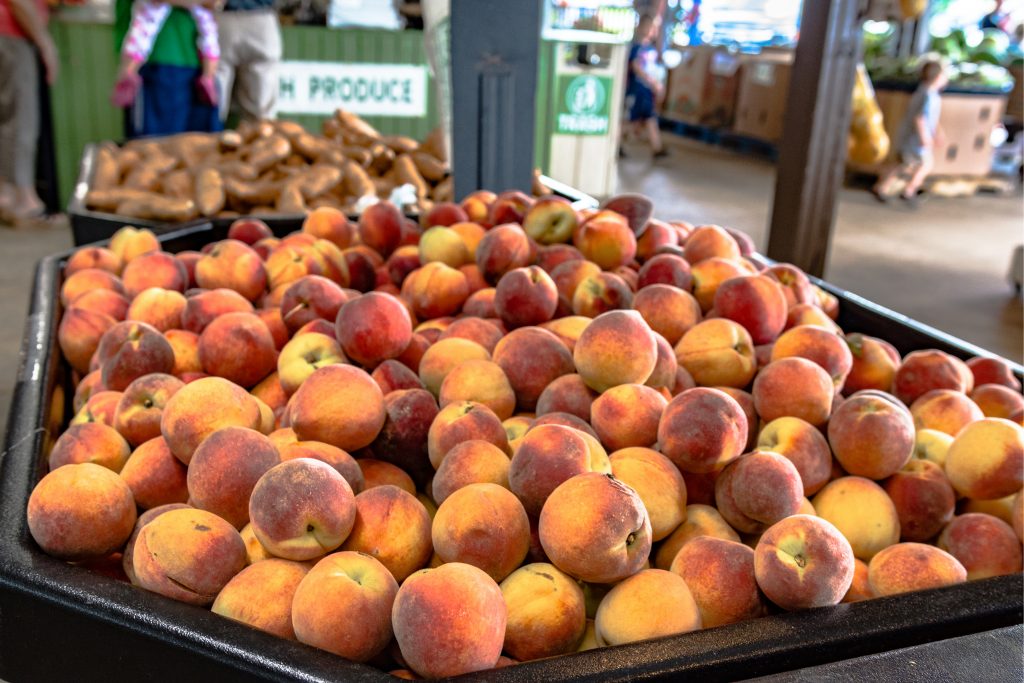
  • Alabama Extension Specialist Cautiously Optimistic About Peach Crop

    peaches
    Peach season in Alabama and Georgia begins in late May.

    By Clint Thompson

    Peach season is less than two months away for Alabama and Georgia growers and Edgar Vinson, assistant research professor and Extension specialist in the Department of Horticulture at Auburn University, is encouraged by this year’s crop despite a very mild winter.

    “I’m cautiously optimistic. I do think we got more chilling than the chill hour models tell us. But my concern now and concern of the growers is potential for frost damage,” Vinson said. “Hopefully, it’s warm for the rest of the season.”

    Vinson said Alabama’s peach season begins in late May and extends to September, which is very comparable to Georgia, and unlike Florida farmers, who are already harvesting their crop amid warm temperatures. Vinson does believe growers are a little concerned with chill hours with respect to the varieties that require a lot.

    “And that’s not to say we’re not going to have any issues with chilling, we’ll probably see some issues with chill accumulation, especially with our high chillers. A number of our growers still have quite a number of peach varieties that require higher chilling; 900 (hours) or above,” Vinson said. “In terms of the early-season to mid-season (varieties), they’re probably not as concerned. They’re more concerned with the varieties that require a high chill. That’s probably where we’ll see any signs or symptoms of a lack of chilling.”

    Lack of chilling hours can affect the overall quality and appearance of the fruit, according to Vinson.

    “There’s an over-pronounced suturing that runs the length of the fruit. Ideally, we want that to be minimal. But when there’s a lack of a chilling, that suturing is very pronounced,” Vinson said. “Also, the tip of the fruit, you don’t want a point there; you want that to be smooth. With fruit that shows lack of chilling, there’s an over-pronounced suture with a very sharp tip at the end of the fruit.”

    Vinson also said there can also be smaller harvests over a longer period.

    “That means your growers are having their crews go out to the orchards for longer periods. That cost more money and each harvest is yielding less. It can affect the growers’ operation that way,” Vinson said.