Category: Georgia

  • Georgia Vegetable Farmer: Blueberry Verdict Took Wind out of my Sails

    Farmers of squash and cucumbers will have their say with the U.S. International Trade Commission (USITC) in two weeks. But don’t count Georgia farmer Jason Tyrone as one who is optimistic about farmers’ chances of convincing the USITC that imports are inflicting serious injury on the domestic crop.

    He just points to the USITC verdict regarding blueberries.

    “I hope I’m wrong, but the way the blueberry thing went, it took all the wind out of my sails,” Tyrone said. “Honestly, I think blueberry guys in South Georgia have as big of a gripe as anybody. I think they’re hurting them worse than anybody, from what I hear. If they didn’t stand a chance, I don’t see where we do. Even though we are being greatly impacted, it’s not any worse than what’s happening to the blueberry guys.”

    Tycor Farms

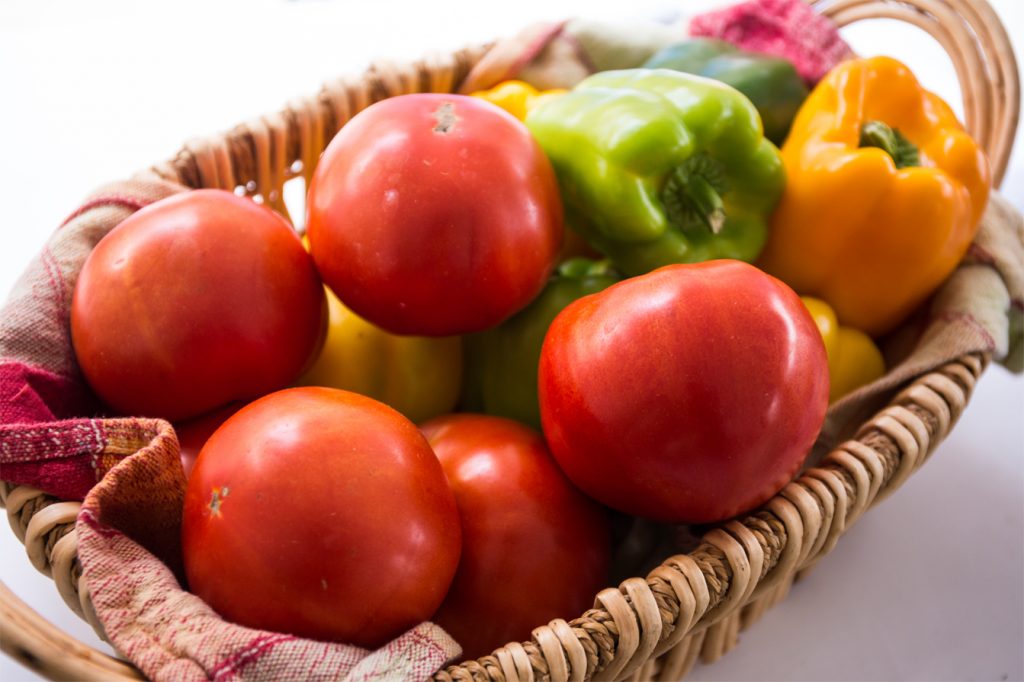
    Tyrone farms with Brian Corbett at Tycor Farms in Lake Park, Georgia. They produce squash, cucumbers, bell peppers, hot peppers, cabbage, egg plant and green beans.

    USITC Investigations

    The USITC is investigating both cucumbers and squash with a focus on the U.S. Southeast. According to the USITC, it is examining the effect of imports on the domestic seasonal markets of both commodities in separate but concurrent investigations and will produce two separate reports. The reports will provide, to the extent practical:

    • descriptions of the effects of imports on the domestic seasonal markets of the products in question, with particular focus on production and the competitiveness of cucumbers and squash grown in the Southeastern United States;
    • information on recent trends in trade in these products between the United States and its trading partners, including information on seasonal patterns of trade; and
    • descriptions of monthly price trends for these products in the United States, including an analysis and comparison of the prices of domestically produced and imported products in the U.S. market, with a focus on the 2015-2020 time period. 

    The USITC will host a public hearing in connection with the investigations on April 8, beginning at 9:30 a.m.

    “(Imports) does impact us. I won’t say that it impact us as heavy; obviously, the south Florida window that’s in right now, they’re in more direct competition,” Tyrone said. “Mexico definitely impacts us on squash and cucumbers. That’s what hits me the hardest; pepper as well, which is probably our main commodity is bell pepper. They do impact us on that, but I would say they are capable of crushing the squash and cucumber markets pretty easily.”

    Increasingly More Problematic

    What’s especially problematic is how imports have skyrocketed in recent years. According to Zhengfei Guan, University of Florida Associate Professor, Florida production of bell peppers doubled what was imported from Mexico in 2000. But in 2019, Mexican imports totaled more than a billion pounds, compared to Florida which totaled a little more than 300 million.

    “It’s escalating. As long as I’ve been in the industry, it’s been affecting south Florida. They just would catch us on the tail end of a season because we don’t overlap quite as much. I haven’t been to Mexico and haven’t, with my own eyes, seen what’s going on but what I hear, I think they’re adapting to grow outside the windows they used to be in by changes in elevation; by using shade cloths during the hot times,” Tyrone said. “I think they’re overlapping with us more and more and with more commodities.

    “Pepper used to never be a problem for us with Mexico, and now it is.”

  • Farm Workforce Modernization Act: GFVGA Pushing for Changes

    The Farm Workforce Modernization Act is in the hands of the Senate. Charles Hall, executive director of the Georgia Fruit and Vegetable Growers Association (GFVGA), is hopeful changes will be made to several provisions in the bill that would impact Georgia producers; specifically the one regarding Certified Ag Workers.

    “One of the things that is concerning is how the Certified Ag Workers (portion) will be handled. In that bill, anyone that has worked on a farm…I think it’s anyone that has worked on farm the last two or three years, can apply to be a certified ag worker. They become a legal worker, not a citizen, but they become a legal worker. They have to work in agriculture 100 days out of the year for five years. Then they can apply for citizenship,” Hall said.

    “The concern that we’ve got is once they become a legal worker, they can go to a farm and displace H-2A workers that have been here and are on contract. For a grower, up to 50% of the contract, they have to hire a legal worker if they come and apply at the farm and are qualified to do the work.

    “You could have a farmer that has 100 H-2A workers, and five certified Ag workers come to their farm and apply to do the work. He would have to send five H-2A workers home and have these non-H-2A workers hired.”

    “You’ve got workers that may or may not be qualified to do the work displacing H-2A workers that may have been three or four or five years, and they’re very skilled workers for what work they’re supposed to be doing.”

    Potential Problem for Georgia Producers

    Certified Agriculture Workers would only be required to work 100 days every year to maintain a visa. Since Georgia vegetable and specialty crops are produced year-round, these new guidelines could potentially leave employers without workers for the remainder of the year.

    The Farm Workforce Modernization Act passed the House by a vote of 247-174.

  • Best Laid Plans? Georgia Vegetable Producer Adjusting Following Winter Rains

    Sometimes a farmer’s best laid plans go awry. Just ask Georgia vegetable producer Ricky Powe.

    File photo shows fumigation being applied in a vegetable field.

    “I was going to have plastic laid and ready to go by Feb. 10 and be waiting on the plants. But with farming, the best laid plan isn’t always what it is,” said the Grady County grower.

    What stopped this Georgia vegetable producer? How about a deluge of rainfall throughout February? That delayed Powe and other South Georgia farmers from laying plastic in preparation for the upcoming season. Some growers have also had to make a judgement call on whether to fumigate or not.

    Why is Fumigation Important?

    Fumigation protects crops from nematodes and other pests and diseases. The gas can linger under ground longer and prevent the plants from being put in the ground on time if the soil is too wet when fumigation is applied.

    “Normally this time of year, 21 to 28 days is plenty. Normally, 21 days, it does what it’s supposed to do and gets out of there. But I’ve got some (plastic) that I’ve laid on Feb. 15, laid a little too wet and gas levels are still extremely high in those right now,” said Powe, who produces tomatoes, peppers, pickles, yellow squash, zucchini and half runner beans. “I chose (Tuesday) to lay a little bit and just have to leave the fumigant out just because the plants were ready. Here in Georgia, we’re on a very tight market window. Either we hit that market, or it’s gone.”

    Powe would rather hit the market with potentially reduced yields compared to hitting it with maximum yields but have no one to sell to.

    “It’s kind of a two-edge sword where you get cut on both sides. I guess the best way for me to say it is, if I had put gas out and make 3,000 boxes to the acre and it got here July 4, nobody’s going to be in the market for Georgia pepper on July 4. I made the decision to get 1,600, 1,800 boxes of pepper in the right time slot,” Powe said.

  • Vegetable Assessment: Georgia Growers Approve

    citrus expo

    Georgia vegetable growers have made their voices known: The Georgia Vegetable Commission marketing order has been extended for an additional three years.

    Producers overwhelmingly voted to extend the assessment of one cent per marketing unit by producers with more than 50 acres crops that include green beans, bell pepper, specialty pepper, carrots, broccoli, beets, eggplant, cabbage, sweet potatoes, cantaloupes, cucumbers, greens, squash and tomato.

    The balloting period for the market order was conducted from Feb. 1 through March 2, 2021, and 87.67 % of the eligible ballots returned voted yes.

  • Sweet Delivery: GDA Announces Vidalia Onions Will Ship April 19

    2021 is the 35th Anniversary of the Passage of the Vidalia Onion Act by the State’s Legislature 

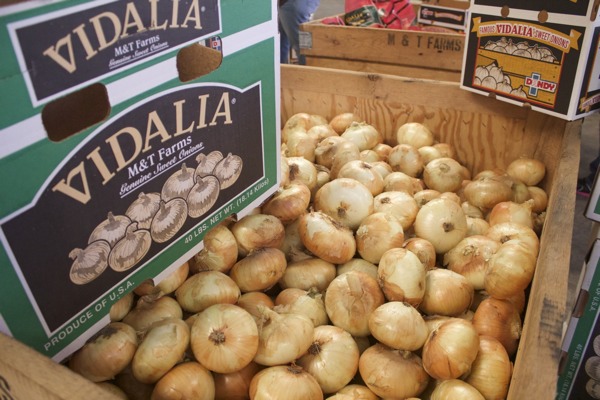
    ATLANTA, Ga. – The pack date for Georgia’s Vidalia onions will be April 19. The Georgia Department of Agriculture (GDA) and the Vidalia Onion Committee (VOC) made the announcement. The organizations are also celebrating the 35th anniversary of legislation that helped make Vidalia onions as popular as they are across the country.

    The announcement means shoppers will soon be able to purchase Vidalia onions, which are only available for a limited time every season.

    An advisory panel comprised of Vidalia industry members, state agriculture scientists and the Department of Agriculture determine the date each year. Soil and weather conditions are considered when selecting a date. This ensures only the highest-quality onions find their way to consumers.

    “It is a special moment every year when we announce the Vidalia onions pack date, but this year we will mark the passage of the 1986 Vidalia Onion Act by our state legislature that played a defining role in making our state’s official vegetable an iconic brand recognized around the world,” said Georgia Agriculture Commissioner Gary Black. “I am pleased to announce April 19 as the 2021 pack date for Vidalia onions.”

    Vidalia’s Popularity

    Vidalia onions have grown in popularity since they were first discovered in the 1930s. The Vidalia Onion Act established that only sweet onions grown in 20 South Georgia counties and produced from a specific Granex seed and packed and sold on or after the official pack date each year could be called Vidalia onions.

    For the 2021 season, approximately 10,000 acres of Vidalia onions were planted, according to VOC Chairman Aries Haygood. “We are anticipating a good harvest, and consumers across the country should have ample supply throughout the season,” said Haygood.

    The vegetable is hand-cultivated by 60 registered growers. They represent about 40% of the sweet onion market. The onions are sold in every state.

    For more information on Vidalia onions, please visit vidaliaonion.org. Follow the season’s news on Facebook, Twitter, Instagram, Pinterest and YouTube.

  • Georgia Blueberries: Crop Not Projected to be Early This Year

    Georgia blueberries are progressing this season but don’t expect them to be ready for an early harvest, says Renee Holland, University of Georgia area Extension blueberry agent in Alma, Georgia.

    “It depends on the weather between now and then. It’s quite warm right now, so things are progressing very quickly, Holland said. “I don’t think we’re going to be two weeks early like we sometimes are. I think we won’t really start picking until May. There may be a little bit in late March for the earlier varieties. But overall, I’d say most of our picking is going to come on in May.”

    Colder temperatures this winter slowed the growth of Georgia blueberries. Weather will still play a role in how quickly the blueberries mature between now and May. Cold and warm temperatures could “push” and “stop” the growth of the plants, Holland said.

    “We’ve had some years where we’re like two weeks early. But I think we’re going to be right on time, as they say, this year,” Holland said. “We’re not running behind, but we’re not early, so more kind of a moderate year.”

    As far as the what the crop looks like now, Georgia producers couldn’t ask for much a better crop status.

    “It looks like we have a nice, large crop load. Most everything’s in full bloom by now, depending on the variety of the plant and the species of the plant. A lot of things are in bloom. We have the blooms out. Some of our mid-season stuff is still in the earlier bloom stages,” Holland said. “We’re in a good place right now. Of course, we’re just waiting to see if we get any freezes.”

  • Mighty Mites: UGA Extension Encourages Scouting for Strawberry pests

    UGA CAES photo shows two-spotted spider mite.

    It won’t be long before strawberries will be ready for harvest in South Georgia. University of Georgia Extension encourages producers to scout for spider mites, especially as strawberries begin to ripen and bloom across the state.

    The two-spotted spider mites are typically light yellow in appearance with a spot on either side of their abdomen. Their piercing-sucking mouthparts can cause damage while feeding on the plant cells. Scouting is important since feeding usually occurs on the underside of the leaf.

    If left undetected, infestations can cause the leaves to become brittle with a bronze tint.

    Early detection is important since this is the time that strawberries are most vulnerable. According to the UGA Extension Strawberry News blog, strawberries can tolerate higher numbers of spider mites as the season progresses. The threshold now for strawberries if five per leaflet. The threshold moves up to 20 further into the season.

    The blog states, “There are several miticides on the market that work well on two-spotted spider mites. It is important to understand that some miticides are only effective on certain life stages. Using a product that is effective on eggs and juveniles will do no good if only adults are present.”

    Complete coverage is critical since mites feed on the undersides of leaves. Rates of 50 and 100 gallons of water per acre are common for controlling mites.

    UGA Extension advises farmers who need assistance or recommendations to call their local county agent.

  • Insect Report: Pests Currently Light for Georgia Vegetable Producers

    It is planting season for Georgia vegetable producers. They can take solace in knowing that insect pressure appears to be light right now, minus some pepper weevils. This is according to University of Georgia Cooperative Extension vegetable entomologist Stormy Sparks.

    UGA CAES photo/The pepper weevil is one of the most serious pests of peppers.

    “There’s concerns about pepper weevil as we’re getting peppers in the ground. We’re running traps in various counties, got county agents running traps in the major pepper growing regions and we’re still catching significant numbers,” Sparks said. “It’s not anything like it is early in the year. They drop off this time of year, but they’re not going to zero. We know we’re overwintering pepper weevil.”

    Sparks believes insect pressure will increase as Georgia vegetable producers head into April, specifically with thrips.

    “As we get into April, all this pollen that we’re seeing right now is just food for thrips. That’s why we always tend to have thrips populations in April. That’ll be popping fairly soon, probably,” Sparks said.

    Insect infestations increase as temperatures continue to heat up. Growers also need to be mindful of squash bugs.

    “Temperatures control insects so much; reproduction and everything, overwintering. We’ll have squash bugs coming out of overwintering in the next few weeks or month also,” Sparks said. “The cool weather just keeps them slowed down. We do have some whiteflies out there, but I don’t think there’s anything of significance. Again, the temperature keeps them low.”

    The exception to that rule is the diamondback moth.

    “It can explode or disappear anytime of the year. I’ve had a few reports of some diamondback moth activity but nothing of alarming levels,” Sparks said.

  • To Fumigate or not to Fumigate?

    Excessive rains in February continue to impact South Georgia vegetable producers who are trying to plant this year’s crop.

    UGA photo/Fusarium wilt is a fungal disease that can considerably damage a watermelon crop. Fumigation can help with nematode and fusarium control.

    Some fields are still too soggy to apply fumigation, a necessary component of vegetable production in how it controls nematodes and other diseases like fusarium. Farmers are faced with the difficult decision that could impact yields come harvest season: Apply fumigation or don’t?

    “The rain kept everybody out of the field. Everybody’s running a couple of weeks late, probably,” said Ty Torrance, University of Georgia Cooperative Extension Vegetable Agent for Colquitt, Tift and Worth Counties. “There were a couple of folks that were able to get some plastic laid. They’re starting to set some plants. There are some plants going into old plastic. But a lot of the new ground is either too wet for them to lay their plastic or they laid it when it was too wet and we’re having a lot of problems with fumigation right now. When you fumigate when it’s too wet, you can trap the gas and it takes a long time for it to come out of there, longer than it normally would.

    “Some people are leaving out the fumigation altogether, so they don’t have to worry about that. That’ll present a whole nother list of problems throughout the season.”

    Farmer-by-Farmer Basis

    Torrance said that producers with access to drip tape can apply nematicides throughout the season that help with nematode management. However, it’s not as effective as fumigation and not all producers utilize drip tape.

    “It is a farmer-by-farmer basis because a lot of it depends on when their plants are going to be ready. How much time do they have before they have to do something?” Torrance said.

    According to the University of Georgia Automated Weather Network, Tifton, Georgia received 8.77 inches of rainfall in February, compared to 6 inches in 2020 and 2.1 in 2019. In Moultrie, Georgia, 8.47 inches were recorded, compared to 6.27 in 2020 and 3.1 in 2019.

    “As widespread as the rain was and as consistent; it wasn’t like we had one big rain, you could do a little bit and then it rained again; it was to the point where they had to stay out of the fields for extended periods of time,” Torrance said.

    Fields still had trouble drying out last week amid sunshine and high temperatures.

    “You get past that top couple of layers of soil and it’s still wet down there, which is the problem with the fumigation. The Telone goes 12, 16, 18 inches deep,” Torrance said. “It’s still wet at that depth.”

  • QLA Deadline: Pecan Producers Reminded of April 9 Date

    Damage from Hurricane Michael in Tift County. By Clint Thompson 10-11-18

    Pecan producers still recovering from Hurricane Michael have three weeks to apply for the Quality Loss Adjustment (QLA) Program. The U.S. Department of Agriculture’s decision to extend the deadline from March 5 to April 9 allows farmers extra time to apply for a program that is assisting producers who suffered crop quality losses due to qualifying natural disasters in the 2018 and 2019 crop years.

    Crops that can be covered by federal crop insurance or the Noninsured Crop Disaster Assistance Program (NAP) are considered eligible for QLA.

    Crops must meet the following requirements to be eligible for the program:

    1. Suffered a quality loss due to a qualifying disaster event;
    2. Had a 5%-or-greater quality discount due to the qualifying disaster event.

    According to a USDA press release, the Farm Service Agency (FSA) began accepting applications on Jan. 6 and has received more than 8,100 applications so far.

    Hurricane Michael ravaged the Southeast pecan crop when it moved through the region in October 2018. According to UGA Extension, Georgia pecans suffered $100 million in direct losses to the crop in 2018, $260 million in losses due to lost trees and $200 million in direct losses for future income.

    To apply, contact your local USDA Service Center. Additional information is also available at farmers.gov/quality-loss. Producers can also obtain one-on-one support with applications by calling 877-508-8364.