Category: Georgia

  • Sanitation Key Following Harvest for Pest, Disease Control

    By Clint Thompson

    File photo shows tomatoes harvested.

    Vegetable farmers are reminded they need to practice proper sanitation once harvest season ends. Doing so will protect against future pests and diseases.

    According to the South Florida Vegetable Pest and Disease Hotline, one of the best tactics that growers can do for themselves and their neighbors is to clean up crop residues promptly after harvest. Sanitation involves any practice that eliminates or reduces the amount of pathogen inoculum, pests, or weed seeds that are still present in the field.

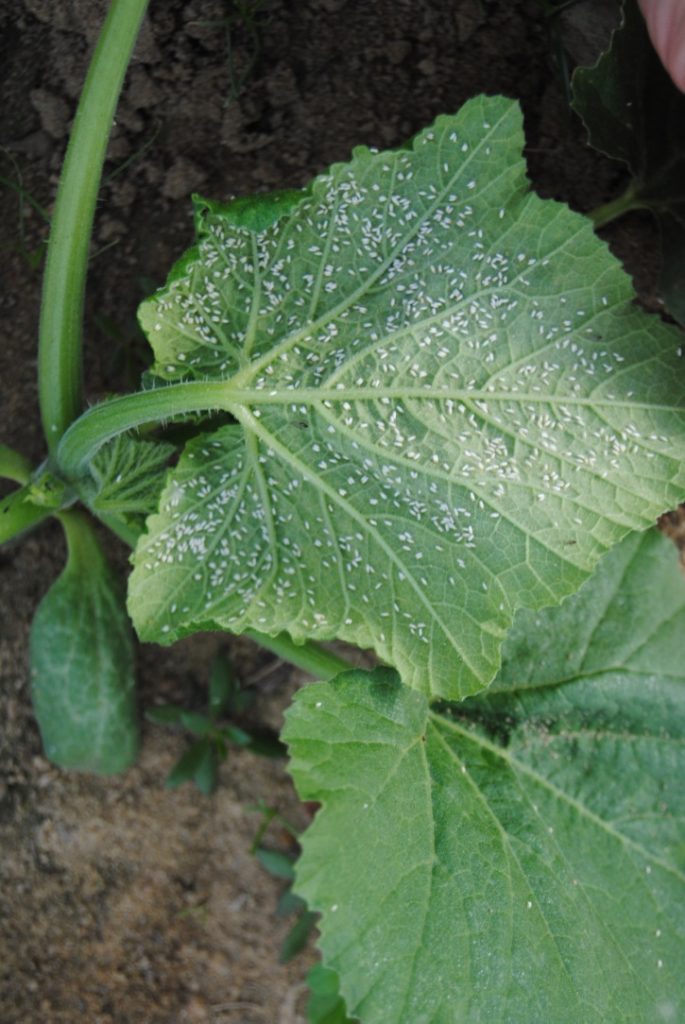
    One of the biggest problems associated with lack of sanitation is with whiteflies. They overwinter and can survive on multiple hosts. This is especially true for those hosts that are not eliminated thoroughly after harvest. They are already a problem for Georgia vegetable farmers.

    If farmers will destroy tomato vines promptly, they will kill off whitefly populations. They’ll also eliminate the transmission of the tomato yellow leaf curl (TYLCV) and other viruses to subsequent crops. It also will eliminate inoculum from late blight and other fungal diseases. This is particularly important in the case of TYLCV and other viruses. Sanitation, a crop-free period, and whitefly/thrips control are the only tools currently available for the management of this disease.

    Downy and powdery mildew on melons can spread via wind from older, diseased plants to plants in surrounding fields that are still maturing. If farmers will plow or disk under infected plant debris, this will help cover up the inoculum and speed up the disintegration of plant tissue. It kills the pathogen.

    Cull Piles

    Cull piles should also not be neglected. Several scouts have reported over the past few years that they have found both insects and diseases such as TYLCV, late blight, whiteflies and others in volunteer plants springing up around cull piles.

    Soil tillage can destroy insects and expose them to birds and other predators. It can also speed the breakdown of plant residues that harbor insects and plant pathogens. By either allowing the organic matter in a field to decompose completely before planting the next crop or allowing a fallow period between crops, you can enhance the control of numerous insects and diseases.
  • Presence of Powdery Mildew a Concern for Southeast Vegetable Growers

    By Clint Thompson

    Powdery mildew disease is present on older squash in various vegetable fields across South Florida. According to the South Florida Vegetable Pest and Disease Hotline, respondents report that the disease has also started to show up on watermelon crops across the region as well.

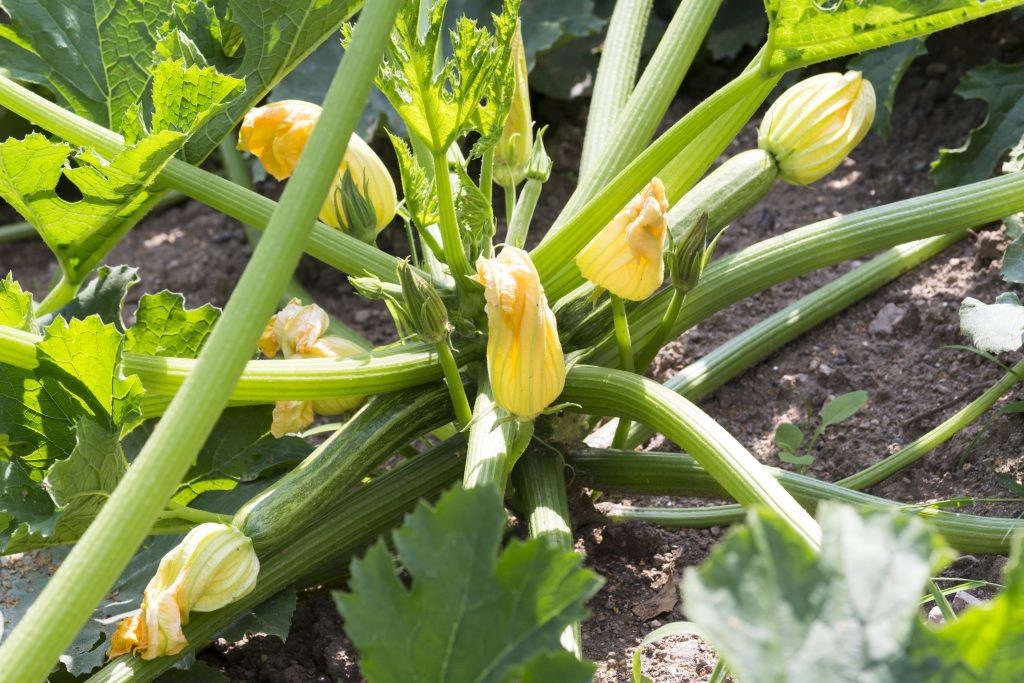
    File photo shows squash growing on a plant. Powdery mildew disease is present on some squash plants in South Florida.

    It’s also reported that powdery mildew is showing up on squash and cantaloupe in the Manatee Ruskin area.

    The disease thrives in high humidity, making the Southeast region a prime target for powdery mildew. Places in Georgia, Florida and Alabama are especially vulnerable the next two weeks. Temperatures in Tifton, Georgia are expected to go back up into the 80s this week and 90s next week. And there’s little to no chance of rainfall. It’s the same forecast for Mobile, Alabama, whose best chance of rain is a 40% chance on Monday, May 18 and Saturday, May 23. Temperatures in Tampa, Florida are going to be in the high 80s the next two weeks.

    The disease can develop rapidly under these favorable conditions.

    Disease Symptoms

    Symptoms on watermelon plants appear as yellow blotches on the oldest leaves first.  If the disease is left untreated, the fungus spreads to the entire leaf. These blotches become bronzed and turn dark brown or purplish as the disease progresses during the season. Eventually the leaf dies and has a crisp texture.

    Powdery mildew normally appears in the middle of the production season. Preventive treatments can help maximize the crop’s yield potential and prevent plant damage. Growers need to scout fields regularly to know if the disease is a factor in their fields.

    There are some vegetables that can tolerate or are resistant to the disease. Most commercial cucumber varieties grown in Florida have acceptable levels of resistance.

    Podosphaera xanthii and Erysiphe cichoracerarum, are the two pathogens that cause powdery mildew disease on cucurbits, particularly cucumbers, year-round. P. xanthii is an aggressive pathogen that attacks during warmer months. E. cichiracearum strikes during cool spring and early summer.

  • Downy Mildew Disease a Problem for Florida Growers

    By Clint Thompson

    Downy mildew disease is present in cucurbits like squash and cucumber around South Florida and is getting worse.

    University of Georgia/Downy mildew disease can destroy plant foliage and cause the leaves to curl and die. Without healthy leaves and vines, a plant is vulnerable to blisters and sunscald during hot days.

    According to the South Florida Vegetable Pest and Disease Hotline, respondents report that the disease is showing up in most watermelons and infections have increased in areas hit hard by rainfall.

    “Around Manatee County, respondents report that downy mildew really kicked into high gear after the last rains and has been quite aggressive in some situations,” the hotline report stated.

    Downy mildew also remains active on cucumber and some squash on the East Coast.

    According to University of Georgia Cooperative Extension plant pathologist Bhabesh Dutta, downy mildew can destroy plant foliage and cause the leaves to curl and die. Without healthy leaves and vines, a plant is vulnerable to blisters and sunscald during hot days. The pathogen thrives in wet, humid conditions and needs moisture on the surface of the plant for successful spore germination and further infection.

    Cucurbit crops — like cucumbers, melons, squashes and pumpkins — are susceptible to the disease. Dutta ranks downy mildew among the top diseases in cucurbit crops, along with Fusarium wilt and Phytophthora fruit rot.

    How to Recognize Downy Mildew

    For those vegetable farmers unfamiliar with what symptoms look like, focus on the leaves themselves. On cucurbits besides watermelon, small yellowish spots appear on the upper leaf surface away from the leaf margin. A yellow coloration later occurs with the internal part of the lesion turning brown. Lesions are usually angular as leaf veins restrict their expansion.

    On watermelons, yellow leaf spots may or may not be angular and will later turn brown to black in color.

    To control downy mildew, fungicide sprays are recommended for all cucurbits. Spray programs for downy mildew are most effective when initiated prior to the first sign of the disease. Once a plant becomes infected, it becomes more and more difficult to control with fungicides.

  • High Whitefly Pressure Reported in Florida Vegetables

    Whitefly adults feed on a yellow squash seedling.

    By Clint Thompson

    Florida vegetable farmers are struggling to manage high whitefly pressure amid trying to produce this year’s crop. According to the South Florida Vegetable Pest and Disease Hotline, tomato growers in central Florida are really struggling with heavy whitefly pressure.

    It noted, “Some growers have already experienced whitefly and virus issues in spring crops and have pulled up entire first plantings due to very high incidence of Tomato Yellow Leaf Curl Virus. Respondents indicate that whiteflies are also increasing in melons. Whitefly pressure is also high in green beans.”

    Around Southwest Florida, in the Immokalee, Florida area, pressure has been extreme for the acreage that remains to be harvested. These include for watermelons and other cucurbits.

    On the east coast, respondents report that whitefly have become out of control in many tomato and eggplant fields. They’re also high in cucumber and pepper.

    The South Florida Vegetable Pest and Disease Hotline is in its 23rd year and reaches more than 1500 individuals and businesses and covers more than 120,000 acres representing all major South Florida vegetable production areas.

    Already in Georgia

    Whiteflies are already a concern in Georgia. University of Georgia Cooperative Extension vegetable specialist Stormy Sparks confirmed the pest has been observed in vegetables in the South Georgia area.

    The mild winter is a key reason why whiteflies are already a problem. While colder temperatures don’t eliminate whiteflies, they do kill many of their wild hosts. They also slow population development in cultivated hosts. Warmer temperatures this winter allowed for larger whitefly populations to overwinter and become mobile earlier.

    Whiteflies cause feeding injury issues in vegetables and transmit two viruses: cucurbit leaf crumple virus and cucurbit yellow stunting disorder virus. Vegetables like squash, zucchini, cucumber, cantaloupe and snap beans are highly susceptible to these viruses. Commercial cultivars that have resistance or tolerance to these pathogens are not available.

    For additional information about whiteflies, see UGA CAES News.

  • Challenging Seasons for Georgia Blueberry Producers

    By Clint Thompson

    Between natural disasters, a pandemic and unfair trade practices, Georgia blueberry farmers have taken one blow after another the past four years. For some farmers, a hailstorm on April 23 was the ultimate knockout punch.

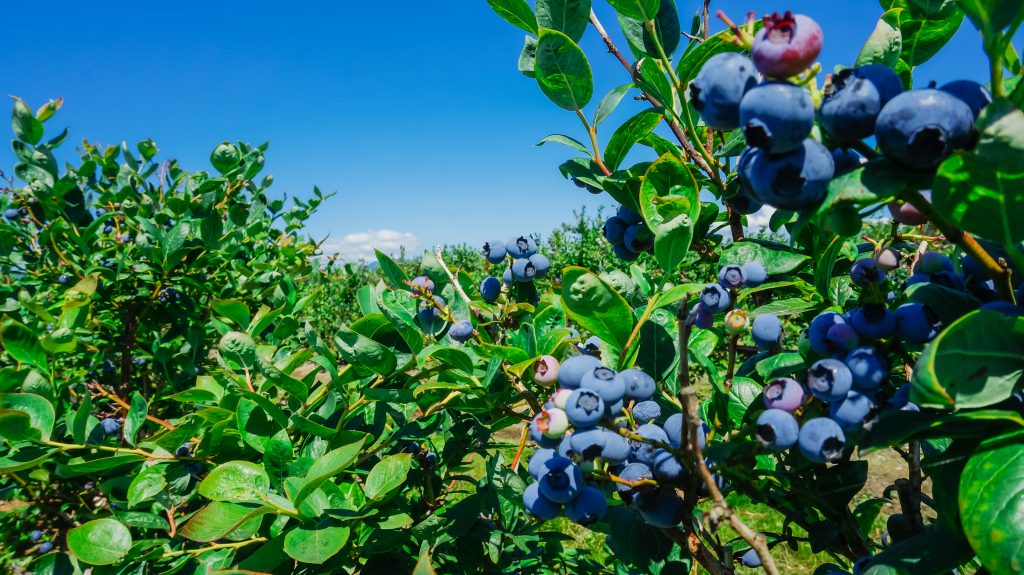
    File photo shows blueberries ready for harvest.

    Russ Goodman, co-owner of Cogdell Berry Farm with 600 acres in Clinch and Lanier counties, lost between 60% and 70% of the crop following the storm.

    “In 2017, we had Irma and a late freeze. In our 2018, Hurricane Michael and a later freeze. Then we’ve had the deluge of Mexican blueberries that have hit us. Now, we’ve been hit with this coronavirus and now this storm,” Goodman said.

    Phillip Mixon’s farm in Waycross, Georgia has about 850 acres with approximately 600 that would have been harvested. Its entire farm was devastated by the hail. The storm knocked a bunch of blueberries off, but what was left on the bush was bruised really bad. They were left unmarketable.

    Mixon estimated he lost about 5 million pounds.

    “We’ve faced a lot of challenges that are outside of our control. We do everything that we can as far as being good managers. You have no control over a hurricane or storm how trade issues are negatively impacting Southeastern farmers,” Goodman said. “It’s just a lot of things outside of our control.

    “We were going to have a good crop. We’re no different than the cotton farmers when Hurricane Michael came through when they were going to pay down some debt and get ahead a little bit. Hurricane Michael came through and destroyed it.”

    Unfair Trade Practices?

    While farmers can’t do anything about storms and late freeze events, they can continue to raise awareness unfair trade with Mexico.

    “If there’s not something done about trade in this country, we’ll be importing all of our fruits and vegetables before it’s all over with,” Goodman said. “How do you compete against 80 cents per hour labor? From my understanding, their minimum wage is 81 cents per hour. But they average about $1 an hour.

    “We have automatic labelers that put labels on our clam shells. In Mexico, they can’t even sell labels because they label them all by hand. Labor is so cheap, it’s not even a factor in production.”

    In an interview with VSCNews on April 30, Florida farmer Ryan Atwood confirmed that Mexico exported 5 million pounds of blueberries to the U.S. the prior week. The country is still importing produce amid COVID-19 when American farmers are struggling to find buyers.

    For more information on how COVID-19 has devastated the blueberry market, see:

    http://vscnews.com/covid-19-florida-blueberry-farmers/
  • COVID-19 Guidelines for Agricultural Operations

    By Laurel L Dunn for UGA CAES Newswire

    Adam Brannen, a student worker on the UGA Tifton Campus, weighs tomatoes at the Blackshank Farm. Clint Thompson July 16, 2014

    Farmers and food processors take routine steps to reduce the likelihood of foodborne pathogens, like Salmonella and E. coli, contacting our food and causing illness. The procedures that our food industry takes on a daily basis are also effective in reducing the chances that the coronavirus responsible for COVID-19 will come in contact with the food we eat.

    There is currently no evidence that the coronavirus is spread through contaminated food. This is in part because the virus primarily targets cells in the respiratory tract (lungs) rather than organs in the gastrointestinal tract (stomach and intestines), and because acids in the stomach likely inactivate ingested virus before it can cause harm.

    During the current pandemic and other viral outbreaks, there are further considerations that farms and agricultural businesses must take in order to protect their workers and customers despite the usual safety of our food supply.

    Farms, packinghouses and food processors

    Sick workers should never be allowed to come to work, and they should understand that there is no punishment for them if and when they call in sick.

    Encourage distancing of at least 6 feet between workers at all time, including on buses transporting groups of workers to the field and on the packing line when possible. Only one employee should be in the cab of a truck, and frequently touched surfaces like the steering wheel or door handles should be cleaned and disinfected when passengers leave or enter a vehicle.

    Frequently touched surfaces within the farm or facility should be cleaned and disinfected throughout the day and between shift changes. The U.S. Centers for Disease Control recommends a list of U.S. Environmental Protection Agency-approved disinfectants that are effective against coronavirus. A solution of 5 tablespoons of bleach in 1 gallon of water may also be used.

    U-pick operations, farmers markets, farm supply stores and CSAs

    Post signs stating rules to be followed at the entrance. Keep them short and easy to read. Rules should include washing hands (or using hand sanitizer if washing is not possible) upon arrival; wearing a mask, bandana or scarf; maintaining 6 feet of distance between other patrons; and requesting vendor assistance to select items instead of handling items themselves.

    Indoor markets may consider putting vendors or high-demand items outside so that patrons do not have to enter the building. For items inside, consider posting a price list outside and having an employee retrieve items, or set a reasonable limit on the amount of time each customer may stay inside to do business.

    Have one person dedicated to handling payments. Conduct transactions online or over the phone when possible, and require credit or debit cards for in-person transactions, since paper money cannot be sanitized.

    U-pick operations should clean and disinfect all picking baskets and equipment between customers. When in the field, customers must only touch fruit they plan to pick.

    University of Georgia Cooperative Extension has further guidance, in English and Spanish, including materials for farms, packinghouses, community gardens, farmers markets, food banks, agribusinesses and consumers on its emergency resources page at extension.uga.edu/emergencies.

  • Be Careful How You Store Certain Fruits, Vegetables

    Peaches are sensitive to cold temperatures.

    By Clint Thompson

    University of Florida post-harvest plant physiologist Jeff Brecht cautions consumers about putting some fruit and vegetables in their refrigerators. Quality commodities like tomatoes, melons, avocados and peaches are chilling sensitive. Consumers need to be wary that too much cooling can affect the quality of certain produce.

    “I hear complaints about all of those where people say, ‘They’re tasteless. They’re not like I remember in the garden when I grew up.  They don’t have flavor.’ What it really is, those are all chilling sensitive, and they’ve been exposed to low temperatures for too long. They stop producing the aroma,” Brecht said. “The aroma is a super important component of flavor. That’s what it really is when you hear people complain about tasteless tomatoes is because they’ve been chilled. It’s a big problem that we have.”

    Clearing Up a Misunderstanding

    Brecht said there is a misunderstanding on the part of consumers about how best to handle different fruits and vegetables when they have them in their possession. Many of the vegetables can be injured by exposure to temperatures that are too low. Sensitivity is especially a concern for immature produce.

    “You can keep them too long in your refrigerator because you’ll actually start to compromise the quality,” Brecht said. “Even though I preach cooling, cooling, lower the temperature to maintain the quality, there’s a whole lot of fruits where you can’t go too far with that. That limits what you can do to keep them in good shape after harvest. You can’t cool them right down to 32 degrees or something like that, which you can do with a strawberry.”

    He also encourages consumers to buy local as much as possible. They’re not only providing much-needed business for producers amid tough financial times, they’re also getting fresher fruit.

    “Consumers are getting even better quality that way because they’re going to pick it up at the farm, take it home and probably eat it within a day or two. I would encourage people to patronize the direct sales farming operation to whatever extent they can,” Brecht said.

  • Control Options for Cowpea Curculio

    David Riley/UGA: Picture shows cowpea curculio and its damage.

    By Ashley Robinson

    Southerners love cowpeas, also known as southern peas or black-eyed peas. Unfortunately, so do cowpea curculios, a weevil that wreaks havoc on peas grown in the Southeast. University of Georgia (UGA) researchers are working to eliminate the pest.

    History of the Pest

    David Riley, professor of Entomology at UGA, has been researching cowpea curculio for the past 10 years.

    At the turn of the 20th century, Southern peas covered approximately 6 million acres across the Southeast. According to Riley, they were the primary legume grown for livestock feed until World War II, when soybeans took over. 

    “There’s a very interesting history behind the crop,” Riley says. “One hundred years ago, cowpeas used to be a massive crop, more like cotton. They were considered an agronomic crop, grown for legume grain for animal forage and feed as well as a vegetable crop.”

    After the emergence of soybeans, the cowpeas that were used for livestock production disappeared. What was left of the peas was grown for food.

    When Riley began working with UGA as a vegetable entomologist in 1996, he discovered that as cowpea acreage declined, so did cowpea curculio populations. As curculio issues died down, cowpea acreage made a comeback, peaking in 2015 at about 7,600 acres, according to UGA’s 2015 Farm Gate Value Report. As acreage made a comeback, though, so did curculio populations.

    Research Progress and Management Options

    Unfortunately, the cowpea curculio has become tolerant to pyrethroid insecticides which was the primary means of control during the flowering stage of the crop. However, in the 10 years that Riley has studied the pest, a lot of progress has been made.

    “When all of your insecticide options are gone, then you have to start thinking outside the box,” Riley said.

    “The most recent, big discovery that has been made is that cowpea curculio is very similar to the boll weevil in that is diapauses,” Riley says. “Diapause is a state of hibernation. During this process, the female weevils don’t develop eggs. They put on fat to survive the winter instead. This is something tropical weevils do because they don’t have any food to survive on during the winter.”

    Riley recommends growers plant their crop for a late September pod set, to avoid damage.

    New World Beans

    Another recent discovery is that New World beans are not as affected by the weevil.

    Five years ago, Riley came across a professor in Australia who was working on another cowpea project in Africa. The professor, T.J. Higgins, noticed that the New World bean, Phaseolus vulgaris (snap bean or pinto bean), wasn’t affected by this weevil. He tracked the reason down to a gene called alpha-amylase inhibitor. Amylase is the enzyme used to digest starch. An inhibitor stops that normal enzyme from working, so it’s harder to digest.

    Higgins took the alpha-amylase inhibitor gene from the New World bean and put it into the Old World bean (cowpea). His results from this genetically modified pea show reduced weevil damage.

    “The New World Beans have a natural resistance to weevils. They grew up together,” Riley said. “Cowpeas aren’t from the New World, so they don’t have the natural resistance.”

    Although weevil-resistant peas would be ideal, it will be difficult to get them approved as the crop isn’t expensive enough and there isn’t enough acreage to warrant a big company getting involved.

    “There is a practical consequence of just knowing the biology and knowing how these crops are,” Riley says. “If you use traps in the spring to see when the weevils are coming out of their overwintering sites, those weevils are very starved. Although they would prefer a cowpea, they will go after snap beans if that is all that is available.”

    Since snap beans aren’t a good reproductive host for the pest, Riley suggests that growers set up traps for their area. They can determine when the weevils are on the move out of their overwintering sites. Then growers should plant snap beans first as a trap crop. Give it a month or so and force those weevils to try to lay eggs in the snap beans. Since it’s a crop with natural resistance, most of the eggs won’t develop.

  • Ag Industry Hopes Georgia Grown Message Reaps Bountiful Harvest

    blueberry
    File photo of blueberry production in Georgia.

    By Clint Thompson

    Now more than ever, buy Georgia Grown. Georgia’s agricultural industries are highlighting this message during the state’s peak season of harvesting produce. Georgia Farm Bureau, University of Georgia Cooperative Extension and Georgia Fruit and Vegetable Association are promoting Georgia Grown produce at a time when the state’s farmers need them the most.

    “We need folks asking their produce managers, if they go into a grocery store and there’s not Georgia Grown or American Grown produce in there, they need to ask where is it at,” said Charles Hall, executive director of the Georgia Fruit and Vegetable Association. “We need for consumers to support the American farmer, to get American Grown, Georgia Grown produce. Because, as that slogan says it’s, ‘Now, more than ever.’”

    The impact of the ongoing coronavirus pandemic has devastated markets for fruit and vegetable farmers across the country. The absence of the foodservice industry for almost two months derailed producers’ bid for a productive season. Farmers in Florida have had to leave produce in the field just because of the lack of potential buyers.

    Alternate Way of Doing Business

    Georgia farmer Bill Brim, co-owner of Lewis Taylor Farms in Tifton, Georgia said he’s lost thousands of boxes of orders due to the pandemic. But he’s found a way to sell part of his excess produce. He’s boxed up produce with different fruit and vegetables and sold directly to consumers for $20 each the last three weeks. Last week, Brim sold between 1,300 and 1,400 of boxed produce. It’s lessened the sting a bit. It also helps consumers become more aware of buying local produce.   

    “I think that growers are looking at alternatives. Boxing up and having a direct farm sale is not going to replace tractor trailers that are going out of the packing shed packed with produce. That’s not going to replace the need for getting produce into the produce chain,” Hall said. “Most of our growers are shipping to the north of us, into South Carolina and North Carolina, into the Midwest and Northeast. Direct sales off the farm is not 100% of the solution. But it certainly helps, when you can move 1,000, 500, 300, whatever it might be. Boxes of produce to your friends and neighbors. They are able to get it fresh. They know it’s fresh coming off land near them.”

    Quick Turnaround?

    While market prices are less than ideal, they could make a turnaround as businesses and restaurants begin to open back up. This could benefit Georgia farmers as they hit their peak season.

    “I think it’s cautious concern to what the market is going to do. The movement on the market right now is slow,” Hall said. “If some of the restaurants and foodservice chains begin to open back up, we are just getting into our peak season, so we could see additional markets there. It’s slower than we want it to be right now, but it could pick up.”

  • Spring Is a Perfect Time to Start Composting

    University of Georgia photo/Creating a compost pile keeps unnecessary waste out of landfills, as landscape refuse, such as leaves, grass clippings and trimmings, accounts for up to 20% of landfill waste.

    By Maria M. Lameiras for CAES News

    With more time at home on many people’s hands these days, lots of yard work is being tackled, making this year’s International Compost Awareness Week, May 3 through 9, a perfect time to create a home composting system.

    For the new composter, first find an ideal spot on your property to locate your composting pile or receptacle, says composting expert and Agriculture and Natural Resources Program Development Coordinator Amanda Tedrow, who represents University of Georgia Cooperative Extension’s Northeast District.

    “If you are just starting out, go for the pile. The ideal minimum size for a compost pile is four by four by four (4 feet wide by 4 feet long by 4 feet deep). That is the right size to reach the temperatures needed for decomposition. A smaller pile will decompose at a slower rate due to lower temperatures,” Tedrow said.

    Locate the compost pile downhill and away from vegetable gardens to prevent potential runoff from the compost pile, which could transmit plant diseases to the garden.

    While heat is an important element to composting, the heat is generated within the composting pile, so it is not necessary to locate a composting system in direct sun. A compost pile located in direct sun may need additional supplemental water during the heat of the summer months.

    Next, it’s important to add the right mix of materials to the pile.

    “The general recommendation is to do two-thirds to three-quarters browns and one-third to one-quarter greens,” she said. Brown materials — such as dried leaves, sticks and old mulch — are a source of carbon, while green materials — such as grass clippings, vegetable and fruit scraps, coffee grounds and egg shells — are sources of nitrogen, both important for proper composting to occur.

    Avoid adding any kitchen waste that contains meat, dairy products or greasy substances, Tedrow warns.

    “Vegetable peelings, fruit rinds, stalks from broccoli, things like that are all fine. Something like peach pits might take a long time to compost, but they are perfectly fine to put in,” she said.

    Moisture is essential, but a compost pile should only stay “as wet as a wrung-out sponge,” Tedrow said.

    “In an ideal world, a compost pile should be turned when the temperature in the center of the pile starts dropping (below the ideal temperature of 130 to 160 degrees Fahrenheit). Most people don’t have a compost thermometer, so many composters will turn their pile every week to two weeks to keep the process moving,” Tedrow said. Compost thermometers are available in stores or online starting at about $20, she added.

    If wildlife is a possible concern, an enclosed composting bin may be a better option, she said.

    If you have a free-form compost pile and you are having a hard time keeping compost materials together, consider using a piece of fencing or other material to make a hoop around the pile to keep it contained, Tedrow added. 

    While creating a compost pile can, in time, produce material usable for gardening, the best thing about a compost pile is keeping unnecessary waste out of landfills, as landscape refuse, such as leaves, grass clippings and trimmings, accounts for up to 20% of the waste being placed in landfills.

    In honor of International Compost Awareness Week, the UGA Extension office in Athens-Clarke County is offering a number of online and interactive events throughout the week, including a composting lecture on Wednesday, May 6, at 6 p.m. For information, go to facebook.com/AthensClarkeCountyExtension or visit athensclarkecounty.com/6542/International-Compost-Awareness-Week.

    For more detailed information on composting, visit extension.uga.edu/publications and search for UGA Extension Circular 816, “Composting and Mulching.” For further assistance or to check for local composting week events, locate your local UGA Extension office at extension.uga.edu/county-offices.