Category: Georgia

  • Valent U.S.A. Offers Fast, Long-Lasting Insecticide

    Whiteflies on a squash plant.

    By Clint Thompson

    Valent U.S.A. is offering a new insecticide that offers fast and long-lasting control of soft-bodied insects of vegetable and citrus crops.

    This is the first year that producers will have access to Senstar Insecticide. It provides farmers with two effective modes of action for control of soft-bodied insects, including whiteflies, aphids, thrips and pysillids.

    “Southeast vegetable and citrus growers have a new tool this year to protect their crops from damaging insect pests,” said Craig Campbell, regional Valent Field Market Development Specialist. “Senstar has two modes of action, and both have translaminar and systemic activity in the plant. That allows Senstar Insecticide to control all stages of the insect life cycle, providing powerful, long-lasting pest control.

    “By controlling all the life cycle stages, including insect eggs, Senstar offers a unique benefit. It breaks down the insect population cycle, resulting in less potential for reinfestation. The growers see a lower pest count and better marketable yields.”

    Senstar is very effective at reaching pests on the underside of the leaves, which are hard to reach with a spray. Its translaminar action means it can move up and down the leaves and manage those pests that feed on the underside.

    Campbell said two sprays of Senstar are allowed through the season.

    Pest Management is Key

    Pest management in vegetables and citrus is extremely important for producers. Not only do they feed on the plants and the crops themselves, pests can transmit diseases that can be detrimental to the plant. Thrips can transmit tomato spotted wilt virus in tomatoes. Psyllids vector Huanglongbing (HLB) disease, also known as citrus greening disease.

    “Growers know this very well. Virus diseases can take down a vegetable crop. That’s a serious problem every year,” Campbell said.

    About Valent U.S.A.

    Valent U.S.A. LLC, headquartered in Walnut Creek, Calif., develops and markets products in the United States and Canada that advance sustainable agriculture, protect crops, enhance crop yields, improve food quality, beautify the environment and safeguard public health. Valent products include a well-known line of quality herbicide, insecticide, fungicide and plant growth regulator products for agricultural, seed protection and professional use. Valent is a leader in marketing and sales of both traditional chemical products and biorational products developed by its affiliate, Valent BioSciences LLC.  For more information about Valent or our full product line, please call 800-6-VALENT (682-5368) or visit valent.com.

  • Secretary Perdue: President Trump Delivers USMCA, a huge win for U.S. Agriculture

    Contact: USDA Press
    Email: press@oc.usda.gov

    (Washington, D.C., July 1, 2020) – Today, The United States-Mexico-Canada Agreement (USMCA) enters into force, replacing the decades-old NAFTA. USMCA is a better deal for America’s farmers, consumers and workers that will set them up for success for decades to come. U.S. Secretary of Agriculture Sonny Perdue penned an oped in the North Carolina Fayetteville Observer saying, “USMCA creates more market access for farmers from across our nation to sell their wholesome and nutritious products to our closest neighbors. This is a better deal for America that will grow our economy and put more money in the pockets of American families.”

    Perdue

    More here from Secretary Perdue’s oped

    “On my first day as Secretary of Agriculture, President Trump promised he’d fight for better deals for American farmers. That is why the president renegotiated the decades-old NAFTA and modernized it into a better deal for America’s farmers, consumers and workers that will set them up for success for decades to come…

    “We are shown once again that President Trump has the backs of America’s farmers and thank him on the delivery of this much better deal…

    “USMCA helps all of America’s diverse agricultural industries. This new and improved deal secures greater access to markets and lowers barriers for our agricultural products…

    “USMCA eliminates Canada’s unfair Class 7 milk pricing scheme that was creatively developed to allow unfairly low-priced Canadian dairy products to undersell U.S. products in Canada and in third-country markets. United States poultry and egg producers will also see expanded access to Canada’s market, directly benefiting American producers in states like Iowa, Georgia, Arkansas and California…

    “It includes rules to address all agricultural biotechnology, including gene editing, in support of 21st century innovations in agriculture. The agreement also improves the flow of trade with new and enforceable rules to ensure that sanitary and phytosanitary measures to protect human, animal, or plant life or health are science-based and transparent…

    “USMCA also updates the rules of origin for processed fruits to ensure preferences benefit U.S. producers. Most importantly, the new agreement maintains the tariff-free access for nearly all U.S. agricultural commodities shipped into Mexico and Canada, providing America’s farmers and ranchers continued market access…

    “The implementation of this deal sends a strong signal to other important export markets such as the United Kingdom and the European Union that President Trump and Congress are serious about pursuing and enacting future agreements that create better economic opportunities for all parties involved. The United States is open for business, and our farmers are ready to export more of their wholesome and nutritious products to consumers around the world…”

    Additionally, Secretary Perdue joined FOX News’ Sandra Smith this morning on America’s Newsroom to talk about the USMCA. You may view their comments on the USMCA or on the image below to watch.

    United States Department of Agriculture

  • Root Borers a Danger to Grapes in the Southeast

    University of Georgia Extension/Pictured is a grape root borer.

    By Clint Thompson

    The time is now for grape producers to protect their crop against the grape root borer, said Brett Blaauw, assistant professor in the Department of Entomology at the University of Georgia. He said usually in north Georgia, the grape root borers will emerge in early July.

    According to the UGA Extension Viticulture Blog, if farmers have not deployed their pheromone dispensers as part of the mating disruption tactic, it is time to get those distributed.

    University of Georgia Extension/Pictured is a grape root borer monitoring trap.

    “Our mating disruption is probably our best option. That’s using a pheromone that basically confuses the male moths. It blocks them from finding the female moths so they can’t mate. No mating, no mates, no eggs, no larvae and then, hopefully, no disruption of the roots,” Blaauw said. “But because of its two-year life cycle, it takes a least two years for the mating disruption to start to show that it’s working in a vineyard. That can be tough because when you use something management you want to see it working right away. But the main disruption takes a couple of years to see any benefit.”

    What Impact Does Grape Root Borers Have?

    As the name implies, the grape root borer larvae feed on the roots. Blaauw said they have a two-year life cycle and will feed underground on the roots for almost 22 months. Unfortunately, it is out of sight, out of mind for many grape producers. Being underground, the borers go unnoticed until the vine begins to deteriorate.

    “Previous research has shown that by having these larvae feeding on the roots it can reduce the vine’s yields by 50%. That’s just having one larvae,” Blaauw said. “The mature larvae are almost an inch long so they’re pretty good size larvae, a little bit like root boring caterpillars feeding for two years. Just having one can reduce yield by 50%. If you have more than one feeding on a vine, that could easily significantly reduce the survivability of the vine; it can reduce the fruit quality and eventually lead to vine death.

    “Growing fruit in the Southeast is tough enough with diseases and other insects. Growing grapes is really tough. Grape vines, at least the vonifera type grapes are often subject to different diseases. One is Pierce’s Disease. Pierce’s Disease can take down vines pretty quickly, too. A lot of growers, when they have a vine that dies, they kind of assume it’s due to a disease. They’re not usually thinking about grape root borer just because it’s underground. You don’t really see what’s going on until you pull that vine out and see the roots all chewed up. Then it’s obviously too late.”

    Effective Management Tool

    Another effective way to manage grape root borers is to suppress the weeds under the vines. This can significantly reduce the success rate of the eggs hatching and the larvae making it to the roots. If weeds are present, they serve as protective barriers for the little caterpillars. They protect them from the sun and protect them from other insects that are going to be feeding on them.

    “If you get rid of those weeds, you create a pretty harsh environment. Bare soil is not a good place for an insect, especially if you’re a tiny little caterpillar,” Blaauw said.

  • Shriveled blueberries could signal “mummy berry” disease

    “Mummy berry” disease is easily recognized when the fruit begins to ripen, as infected berries become dry, shrivel and drop prematurely. (UGA Plant Pathology/Bugwood.org)

    By Paul Pugliese for CAES News

    Blueberries are one of the most popular backyard fruits for Georgia because they are relatively low maintenance compared to other fruit species. However, there is one particular disease issue known as “mummy berry” that can be problematic for blueberry growers.

    The disease is easily recognized when the fruit begins to ripen, as infected berries become dry, shrivel and drop prematurely. These infected berries are a pinkish color rather than the normal blue. This is caused by a fungus that can survive over the winter inside the fruit mummies that lay on the ground. Spores within infected berries can remain viable for several years.

    Mummy berry can cause crop yield losses as high as 25% to 50% are not unusual if left untreated. Blueberry varieties differ in their susceptibility to the disease. Unfortunately, some of the most popular varieties for Georgia are known to be highly susceptible.  

    This year has been a terrible year for mummy berry disease due to the unusually cool, wet spring weather. Late freezes also predisposed leaves and flower buds to infection.

    Mummy berry actually infects blueberry plants in two stages. The first stage occurs when spores (ascospores) are released from the fruit mummies on the ground. Wind spreads the spores to nearby plants, infecting emerging shoots and leaves. Newly infected leaves, buds, stems and flower clusters suddenly wilt, turn brown and eventually become covered in a powdery mass of spores. Secondary spores (conidia) from these blighted shoots are then carried to open flowers along with pollen. In fact, bees and other pollinators inadvertently spread the spores during pollination. During the second stage, the spores infect developing berries by growing into and colonizing the ovaries of the fruit.

    Unfortunately, by the time most people notice the problem — normally close to harvest — it’s too late to do anything to salvage your blueberries for the current season. This is true of most plant disease issues. Once you’ve seen this disease in your blueberry planting, you can anticipate it will return the following year. The good news is that there are effective fungicide options that can be sprayed to prevent this disease early in the growing season. A few properly timed fungicide applications can effectively control this disease.   

    Sanitation is an important tactic for managing mummy berry disease with backyard blueberry growers, since fungicide options for home gardeners are limited. Burying or mulching the mummies during the winter can help prevent future infections. Rake or use a leaf blower to move mummies into row centers and bury 2” deep by disking the soil between rows or adding 2” of mulch. A bagging mower could be used to collect and remove the mummies. Shallow cultivation between rows before bud break can also kill any exposed fungal fruiting bodies. It is difficult to ensure that all mummies will be buried or removed, so chemical control is also necessary.  

    Fungicides should be applied soon after bud break when green tip occurs on leaf buds or less than 5% open bloom occurs on the flowers, whichever comes first. Continue sprays until all blooms have fallen. Once the flowers have been pollinated, no further infection can take place.

    One control option that provides fair control is a product containing the natural bacterium Bacillus subtilis, sold under the brand name Serenade. This has been shown to reduce mummy berry infection if applied at the shortest labeled intervals during bloom.  

    Another good fungicide option is Captan 50WP applied every 7 to 10 days through bloom. Be sure to get a standalone fungicide that is not combined with any insecticides. Insecticides should never be applied during bloom as they will harm bees that are necessary for pollination.

    For more information about growing blueberries, check out University of Georgia Cooperative Extension Circular 946, “Home Garden Blueberries,” at extension.uga.edu/publications.

  • Watch Out for Green June Beetle in Fruit Crops

    Alabama Extension photo/Green June beetles feeding on maturing Seyval Blanc grape berries.

    Elina Coneva, Extension Specialist & Professor at Auburn University, said now is the time for fruit crop producers to scout for adult Green June beetle emergence. According to the Extension News Release, the beetles are considered a serious pest and can injure fruits of numerous crops including grapes, apple, pear, quince, plum, apricot, peach, nectarine, blackberry and raspberry.

    Adult beetles are attracted to the ripening grape clusters and fruits as the sugar content increases and fruit soften. Green June beetle populations vary from year to year. The damage caused to fruit crops ranges from negligible in some years to considerable in other years.

    Adult Green June beetles are identified as ¾ to 1 inch long and ½ inch wide. Their color varies from dull brown with irregular stripes of green to a uniform velvet green. The margins of the body can range from light brown to orange yellow. The underside of the beetle is a metallic greenish or yellow.

    The larva is a typical white grub, about 2 inches long when mature. The larva are easily distinguished by their habit of crawling on their backs. The larvae overwinter in the soil. Sandy soils high in humus or organic matter are preferred habitats. In the spring, Green June beetles tunnel near the surface. The beetles pupate in June. The adults emerge in July and August.

    Refer to the Southern Region Small Fruit Consortium IPM Guide for control options.

  • Food Safety in Light of COVID-19

    With millions of American workers staying home to aid public health efforts to stop the spread of coronavirus (COVID-19), the security of America’s food supply is more important than ever before. It’s crucial that growers are taking the appropriate measures to ensure food safety during the COVID-19 pandemic.

    town hall

    The Centers for Disease Control and Prevention (CDC), the U.S. Department of Agriculture and the U.S. Food and Drug Administration do not consider COVID-19 to be a foodborne illness. In addition, there is no evidence of food or food packaging being associated with the transmission of the disease.

    GOOD HYGIENE
    Experts at the University of Florida Institute of Food and Agricultural Sciences (UF/IFAS) advise produce growers, harvesters, packers and coolers to continue to follow the good hygiene practices they already have in place as part of their food safety programs when handling produce. This includes hand washing and cleaning and sanitizing surfaces often that may contact food or hands.

    Many growers are already participating in voluntary audits to verify that their fruits and vegetables are produced, packed, handled and stored as safely as possible to minimize risks of microbial food safety hazards.

    FARMWORKER SAFETY

    Mark Lander, administrator of the Florida Department of Health in Marion County, says that agricultural workers are essential to a stable and steady food supply.

    UF/IFAS held a food safety webinar last week, where Lander shared some information about farmworker safety.

    “The conversation starts locally,” Lander says. “We want to educate our growers, educate the community and our workforce as they come into Marion County, or in any county, on how to take care of yourself and your surrounding workforce.” Identifying local healthcare resources and providing labor with those resources before their arrival can also be helpful, he says.

    If a COVID-19 case is identified at your facility, Lander suggests calling your local Health Department. At that point, the Health Department will conduct interviews and identify close contacts to the infected person. The Health Department will also make testing and monitoring recommendations to reduce possible spread at the site, as well work with the labor force to identify if the group is leaving the area. If so, they will discuss precautions for their next destination.

    To ensure farmworker safety and minimize the spread of the virus, growers should implement the following precautions:

    • Promote healthy hygiene practices
    • Implement worksite health screenings
    • Post signs on how to stop the spread of COVID-19 in appropriate languages for all staff to comprehend
    • Avoid use of sharing items that are not easily cleaned, sanitized or disinfected
    • Ensure that ventilation systems operate properly and increase circulation of outdoor air
    • Discourage on-site communal gathering
    • Modify commuting practices

    For more information regarding food safety and COVID-19, here are some resources:

    Ashley Robinson, a communications intern for AgNet Media, wrote this article.

  • Watermelon Prices High, Supply Low

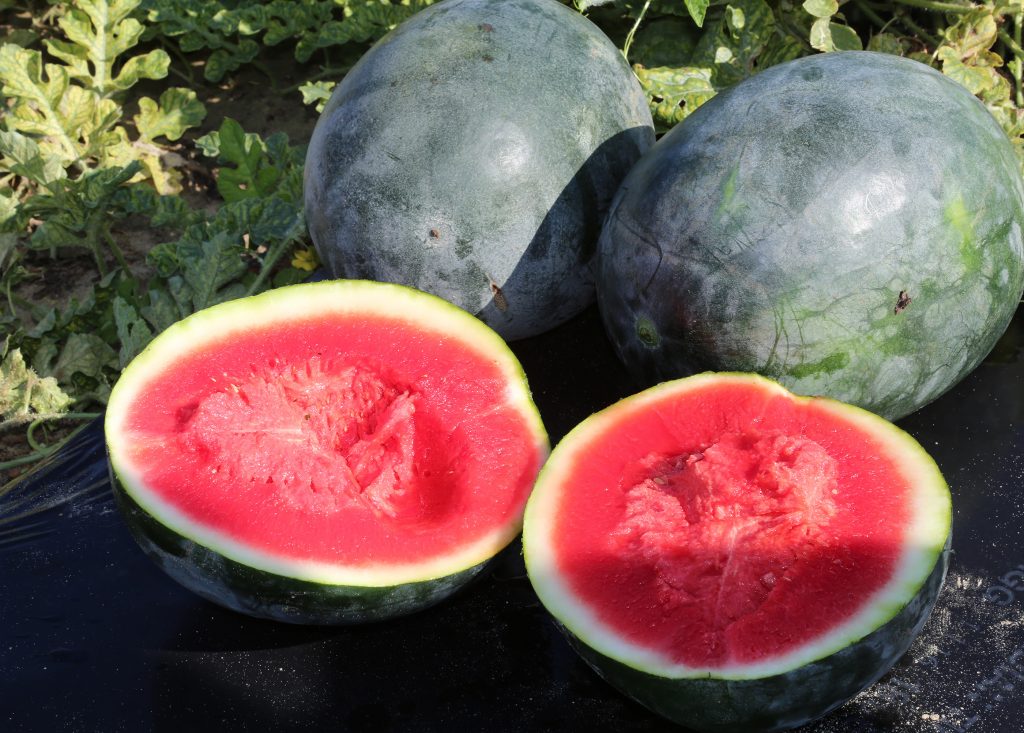
    University of Georgia pic/Watermelons on display at a farm on the UGA Tifton campus. 6-14-19

    By Clint Thompson

    Watermelon prices remain high for farmers in the Southeast. Unfortunately, there’s not enough crop ready for producers to take advantage, according to Bill Brim, co-owner of Lewis Taylor Farms in Tifton, Georgia.

    “Prices are still good. They’re around $155 to $160 a bin. There’s not many melons out there that’s ready right now. It’s unfortunate,” said Brim, who estimates individual watermelons are selling for an average of 24 cents per pound.

    He also believes the rainy weather has played a role in watermelons not maturing as quickly as they would in previous years.

    “Maybe too much water right now and they’re just not ripening as fast. We’ve got all of these showers in the afternoon, probably part due to that,” said Brim, who had to pause harvesting his own watermelon crop over the weekend.  “We had some stuff that was planted later, too than what we would normally plant; because the plants weren’t ready or the fields weren’t ready. It could be anything. Fumigants hadn’t been out of the soil long enough.

    “It’s quite a bit of difference from last year. Last year we were probably through by the (July) 4th.  We won’t be through for three weeks after the 4th (this year),” Brim said.

    This is typically a busy week for producers leading up to the July 4th Holiday on Saturday. Demand is normally very high this week.

    Drop in Georgia Acreage

    According to Samantha Kilgore, executive director of the Georgia Watermelon Association, acreage is projected to decrease this year to 19,000 acres. It would mark a significant drop from previous years’ harvests.  According to the National Agricultural Statistics Service, from 2016-2018, Georgia averaged a harvest of just more than 23,000 acres.

    Wet Planting Weather

    According to Andre da Silva, University of Georgia Cooperative Extension vegetable specialist, wet weather in February and early March could have delayed farmers’ planting window. If growers had to wait to plant their crop, it could have also impacted when their crop would be ready for harvest.

    He said that watermelon planting season in Georgia starts as early as March 1, but the bulk of farmers start March 15 and continue to the end of April. The watermelon market in Georgia begins in early June and usually concludes a week after July 4.

  • USMCA Set to Enter Into Force July 1

    The USMCA will enter into force on July 1.

    By Clint Thompson

    Wednesday, July 1 marks a new era for North American Trade.

    The United States-Mexico-Canada Agreement (USMCA) will enter into force July 1. But according to economists and industry leaders, the agreement still does not provide much protection for vegetable and specialty crop producers.

    Florida Fruit and Vegetable Association President Mike Joyner:

    “When Congress passed USMCA, we unfortunately did not get the provisions we were hoping for in USMCA. The Florida delegation, to the person, hung together. Because they hung together, we were able to get a commitment from Ambassador (Robert) Lighthizer to come up with a plan as to how we’re going to address this issue,” Joyner said. “We felt like that was a strong commitment. It’s in writing. We trust Ambassador Lighthizer. Right now, all indications are USMCA will go into effect July 1.

    “If you go back and look at the letter, the commitment that the delegation was able to get, that within 60 days of entry into force, Ambassador Lighthizer has to have a plan. We’ll present some information to the U.S. Trade Representative’s Office that they need to consider. It’s data that clearly shows what’s happening with Mexican produce. We’re hoping that over the next two or three months, we can work with Ambassador Lighthizer and his team and come up with something that will help solve this issue.”

    University of Georgia Extension Ag Economist Adam Rabinowitz:

    “The concern with the USMCA, in terms of specialty crops, is that there are a lot of lower priced crops, low cost labor in Mexico that are coming into the U.S. and competing with southeast fruits and vegetables. There was hope that there would be some restrictions or some assistance that would help with the ability to compete with those Mexican imports. But there was nothing within that. As a result, it’s looking like there’s going to be a challenge in terms of being able to compete on price with the southeast fruits and vegetables with the imports from Mexico.”

    Charles Hall, executive director of the Georgia Fruit and Vegetable Association:

    “It’s insulting to the specialty crop growers who are suffering with COVID-19. It’s taken away markets. Then on top of that, we’ve got Mexican products coming in on top of us to drive the prices even further down.”

    According to the USMCA press release, the agreement marks the beginning of a historic new chapter for North American trade by supporting more balanced, reciprocal trade, leading to freer markets, fairer trade, and robust economic growth in North America. However, Southeast farmers still will compete against imports of Mexican produce.

  • Sneak Peek: July 2020 VSCNews Magazine

    By: Ashley Robinson

    The July issue of VSCNews magazine focuses on a variety of topics, including machine harvesting of blueberries, strawberry pests and diseases and technology for vegetable production.

    Blueberry growers and packers are adopting the latest innovations and technology to reduce harvesting costs and put less reliance on contract laborers. Fumiomi Takeda, a research horticulturalist with the United States Department of Agriculture (USDA) Agricultural Research Service Appalachian Fruit Research Station in Kearneysville, West Virginia and Steven Sargent, professor and Extension postharvest specialist at the University of Florida Institute of Food and Agricultural Sciences (UF/IFAS), discuss the results from a study with USDA and several land-grant institutions, comparing different harvesting methods of blueberries.

    Takeda returns for another article, this time joined by Wojciech Janisiewicz, a research plant pathologist at the USDA Agricultural Research Service Appalachian Fruit Research Station in Kearneysville, West Virginia. They take a look at how USDA researchers are successfully using Ultraviolet light to control pests and diseases in strawberry production.

    Vegetable growers face a variety of challenges. However, new advancements in technology may help growers address these production issues. Yiannis Ampatzidis, an assistant professor at UF, presents growers with examples of state-of-the-art technologies that may be useful in vegetable production today or in the near future.

    Tomato and Pepper Spotlight

    The crop spotlight returns in July, this time with a focus on peppers and tomatoes.

    Xavier Martini, an assistant professor, and Joe Funderburk, a professor, both at the UF/IFAS North Florida Research and Education Center in Quincy, Florida, provide tomato growers with thrip management strategies.

    Anthracnose is a serious disease that occurs across pepper-growing regions worldwide. Pam Roberts, a professor at the UF/IFAS Southwest Florida Research and Education Center (SWFREC) in Immokalee, Florida shares management measures with growers.

    In the tomato and pepper spotlight, Gene McAvoy, associate director for stakeholder relations at the UF/IFAS SWFREC, shares some tips and tricks with growers on how to select varieties with profit potential.

    VSC Expo Set For Aug. 12-13

    Finally, readers will get a preview of the upcoming Citrus Expo and Vegetable & Specialty Crop Expo.

    The annual event will take place Aug. 12-13 at the Lee Civic Center in North Fort Myers, Florida. Growers can register here and automatically be entered for a chance to win a John Deere gun safe courtesy of Everglades Equipment Group. To learn more about the Citrus Expo and Vegetable & Specialty Crop Expo, including host hotel information, visit http://citrusexpo.net/. To receive future issues of VSCNews magazine, visit click here.

  • Bacterial Spot Leaving Mark in Tomato Crops

    File photo shows bacterial spot disease in tomatoes.

    By Clint Thompson

    Bacterial spot in tomatoes has been observed in various locations in Alabama, according to Ed Sikora, professor and Extension plant pathologist in the Department of Entomology and Plant Pathology at Auburn University.

    He believes the excess rainfall and abnormal temperatures contributed to the disease being more problematic this year.

     “I think this year with the moisture we’ve had this spring and slightly cooler temperatures, I think it’s more of a problem than normal. In talking with the growers, it appears to be a yearly problem,” Sikora said. “We were in these fields four weeks ago and we had a fairly hard time finding the disease, it would just be in small pockets. Then (last week) when I was out sampling in Mobile (Ala.), it was throughout the field to the top of the upper canopy of the plant. It can move pretty swiftly.”

    What is bacterial spot?

    According to University of Georgia Cooperative Extension, bacterial spot attacks the stems, petioles, leaves and fruit. Spots are circular and brown and become water-soaked during periods of heavy rains. Symptoms on the fruit itself are tiny raised blisters.  

    “You can get some defoliation, some blight of the leaves, which I think can have an effect on yield. How much? I do not know. It can get to the fruit, you can get some fruit lesions,” Sikora said. “That can make them unmarketable.”

    The disease is spread by rain, workers and tools. The best method for control is to rotate crops and field sites and remove any plant debris and eliminate potential hosts.

    “Typically, the disease will often come in on transplants, so it’s very hard to control in the transplant house. Sometimes it can survive on debris in the field,” Sikora said. “Some of these growers are not rotating, they just don’t have the room.”

    Resistance Problem

    Sikora estimates that between 75% and 80% of populations of the disease pathogen are resistant to copper, which has been the chemical product of choice for growers. It will keep the populations down but does not clean it up entirely. Tomato growers are tolerating the disease instead of controlling it completely.

    “They’re seeing the same problems in Florida and I’m sure Georgia and other places. This resistance is not a new phenomenon, but it’s been developing over time. Growers will still be spraying copper and hopefully they can knock down populations a bit,” Sikora said. “Probably our best bet will be developing resistant varieties. The same disease also goes to peppers. But when you start searching peppers, you’ll see that peppers, certain varieties have resistance to this pathogen. If you have a resistant variety, you don’t have to worry about spraying copper. At this point, I don’t recall any bacterial spot resistant tomatoes on the market.”