Category: Georgia

  • Georgia Peaches Nearing End to ’20 Season

    Photo taken by Clint Thompson/Shows a box of recently purchased Georgia peaches.

    Time is running out on Georgia’s peach crop this year. Jeff Cook, University of Georgia Cooperative Extension Agriculture and Natural Resources agent for Peach and Taylor counties, confirmed that the state’s producers only have about a week left before they are done harvesting this year’s crop.

     “We’ll still ship, maybe for another week. We’re getting to the end here,” Cook said.

    Cook said Georgia peach producers normally harvest through the second week in August. Some varieties were harvested earlier this season. High temperatures in the springtime were a likely factor.

     “I think a lot of it was the heat in March, the heat directly after bloom,” Cook said. “But it wasn’t across the board that everything acted the same. Some things were early, some things were normal time. Some things held on.  I’ve got a Scarlet Prince (variety) in my research orchard that we usually pick the last couple of days of June and first of July. We were picking the second week of June through the first week in July. We picked them for three weeks and they were good, commercially acceptable peaches.”

    Good Year Overall

    He added that it has been a good year overall for farmers.

    “We had some speedbumps early on with some early varieties that got a little cold damage,” Cook said. “It looks like quality has been good because I haven’t seen a lot of dump trucks leaving packing sheds.

    “I was actually at Lane’s yesterday with my son and he was like, ‘What is that thing coming out of the packing shed?’ I was like, ‘That’s the conveyor belt that takes all of the bad peaches.’ All that was coming off the conveyor belt was leaves, that’s all that was falling through. That’s always a good sign.”

    According to UGA Extension, Georgia produces more than 130 million pounds of peaches every year. There are two commercial peach-growing regions in Georgia. The central region is the largest with about 1.6 million peach trees, which comprises 75% of the state’s production. The southern region produces about 30 million pounds of peaches annually.

  • Dry Temperatures Not Bad Thing for Georgia Hemp Producers

    File photo shows hemp growing in a field.

    Hot and dry temperatures are not necessarily a bad thing for Georgia’s hemp producers, according to Tim Coolong, University of Georgia Cooperative Extension specialist. What the crop will not do well in is when the soil is wet.

    Tim Coolong

    “Every single grower that I’ve met with is irrigating their hemp anyway. Actually, a little bit drier is probably fine, because if they do need some water, they will irrigate,” Coolong said. “The only negative thing is some people are planting pretty late because they’re just getting their licenses. Some of the heat we’re having may make it a little bit harder to establish plants. Just like planting fall vegetables, if you’re planting and it’s 95 degrees out, sometimes it helps to have a little bit of a shower to cool things down.”

    According to the US Drought Monitor, various parts of the state include areas that are classified as abnormally dry. It is especially concerning for middle Georgia and east Georgia along the coast.

    It is a critical point for hemp producers since hemp is expected to begin flowering in early August. Coolong said the handful of growers that are still planting are in danger of producing a crop with reduced yields.

    “Hemp for the most part, when you get below 14 hours of day length will start to flower. That’s right about now when we start getting below that threshold. Most of the plants will start flowering around the first week of August,” Coolong said. “The idea is if you plant too late, you’ll have this relatively small plant that could start flowering. Your yield would be lower than if you planted in late May or June when you can build a larger frame on a plant.”

  • UGA Pecan Specialist: Fruit Thinning a Hard Sale

    Fruit thinning will likely be a hard practice for pecan producers to follow through on in the next couple of weeks. But University of Georgia Cooperative Extension pecan specialist Lenny Wells believes it is the right course of action to take, especially considering the quantity of this year’s pecan supply.

    Lenny Wells

    “This is going to be a hard sale because a lot of growers have gone without much of a crop for a couple of years. They’re wanting to make all they can. But in a situation like that with a crop that’s really loaded, especially if they’re calling for dry weather late in the season, it would not be a bad idea right now to fruit thin your trees,” Wells said. “That would take some of that pressure off the tree where it would be better able to manage and make those nuts with good quality that it has left.”

    Wells said growers only have another week or two to thin their trees, except for Pawnee variety, which should have already been done. There are various advantages to thinning your tree, though, you would be affecting this year’s crop.

    “It’s a tough call, it really is. It’s certainly hard to do,” Wells said. “It definitely does help. It helps with a lot of things; it helps with quality; it helps with return crop next year; it helps with the size of the nuts; it helps with that if we do get some kind of storm late in the season, if you lighten that crop load, then trees don’t take such a beating. There’s a lot of advantages to it, but it is hard to do.”

    According to the UGA Extension pecan blog, Wells said Georgia’s crop is projected at 87 million pounds.

  • Sneak Peek: August 2020 VSCNews Magazine

    By Ashley Robinson

    The August issue of VSCNews magazine equips growers with the latest information and strategies to develop a sound fumigation system.

    With the loss of methyl bromide, many growers have struggled to maintain consistent soilborne pathogen and pest control with fumigants that are currently available. Gary Vallad, Johan Desaeger, Joe Noling and Nathan Boyd of the University of Florida Institute of Food and Agricultural Sciences (UF/IFAS) discuss supplemental fumigation strategies for tomato production.

    In 2018, a comprehensive survey identified root-knot nematodes as the top nematode pest among Georgia vegetable crops. Abolfazl Hajihassani, an assistant professor and Extension specialist and Chinaza Nnamdi, a plant pathology graduate student, both at the University of Georgia (UGA) in Tifton, share proper management practices to successfully control these pests.

    Anthracnose fruit rot disease is one of the most significant disease problems of commercial strawberry production in the Southeast. To control the disease, growers have typically relied on preventive fungicide applications, the most commonly used fungicide being quinone outside inhibitors (QoIs). However, growers have recently noticed a resistance to QoIs. Phil Brannen, Emran Ali, Jeff Cook, Sumyya Waliullah and Owen Hudson, all at UGA, present new recommendations and strategies for growers struggling with fungicide resistance.

    Desaeger, an assistant professor for UF/IFAS is back for another article in this month’s issue. This time, discussing Florida’s up and coming hemp crop. With an increased interest in hemp, researchers are investigating how nematodes may affect this new Florida crop.

    Additionally, Jenelle Patterson, a plant molecular biologist, shares how bioengineered sentinel plants could help protect future crops.

    Finally, it’s Expo time! Even though coronavirus has prevented growers from gathering in person for the Vegetable and Specialty Crop Expo, the virtual event will continue to provide growers with the great education they need. On Aug. 19–20, the seminar program will go online at VSCExpo.com, and growers can tune in and watch the seminar presentations from the comfort of their own home. Those who watch the seminars when they debut online will be eligible to win door prizes, including four $200 Bass Pro gift cards.

    There is no charge to attend the virtual Expo, but registration is required to view the seminar videos. Keep up to date on all the latest event information and register to attend at VSCExpo.com.

    If you would like to receive future issues of VSCNews magazine, click here.

  • USDA Announces Third Round of Farmers to Families Food Box Program Purchases

    (Washington, D.C., July 24, 2020) – U.S. Secretary of Agriculture Sonny Perdue announced on Friday the U.S. Department of Agriculture (USDA) will launch a third round of Farmers to Families Food Box Program purchases with distributions to occur beginning by September 1 with completion by October 31, 2020. The purchases will spend the balance of $3 billion authorized for the program. So far, over 46 million Farmers to Families Food Boxes have been invoiced and delivered.

    Secretary Perdue

    “This third round of Farmers to Families Food Box Program purchases is a testament to the great work done by vendors in support of American agriculture and the American people. It is also a testament that the program is accomplishing what we intended – supporting U.S. farmers and distributors and getting food to those who need it most. It’s a real trifecta, which is why we call it a win-win-win,” said Secretary Perdue. “The efforts of everyone involved form the backbone of the Farmers to Families Food Box Program and its goal to help fill the hunger gap in all of our communities.”

    “The Farmers to Families Food Box Program has created a tangible link between hungry families and struggling farmers impacted by the COVID-19 pandemic,” said Advisor to the President, Ivanka Trump. “Through this third round of Farmers to Families Food Box purchases announced today, the Trump Administration continues its steadfast commitment to supporting our farmers, bolstering our workforce and feeding families most in need during this critical time.” 

    Background:

    In this third round of purchases, USDA plans to purchase combination boxes to ensure all recipient organizations have access to fresh produce, dairy products, fluid milk, and meat products.

    Eligibility in the third round will be open to entities who can meet the government’s requirements and specifications. Proposals will be expected to illustrate how coverage will be provided to areas identified as opportunity zones, detail subcontracting agreements, and address the “last mile” delivery of product into the hands of the food insecure population.

    A notice explaining the solicitation process will be issued in the days to come with a webinar and other educational opportunities provided for those interested in participating. 

    In the ongoing second round of purchasing and distribution, which began July 1 and will conclude Aug. 31, 2020, USDA aims to purchase up to $1.47 billion of food for the program. For the second round, USDA extended contracts of select vendors from the first round of the program worth up to $1.27 billion. Some contracts were not extended at the vendors’ request or reduced based on information provided by the contractor. Additionally, in the second round, USDA approved up to $202 million in new contracts, via a new acquisition activity, with select vendors whose offers were not previously accepted due to various issues in their proposals. These distributors were selected to increase the focus on Opportunity Zones in order to direct food to reach under-served areas, places where either no boxes have yet been delivered, or where boxes are being delivered but where there is additional need.

    The first round of purchases totaling more than $947 million occurred from May 15 through June 30, 2020.

    More information about the third round of food box purchasing will be made available on the Farmers to Families Food Box Program website at www.usda.gov/farmers-to-families. Please monitor the website or subscribe for updates.

  • Farmer Feedback Essential for Adequate Analysis

    Feedback during the Notice of Funding Availability comment period for the Coronavirus Food Assistance Program yielded positive results for certain commodities added in coverage by the United States Department of Agriculture.

    It also pointed to the importance of farmers and industry leaders responding to surveys and requests for information. In this case, it allowed the USDA to make appropriate decisions regarding the allocation of funds.

    Adam Rabinowitz

    “I think there was some good feedback listened to and I think that open communication is important. I think it also stresses the need for producers to respond to requests for information where there’s these surveys or the USDA is collecting data. Because without that data, we can’t do adequate analysis that really tells their story,” said Adam Rabinowitz. He’s an Assistant Professor and Extension Economist at Auburn University.

    “From a research and Extension perspective, making sure the growers are answering these surveys that they’re providing the USDA with that data, that’s vitally important.”

    CFAP Coverage

    According to a USDA press release, commodities like blackberries, collard greens, kale greens and pineapple were added to coverage. Seven eligible commodities were provided expanded coverage under Category 1. These included apples, blueberries, garlic, potatoes, raspberries, tangerines and taro.

    “When we announced this program earlier this year, we asked for public input and received a good response. After reviewing the comments received and analyzing our USDA Market News data, we are adding new commodities, as well as making updates to the program for existing eligible commodities. This is an example of government working for the people – we asked for input and we updated the program based on the comments we received,” said Ag Secretary Sonny Perdue in the USDA press release.

    According to https://www.farmers.gov/cfap/specialty, eligible specialty crops in CFAP are broken down into three categories:

    1. Had crops that suffered a five percent-or-greater price decline between mid-January and mid-April as a result of the COVID-19 pandemic,
    2. Had produce shipped but subsequently spoiled due to loss of marketing channel, and
    3. Had shipments that did not leave the farm or mature crops that remained unharvested.

    USDA collected comments and supporting data for consideration of additional commodities through June 22, 2020.

  • Sunbelt Ag Expo Cancelled

    Contact: Becca Turner; (229) 985-1968 x2228; Email: becca@sunbeltexpo.com

    The Sunbelt Agricultural Exposition Board of Directors voted to cancel the 43rd Annual show scheduled for October 20-22, 2020.

    North America’s Premier Farm Show, the Sunbelt Ag Expo, has provided a venue for the agricultural industry to conduct business for 42 years. For the first time, since it began in 1978, the gates at Spence Field will not open the third week in October to welcome farmers, their families and loyal exhibitors.

    While the Expo staff has worked diligently over the past several months to put together an action plan that would enable a safe and successful show, it has become abundantly clear that we must change course. Unfortunately, we simply cannot safely blend networking, commerce and education while representing the rich history of the Sunbelt Ag Expo. Additionally, the board’s decision to cancel the 2020 Sunbelt Ag Expo was greatly impacted by its concern for valued attendees’ and exhibitors’ expenses, and their need to plan.

    Plans for the selection of the 2020 Swisher Sweets/Sunbelt Ag Expo Southeastern Farmer of the Year Winner and the Southeastern Hay Contest Award Winners are still being finalized. As these plans are confirmed, information will be released on our web site and social media channels. In addition, the Holiday Arts and Crafts Show, hosted by the Sunbelt Ag Expo, is still scheduled at this time for November 14-15, 2020.

    The Sunbelt Ag Expo looks forward to greeting visitors again in 2021 as it showcases the latest in farming technology, October 19-21. The show will go on! Visit www.sunbeltexpo.com for more information.

  • Not Enough Funds for CFAP?

    The recent revisions to the Coronavirus Food Assistance Program (CFAP) was a step in the right direction in the United States Department of Agriculture expanding the scope of what commodities are covered. But it also may lead to a shortage in funds being in place for producers, according to Adam Rabinowitz,

    Adam Rabinowitz

    “I think it’s going to be challenging for there to be enough funds. I think there will be some additional allocation that’s there, as well as recognition that there’s other commodities that need to be included,” said Adam Rabinowitz, who recently joined Auburn University as Assistant Professor and Extension Economist. “We may not see, for instance, some of the row crops that’ll be harvested this fall, we may not see the true impact on some of those commodities until after harvest season. Until it’s harvested, we don’t really know what’s going to happen to the markets. Clearly things have not gotten better as of yet from a health perspective, where everything’s back to normal.”

    Next Stimulus Package

    Farmers and industry leaders are highly invested in what’s talked about on Capitol Hill. Additional monetary aid for agriculture is part of the discussion on the next stimulus package.

    “They’ve started discussing the next stimulus package, and part of that discussion may be, whether or not there needs to be some additional funds available for agriculture,” Rabinowitz said. “Everything’s kind of up in the air with that in terms where the Senate proposal might be and how the Senate and the House might ultimately compromise.”

    Additional Commodities

    In a USDA press release issued on July 9, U.S. Secretary of Agriculture Sonny Perdue announced an initial list of additional commodities that were added to CFAP. Also adjustments were made by the USDA to the program based on comments from producers and organizations and review of market data during the Notice of Funding Availability period.

    “I think it’s positive, certainly expanding the scope and it kind of goes a little bit with what we found in a survey that we did with Alabama producers. A good portion of those that responded to our survey just felt that CFAP didn’t even apply to them,” Rabinowitz said. “I think broadening the scope is certainly important.”

    Producers were able to submit applications that included these commodities on Monday, July 13. The USDA Farm Service Agency is accepting applications for CFAP through Aug. 28. The program helps offset price declines and additional marketing costs due to the coronavirus pandemic.

  • Grape Root Borers Detected in North Georgia

    Grape root borer.

    According to the UGA Extension Viticulture Blog, the grape root borer adults have been detected in north Georgia. Brett Blaauw, University of Georgia assistant professor in the Department of Entomology, confirmed that on Monday, they collected some adults in their pheromone traps in Lumpkin County, Georgia.

    Adults have started to emerge from the soil, and for the next few weeks, the adults will mate, and the females will lay eggs at the base of vines. Producers with a history of grape root borer in their vineyards need to start monitoring for the pest and initiate management if necessary.

    As the name implies, the grape root borer larvae feed on the roots. Blaauw said they have a two-year life cycle and will feed underground on the roots for almost 22 months. Unfortunately, it is out of sight, out of mind for many grape producers. Being underground, the borers go unnoticed until the vine begins to deteriorate.

    In terms of management, since the adults are now emerging, it is too late in the season to apply dispensers for mating disruption. Chemical management is our key option. Currently, the only insecticide registered for control of grape root borer is Lorsban 4E (chlorpyrifos), which is applied as a coarse spray to the base of vines to kill adults as they exit the soil and newly hatched larvae before they attack the vine. However, Lorsban should not be made within 35 days of harvest.

    The first signs of infestation are yellowing and wilting of leaves with loss of plant vigor and reduced production. This will lead to reduced shoot growth over time, including smaller leaves and berries, loss of vigor and reduced yields.

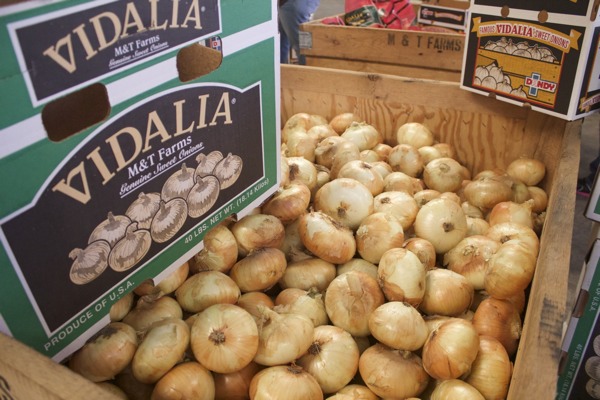
  • Vidalia Onion Farmers Ready to Plant 2021 Crop

    Vidalia onion farmers will soon be planting next year’s crop.

    Chris Tyson, University of Georgia Extension Area Onion Agent at the Vidalia Onion & Vegetable Research Center in Lyons, Georgia, said producers have already ordered seed and will prepare land with fumigation and treatments in August. Seedbeds will be planted in September through the first of October.

    Low Supply in 2020

    Growers are hoping for a better growing season in 2021. The onion supply was shorter this year, due in large part to different weather events. Storms came through Southeast Georgia in April and delivered hail damage to some of the onion crop.

    “What the growers put on the shelf was a quality product, there just wasn’t as much of it to go around. Then the COVID pandemic created some extra challenges. It actually created a higher demand for a lot of food staples, and onions are one of those items. Fortunately, the Vidalia onions, most of those items end up on the retail shelf for direct to the consumer; the majority of them do, whereas some of other types of onions may go to food service,” Tyson said. “With the COVID going on, I think it hurt the food service industry, but it was good for the retail industry. Consumers, they’ve still got to eat, and they were going to the grocery store and eating at home more. That worked into our favor. When you have less to go around, the crop was short to begin with and when you have that, it makes it even shorter.”

    The growing season also provided abnormally high temperatures in March. Tyson said a “heat wave” basically moved through the region that did not set well with the onion crop.

    “To an onion that’s not used to that or that’s trying to grow a bulb, it created some stress for the crop. That was one reason for the shorter supply this year,” Tyson said.