Category: Georgia

  • Secretary of Ag Discusses Timely Issues Facing Southeast Vegetable Producers

    Tom Vilsack

    Two issues at the forefront of vegetable and specialty crop producers in the Southeast is H-2A and imports from countries like Mexico. Secretary of Agriculture Tom Vilsack discussed both issues and sympathizes with growers in the Southeast.

    “We’re looking at ways in which we’re able to provide some help and assistance to them under the COVID relief packages that were not specifically targeted to them. No. 2, in terms of labor, no question, serious issues, serious challenges that agriculture faces,” Vilsack said. “That’s why I’m certainly happy to see the House of Representatives pass the Farmer Worker Modernization Act, which essentially creates an avenue for a stable, mature and predictable workforce that makes improvements to the H-2A program that makes it easier for farmers to have that stable workforce, dependable workforce. At the same time, it allows those workers the opportunity to basically come out from the shadows.”

    Vilsack said he hopes the Senate will take the legislation up, noting it is a bi-partisan issue.

    “These are the workers that folks in the Southeast are depending upon. These are folks that are essentially responsible for picking a lot of our fruits and vegetables in a number of different areas across the country. It just makes sense that farmers have that stable and secure workforce,” Vilsack added.

    Increasing Imports

    As for imports, it’s an issue that seems to worsen daily. Southeast farmers accuse Mexico of dumping produce and creating a competitive disadvantage that growers can’t compete with.

    “On the issue of imports, look, it’s always a delicate balance. We want to make sure that we are able to ensure that our producers have market opportunities. But at the same time, part of what we do, obviously, is to export. We want to make sure that there’s a balance relationship there,” Vilsack said.


  • Increased Imports: U.S. Too Reliant on Foreign Produce?

    It’s a disheartening scenario but one that farmers face every day due to rising imports from Mexico.

    Sam Watson

    “Every morning I start my day by spending hours on the phone with produce buyers across the country, trying to sell my product. I get the same answer, ‘No, we don’t need any,’ they would say,” said Georgia farmer Sam Watson. “At least they’re honest, they tell me they can get it cheaper in Mexico. Maybe try us next week.”

    For some growers, they’re running out of weeks.

    Few Choices

    Watson, along with other producers in Georgia and Florida, testified in a U.S. International Trade Commission hearing on Thursday about the impact that imports of cucumbers and squash are having on the domestic industry. One of Watson’s main points of emphasis is that the American consumers are not being offered any choices anymore. Grocery stores are becoming more and more reliant on supplying foreign produce.

    “What’s interesting is the American consumer is still paying the same price at the grocery store. I firmly believe that if American consumers were given a choice between U.S. grown and imported produce, they would choose to buy American. Problem is they have no choice anymore,” Watson said. “We cannot become a country that’s dependent on others for our food supply. Watch all the farmers go under and that is exactly what will happen.”

    Cheap labor, low input costs, subsidization by the Mexican government and less regulatory environment contribute to a rise in imports.

    “When you combine all of these advantages, I find it hard to believe that anyone can say that the American farmers participate in fair trade,” Watson said. “We’re not saying we want to stop the importation of fresh fruits and vegetables into this country. We just want protections and safeguards put into place to provide for fair trade.”

  • Fresh Produce Association of Americas: Mexico Cannot Be Blamed

    rubio

    Not everyone believes there is a problem with Mexican imports and their impact on the domestic industry. In fact, Lance Jungmeyer, president of the Fresh Produce Association of Americas, believes “Mexico cannot be blamed” for many of the issues Southeast farmers are trying to overcome.

    “In reality, many of the problems facing the Southeast growers – labor, hurricanes, real estate development, consumer demand – have nothing to do with Mexican imports but everything to do with the growers’ inability or unwillingness to supply that market as demanded,” Jungmeyer said.

    Labor

    Labor rates play a significant role in comparing the Florida vs. Mexico. It was established during Thursday’s ITC hearing regarding the impact imports have on the Southeast domestic market, that Mexico’s minimum wage is $10 per day. Florida just voted to increase its minimum wage that will increase to $15 per hour over the next few years.

    Jungmeyer was also critical of Florida and Georgia’s usage of the H-2A program and believes their lack of available workers has led to quality issues.

    “Mexico cannot be blamed for U.S. farmers not having labor, agricultural workers, to work in their fields. Perishable products such as cucumbers and squash are labor intensive crops, particularly for the harvesting and packing. Without adequate labor, Southeast growers are at a severe disadvantage in how they grow and pack. Their products result in a distinct quality disadvantage that U.S. retail customers clearly recognize,” Jungmeyer said.

    Industry leaders in Florida and Georgia insist, though, there is not a labor shortage.

    Weather Issues

    Jungmeyer’s defense of Mexican imports also centered on hurricanes that are an annual threat to Florida production.

    “Mexico cannot be blamed for the hurricanes and tropical storms that cause damage to crops. The threat of bad weather is reason alone why many retail customers seek Mexican suppliers to at least backstop the risk of Florida suppliers running into weather-related supply problems. This happens in Georgia as well. The risk of hurricanes is also a significant disincentive for southeast growers to pursue using protected agriculture to grow cucumbers and squash,” Jungmeyer said.

    He also mentioned real estate development for a reason that many Florida producers have sold land instead of continuing the family business.

    Consumer preference was his final point of defense. Jungmeyer claims consumers just prefer Mexican produce compared to American producers.

    “Consumer choices have evolved to favor premium produce items like fancy squashes and cucumbers. This is in a way similar to how consumers choose bell peppers that are grown in protected agriculture because of the variety and color of peppers available and even the perfect appearance of those green protected agriculture peppers. We also have a perfect appearance in Mexican squash and cucumbers,” Jungmeyer said. “The extreme high quality in imported Mexican produce (distributors) sell gives them a significant demand edge in the market.”

  • Representative Response: Austin Scott, Darren Soto Pen Letter to ITC

    Austin Scott

    WASHINGTON, D.C. – Reps. Austin Scott (R-GA-08) and Darren Soto (D-FL-09) co-led a bipartisan letter to the International Trade Commission (ITC) on Tuesday expressing support for a Section 332 investigation for cucumbers and squash as American specialty crop producers struggle with unfair trade practices that negatively impact operations.

    “Seasonal cucumber and squash imports from Mexico continue to dramatically impact U.S. markets and threaten the future of domestic farm production of perishable produce,” wrote the Members. “This Section 332 investigation by the ITC for cucumbers and squash is needed to make a meaningful determination as to the impact of these seasonal imports on our markets. Market changes occur quickly and can devastate a grower’s season in a matter of days if imports increase and the resulting price decreases coincide with harvest. We appreciate your efforts on behalf of our growers and rural communities.”

    The letter is supported by Georgia Farm Bureau, Florida Farm Bureau, Michigan Farm Bureau, the Georgia Fruit and Vegetable Association, and the Florida Fruit and Vegetable Association.

    Darren Soto

    “Georgia Farm Bureau agrees with U.S. Representatives Austin Scott and Darren Soto that a Section 332 investigation for cucumbers and squash is necessary to determine the full impact that imported produce is having on domestic growers. In recent years, Georgia farmers — along with farmers in many other U.S. states — have struggled to compete with the growing surge of imported fresh fruits and vegetables, and as noted by the reports highlighted in the letter, the problem will only get worse unless U.S. officials step in. We are grateful for the leadership of Representatives Scott and Soto along with the other Members of Congress who joined this important effort,” said Tom McCall, President of Georgia Farm Bureau.

    “The several specialty crop states represented on this letter should signal a growing national concern for our agriculture sector,” said John L. Hoblick, President of Florida Farm Bureau. “Florida agriculture, and our rural communities as a result, is at a crossroads. This investigation on squash and cucumbers is a helpful start toward a fair solution for our domestic producers, and we applaud our federal policymakers for standing with us.”

    The letter was sent two days ahead of Thursday’s ITC fact-finding hearing that will focus on cucumber and squash imports and their impact on the Southeast sector.

    In November, Rep. Scott sent a similar letter to the United States Trade Representative (USTR) requesting ITC begin a Section 332 investigation into squash and cucumber imports. Click here to read more.

    You can read the text of the letter below or by clicking here.

  • Voice of Leadership: Congressman Scott Sounds Off on Mexican Imports

    Austin Scott

    How can you stay in business by selling a commodity for less than the inputs required to produce it? While it may sound like simple economics, it’s a financial game that’s just not adding up for many Southeast vegetable and specialty crop producers?

    What’s the ‘X’ factor? Imports from foreign countries like Mexico, Peru and Chile. If they continue to keep bringing in produce like strawberries, blueberries, tomatoes and squash at their current rate, Southeast farmers will continue to suffer.

    “The primary issue is if you can’t sell your crop for more than you’ve got in it, then obviously you’re backing up,” said Congressman Austin Scott (R-GA-08). “It doesn’t cost as much to farm in Mexico as it does in the United States. Our producers are losing significant portions of the market share. It is predominantly coming from the imports from Mexico. As Mexico has set aside more protected acres for agriculture, it makes it easier for their farmers to do business.

    “We as a country have been flooded by imports who have a lower cost of production than U.S. producers. It’s been moving in the wrong direction for a while. I think now it’s just moving further faster with COVID because your fresh fruits and vegetables; the restaurants that were serving them are at half capacity if they’re open at all.”

    Mexico Government Provides Support

    According to University of Florida Associate Professor Zhengfei Guan, approximately 95% of Mexico’s protected acreage (those in macro-tunnels, shade houses and greenhouses) is for fruits and vegetables. The Mexican government also subsidizes its fruit and vegetable industry. From 2006 to 2016, the average annual budget for subsidies was $4.5 billion.

    “Agriculture has significantly more support in Mexico than we have in the United States right now, unfortunately. When I say more support, I mean at the national level,” Scott said.

    It has created a concern that other farmers have voiced: Where will our children and grandchildren get their food one day? As more and more producers are forced to quit because of an inability to stay in business, who will produce food in America?

    “I don’t want to be dependent on any section of the world for our food and our nutrition. We do very little in this country to help our Ag producers. We’re competing with other countries that do a lot and have a lower cost of production. Every time the federal government passes a rule and regulation that increases the cost of production within the United States, it’s done at the expense of U.S. food security,” Scott said.

  • Georgia Fruit Crops Impacted by Cold Temperatures

    South Georgia vegetables were not the only crops vulnerable to last weekend’s chilly temperatures. Fruit in middle and north Georgia were subjected to even colder temperatures. University of Georgia Cooperative Extension Fruit Disease Specialist Phil Brannen is concerned about the state’s grape, apple and peach crops.

    Phillip Brannen

    “I think there will be some significant damage on grapes, anything that was advanced. I think most of the grapes are still not that advanced, so I’m hopeful that’s going to help. But it’s pretty cold temperatures,” Brannen said.

    Brannen said Chardonnay grapes are often the variety that comes out the earliest. It was definitely the most vulnerable to any frost damage.

    “Most of the time Chardonnay by this time would have some shoot development. Those shoots would be fried, as far as those young shoots,” Brannen said. “You can have secondary fruit production on buds. There are secondary buds that will produce fruit, but you’re going to have a much reduced crop from those secondary buds. As long as the secondary buds were not damaged, we can still have a crop of grapes even in things that were pretty far advanced.”

    Apple and Peach Crops

    The outcome may be just as significant for Georgia’s apple and peach crops.

    “When you’re looking at north Georgia, a lot of the apple trees were in full bloom. Depending on what stage they were in, they could be damaged pretty severely again this year. We had a lot of damage last year, but I think we’re going to have a good bit this year. We had two nights with really cold temperatures,” Brannen said. “I’m concerned about apples, peaches in north Georgia, same thing. A lot of them were in full bloom or just post bloom, and that kind of temperatures for as long of a period as we had is going to be pretty significant as far as damage.”

    Brannen estimated that temperatures in the north Georgia mountains dipped as low as 25 degrees or 26 degrees Fahrenheit. In Athens, Georgia where Brannen’s located, the temperature dropped to about 30 degrees. He’s concerned about middle Georgia peaches as well, where he heard temperatures dropped below 30 degrees in one orchard.

    “I’m hopeful on peaches in middle Georgia it’s just going to kind of thin them as opposed to causing major issues. But it remains to be seen,” Brannen said.

  • GFVGA Briefs Warnock, Bishop on Top Fruit and Vegetable Issues

    By Mary Kendall Dixon

    U.S. Congressman Sanford Bishop hosted U.S. Senator Raphael Warnock for a tour of several South Georgia farms on Wednesday, March 31. The congressman coordinated with the Georgia Fruit and Vegetable Growers Association, GFVGA, to connect the senator with several Georgia fruit and vegetable farmers, tour their operations and learn about the issues they face as an industry.

    Farmer Dick Minor and Charles Hall, GFVGA Executive Director (far right), talk with Senator Raphael Warnock (far left) and Congressman Sanford Bishop.

    The tour began at Minor Produce in Sumter County. Farm co-owner Dick Minor provided an overview of the farm operation and industry issues.

    Several fruit and vegetable growers participated in the round-table discussion with Senator Warnock and Congressman Bishop on trade, labor and agricultural research needs. The growers focused on the impact seasonal dumping of produce in domestic markets from Mexico has had on American growers, issues with current farm worker legislation and the importance of continued funding for whitefly research at the University of Georgia’s College Agricultural and Environmental Sciences and Fort Valley State University.

    “We appreciate the congressman and senator coming and meeting with us,” said Minor, chairman of the Georgia Commodity Commission for Vegetables. “We also appreciate their work to help the Georgia fruit and vegetable industry.”

    Industry Leaders

    Congressman Bishop serves as the chairman of the U.S. House Agriculture Appropriations subcommittee and he serves on the House Agriculture Committee. Senator Warnock joined the U.S. Senate Ag Committee and is chairman of the Senate Ag subcommittee on Commodities, Risk Management and Trade.

    Senator Warnock and Congressman Bishop ended the day with a visit to Dollison Farm in Poulan, Ga. They toured this farm-to-table operation that specializes in swine, vegetables and peanuts and discussed the value-added products Dollison markets. The visit also included a discussion on USDA programming for minority growers and the need for further promotion and communication of new program availability.       

    “As a new member of the Senate Ag Committee it is important that Senator Warnock is aware of the issues that deeply affect our Georgia farmers,” said Charles Hall, GFVGA Executive Director. “We appreciate their support of the Georgia specialty crop industry and look forward to working with them.”

  • Chilly Outcome: Cold Temperatures Damage Some South Georgia Crops

    watermelon
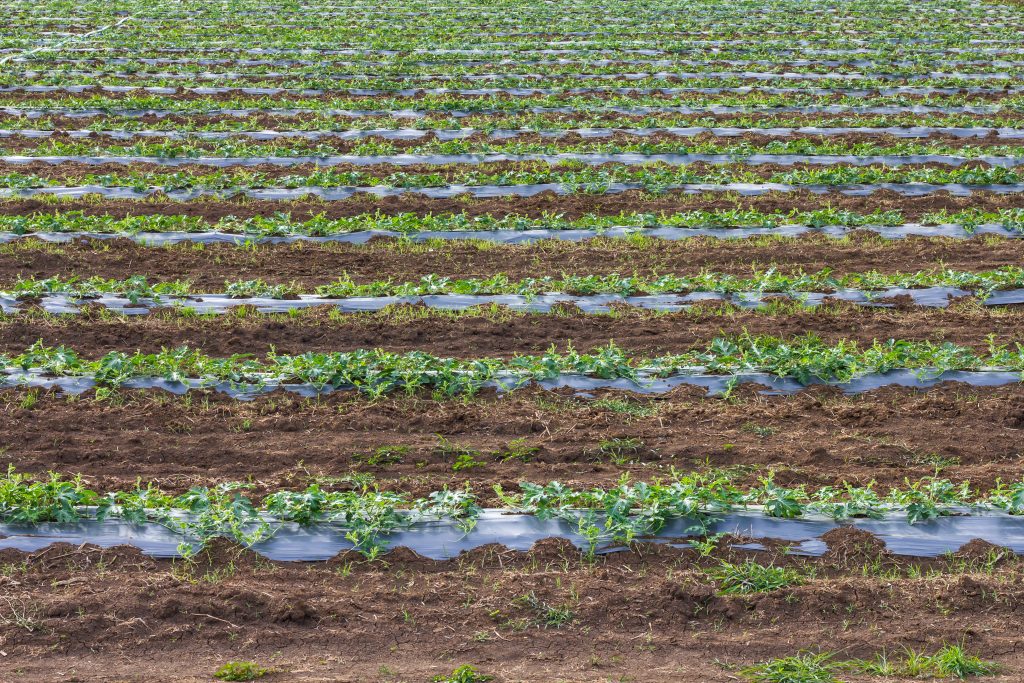
    File photo shows a young watermelon field.

    Cold temperatures and a late-season frost could lead some South Georgia vegetable producers to replant some of their crops, namely watermelons and cantaloupes.

    Bill Brim, part owner of Lewis Taylor Farms in Tifton, Georgia, said his plants survived most of last weekend’s temperature drop, other than some cantaloupe plants in Worth County.

    “Cantaloupes got burnt a little bit in some low areas as well. We’re probably going to have to reset some of those. It was over in Worth County at that real sandy farm that we’ve got. It got a little colder over there I believe than it did over here,” Brim said. “We’re going to have to reset some of those. We’re probably going to go in there and put a little extra fertilizer on them to see if we can get them going.”

    Squash was also not immune to frost damage.

    “Anybody that had any squash planted, it burnt it too. Tender vegetation just can’t take it,” Brim said.

    How Cold was it?

    According to the University of Georgia Weather Network, temperatures dropped as low as 35 degrees Fahrenheit in Tifton, Georgia on Saturday morning; 34 degrees in Valdosta, Georgia on Saturday; and 33 degrees in Moultrie, Georgia on Saturday.

    It was just as bad in other areas.

    “We’ve already had some calls. East Georgia, I think, and north Florida got hurt worse than we did. We had calls from north Florida to save all the plants that we had,” said Brim, whose farming operation also includes LTF Greenhouses that has over 900,000 square feet of production space with the capability of producing more than 350 million transplants every year. “East Georgia was the same way over around Jesup, over that way. They got hurt pretty bad, too, with the plants that they had already set out. It’s mostly watermelons.”

    Especially since South Georgia vegetable plants are still in their infancy stage at this time of year, they are vulnerable to cold temperatures.

    “If it burns that bud out, you might as well go ahead and pull it up. It just won’t ever come back, it doesn’t seem like. It splits off, and it just doesn’t work,” Brim said.

  • Watermelon Production Decreased in 2020

    Prices were High

    Watermelon production in the United States decreased in 2020, while prices remained strong. According to the USDA Fruit and Tree Nuts Outlook, domestic fresh-market watermelon production totaled 3,419.9 million pounds in 2020, which is a decrease of 4.4% from the previous season.

    The USDA National Agricultural Statistics Service (NASS) reported that production in 2019 was 3,579.2 million pounds, and in 2018, it was 3.914.9 million pounds.

    Production in Florida and Georgia decreased, while North Carolina increased. The USDA NASS also reported that the average price per pound was 17 cents in 2020, up 10% from the previous year.

    Watermelon imports decreased 4.1% in 2020. Mexico is once again a huge exporter of watermelons, supplying 85% of the imports into the U.S. in 2020.

    Imports were down 6.9% in January 2021, compared to 2020. Mexican shipments of watermelons in January were also 8.4% lower.

    Watermelon exports increased 11.5% in 2020.

    It was one of the few commodities not impacted by the COVID-19 pandemic. After the initial shock that did impact South Florida producers in March 2020, retail demand picked up.

    The February 2021 freeze in Texas may impact domestic watermelon supplies in future months.

  • Crop Progress: What’s Happening in Southeastern States?

    The United States Department of Agriculture released its crop progress reports for each state this week.

    Alabama: Temperatures in March were comparable with or up to 7.9 degrees Fahrenheit warmer than historical averages. Rainfall ranged from 2.6 inches to 14.6 inches, though heavy rain was recorded during the latter part of the month. It improved drought conditions but also halted field work.

    Photo by Clint Thompson/Shows Georgia peach tree in bloom.

    Producers impacted by Hurricane Sally last September continue to repair fields and damaged structures.

    Florida: March temperatures were on average 2.2 degrees warmer compared to historical averages. Rainfall was as high as 6.5 inches in Okaloosa County. But at the end of the month, the state was 49% abnormally dry and 1% in moderate drought conditions, according to the U.S. Drought Monitor.

    Various fruits and vegetables were planted and marketed. Whiteflies and pest pressure were noted on vegetable crops in South Florida. Citrus fruit harvested for the fresh market included white and red grapefruit, Valencia oranges, as well as Honey, Tango and Royal tangerines.

    Georgia: March temperatures were on average 3.4 degrees warmer than historical values. Total rainfall was as high as 13.5 inches in Rabun County. According to the U.S. Drought Monitor, 21% of the state was abnormally dry. Frequent rain showers in latter March saturated fields and reduced field activities.

    Producers in South Georgia noted fields started to dry out, which allowed them to continuing planting. Peaches and blueberries were in full bloom. Vegetable growers planted some fields. Onion harvesting will begin soon. Pecan trees are also budding in multiple counties.