Category: Georgia

  • Commissioner Black Pleased with Announcement from USTR

    Georgia Agriculture Commissioner Gary Black is pleased farmers and agricultural leaders have a seat at the decision-making table again.

    Black

    The agreement to have the August hearings that focused on unfair trade practices involving foreign produce and included testimonies from farmers and industry leaders from Florida and Georgia was a “positive step,” he said.

    This led to a plan of action, announced on Tuesday by the Office of the U.S. Trade Representative, the Department of Agriculture and the Department of Commerce. There will be further investigations surrounding certain commodities at the center of the trade dispute Southeast growers have with Mexican imports, specifically blueberries, strawberries and bell peppers.

    Gary Black

    “The one thing that has to go out over your air waves is the unmatched support from this administration; the president, secretary, Ambassador Lighthizer and others; agriculture is a priority to Donald Trump. Again, are you always going to agree on everything? No you don’t, but I think most people in agriculture are just encouraged to be a part of the conversation; to be a front-burner issue as opposed to the fine print at the end of the credits,” Black said. “That’s where we’ve been for way too long. There’s a commitment by the ambassador, trade representative to step up, to listen. They did.

    “I think it’s incumbent upon us to stay hitched up, try to look at this agreement and this plan they put forth in a positive way. As I said in my testimony, we want a strong agreement, but we want one that’s enforced. American farmer, the Georgia farmer, their responsibility is as important a part of our homeland security and national defense strategy than anything else that we do. We’ve got to have a healthy agriculture to have a healthy America and a healthy Georgia. Trade’s the lifeblood. Lets just hope these steps wind up being very positive. We’re going to be supportive and keep the communication lines open as we move forward.”

    USTR Press Release

    According to the USTR press release, the public hearings allowed more than 60 witnesses to testify, in addition to more than 300 written submissions.

    As outlined in the plan, the USTR will request the International Trade Commission to initiate a Section 201 global safeguard investigation into the extent to which increased imports of blueberries have caused serious injury to domestic blueberry growers. The same 201 investigation could be implemented later this year for strawberries and bell peppers.

    The plan also states that the USTR will pursue senior-level government-to-government discussions with Mexico over the next 90 days to address U.S. industry concerns regarding U.S. imports of Mexican strawberries, bell peppers and other seasonal and perishable products.

    To read the full report, click here
  • Planting Season Nears for Vidalia Onion Growers

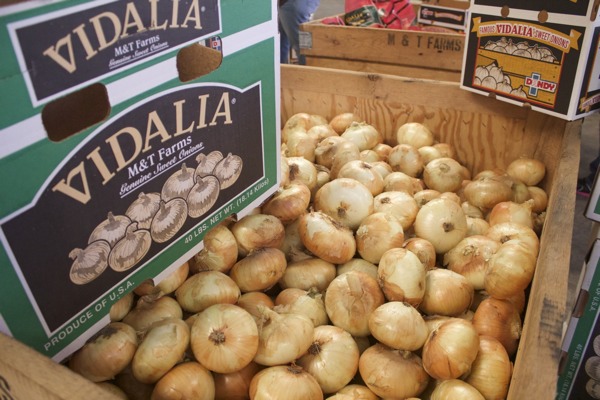
    Vidalia onion plants will soon be going in the ground across Southeast Georgia. Chris Tyson, University of Georgia Extension Area Onion Agent at the Vidalia Onion & Vegetable Research Center in Lyons, Georgia, pinpoints the week of Sept. 7 that some growers will start planting this year’s crop with most planting the week after.

    “After Labor Day, definitely there will be some going in. Then there will be a lot that will go in around…I’ll just use the (Sept.) 15th as an arbitrary date. A lot of people will plant at the 15th; a big bulk of the onions. But there are some that are planted before then, definitely,” Tyson said.

    Vidalia onion acreage the past two years has hovered around 9,300 acres, which is down from what it had been for several years prior. Tyson said this year’s acres could fluctuate some either way, but he doesn’t anticipate any huge changes in acreage.

    “The acreage has been about the same the past two seasons. But you never know, it could go up some or it could stay the same,” Tyson said. “A lot of times we really don’t know until after planting, really what everybody does and what it’s going to actually look like.”

    Seedbeds will be planted in September through the first of October.

  • H-2A Applications Processed Effectively in Timely Manner Amid Coronavirus Pandemic

    state department
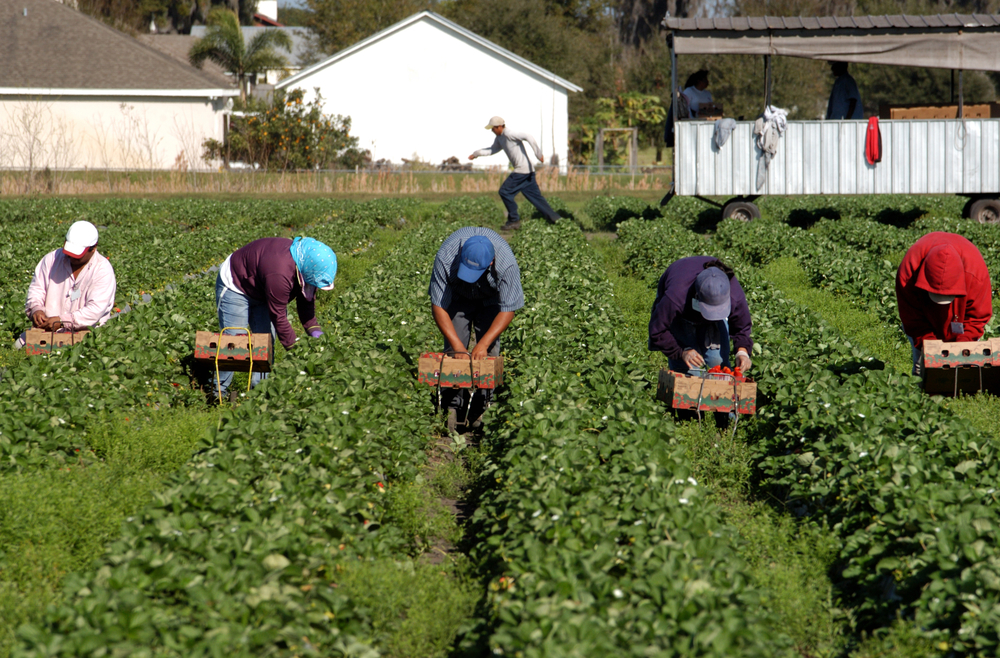
    File photo shows workers picking strawberries.

    Third quarter data from the Department of Labor (DOL) shows H-2A applications were processed effectively and in a timely manner even during the early onset of the coronavirus pandemic, according to Veronica Nigh, economist with American Farm Bureau.

     “With as much transition as there was for just the physical staff up here in D.C. and DOL, going from working in person to doing remote work, I think it would have been very much expected to see the percentage of applications fall off on that ‘timeliness’ percentage but it hung right in there,” Nigh said. “I think that certainly reflects the recognition of the importance of the program.”

    According to the U.S. Citizenship and Immigration Services, the H-2A program allows U.S. employers who meet specific regulatory requirements to bring foreign nationals to the United States to fill temporary agricultural jobs. Florida is the largest user of the H2A program during the first three quarters of the year. It listed 28,005 certified positions. Georgia, another user of the program, listed a little more than 23,000 certified positions.

    “Certainly, the Southeast is a big user of the program,” Nigh said.

    ‘Timely’ Processing

    One of the stats that Nigh was most encouraged with was the percentage of applications that were processed in a “timely” manner, which happens when an application is resolved 30 days before the needed start date. For the period from April 1 through June 30, 96% of applications were processed in a “timely” manner, compared to 86% in the third quarter in 2019 and 90% in 2018.

    “I think there was a lot of interest from us and all the other farm groups and certainly our farm members about whether or not some of the delays they saw and some of the concerns we had earlier in the year about H-2A, whether or not folks were actually able to get the workers that their farms needed,” Nigh said. “What that data showed was, my goodness, the demand for H-2A and the processing of applications certainly continued to be high and showed growth from last year. For the number of certified positions, it was up 4% compared to the third quarter of 2019, which is, I think, surprising given all the concerns there were.”

    Flexibilities

    Nigh said flexibilities were given to the processing of H-2A applications. Normally, an interview was required before a Visa was issued, but that was waived for H-2A workers. Also, if workers were already in the U.S. but had a Visa about to expire, the government allowed them to apply for a different position.

    “If you combine all of that, the deeming of them as essential workers; known applicants not having to do an in-person interview; making border travel easier for those folks; extending time in the U.S. for those who were already present; it really had the impact of making sure folks were able to continue to get to the U.S. to work and stay here. Therefore, the H-2A program was able to continue,” Nigh said.

    Nigh said more than 90% of H2A workers come from Mexico.

  • Georgia Hemp Crop Beginning to Flower

    georgia
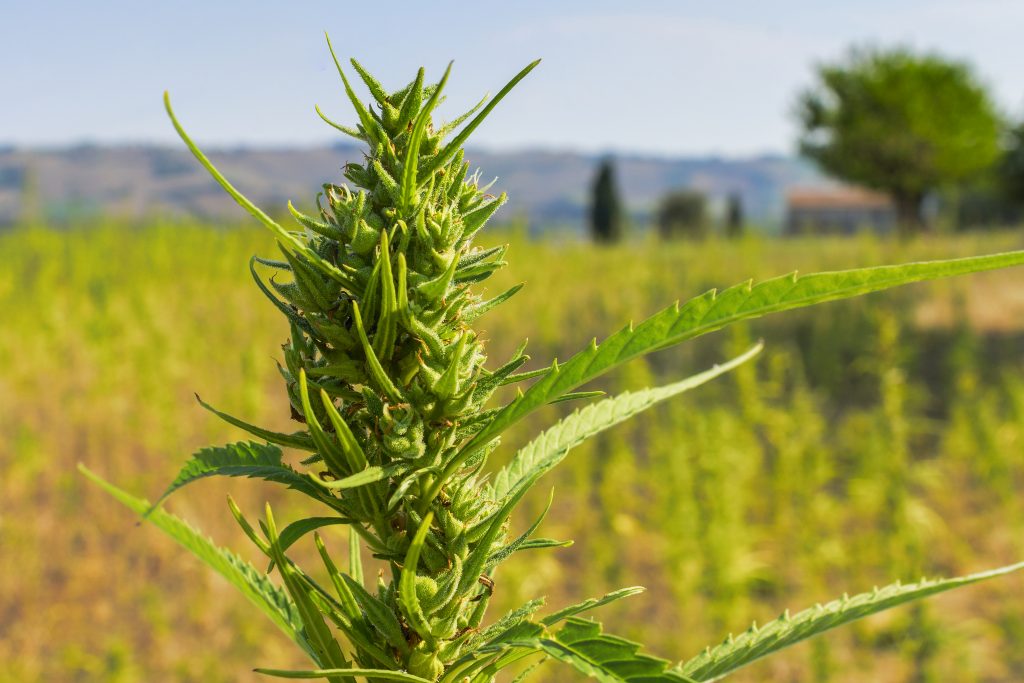
    File photo shows a hemp plant.

    Georgia’s hemp crop is beginning to flower and could be ready for harvest starting in a little more than a month, says Tim Coolong, University of Georgia Cooperative Extension specialist.

    “I’ve got trials that started flowering about (2 weeks) ago on some of the early material. We’re seeing that around the state. I suspect we’re going to continue to see more of that,” Coolong said.

    Hemp harvest in Georgia should commence around late September or early October.

    Coolong said the crop is doing well despite the hot and humid temperatures this summer.

     “Right now, the crop overall, we’ve got some disease here and there, but I would say overall it’s looking okay,” Coolong said. “I was in some fields in South Georgia actually and the plants were 7 and 8 feet tall. They looked really good. And the stuff we have up here (north Georgia), even though it’s not quite as hot as south Georgia, it’s still pretty warm; the stuff here is growing pretty well, too.”

    Coolong estimates between 300 and 400 acres were planted this year with 108 licenses issued by the Georgia Department of Agriculture. Some of those, though, may be processors and others may be farmers who decided not to plant.

    “While we do have some bigger growers, particularly in South Georgia, a lot of them are pretty small,” Coolong said.

  • UGA to Begin New Pecan Variety Trials in Southeast Georgia

    Pecan scab fungus (Fusicladium effusum) is the most destructive disease of pecans in Georgia.

    By Emily Cabrera for UGA CAES News

    University of Georgia faculty will begin a series of pecan trials this winter to help identify better management practices for growers.

    New pecan trees will be planted at the UGA College of Agricultural and Environmental Sciences’ Vidalia Onion and Vegetable Research Center in Toombs County for research and demonstration purposes. Andrew Sawyer, southeast Georgia area pecan agent for UGA Cooperative Extension, is spearheading several research projects with a team of UGA researchers. He will be looking at factors that impact the pecan industry such as variety selection, insect pest management, disease resistance, herbicide application rates and other input requirements.

    This research is funded by a Pecan Commodity Commission grant that was awarded last year.

    Sawyer, who began this new position in May 2019, is based in Statesboro, Georgia and supports pecan growers throughout southeast Georgia. The position is funded by the Georgia Pecan Grower’s Association and UGA Extension to support Extension pecan specialist Lenny Wells at the UGA Tifton campus. 

    Primary Study

    The team will primarily study the effects of pecan scab fungus on various cultivars that grow well in the southeast. Pecan scab begins in the tissues of the tree trunk, and at bud break in the spring, the disease begins to rapidly spread through the limbs, leaves and eventually the nuts. It’s the most detrimental disease to pecans in Georgia, causing severe economic losses each year. Currently, trees must be treated with several applications of fungicides annually in order to produce a marketable crop, as it only takes 25% scab on shucks to minimize quality.

    ‘Desirable,’ ‘Pawnee’ and ‘Stuart’ are some of the most common pecan varieties grown in Georgia, valued for their excellent yield and nut quality. Of the three cultivars, growers have shown a preference for ‘Desirable,’ which is the most susceptible variety to pecan scab.

    “The most susceptible cultivars to this disease also happen to be the industry standards used here in the southeast,” explained Sawyer. “We didn’t use to see pecan scab in these cultivars, but over time, as the pecan industry became more or less a monoculture of ‘Desirable,’ the disease has gained a foothold in orchards throughout the state. We are at a point that we shouldn’t be planting this cultivar in new orchards anymore. There may be some situations where growers are located in more northern areas of the state where this disease isn’t as hard-hitting, but most pecans are grown in warmer parts of the state where spraying from bud break to shell hardening requires an unsustainable amount of labor and money.”

    Sawyer hopes that through his research program, other low-input, marketable varieties will prove to be just as valuable as the current industry favorites. His recommendation for growers who are interested in establishing new orchards is to use a variety of cultivars to help minimize the risk of disease and pest issues.

    “Since 2008, UGA researchers in Tifton have been working with alternative cultivars that are resistant to pecan scab, have low input requirements, are high yielding and produce great quality nuts. Some of the best varieties we’ve seen are ‘Excel,’ ‘Lakota,’ ‘Gafford,’ ‘McMillan,’ and ‘Kanza’ — a cold-tolerant variety that may be better suited for growers in north Georgia as well,” said Sawyer.

    Low-Input Cultivars

    Low-input cultivars provide an economic benefit to growers, especially in southeast Georgia, because orchards in this region tend to be managed through commercial practices but on a much smaller scale than found elsewhere in the state.

    “When you have a smaller operation, but still have to shell out a lot of time and money into your crop, the cost-benefit ratio sometimes doesn’t work to your advantage,” said Sawyer. “That’s why these low-input cultivars are so attractive. It means growers can save more time and money and end up with a great quality, high-yielding product without all the heavy investments. So, the Vidalia Onion Research Farm will be a great location in this part of the state to observe these low-input cultivars,” he added.

    As research plots are established this winter, trees will be planted in such a way to accomplish both long-term variety research and short-term applied research goals. Sawyer and his team will host several demonstrations at the research farm over the next few years to allow Extension agents and growers to participate in hands-on training about topics including planting, pruning, grafting, irrigation, pest and disease prevention strategies, and making herbicide treatments using different chemistries and rotations.

    To learn more about pecan varieties and management, see UGA Extension Circular 898, “Pecan Varieties for Georgia Orchards,” and UGA Extension Circular 1174, “Pecan Management,” both available at extension.uga.edu/publications. To keep up with the latest information from the UGA pecan team, visit pecans.uga.edu

  • Plan in Place?

    USTR Sets Sept. 1 Date for Response to Hearings

    Florida and Georgia seasonal produce farmers who testified in hearings regarding unfair trade practices the past two weeks should not have to wait long to see how the U.S. Trade Representative’s Office will respond to their concerns with Mexico.

    Charles Hall, executive director of the Georgia Fruit and Vegetable Growers Association and who testified in the virtual hearing on Aug. 20, said Ambassador (Robert) Lighthizer has provided Sept. 1 as the date he would have a plan available to begin implementing.

    “They are to announce a plan Sept. 1. I don’t know that we’ll have it on Sept. 1 or not but I think certainly within the next 2 to 4 weeks; we should have a plan based on what their recommendations are as far as how they plan to address the issues that were discussed during the hearings. We’ll wait to see what that plan is,” Hall said.

    Action Needed

    Florida farmers and Georgia farmers agree that action needs to be taken. The major concerns for seasonal producers are with the government-funded subsidies and cheaper labor that allow Mexican farmers to flood the U.S. market and drive down prices. U.S. growers can’t compete when Mexican farmers only have to pay less than a dollar per hour as a minimum wage.

    Producers who testified also agreed that a Section 301 Investigation needs to happen. This provides the United States with the authority to enforce trade agreements, resolve trade disputes and open foreign markets to U.S. goods and services.

    “That’s what we recommended although they may have other tools available through them through the USTR or Commerce or some other area. They may see some other areas which they could work in different than a 301 but would help us with a solution to the problem,” Hall said.

    “I think based on the hearings, they clearly understand what the problem is and what we feel like is causing the problem. Hopefully, they will have some tools available where they can look into and give us some relief.”

  • Producers Be Aware of Phony Peach Disease

    Phillip Brannen

    Peach producers need to be mindful of Phony peach disease. According to the UGA Peach Blog, Phil Brannen, University of Georgia Cooperative Extension plant pathologist, cautions growers that if a tree is diagnosed with the disease, they need to destroy the tree immediately. They also need to remove it from the orchard to prevent further spread of the Xylella fastidiosa bacterium by sharpshooter insects, the predominant vector of the pathogen in the Southeast.

    Infected trees are initially stunted due to shortened internodes between the leaves and limited growth. Less fruit are produced over time, and the fruit size diminishes as well. Given enough time, the tree will die as a result of the pathogen or indirectly due to stress and other factors.

  • Georgia Ag Commissioner: One of the Vulnerabilities This Year Was Blueberries

    Gary Black

    Georgia Agriculture Commissioner Gary Black testified last week in a hearing with the U.S. Trade Representative’s Office that his state’s fruit and vegetable producers had a decent spring of production amid the coronavirus pandemic. However, one commodity group had its challenges especially when competing against Mexican imports.

    “I think one of the vulnerabilities this year was blueberries. We had some good weeks, but then we had an enormous influx of blueberries from Mexico. It was a little disheartening. You go to the middle of the blueberry belt and see in the big box stores, you see blueberries from Mexico right in the middle of our season,” said Black.

    Georgia Grown

    He also admits, though, more work can be done by his team to promote the value of Georgia Grown.

    “We can still do a better job of working with some of the retailers to enhance our brand; a lot of work to do still on consumer demand because consumers are going to drive what happens at the retail level,” Black said.

    Marketing was a key part of the Georgia Department of Agriculture’s (GDA) “Buy Georgia Grown, Now More Than Ever” campaign, which was launched during the early months of the initial pandemic. Georgia Grown partners with local governments to connect produce farmers directly to consumers in highly populated areas throughout the state.

    Georgia Grown To-Go was a series of pop-up markets, primarily in metro Atlanta, that provided customers an opportunity to purchase fresh produce directly from farmers with limited contact, drive-through service.

    Hearings

    Georgia producers and agricultural industry leaders testified in a virtual hearing last Thursday, Aug. 20. The hearings provided the U.S. Department of Commerce (DOC) and United States Department of Agriculture an opportunity to hear from growers in Georgia about the urgent need for federal action regarding unfair trade, specifically with Mexican imports.

    This was the second of two virtual hearings to be held. The first involved Florida growers and industry leaders on Aug. 13.

  • Auburn Economist: 301 Investigation Could Spark Retaliation From Mexico

    Adam Rabinowitz

    Georgia and Florida vegetable and specialty crop farmers are calling for a Section 301 investigation into unfair trade practices regarding Mexican imports.

    But Auburn University Assistant Professor and Extension economist Adam Rabinowitz is concerned about the potential ramifications that could loom as a result.

    Section 301

    According to the International Trade Administration, Section 301 of the Trade Act of 1974 provides the United States with the authority to enforce trade agreements, resolve trade disputes, and open foreign markets to U.S. goods and services.

    Rabinowitz said an investigation could lead to the U.S. imposing trade sanctions such as tariffs which would increase prices of inexpensive Mexican imports, in particular the fruit and vegetable crops. These are difficult for Southeast producers to compete against and were reasons that virtual hearings were necessary for the past two weeks with the U.S. Trade Representative’s Office.

    Adam Rabinowitz

    “We’ve seen the U.S. use this method against other countries for other industries. Representative (Robert) Lighthizer seems to be listening to the concerns. The one potential challenge may come from how Mexico may retaliate against any tariffs in that form,” Rabinowitz said. “There are concerns of other vegetable growers out west, there could be retaliation against some of their products that are flowing down into Mexico.

    “I think there will be further investigation in this. I think things will be heard. It’s just a question or not 301 will be used to actually apply some tariffs or if there could be some other type of resolution through a side agreement with the Mexican government that may address some of those concerns.”

    Virtual Hearings

    Georgia farmers and industry leaders voiced their concerns on Thursday, Aug. 20 and Florida producers testified on Aug. 13. The hearings were established to provide the U.S. Department of Commerce (DOC) and United States Department of Agriculture an opportunity to hear from growers in both states about the urgent need for federal action regarding unfair trade, specifically with Mexican imports.

    All who testified were consistent in their concerns about two main issues that are in Mexico’s advantage: government subsidies to Mexican producers and inexpensive labor.

    “If those could be addressed outside of tariffs, that could be a potential solution. Otherwise, you start getting into some of the trade disputes that raise some other issues,” Rabinowitz said.

  • Georgia Ag Leaders Call for Healthy, Fair Trade

    Georgia Agriculture Commissioner Gary Black

    Georgia producers and industry leaders had their turn to testify on Thursday during a virtual hearing with the U.S. Trade Representative’s Office about unfair trade practices with Mexico. The hearings provided the U.S. Department of Commerce and Trump Administration an opportunity to hear from growers in Georgia about the urgent need for federal action regarding unfair trade.

    This was the second virtual hearing following the one on Aug. 13 involving Florida farmers.

    Georgia Agriculture Commissioner Gary Black believes a fair, healthy trade agreement is what is needed.

    Gary Black

    What is Needed?

    Farmers discussed trade practices about various produce such as blueberries, pecans, blackberries and cucumbers and how the future of the American farmer is at stake. Most farmers called for a 301 investigation into Mexico.

    Adam Rabinowitz, Auburn University Assistant Professor and Extension Economist, explained that a 301 Investigation is part of the Trade Act of 1974 and allows the U.S. to engage in trade activity, whether it be trade agreements but also resolving trade disputes. The idea was that the U.S. could access foreign markets but also that domestic markets were not impacted.

    An investigation could lead to the U.S. imposing trade sanctions such as tariffs which would increase prices of inexpensive Mexican imports, in particular the fruit and vegetable crops, that are difficult for Southeast producers to compete against and were reasons that hearings were necessary in the first place.

    The list of speakers included Congressmen Austin Scott (GA-08) and Buddy Carter (GA-01); Georgia Ag Commissioner Gary Black; Gerald Long, Georgia Farm Bureau Federation; Charles Hall, executive director of the Georgia Fruit and Vegetable Growers Association; as well as various farmers, including Russ Goodman (Cogdell Berry Farm), Sam Watson (Chill C Farms) and Bill Brim (Lewis Taylor Farms, Inc.).