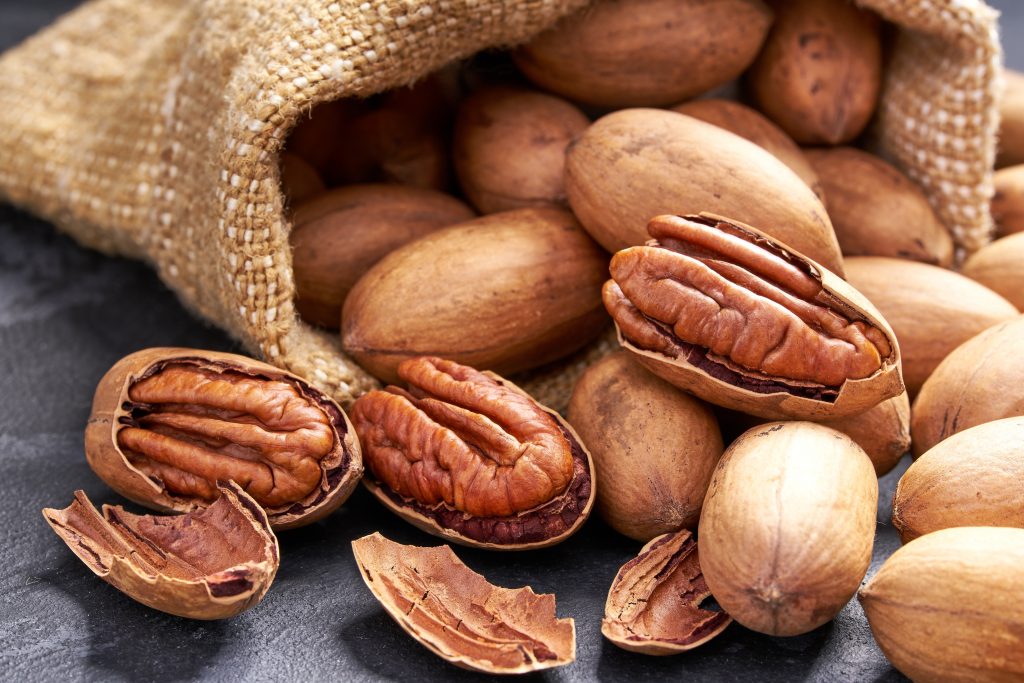
University of Georgia photo compares Pawnee varieties to Desirables and Stuarts.
Pecan producers will soon be planting trees throughout the Southeast. But first, growers must decide what variety they’re going to plant.
Scab susceptibility is the No. 1 factor that should influence what variety producers plant this year, according to Shane Curry, University of Georgia Appling County Extension Agriculture and Natural Resources agent.
If growers are going to plant a variety like Cape Fear, it is going to require a high input of spray applications to protect against scab disease. If producers want low input varieties, they can choose Avalon, Excel or Lakota. Those varieties don’t require as much spray applications.
Producer’s Preference
It’s just a matter of how much time a grower wants to devote to taking care of their trees and whether they possess the spray equipment to make the necessary applications.
“They definitely have a lot they have to consider. Or I guess really, one thing in particular, and that’s are they going to be able to spray as far as what we would say a high input of sprays from a fungicide standpoint or are they not going to be able to do that?” Curry said.
“Obviously, if somebody is planting 50 trees, they’re probably not going to go buy a $20,000 or $30,000 sprayer, and some of those even cost more than that. Money’s just not going to work out on the end in small acres. A lower input variety would be more of the way to go. If someone is set up to spray, meaning they already have them or they’re going to put in enough to justify the equipment, they’ve got a few more options.”
Early Varieties
Lakota and Pawnee are the two varieties that produce a crop the earliest, which might generate a higher market price. However, Pawnee is very susceptible to scab disease, so it will require a high input spray program.
“If pecan prices are high and quality is great, we can offset those costs. Every year (though) that’s not the case,” Curry said.
Curry said planting is normally done during December and January when the trees are dormant.
According to Georgia Farm Bureau, Georgia pecan corn, hay, peanut, oat and wheat producers are set to harvest significantly larger crops in 2020 than they did in 2019, according to the October Crop Production Report from the USDA’s National Agricultural Statistics Service.
NASS forecast Georgia pecan production in 2020 at 125 million pounds, an increase of 71% from 2019. If realized, this would be the state’s largest crop since 2007.
Georgia corn growers are forecast to yield a record-high 182 bushels per acre. Corn for grain production in 2020 is forecast at 69.2 million bushels, up 24% from 2019.
Hay producers in Georgia are expected to produce 1.8 million tons in 2020, up 19% from 2019.
It’s never too early for Vidalia onion growers to start thinking about bacterial diseases that are problematic this time of year; especially Center Rot.
While Southeast Georgia is the perfect environment for onion production, it also presents different challenges for onion producers. There are many plant diseases that can impact production. According to a UGA Extension publication, during this time of year of seedling and transplant growth, the warmer temperatures favor diseases like Xanthomonas blight and center rot.
Symptoms
Water-soaked lesions that expand and span the length of the leaf blade are foliar symptoms of Center Rot. This leads the leaf to become bleached and blighted. As the disease worsens, there is severe wilting and blighting of the foliage. This can result in death of the plant tissues above ground.
Bacteria move from the foliar tissue into the bulb, causing decay. This has been demonstrated experimentally with Pantoea ananatis, one of four Pantoea species associated with center rot. UGA Extension emphasize the importance of protecting onion leaves, which can reduce bulb rot incidence.
Management
For producers to control Center Rot, they’ll need to apply an integrated approach that targets reducing potential sources of inoculum. This counters the spread of the bacteria, according to a UGA Extension publication. UGA Extension strongly advises onion producers to use certified onion seed to avoid introducing inoculum into the field.
UGA Extension also recommends early-maturing and mid-maturing cultivars. Epidemics are favored by high thrips pressure and hot and humid conditions, which are encountered more with late-maturing cultivars. Early-maturing cultivars are better equipped to avoid conditions that are suitable for bacterial disease development.
Thrips control is also effective in reducing center rot incidence. Disease management options are limited once in season. Weed control can potentially reduce initial inoculum.
Weather has wreaked havoc on one South Georgia farmer’s fall vegetable production.
Sam Watson, managing partner of Chill C Farms in Colquitt County, Georgia, said his crop has not progressed as far along as it should have by this point in the growing season. He’s concerned a potential frost could derail his plans for a productive fall season.
“We’re Oct. 9 and not even halfway with our crop. It’s all going to depend on the weather. If we get an early frost, then we’re all going to be in trouble. It’s not going to matter what the market is because we’re not going to get our crop harvested,” Watson said. “(I’m a) little bit nervous about that. Everybody is just really late.”
Vegetable Production
Watson produces squash, zucchini, bell pepper, cabbage, eggplant and cucumbers in Colquitt County, Georgia, one of the leading vegetable-producing counties in the state. From the first day of planting until now, though, almost a month removed from the remnants of Hurricane Sally, weather challenges have been almost unbearable for producers like Watson.
“Our stuff, it was stressed when we put it out because of the high heat temperatures. Then it got saturated. It wouldn’t quit raining. Then it turned off cold,” Watson said. “When it’s overcast and cloudy, bees don’t pollinate, the stuff doesn’t grow. It’s got to have sunshine. It’s been like the rest of 2020, it’s been crazy.”
The unpredictability of the weather has delayed progress of Watson’s vegetables and has put them at risk if there is an early frost. According to weather.com, the upcoming forecast for Moultrie, Georgia includes low temperatures of 56 degrees F on Friday and 55 degrees on Saturday.
“We should be at the halfway point and blowing and going. We just started (last week) with pepper. I should have been in pepper probably two weeks ago,” Watson said.
“We’ve got some squash that we just started, we’ve got squash that we haven’t even started yet. We’ve got a lot of stuff that we haven’t even touched yet. They’re talking cooler weather (this week). I don’t know, we’re just going to have to see what happens.”
Georgia Fruit and Vegetable Growers Association (GFVGA) board members and staff recently participated in United Fresh’s Virtual Washington Conference.
With travel still limited and much of Washington remaining shut down because of COVID-19, produce industry representatives from across the country gathered virtually on Sept. 21-25 to advocate for fruit and vegetable growers on issues impacting the industry.
Meetings with USDA officials and elected representatives, normally held in person, were conducted via Zoom. While certainly different than face-to-face visits, the format allowed GFVGA members to share concerns on issues ranging from trade concerns, labor and the continuing impact the coronavirus has had on produce production and sales.
GFVGA members thanked the Georgia delegation for their continuing support of initiatives including USDA’s Farmers to Family Food Box Program and CFAP. Georgia growers also urged representatives and officials to bolster their support for fair trade and initiatives aimed at supporting American businesses during these unprecedented times. See the full story in GFVGA’s fall Grower News.
Southeast pecan farmers should be encouraged by market prices as harvest season gets under way across the region. According to Lenny Wells, University of Georgia Cooperative Extension pecan specialist, prices for Pawnee varieties are up from what was originally projected, as are Stuarts.
Plus, there is renewed buying interest from China, which has traditionally been the biggest buyer of U.S. pecans.
“I’m hearing that there definitely is interest from China. They do definitely seem like they’re going to buy and possibly might buy quite a bit, which would help tremendously,” Wells said. “I don’t know that it’s going to help bring prices up all that much. I hope it does. At the very least it should stabilize prices some.
“China wants to buy but they are definitely price sensitive at this point with everything going on. That’s why I say I don’t know that it’s going to make prices go up a lot, but it should stabilize it.”
Pawnee Prices
Wells said that Pawnees, which are typically the first variety to be harvested every year, are selling anywhere from $2.30 to $2.40 per pound, which is quite the improvement from the $2.10 mark that was discussed before the start of harvest season.
“If (producers) have Pawnees, then yeah they probably need to go ahead and sell those. Once the other nuts start coming in, the price of Pawnees usually start to drop some,” Wells said. “So, I would go ahead and start to get rid of those.”
They’re not the only variety selling better than expected, either.
“I’m also hearing a little bit of encouragement on Stuarts. I was told a couple of weeks ago that we may see Stuarts up around $1.50, $1.60, which is a lot better than the $1.20 or $1.30 we were hearing a couple of months ago. So that’s good,” Wells added.
The most dangerous threat to the peach industry in the Southeast is Oak Root Rot, a soil-borne fungus that can wipe out peach trees, according to Edgar Vinson, Alabama Extension Professor of Horticulture.
Oak Root Rot or Armillaria Root Rot, causes stunted leaves, yellow defoliation, chlorotic leaves, death of branches and, ultimately, death of the tree.
Unfortunately for peach producers, there’s not many management options available to offset the death sentence for peach trees that are planted in a field with this disease.
“As far as we know, once it’s in the soil it’s there probably for good,” Vinson said. “Once the tree starts to succumb to it, there’s no remedy for it. There’s some things to delay it, if you have a tree that’s planted in the soil that has Oak Root Rot. If you’re planting into soil that has Oak Root Rot, there’s really no remedy for it. It will eventually take over the tree and take the tree out.”
One Option
Farmers can implement a root collar excavation. This is a management tactic that producers utilize to remove soil from the crown of the tree to prevent the fungus from growing on the crown. This only delays the inevitable. Eventually the tree will succumb to the disease, but this practice extends the life of the tree so the grower can get more harvests out of it.
The best option would be to plant a resistant root stock. However, one is not broadly available yet.
“Most peaches don’t come from the nursery on their own roots. They’re budded onto a rootstock that’s tolerant to a particular soil condition or diseases. You have a desirable peach variety that’s grafted onto a resistant rootstock. That’s typically how we receive our peaches, apples and a number of other crops,” Vinson said.
Oak Root Rot symptoms usually appear between 5 to 7 years after planting.
“It’s a disease that’s recognized all over the Southeast. We’re currently working on ways to mitigate the damage,” Vinson said.
There is currently little to no science-based information on the efficacy and safety of most essential oils in pest management of fruit crops like blueberries, so a multistate team is working together to learn more.
By Josh Paine for UGA CAES News
Organic fruit and vegetable growers want to meet the recent uptick in national consumer demand, but they need additional tools to battle pests and diseases that often accompany organic crop growth.
One such tool may be the use of essential oils. That’s why the U.S. Department of Agriculture National Institute of Food and Agriculture awarded a nearly $2 million grant to a team of scientists for an Organic Agriculture Research and Extension Initiative project to study the degree to which essential oils can help suppress certain pathogens and pests.
Jonathan Oliver, assistant professor in the University of Georgia College of Agricultural and Environmental Sciences at the UGA Tifton campus, is part of the team of 15 scientists who will work on this project nationwide. Researchers from the University of Florida, Clemson University, the University of California, Riverside, the University of Hawai’i at Manoa and the USDA Agricultural Research Service will collaborate on the project.
In his role as a small fruit pathologist in the Department of Plant Pathology, Oliver will investigate the use of essential oils in organic blueberry production, the state’s top fruit crop.
“Blueberries are the highest value fruit crop in Georgia, and organic blueberry production represents a growing proportion of our total acreage,” said Oliver. “Nonetheless, organic production of blueberries in Georgia faces many challenges, because our hot, humid climate is ideal for many disease issues including fruit rots and leaf spots. Our growers need better tools to help them manage these disease problems.”
Funding for the four-year research program will support scientists with expertise in fruit crop management and physiology, plant pathology, entomology, postharvest biology and organic production.
To carry out the project, scientists will:
Evaluate the plant safety and horticultural impact of essential oils in managing diseases in fruits including blueberries, peaches, mangos and avocados.
Begin to test plant disease efficacy claims of essential oil products marketed for organic producers.
Evaluate organically certified plant essential oils on targeted pathogens such as algal stem blotch, brown rot, scabs, gray mold and powdery mildew.
Determine the efficiency of essential oils on fruit shelf life through postharvest testing.
Test the efficacy of essential oils against insects including scales, thrips and mites, although arthropod pests are not the primary focus of this research.
After they gather their new data, participating scientists will communicate the results of their research to organic fruit farmers and those who grow conventional crops, so that those producers can rapidly adopt any new practices. Scientists will also evaluate the effectiveness of the project through continuous feedback from stakeholders.
“Through this research project, we hope to provide Georgia growers with the information they need to make decisions regarding the use of essential oils as a part of their organic fruit disease management program,” said Oliver. “Since Georgia is the largest producer of blueberries in the Southeastern U.S. and one of the top producers in the nation, providing Georgia growers with information and tools for safe and effective organic disease management has the potential to have a broad impact in Georgia and on the Southeastern organic blueberry production industry as a whole.”
Organic food sales topped $50 billion in the U.S. in 2018. Statistics from the Organic Trade Association tell part of the story of this growing market: fruits, vegetables and other specialty crops combined to make up 36.3% of total organic sales, up 5.6% from the previous year.
The pecan crop in the Southeast remains ahead of its normal production schedule, though cooler temperatures in recent weeks have slowed the crop’s progress, says Andrew Sawyer, University of Georgia Cooperative Extension area pecan agent for Southeast District.
“I think the cool (weather) has actually slowed us down a little bit,” Sawyer said. “The crop was already 10 (days) to two weeks ahead anyway. We’ll still be ahead in the long run.”
Farmers have already begun harvesting pawnee varieties. In normal production years, pawnees are usually the first varieties harvested, and then there is a gap before the rest of varieties are mature enough for harvest. However, others are already showing signs of being ready to be picked, Sawyer said.
“Desirables are cracking pretty strong which is probably on the early side for them, too. They’re looking good. Everything’s about to really get ramping up,” Sawyer said.
All in all, this year’s pecan crop is projected to be one of the largest crops in recent memory, especially since Hurricane Michael impacted the region in 2018, disrupting production.
“Definitely the biggest in a long time. It is going to be a big crop,” Sawyer said. “Expect some lower prices for sure.”
The U.S. Supreme Court on Monday indicated it will hear oral arguments in the long-running water battle between Florida and Georgia but did not specify when. The court issued an order that said the dispute is “set for oral argument in due course.”
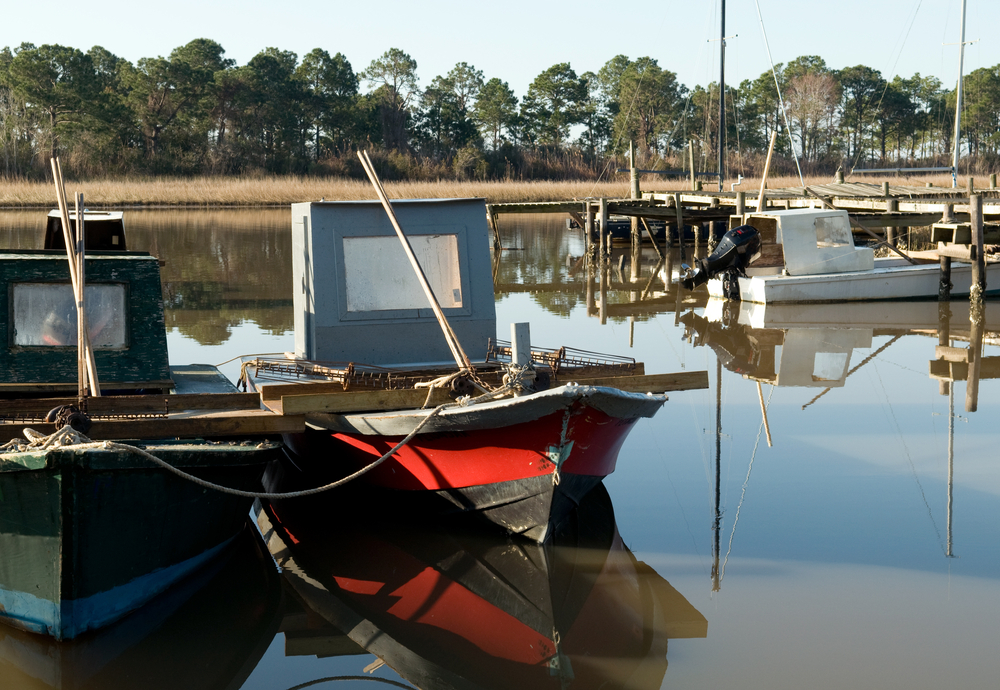
The case involves divvying up water in the Apalachicola-Chattahoochee-Flint river system, which stretches from northern Georgia to Apalachicola Bay in Franklin County. Florida contends that Georgia uses too much water from the system, in part damaging a critical Apalachicola Bay oyster fishery.
Florida is seeking an order that could lead to more water flowing south, but Georgia disputes that its water use has caused damage in Florida.
A special master appointed by the Supreme Court sided with Georgia in December, but justices will have final say. Florida filed the lawsuit in 2013, though the two states have fought for decades about water in the river system.