Category: Georgia

  • Like it or not, Joro spiders are here to stay

    UGA CAES photo/Detial photo of Joro spider.

    By Beth Gavrilles for UGA CAES News

    Chances are, if you live in northeast Georgia you’ve come across an East Asian Joro spider this fall.  

    At almost 3 inches across when their legs are fully extended, they’re hard to miss. While they’re roughly the same size as banana spiders and yellow garden spiders, the distinctive yellow and blue-black stripes on their backs and bright red markings on their undersides are unique. Their enormous three-dimensional webs are a striking golden color and tend to be located higher off the ground than those of other spiders. 

    “We’ve been getting lots of calls and emails from people reporting sightings,” said Byron Freeman, director of the Georgia Museum of Natural History. “They seem to be really common in riparian areas and in urban areas around people’s houses, but they’re also in the deep woods.” 

    Joro spiders have spread widely since they were first spotted in Hoschton, Georgia, in 2013. They probably arrived by hitching a ride in a shipping container from China or Japan, according to Freeman. He and Richard Hoebeke, associate curator of the museum’s arthropod collection and a research professional in the University of Georgia College of Agricultural and Environmental Sciences Department of Entomology, confirmed the identity of those early arrivals based on genetic analysis in 2015. 

    Now, five years later, Joro spiders appear to have successfully established themselves in the area, with recent confirmed reports from as far afield as Blairsville, Georgia, and Greenville, South Carolina. But there is still much that remains unknown about them. 

    One important question is how they might affect the local ecosystem. Will they out compete other orb weaving spiders? Will they reduce insect populations through predation?  

    “We don’t know what the impact is going to be,” said Freeman, a faculty member in the University of Georgia Odum School of Ecology. “Right now, we’re trying to learn as much as we can about them.” 

    So far, early observations indicate that Joros are coexisting with the area’s other orb weaving spiders, with webs close to, and in some cases even attached to, one another.  

    And Joro spiders also appear to be able to capture and feed on at least one insect that other local spiders are not: adult brown marmorated stink bugs, an invasive pest that can infest houses and damage crops. In turn, Joro spiders are vulnerable to predators like mud dauber wasps and birds.   

    Freeman noted that dewdrop spiders, a kleptoparasite—as the name implies, they steal food from others—have been spotted in Joro webs. 

    “They may be switching from what we thought was their principal host, the banana spider, to this new kind of orb weaver,” he said. He pointed out that banana spiders, a relative of the Joro, are native to the Caribbean and Central America. They were first recorded in the U.S. in 1862 and have since naturalized.  

    “My guess is that this will be no different than the banana spider, and I don’t know that we can assess what the effect of the banana spider has been at this point,” he said. 

    Another question Freeman hopes to answer is how the males find their mates.  

    Joro spiders travel by ballooning, letting the wind carry them on a strand of gossamer.  

    “The male has to drift in and find the female,” Freeman said. “Sometimes there’ll be four or five males on a web, sometimes there’ll be one, so the males are moving between webs. When you have a large population it seems feasible that a male could just drift from one spot to the next, but when you don’t have a lot of webs around, how does the male show up?”    

    Freeman is also conducting further genetic analysis to determine what causes some Joro spiders to have a different color pattern. While most have distinctive black and yellow striped legs, some have legs that are solid black. These black morphs have other physical differences that are only apparent when viewed under a microscope, and Freeman has determined that they are genetically distinct members of the species.  

    Despite their size, Freeman said that Joro spiders don’t pose a threat to people. 

    “All spiders have venom that they use to subdue prey,” he said. “If you put your hand in front of one and try to make it bite you, it probably will. But they run if you disturb their web. They’re trying to get out of the way.”  

    Freeman said that Joros can be shooed away with a broom if they’re in a location that puts them too close for comfort. 

    But as for removing them permanently, he compared such efforts to shoveling sand at the beach. 

    “Should you try to get rid of them?” said Freeman. “You can, but at this point, they’re here to stay.” 

    If you spot a Joro spider — especially if you can provide a photo tagged with date and location — please contact Hoebeke at rhoebeke@uga.edu.  
  • Various Varieties to Choose from When Planting Pecan Trees

    georgia pecan
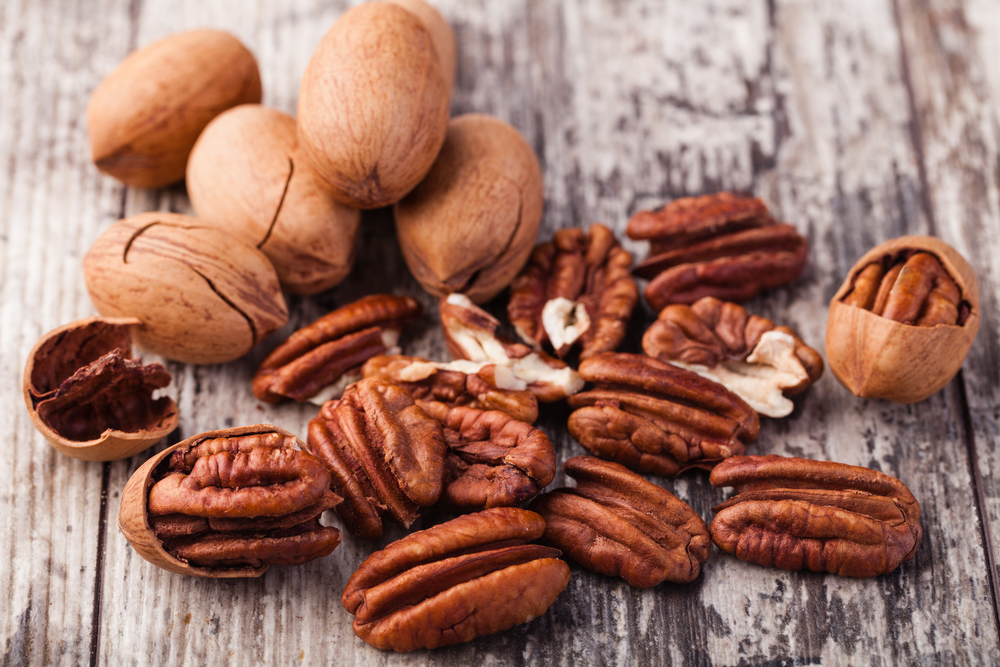
    File photo shows pecans.

    The time to plant pecan trees is nearing for Georgia producers. Shane Curry, University of Georgia Appling County Extension Agriculture and Natural Resources agent, offers a plethora of options for growers to choose from.

    According to Appling County Crop E News, there are multiple varieties that are very popular and viable options for any farmer in Georgia.

    Avalon is one of the newer varieties that was bred by University of Georgia scientist Patrick Conner and became available around 2017. It has excellent percent kernel, about 47 nuts per pound and is about the size of the Desirable variety. Maybe most importantly, it is highly resistant to scab disease.

    Curry

    Lakota is another popular option that requires very little input. However, Pawnee is one of its best pollinators and is one of the most scab susceptible cultivars available on the market. Pawnee can require as many as 15 sprays for scab during the growing season. Lakota and Pawnee are also the earliest varieties we plant in Georgia, which can bring the highest prices on the market at that time of year, which is in late September and into October.

    Curry said Cape Fear is one of his favorites, though, it is not a low input variety. It will require spraying but yields and quality make it a variety worth planting. It is susceptible to bacterial leaf scorch, and quality can be affected when the tree overloads as it matures. But fruit thinning can help with that problem.

    Excel is another variety that requires low inputs and has good scab resistance. Pecan planting is usually done during December and January when the trees are dormant.

  • Agricultural Acres Down Significantly Over Last 100 Years

    File photo shows a farmer spraying his field.

    Agricultural acres have dropped dramatically over the last 100 years throughout the Southeast. According to stacker.com, Georgia and Alabama were two of the top four states to see their farm land decrease the most.

    Based on numbers from the United States Department of Agriculture National Agricultural Statistics Service, Alabama, ranked No. 4 in decreased acres, had 256,099 farms in 1920 with 19.6 million farming acres. In 2019, the number of farms dropped to 38,800 with 8.3 million acres total.

     In Georgia, ranked No. 3, the number of farms was 310,732 in 1920 with 25.4 million total acres. The number of farms dropped to 41,500 in 2019 with 10.2 million total farming acres.

    In Florida, acres actually increased over the past 100 years. It had 54,005 farms in 1920 with 6 million total acres. In 2019, the number of farms dropped to 47,400 with 9.7 million total acres.

    Extension Economist Not Surprised

    Adam Rabinowitz, Auburn University Assistant Professor and Extension economist, is not surprised about the significant drop in agricultural acres but believes yields have improved with increased productivity and efficiency.

    “A combination of things have happened. Certainly, land has been taken out of agriculture and moved into housing developments or built up in terms of other commercial uses,” Rabinowitz said. “The fact that we’ve become more productive in the land that we do use, though, yields have increased considerably over that period of time. So while we may be farming less acres, the output has increased substantially on those areas that we are farming.

    “It would not surprise me to say that considerable amount of acres have been lost.”

    Buy American Grown

    Additional acres could be lost soon if consumers don’t respond to the American Grown initiative.

    Farmers like Bill Brim in Georgia contend that if consumers don’t realize the importance of buying Georgia Grown and American Grown, the constant imports from Mexico, for example, are going to put a lot of farmers out of business. That’s why trade hearings were held so farmers and industry leaders could voice their concerns about the urgent need for federal action regarding unfair trade.

    Rising Average Farmer Age

    The lack of farming land available throughout the Southeast may only be amplified when more farmers retire and no successor in line to take their place. According to USDA NASS, the average age of a farmer in 2017 was 57.5 years old, up 1.2 years from 2012.

    “Farm age continues to increase, the average age of the farmer. Succession planning is an issue in terms of transitioning to younger generations who now have more options than just staying on the farm. As a result, you do have a lot of folks who are leaving the farm for college, for other careers, going other places,” Rabinowitz said. “You have that shift there and there is a big concern of what’s going to happen when this older generation right now gets ready to move on. Is that going to further contract the number of acres that are in agriculture?”

    Challenging for Beginning Farmers

    According to USDA NASS, producers also tend to be experienced, having been on their farm an average of 21.3 years. Beginning farmers is extremely rare, considering how expensive it is to acquire land to farm on and equipment to use throughout the growing season

    “There are a lot of barriers to new farmers coming into agriculture. Acquiring land, whether it be ownership of land, buying the land or even renting the land can be very challenging for a new or beginning farmer. Even beyond land, when we talk about machinery, especially in southern Alabama and southern Georgia with cotton and peanuts as being one of the primary crops in this area, the machinery equipment needs are unique to those crops,” Rabinowitz said. “You need some stuff for your corn that you’re going to put into rotation with your other crops and you need for your cotton and peanuts, you have special pickers and planters and such. It provides again a significant barrier to new entry.

    “That said there are programs that do exist to help beginning farmers and new farmers. There are loans through FSA. There are farm credit programs that exist to help provide special terms and assistance. Certainly through the land grant institutions and Extension, there a number of beginning farmer programs in every state to help provide those resources and assistance from a technical standpoint of getting started in agriculture.”

  • Award-Winning Documentary Guides Conversation About Growing Plants, Community and Inclusion

    “Hearts of Glass” will be available to the UGA community for viewing through Oct. 30. A free and interactive discussion will be held at 4 p.m. Tuesday, Oct. 27, on Zoom.

    By Sean Montgomery for UGA CAES News

    The University of Georgia (UGA) Department of Horticulture, together with UGA’s Institute on Human Development and Disability, Master Gardener Extension Volunteer Program, Office of Sustainability, Sustainable Food Systems Initiative, and UGArden, are excited to stream the award-winning “Hearts of Glass” documentary for the university community beginning today, Oct. 23.

    “Hearts of Glass” gives an in-depth look inside Vertical Harvest, a Jackson, Wyoming, agribusiness that facilitates high-quality food production while providing employment opportunities for individuals with disabilities. As a high-tech urban farm, the organization’s goal is to supply valuable resources to communities and families that struggle with food insecurity by growing and distributing organic, affordable and nutritious options.

    “It is hard not to be engaged by the story told in “Hearts of Glass.” A business operation that uses the latest technology to grow plants and food in a greenhouse, at a location where it would be impossible to grow food outdoors for more than a few months a year, is per se a fascinating story,” said Leo Lombardini, head of the Department of Horticulture in the College of Agricultural and Environmental Sciences.

    “Vertical Harvest is a perfect example of how determination, social responsibility, horticulture and local food production can be all achieved successfully to make this world a better place. We have known for a long time that plants have the power to heal our souls, but it is examples like these that prove that plants can also become elements for inclusion and unprecedented opportunities.” 

    The university community is welcome to stream the film between today, Oct. 23, and Friday, Oct. 30, at showandtell.film/watch/uga. In addition to the film showing, a free and interactive discussion with the filmmaker, Vertical Harvest employees, and Clarke County School District and UGA faculty will be held virtually at 4 p.m. Tuesday, Oct. 27, to include:

    • Jennifer Tennican, director and producer of “Hearts of Glass”
    • Sean Stone, senior facilities associate, Vertical Harvest
    • Kai Hoffman, senior grower of vining crops, Vertical Harvest 
    • Jennifer Thomas, special education teacher at Clarke County School District

    The panel will be moderated by Jennifer Jo Thompson, associate research scientist and director of the UGA Sustainable Food Systems Initiative.

    “Bringing the film to the UGA community allows Vertical Harvest to see how others are reacting to their story, business model and social impact goals,” said Jennifer Tennican, director and producer of the documentary. “The enterprise is ambitious and has demanded intense commitment over many years, so I anticipate that the reactions from UGA viewers will be affirming and energizing.”

    Register for the discussion at zoom.us.

    About the moderator: Jennifer Jo Thompson, associate research scientist and director of UGA’s Sustainable Food Systems Initiative

    Thompson is an engaged anthropologist and leads the Social Sustainability of Agriculture and Food Systems Lab in the Department of Crop and Soil Sciences. Her research emphasizes transdisciplinary collaboration, human and environmental health, and social justice in agriculture and food systems.

    About the panelists:

    Jennifer Tennican, director and producer of “Hearts of Glass”

    Tennican began her documentary career in the late 1990s working on NOVA science programs for Boston’s PBS station with independent producers in the Boston area. Since moving to Wyoming in 2002, she has focused on local storytelling. Her films explore identity, inclusion and community and, although they are rooted in Jackson Hole, they resonate far beyond the mountain west. Tennican’s award-winning work including “Hearts of Glass” and “The Stagecoach Bar: An American Crossroads,” and “Far Afield: A Conservation Love Story,” which have been featured in numerous film festivals and aired on PBS.

    Sean Stone, senior facilities associate at Vertical Harvest

    Stone was born and raised in Pocatello, Idaho. After graduating from high school, he moved to Jackson, Wyoming, and held various jobs within the community before joining Vertical Harvest when it launched in 2016. As a senior associate, he helps run and maintain greenhouse operations.

    Kai Hoffman, senior grower of vining crops at Vertical Harvest

    Growing up in Flagstaff, Arizona, Hoffman is passionate about the outdoors and gardening. He studied hydroponics at the University of Arizona and quickly began to pursue a career in the plant industry, joining Vertical Harvest in November 2016 with a focus on tomatoes and sustainable food growth.

    Jennifer Thomas, special education teacher at Clarke County School District

    From Nashville, Tennessee, Thomas is an adapted curriculum instructor and green school coordinator at Clarke Middle School. In 2019, she was a garden champion awardee, celebrated as the Outstanding Middle School Teacher for helping to make farm-to-school and garden-based learning a success in Athens-Clarke County.

    For more information about the film and panel event, visit showandtell.film/watch/uga.

  • Alabama Extension Economist Tries to Clear Up Misconception about Hemp

    File photo shows field of hemp.

    A misconception between hemp and marijuana has Adam Rabinowitz concerned about how consumers view an up-and-coming agricultural commodity in the Southeast.

    Rabinowitz

    Rabinowitz worked as an Extension economist at the University of Georgia before he moved to Alabama this summer to become an Auburn University Assistant Professor and Extension economist. At UGA, Rabinowitz helped conduct a survey to gauge consumer knowledge of hemp. The results were staggering.

    “I feel like there really hasn’t been any education to really make that distinction. Hemp has gotten that stigma of being the same as marijuana because we haven’t had the production. We haven’t had the products that really have taken hold in our society. It’s resulted in a lack of knowledge of what the crop really is,” Rabinowitz said.

    Hemp Production Across the Southeast

    However, farmers in Alabama, Florida and Georgia farmers understand the significance of the hemp crop.

    The USDA approved Florida’s state hemp program in April, which paved the way for growers to cultivate hemp this year. According to the University of Florida/IFAS, the UF/IFAS Industrial Hemp Pilot Project is under way across the state at three production locations in Quincy, Hague and Homestead to examine variety selection, cropping system development, production economics and invasion risk assessment.

    According to Mike Evans, director of plant industries who oversees the hemp program at the Georgia Department of Agriculture, they received 166 applications from farmers who were interested in producing hemp this year.

    Hemp production in Alabama is in its second year. Katelyn Kesheimer, Auburn Assistant Professor & Extension Specialist in Entomology and Plant Pathology, there were 150 licensed growers with 10,000 acres approved last year. This year there are close to 500 official licensed growers throughout the state. 

    What Distinguishes Hemp From Marijuana?

    What distinguishes hemp from marijuana is the amount of THC or tetrahydrocannabinol present in the plant. It is the main compound in cannabis that produces the “high” sensation. Legal hemp must contain no more than 0.3 percent of THC. Otherwise, the THC is at an unacceptable level. When hemp contains more than 0.3 percent THC, the crop must be destroyed. THC levels must be tested within 15 days of anticipated harvest.

    According to healthline.com, marijuana refers to cannabis that has more than 0.3 percent THC by dry weight.

    Rabinowitz believes initially, the hemp awareness and education he’s trying to spread will not necessarily lead to more acreage in the future. In fact, he doesn’t expect hemp acres to increase in 2021.

    “The hope is that it leads to better informed consumers about what is actually happening. I think what’s going to really drive the acres discussion is the market for the product. If we talk about like fiber products and some of the other uses, the price of hemp to be produced for those products is very, very low,” Rabinowitz said. “It was really the CBD market that got the attention of some farmers but a lot of folks that are not even in agriculture to think about, ‘Hey, is it possible I could make tens of thousands of dollars per acre on this crop?

    “I think now we’re starting to get more towards the core of these are the farmers that are going to be engaged in the actual production. But we still need to see what the consumer side looks like.”

    Rabinowitz also said he is part of a recently funded USDA grant that will look at the marketing aspect for hemp-based products which will continue to focus on the consumer side.

  • South Georgia Farmer: Need to Buy Georgia Grown

    One South Georgia farmer is hoping American consumers will buy more locally grown produce. After all, the future of the American farmer is at stake.

    Brim

    Bill Brim, co-owner of Lewis Taylor Farms in Tifton, Georgia, implores consumers to truly consider who they’re buying their fruits and vegetables from. Not the retailer but the country of origin the blueberries and cucumbers and squash originated from.

    The biggest threat to vegetable and specialty crop producers in the Southeast remains constant imports from Mexico. It’s happening right now with the fall production season underway in Georgia.

    “They’re pumping cucumbers in here right now and squash and bringing the markets down to where we can’t compete. We’ve got to do something to make people realize that they need to buy Georgia Grown or American Grown and to heck with the Mexican Grown stuff,” Brim said. “Don’t buy it, just do without it. They’re going to put us out of business if we don’t stop it somehow.

    “When you’re dropping $22 to $12 (for squash), you cut your profit to nothing.”

    Hearings

    Brim was one of the Georgia producers who testified during a virtual hearing on Aug. 20 with the U.S. Trade Representative’s Office. He and other farmers and industry leaders like Georgia Agriculture Commissioner Gary Black and Charles Hall, executive director of the Georgia Fruit and Vegetable Growers Association, testified that if action was not taken, Mexican imports will continue to drive down market prices and make it impossible for producers to continue farming.

    USTR Response

    The USTR responded with a plan to support American producers of seasonal and perishable fruits and vegetables. It includes a Section 201 global safeguard investigation into the extent to which increased imports of blueberries have caused serious injury to domestic blueberry growers.

    The USTR also announced plans to pursue senior-level government-to-government discussions with Mexico to address industry concerns regarding the imports of Mexican strawberries, bell peppers and other products.

    While it may take some time for any subsequent action to be taken, producers like Brim remain vulnerable to the constant barrage of imports coming in from Mexico.

    “When they start pulling all of this stuff from Mexico, these brokers and these people that are doing these for Kroger or Wal-Mart or whoever they are, they’re going to buy the cheapest product that they can get. They’re going to try to make as much money off of it as they can get. It’s just a matter of trying to convince the Krogers and Wal-Marts of the world not to buy from Mexico and buy from us,” Brim said.

    “If they don’t, we’re going to be out of business. They’re not going to have any choice for anything else.”

  • UGA Research Aimed at Protecting Produce Packing Plants from Listeria

    Diez

    One University of Georgia (UGA) research project in 2021 will be aimed at protecting produce packing plants from Listeria, according to Francisco Diez, Director and Professor at the UGA Center for Food Safety in Griffin, Georgia.

    The lead investigator is Diez. The grant project is funded by the Center for Produce Safety and covers the entire 2021 year. His objective will be to see if the antimicrobial blue light, which has shown antimicrobial effects and is considered safe for humans, can kill the Listeria monocytogenes.

    “It’s been found by a number of reports that blue light can be lethal for some bacteria. There’s been applications of blue light in some settings like hospitals in which they can leave the blue light on and eventually that protects if there’s any presence of bacteria on the surface in the room; on floors, on walls or other materials,” Diez said. “What we’re trying to address in this proposal is under simulated conditions in the laboratory that will resemble surfaces that would be found in a packing plant is whether we can kill Listeria monocytogenes.”

    Grant Description

    According to the award description, Listeria monocytogenes as dried cells or biofilms will be placed on a wide range of surfaces (stainless steel, plastic, etc.) and exposed to blue light to evaluate its antimicrobial efficacy.

    Diez stresses that this research would not replace the normal sanitizing and cleaning procedures that are already in place at packing plants across the Southeast. Blue light would be used only as a supplement. It could really be useful in case a piece of equipment or spot on a wall or floor was missed and was left exposed to the Listeria pathogen.

    “Listeria is not so easy to control. Most treatments can kill listeria. A good sanitizing program with a combination of good cleaning and sanitizing may control listeria in most cases but the organism is so capable of surviving that it can remain on surfaces or equipment, in small niches and crannies,” Diez said. “If a piece of equipment has a little corner that didn’t get cleaned or sanitized properly and gets in contact with vegetables, either packing or cutting or cleaning, then (the bacteria) could get into the product.”

    What is Listeria?

    Listeria is one of the major food-borne pathogens that is extremely dangerous if consumed.

    “Fortunately, it doesn’t cause as many cases per year as salmonella. But we’re very concerned because Listeria Monocytogenes has a relatively high death rate. About 20% of people that contract Listeria, they die or they develop serious conditions,” he said. “Listeria is a very pervasive organism in nature. It’s found in many, many natural environments. Plants or plant tissues could be colonized by Listeria.”

  • Extension Economist Doesn’t Expect Hemp Acres to Increase in Southeast in 2021

    File photo shows a field of hemp

    With hemp harvest beginning across the Southeast, predictions are already being made about what next year’s crop might look like. One Extension economist believes there will not be an acreage increase in 2021.

    Auburn University Assistant Professor and Extension economist Adam Rabinowitz does not expect acres in the Southeast to increase until the market shows significant recovery.

    Rabinowitz

    “I don’t think we’ll see more acres in the Southeast. We’re not seeing the price rebound back up to the point to where there was this huge interest of getting into that production,” Rabinowitz said. “I think we’re going to have to see a little bit more of the market really play out in terms of what the real consumer demand is and get a better understanding of that, and then potentially, try to find some efficiencies in the production practice before we’ll see an acreage increase.”

    Alabama Hemp Applications

    Hemp applications for the 2021 season are already being accepted in Alabama. They are available at agi.alabama.gov/hempapp.  The final day to apply for a hemp license is Nov. 30, 2020 by 5:00 pm (CST).

    It will be the third year that the Alabama Department of Agriculture and Industries has administered the program.

    Georgia Hemp

    According to Tim Coolong, University of Georgia Cooperative Extension specialist, he estimates that between 300 and 400 acres were planted this year with 108 licenses issued by the Georgia Department of Agriculture. Some of those, though, may be processors and others may be farmers who decided not to plant.

    Florida Hemp

    According to Holly Bell, director of cannabis for the Florida Department of Agriculture and Consumer Services (FDACS), “Florida is becoming the leader in the country – if not the world – on how we’re getting our hemp rolled out and the standards we’re setting.” On April 27, FDACS began issuing hemp cultivation permits for the 2020 growing season. As of mid-August, 550 permits were issued and another 400 were being processed. The 550 permits encompass 18,000 acres of indoor- and outdoor-grown hemp.

  • Cold Outbreak at End of October Could End Growing Season in Northern Alabama, Georgia

    Map from UGA Extension blog.

    According to Pam Knox, University of Georgia agricultural climatologist, in her UGA Extension blog, the forecasts are starting to show a strong cold front passing through the Southeast at the end of October.

    This will usher in a period of much colder air which could include frost across northern Alabama and Georgia as well as western parts of the Carolinas and Virginia.

    Some of the mountainous areas have already experienced frost conditions, but this looks like it could be a much more widespread event. The latest models put the front through the region on Wednesday, Oct. 28, with lingering cold conditions in the mornings for the next few days after the front passes.

    It is important to be mindful that this is still 10 days out. Changes in the timing and strength of the cold air are likely, but it is something to watch out for, especially if you have plants that are sensitive to freezing conditions.

  • Supergene in Fire Ants May Lead to Understanding of Developmental Behaviors

    UGA CAES photo/A trio of winged fire ants perched on a branch.

    By Sean Montgomery for UGA CAES News

    A unique study conducted by University of Georgia entomologists led to the discovery of a distinctive supergene in fire ant colonies that determines whether young queen ants will leave their birth colony to start their own new colony or if they will join one with multiple queens. Researchers also found that ants were more aggressive toward queens who don’t possess the supergene, causing colony workers to kill them. This critical finding opens the door to new pest control methods that may be more efficient in eradicating problematic fire ant colonies. 

    “Learning about the way fire ants behave is very important baseline information,” said Ken Ross, a longtime professor of entomology at the university. “This information is key to helping us manage pest populations and predict what dissimilarities can happen in their environment.”

    What is a supergene?

    A supergene is a collection of neighboring genes located on a chromosome that are inherited together due to close genetic linkage. Studying these unique genes is important to understanding the potential causes for differences among the social structure of fire ants, specifically for controlling the species and building upon the existing knowledge base.

    Researchers focused on young queen fire ants embarking on nuptial flights. They compared the supergene’s impact on the fire ants’ two primary types of social structures: monogyne, which is reproduction from queens that form a new nest, and pologyne, reproduction from queens that join an existing nest.

    Ross initially worked alongside colleagues in his lab to discover a remarkable example of genetically encoded differences in social organization within the fire ant species Solenopsis invicta. The next step was to understand how these genetic differences result in complex behavioral and physiological variations among ants from single queen colonies versus colonies with multiple queens. Compounding this knowledge helps scientists further understand patterns of development in the species, increasing alternatives to combat invasive populations.                                                                  

    Led by a pair of UGA entomology graduate alumni, Joanie King, who earned her master’s degree in 2017, and Samuel Arsenault, who earned his doctoral degree in 2020, the team developed an experimental design that utilized a collection of samples from two fire ant organs — brain and ovarian tissues — and the complete range of social chromosome genotypes and social forms within this fire ant species.

    Scientific Methods

    The innovative study incorporated various scientific methods, leading to a collaboration of tools and resources throughout many different areas of the institution.

    “UGA was a very supportive environment to conduct this research,” said Brendan Hunt, associate professor of entomology. “We received help preparing samples for RNA-sequencing from Dr. Bob Schmitz’s lab in the Genetics department, performed the sequencing at the Georgia Genomics and Bioinformatics Core, and utilized computational resources from the Georgia Advanced Computing Resource Center to analyze the data.”

    These types of student-led projects give young researchers the chance to grow in a hands-on environment with mentorship and guidance from scientists with proven track records in the field.

    “The graduate students gained experience that helped them transition to the next stages of their careers,” said Hunt. “Both have gone on to continue their studies of ant genetics.”

    After earning their degrees and completing the research at UGA, King began pursuing a doctorate at Texas A&M University to study alongside Edward Vargo, and Arsenault works as a postdoctoral researcher with Harvard University’s Buck Trible Lab.

    To read the full published research, check out the Wiley Online Library digital archive. For more information on the UGA department of entomology, visit ent.uga.edu.