Category: Georgia

  • Peach Producers Have New Tools in Fungicide Toolbox

    File photo shows peaches growing on a tree.

    Southeast peach producers have new tools in the fungicide toolbox for the 2021 season. According to the UGA Peach Blog, Cevya, Miravis and Miravis Duo and Chairman are new products that growers need to implement in a way that will allow for efficient and protect against resistance development.

    University of Georgia Extension fruit disease specialist Phil Brannen said Cevya is a DMI (DeMethylation Inhibitors) fungicide that was registered for use last year by BASF.

    However, because it is a DMI, growers need to treat it like any other DMI since there has been DMI resistance in previous years. Brannen prefers that Cevya be used only in late-season sprays for brown rot disease.

    Miravis and Miravis Duo

    Miravis and Miravis Duo are Syngenta products. They are extremely active against peach scab, a fungal disease that thrives in a wet environment. Scab is the second most impactful disease that peach farmers deal with ranking just behind brown rot. Miravis and Miravis Duo also provide brown rot control that is comparable to Merivon or Luna Sensation.

    If growers are not having any issues with peach scab, then they are encouraged to still use chlorothalonil (e.g. Bravo and generics).

    Chairman

    Chairman, another product from Syngenta, is a post-harvest packing line that is similar to Scholar. Brannen said it is basically a combination of Scholar and propiconazole, which is a DMI. The addition of the DMI provides potential sour rot management. This is the last opportunity to manage sour rot as the fruit goes to market, so growers are to consider Chairman if it is a concern. It may also broaden brown rot efficacy.

    Resistance management remains a top priority for peach producers, especially when incorporating new chemical applications.

    “With brown rot being the kind of fungus it is, we know it can develop resistance; thankfully, we’ve been able to develop some good programs that even where we’ve had some DMI resistance, we can still get good control and incorporate some DMIs. But we try to use only one class of chemistry if possible once or twice per year,” Brannen said. “We try to utilize the old chemicals like chlorothalonil, like captan, like Sulfur and save all of the other classes of chemistries where there can be resistance until the very end where we have such a problem with brown rot. Then we try to utilize them only once or twice per class.”

  • Smart Irrigation Tools for Blueberry Growers

    Figure 1. A: The University of Georgia Smart Sensor Array (UGA SSA) node is installed in blueberries. The electronics are housed in the white PVC container. The spring allows the antenna to bend when farm vehicles pass overhead. B: The UGA SSA sensor probe integrates three Watermark sensors and can be customized to any length.

    By Vasileios Liakos

    One of the goals of the University of Georgia College of Agricultural and Environmental Sciences (UGA CAES) is to develop new irrigation methods and tools for crops. Researchers, including myself, Erick Smith, George Vellidis and Wes Porter, have been developing smart irrigation scheduling tools for blueberry growers in Georgia since 2015. Smart irrigation is a new method of irrigation that uses technology and information to make more accurate and faster decisions.

    UGA has developed two smart irrigation tools for blueberries — the UGA Smart Sensor Array (SSA) and the Blueberry App.

    SYSTEM RECORDS SOIL MOISTURE

    The UGA SSA is a system that records soil moisture within fields. It consists of a monitoring system, a commercial server that receives soil moisture data wirelessly, and a website that presents soil moisture data and recommends irrigation rates. The monitoring system consists of smart sensor nodes and a gateway. Each node has a circuit board, a radio frequency transmitter, soil moisture sensors, thermocouple wires and an antenna (Figure 1a). Each node accommodates two thermocouples for measuring temperature and a probe that consists of up to three Watermark® soil moisture sensors (Figure 1b).

    “Soil moisture sensors record soil water tension, and we realized very soon that farmers could not make irrigation decisions based on the sensor readings. It was necessary to convert sensor readings into amount of irrigation,” said UGA precision agriculture specialist George Vellidis.

    To overcome this problem, we utilized soil properties and a model to convert soil water tension numbers into inches of irrigation that is needed to saturate the soil profile. Additionally, farmers can see in real time their soil moisture data to make irrigation decisions for each location in fields using a web-based interface that was developed by UGA.

    IRRIGATION SCHEDULING APP
    Figure 2. Left: The main screen of the Blueberry App tells growers how many hours they need to run their irrigation systems and how many gallons they are going to use. It also allows them to check accumulated rainfall from the past seven days and the expected crop evapotranspiration for the next seven days. Right: Blueberry growers do not have to check the app daily since it notifies users if there is rain at the field and how much irrigation they need to apply.

    Blueberry growers can also use the Blueberry App on their smartphones to schedule irrigation (Figure 2). The app runs a model that uses reference evapotranspiration (ETo) data and the Penman-Monteith equation to calculate the irrigation needs of blueberries.

    The innovation of the Blueberry App is that it is programmed to receive forecasted ETo data for the next seven days for every location in the United States from the Forecast Reference Evapotranspiration service of the National Oceanic and Atmospheric Administration. Precipitation data are received from the Georgia Automated Environmental Monitoring Network and the Florida Automated Weather Network (FAWN).

    UGA has developed a crop coefficient curve that shows the water needs of blueberries in Georgia every year. The goal is to include more coefficient curves from other states. This will be capable if more blueberry growers use the app.

    By knowing the total ETo for the next seven days and the crop coefficient values of the blueberries, the crop evapotranspiration of blueberries can be calculated, and irrigation events adjusted accordingly.

    EVALUATION OF SOIL MOISTURE SENSORS

    Another interesting project, involving soil moisture sensors and blueberries, began a few months ago. The objectives of the project are to 1) compare different commercially available soil moisture sensors in blueberry soil, 2) determine the accuracy of each type of soil moisture sensor in blueberries and 3) determine which soil moisture sensor type is best for use in blueberries.

    Figure 3. Field trials are testing four different soil sensor types in blueberry fields.

    The soil moisture sensors used in this project are Watermarks, Irrometer tensiometers, Aquachecks and Decagons (ECHO EC-5). The selection of these sensors was made based on their popularity in the United States. Table 1 shows advantages and disadvantages of different types of soil moisture sensors.

    This study takes place at a UGA blueberry farm in Alapaha and at two commercial blueberry farms in Alma and Manor. At each site, the four different soil moisture sensor types have been installed close to each other along the beds to collect data to meet the objectives of the project (Figure 3).

    Source: Practical use of soil moisture sensors and their data for irrigation scheduling by R. Troy Peters, Kefyalew G. Desta and Leigh Nelson, 2013, Washington State University.

  • Georgia Hemp Producers Excel in Staying Within Legal Limits

    hemp
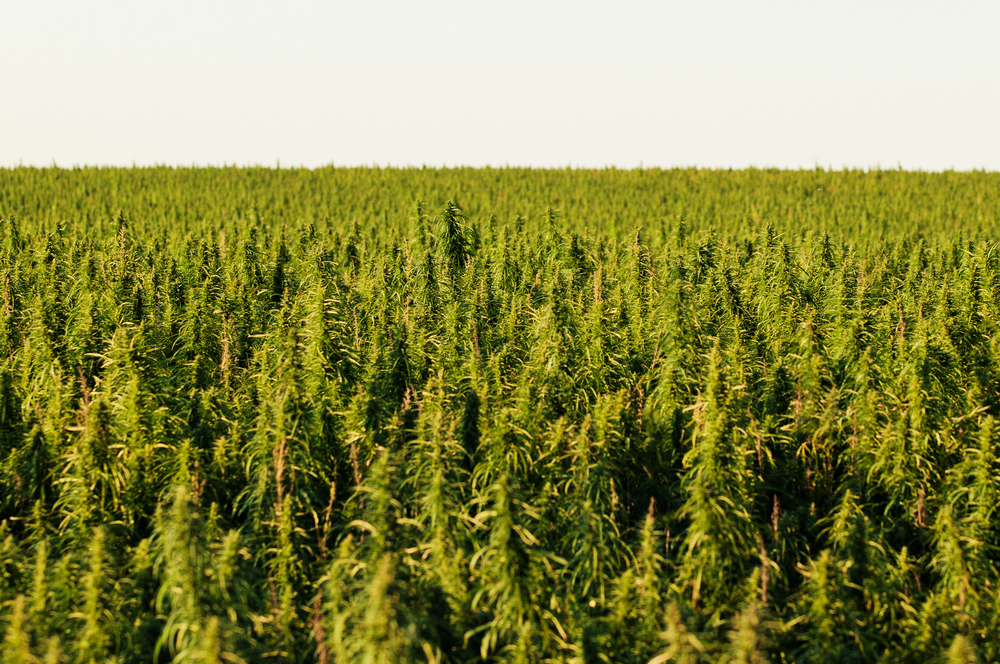
    File photo shows hemp field.

    Hemp harvest is nearing an end in Georgia. According to Tim Coolong, associate professor in the UGA College of Agricultural and Environmental Sciences, the state’s hemp producers appeared to have stayed within the legal parameters of hemp production.

    What distinguishes hemp from marijuana is the amount of THC or tetrahydrocannabinol present in the plant. It is the main compound in cannabis that produces the “high” sensation.

    Legal hemp must contain no more than 0.3 percent of THC. Otherwise, the THC is at an unacceptable level, and the crop must be destroyed. That doesn’t appear to have been the case this year, though.

    “I haven’t heard many reports of people going above the limit. For the most part, at least for the growers I’ve interacted with, they were testing regularly. When they had gotten their test back for harvest they were completely legal and ready to go,” Coolong said.

    THC levels must be officially tested within 15 days of anticipated harvest.

    If growers regularly tested their hemp samples, it prevented a disastrous scenario of if the officials tested the crop before harvest, and it exceeded legal limits, catching the farmers off guard. All of the work done to produce that crop would be for naught.

    “We stressed that a lot last year at our county meetings. Terry Hollifield, with Georgia Crop Improvement, they were doing the sampling for the growers, and he made a specific effort to do orientations with them. During the summer, he would go out and visit the growers and explain to them the process and everything,” Coolong said.

    “Almost every grower I had spoken to this summer was doing some testing on their own before the state would come in.  I would be surprised if there were very many growers who were just like, ‘Oh, I didn’t know about this.’”

  • Horticulture students cultivate organic crops and an entrepreneurial spirit

    UGA CAES photo/Erica Head, a student in the Organic Horticulture Entrepreneurship class and student assistant herb manager at UGArden, sells teas from herbs she’s grown and processed at a weekly student farmers market.

    By Austin Clark for UGA CAES News

    Balancing academic coursework with a job is a challenge many University of Georgia students face. But for students in the new Organic Horticulture Entrepreneurship class, their classwork is both academic and economic.

    This semester is also harvest season for the four horticulture students in the class, who are gaining experience planning, planting and marketing their crops through a weekly student farmers market.

    Taught by Associate Professor David Berle and Professor Tim Coolong in the Department of Horticulture, the new course in the College of Agricultural and Environmental Sciences (CAES) empowers students to learn the process of growing their own produce and build the interpersonal communication skills necessary to sell their crops.

    Every Thursday

    Every Thursday from 4:30 to 6 p.m., the students load up tables at UGArden with the crops they’ve grown during the semester — leafy mounds of lettuce, kale, turnip greens and bok choy, as well as radishes, turnips and teas made from herbs they’ve grown — and sell their wares to the public. Customers are able to buy field-fresh produce and the students practice educating members of the Athens community about the process of organic farming.

    The class, which is being taught for the second time this semester, was created after Berle, who focuses on organic horticulture, and Coolong, a vegetable specialist, were approached by a donor interested in supporting the development of an immersive course addressing both sustainability and entrepreneurship.

    Part of the donor funding goes to compensate Sarah Rucker, assistant farm manager for the UGArden.

    “(Rucker) is the one who helps coach the students and manage the farmer’s market,” Berle said. Through her role in the course, Rucker essentially serves as a teaching assistant for the course by answering any questions the students may have about their crops, best practices and marketing techniques.

    Course Adjustments

    As the course progresses, Berle continually makes adjustments to give students the best opportunities to gain experience in both growing and selling organic produce.

    One tweak is the way students sell their produce. During the first semester the course was offered, students were selling primarily to university vendors such as UGA Dining Services and the University of Georgia Center for Continuing Education & Hotel. But after realizing that students were missing out on face-to-face interaction with customers, Berle and Coolong combined their class with the weekly UGArden farmers market so that students could interact directly with consumers rather than just delivering to vendors.

    Students Appreciative for Opportunity

    Students in the course are grateful for the opportunity to give back to the Athens community by providing fresh produce while learning what it takes to be an entrepreneur in the organic horticulture industry.

    “I am probably out here (in the garden) for four or five hours every day,” stated Sarah Kate Duncan, a senior horticulture major who is taking the course. “But it is totally worth it … Some of my favorite things to grow are turnip greens, different types of lettuces, fresh cut flowers and herbs.”

    Another student in the course, Erica Head, works as the student assistant herb manager for UGArden.

    “I see the whole process from beginning to end: I seed the plants, I put them in the field, I dry and process them into teas. I like seeing people enjoy the teas and telling them about their medicinal effects,” Head said. “It’s also really good to see the other students selling the crops they have worked hard on all semester.”

    Chris Rhodes, director of industry partnerships at CAES, explains that industry leaders are looking for graduates with the creativity, communication and problem-solving skills that students in this course are gaining.

    “There is no substitute for running a business to learn how to run a business,” Rhodes stated. Through his role in the college, Rhodes wants to ensure that every student has the confidence to recognize a path they want to achieve and then to be connected to resources to ensure success after their time at UGA.

    Produce Availability

    Student-grown produce from the course will be available through the weekly farmers market until Thanksgiving. For more information on this course and other experiential learning opportunities available at CAES, visit caes.uga.edu/students/experiential-learning.

  • Farmer’s Message Regarding Mexican Imports: It’s a Totally Different Playing Field

    United States of America and Mexico waving flag.

    All South Georgia vegetable farmer Sam Watson wants when competing against Mexican imports is a level playing field. Right now, that does not exist and has the Moultrie, Georgia farmer concerned about the future of the American farmer.

    Watson

    “When you look at what we have to do from our cost of production standpoint and you look at our labor costs mainly, where we have to pay (hourly) H-2A wages that are in the $12 range and yet you can go to Mexico and have the same labor down there and pay $8 a day on the high end; and then there’s no regulatory environment,” Watson said.

    “You don’t have EPD and Department of Agriculture and FDA and OSHA. The food safety requirements exist on this side, but do we know how much of that is being regulated on their side? The whole regulatory environment is different.”

    Virtual Hearings

    Watson was one of many Georgia farmers and Florida farmers who testified in virtual hearings with the U.S. Trade Representative’s Office about unfair trade practices with Mexico. All who testified voiced similar concerns that they are unable to compete now and in the future.

    Not a Level Playing Field

    “It’s a totally different playing field. If I didn’t have to pay but $8 a day, I could do a whole lot better job probably when it comes to quality and harvesting and that kind of stuff,” Watson said. “They’ve got state of the art facilities down there that we can’t compete with. The government is subsidizing those guys down there. Their government is pumping a ton of money into economic development and growing that sector of their economy down there.

    “You’ve got cost of production, you’ve got regulatory environment and you’ve got subsidies. When you put all of that together; the cost of production continues to go up. Our regulatory environment continues to get worse. Our labor costs continue to go up.

    “You reach a point where it’s just not worth it anymore.”

    Federal Response

    Federal agencies responded to the hearings with a plan to help farmers of seasonal and perishable fruits and vegetables, including those from Georgia and Florida. Click here to view details of the plan.

    “We’re not saying we want to stop the production. We just want there to be a level playing field. They shouldn’t be sending product into the United States of America open on a $16 squash market. That’s called dumping. I’ve got evidence of it,” Watson said. “That happens all the time.”

  • Registration Ongoing for SE Regional Fruit and Vegetable Conference

    The Southeast Regional Fruit and Vegetable Conference typically includes a trade show of hundreds of exhibitors. This year it will be held virtually amid COVID-19. Photo courtesy of the Georgia Fruit and Vegetable Growers Association.

    Registration is ongoing for the 2021 Southeast Regional Fruit and Vegetable Conference, which will be held virtually on Jan. 5 through Jan. 7, 2021.

    All events this year, including the educational sessions from university researchers and industry leaders, will take place online this year amid COVID-19 concerns. The conference will have the latest in production and crop operational information that attendees have come to expect from the SE Regional Conference.

    All educational and exhibitor content will be available for on-demand viewing until April 30 to all registered attendees.

    An All Access pass is $125 and includes access to all educational sessions, virtual trade show, poster sessions and networking events until April 30. A Trade Show Pass is free and includes admission to the virtual trade show and networking sessions but does not include access to any educational sessions. Access to the trade show floor will be available until April 30.

    You must register for the trade show to access the trade show floor.

    To register, click here.

  • Bishop, Loeffler Announce USDA Funding for Ag Research

    Bishop

    According to Georgia Farm Bureau, Rep. Sanford Bishop (D-Ga. 2nd District) and Sen. Kelly Loeffler (R-Ga.) each announced funding for Georgia agricultural research.

    On Oct. 16, Bishop, chairman of the U.S. House Appropriations Subcommittee on Agriculture, Rural Development, Food and Drug Administration, and Related Agencies, provided funding for pecan and peanut research in the FY2021 Agriculture Appropriations bill.

    The bill included 1.5 million for research on pecan cracking and pasteurization technology, $1.5 million for pecan breeding and genetics research and $1.51 million for aflatoxin research at the ARS Peanut Lab in Dawson and Fort Valley State University.

    “One of the most important things to me as the agriculture appropriations chairman is making sure the crops we grow here in Georgia continue their massive contributions to our local, state, and national economies while also feeding our citizens nutritious food,” Bishop said. “Pecans and peanuts are very healthy and are also two of our largest agricultural exports as a state.”

    Loeffler

    On Oct. 22, Loeffler, a member of the U.S. Senate Committee on Agriculture, Nutrition and Forestry, announced the University of Georgia will be receiving $323,834 from the USDA National Institute of Food and Agriculture to research and improve crop protection and pest management. The grant will allow UGA to study and develop tools to resist the diamondback moth, which causes severe damage to crops in Georgia’s agriculture regions.

     “Farmers are the backbone of Georgia and this nation, and they deserve all the help and resources they can get to ensure their crops are protected,” Loeffler said. “I applaud USDA for awarding UGA with this grant, which will bolster its premier agriculture research program – which is already a leader in the nation – and help safeguard Georgia crops from the diamondback moth and other threats for years to come.”

  • USDA Encourages Ag Producers, Residents to Prepare for Hurricane Zeta

    WASHINGTON, Oct. 28, 2020 – The U.S. Department of Agriculture (USDA) is reminding communities, farmers, ranchers and small businesses in the path of Hurricane Zeta that USDA has programs that provide assistance in the wake of disasters. USDA staff in the regional, state and county offices stand ready and are eager to help.

    Perdue

    “Our neighbors in the Gulf have endured a devastating Hurricane season this year, and I’ve been awed by their resilience,” said U.S. Secretary of Agriculture Sonny Perdue. “We ask everyone in the path of the storm to again prepare, and to rest assure that this Administration will stand by them to provide all the assistance we can, for as long as they need.”

    USDA has partnered with FEMA and other disaster-focused organizations to create the Disaster Resource Center, a searchable knowledgebase of disaster-related resources powered by subject matter experts. The Disaster Resource Center website and web tool now provide an easy access point to find USDA disaster information and assistance.

    Food Safety During an Emergency

    Power outages from severe weather could compromise the safety of stored food. USDA encourages those in the path of the storm to take the following precautions:

    Store food on shelves that will be safely out of the way of contaminated water in case of flooding.

    Place appliance thermometers in the refrigerator and the freezer to ensure temperatures remain food safe during a power outage. Safe temperatures are 40°F or below in the refrigerator, 0°F or below in the freezer.

    Freeze water in small plastic storage bags or containers prior to a storm. These containers are small enough to fit around the food in the refrigerator and freezer to help keep food cold.

    Freeze refrigerated items, such as leftovers, milk and fresh meat and poultry that you may not need immediately — this helps keep them at a safe temperature longer.

    Consider getting 50 pounds of dry or block ice if a lengthy power outage is possible. This amount of ice should keep a fully-stocked 18-cubic-feet freezer cold for two days Group foods together in the freezer – this ‘igloo’ effect helps the food stay cold longer.

    Keep a few days’ worth of ready-to-eat foods that do not require cooking or cooling.

    Protecting Livestock During a Disaster

    USDA’s Animal and Plant Health Inspection Service (APHIS) is urging everyone in the potential path of the hurricane to prepare now – not just for yourselves, but also for your pets and your livestock.

    • Plan for evacuation – know how you will evacuate and where you will go. If it is not feasible to evacuate your livestock, be sure to provide a strong shelter and adequate food and water that will last them until you can return.
    • If you are planning to move livestock out of state, make sure to contact the State Veterinarian’s Office in the receiving state before you move any animals. You may also contact the Animal and Plant Health Inspection Service (APHIS) Veterinary Services state offices for information and assistance about protecting and moving livestock.
    • Listen to emergency officials and evacuate if asked to do so.

    Helping Producers Weather Financial Impacts of Disasters

    Livestock owners and contract growers who experience above normal livestock deaths due to specific weather events, as well as to disease or animal attacks, may qualify for assistance under USDA’s Livestock Indemnity Program. Livestock, honeybee and farm-raised fish producers whose mechanically harvested or purchased livestock feed was physically damaged or destroyed; or who lost grazing acres or beehives due to an extreme weather event may qualify for assistance. Producers of non-insurable crops who suffer crop losses, lower yields or are prevented from planting agricultural commodities may be eligible for assistance under USDA’s Noninsured Crop Disaster Assistance Program if the losses were due to natural disasters.

  • UGA Research Grant Aimed at Protecting Consumers from Norovirus

    A Center for Produce Safety grant will fund University of Georgia (UGA) research aimed at studying human norovirus and its impact on leafy vegetables, in particular, lettuce.

    Malak Esseili, an Assistant Professor at the Center for Food Safety on the UGA Griffin campus, is the lead investigator in the project, which spans from Jan. 1, 2021 through Jan. 1, 2023. Her objective is to study the survival rate of human norovirus in river water, which is commonly used in agricultural irrigation; analyze its die-off rate in relation to E. coli (a standard water quality fecal indicator organism); determine the survival of infectious virus on lettuce under pre-harvest; and on post-harvest lettuce following chlorine washes.

    Human Norovirus Top Food-Borne Pathogen

    Esseili

    “Norovirus in the U.S. is the No. 1 food-borne pathogen; 58% of foodborne illnesses are caused by human norovirus. It’s very prevalent, but there is unfortunately no vaccine or antiviral drugs to treat norovirus infections. Most of the foodborne outbreaks, historically, are associated with leafy greens, particularly lettuce or frozen berries, such as strawberries. If it’s frozen, the virus will likely be preserved,” Esseili said. “It’s really important to understand whether norovirus on leafy greens, such as lettuce, remains infectious or not and to what level.”

    Understanding Norovirus

    She said that the human norovirus is excreted with feces. If infected, sick people can shed the virus in their feces, and all the feces travels down the sewer to a treatment plant. But the treatment plant is not 100% effective in removing this virus. This leads to contaminated river water, which can be used in watering crops like lettuce.

    “The water that comes out after the treatment of human waste, that water is called effluent, and it goes into a river. Many studies around the world have detected genetic material of the virus in river water. However, because we did not have a cell culture method for norovirus, we could not determine whether finding virus-specific genetic materials indicate the presence of infectious virus or not. We don’t know how long the virus remains infectious in river water and this is what my grant will also be looking at,” Esseili said.

    Esseili’s Experiment

    Esseili said that her experimental work will consist of growing lettuce in greenhouses and adding drops of the virus on the lettuce leaves in small quantities. Then, she will monitor the infectivity of the virus using a recently discovered cell culture method for human norovirus. Some of the basic questions she wants to answer are, does the pathogen survive and for how long? And will regular water clean it off or does it require a sanitation step such as chlorine washings.

    This research will help prevent illnesses associated with norovirus. It’s such a dangerous pathogen that even a low dose can be problematic.

    “If you have even low quantities of the virus on the leafy greens or berries and the person eats it, there is a chance the person will get infected,” Esseili said.

  • Zeta Set to Move Through Region This Week

    National Weather Service Graphic

    Zeta, a tropical system and an expected hurricane once it reaches the U.S. by Wednesday, is churning in the Gulf of Mexico and is expected to move across the Southeast later this week. According to the UGA Extension Viticulture Blog, Pam Knox, University of Georgia Cooperative Extension Agricultural Climatologist, said there will be some rain and gusty winds from that system as it moves through the area after making landfall in Louisiana.

    Knox

    At the same time, a low-pressure center is expected to move through the Southeast region. This would bring more rain to the Ohio and Tennessee River valleys. It could include up to several inches of rain in the more mountainous regions of the region.

    “Cooler temperatures are expected this week due to the cold fronts that are now starting to move through the region. However, the coldest air, which is bringing snow and single-digit temperatures to the northern Plains, is not expected to get to the Southeast. I don’t see any signs of frost in the next couple of weeks,” Knox said.

    This would be welcomed news for vegetable growers, like Sam Watson in Moultrie, Georgia, who are still harvesting their fall crops.