Category: Georgia

  • Hemp Production in Georgia a Success Despite Few Orders That Exceeded Legal Limit

    agriculture
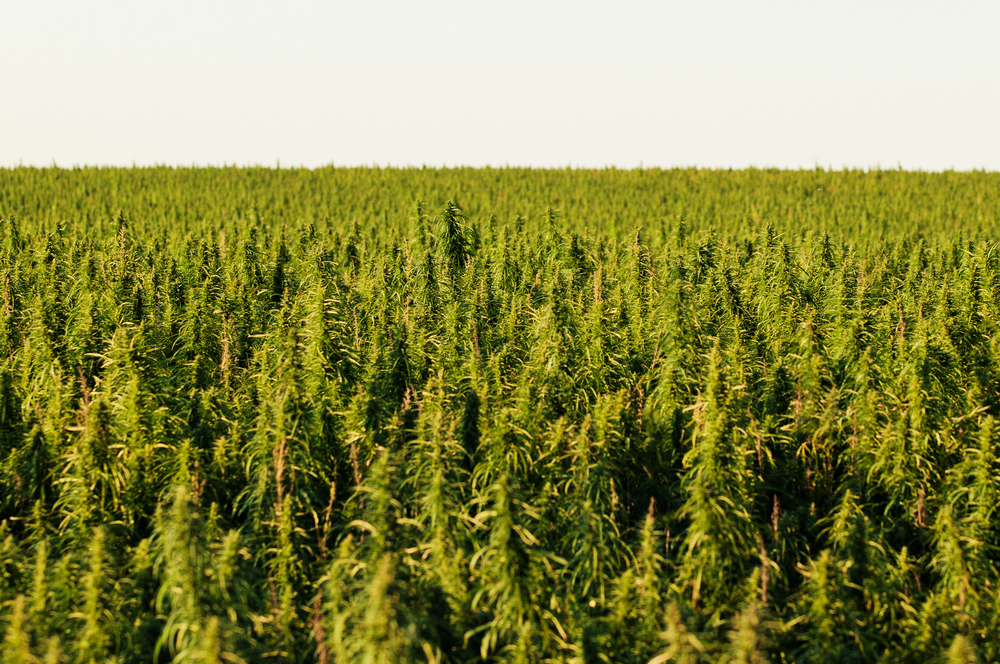
    File photo shows industrial hemp

    Georgia’s first year of commercial hemp production was a success, though, there were some growers who had plants that exceeded the 0.3 THC level required for crop production.

    Mike Evans, director of plant industries who oversees the hemp program at the Georgia Department of Agriculture (GDA), expects a big change next year to come with more frequent testing from the growers throughout the summer.

    “One thing I think the growers are looking at, they’re going to do more testing of their crop as the crop progresses and starts getting closer to maturity. Unfortunately, we had 17 disposal orders, where the hemp had been tested and found over the limit,” Evans said. “The retest said the same thing, so that cannabis needed to be disposed of. That was 11 growers, but that was a lower percentage than what several other states had their first year.

    “A lot of the growers said they’re going to be testing more frequently.”

    Hemp Statistics

    Evans said there 144 licenses issued in 2020 with 1,450 acres intended for hemp production and 186 greenhouses.

    “Talking with the growers, and I didn’t talk with everyone but a fair number, several of them were planting small acres. There were a lot of one to two acre plots. There were some others that had larger. But a lot of them were of the mindset, ‘I want to figure out how to do this in 2020, and then I’ll decide what I want to do after the season,’” Evans said.

    2021 Applications

    Renewal applications are being accepted now from farmers who grew hemp this year and are interested in producing it again in 2021. The deadline to renew a current license is Dec. 1. The Georgia Department of Agriculture (GDA) will begin accepting new applications for 2021 in January.

     “Overall, I think the first year was successful. From our perspective, we were able to issue licenses, and the growers were able to get the licenses and they were able to get a crop in the ground,” Evans said.

    According to the Georgia Department of Agriculture, under the authority of the Georgia Hemp Farming Act, the GDA is authorized to regulate the cultivation and processing of hemp in the State of Georgia.

  • Pruning tips for ornamental plants

    UGA CAES photo/Each plant in the landscape has its own growth habit and a different requirement for pruning. Some shrubs have dwarf growth habits and may never require pruning, while vigorous large-growing shrubs may require frequent pruning.

    By Brandon Crumsey for UGA CAES News

    To prune or not to prune, that is the question. Pruning is an important part of maintaining plant health and maximizing plant productivity. This is often a topic that brings fear and confusion, but pruning is, in fact, a beneficial and routine task.

    Ornamental plants in the home landscape are pruned for several reasons, including maintaining a desired size or shape; promoting healthy, vigorous growth, flowering or fruiting; and removing sections damaged by insects, disease or weather. Each plant in the landscape has its own growth habit and different requirements for pruning. Some shrubs have dwarf growth habits and may never require pruning, while vigorous, large-growing shrubs may require frequent pruning. Anyone can prune, but not everyone prunes properly.

    Improper pruning, or pruning at the wrong time of the year, can result in misshapen plants, reduced flowering or plants that are more likely to be damaged by insects, diseases or winter cold. Because flowering ornamentals form their flower buds at different times of year, pruning times must be adjusted accordingly.

    Many spring-flowering plants such as azalea, dogwood, forsythia, redbud and rhododendron set flower buds in the fall, so pruning during the fall or winter months eliminates or decreases their spring flower display.

    Plants that typically flower during the summer form flower buds on new growth and can be pruned during the winter with no effect on their flowering. However, sometimes plants may need to be pruned outside of these ideal windows to remove damaged or dead plant parts, to remove obstructions from windows or buildings, or to help stop the spread of diseases.

    As a general rule, plants that flower before May should be pruned after they bloom, while those that flower after May are considered summer-flowering and can be pruned just prior to spring growth.

    One exception to this rule is the oakleaf hydrangea, a summer-flowering shrub that forms flower buds the previous season.

    Another exception are late-flowering azalea cultivars, which bloom during May, June or July. Prune both the oakleaf hydrangea and late-flowering azalea cultivars after they bloom. Newer azalea varieties like the ‘Encore’ line, which bloom in the spring, summer and fall, don’t require much pruning — if any at all — as long as they are planted in the right place. At most, you may need to prune taller shoots back into the body of the plant immediately after spring flowering. ‘Knock Out’ roses start flowering in spring up until frost, but should be pruned back to about 12 inches to the ground in early spring, after the threat of last frost has passed, to help stimulate vigorous growth throughout the season.

    Other types of plants, like broadleaf evergreen shrubs, generally require little or no pruning at all because they usually develop a naturally symmetric growth habit when left alone, but late winter when they are dormant is usually a good time if pruning is desired.

    Pruning is only harmful to a plant if done incorrectly or at the wrong time. With the right information and confidence, pruning should become a normal part of your landscape maintenance routine.

    To learn more about pruning ornamental plants, see University of Georgia Cooperative Extension Bulletin 961, “Pruning Ornamental Plants In The Landscape,” and Bulletin 949, “Basic Principles of Pruning Woody Plants,” which can be found at extension.uga.edu/publications.

  • Prize-Winning Pumpkin Weighs in at More Than a Quarter Ton

    UGA CAES photo/Peyton Collins of Union County had the prize-winning pumpkin, weighing 548 pounds.

    By Austin Clark for CAES News

    More than 25 pumpkins were submitted to Georgia 4-H’s 2020 statewide pumpkin-growing contest, with the largest pumpkin, cultivated in north Georgia’s Union County, weighing in at a whopping 548 pounds.

    All Georgia 4-H youth were encouraged to participate by submitting one pumpkin for consideration. Participants took their entries to their local University of Georgia Cooperative Extension office for weighing. This year, the Georgia Fruit and Vegetable Growers Association sponsored the contest, donating prize money of $100 for first place, $50 for second place and $25 for third place.

    The winners of the 2020 Georgia 4-H Pumpkin Growing Contest are:

    1. Peyton Collins, Union County, 548 pounds
    2. Natalie Payne, Union County, 432 pounds
    3. Ava Sharp, Union County, 316 pounds

    Georgia 4-H empowers youth to become true leaders by developing necessary life skills, positive relationships and community awareness. As the largest youth leadership organization in the state, 4-H reaches more than 242,000 people annually through UGA Extension offices and 4-H facilities. For more information, visit georgia4h.org.

  • GATE Renewal Now Open

    File photo shows spraying being done in the field.

    Annual renewal for the Georgia Agriculture Tax Exemption (GATE) program is now open. Eligible farmers can renew their GATE card for 2021 online starting Friday, November 6, 2020, by visiting https://forms.agr.georgia.gov/GATE/.

    GATE cardholders who are to renew in 2021 will automatically be placed on the new three-year renewal program and will receive their renewal invoice in 2024. All current cards will expire December 31, 2020. Cardholders currently on two and three-year renewals will receive their 2021 cards with the new expiration date of December 31, 2021, and do not need to renew or apply for the 2021 year.

    The GATE program was created through legislation to offer qualified agriculture producers a sales tax exemption on agricultural equipment and production inputs. Qualified farmers and agricultural producers can apply to receive a certificate showing that they are eligible for this exemption. Farmers are required to present the current year GATE Card at the time of each purchase.

    Producers needing assistance can contact the GATE program team at 855-FARMTAX or farmtax@agr.georgia.gov.

  • How Low Are Pecan Prices Compared to Previous Years?

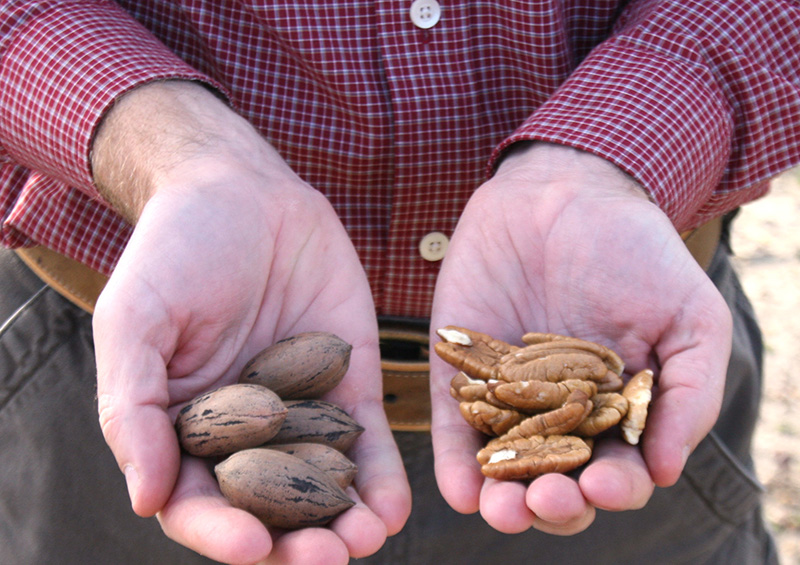
    Alabama Extension Photo shows pecan emerging out of its shell.

    Pecan prices are devastatingly low for Georgia producers. But how low are they compared to what farmers are used to this time of year? South Georgia pecan farmer Randy Hudson puts it in perspective.

    “We’re seeing prices anywhere from 30% to 50% less than what they’ve been the last three years,” Hudson said. “It makes a big difference. Of course, the expense of growing pecans is a very critical issue here. The expense of growing pecans has not been any cheaper, although, we have seen prices on the fuel side and there have been some prices that have gone down in other areas.

    “The production costs are still pretty high. Fixed and variable costs are running over $2,000 an acre. You’ve got a lot of expense in pecans. These low prices make it very difficult to be able to pay your bills.”

    USDA Pecan Report

    Following the release of the USDA Pecan Report that was released last Tuesday, prices ranged anywhere from 70 cents to 75 cents per pound for Stuart varieties to Sumners that were selling for $1.30 to $1.41 per pound (nut count 50-60) with meat yield 52% to 54%. Even Desirable varieties that did not have to overcome heavy scab disease pressure this season were selling for just $1.35 to $1.40 per pound.

    The next USDA Pecan Report will be released this Tuesday. Growers will be able to see if prices are stabilizing or continuing to freefall, which is a fear of University of Georgia Extension pecan specialist Lenny Wells. It’s especially disheartening since this is one of Georgia’s best pecan crops in recent memory. 

    Big Crop for Georgia

    “The reality is Georgia has a really big crop. The demand over the last few years has been reduced by the fact that the China tariffs increased to a point that China consumption has gone well down on pecans. We’re in a cycle where we may see reduced prices until we get consumption back up to a point that it would support higher prices,” Hudson said.

    “I personally think that after this election settles out, we may see a little firmness move into the market, I hope so. I think a lot of the bigger growers are counting on it. For the most part, there’s not a lot of nuts moving right now other than yard crop and maybe some small growers that don’t have the input costs of the bigger growers. There’s not a large volume of pecans that’s actually being traded right now. There’s a lot of pecans being held.”

  • Georgia 2021 Hemp Applications to Be Accepted in January

    hemp
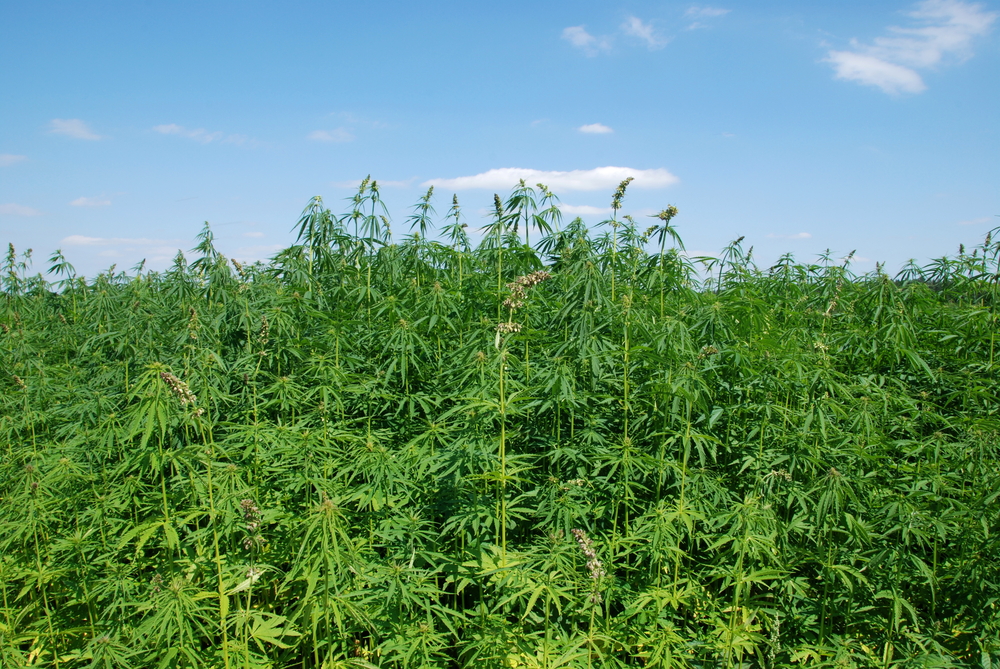
    File photo shows hemp field.

    Georgia’s 2020 hemp season is nearing an end as harvests wind down across the state. It’s never too early, though, to start thinking about next year’s production season.

    According to the Georgia Department of Agriculture (GDA), applications for new Georgia hemp grower licenses and hemp processor permits will be accepted beginning in January, 2021.

    Growers licensed by the GDA are authorized to grow and handle hemp in Georgia.

    For More Information

    Current Georgia hemp grower licensees and hemp processor permittees can contact hemp@agr.georgia.gov for renewal information.

    Under the authority of the Georgia Hemp Farming Act, the Georgia Department of Agriculture is authorized to regulate the cultivation and processing of hemp in the state of Georgia.

    Mike Evans, the director of plant industries who oversees the hemp program at the GDA, said they had received 166 applicants from farmers who were interested in growing hemp in early April.

    Within Legal Limits

    According to Tim Coolong, associate professor in the University of Georgia College of Agricultural and Environmental Sciences, the state’s hemp producers stayed within the legal parameters of hemp production.

    What distinguishes hemp from marijuana is the amount of THC or tetrahydrocannabinol present in the plant. It is the main compound in cannabis that produces the “high” sensation.

    Legal hemp must contain no more than 0.3 percent of THC. Otherwise, the THC is at an unacceptable level, and the crop must be destroyed. That doesn’t appear to have been the case this year, though.

  • Falling Pecan Prices Dishearten Growers Amid Bumper Crop

    Photo courtesy of UGA College of Agricultural & Environmental Sciences.

    It’s a disheartening feeling to know you have your best pecan crop in years only to face the worst market prices in at least the last 20 years. But that’s what pecan growers in Georgia are facing this fall, according to Lenny Wells, University of Georgia Cooperative Extension pecan specialist.

    As states like Georgia are currently harvesting a bumper crop, they’re encountering prices that have been a shock to farmers this fall.

    According to the latest USDA Pecan Report that was released on Tuesday, prices ranged anywhere from 70 cents to 75 cents per pound for Stuart varieties to Sumners that were selling for $1.30 to $1.41 per pound (nut count 50-60) with meat yield 52% to 54%. Even Desirable varieties that did not have to overcome heavy scab disease pressure this season are selling for just $1.35 to $1.40 per pound.

    Totally Unexpected

    “We knew (prices) would be lower, but I don’t think anybody expected it to go this low. I don’t know that it’s finished going down (either). I hope it is, and I hope we see some turnaround. There’s no way to know,” Wells said.

    How much farther can prices drop? There could potentially reach a point where pecans are not selling at all.

    “I think that’s probably the next step. I hope we don’t get to that point. It’s a scary situation for growers out there,” Wells said. “I think most all of them know about it now. But even as harvests were first starting, I think there were a lot of growers that didn’t realize that this was coming. Some did but most that did didn’t think it was going to get this bad.”

    Especially Frustrating for Growers Recovering from Michael

    It’s especially troublesome for producers considering the quantity of pecans there is this year. Some growers had pegged this season as a rebound year just two years removed from Hurricane Michael.

    “It’s especially frustrating for those guys down in Albany, Mitchell County, Bainbridge and that southwest corner who took such a hit from Michael. They dealt with that for two years; had their crop wiped out that year and not having much of any crop last year,” Wells said.

    Losing Scenario for Farmers?

    If you consider the input costs it takes to produce pecans every year, growers are going to lose money this year. It’s just a question of how much.

    “I did some crunching of some numbers the other day, just looking at the UGA pecan budget. It looked like to me that if you factored in your variable costs, your harvest costs, all of that added in together, the break-even price on pecans based on the UGA budget at around $1,800 per acre to grow pecans, was $1.53,” Wells added.

    “Last week, the average price (of pecans) was $1.44. I ran the numbers (Wednesday) morning with the new report that just came out (Tuesday) and it’s at $1.17 across all varieties. That includes Moneymakers and Seedlings and stuff like that.”

    “(Farmers) are hurting right now. They’re losing a lot of money right now.”

  • Commodity Commission for Wine & Grapes Accepting Nominations for Board Member Positions

    ATLANTA, GA– Nominations are currently being accepted to fill five board positions of the newly created Georgia Agriculture Commodity Commission for Wine and Grapes. Persons nominated must be active producers of wine and reside in the State of Georgia. The deadline for submissions is Friday, Nov. 27, 2020.

    Those interested may submit a nominee information form found at agr.georgia.gov/cpf, to Andy Harrison at andy.harrison@agr.georgia.gov or by fax at 404-656-9380.  Forms may also be mailed at:

    The Georgia Department of Agriculture

    Attn: Andy Harrison

    19 MLK Jr. Drive S.W.

    Room 320

    Atlanta, GA 30334

    The nominees will be vetted and certified to ensure they are active Georgia producers of this commodity in the appropriate geographic areas. Interested producers with questions may contact the Georgia Department of Agriculture at 404-586-1405.

    On August 3, 2020, Governor Brian Kemp amended the Georgia Agricultural Commodities Commissions Act by signing HB 1093 to establish an Agricultural Commodity Commission for Wine and Grapes. Georgia Agriculture Commodity Commissions are created by the Georgia Legislature. Furthermore, a market order of each commission is passed by the growers of that respective commodity which allows for assessments on the commodity to be paid by each of the producers of such commodity. These funds are used for research, education and promotion of the commodity. Members of the commissions make decisions on how funds are spent and programs the commission supports.

  • Very Low Prices for Georgia Pecan Producers

    Photo shows pecans being cleaned.

    Georgia pecan prices remain discouragingly low for farmers as harvest season is in full swing across the state. According to the USDA Pecan Report that was released on Tuesday, ranged anywhere from 70 cents to 75 cents per pound for Stuart varieties to Sumners that were selling for $1.30 to $1.41 per pound (nut count 50-60) with meat yield 52% to 54%.

    Elliott varieties (nut count 65-75) sold for $1.20 to $1.38 per pound with a meat yield of 50% to 53%.

    It’s important to note these prices are for in-shell pecans of good quality in lots of 20,000 pounds or less.

    For lots over 20,000 pounds, including truckloads; Desirable varieties sold for $1.25 to $1.46 per pound (nut count 45-51) with meat yield between 50% to 52%. Elliott varieties sold for $1.20 to $1.30 per pound (nut count 65-75) with a meat yield of 50% to 52%. Sumner varieties sold for $1.30 to $1.41 per pound (nut count 50-60) with a meat yield of 52% to 54%.

    The release stated that, “Growers are preparing their pecans to be tested and offering them for sale this week with many not making any deals or sales. They are either reoffered for sale or put into storage waiting until a price can be established and accepted by both sides. Purchases by shellers and domestic buyers are moderate to slow as well as retail gift pack purchases and it is expected to pick up before the Thanksgiving push for holiday sales. The export market is slow as compared to past years, especially the movement going to Asia.”

  • What a Difference a Year Can Make for Vidalia Onion Producers

    University of Georgia Extension photo/Some mid-September sown seedbeds in Toombs County growing nicely.

    What a difference a year makes for Georgia’s Vidalia onion producers. Last year’s weather conditions consisted of hot temperatures when growers were planting their seedbeds. That’s not been the case this year, however.

    “It’s been a real quiet year. Everything’s been going very well. This time last year we were dealing with really hot temperatures, some extreme. We think the plants have suffered some, but we’ve had really great conditions this year,” said Chris Tyson, University of Georgia Cooperative Extension Area Onion Agent at the Vidalia Onion and Vegetable Research Center in Lyons, Georgia.

    “Until (last Thursday) when we had some rain from the hurricane (Zeta) that came through; we actually got over an inch of rain in some places which was actually much needed; but we haven’t had a lot of rain to promote disease in the last several weeks.

    “We haven’t had much rain. We’ve had mild temperatures, everything has been going really good.”

    All Seedbeds Planted

    Tyson said all of the seedbeds have been planted. Some were planted as early as the first week in September, and it continued all the way to the end of September. The first seeds that were planted are likely to be transplanted this week on a limited scale. However, during the second or third week in November, transplantings will pick up and continue in December.

    Vidalia onion seeds are planted in a separate field from where they’ll be transplanted. Tyson said growers want the diameter of the plants to be as big around as a pencil. When they get to that size, farmers will pull them out of the ground off the seedbed and transplant them into the fields.

    High Population Density of Plants

    They grow seedbeds at a high population density with about two million seeds per acre. They’ll transplant between 85,000 and 100,000 plants per acre. An acre of seedlings leads to between 18 and 20 acres of transplanted fields. Vidalia onion producers utilize this planting strategy to protect against weed pressure.

     “When those plants are very small, we have a lot of weed pressure. We don’t have a lot of good herbicide options for those really small plants. What we do on our seedbeds, we use a type of fumigant to fumigate the soil and sterilize the soil to help kill off a lot of weeds and a lot of weed seeds,” Tyson said.

    “That’s expensive. That’s the biggest obstacle to just planting the seed in the field one time and being done with it is weed control. The costs and the labor to grow them that way, it’s a lot more intensive.”