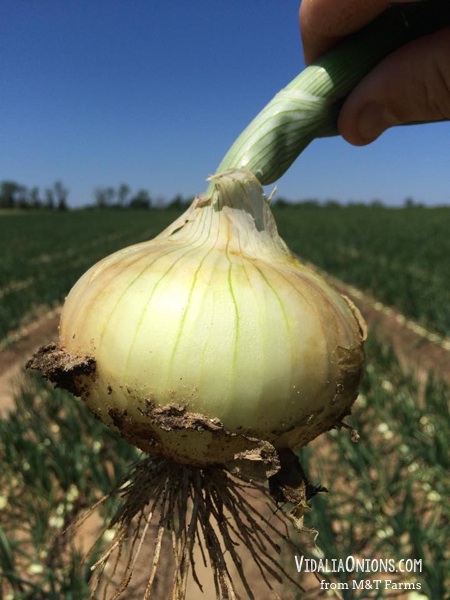
Photo courtesy of M & T Farms, Lyons, GA, and Vidalia Onions.com
Abnormally dry conditions in Southeast Georgia are only helping Vidalia onion farmers who are transplanting this year’s crop.
Chris Tyson, University of Georgia Extension Area Onion Agent at the Vidalia Onion & Vegetable Research Center in Lyons, Georgia, said onion producers don’t need a lot of water right now anyway. The lack of rainfall is not a detriment at this stage in the growing season.
“During the planting season we need the dry weather. We don’t need rain, because every time we have a rain event it causes delays. You have a week or two of rainy weather, and even though that’s good for putting water back in the sub-soil and the aquifer and replenishing all of that; for us, two weeks of bad delays and we might want to be finished planting by the week of Christmas or week before Christmas and we’re having to plant into January,” Tyson said.
US Drought Monitor
According to the US Drought Monitor, more than 25 counties in the southeast part of the state, are classified as “D0” or abnormally dry. These include Georgia’s top two onion-producing counties Tattnall and Toombs.
“Obviously we need water for our onions and most onions are under a pivot anyway to give them what they need, but the same thing is true for harvest,” Tyson said. “Rain is sort of the enemy during harvest time because it creates delays and causes disease. At planting, it’s not so much disease as it’s more the delays it causes.
“Onions can get by with relatively low amount of water up until the spring time when they start bulbing and getting closer to harvest when they really have a high water demand. For the first half of the season, they have relatively low requirements for water. Usually we can give them what they need with our irrigation systems if we have to give them any water during the winter time.”
Gwinnett County is excited to host the final Georgia Grown To Go of the season at Coolray Field, 2500 Buford Drive, Lawrenceville, from 10 a.m. to 2 p.m. on Saturday, Nov. 21.
“Our Georgia Grown To Go pop-up markets were a huge hit this spring and summer, bringing a safe and convenient shopping experience to those who craved local products,” said Georgia Agriculture Commissioner Gary W. Black. “We are excited to replicate that opportunity for consumers looking to fill their Thanksgiving table with Georgia Grown produce and for shoppers looking to get an easy head start on their Christmas shopping.”
The $20 produce box includes squash, zucchini, cucumbers, corn, apples, sweet potato, citrus and green tomatoes. In addition to produce and protein, gift items will also be offered for purchase. For more information on available items and to pre-order visit www.GeorgiaGrownToGo.com.
Customers can abide by CDC social distancing guidelines while purchasing fresh produce and other Georgia Grown products thanks to the drive-through approach with produce boxes placed directly in their trunks and contactless payment options of cash or credit. Customers can also support their community this Thanksgiving season by donating a produce box. Gwinnett County will work with community partners of Gwinnett Cares to provide items to local nonprofits, co-ops, and faith-based facilities.
Georgia Grown To Go is part of the Georgia Department of Agriculture’s “Buy Georgia Grown, Now More Than Ever” campaign encouraging consumers to ask for Georgia Grown products. With foodservice channels still limited, the pop-up markets are designed to give customers an opportunity to purchase fresh produce directly from farmers with limited contact, drive-through service. For more information on produce offerings, pricing and upcoming events, please visit www.GeorgiaGrownToGo.com.
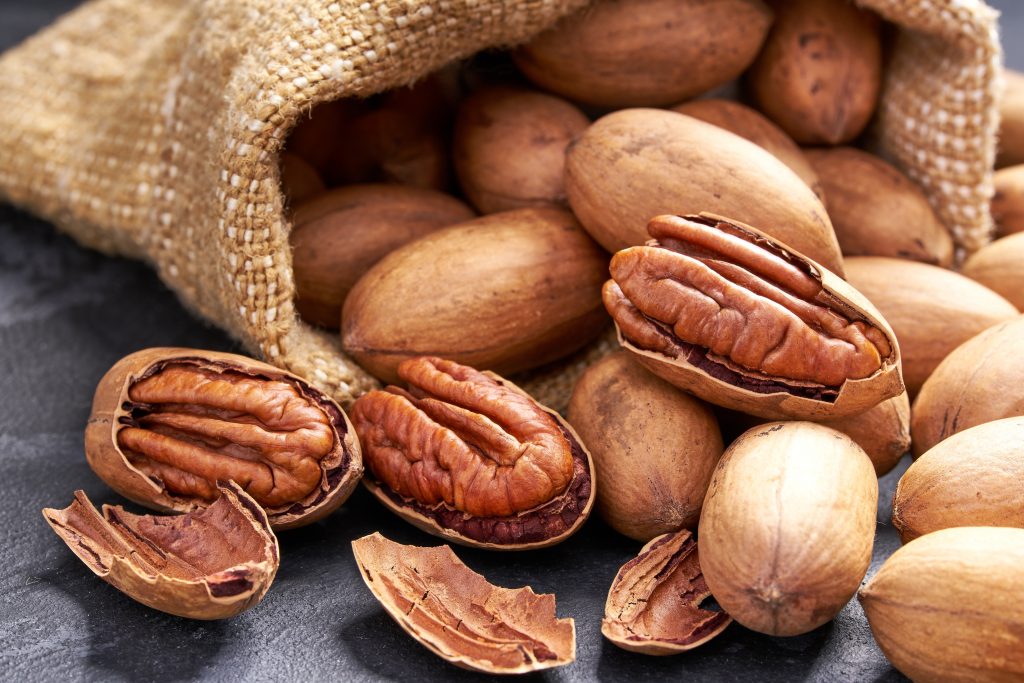
One of the largest pecan producers in the Southeast believes the industry could be on the verge of collapse amid tariffs, a strong hurricane season and devastatingly low prices this year.
Eric Cohen, who along with brother, Rob, operates Pecan Ridge Plantation in Bainbridge, Georgia, said they are still recovering from Hurricane Michael’s impact in 2018. It wiped out 800 acres and more than 20,000 trees. What he’s concerned with the most now are tariffs that prevent the largest buyer of U.S. pecans, China, from buying this year. It’s also allowed Mexico to become an even bigger player on the world’s pecan stage than it was before.
A Pecan Producer’s Comments
“I think our industry, honestly, is on the brink of collapse if something doesn’t actually change,” Cohen said. “We’ve got all these pecans coming in from Mexico. The tariff situation is absolutely killing us because they don’t have a tariff on their pecans. China can buy all of their pecans from them.
“Mexico, their labor is so much different than ours. We’re getting drilled on everything; labor, their inputs are so much cheaper. We just can’t grow them as cheap as they can, and they’re just flooding our market. It’s an extremely dark time in the pecan industry in Georgia after Hurricane Michael. Now we have extremely low prices.”
Low Prices Continue
The USDA Pecan Report was released on Tuesday and continues to show prices dropping for all pecan varieties.
The report states, “Growers are still putting pecans into cold storage while prices for export quality and retail gift shop purchases are low as many are purchasing pecans from other sources. Domestic shellers are busy this week and growers are sending in their B grade pecans to make room for their better quality nuts to be stored. Talk of export buyers coming in as they have in the past is still ongoing but they are not as active as was expected.”
Prices for Desirable varieties remain between $0.80 and $1 per pound, while Sumner varieties are selling between $0.70 and $0.80 cents per pound. It’s depressing news as growers are storing pecans in hopes of prices rebounding in the future.
“I never dreamed it would be this bad,” Cohen said. “If China would buy. If they would just come in the market and take some of this off, they would create some competition. China being out of our market is what’s going on.
“If we could get the tariff situation settled, whatever administration is in there that would be an absolute benefit to growers. I firmly believe that China wants to buy American Georgia pecans. The economics are just not there the way they are now.”
Alabama Farmers Suffer Through Storms
While Georgia producers have dodged storms this season, their Alabama counterparts were not so lucky. Alabama producer Adam Bertolla lost three-quarters of this year’s crop and 250 trees, or one-third of his pecan operation after Hurricane Sally struck in mid-September.
“We’re losing money. Growers out here, we’re absolutely losing money on the farm this year. You’ve got to make up your mind, ‘Are you willing to hang on and stick it out?’ If we were Louisiana, I know Alabama got destroyed this year. But look at Louisiana, I think they’ve had five storms. You take those five storms and run them through Georgia, we’re done.”
A La Nina weather pattern is expected to last through early spring and bring warm and dry conditions to the Southeast.
According to the Climate and Agriculture in the Southeast blog, Pam Knox, University of Georgia Extension Agricultural Climatologist, said that the NOAA’s Climate Prediction Center predicts a 100% chance of a La Nina through the winter and better than 90% chance through early spring.
This scenario could be gloomy news for vegetable fruit farmers, especially peach growers in Alabama, Florida and Georgia who need chill hours to make a crop for the following year. It also means pests could linger longer than desired since the lack of cold temperatures will alive them to survive longer.
Pam Knox Comments
Knox
“In La Nina years, they’re much less likely to get the chill hours that they need. That’s going to be a problem for fruit producers,” Knox said.
“Another thing is when you have warm temperatures, it’s not cold enough to kill the bugs very effectively. So you have more overwintering of bugs like whiteflies and other things that will bring disease to the plants next year. They could get an earlier start, but they’re also going to be more numerous because they’ve been able to survive the winter because of the warmer temperatures.”
The lack of sufficient chill hours does not mean there will be zero cold weather. That’s still expected but will be overshadowed by the warmer temperatures to follow.
“Even in La Nina years, we have some outbreaks of cold weather. It’s still winter, so we’re still going to see some of those cold outbreaks. There’s a lot of variability over time. I would definitely expect to see some colder weather. We could have some pretty big outbreaks,” Knox said.
“It’s just that over the course of the whole winter, we’re likely to see those outbreaks punctuated by warmer spells. That’s not at all surprising. Winter is like that any way. It’s just that the whole average is a little higher. Those outbreaks come less frequently because the storm track is pushed to the north. The storm track is what controls whether we’re in the warmer air, because the warmer air is usually south of the storm track and also whether or not we’re getting rainfall because the rainfall usually happens along the storm track.”
Prolonged Dry Spell?
Winter is also a time when the soil moisture gets recharged due to rainfall. That’s not expected to happen this year amid La Nina, but it does appear the Southeast is in decent shape to withstand prolonged dry conditions.
“Temperatures are lower and evaporation is lower, and plants are dormant so they’re not using a lot of water. I think from a water standpoint, at least right now, it doesn’t look too bad,” Knox said.
According to the US Drought Monitor, southeastern counties in Georgia, as far south as Pierce and Ware, stretching as far north as Burke and Jefferson are classified as abnormally dry. The rest of Georgia, Alabama and Florida have sufficient moisture.
Highlight Impact Of Seasonal Produce Imports On Southeastern Growers
WASHINGTON, D.C. – U.S. Senators David Perdue (R-GA) and Kelly Loeffler (R-GA) continue to fight for a level playing field for Georgia farmers. In a letter to U.S. Trade Representative (USTR) Robert Lighthizer, the Senators requested a broadening of USTR’s current Section 332 investigation to include the impact of seasonal cucumber and squash imports on Southeastern markets.
“Fruit and vegetable imports from Mexico continue to dramatically impact U.S. markets and threaten the future of domestic farm production of perishable produce,” wrote the Senators. “In the last twelve months, we have seen further growth in imports across several vegetable products.”
“Prices have followed supply, and growers are now reporting tumbling prices across the board for vegetables,” continued the Senators. “Prices are now well below U.S. production costs for several of these commodities and appear to correlate directly with increasing fall shipments from Mexico.”
Loeffler
“These market changes occur quickly and can make or break a grower’s season in a matter of days if import increases and the resulting price decreases coincide with harvest. For this reason, we urge you to consider requesting a Section 332 investigation for cucumbers and squash in order to determine the impact of these seasonal imports on Southeastern markets,” concluded the Senators.
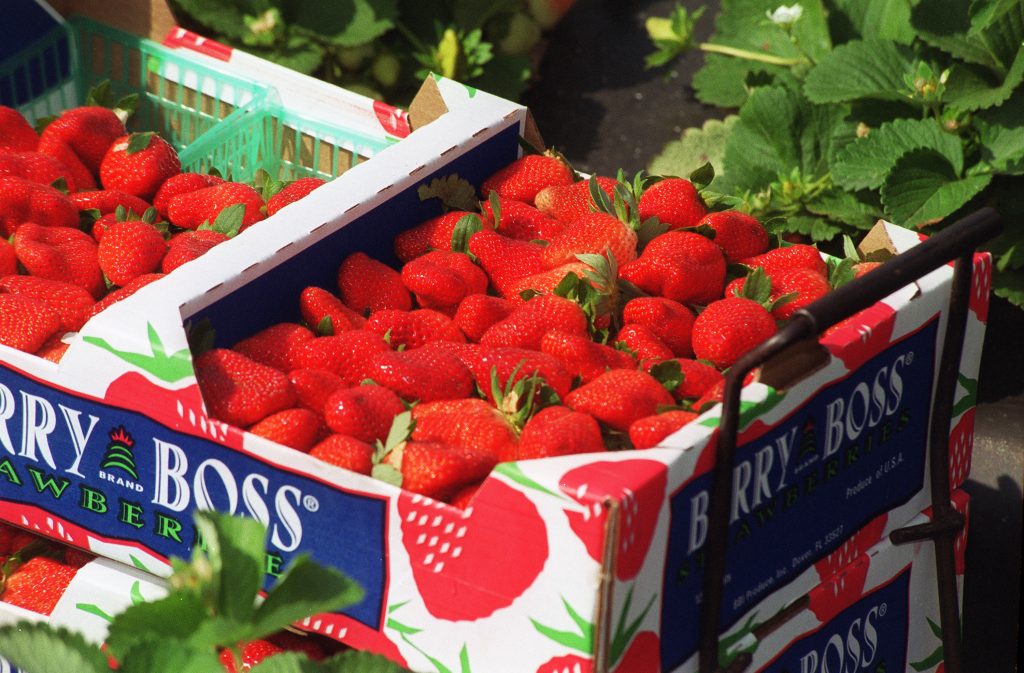
File photo shows strawberries just harvested and packaged.
Georgia strawberry producers need to monitor their plants for Neopestalotiopsis Fruit Rot. It has already caused problems for Florida farmers and nurseries in North Carolina where many Georgia farmers get their plugs from.
“(Georgia producers) should be aware of it. We had a meeting on it again,” said University of Georgia plant pathologist Phil Brannen.
“It has been found in Florida again. Some of the growers down there are ripping up a lot of strawberries and trying to replant with fresh plugs, because they got it in and don’t want to take a chance. It’s causing issues there. Even in the northeast, some people have gotten in plugs up there that have it and the same thing, they’re just destroying those plugs. They don’t want to take a chance.”
Symptoms
According to Strawberry News, Brannen referred strawberry farmers to research done by University of Florida scientist Natalia Peres. Symptoms below ground were darkening of the roots and orange-brown necrosis in the crowns, which leads to stunting or poor establishment after transplanting. There will be stunting, wilting and necrosis of older leaves above ground, which results in collapse and death of the plant.
The common link of the outbreaks so far was the nursery source for the plants.
Not Yet Found in Georgia
“So far, we have not identified it in Georgia. We’re having other issues in our initial starting plants but it’s not that. Thankfully, everything where we have been looking for it we have not seen it or identified it yet in Georgia,” Brannen said. “I don’t know what that means. I don’t know if that means we’ve gotten lucky so far or what. But people that have been getting their plugs from certain sites in North Carolina are seeing problems.
“We know we are getting plants that could have it. But these (nurseries) are huge. We may get a block that doesn’t have it at all.”
Be Vigilant
Brannen said growers should be vigilant when receiving and inspecting strawberry plants this year. They need to work with county agents to confirm diseases that show up on young and maturing plants throughout the season.
“It’s costing the industry, even if it’s just a cleanup where it maybe an abundance of caution, people are not waiting to see what happens,” Brannen said.
Switch and thiram products are the only fungicides that provide some suppression of the disease.
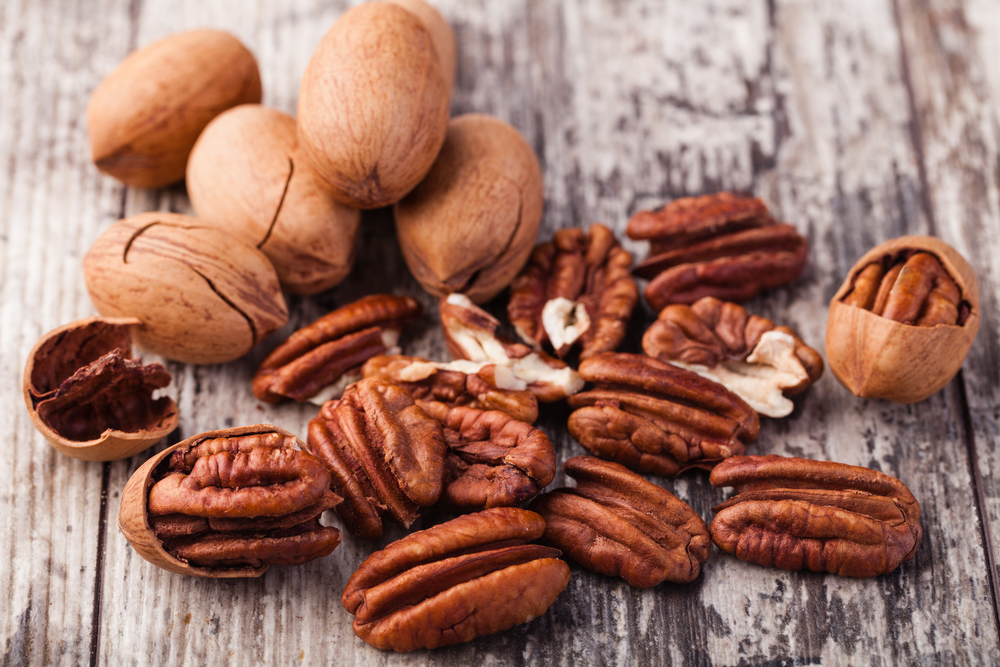
Photo by Clint Thompson/Shows pecans being cleaned after harvest.
A popular option that Georgia pecan producers are utilizing to combat low prices is to put them in storage in hopes of improved prices in the future.
However, University of Georgia Cooperative Extension pecan specialist Lenny Wells cautions growers who take this approach.
“That’s most of what I hear taking place. I haven’t heard a lot (of pecans) over the last (couple of weeks) being sold at the offers they were getting. There was a little here and there but not much. The issue that I see with that is I see no sign of things getting better, even holding it,” Wells said. “If they hold it there’s a risk of having this problem continue on into next year when we’re likely to have as much as we have now.”
Decreased Prices
South Georgia farmer Randy Hudson said prices are anywhere from 30% to 50% less than what they’ve seen the last three years. Prices are the lowest they’ve been in the last 20 years, while expenses remain high.
The depressed market also comes amid a bumper crop across the Southeast. Instead of giving in to low prices, buyers are taking the wait-and-see approach.
“Putting them into cold storage and holding them has always been the thing growers will do when prices have bottomed out like this, but back when that worked, we didn’t have to worry about Mexico’s production. We didn’t have to worry about South Africa’s crop coming off in May and June,” Wells said. “There’s a very narrow window there that you’re just hoping that the demand for pecans goes up during that time.
“I don’t know when to expect the price to get any better.”
NIHC Becomes First Hemp Organization Officially Recognized by USDA Foreign Agricultural Service as Market Access Program (MAP) Partner
File photo shows hemp field.
WASHINGTON – The National Industrial Hemp Council announced it received $200,000 in U.S. Department of Agricultural (USDA) Market Access Program (MAP) funding to support export market development of industrial hemp.
“We are grateful for USDA confidence and the recognition of NIHC as the industry leader in industrial hemp trade and marketing,” said Kevin Latner, NIHC’s Senior Vice President for Trade and Marketing who will be responsible for implementing the program. “Today’s announcement makes NIHC a trusted partner to USDA for hemp fiber, feed, food and CBD companies looking to break down trade barriers in markets overseas.”
MAP funds are administered through USDA’s Foreign Agricultural Service (FAS). Through the MAP program, FAS partners with U.S. agricultural trade associations, cooperatives, state regional trade groups and small businesses to share the costs of overseas marketing and promotional activities that help build commercial export markets for U.S. agricultural products and commodities. These funds can be used for facilitating trade missions and meeting with industry stakeholders and government regulators overseas.
NIHC programs will focus on Europe and China and include market research, trade policy and trade facilitation. The global industrial hemp and products market was estimated at $11.1 billion in retail sales in 2019. With an annual growth rate of 52%, driven by continued strength in textiles, food and industrial uses and hemp-derived cannabidiol (CBD), the global market is forecast to be worth $89 billion by 2025.
Hemp for industrial use, textile and CBD market is expected to quickly expand and be the primary driver of global industry growth. By 2021, the global trade of hemp is forecast $8.1 billion across all markets, representing a three-year compound annual growth rate (CAGR) of 83%. Europe, China, and Canada are currently the primary sources of industrial hemp. With the passage of the 2018 Farm Bill, the U.S. has become the world’s third largest producer of industrial hemp.
Europe has rapidly developed a robust hemp and CBD market. Europe is also a strong producer of industrial use hemp products with $424 million in industrial product sales. China has led global markets in textiles with almost 80% of the $1.7 billion hemp textile market in 2019.
In addition, National Industrial Hemp Council members will now have unprecedented access to United States trade negotiators; foreign government counterparts; and a network of international hemp industry association counterparts. Foreign governments understand that NIHC is now supported by the U.S. government and represents U.S. industry interests.
Market Access Program funds can be used by NIHC throughout the world to support market access and trade policy work, international trade promotion including supporting business-to-business facilitation and consumer and brand marketing.
MAP funds for 2021 will be administered to NIHC through the Food Export Association of the Midwest USA.
“We’re extremely confident and trust that NIHC will represent the best interests of U.S. industrial hemp abroad. We’re excited to be working with them as part of the USDA cooperator community,” said Tim Hamilton, Executive Director of Food Export Association of the Midwest USA.
About the National Industrial Hemp Council: The National Industrial Hemp Council provides high-quality networking and resources for its members, from farm to consumer. Its leadership is composed of leading international, federal, state, private industry, and government professionals throughout the sector. The organization is dedicated to furthering market development, assisting members in entering the industry, and educating consumers on industrial hemp and its applications. For more information please go to www.hempindustrial.com.
Organic agricultural production is increasing in Georgia. Jonathan Oliver, University of Georgia (UGA) assistant professor and small fruits pathologist, wants to help producers be more efficient by researching ways to protect organic blueberries from diseases.
According to UGA Extension, the U.S. Department of Agriculture National Institute of Food and Agriculture awarded a $2 million grant to the team of 15 scientists from 5 universities and the USDA Agricultural Research Study, including Oliver at UGA. While the group of researchers will focus on various fruits, including peaches, mangos and avocados, Oliver’s focus will be centered on blueberry production, the highest value fruit crop in Georgia. All will be seeing if essential oils can help suppress certain pathogens and pests.
Oliver Comments
Oliver
“The essential oils organic grant is actually looking at a lot of different crops in the southeast and whether essential oils could have a role in a disease management program. There is data showing that essential oils can have antifungal properties and things like that if used in the laboratory or the greenhouse. But field studies are lacking,” Oliver said. “Since Georgia is one of the top producers of blueberries in the country and definitely in the Southeast, my role on this grant as the blueberry pathologist at UGA is to look at whether these products can be effective in the field and help our organic growers here that are growing blueberries.”
Oliver will apply the essential oils in the field in a similar manner that producers apply other products. He’ll also be looking at diseases that affect blueberries after harvest. Will this treatment have a post-harvest impact if applied prior to harvest?
“Cultural practices are really important in both conventional and organic, but in organic, they’re especially important. As far as chemical management in organic systems, you’re really limited on the types of products you can apply. No synthetic pesticides can be used. Typically, the synthetic pesticides are the ones that are going to be most effective. Usually, organic pesticides need to be applied more frequently to obtain control, if you can obtain control,” Oliver said. “We really need a lot more tools for our organic growers to help them manage diseases.”
Grant Background
The four-year project will support researchers who specialize in fruit crop management and physiology, plant pathology, entomology, post-harvest biology and organic production.
In the research, scientists will:
Begin to test plant disease efficacy claims of essential oil products marketed for organic producers.
Evaluate organically certified plant essential oils on targeted pathogens such algal stem blotch, brown rot, scabs, gray mold and powdery mildew.
Determine the efficiency of essential oils on fruit shelf life through postharvest testing.
While arthropod pests are not the primary focus of this research, researchers also will test the efficacy of essential oils against insects including scales, thrips and mites.
Organic food sales topped $50 billion in the United States in 2018. According to the Organic Trade Association, fruits, vegetables and specialty crops comprised of 36.3% of the total organic sales, which is up 5.6% from the previous year.
Rain and wind this week have made it a challenge for Georgia pecan producers harvesting this year’s crop. Farmers still can’t find a ray of sunshine amid declining prices.
According to the USDA Pecan Report that was released on Tuesday, prices are lower than a week ago and most farmers with export quality pecans are holding them in storage until market prices increase; or they will wait until after New Years to offer them for sale.
Prices include, for lots of 20,000 pounds or less: Cape Fear, $1.18 to $1.36 per pound; Desirables, $1.21 to $1.41 per pound; Elliott, 90 cents to $1 per pound; Seedlings, 40 cents to 50 cents per pound; Stuarts, 50 cents to 75 cents per pound; and Sumner, 70 cents to 80 cents per pound.
For lots over 20,000 pounds, including truckloads; Cape Fear, $1.18 to $1.36 per pound; Desirables, $1.20 to $1.63 per pound; Stuarts, $1.30 to $1.33 per pound; Sumner, $1.23 to $1.38 per pound.
The release stated that, “Prices paid to growers (late afternoon Tuesday, November 03, 2020 through late afternoon Tuesday, November 10, 2020) at buyers delivery point or F.O.B. the orchard including direct sales to end users, cents per pound in-shell of generally good quality in lots of 20,000 pounds or less unless otherwise stated.”