Category: Georgia

  • Today is Pack Date for Georgia Vidalia Onions

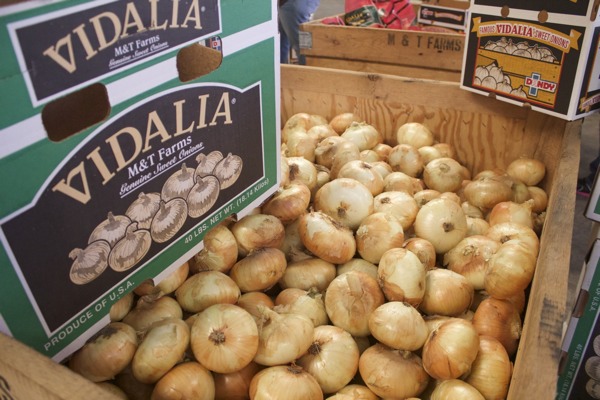
    Today is the pack date for Georgia Vidalia onions. An advisory panel comprised of industry leaders determined that April 19 be the first day of the year consumers could buy Vidalia onions.
    “A lot of growers were getting ramped up with harvest end of (two weeks ago) to really have onions that would be ready to sell for the pack date,” said Chris Tyson, University of Georgia Extension Area Onion Agent at the Vidalia Onion & Vegetable Research Center in Lyons, Georgia. “We’re still digging onions, clipping and grading. We’ve got a little bit of everything going on now. We’re starting to get into full swing of things.”

    Growers in Southeast Georgia also could not have asked for better weather conditions to harvest their crop.

    “It’s been clear and sunny. It hasn’t been too hot, yet We’ve had highs in the 80s, that’s almost perfect weather conditions for field curing onions,” Tyson said. “We start to get a little concerned when temperatures get hot. When it gets into the 90s, it’s harder on the onions. When it’s wet too, it’s the same thing. But it’s been mild and dry. It’s been really nice for them.”

    Growers first dig onions and let them field cure. Then they’ll clip the onions and send to the grading house to be packaged and boxed up.

    “I think we have a good, quality crop out there for the most part. This weather we’ve had up until now has really helped that,” Tyson said. “The weather can make us or break us. It’s been on our side so far. We’ve got a good-looking crop out there. I think the quality’s going to be really good.”

  • Florida Farmer: It’s Going to Take a Movement

    Two farmers. Two states. One message: The government needs to do more to support the American farmer.

    In an era of increasing costs and imports that continue to flood the marketplace, more and more farmers express concern about the decreasing role American farms have in feeding our country.

    “Florida specialty crops is really getting the raw end of the deal here. There are people that are making lots of money off exporting. It’s not us,” said Florida strawberry producer Dustin Grooms. “Our berries are meant to be eaten fresh right here locally and around the U.S. We can’t compete with (Mexico’s) labor. That’s one of the main things is their labor. We just can not compete with their low prices. They know that. Every time it seems that we’re starting to get somewhere with the government, we take one step forward and about 10 steps backwards. It’s a losing battle.”

    Labor Battle

    Labor is at the forefront of this battle and one that Mexico is winning. It was established during the USITC hearing on cucumbers and squash that labor rates in Mexico were just shy of $12 per day; which is comparable or even less than what some American farmers have to pay for workers per hour.

    “I just don’t understand how in America we expect the farmer to grow things under certain environmental regulations and labor regulations and that comes with a cost. If you’re going to regulate the American farmer then you’ve got to protect them against countries that don’t have similar regulations,” said Georgia blueberry farmer Russ Goodman. “If nothing’s done about it, and we’re already starting to feel the repercussions in rural communities across the country, it’s just going to get worse.”

    Increasing Frustration

    Goodman is especially frustrated about the report that says the Biden Administration plans to manage the immigration crisis by asking private U.S. companies to invest in Mexico and Central America.

    “I hope at some point in time our government will recognize it’s a national security issue,” Goodman said. “If you take anybody that has a 90% advantage over something that is 40% of their costs of doing business, they’re going to put their competitor out of business. The sad thing is that competition comes in the form of the American family farm. I just don’t know what the future holds. It’s absolutely amazing to me that our country is not trying to do something to protect farmers.”

    Food security and food awareness need to be heightened in this country. Consumers need to be made aware of how and where they get their food.

    “We need the support of the government. We also need the support of the American people to buy our products and not foreign imports,” Grooms said. “That’s what it’s going to take, a movement.”

  • Georgia Strawberry Farmer: Disease Wiped Out This Year’s Crop

    Neopestalotiopsis Fruit Rot is not just impacting Florida strawberry producers. It has quickly made its way north. Just ask Georgia strawberry farmer Bill Brim.

    Photo by Natalia Peres/UF: Shows the effect of Neopestalotiopsis Fruit Rot on strawberries.

    “It just wiped (my strawberries) out. As a matter of fact, we sprayed it with roundup (Wednesday),” Brim said.

    Brim’s strawberry production equated to 12 acres.

    “It’s a pile of money, too, the plants; about $60,000 worth of plants,” said Brim, who is in his fifth season growing strawberries at Lewis Taylor Farms, in Tifton, Georgia. “We didn’t have it last year. If we had it, we didn’t know it. It wasn’t noticeable. There might have been a few plants.”

    But that wasn’t the case for this year’s crop.

    Symptoms

    Neopestalotiopsis causes leaf spots on strawberry plants. It develops quickly and produces spores on the leaves. It can cause severe leaf spotting and fruit rot under favorable weather conditions. The disease was first discovered during the 2018-19 season in five farms and was attributed to one nursery source in North Carolina.

    “We’re going to have to change vendors is what I think we’re going to have to do; get them out of California, Canada, somewhere. Can’t grow them in Florida, send them over and plug them out in North Carolina and get a clean plant, don’t look like,” said Brim, who is not the only Georgia strawberry farmer impacted. “It’s not just us, there’s several other growers that have got it, too.”

    Disease instances have increased over the past three seasons. The disease was also discovered in fields that had it the prior season.

    One Florida producer even called it the “Greening of Strawberries.”

  • Breaking Ground: Pecan Trials Planted at UGA’s VOVRC

    UGA CAES photo/County agents Shane Curry, Ross Greene and Zack Williams planting pecan trees at the Vidalia Onion and Vegetable Research Center with Andrew Sawyer, SE District Area Pecan Agent and coordinator of the grant project which includes short-term demonstration plots and long-term research trials.

    University of Georgia Cooperative Extension is conducting pecan research at the UGA Vidalia Onion and Vegetable Research Center (VOVRC) in Toombs County.

    Pecan trees were planted earlier this year and will be the basis for long-term research plots and short-term demonstration plots.

    Research will focus on low-input pecan varieties that can successfully grow in Georgia without incidence of pecan scab. Plots will also serve as hosts for field days for Extension agents and producers.

    Andrew Sawyer, Southeast District Area Pecan Agent, initiated the project last year with a grant from the Georgia Pecan Commission.

    Sawyer compiled a team of specialists, county Extension agents, local growers and growers association representatives to make sure everyone had a hand in the process.

    “This is the essence of true Extension work,” he said of the team effort that helped get more than 140 pecan trees planted in February this year.

    The team planted various low-input cultivars including McMillan, Lakota, Avalon, Excel, Eclipse and Kanza. Sumner, an older variety, was also planted to be used in comparison, due to its susceptibility to pecan scab fungus and popularity among growers in Southeast Georgia. Many seedling trees were also planted which will be grafted with newer varieties in a few years.

    Sawyer and his team will highlight differing management tactics, including fertilizer, pruning, irrigation and spacing regiments and their potential impact on growth and yield.

    “Pruning is a very important cultural practice that is easier to demonstrate than discuss,” explained Sawyer, “so this site will be good for demonstrating the right way to prune pecans within their first four years.”

    Source: UGA Extension

  • Drought Monitor: South Florida Remains Abnormally Dry

    South Florida received a substantial amount of rainfall last weekend, but it still remains dry across the region. According to the Thursday’s release of the US Drought Monitor the majority of south Florida and parts of central Florida are abnormally dry. Even counties like Monroe, Collier and Palm Beach are classified ‘D1’ or in a moderate drought.

    The abnormally dry conditions extend as far north as Citrus County, Marion County, Putnam County and Flagler County.

    South Georgia still has enough moisture from the excessive rains it received in February. There are about 20 counties in north Georgia that are abnormally dry. They start in Henry County and Clayton County and extend as far east as Elbert County and Hart County.

    There is also a few counties that abnormally dry along the Georgia-Alabama line. They include Haralson County, Carroll County and Heard County.

    In Alabama, the abnormally dry counties are Cleburne County, Randolph County and Chambers County along the Georgia-Alabama state line. There is a small portion that is abnormally dry in Monrore County and Wilcox County.

  • Ripening Industry: Georgia Citrus Continues to Grow

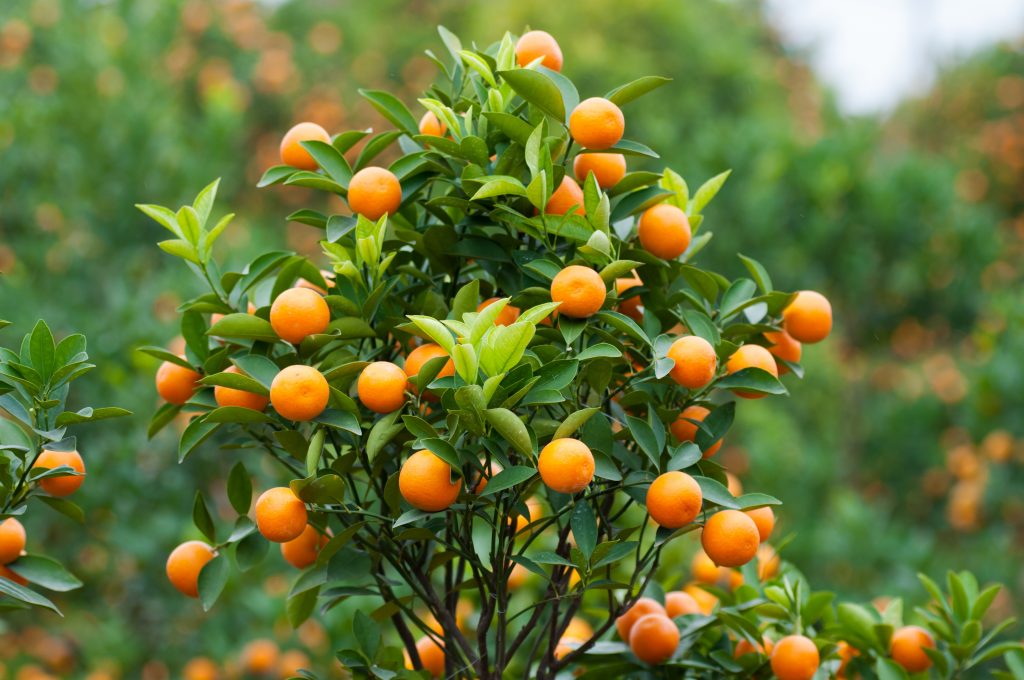
    Photo shows satsuma oranges.

    One Georgia farmer sees citrus as an emerging industry in Georgia with huge potential. Justin Corbett even compares it to another popular crop that’s dominated the state’s fruit landscape.

    “I think it has the potential to be a big industry. I compare it to blueberries 10 or 15 years ago, I just hope we don’t follow the same path they followed with imports affecting them now,” Corbett said.

    Corbett is one of many farmers in Georgia who are trying their hand in the citrus sector with satsumas. Satsumas are the most grown citrus in Georgia. Between 80% and 90% of Georgia citrus is satsuma oranges, according to Lindy Savelle, President of the Georgia Citrus Association.

    They are a cold-tolerant citrus, and once established, can withstand temperatures as low as 15 degrees. This makes them an effective crop for Georgia producers. They’re also seedless and easy to peel.

    “It’s definitely an emerging industry. We’re trying to build a brand with it and trying to get consumers aware of what a satsuma is. Once the consumer tries it, they love it,” said Corbett, whose trees have produced fruit for almost six years. “It’s a challenge to get them in to retail locations and different places just to get them out there. Where we’ve got them in, they’ve been real pleased with how they’ve turned out.”

    Along with marketing, another challenge that Corbett and other Georgia citrus producers face are late-season freeze events.

    “We have been hit in the past where we would get a mid-March freeze and wind up with losing some bloom, losing some yields,” Corbett said.

  • Labor Shortage? Not According to Southeast Farmers, Industry Leaders

    One of the focal points of the U.S. International Trade Commission hearing on the impact imports of cucumbers and squash have on the domestic industry is labor; how much it costs and the availability of it.

    Lance Jungmeyer, president of the Fresh Produce Association of Americas, insists the lack of workers has led to a quality issue with produce grown in the Southeast.

    “Without adequate labor, Southeast growers are at a severe disadvantage for how they grow and pack. Their products result in a distinct quality disadvantage that U.S. retail customers clearly recognize,” Jungmeyer said.

    Not So Fast

    But farmers and industry leaders in Georgia and Florida scoff at the notion that there is a problem with worker availability.

    “I would dispute that,” said Florida farmer Marie Bedner. “We have the same people that return year after year. We invested in our farming future and built a state-of-the-art 400-bed facility for these employees.”

    Mike Joyner, president of the Florida Fruit and Vegetable Association (FFVA), said Florida brought in 39,000 H-2A workers last year.

    “To the labor issue, I’m concerned that there’s a theme that we have a problem and I’m just not seeing it,” Joyner said.

    Same for Georgia

    The same is true in Georgia as well.

    “Those growers that are using H-2A, we do not have a labor shortage. Generally, workers are using some domestic help, or they’re using H-2A workers. Labor shortage is not a problem,” said Charles Hall, executive director of the Georgia Fruit and Vegetable Growers Association.

    Last August, Veronica Nigh, an economist with American Farm Bureau Federation, said H-2A applications were processed effectively and in a timely manner even during the early onset of COVID-19. She noted that Florida was the largest user of the H-2A program during the year’s first three quarters. It listed 28,005 certified positions. Georgia listed a little more than 23,000 certified positions.

    What Southeast producers may be most concerned with is Mexico dumping produce, or exporting a product at a price below the price charged in the country of origin.

    “Our growers are paying well above minimum wage by the time you add in all the travel, housing. That labor is costing $15, $16 an hour,” said Gene McAvoy, University of Florida/IFAS Regional Vegetable Extension Agent IV Emeritus. “If you look at the cost of labor being about 30% of our cost of production and the break-even price on squash is $8.50 a box, take $3 off of it, and that’s $5.50. It’s still hard to see how Mexico could put squash into the U.S. market in recent weeks at $3.98 a box. There’s just no way it could be done.

    “Tractors (there) cost as much as they do in the United States. Boxes cost as much as they do in the United States. Chemicals cost as much as they do in the United States. Even if you subtract labor, there’s no way that product is coming into the market without dumping occurring.”

  • Scab Disease: To Spray or Not to Spray?

    Picture shows scab disease on pecans.

    The calendar may say it’s time for pecan producers to spray for scab but the weather conditions, combined with the current market season, say otherwise.

    Lenny Wells, University of Georgia Cooperative Extension pecan specialist, says it still early to start spraying for scab disease this week. Next week should present a more optimal timeframe. It would also coincide with growers’ plans of reducing input costs.

    “One of the goals that most growers had going into this season was to try to save some money because they saw what the prices were this year. They know that with the kind of crop we had last year, we’re not likely to have a heavy crop this year, overall,” Wells said. “With the potential for low prices out there, saving money is on everybody’s mind. Fungicide sprays make up 12% of the budget of growing pecans; 12% of the variable costs of production. That’s one big area you could potentially save some money in.”

    Slower Progression

    Pecan trees are also progressing later than normal; about a week to 10 days later. The up-and-down weather conditions that consist of cold temperatures during Easter weekend and the current warmer temperatures have slowed the progression of the trees’ foliage. Some varieties like Elliott and Cape Fear have budded out. Others like Stuarts and Desirables are just now starting to come out.

    “By the calendar, growers are used to spraying by this time. There are some areas where there are some varieties where we’ve had heavy scab pressure or the site has heavy scab pressure because of the lay of the land; and you’ve got varieties that scab. Those situations, I can see an argument being made for going ahead and starting,” Wells said. “For the most part, I think it would be a little premature to start this week. Maybe next week, I think would be more like it.”

    Spraying too early will also have repercussions later in the growing season.

    “If you go ahead and jump out there and start spraying now when you don’t really have that much foliage to cover and the foliage development is later, that means that the crop development is going to be later and then our crop maturity and harvest is going to be later. If you start now and there’s not a whole lot out there to spray, that’s just extra spraying you’re going to have to do,” Wells said. “There’s soon going to be a point in the season where you’re going to have to spray. If you start now, you’re just extending that period of time out to where you’re going to have to keep spraying possibly more than you normally do.”

  • Market Manipulation: Vegetable Farmers Vulnerable to Increasing Imports

    United States of America and Mexico waving flag

    The vegetable and specialty crop sector is vulnerable to market manipulation. That makes what Mexico is accomplishing through its increased imports of cucumbers and squash dangerous for the future of the American farmer, claims Georgia farmer Dick Minor.

    “In 2018, the combined acres planted into fresh market cucumbers of the top five producing states was less than 30,000 acres,” Minor said. “A simple 10% increase in production is enough to totally devastate the marketing window and eliminate any chance of profitability.

    “Mexico, over the last 10 years has dramatically increased production of cucumbers and squash. They have expanded production with no regard for other production areas or without regard for probability of making a profit.”

    Competitive Disadvantage

    Minor produces eight different vegetable crops, which include cucumbers and zucchini squash. It is very common to produce both crops. But it’s also becoming increasing challenging to produce both crops when compared to unfair competition against Mexico.

    “The last 34 years have presented many challenges to our vegetable farming operations. However, none has presented a threat near the scale of the dramatic increase in low-cost Mexican vegetable imports,” Minor said.

    Many factors led to this unfair competitive advantage, as claimed by Minor and other Florida and Georgia farmers during Thursday’s U.S. International Trade Commission hearing. Labor tops the list. Mexico can pay its workers a small fraction of what farmers like Minor pay theirs.

    “Mexico is able to offset its disadvantage in location with some of the most abundant and cheapest labor costs anywhere in the world,” Minor said.

    Government subsidies also contribute to Mexico’s workforce growing more and more produce under protected acreage. Mexico can import its produce 12 months out of the year, which directly impacts marketing windows for Southeastern farmers.

    “Florida growers understand that when Georgia starts they need to be finished harvesting and they plant accordingly. Georgia growers understand that North Carolina will start harvesting in late June, and when we plant, we also plant accordingly. Each growing area understands its window,” Minor said.. The factors that influence when and how much product they can produce and still maintain the probablilty of still maintaining a profit.”

    Supply is the main factor that affects daily prices. Fresh produce needs to be sold and sent to markets as soon as it is harvested. Markets are volatile. They can surge quickly or drop instantly, as they are sensitive to change and planted acres.

    “Today, low costs Mexican production is threatening every grower in the United States,” Minor said.

  • Georgia is Nuts About Pecans

    Samantha McLeod photo/Georgia Governor Brian Kemp designated pecans as the official state nut for Georgia.

    Brian Kemp is nuts about pecans. So is the rest of Georgia for that matter. Just call Georgia the “Pecan State.”

    Georgia’s Governor designated the pecan as Georgia’s official state nut on Friday at an event at Ellis Brothers Pecans in Vienna.

    According to the USDA Fruit and Tree Nuts Outlook, Georgia reclaimed the status as the largest pecan producer in the country after last season’s output, after being bested by New Mexico the previous two years.

    Last year’s harvest rose 95% to 142 million pounds. Statewide bearing acreage remained steady at 129,000 acres, with yields per acre estimated at 1,100 pounds per acre.

    According to the UGA Extension, pecans were ranked as the top state for pecan production by the 1950s. It’s a status that’s still true today.

    For more up-to-date information about pecan production in Georgia, see https://site.extension.uga.edu/pecan/.