Category: Georgia

  • Pecan Prices Stay Low

    It is getting late in the pecan harvest season. Prices remain low for farmers across the Southeast.

    According to the USDA Pecan Report, some producers are storing pecans they would normally export in hopes of getting a better price after the new year. Farmers and homeowners who are trying to sell now are still encountering decreased prices.

    Photo by Clint Thompson/Shows pecans being cleaned after harvested.

    “Export and retail gift quality pecans are still being pursued by buyers for holiday sales, but the Asian markets have not been wide open as in past years. Growers are hoping for a change in that area soon,” according to the press release.

    Growers are busy finishing up going over the orchards for a second or third time if needed. They are taking samples and having them graded for sale.

    Prices for Georgia Pecans

    Prices paid to Georgia growers (late afternoon Tuesday, November 24, 2020 through late afternoon Tuesday, December 1, 2020). These were at buyers delivery point or F.O.B.; also, the orchard including direct sales to end users, cents per pound in-shell of generally good quality. These prices are for lots of 20,000 pounds or less unless otherwise stated.

    Cape Fear (deliveries light) meat yield 49-52% 113-136

    Curtiss (deliveries insufficient to establish market)

    Desirables (deliveries light) meat yield 48-52% 113-136,yard tree lots 80-100

    Elliott (deliveries very light) yard tree lots 90-100

    Farley (deliveries very light) yard tree lots70-80

    Moneymakers (deliveries very light) yard tree lots 40

    Native/Seedlings (deliveries light) yard tree lots 40-50 occasional lower

    Schley (deliverieslight) yard tree lots 70-85

    Stuarts (deliveries light) meat yield 46-52% 104-125, yard tree lots 50-75 mostly 70-75 few high as 90

    Sumner (deliverieslight) meat yield 51-53% 118-138, yard tree lots 70-80

    Lots over 20,000 pounds including truckloads

    Cape Fear (deliveries light) (nut count 50-55) meat yield 49-52% 120-133

    Desirables (deliveries light) (nut count 45-50) meat yield 50-52% 123-136

    Stuarts (deliveries light)meat yield 46-52% 111-130

  • Diamondback Moths a Problem for Cole Crop Producers

    University of Georgia CAES photo by David Riley/Shows diamondback moth and its damage.

    Diamondback moths are starting to show up in some vegetable fields across Georgia, says Stormy Sparks, University of Georgia Cooperative Extension vegetable entomologist. Cole crops producers need to be wary of this pest, as it can pose a threat to cabbage, collards, kale and broccoli.

    “Diamondback moth is starting to show up in some areas. We’ve had three or four really bad fields, and they’re really hard to control,” Sparks said. “It’s been scattered. It’s not just one area right now, either.”

    Generations Per Year

    According to UGA Extension, there are multiple generations per year in Georgia. Generation time will slow considerably in the winter months. However, greater moth activity has been observed when temperatures are higher than normal in December and January. That could be the case this winter with an extended La Nina weather pattern expected.  

    “That’s a strange pest. It has the potential to explode or disappear anytime of the year,” Sparks said. “They can be a problem in the middle of the summer and in the middle of the winter or they can just disappear.”

    Insecticide Effectiveness

    Sparks said they have looked at insecticide products like Proclaim and Radiant. He characterized their success as good to fair. Nothing looks great because this is a hard pest to kill.

    “They are the world champion of insecticide resistance,” Sparks said.

    He added that with the Group 28 insectides, resistance looks pretty severe.

    According to UGA Extension, larvae will feed on foliage. Early instars can cause small channels in the leaf surface. Larger larvae can cause perforations in the leaf. Populations above 0.3 larvae per plant need to be controlled. Sparks recommends growers scout weekly to determine if that threshold level has been reached.

  • Stanley Culpepper: A leading voice for growers

    By Clint Thompson

    When University of Georgia (UGA) Cooperative Extension weed agronomist Stanley Culpepper speaks, Tift County grower Bill Brim listens. After more than two decades of Culpepper providing expertise regarding more than 20 different vegetable crops, there’s no reason for Brim not to pay attention.

    “He’s a great young man. He’s a hard worker and tries to get things done. He’s the best one out at the (experiment) station, as far as I’m concerned,” says Brim, co-owner of Lewis Taylor Farmers in Tifton, Georgia.

    Culpepper’s accomplishments are a big part of why growers like Brim have confidence in what the scientist says. A professor in the UGA Crop and Soil Science Department, Culpepper is a world-renowned scientist at one of the leading agricultural colleges in the country and has had a lot to say over his 20-plus years at the Tifton campus.

    Culpepper’s team is improving tactics for vegetable growers to better manage weeds. In the last couple of years, he has been very active in fruiting vegetables, like tomato, pepper and eggplant; cucurbits, like watermelon, squash, cantaloupe and cucumber; cole crops, like broccoli and cabbage; and leafy greens, like collard and mustard; as well as carrots.

    Whether it’s researching alternatives to methyl bromide or developing management strategies for overcoming palmer amaranth weeds, Culpepper has had far-reaching impact in commodities across the world.

    “My team’s research efforts have always and will always follow the needs of our growers, which are of course, very diverse,” Culpepper says. “Developing alternative systems to methyl bromide that our farmers continue to rely on today was certainly among our more impactful work. I also think it was my favorite personal project. That effort was so large that I had an opportunity to work with growers for an extended period of time early in my career. Those growers really helped teach me how to grow vegetables on plasticulture. And of course, what good is research if the researcher can’t grow a crop like a grower?”

    UGA 3-WAY

    Culpepper’s work with methyl bromide alternatives is considered among his most impactful contributions as a scientist. For decades, Georgia vegetable producers relied on methyl bromide as a soil fumigant to control weeds, insects and nematodes. It was phased out in the mid-2000s, though, when the Environmental Protection Agency deemed it harmful to the ozone.

    Culpepper devoted almost 10 years of research to finding suitable alternatives. Brim said an effective alternative that Culpepper was responsible for was the UGA 3-way system that implements Telone II, metam sodium and chloropicrin.

    “What he did was just a tremendous help for us as far as developing a new product that we could use” for weed, fungus and nematode control, says Brim. “Without that, we’d probably be out of business. Methyl bromide was such a forgiving chemical as far as helping us develop nematicide programs and weed control and disease control. When we lost methyl bromide, we thought we were just done. Stanley did research here on the farm on the 3-way … two years before we actually started using it completely before methyl bromide was taken away from us. We really didn’t know until years later (how effective it was going to be), and now we’re still using the 3-way.”

    EXPANDING HERBICIDE LABELS

    Another area Culpepper has had a major impact on is the development of new herbicide tools for vegetable growers. His efforts have led to more than 34 new herbicide uses in various vegetable crops for Georgia farmers. He has also assisted growers in other states to obtain these labels.

    “I absolutely love finding new effective herbicides for a vegetable grower and getting them labeled in a way that is safe for the user, the crop and our environment. Of course, this accomplishment is the result of an amazing team of people working together from the University of Georgia, industry, IR-4, The Georgia Department of Agriculture and the U.S. EPA,” says Culpepper. 

    DESTINED FOR AGRICULTURE

    Culpepper was destined for a career in agriculture. He grew up on a bicentennial family farm in North Carolina where his family produced corn, cotton, peanuts, soybeans and wheat. So much of his childhood influenced every step of his career. Culpepper remembers those hot summer days of pulling weeds when he was very young. He even recalls chopping them down with a hatchet as some were twice as big as he was.

    “I thought I might be able to make a difference studying weed science,” Culpepper remembers. “Hopefully, I have.”

    He received a bachelor’s degree in agronomy and his master’s and doctorate degrees in weed science from North Carolina State University.

    Culpepper began his professional career at UGA as a cotton, vegetable and small grain weed scientist in 1999 and continues with those same responsibilities today.  

    ACCOMPLISHED CAREER

    Culpepper’s awards and accomplishments speak volumes about how his colleagues view his work. He has been a guest speaker at more than 300 events across the globe; 686 Extension county meeting presentations and 66 in-service Extension trainings. He has authored or co-authored 106 refereed journal articles, four book chapters, 406 abstracts for presentations, 223 Extension publications and 222 newsletters/blogs.

    Culpepper has received 31 professional awards. Some of the highlights include:

    • Donnie H. Morris Award of Excellence in Extensionfrom the Georgia Fruit and Vegetable Growers Association (2003)
    • Montreal Protocol Award from the EPA for assisting in the preservation of the ozone layer (2010)
    • Walter Barnard Hill Award for Distinguished Achievement in Public Service and Outreach from UGA (2014)
    • Southern Region Excellence in Extension Award from the Association of Public and Land-grant Universities (2016)
    • Walter Barnard Hill Distinguished Public Service Fellow Award from UGA (2019)

    In addition, Culpepper is currently serving a third term as a member of the Agricultural Science Committee of the U.S. EPA Science Advisory Board.

    Culpepper attributes his success to working with others. “Success is really driven by cooperation, whether that is with Extension agents, farmers, consultants, industry partners, regulators, or usually with all of these groups. As we continue to move forward in agriculture, this is a priority for our sustainability,” Culpepper concludes.

  • Neopestalotiopsis Disease Confirmed on Georgia Strawberry Plants

    Image of Neopestalotiopsis leaf spot from Georgia strawberries (provided by Mark Frye; Wayne County Cooperative Extension Service).

    Georgia strawberry producers need to be wary of Neopestalotiopsis; a disease that has already devastated Florida production and could have wide-ranging impact on Georgia’s crop if farmers are not proactive.

    Phil Brannen, University of Georgia Cooperative Extension Fruit Disease Specialist, cautions farmers that while the disease has been found in just one Georgia location and only as leaf spotting, there is a common link to suggest there could potentially be additional cases.

    “We know that particular pathogen, Neopestalotiopsis, that’s been causing devastating losses in Florida, we’ve got. Our environment may be different. We’re a little bit colder than they are down in South Florida and that may help us. We just don’t know,” Brannen said.

    “So far, we haven’t seen it on fruit, obviously. It’s the wrong time of year. But the fact that it’s on the leaves, that follows what they’ve seen this year. They got it a few weeks earlier than we did from some of the plants they’ve got down there.”

    Same Origin

    Many of the strawberry plants originate from the same nursery in North Carolina, where there have been widespread problems associated with this disease. That leads Brannen to believe this is just the beginning.

    “I think coming from that nursery we’re going to see more, because of the association with this one nursery in North Carolina. I suspect that anybody who got their plants from that nursery stands a good chance of having it,” Brannen said.

    Fungicides Available

    Brannen says the best fungicides available are Switch and thiram. They provide suppression of the disease, though it is less than 50% control. Still, any control is better than no control to avoid a major outbreak.

    “It hopefully will get (producers) through this year and allow them to produce strawberries. If it’s like it is in Florida, what would happen potentially in the spring, we’ll come through and those plants will die and the fruit. Any fruit that’s produced will be covered in spots and you can’t sell those. Ultimately, the plants actually die,” Brannen said.

    “It’s an aggressive pathogen. It does what three or four pathogens do. There are some other pathogens that can infect the crown and kill the plant and also infect the fruit, anthracnose being one. But that’s not often the case. Most of the time you’ll either see a fruit rot or maybe limited crown rot. This one is really aggressive.

    “Basically, it chews the plant up and spits it out.”

    Drastic Measures

    It is so severe in Florida that growers have had to rip up the whole planting and start over, which is not a possibility in Georgia if growers expect to get a crop in this year.

    “I hope it’s going to get cold enough to where it won’t be as aggressive. I’m not sure what’s going to happen in the spring but we’re going to find out,” he added.

  • New H-2A Wage Rule a Win for Farmers

    state department
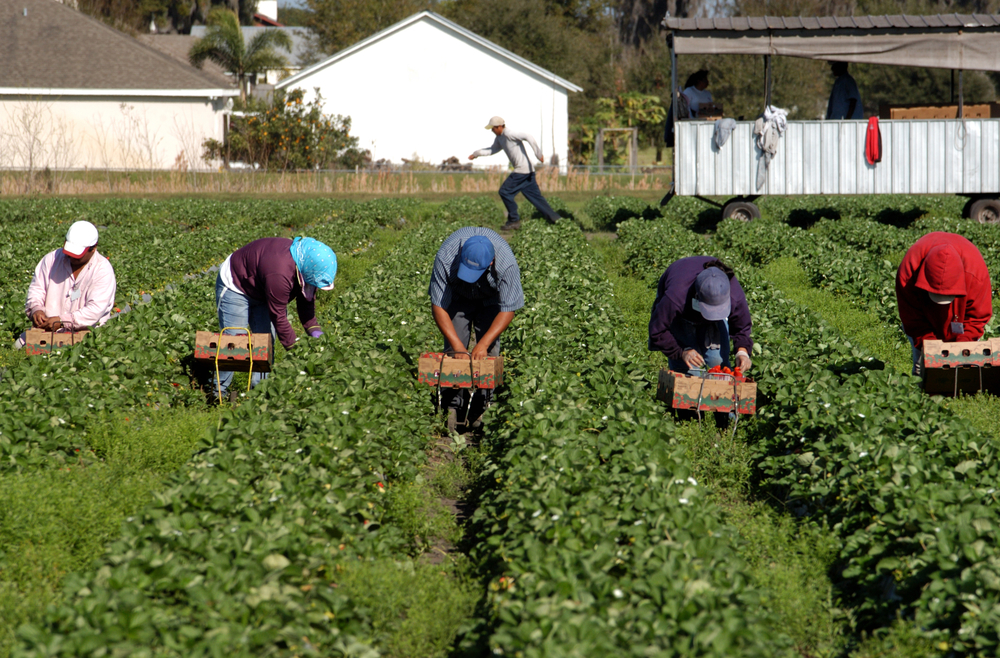
    File photo shows workers picking strawberries.

    Vegetable and specialty crop producers who utilize the H-2A program will not have to stress over wage increases for the 2021 and 2022 growing seasons. This is incredibly helpful for farmers in Georgia and Florida – avid users of the program – who will navigate a growing season amid rising expense costs, another potential COVID-19 shutdown and trade that is bringing down market prices.

    Labor Expenses

    Allison Crittendon, Director of Congressional Relations at the American Farm Bureau Federation, said labor expenses are a major portion of the expense budget farmers operate by every year.

    This final rule that was released by the Department of Labor on Nov. 2, amends the methodology used to set the Adverse Effect Wage Rate. It was much needed since there were concerns for some time over the quality of the data used and how the old method created variability from year to year.

    “Labor expenses vary by the kind of agriculture someone is involved in. In states where labor intensive agriculture is most prevalent, Florida or California, their labor expenditures make up somewhere between 20% to 30% of their operating expenses,” Crittendon said. “To know the increases there are predictable and stable instead of extreme and variable is incredibly helpful to agriculture and to those business owners, those farmers that are trying to figure out how they’re going to navigate another growing season.”

    Unpredictability in Previous Wage Rule

    The unpredictability of the previous wage rule was a major reason a change was made. Crittendon said in one region, between 2018 and 2019, farmers had a 23% increase in wages in just one year. It’s almost impossible for farmers to plan for an increase of that magnitude.

    After two years of frozen wages, the wage increase will be based on percentage change in employment cost index in 2023. It’s a different metric with a more predictable steady growth rate.

    Crittendon and her colleagues have looked at the employment cost index over the last decade and it’s ranged from a 1.7% to 2.9% increase in a given year with the 10-year average at 2.24%.

    “You’re going from, in some regions really drastic double digit increases in one year to move into a metric that’s starting in 2023; it’ll be a guaranteed increase but it’ll be a predictable steady increase which will allow farms to make other planning decisions and figure out how they want to structure their labor in the coming year,” Crittendon said.

    Who’s Covered?

    It is estimated that 97% of H-2A workers will be covered for 2021 and 2022. These include graders and sorters of Ag products, Ag equipment operators, farm workers, crop nursery greenhouse farm workers, farm workers of farm ranch and aquacultural animals, agriculture workers and packers and packagers.

  • Uncertainties for 2021 Growing Season

    While 2020 is nearly in the books, farmers are looking ahead to 2021 with the same outlook of uncertainty they had this year following the coronavirus outbreak in March.

    There’s uncertainty regarding COVID-19 and a risk of not knowing if there will be another nationwide shutdown that could lead to more market disruptions like the ones that impacted Florida farmer Sam Accursio this year.  

    There’s uncertainty regarding trade with China and the tariffs that are currently imposed on Chinese products that have prevented the country from purchasing U.S. pecans. This has led to extreme low prices this year for Southeast farmers.

    Various Risks

    There are various risks producers have to consider when planning for next year, says Adam Rabinowitz, Assistant Professor and Extension Economist at Auburn University.

    “There clearly are a lot of uncertainties as we move forward into 2021. 2020 was a very challenging year as everybody knows from a lot of different standpoints with things that we have experienced that we have not felt before in agriculture as well. That just adds to the uncertainty moving forward,” Rabinowitz said.

    “We still have a pandemic, as we see now cases rising and what impact that will have. We saw supply chain disruptions that occurred at the beginning of the year.

    “We’ve seen net farm income continue to drop with the exception of government payments that have helped really to sustain it. There have been two rounds of the Coronavirus Food Assistance Program (CFAP) that have helped really alleviate some of the market issues.”

    CFAP 2 Deadline

    Producers have until Dec. 11 to submit their CFAP 2 applications. The program is open to growers of specialty crops, including fruits, vegetables, tree nuts, honey, horticulture and maple sap.

    Administration Change

    The uncertainty is magnified in 2021 because the country will transition from the Trump Administration to the Biden administration. What is the future of trade negotiations and the tariffs that are currently on Chinese goods?

    “We do know that we have the trade negotiations that are still ongoing, regardless of who is in the White House. That’s still going to be an ongoing process,” Rabinowitz said.

    “There are still the tariffs that the U.S. has put on Chinese products and other products with other countries in retaliation that has occurred likewise for U.S. exports going overseas. What happens to that is still an unknown. We’ve certainly seen China increase their purchasing of U.S. agricultural products this year, including getting into markets they have not been in before. That’s certainly promising.

    “This Phase One agreement that we’re under right now with China where we essentially laid out a two-year plan, so what is the future beyond that and will they still be able to meet the first year goals plus an increase in second year goals? It’s still up in the air.”

  • CDC Guidelines, Precautions Should Guide Holiday Celebrations

    UGA CAES Photo/In the midst of a stressful year, people may crave the normalcy of a celebration with family or friends, but UGA Extension food safety specialist Elizabeth Andress points out that safety should still come first.

    By Maria M. Lameiras for CAES News

    As the holiday season arrives, the traditional images of loved ones crowded around a dinner table groaning under the weight of the holiday feast may look a little different this year: The recent surge in COVID-19 cases has prompted rising fears that holiday gatherings may accelerate the spread of the virus.

    The Centers for Disease Control and Prevention has released recommendations for safely celebrating Thanksgiving, suggesting smaller gatherings with only household members and offering tips for making the holiday both happy and healthy.

    In the midst of a stressful year, people may crave the normalcy of a celebration with family or friends, but safety should still come first, said University of Georgia Cooperative Extension food safety specialist Elizabeth Andress.

    While CDC guidelines suggest that guests bring their own food, drinks, plates, cups and utensils to holiday gatherings, that might not be feasible.

    “One person or the host of a small gathering can be in charge of preparing and serving the food. It is not a bad idea to have fewer people involved in bringing or preparing food,” Andress said. “If someone is concerned about not having their own family recipe, maybe they can ensure that the person preparing the food has that recipe. Often there are things that aren’t made from a recipe or Grandma doesn’t want to give someone a prized or secret recipe, but this is the time to share those things.”

    If bringing your own dishes and utensils sounds cumbersome, using disposable plates and utensils is an option, but more care should be given to items that are more likely to be used communally, like serving utensils.

    “I am more concerned about serving utensils, as they are more likely to be shared. That is why it is a good idea for one person to serve the food,” she said. “While we don’t have evidence that COVID-19 is foodborne, it still comes down to basic food safety advice, like using a clean plate if you go for seconds. People could be at higher risk this year, so it is a good year to emphasize being extra cautious.”

    Eating outside or keeping windows open if eating indoors are suggestions for hosting safely, and Andress also cautions against congregating in a small area for extended periods. When not eating or drinking, everyone should wear masks.

    “Another tradition may be everyone gathering in the kitchen while the food is prepared, but that may not be possible this year. And distancing should still be observed even if you are going to host a small group outside. Make sure you are distanced as people sit and eat,” she said. “This is not a year to spend a long time eating or visiting anyway. Our time needs to be shorter and not that obtrusive.”

    After the meal, thoroughly wash tablecloths or cloth napkins as soon as possible and take care if you are sending home leftovers, having one person packing items in disposable containers for others to take with them rather than having everyone help themselves.

    “If you are hosting, clean high-contact surfaces frequently and make sure you have plenty of hand sanitizer available or encourage people to bring their own,” Andress said.

    And while all of the warnings and precautions may seem overly cautious to some, being diligent now will ensure a quicker return to normalcy and preserve your loved ones’ health.

    “This is not a lifetime sacrifice. We may have to sacrifice more for a holiday or two, but that is just something friends and family members have to sacrifice this year to keep everyone heathy and safe,” Andress said.

    You can find the CDC recommendations for safer holiday gatherings at cdc.gov.

  • Pecan Research to Help Georgia Producers Meet Demand

    University of Georgia CAES photo/Shows pecans being cleaned.

    By Allison Fortner for CAES News

    The international popularity of pecans is trending upward, but more reliable measures for guaranteeing quality during storage are needed to meet demand in Georgia, the top state for pecan production.

    A review conducted by University of Georgia researchers identified scientific principles behind postharvest storage and handling techniques for pecans and revealed the need for a mathematical model to help producers predict quality under various conditions. This research will help U.S. pecan producers improve quality and increase shelf life.

    In a recently published article in the journal Food Reviews International, researchers explored the science behind three indicators for optimal pecan quality: color, texture and lipid profile. The study was led by associate professor Fanbin Kong, the principal investigator on the project, and doctoral candidates Himanshu Prabhakar and Shruti Sharma in the UGA College of Agricultural and Environmental Sciences’ Department of Food Science and Technology.

    “Georgia is the nation’s leading pecan-producing state. In recent years, Georgia-grown pecans have seen a rapid increase in sales in the international market, and a big portion of Georgia pecans are exported to other countries. The quality can deteriorate significantly during the long-term transportation and storage,” said Kong, who initially identified the need for in-depth research on postharvest pecan quality.

    This review of current handling and storage practices is part of a larger research project funded by the U.S. Department of Agriculture Specialty Crop Block Grant program. The ultimate goal of the three-year project is to identify how factors such as relative humidity, temperature, packaging and processing influence quality changes and shelf life of pecans. The end product will be a mathematical model for determining pecan quality based on a variety of storage conditions.

    Research Findings

    Both Prabhakar and Sharma contributed to the journal review to identify factors that could adversely affect pecan quality and specify areas where research is lacking in relation to color, texture and lipid profile.

    In the pecan industry, the quality and resulting price of pecans is most often assessed by color. However, texture and lipid profiles are important physical and chemical attributes that contribute to the consumer experience. The lipids give pecans their flavor profile and distinct aroma, while the texture indicates freshness and contributes to the consumer’s sensory experience.

    “Understanding how one aspect of pecan leads to and relates to the other is quite an invigorating process as a food scientist because the pecan has its own unique chemistry, given the fact that it’s a plant food,” said Sharma.

    Although pecan quality research has been conducted in the past, many of the findings are not useful in the Georgia pecan industry. For example, Prabhakar said that many existing storage studies kept pecans around 70 degrees Fahrenheit, but Georgia temperatures can range from below freezing to over 100 degrees Fahrenheit in storage facilities.

    “They gave out the best conditions to preserve most of the pecan quality attributes in storage, but what they lacked was the actual scenario that pecan growers and distributors face,” said Prabhakar.

    The review also found that other nuts have been more heavily researched in the past. Prakhabar said that although pecans are technically fruits, they compete in the same market as nuts.

    “Given the fact that the researchers have done a lot of work in nuts in terms of storage and developing complex models to predict their changes in storage, it’s time that we should do that for pecan as well,” Prabhakar said.

    Mathematical Model for the Industry

    Based on the review findings, Kong and Prabhakar are developing a mathematical model by studying pecans under a variety of storage and handling conditions.

    “We are developing a computational predictive model that can estimate the shelf life from different conditions (moisture, humidity, temperature, packaging methods, conditioning, etc.),” Kong said. “The model will be free for use by Georgia pecan growers and processors.”

    Prabhakar explained that producers will not need to work with the complex equations the researchers are developing. Instead, a website will be created for producers to input factors such as temperature, relative humidity and pecan variety to receive information about the changes in quality that will occur over time. This will help pecan growers prepare accordingly, whether investing in different storage technology or adjusting sales timelines.

    This model aims to help Georgia-grown pecans stay competitive and increase profitability in the growing global market. Consumers, both domestically and internationally, are recognizing pecans for their health benefits, which include vitamins, minerals and essential fatty acids. Millennials and Generation Z are also incorporating more nuts into their diets as they adopt plant-based food products.

    “Given the fact that the popularity of plant-based foods is on the rise, research should be focused on understanding the chemistry of pecans and ways to advertise their health benefits in the international market,” said Sharma. “The future of this study depends on how effectively it will be communicated to the right audience at the right time to seek their feedback to incorporate the improvements.”

    Kong, Prabhakar and Sharma hope their research will help Georgia’s pecan producers and help market pecans to new consumers.

    “Food scientists are also developing novel products from pecans such as pecan butter. The increasing demand for pecans presents a great opportunity for the Georgia pecan industry. An improved postharvest handling and storage method will further enhance the competitiveness of Georgia-grown pecans,” Kong said.

    For more information on the UGA Department of Food Science and Technology, visit foodscience.caes.uga.edu.

  • UGA Vegetable Entomologist: Potential Explosion of Whiteflies This Fall Never Occurred

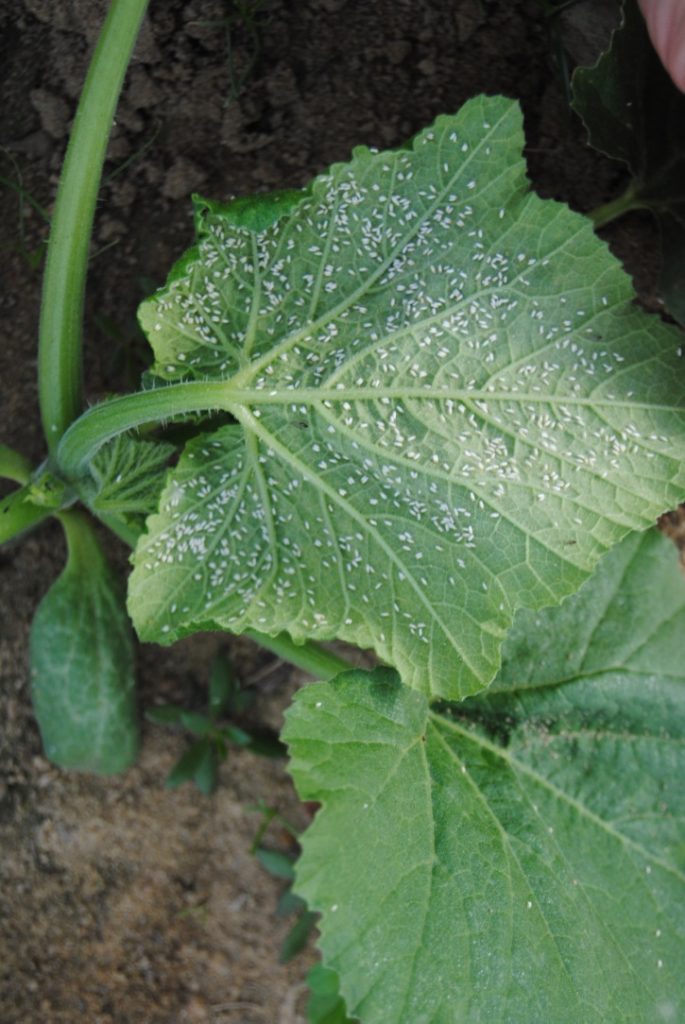
    Whitefly adults feed on a yellow squash seedling.

    Whiteflies were projected to have a widespread, devastating impact on fall vegetable crops in Georgia. But according to University of Georgia vegetable entomologist Stormy Sparks, that never happened.

    “We were setting up for an explosion of whiteflies in the fall and it never really occurred,” Sparks said. “I’m pleasantly surprised it wasn’t a lot worse than it was. In the summer, we were set up to be ugly, ugly.”

    Greater Problem This Year

    Whiteflies were a greater problem this year due in large part to a mild winter last year. They were widespread and posed a similar risk to the fall vegetable production that Georgia producers experienced in 2017. Thankfully, it never materialized.

    “It didn’t get nearly as bad as I thought it was going to get. I think cotton growers deserve a pat on the back. I think they did a much better job of managing it than they have in the past because they expected it,” Sparks said. “I was really expecting virus to wipe out some of the crops and it didn’t happen. I was really pleased with that. I think a lot of it is just the area wide management of whiteflies.”

    Impending La Nina

    Whitefly management continues to be a crucial component of vegetable production with the expectation of a La Nina weather pattern this winter. A La Nina is expected to bring warmer temperatures and drier conditions throughout the winter and into early spring. This could allow for more overwintering of whiteflies if the colder temperatures do not kill off their host plants.

    “We want cold weather to kill the host plants. We don’t ever get cold enough to kill whiteflies. It takes a lot of cold for a long period to kill a whitefly. But what we (want) is to kill the host plants, which all it really takes is a frost for a lot of them,” Sparks said.

    “When we get rid of cucurbits, that gets rid of a lot of our major host crops. Then it’s management of whiteflies in those cole crops that is very important during the winter. The generation time really lengthens so you don’t tend to have a lot of buildup, but you can carry them through, the warmer it is and the less we manage them.”

  • Georgia Congressmen Request Section 332 Investigation on Squash and Cucumbers

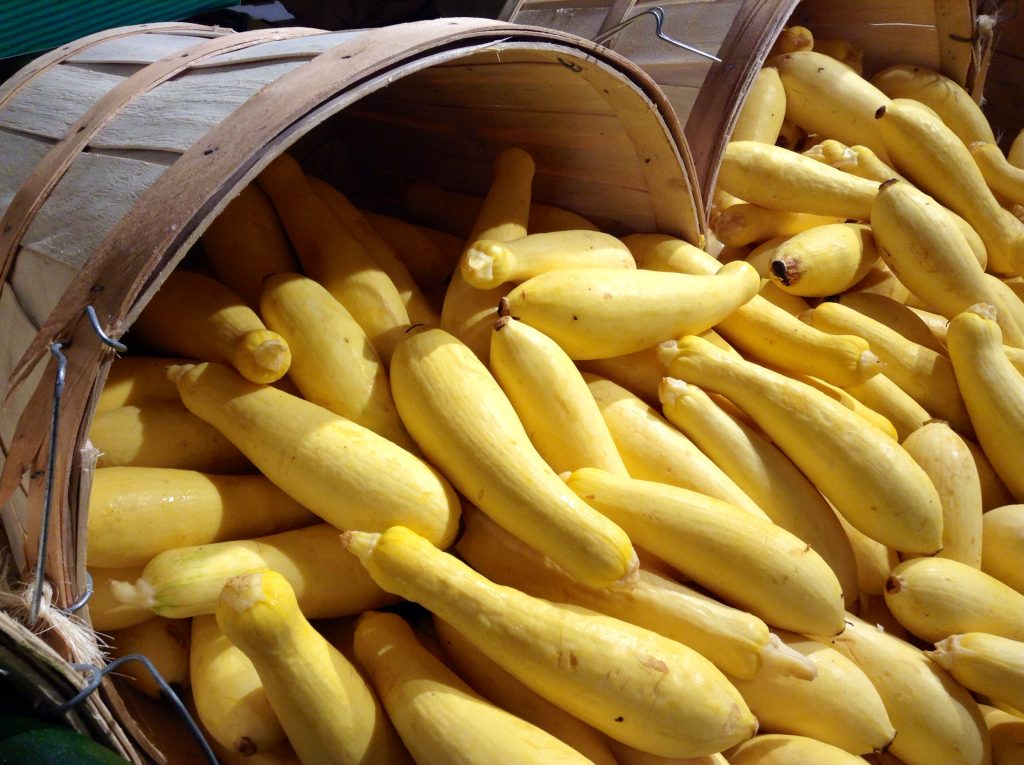
    File photo shows yellow squash

    Congressmen Austin Scott, Sanford Bishop, Rick Allen and Buddy Carter continue to fight for Georgia produce farmers and against unfair trade practices with Mexico. In a letter sent to U.S. Trade Representative Robert Lighthizer, the congressmen requested that the current Section 332 investigation for strawberries and bell pepper be broadened to include the impact seasonal cucumber and squash imports has on Southeastern markets.

    Scott

    “We were pleased to see that USTR has requested a Section 332 for strawberries and bell peppers. However, we believe the inclusion of other commodities, such as cucumbers and squash, in the Section 332 request, would provide some assistance to growers as they continue to struggle with seasonal imports for the upcoming harvest season,” said the congressmen.

    “Section 332 investigation request to the International Trade Commission for cucumbers and squash is needed in order to make a meaningful determination as to the impact of these seasonal imports on Southeastern markets,” the congressmen wrote in their letter.

    “We are pleased to have the continued support of members of the Georgia House delegation in our efforts to level the playing field for our industry, said Charles Hall, GFVGA Executive Director. “Market data developed by GFVGA clearly outlines the need for a broadened investigation and we applaud their efforts and support of Georgia farmers.”  

    The Georgia Fruit and Vegetable Growers Association is committed to continue to work with the Georgia congressional delegation and provide them with the data and support to provide relief for Southeastern growers.