Category: Georgia

  • Georgia Fruit and Vegetable Growers Announces COVID-19 Handbook for Georgia Ag Laborers

    The Georgia Fruit and Vegetable Growers Association (GFVGA), in collaboration with the Georgia Department of Public Health, Georgia Department of Agriculture and the University of Georgia Extension, has developed a practical and comprehensive COVID-19 handbook for growers and farm labor contractors in the specialty crop industry. 

    Written specifically for Georgia growers, Protecting Yourself Against the Coronavirus, focuses on maintaining a safe and healthy workspace on the farm. This resource, available in both English and Spanish, contains science-based information to help growers maintain a safe and healthy environment for their workforce.

    “As employers, we come to value our employees and see them as members of our own extended family,” said Aries Haygood, GFVGA president. “Protecting them and their families during this ongoing pandemic is our number one priority and this handbook will help employers find answers to their questions.” 

    All the information in the handbook is based on CDC and Georgia Department of Public Health guidance. 

    “We are always excited to work together with our industry partners to better serve the specialty crop industry,” said Charles Hall, GFVGA Executive Director. “We think this handbook provides valuable information to help growers and their employees during the ongoing pandemic.”

    To download this free resource, visit www.gfvga.org/store

  • Organic Vidalia Onion Industry: Challenges in Sour Skin Management

    Photo courtesy of Bugwood/Shows sour skin on disease on an onion.

    Vidalia onions are famous for their mild-sweet flavor and are a favorite of consumers and chefs across the U.S. Due to this popularity, there is also significant demand for organically-grown Vidalia onions. 

    Soil-borne bacterial diseases like sour skin and slippery skin caused by Burkholderia sp. impact quality and yield of organic onions in Georgia. The pathogens are soil-borne. Current organic management practices do not eliminate or eradicate them from the soil.

    This makes management extremely challenging, according to Bhabesh Dutta, University of Georgia (UGA) Cooperative Extension plant pathologist.

    “Conventional onion production is itself challenging, and organic onion production is more challenging,” Dutta said. “We do have some grasps on managing those issues in conventional ag, whereas in organic ag, we don’t have those options. The No. 1 issue we’ve been facing in any onion industry, especially in organic onions, is sour skin and slippery skin diseases.”

    Conditions Favorable for Disease Development

    Warm temperatures and intermittent rainfall during the spring can predispose organic onions to infection with these bacterial pathogens. Vidalia onion growers experienced similar weather conditions (warm and wet) this past spring. This led to considerable yield losses both in the field and in storage.

    Sour skin was also worse last year for producers. It is usually more of a problem during harvest in the latter part of the growing season. As it thrives in warm conditions, symptoms can manifest earlier in the season depending on temperature. The disease can progress from the upper foliage to the leaves in the lower part of the plant and then to the bulb’s outer scales.

    Bulbs that are infected with sour skin usually have an acrid, sour odor and other foul odors that are associated with secondary organisms. Bulbs will turn reddish-brown to brown in color over time, as the tissues rot and copious amounts of fluids are produced.

    Appropriate Management Strategies

    Organic onion growers need management strategies that are not just effective but also economically and environmentally sustainable. The UGA Vidalia Onion Research and Extension Group is researching organic and physical soil-amendments that can reduce soil-borne pathogens including Burkholderia sp.

    The amendments like soil solarization, soil-biofumigation (wild mustard), soil-applied biological controls and cover crops will be evaluated in certified organic fields at UGA.

    “With respect to sour skin, which is one of the worst diseases you can ever have on onion; on organic onion, this disease is particularly bad. The pathogen survives in the soil and stays in the soil. Any management options, like the use of copper or use of any chemicals, which you cannot use; you can use some kind of copper in organic (production), but it doesn’t have much efficacy on management of sour skin,” Dutta said.

    “What we are thinking, unless we do some kind of soil amendments – physical, cultural, biological soil amendments – we may not be able to reduce the pathogen in populations of this sour skin pathogen.”

    UGA scientists also plan to evaluate the impact of these amendments on reducing weeds, plant-parasitic nematodes and other soil-borne fungal and oomycetes organisms. Researchers will also focus on studying the impact of these amendments on soil-microbiome and prevalence of insect natural predators and enemies. The aim is to foster the “systems approach” without negatively altering the diversity and prevalence of both beneficial microbes and natural enemies.

    “We have to think outside of the box, but we also respect the stewardship of organic certification. Whatever we do, it should be within the limits of that organic certification or organically approved methods,” Dutta said. “This method with which I talked about is within that limit.”

  • Chill Hours a Concern for Peach Producers

    Peach trees need chill accumulation every fall and winter to produce a substantial crop the following season. Edgar Vinson, assistant research professor and Extension specialist in the Department of Horticulture at Auburn University, is concerned Alabama producers may be lagging behind.

    “We’re still a little concerned about having enough chill by the end of this month. Typically, we’d like to have about half of the recommended chilling for our area by the end of the year,” Vinson said on Friday. “So far, we have about 172 hours, I think last time I checked. Looking at the extended forecasts, we don’t really see as many opportunities to collect chill as we’d like.”

    Optimal Chilling Temperature

    Vinson said peach growers long to have between 450 and 500 chill hours by the end of the year. He added that temperatures do not need to reach below freezing for chill accumulation to occur. Optimal chilling is at 42 degrees Fahrenheit.

    “Just as an example, you can have a relative warm winter and still get the recommended chilling for your area. The temperature does not have to be at freezing. In fact, anything below freezing, you’re not getting much chill at all. Anywhere below 29, you’re not getting any chill accumulation,” Vinson said.

    “You’re not losing any, but you’re not gaining any. You can have a relatively warm winter where you’re hovering around mid-40s, low 50s; somewhere around there and still get the recommended amount of chilling. It doesn’t have to be bitter cold to get chilling.”

    Peaches need chill hours to mature. The required chill hours depend on the peach variety, but most growers hope to get around 1,000 chill hours before spring.

    Temperatures were relatively warm in Alabama towards the end of last week and weekend which did not help with chill accumulation.

    “Warm days like that, especially at 24-hour cycles at a time like that tend to be pretty detrimental to chill accumulation. Looking at extended forecasts, at least right now, we’ll keep checking extended forecasts and they’ll likely change, but as we look now at the extended forecasts, there doesn’t appear to be as much of an opportunity to collect chill,” Vinson said. “Not saying that there won’t, but we’re a little bit concerned about that.”

  • Mexican Imports Lead to Bad Fall Season for Georgia Vegetable Producers

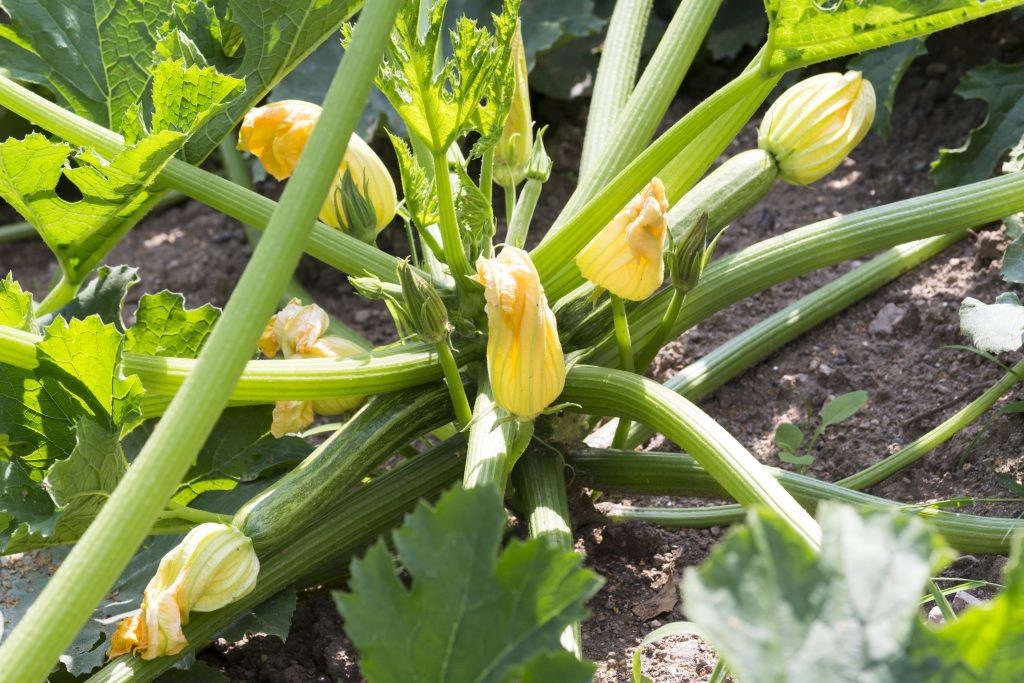
    File photo shows a squash plant.

    Georgia’s fall vegetable crop did not produce profits like growers had hoped for. Mexican imports had a lot to do with that, says Charles Hall, executive director of the Georgia Fruit and Vegetable Growers Association.

    “It certainly was not as good for us as the spring was. While we had good early prices on squash and cucumbers, once the Mexican crops hit, (prices) just dropped. There’s nothing the grower can do about it,” Hall said. “They either have to decide to plow up and not harvest or they just take a bad beating. Squash were selling and cucumbers were too, they were selling below our cost of production, about half our cost of production.

    “It’s not been a good fall. (And) later in the season broccoli fell out.”

    Unfair trade practices have the been the source of Georgia producers’ discontent for some time. It led to virtual hearings by the U.S. Trade Representative’s (USTR) Office with farmers in Florida and Georgia. Congressional support helped lead to potential action regarding the imports of cucumbers and squash.

    The USTR has requested investigations from the U.S. International Trade Commission into the imports of both commodities and the effect on domestic seasonal markets.

    “A farmer can control labor, and a farmer can control pesticides and he can control rain to some extent because of irrigation, but the one thing he can not do anything about is trade. When he puts his product on the market and those prices drop out, it’s a goner,” Hall said.

  • Cautious Optimism: Low Interest Rates Present Opportunities for Farmers

    Interest rates are low and should remain that way for the foreseeable future. Adam Rabinowitz, Assistant Professor and Extension Economist at Auburn University, says vegetable and specialty crop producers may have an opportunity to capitalize.

    Rabinowitz

    “Interest rates are extremely low, and they are forecast to remain low. That is certainly an opportunity to where if there’s interest on any kind of capital equipment or land, in terms of loans that have interest on that; looking at refinancing that is an option, if you can secure a lower rate,” Rabinowitz said.

    “But also, it certainly might be an opportunity, if you have a sound financial position long term, to look at buying some of the equipment that is needed for where you’re going to have a loan that will obviously have a lower interest rate at this point.”

    Interest Rate Background

    The Federal Reserve Bank oversees setting the interest rate, which rises and falls depending on the outlook of the financial market.

    The interest rate is typically high when economic times are good but is low during economic downturns. Such is the case amid the coronavirus pandemic, which led to massive shutdowns and a spike in unemployment when COVID-19 impacted the country in mid-March.

    The interest rate is near zero percent and is expected to remain that way through 2022.

    Proceed with Caution

    But Rabinowitz also cautions farmers to really consider if taking on more debt is the right tactic to take with regards to their farming operations.

    “I would stress, though, it’s important to look at it within the context of the entire operation to make sure the financial position is a sound financial position before taking on that additional debt. We’re still looking at very volatile markets in terms of pricing,” Rabinowitz said.

    “There’s a lot of uncertainty in a lot of other aspects. Taking on more debt is not necessarily the best thing to do either.”

  • Getting to the Bottom of Blossom-End Rot

    Blossom-end rot, which manifests in the first few weeks of growth after tomato flowers are pollinated, causes black, rotted areas on the blossom end of the fruit, opposite the stem.

    By Maria M. Lameiras for UGA CAES News

    Home gardeners and commercial farmers alike can attest to the disappointment of seeing a beautiful tomato ripening on a vine, only to discover that the fruit has dark, sunken pits at the blossom end of the fruit. Called blossom-end rot (BER), this physiological disorder is prevalent in fruit and vegetable crops, including tomatoes, and can cause severe economic losses.

    Through a $475,000 grant from the U.S. Department of Agriculture’s National Institute of Food and Agriculture (USDA-NIFA), University of Georgia researchers are looking for the genetic and developmental factors of BER with goals of investigating causal mechanisms and developing prevention and mitigation strategies for the disorder.

    Research Specifics

    Led by Savithri Nambeesan, an assistant research scientist specializing in ripening and postharvest physiology in the UGA Department of Horticulture at the College of Agricultural and Environmental Sciences (CAES), the study will compare the genetic traits of tomato lines that are susceptible and resistant to BER through genetic mapping to try to identify the regions in the genome that cause BER. It will also examine developmental and molecular contributors to the disorder.

    “If we can find the factors that lead to BER, we can use that information to tailor management practices to minimize the disorder,” said Nambeesan, who is working on the project with horticulture professor and plant geneticist Esther van der Knaap, who has done extensive work on tracing tomato genomes.

    Tomato Crop’s Value

    The U.S. tomato crop was valued at more than $1.6 billion in 2019. In severe cases, BER can cause crop losses of up to 50% of the total yield in affected fields, resulting in a significant economic loss.

    Nambeesan said the disorder, which manifests in the first few weeks of growth after tomato flowers are pollinated, is influenced by genetic, developmental and environmental factors. The study will combine molecular and developmental approaches to understand potential causes.

    “Currently, the underlying cause of BER is thought to be due to calcium deficiency, but current field management strategies to correct that via irrigation and calcium fertigation have met with limited success. Generating more basic information on this disorder will help with breeding cultivars that are BER-resistant or provide more tailored management strategies to minimize this disorder,” she said.

    “We will determine if BER can occur in fruits that grow relatively fast during their development and therefore have higher demand for calcium. Fruit receive their calcium through vascular tissues such as xylem, and therefore investigating how the xylem develops during fruit development may be critical in understanding calcium translocation into the fruit.”

    MultiModel Approach

    The multimodel approach to finding the underlying cause of BER in tomatoes will be useful in translating the information to other crops including vegetables and fruits such as pepper, watermelon, squash and eggplant. Because there are greater genetic and genomic resources available in tomatoes, it is the best model system for research that can translate into knowledge applicable to other crops.

    “If we can tackle the problem using two approaches in molecular physiology — how fruit growth rates and xylem development tie into subcellular calcium localization — we can find the causative factors for it and we can address it more effectively,” she said. “We also are taking a two-pronged genetic approach, identifying certain loci that are involved in blossom end rot and finding genes in the genome to develop lines that are resistant.”

    To read more about BER, see UGA Cooperative Extension Circular 938, “Blossom-End Rot and Calcium Nutrition of Pepper and Tomato.” For more information on research being conducted at CAES, visit caes.uga.edu/research

  • Why are Sales of Real Christmas Trees Breaking Records This Year?

    Photo shows Christmas tree farm.

    Sales of real Christmas trees are breaking records this season. Conversations with tree shoppers may reveal why. (Gary Crawford. Tim O’Connor with the National Christmas Tree Association and several intrepid tree hunters)

  • Year-End Economic Survey Now Open to Georgia Farmers

    The Georgia Foundation for Agriculture, Georgia Farm Bureau, Georgia Department of Agriculture and UGA Center for Agribusiness and Economic Development are jointly sponsoring a second survey to document the impact of COVID-19 on the agriculture industry in the state. (photo from Georgia Farm Bureau)

    A survey is now being conducted by the University of Georgia (UGA) in an effort to get a year-end perspective of the impact of the pandemic on Georgia’s agricultural industry.

    The Georgia Foundation for Agriculture, Georgia Farm Bureau, Georgia Department of Agriculture and UGA Center for Agribusiness and Economic Development are jointly sponsoring the survey. Organizers will use the data to document the needs of the agriculture industry and share the summary at the UGA College of Agricultural and Environmental Sciences’ 2021 Georgia Ag Forecast, which will be held online Friday, Jan. 29.

    All sectors of Georgia’s food and fiber industry have been impacted by the COVID-19 pandemic. In May, more than 850 producers completed a survey describing the early impacts of the disease on agriculture in Georgia, and 82% of respondents reported lost revenue. Livestock was the hardest-hit sector in the earlier assessment.

    The approximately 10-minute survey covers potential impacts on producers such as commodity prices, disposal or loss of products on farm, lack of markets, access to working capital, farm labor issues, availability of farm inputs, transportation, closure of sale barns or processing facilities and international trade.

    There is no personal compensation provided for participation. All sensitive information will be kept strictly confidential by the principal investigator. Published results will be presented in summary form only with aggregated data. 

    To participate in the survey, visit ugeorgia.ca1.qualtrics.com/jfe/form/SV_efBzrDOnqssorRP. The deadline to complete the survey is Dec. 23.

    For questions about the survey, call 706-542-9811 or email Vanessa Shonkwiler, agribusiness economist and survey coordinator, at V.Shonkwiler@uga.edu.

  • Pecan Harvest Season Nearing End

    georgia pecan
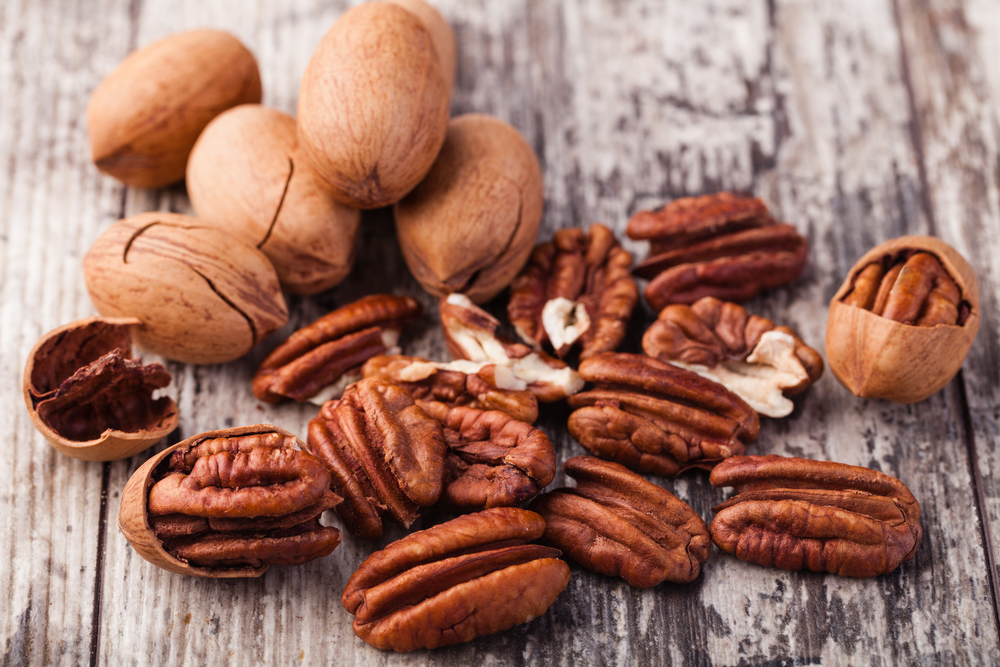
    File photo shows cracked pecans.

    According to the USDA Pecan Report, growers are about 90% finished with harvesting their pecan crop this season. An estimated 50% have been sold, with the rest that are of good quality and size will be stored to sell later when prices have improved.

    The Pecan Report states, “Prices are about steady, and interest has increased as the push for holiday retail and domestic sales has come into play.”

    Not Much Change in Prices

    The updated prices are consistent with what Lenny Wells, University of Georgia Cooperative Extension pecan specialist, said they were last week.

    “What I’ve been hearing, they’ve been fairly stable for the last two or three weeks. Good nuts have been selling in the range of a $1.15 to $1.35 (per pound), mostly, somewhere in that range. It doesn’t really matter what variety it is or anything. If it’s a decent nut, it’s selling in that range. Of course, the poor-quality stuff is well below $1,” Wells said.

    Prices paid to Georgia growers as of Tuesday, Dec. 8 at buyers delivery point or F.O.B. the orchard including direct sales to end users, cents per pound in-shell of generally good quality in lots of 20,000 pounds or less unless otherwise stated:

    Cape Fear, meat yield 53-56%, $1.25-$1.31

    Desirables, meat yield 49-52%, $1.30-$1.43; meat yield 46-47%, $1.15-$1.23; yard tree lots $0.80-$1.00

    Elliott, yard tree lots $0.90-$1.00

    Excel, meat yield 52-55%, $1.21-$1.25

    Farley, yard tree lots $0.70-$0.80

    Native/Seedlings, yard tree lots $0.40-$0.50, occasional lower

    Stuarts, meat yield 48-51%, $1.21-$1.29; yard tree lots, $0.50-$0.75, mostly $0.70-$0.75, few high as $0.90

    Sumner, meat yield 51-53%, $1.28-$1.38, yard tree lots $0.70-$0.80

    Lots over 20,000 pounds including truckloads:

    Cape Fear, meat yield 49-52%, $1.23-$1.36

    Desirables, meat yield 49-52%, $1.30-$1.43; meat yield 46-47%, $1.23-$1.36

    Stuarts, deliveries insufficient to quote

    Sumner, meat yield 51-53%, $1.28-$1.38

    Georgia has experienced freezing temperatures throughout the state with wind chill factors in the teens. The rest of the week is forecasted for temperatures in the 30s-to-mid-40s with daytime temps in the low 50s-to-high 60s.

  • Avoiding a Shutdown: H-2A Help Essential in Harvesting Crops Next Spring

    Growers take steps to protect farmworkers’ health so they can continue to ensure an abundant, safe food supply is available to U.S. consumers. Image source: The Pajaronian

    The early onset of the coronavirus pandemic spelled doom for certain sectors of the agricultural industry. Restaurants shut down, unemployment rose, and suddenly, fruit and vegetable producers across the Southeast faced a decreased demand for their produce.

    There was also temporary concern among farmers about how suspended travel from foreign countries would impact H-2A workers trying to get in the country to help harvest the crops when they were needed the most.

    Could the country experience a similar shutdown once President-Elect Joe Biden takes office on Jan. 20, especially since COVID-19 cases continue to surge?

    No Shutdown Planned

    According to media reports, Biden has said he wouldn’t put the country through another national shutdown to try to slow the virus’ spread.

    This would be great news for those producers who will rely on H-2A workers to be in place to harvest their crops next spring, according to Allison Crittendon, Director of Congressional Relations at the American Farm Bureau Federation.

    “I think when we had the shutdown back in March, we had no idea what this virus really was or how it spread. It’s crazy to think back in March masks weren’t known as what you had to do. Now we certainly have more information and more clarity about how to go about trying to achieve essential operations like food production as safe as possible,” Crittendon said.

    “I hope that with all of the information we’ve now gathered over the last several months that we could avoid a shutdown. But I wouldn’t be surprised if there were further requirements for employers to adhere to when it comes to mitigating the spread once folks are on the farm and have traveled over here from their home country.

    “Hopefully, since we now have more information about the virus, we won’t have to revert to those early practices of shutting everything off completely when it comes to travel of our essential workers.”