A new year means a new set of peach cultivars for producers to choose from for the upcoming season. According to UGA Extension peach blog, the USDA at Byron, Georgia has released a trio of “Joy” peach cultivars, named ‘Crimson Joy’ (early mid-season), ‘Liberty Joy’ (mid-season), and ‘Rich Joy’ (late season).
The three main-season cultivars have self-fertile showy pink flowers that produce large, firm, melting and freestone fruit with high blush, yellow flesh, normal acidity and pleasant eating quality. The cultivars are suited for trials in areas with medium to high chilling accumulation.
‘Crimson Joy’ requires ~700 chill hours (CH) and typically ripens approximately with ‘Harvester’ and ‘Redhaven’ and about a week after ‘GaLa’ in mid to late June at Byron. The fruit are redder, more attractive and firmer than the three cultivars in the similar harvest window.
‘Liberty Joy’ requires ~650 CH and typically ripens in late June to early July at Byron. It could be a reliable lower-chill alternative to ‘Fireprince’, ‘Blazeprince’, ‘Scarletprince’ and ‘Redglobe’, some current commercial cultivars in the harvest window that all require ~850 CH and do not crop well when chilling accumulation is insufficient.
‘Rich Joy’ requires ~850 CH and typically ripens about a week after ‘Julyprince’ and approximately 2 weeks before ‘Flameprince’ at Byron, which can fill the harvest gap between the two cultivars. At maturity, ‘Rich Joy’ fruit have high percentage of bright red blush, making it more attractive and preferable to older, less blushed ‘Cresthaven’ and ‘Early Augustprince’, which are in the same harvest window. The freestone fruit develop excellent melting texture and pleasant rich flavor, and soften slowly on the tree as they ripen, allowing them to be picked over a relatively longer period compared to other typical melting cultivars.
The pedigrees of the three cultivars are different, so are their chill requirements, ripening days relative to ‘Elberta’ and harvesting seasons.
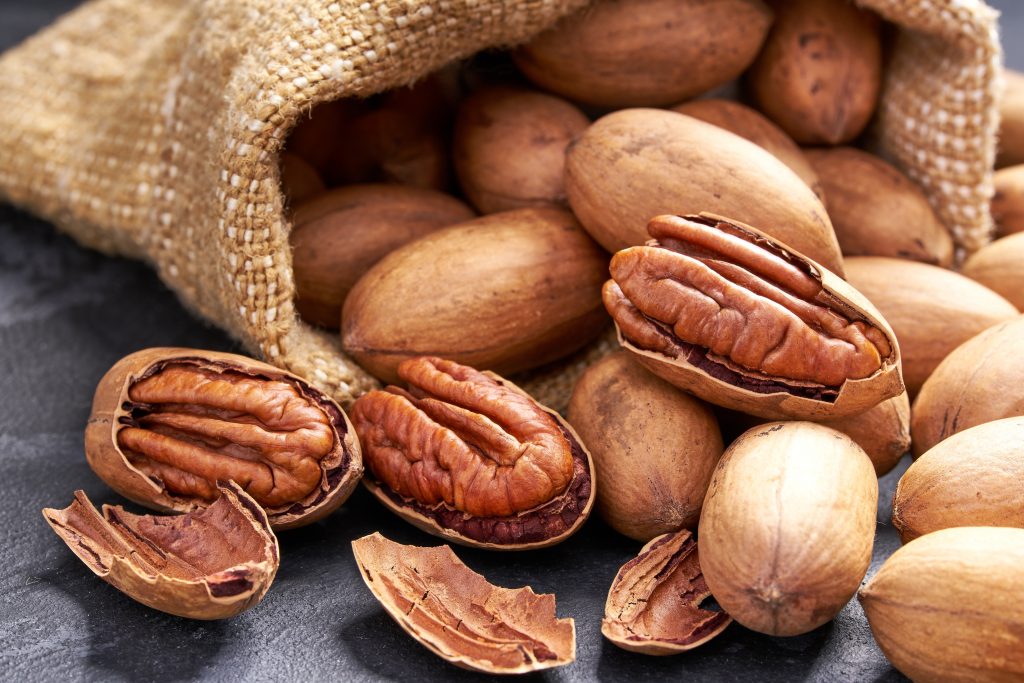
According to the USDA Federal-State Market News Service, pecan prices remain low throughout Georgia. Growers are picking up what is left in the orchards and bringing in what they have not put into cold storage. Rain and wet orchards have left some areas with excess moisture and damage from rot.
Growers are working those lots harder to clean them out and have them ready for testing and sampling. Prices remain about steady with a moderate interest from domestic buyers. Retail and gift pack purchasers are still looking for top quality pecans, while the export business to Asia has been virtually non-existent and slow as compared to previous years past. The season is rapidly winding down in Georgia. Most lots are blended varieties.
Blends with (nut count 50-65) meat yield 48% to 50% are selling for about $2.50-2.65 per point; meat yield 45% to 47% sold for about $2.40-2.50 per point; and Blends with meat yield 41% to 43% sold in a range of about $2.00-2.25 per point.
Prices paid to growers (late afternoon Tuesday, December 22, 2020 through late afternoon Tuesday, January 5, 2021) at buyers delivery point or F.O.B. the orchard including direct sales to end users, cents per pound in-shell of generally good quality in lots of 20,000 pounds or less unless otherwise stated:
Cape Fear (deliveries insufficient to establish market)
Desirables (deliveries light) yard tree lots, 80-100
Elliott (deliveries very light) yard tree lots, 90-100
Farley (deliveries very light) yard tree lots, 70-80
Moneymakers (deliveries very light) yard tree lots, 40, occasional higher
Native/Seedlings (deliveries light) yard tree lots, 40-50, occasional lower
Schley (deliveries light) yard tree lots, 70-85
Stuarts (deliveries light) yard tree lots, 50-75, mostly 70-75, few high as 90
Sumner (deliveries light) yard tree lots, 70-80
Lots over 20,000 pounds including truckloads:
Cape Fear, Desirables and Sumner (most lots are Blends, see prices above)
UGA CAES photo/Entomology researchers can study predator activity in turfgrass by the markings predators leave in clay models.
By Allison Fortner for CAES News
Modeling clay isn’t limited to art classrooms and sculpting studios. University of Georgia researchers developed a tool to track beneficial insects in turfgrass systems using clay models. Tracking these good predators can help develop eco-friendly pest management techniques for both home lawns and commercial sod growers.
In a recently published article in Entomologia Experimentalis et Applicata, UGA scientists determined that beneficial predator insects will interact with and leave distinct markings on clay models that resemble their prey, in this case the larvae of turfgrass pests. This study was led by entomology doctoral candidate Fawad Khan under the guidance of Assistant Professor Shimat Joseph in the College of Agricultural and Environmental Sciences on the UGA Griffin campus.
“We want to know who the predators are and what kind of impressions these predators will create on these clay models. Before we do anything in the field, we need to have a sense of what that looks like,” said Joseph, a turfgrass entomologist.
Though the clay model approach has been used in other disciplines to observe predator activity, Joseph and Khan found no previous use of the method in turfgrass research. This study developed clay models as a tool to aid in future research.
“It’s kind of brain hack of the predator. We want to see how much the real predator interacts with the model based only on the visual cues,” said Khan, a Fulbright scholar who came to UGA to study eco-friendly pest management options, specifically beneficial insects.
The Need for Research
The turfgrass industry contributes $9 billion to Georgia’s economy each year, but one of the high costs is pest management. Joseph said that the use of insecticides not only cuts into grower profits but requires valuable time, labor and equipment. The use of biological controls, such as natural predator insects, could mean only using chemical management when pest numbers rise beyond a certain threshold.
Harmful pests such as fall armyworms cause problems for turf growers and homeowners alike. Though there are natural predators that attack pests in their larval stage, it’s difficult to study the activity since they leave little evidence. The goal of Khan and Joseph’s research was to identify predator interactions and use that knowledge in commercial and residential turf. But before they could do so, they needed a method to measure how predators interacted with their prey.
In this study, researchers created two sizes of simulated larvae from modeling clay. Then they collected natural predators from turf lawns at UGA-Griffin. Each collected arthropod spent 48 hours in a petri dish with two sizes of clay larvae models. This was enough time for them to make their marks. Because the clay stays soft at room temperature, any markings left by the predators were preserved.
Researchers used video equipment to observe how the predators would first interact with models in the field. Outside of the petri dish controlled environment, they also placed the clay models near a fire ant mound in turfgrass. The study found different types of predators left behind distinct markings.
The researchers characterized and named the impressions left by each type of arthropod and used the knowledge of the specific markings as a tool to study the activities of these insects in the field.
“(The clay method) is good and it’s also cost-effective because it does not use a lot of expenditures like cameras or heavy equipment. You just have to put the clay models on the trees and near the turfgrass. After one or two days you see there are different markings and some activity there,” Khan said.
Fueling Pest Management Research
Because this study used a new method for measuring predator activity in turf, it created a baseline tool for further research as part of Khan’s dissertation work. The next step in the research is to compare predator activity between different systems.
“For that research, we need to identify the marks in the real field conditions of the sod farms and the residential lawns. If we did not have the baseline research on the turfgrass system, we couldn’t do that,” Khan said.
The goal in tracking predator activity between the systems is to create integrated pest management (IPM) methods against harmful insects such as fall armyworms. The clay model system will allow researchers to know which predators are present in commercial and residential situations. With that knowledge, Joseph said that they hope to manipulate existing predator insects to serve as a control method for the pests.
“In IPM, we tend to use multiple tactics. Pesticide is an important tactic, but there are others, like biological control,” Joseph said. “My viewpoint is more conservation. Here we are looking at biological control so we can … develop a population of predators and beneficial insects. When the fall armyworm attacks, (predators) can provide the first layer of control. If the population is overwhelming, we have to come up with a remedy. Chemical management comes into play if the numbers go beyond a certain threshold.”
Khan said the ecosystem-based approach of IPM considers beneficial insects including predators, parasites and pollinators, the environment, costs, economic loss and other factors surrounding any crop. However, this approach is not just important for those in the commercial agricultural sector. One of Khan’s ultimate research goals is to help homeowners know more about what is happening in their lawns.
“We have to appreciate the natural enemies and biological control that is happening around us in our residential lawns. My research will be giving an estimation technique to see what good insects are active,” Khan said.
For more information on the UGA Department of Entomology, visit ent.uga.edu.
The pecan harvest season is in the books. When farmers and industry experts reflect on the 2020 season, what will be the story?
Will it be an overwhelming crop that produced record yields for some farmers? Or will it be the low market prices that discouraged producers and forced many to store this year’s crop?
University of Georgia Cooperative Extension pecan specialist Lenny Wells offers insight into a season unlike any other.
“I think it’ll be the prices. Even though it was a huge crop, just the morale out there is really low right now. They didn’t get a lot for the crop,” Wells said.
“The volume was there enough to where I think most of them are going to be okay. My concern is, if we’re seeing low prices again like this next year and we don’t have that volume, that’s when we’ll really start to feel the pain. But we’ve got a long time to go between now and then. Who knows what will happen with China and all that in the meantime?
“There are a lot of nuts that are stored out there. That’s certainly going to play into whatever the price turns out to be next year.”
Low Prices All Season
Pecan prices were shockingly low all season. South Georgia farmer Randy Hudson said prices were anywhere from 30% to 50% less than what they’ve experienced the previous three years. All while fixed and variable costs continue to be extremely high.
During the middle of harvest season in early November, Stuart varieties sold for 75 cents per pound. Sumners were selling for $1.30 to $1.41 per pound. Even with minimal scab disease pressure, Desirable varieties sold for just $1.35 to $1.40 per pound.
Massive Yields
Wells said the latest USDA numbers estimate that Georgia pecan farmers produced about 135 million pounds. It’s an astounding number considering the state is recovering from Hurricane Michael in 2018. Trees and acres of production were lost during the October storm. Who knows how high this year’s production would have been if not for the storm?
“If we still had the acreage before we had the hurricane, this would have been a record crop, no doubt. A lot of growers had a record crop for their farm. But just because there was so much acreage lost, I think that brought it down some,” Wells said.
Alabama farmers were hurt by hurricanes that destroyed acreage and greatly reduced their crop this year.
Blueberry growers will soon have a chance to make their case against unfair trade practices from Mexico and other countries.
Jerome Crosby, Georgia blueberry grower and chairman of the American Blueberry Growers Alliance, confirmed on Tuesday during the Southeast Regional Fruit and Vegetable Conference that the group will present their case to the International Trade Commission (ITC) on Tuesday, Jan. 12.
“On Jan. 12, we will be providing physical testimony to the ITC Committee. All parties of leadership will be at the table. We will be speaking directly to the commissioners. We will be presenting our cases and our comments. Those of us who are making comments, we will be putting those comments in under a signed affidavit. This is where the rubber meets the road,” Crosby said.
Crosby said the blueberry group will have 60 minutes to make its case on Jan. 12, which will include testimony from legislative delegation from all states and featured speakers, including Crosby and Brittany Lee, Executive Director of the Florida Blueberry Growers Association.
However, Crosby also cautions that groups who oppose the 201 investigation will have the same amount of time to present their cases. So, it is not a slam dunk that the ITC will issue a remedy.
“It’s going to be one hour of us versus maybe five, six or seven hours of opposition. I still feel good about our case because the data and the facts are on our side. We’ve got good numbers. We’ve got a good team working with us. We’re doing all the right things,” Crosby said. “But to say it’s not a little bit intimidating would be misleading you. We’ve got a big mountain to climb.”
Crosby added that after the Jan. 12 meeting, the ITC will have 30 days to file a report.
Virtual Hearings
The meeting with the ITC stems from virtual hearings held last August. The two hearings provided the U.S. Department of Commerce and Trump Administration an opportunity to hear from seasonal produce growers in Georgia and Florida about the urgent need for federal action regarding unfair trade.
Southeast Regional Fruit and Vegetable Conference
The conference, which is normally held in January in Savannah, is being held virtually this year due to COVID-19 concerns. The three-day event will be held through Thursday, Jan. 7.
For more information, or to register for the event, click here.
The 2021 Southeast Regional Fruit and Vegetable Conference is underway. The conference, which is normally held in January in Savannah, is being held virtually this year due to COVID-19 concerns. The three-day event will be held through Thursday, Jan. 7.
For more information, or to register for the event, click here.
Organic onion production in Georgia is nothing new. But the data is lacking for farmers who are trying to expand and be more efficient in their operations.
That is why Tim Coolong, associate professor in the UGA College of Agricultural and Environmental Sciences, is studying organic onion production.
“Onions have been grown conventionally for decades. That system, I feel like we’ve got it down pretty well, although, we still have issues,” Coolong said.
“Organic onions have also been grown for a little while, but the body of knowledge is so much less. Growers are constantly trying new things. As researchers, we’re trying new things. Sometimes they work, sometimes they don’t. But it’s just trying to build that body of knowledge to draw upon.”
Fertilizer Applications
That knowledge consists of fertilizer applications, which are essential in the development of onions throughout the growing season. Growers who utilize organic fertilizer sources, typically use poultry-litter based. But farmers must apply high levels of organic fertilizer prior to planting to ensure onions have adequate fertilizer levels when they start putting on growth in mid-winter.
Unlike conventional soluble fertilizers, many organic sources continue a slow and steady release of nitrogen throughout the growing season, even later in the year when growers often try to reduce available nitrogen prior to harvest.
“We’re looking at standard poultry litter, which is used a lot less now than it used to be. Then we’re going to be looking at other organic fertilizers that, based on information from folks up here, they found that they have very different release rates,” Coolong said. “With the conventional fertilizer, if you put it out, it’s there. It’s readily available. But with some of these organics, they may take several weeks to release, they may take longer. What we’re hoping to do is evaluate some of these so that our onion growers can be able to time their fertilizer applications better.”
Unfortunately, higher nitrogen levels near harvest may predispose some onions to bacterial diseases if the weather is warm, which is not uncommon in southeast Georgia.
“We’ve done some preliminary work, so we’ve got a little bit of data. We’re hoping to really dial it in this year,” Coolong said.
In the age of COVID-19, sanitizer applications are essential for producers to keep their workforce healthy.
Laurel Dunn, Assistant Professor in the Department of Food Science and Technology at the University of Georgia, offers several guidelines for using sanitizers and other cleaning products in facilities where vegetable and specialty crops are cleaned and packaged.
Not All Sanitizers are Appropriate
Dunn
The first step is to realize not all sanitizers are appropriate for equipment or other areas where produce is being handled.
“Sanitizers in general are a bit trickier because it depends on where you’re using them. If you’re using them to clean your floors or your bathrooms or things like that, you can use whatever,” Dunn said.
“If you’re using anything that’ll contact your food contact surfaces; your conveyors, packing equipment and stuff like that, then you have to go through your EPA registrations and make sure you’re using something that’s appropriate and approved for use on the food and is also adequate to inactivate something like the coronavirus.
“You might be trying to deal with your microbial concerns by using that sanitizer, and in doing so, put a chemical hazard right in your food product.”
Other Tips
Another tip to remember is that sanitizers work better on surfaces that are free of dirt. Also, remember that sanitizers need time to work so don’t spray and then wipe off immediately.
“Another thing we see a lot too, and I’m guilty in my own house, is using a sanitizer and spraying it on dirt, which, that doesn’t do a lot of good. You need to have it pretty clean,” Dunn said.
“Then also spraying a sanitizer and wiping it off immediately. A lot of our sanitizers need like 30 seconds to a couple of minutes to work. You have to make sure you’re using the right thing, but also make sure you’re using it correctly.”
Dunn said COVID-19 is a “relatively puny virus” compared to others so it will react quickly to the various sanitizers available.
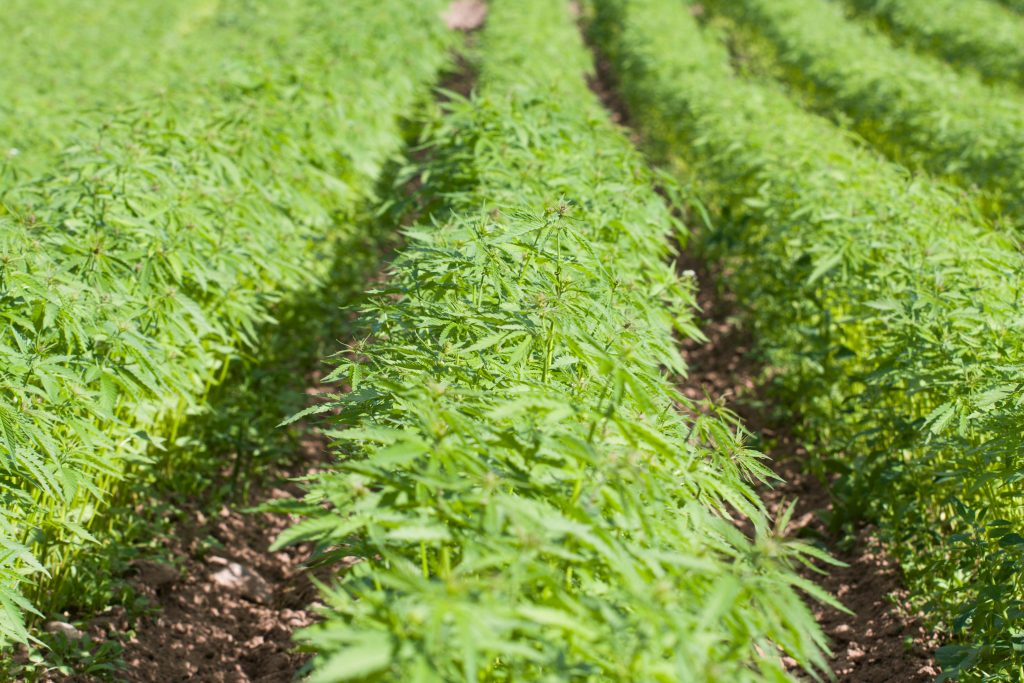
Some Georgia hemp producers were victimized this year by having their crop’s THC level exceed 0.3 level. Subsequently, the hemp was destroyed, which was the case for 11 producers.
Tim Coolong, associate professor in the University of Georgia (UGA) College of Agricultural and Environmental Sciences and leader in hemp research at UGA, said he heard farmers in east Georgia who had a crop that tested hot. He believes next year that producers will test their hemp more frequently to avoid instances where the crop must be disposed of.
Testing Benefits
“I think certainly that anyone who tested hot this year that decides to grow again will certainly be doing it. I think for the most part, the growers that I did visit with last year understood the value of testing and how important it was,” Coolong said. “I think going into it next year, depending on how many growers we have, I think they will be a little more targeted perhaps or maybe just have a little bit better plan because they’ll have more time.”
Coolong added that he is still waiting to see how farmers fared financially after the state’s first commercial growing season.
“That’s obviously where, it doesn’t matter how good your yields are or quality, the bottom line is how much profit did growers make. People are still processing their product and all those sort of things right now. I’m not sure the profit levels on some of the growers I worked with,” Coolong said.
According to the Georgia Department of Agriculture, applications for new Georgia hemp grower licenses and hemp processor permits will be accepted, beginning in January, 2021.
The University of Georgia Cooperative Extension will hold pecan production meetings virtually in January, February and March.
UGA Pecan Team members include Lenny Wells (Extension pecan specialist), Angel Acebes (entomologist), Andrew Sawyer (Area Pecan Agent-Southeast District) and Jason Brock (plant disease diagnostician). All will give presentations and be available for questions over Zoom. Tentative dates for the meetings are as follows:
Jan. 21-6 p.m.
Feb. 9-9 a.m.
March 9-6 p.m.
According to UGA Extension, the various times are provided so people have the options of the best times that may work for them.
“We are still working out the details of setting things up for this with regard to registration, pesticide credits, etc., but I will be posting more information here as the plan comes together,” Wells said.