Category: Georgia

  • Vegetable Weed Management a Complicated Practice for Producers

    Photo submitted by Stanley Culpepper/UGA: Shows a blend of yellow and purple nutsedge.

    Weed management in vegetable crops across the Southeast remains a diverse and complicated practice that all producers need to be reminded of.

    “There are so many components that a vegetable grower has to consider, especially when it comes to weed control. Some production systems you can use tillage. Some you can’t. Some you have plasticulture in a fumigant system. Some that you don’t,” University of Georgia Cooperative Extension weed specialist Stanley Culpepper said.

    “Then when you start thinking about herbicides, we’ve been very fortunate over the last 10 years, getting our growers a lot of cool herbicide tools as a component to their management program, but when you’re a vegetable producer and going to have a crop and be in and out in 60, 80, 90 days, you’ve got to think about herbicide carry-over. I can or I can’t use herbicide ‘A’ because of what it could potentially do to the next crop, which means you’ve got to know what the next crop is going to be. You know vegetable guys as good as I do, a lot of times, they just don’t know.”

    Producers have to implement the right herbicide and do so at the right rate. They have to use the right irrigation program. The tank also has to be perfectly clean.

    “The complexity goes on and on for a vegetable farmer. A lot of decisions have to be made in a 12-month cycle because we could be producing three crops in a lot of our farms,” Culpepper said.

    Weed Problems

    Certain weed species are also problematic at different times of the year. Weeds that are normally a concern for producers in the spring are not the same as those that are plaguing producers right now. Different weeds require different management strategies.

    “Lets start in the spring. In a fumigated plasticulture production system, nutsedge remains the baddest boy that there is. That’s the only weed that can penetrate through the mulch. Nutsedge is still a huge dominant player. In addition to nutsedge, what has really taken its foothold on a lot of my guys has been purslane species and a lot of ours is actually pink purslane; a bunch of different grasses that have always been here and then our amaranth species (not palmer amaranth),” Culpepper said.

    “If you look at this time of year, wild raddish is the baddest boy that there is.”

    Weed Management

    Weed management remains key to successful vegetable production, whether you are talking about now or in the spring. Before plants are ever put in the ground, weed control needs to be a top consideration for producers. Weeds challenge and can overwhelm crops for water, sunlight and nutrients.

    Culpepper said in most situations, the weeds are better competitors than the crop.

    “Before you ever start a conversation, you say, ‘Look, vegetable weed control is really challenging. There can’t be any weed emerge at planting.’ It’s very likely that if we’re going to implement a herbicide program we’ve got to start it before we ever plant,” Culpepper said.

    “In transplanted onion production, obviously, very important to Georgia, we have an excellent herbicide program that will be successful probably 95-plus% of the time, which is really, really good. If you wanted to grow seeded onion production in the state of Georgia, I don’t think you’ll have a chance because you can’t manage the weeds. Or if you do, you’ll spend a tremendous amount of money.

    “There’s the same crop per se grown two different ways; one is very unlikely to be successful and the other is very likely to be successful with regards to weed management.”

    “If you wanted to seed cabbage, because of wild raddish, you’re in trouble. But if you want to transplant cabbage, I have a herbicide you can put out before you transplant, and I’ll take the wild raddish out.

    “There’s two examples, exact same crop, of how you want to process or implement your program will determine how successful you’ll be.”

  • Examining Issues Facing Hemp Production and Processing

    UGA CAES Photo/A survey conducted by UGA researchers examined whether respondents had any concern about the growing of hemp and the creation of hemp products in their area.

    By Allison Fortner for CAES News

    Hemp is a promising new industry for profitability, but growers of this newly legal crop will face a mix of public opinions according to University of Georgia research into challenges those in the hemp business may face in the southeastern United States.

    A recently published article in the Journal of Agricultural and Applied Economics identified the concerns nearby residents may have with local hemp production and processing. The study was led by UGA College of Agricultural and Environmental Sciences faculty Benjamin Campbell and Julie Campbell in collaboration with Adam Rabinowitz at Auburn University.

    “We got involved in doing hemp economics two years ago when it was passed with the legislature,” said Benjamin Campbell, associate professor and UGA Cooperative Extension specialist in the Department of Agricultural and Applied Economics. “We started asking if there would there be a negative perception or externalities associated with these hemp processors coming [into communities].”

    With the passage of the 2018 Farm Bill, hemp was legalized as a crop in all states. Though hemp is not a novel crop, the legislation opened opportunities for markets in new areas and resulted in a fast push to produce and process the plant. The research team initially examined budgeting and markets surrounding hemp but found there was a lack of research in hemp production perception. They sought to identify potential problems that could arise in communities where the crop is grown and processed into various goods.

    “We kept seeing people concerned about light pollution and the smell in popular press-type reports,” said Julie Campbell, an assistant research scientist in the Department of Horticulture.

    The group put together a list of questions that was distributed via an online survey to southeastern U.S. residents. The responses were representative of the population, with consideration to household income, race, education level, age and gender.

    Demographic Considerations

    The survey examined whether respondents had any concern about the growing of hemp and the creation of hemp products in their area.

    Researchers found that Republicans are 4.8% more concerned about hemp production and 4.9% more concerned about processing than Democrats. Therefore, the political landscape should be considered when hemp firms are garnering local community support.

    The research also revealed that education level does not necessarily dictate the amount of concern. Respondents with a high school education or less and those with graduate degrees expressed more concern about local hemp production and processing than those with a bachelor’s degree.

    “There’s not one consumer. There’s a whole various subset of consumers that believe different things,” Ben Campbell said. “Surveys allow us to understand these different groups and assess what their perceptions are. This helps us inform these groups so they can understand what’s going on with the new technologies.”

    Differences Between Hemp and Marijuana

    Though hemp and marijuana are identical in appearance, the determining difference between the two is the level of tetrahydrocannabinol (THC) present in the cannabis plant. THC is the chemical responsible for most of marijuana’s psychological effects, but its levels are strictly regulated in commercial hemp crops. Ben Campbell said a resulting concern is consumer belief that hemp is the same as marijuana, though smoking a hemp plant does not result in a high.

    The survey collected information about consumer knowledge level and found that 44% of respondents thought that hemp and marijuana were the same, while 44% knew hemp and marijuana were different. The remaining 12% had never heard of hemp.

    “For years there have been entire drug campaigns saying, ‘Marijuana is horrible.’ People associate hemp and marijuana as being the same thing. Now all of the sudden we’re saying, ‘Hemp is good.’ It’s kind of hard to have people turn on a dime,” Julie Campbell said.

    While the plants have different chemical compositions, their matching appearance leads to concerns of illegal activity.

    “You have people breaking into fields in other states and stealing hemp plants because they think it’s marijuana. That’s one of the externalities I was looking at — illegal activity,” Ben Campbell said.

    The survey examined the perceived concerns of respondents and found that the potential for illegal activity and overall safety were the highest-rated concerns for both local growth and processing.

    Therefore, engagement with communities to dispel myths about hemp and to educate about its benefits is crucial. These efforts should also address issues of local concern to help neighborhoods feel more comfortable with the hemp firms in their areas.

    “I think it brings up a point that you need to have producers and processors interacting with their neighbors to show them what they’re doing and alleviate any concerns so that they are informed. If not, you’re going to have people believing that you’re hurting them or harming them when that may not be the case. That’s the biggest overall takeaway,” Ben Campbell said.

    Future Research

    Julie Campbell said this research provides a perspective on what hemp firms will need to consider before investing money and establishing themselves in a community, especially considering the government hearings businesses must go through for community input. However, she said communication and education on this matter will be up to both industry and academia.

    “People growing hemp, people growing medicinal marijuana – it’s coming,” she said. “We have to be able to do research on this so that we’re not left behind. People are looking to the university for guidance on this.”

    The questions and results from this study will inform future consumer surveys. Recently, Ben Campbell received a Federal State Market Improvement Grant from the U.S. Department of Agriculture (USDA), in collaboration with Auburn University, the University of Delaware, and the University of Kentucky, to conduct monthly consumer surveys over the next three years, allowing for further hemp research, among other public perception and marketing surveys.  

    Ben Campbell’s research and Extension efforts are devoted to better understanding the consumer marketplace for horticultural products, notably green industry products. He has more than 15 years of experience in conducting market and production economics research throughout the U.S. and Canada.  His work has focused on market intelligence, market identification and the economics of production for varying horticultural commodities.

    Julie Campbell’s recent research focuses on a number of issues facing the green industry, including consumer perceptions, marketing, disease mitigation and best management practices. Her research helps link consumers, retailers and producers, often intertwining multiple disciplines.

    For more information on the UGA Department of Agricultural and Applied Economics Department, visit agecon.uga.edu. For more information on the UGA Department of Horticulture, visit hort.uga.edu.

  • Georgia Department of Agriculture to Host Produce Safety Alliance Training

    The Georgia Department of Agriculture will host the Georgia Virtual Produce Safety Alliance Training on Jan. 26 and Jan. 27 from 8 a.m. to noon. The two-day workshop covers the standardized curriculum designed by the Produce Safety Alliance, which meets the regulatory requirements of the Produce Safety Rule under the Food Safety Modernization Act (FSMA).

    Individuals who participate in this course are expected to gain a basic understanding of:

    1. Requirements in the FSMA Produce Safety Rule and how to meet them successfully;
    2. Microorganisms relevant to produce safety and where they may be found on the farm;
    3. How to identify microbial risks, practices that reduce risks, and how to begin implementing produce safety practices on the farm;
    4. and Parts of a farm food safety plan and how to begin writing one. (ers.usda.gov/arms): ers.usda.gov/arms
           
      Further information is available on www.georgiaproducesafety.com or by viewing this detailed flyer. For questions, please email Maggie Brown or Elizabeth Danforth.

    Registration ends today.

  • Whitefly Management: Sanitation Key Especially for Watermelon Producers

    Stormy Sparks’ message regarding whitefly management remains the same: If you’re done with the crop, get rid of that crop.

    Sanitation remains the best defense against whitefly buildup in Southeast vegetable and cotton crops. Even watermelon producers, who don’t have to contend with whiteflies as much as cantaloupe and cucumber farmers, are encouraged to do their part in preventing potential infestations in other fields.

    “Watermelons present a unique challenge because we’re dealing with so many more growers,” said Sparks, a University of Georgia Cooperative Extension vegetable specialist.

    “If you look at it from strictly a financial standpoint this season, in many cases there’s no emphasis on whitefly management in watermelons. But if we don’t get rid of the crop, we can distribute them on watermelons and then they can build up in those crops that are left standing and move into cotton. That’s basically what happens.”

    Sanitation is a key management strategy all farmers can implement when managing whiteflies. Once farmers are done harvesting their spring vegetables, they need to get rid of them.

    Watermelons Left in the Field

    But in many watermelon fields, watermelons are sometimes left in the field long after the final harvest. This can be largely attributed to “pinhookers” or people who buy the remaining watermelons in a field with the purpose of reselling them. However, this leaves a watermelon field susceptible to whitefly infestations since so much of the crop is left in a field for weeks, if not months.

    “You can find fields in the fall that were planted in the spring,” Sparks said.

    Whitefly Impact

    Whiteflies migrate from winter vegetables to spring vegetables to agronomic crops, like cotton, to fall vegetables and back to winter vegetables. Whiteflies cause feeding injury issues in vegetables and transmit two viruses: cucurbit leaf crumple virus and cucurbit yellow stunting disorder virus.

  • Export Markets Remain Key for Southeast Pecan Producers

    With the 2020 pecan season in the books, growers in the Southeast are looking to write a new chapter in 2021, one they hope will have a better ending.

    The story of this past season’s crop centered on devastatingly low prices and low morale among farmers still trying to recover from Hurricane Michael in 2018. The biggest question remains, what can be done to improve market prices? It starts with the potential export markets that need to be explored, especially since China currently remains a non-buyer.

    UGA Extension Pecan Specialist

    “Southeastern growers should be able to see now what their markets look like if we don’t have a large in-shell export market in play. It’s not a pretty sight,” University of Georgia Cooperative Extension pecan specialist Lenny Wells said. “I hope that we will see more efforts from some of the grower organizations in the state to take on and actively get involved in some of this export marketing work for in-shell nuts.

    “I think whether we’re talking about China or South Korea or India, Turkey, even Egypt’s being talked about now; there’s a lot of places we need to be working on for in-shell export markets. That’s really where southeastern growers are going to benefit.”

    Domestic Market Competition

    Additional export options are needed considering the domestic market has increased competition from Mexico.

    “I just really don’t see anything on the horizon that’s going to affect the volume of nuts coming in from Mexico. That competition for the domestic market is here to stay. There’s no question that Southeastern growers are at a disadvantage in that market,” Wells said.

    According to the final Georgia Pecan Price Report released last week, growers are cleaning up orchards and preparing for the 2021 season. Growers are still bringing pecans onto the market. But the volume has dropped, and there is a wide range of quality.

  • COVID Forces Farmers to Consider Alternate Marketing Opportunities

    Photo by Clint Thompson/Shows boxed produce being sold direct to consumers.

    COVID-19 altered the marketing plans of Southeast vegetable and specialty crop producers in 2020. Restaurants closed, which crippled certain sectors of the fruit and vegetable industry.  

    Farmers must continue to adjust as a new season approaches while the pandemic continues. Jessie Boswell, Alabama Regional Extension agent, who specializes in commercial horticulture and farm and agribusiness management, believes the pandemic’s impact has forced farmers to realize their marketing options needed to expand and could expand in 2021.

    “I think it made a lot of farmers realize how flexible they have to be and actually noticing these other marketing channels that they have, they may not have even noticed it before,” Boswell said.

    “A lot of them may not even have realized how to do those different channels. Maybe they’ve been meaning to look into it later, and this just kind of made them realize they’d have to be more flexible in kind of looking ahead more so than they were in the past.”

    Boxed Produce/CSA

    Farmers like Bill Brim in Georgia boxed their produce and sold direct to consumers to offset decreased demand. Community Supported Agriculture (CSA) was another option that paid off for some producers.

    “I know of a farm and they were planning on transitioning to a CSA last spring, spring of 2020, and they were already planning that before the pandemic even happened. They had a way better year than they even could have imagined,” Boswell added. “They had already started setting up for direct to consumer or a CSA box. They sold an astronomical amount. They sold out, actually.

    “That’s probably what I have seen most people do is switch to more of an online (option) or CSA. Even some of the ones that aren’t technology savvy started selling stuff on Facebook, trying to sell their greens or whatever they had because their other marketing channels were not open.”

    Of course, encouraging some farmers to consider alternate marketing strategies is easier said than done.

    “I know a lot of farmers that like to do things the way they’ve been doing it for the past decade. They’re not always the biggest fans of change,” Boswell said.

  • Georgia Vegetable Growers to Vote to Continue Assessment

    Georgia vegetable growers will vote Feb. 1 through March 2, 2021 to determine the continuation of the Georgia Vegetable Commission marketing order which allows assessment of one cent per marketing unit of vegetables as described in the current marketing order.

    Photo submitted by UGA’s Stormy Sparks/Shows whiteflies on a vegetable plant.

    The marketing order applies to growers with 50 acres or more of total annual production of the following crops – beans, bell pepper, specialty pepper, broccoli, beets, cabbage, cantaloupe, carrots, cucumbers, eggplant, greens (including collards, turnip greens, mustard and kale), squash (including yellow, zucchini and winter squash), sweet potato and tomato. 

    Funds collected by the Georgia Vegetable Commission are used for research, education and promotion of the crops mentioned above. It is the policy that the commission allocates at least 75% of money collected toward research projects by the University of Georgia and other research institutions that best serve Georgia growers. Some of the areas previously funded have focused on whiteflies, fungal disease diagnoses and control, viral diseases, variety development, fumigation, and weed control. 

    The Georgia Vegetable Commission was established by the Georgia General Assembly in 2006 at the request of the Georgia vegetable growers. The marketing order must be reapproved by vote of the eligible vegetable growers every three years by a two-thirds affirmative vote. 

    If you are a qualified grower and have not received a ballot in the mail by Feb. 10, please contact Andy Harrison:

    Andy Harrison

    Manager, Commodity Commissions

    Georgia Department of Agriculture

    Andy.harrison@agr.georgia.gov

    (404) 710-1196

  • Georgia Blueberry Producer: In the World I Live in, It’s a Problem

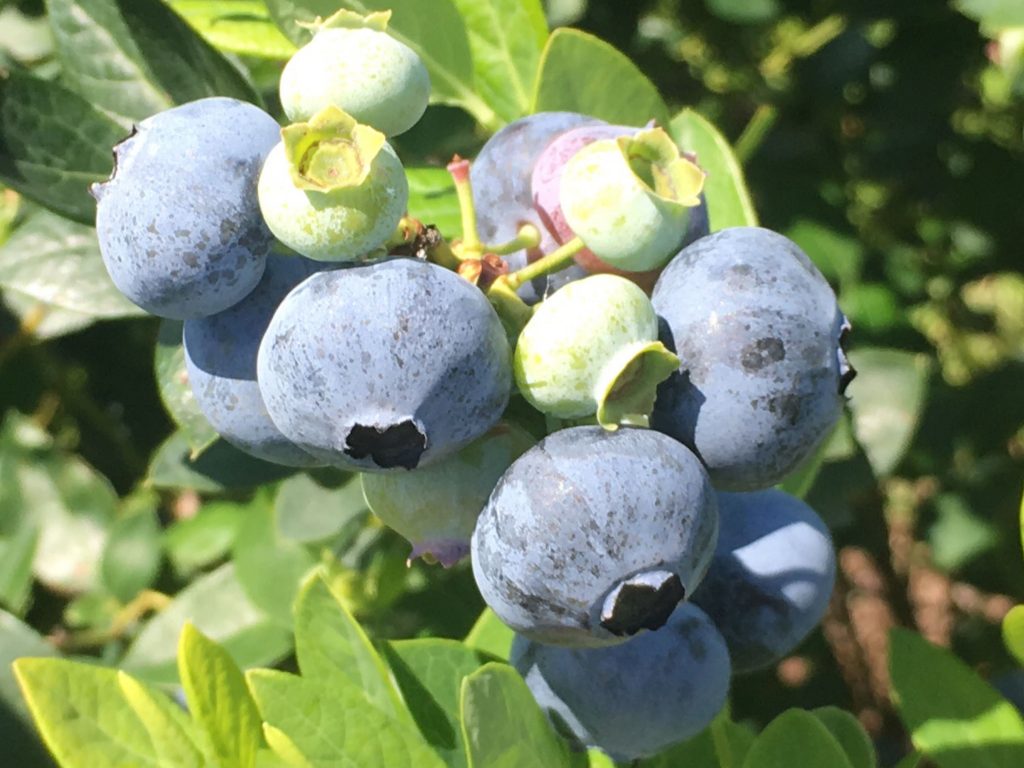
    blueberry

    Foreign imports of blueberries do not complement the U.S. domestic crop. Farmers and industry leaders in the Southeast sounded insulted about the notion that imports do not actually compete with their crop. They were asked about it during Tuesday’s virtual hearing with the U.S. International Trade Commission (ITC).

    “I find the comment that imports don’t affect us, it’s confusing to me, and I wonder if they’re trying to be comical,” said Jerome Crosby, Georgia blueberry grower and chairman of the American Blueberry Growers Alliance. “My farm operates both in the frozen world as well as the fresh world.

    “On the frozen side, I have watched my sales, net margin drop from about 80 to 90 cents per pound for grade A. To this year, I received 38 to 40 cents per pound to pay off my farm expenses with. In the world I live in, it’s a problem.”

  • Weed Management a Key Factor in Vegetable Production

    Photo by Stanley Culpepper/Shows nutsedge.

    Weed management remains a vital strategy all vegetable producers need to implement in order to have a successful season.

    University of Georgia Cooperative Extension weed scientist Stanley Culpepper implores farmers to stay vigilant in keeping weeds out of their fields.

    “What you want to do is you want to remove weeds from the field because they compete with the crop. They compete for water. They compete for sunlight. They compete for your nutrients,” Culpepper said. “In most situations when you talk about a vegetable crop, not all, in most situations the weed is a better competitor than the crop. If you’re in corn, corn’s a really good competitor. A lot of weeds can’t compete with corn.

    “But in most of our produce crops, because we start off very small and it takes a long time to get going, those weeds will basically take advantage of the lower competitiveness of the crop and then win out.”

    Weeds are problematic no matter what time of the year and no matter what crop is being produced. Whether you are talking about wild radish or primrose this time of year or nutsedge in a fumigated plasticulture production system during the spring, weeds are a top priority that need to be considered before planting ever begins.

    “Before you ever start a conversation, you say look vegetable weed control is really challenging. There can’t be any weed emerge at planting. It’s very likely that if we’re going to implement a herbicide program we’ve got to start it before we ever plant,” Culpepper said.

    “It’s not like cotton. It’s not like corn. It’s not like soybeans where okay I made a little mistake, I’ll catch up. That does not exist in the world of weed control in southeastern vegetable production.”

  • What Next in ITC Blueberry Investigation?

    The long-awaited hearing with the International Trade Commission (ITC) for blueberry farmers has come and gone. The case against blueberry imports from foreign competitors has been made.

    Now what happens?

    Bob Redding, who works for the Redding Firm and serves as a lobbyist for agricultural groups in Washington, D.C., outlines the potential outcomes that will occur following Tuesday’s hearing. It all depends on the recommendations the ITC makes to President-Elect Joe Biden and what path he chooses to take after assumes office.

    Potential Outcomes

    “The president can ignore it, change it or accept it. This will be quickly, after the ITC action, a political issue again with the administration. Having said that, we do not know the position of the president yet, on this issue. It’s too early,” Redding said.

    “We need to get a U.S. Trade Rep in place first and we will start working with them, our congressional delegations start working with them to hopefully get a good position on that issue.”

    The case was made tougher considering the American Blueberry Growers Alliance’s opposition.

    “We have a lot of groups against us. A lot of the countries that are pushing product at a bad time of the year have hired up lawyers, economists, lobbyists and consultants to fight the American Blueberry Growers Alliance position in trying to get relief from seasonal imports at the ITC,” Redding said.