Category: Georgia

  • Yeast Rot in Blueberries Major Problem in 2020

    A sporadic blueberry disease caused significant problems for Georgia producers in 2020.

    Though management options are non-existent with yeast rot, Jonathan Oliver, University of Georgia (UGA) assistant professor and small fruits pathologist, believes timely harvesting and handling of ripe fruit will help minimize instances in 2021.

    Photo by Clint Thompson/Shows Jonathan Oliver talking about yeast rot during the virtual Southeast Regional Fruit and Vegetable Conference.

    “It was a major problem for our rabbiteye growers. Kind of the last half, maybe the last three-quarters of the rabbiteye harvest, at least in southern Georgia, seemed to be affected by it significantly. It probably is weather and condition dependent,” Oliver said.

    “We had a lot of warmer weather right before we had the problem, and we had a lot of rainfall. It seems to be something of a problem when fruit is already either overripe or damaged in some way. Some of the weather conditions I think led to some of those problems. That’s why it was kind of an issue last year.

    “It sporadically can be an issue in other years as well. It was a real big issue right at that one critical time last year, unfortunately, for our growers.”

    Environmental Conditions

    Warm, wet or humid conditions likely favor the growth of the fungus. There was a rapid shift to warmer overnight temperatures in Georgia in mid-to-late May. It went from the mid-50s to mid-70s very quickly. Also, there was a huge rain event that contributed as well. Alma, Georgia received 2.3 inches on May 22.

    It is a secondary or weak pathogen that colonizes fruit surfaces and wounds. This causes the fruit to collapse and take on a wet, slimy appearance. Soft, splitting rot were common, and samples that were sent to the diagnostic lab were infested with yeasts.

    Economic losses were significant. Harvested fruit was rejected and packing lines shut down early.

  • Whitefly Management: Don’t Get Behind in Spray Program

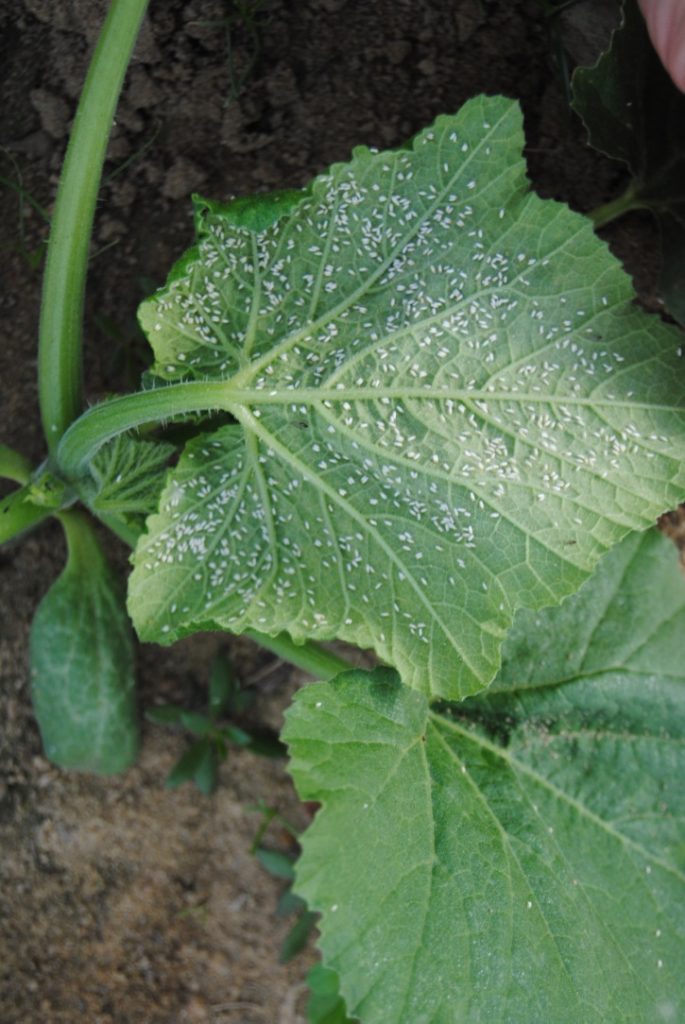
    Whitefly adults feed on a yellow squash seedling.

    Insecticides are available for growers managing whitefly populations. But they need to be applied early in the season when whiteflies are young and immature.

    “Most of the things we use primarily target immatures. That’s where our best control is. We’ve only got a couple of products that are really good on adults,” said Stormy Sparks, University of Georgia Cooperative Extension vegetable entomologist. “Most of them, I can’t say for certain, but most of them probably are most efficacious on very little N-star immatures.”

    Managing whiteflies when they’re young is a producer’s best management strategy considering how quickly they will reproduce.

    Whiteflies can grow by a generation in just two weeks in the heat of the summer when temperatures routinely exceed 90 degrees Fahrenheit. The time for these insects to develop is related to temperature. When temperatures are cooler, development takes longer.

    During hot and muggy conditions, which are common in Georgia and Alabama in July and August, development time for whiteflies decreases.

    “Whiteflies are one of those things you don’t want to get behind on,” Sparks said.

    Southeast producers grow cole crops, like broccoli, kale and cabbage, from September through May. Cucurbits grow in the summer, and cotton grows in the early fall. All of these crops serve as host plants for whiteflies.

    Whiteflies can also transmit cucurbit leaf crumple virus and cucurbit yellow stunting disorder virus. 

  • Blueberry Imports a Complement to Southeastern Producers?

    The Blueberry Coalition of Progress and Health contends that imports of blueberries do not take away markets from southeastern growers but complements their production.

    It made its case to the International Trade Commission (ITC) on Jan. 12 during a virtual hearing and continues to believe there is a big enough “blueberry pie” for all parties to benefit from.

    “That’s why the coalition was formed. We wanted to continue the momentum that the blueberry industry has done over the last few years and the growth and the demand,” said Joe Barsi, President of California Giant, which is a member of the coalition. “The average consumer eats 1.79 pounds of blueberries per year. That’s up significantly. It’s still pales in comparison to a category likes strawberries where consumers eat seven pounds a year of strawberries.

    “We wanted to continue the momentum and we feel like limiting imports will raise prices to the U.S. consumer. It will decrease demand and we’ll lose the momentum the industry has realized. I think the domestic industry has really benefited from the imports in having a consistent supply at retail year-round that’s fairly priced.”

    Section 201 Investigation

    Blueberry imports have been a struggle for growers in the southeast to compete with every year. It was the focus of a Section 201 investigation where the American Blueberry Growers Alliance presented data to the ITC during the Jan. 12 hearing that outlined the imports’ impact on southeast blueberry production, which it believes has resulted in serious injury.

    Statistically Speaking

    According to the American Blueberry Growers Alliance, the U.S. Department of Agriculture Marketing Service reported a 68% increase in imported fruit from Mexico from 2019 to 2020, amounting to more than 15 million pounds of fresh blueberries during a 14-week period. Mexico, along with Peru, Chile, Canada and Argentina account for more than 98% of total U.S. imports. Import values increased from $530 million in 2014 to $1.2 billion in 2019.

    Jerome Crosby, Chairman of the American Blueberry Growers Alliance, testified that imports of fresh blueberries have increased 75% over the past five years and is only expected to worsen.

    Supply and Demand

    Barsi believes that the blueberry demand requires the consistent imports that are coming from places like Mexico and Peru.

    “There’s such a demand in the marketplace for fruit, say in the spring window when Florida is producing, there’s such a demand for fruit that Florida and southern California wouldn’t be able to supply the market for the demand that it requires. That’s why we feel like imports have been a really good complement to that,” Barsi said.

    “For someone like California Giant or another company like ourselves, we’re in the market 52 weeks out of the year. To be able to supply our customers with a supply of blueberries year-round, we have to be able to have both, domestic and imports, to be able to supply those requirements.”

    Who Makes Up the Blueberry Coalition of Progress and Health?

    The Blueberry Coalition of Progress and Health is compromised of a broad range of domestic and international producers as well as distributors. Some retailers are on the coalition as well.

    “It was basically formed, we wanted to continue the progress that the blueberry market has continued to have over the last 15 to 20 years. I’ve been involved in blueberries for 15 years, and there’s been significant growth in the marketplace,” Barsi said. “The coalition was formed to be able to provide data to the International Trade Commission on why we think that imports haven’t been a serious injury to the domestic industry.”

    ITC Investigation Timeline

    Important dates

    • January 12th – Public hearing 
    • January 19th – Post-hearing briefs
    • February 3rd – Staff report (internal)
    • February 11th – Injury public vote (scheduled)

    For the remedy phase (if affirmative injury is determined):

    • February 18th – Prehearing briefs
    • February 25th – Public hearing
    • March 3rd – Post-hearing briefs
    • March 19th – Remedy public vote (scheduled)
    • March 29th – Determination, views and report delivered to the President
    • May 27 as the deadline for the President’s decision

    Blueberry Coalition Members

    • Agroberries S.A.
    • Alpine Fresh Inc.
    • Aneberries A.C.
    • Berries Paradise S.A.P.I. de C.V.
    • California Giant Berry Farms
    • Camposol Fresh USA, Inc
    • Driscoll’s, Inc.
    • Family Tree Farms
    • Fresh Produce Association of the Americas
    • Giddings Berries
    • Hortifruit
    • Andrew & Williamson Fresh Produce
    • Pro Arandanos
    • United Exports Limited
    • Reiter Affiliated Companies
    • Chilean Blueberry Committee
    • Chilealimentos
  • Slow Start for Georgia Vidalia Onions

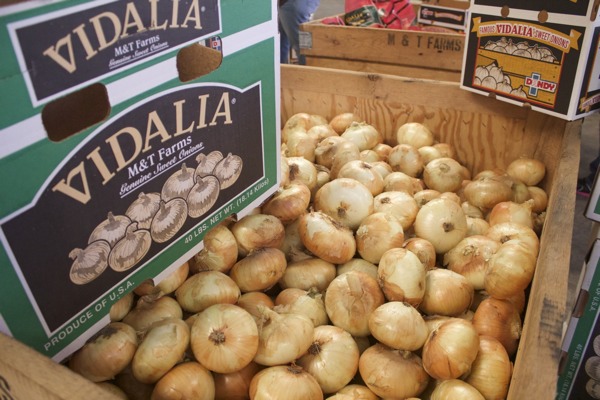
    File photo shows a bunch of Vidalia onions.

    It has been a tale of two winters for Georgia Vidalia onion producers. Last year’s abnormally mild winter was highlighted by warmer temperatures. This season has been characterized by wetter conditions and cooler temperatures.

    It has impacted the growth of the state’s onion crop so far this season, says Chris Tyson, University of Georgia Extension Area Onion Agent at the Vidalia Onion & Vegetable Research Center in Lyons, Georgia.

    “We had some warm weather in December and January last year and it really got the onions up jumping. This year they’re just off to a much slower start. That’s okay. It’s not a problem. It’s just been a cool, cold, slow start. The growth has just been really slow to begin with,” Tyson said.

    Slow Start, Just Not a Bad Start

    A slow start is not necessarily a bad thing either for onion producers.

    “The sooner the onions get big and get growing, the sooner we have to fight disease and manage fertility. I think recent years have been uncharacteristically warmer, above average; we almost have gotten used to that the last few years. But this year it may be more of an average year,” Tyson said. “You talk to these Vidalia onion growers and they’ll tell you about years when we’ve had really cold weather and we’ve had hard freezes. It’s caused problems in the past. We haven’t seen any extremes like that (this year).

    “We don’t want to get the onions too big and have a bad freeze or something like that. When they get big like that, the freeze damage can hurt them worse.”

    Sufficient Moisture

    Moisture is not a problem either for Georgia onion farmers. According to the US Drought Monitor, only a few coastal counties and some in the southwestern part of the state are abnormally dry. Most of the state got saturated during the New Year’s Holiday weekend.

    “A lot of places in the onion belt got 3 to 5 inches. In this time of the year when it’s cold and not much evaporation, it makes things really wet and takes a while to dry off,” Tyson said.

    “As far as moisture goes for the onions, we feel like we’re in pretty good shape right now.”

  • Appointments Made to Georgia Wine and Grape Commission

    Five Georgia wine producers have been appointed to serve on the Georgia Wine and Grape Commission.

    North Georgia Region – Eric Seifarth, Towns County; Central Georgia Region – Simone Bergese, Barrow County; South Georgia Region – Gary Paulk, Irwin County; Appointed as at large members – Gary Engal, Gilmer County and Eric Miller, White County. 

    Engal and Bergese will serve terms of three years, and the other appointees will serve terms of two years. These individuals will be eligible to be reappointed following their terms. 

    The Georgia Agriculture Commodity Commission for Wine and Grapes was established by the Georgia General Assembly in 2020 at the request of the Georgia wine industry. The Georgia Wine and Grape Commission can implement a marketing order which will allow for collection of assessment from producers upon approval of the growers. Funds collected must be used for research education and promotion of the commodity.

    For more information please contact Andy Harrison:

    Andy Harrison

    Manager, Commodity Commissions

    Georgia Department of Agriculture

    Andy.harrison@agr.georgia.gov

    (404) 710-1196

  • Phony Peach Prevalence in Southeast

    A tree (left) with phony peach disease has shortened internodes, a flattened top and darker green foliage compared to a healthy tree (right).

    By Ashley Robinson

    Peach trees are plagued by several different diseases throughout the growing season. But one disease is causing noticeable losses within orchards in Georgia.

    Phony peach disease, caused by the bacterium Xylella fastidiosa, has been challenging for growers ever since its first detection in 1885 near Marshallville, Georgia.

    Recently, growers across the southeast have reported an increase in disease prevalence, which is a threat to production. The disease results in stunted tree growth and reduced fruit size and quality.

    Kendall Johnson, a graduate research assistant at the University of Georgia (UGA), discussed phony peach disease during the 2021 virtual Southeast Regional Fruit and Vegetable Conference. According to Johnson, warmer winters may be to blame for increased disease pressure. Phony peach disease is vectored by sharpshooter insects, which are widespread in warm southeastern climates.

    Through on-site surveying, Johnson confirmed phony peach disease is very much prevalent in the central and southern parts of Georgia, Alabama and Florida. However, the disease was not found in north Georgia or South Carolina, likely due to higher altitudes and cooler temperatures.

    Johnson reported that phony peach incidence in sample orchards ranged from 12.12% to 30.5%.

    Since phony peach is not a curable disease, control is directed toward prevention and minimizing the spread. To date, the most often used detection method is visual assessment. However, according to Johnson’s research, this method may not be an effective form of management as experts can’t accurately identify symptomatic trees. Non-symptomatic trees are often infected.

    Visual detection is highly dependent on an isothermal DNA amplification and detection system, which through field trials, proved to be 95.5% accurate in detecting the disease. 

    Although a 4.5% error rate may not seem devastating, infected trees that are not detected and left in the orchard could serve as inoculum sources for additional disease spread throughout the orchard, disrupting production.

    Currently, Johnson is working with UGA to utilize hyperspectral imaging for early detection of the disease. She is also working to develop a phony peach disease identification training session for growers, scouts and Extension agents in hopes of better controlling disease spread.

  • Florida Blueberry Producer: Data Makes the Case for Us

    house
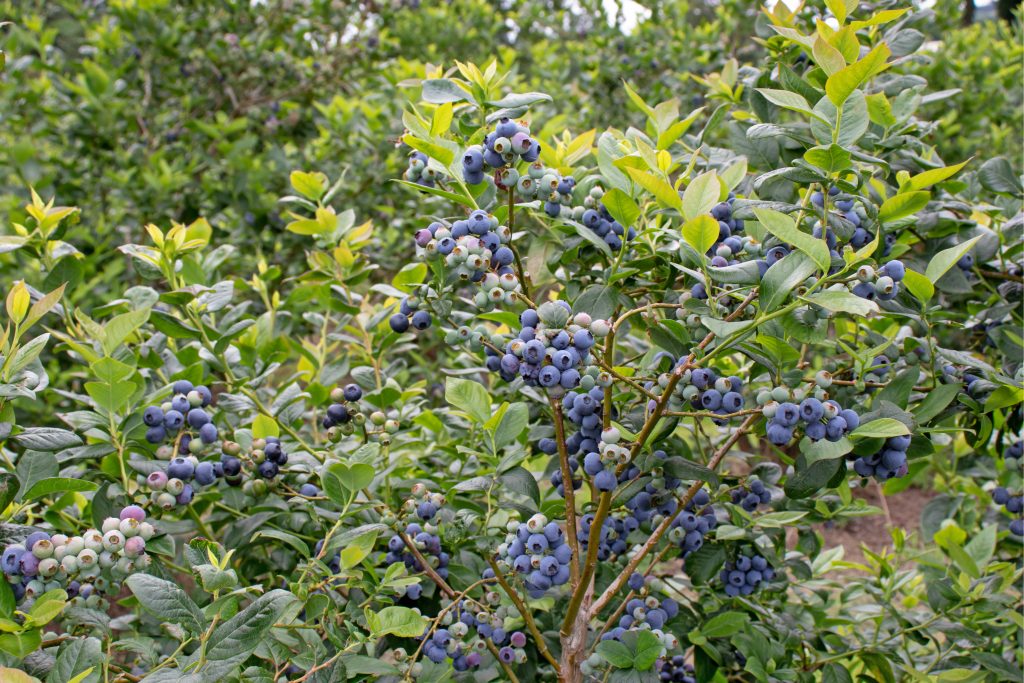
    File photo of blueberry production.

    A decision could come soon for Southeast blueberry growers hoping to find relief from seasonal imports causing harm to their farming operations.

    The International Trade Commission (ITC) heard the American Blueberry Growers Alliance Case in early January. Now, it will formulate a recommendation for President Biden to decide how to move forward.

    “I think the data makes the case for us. I think we have the data on our side. It’s hard not to look at the data and see what’s going on,” said Ryan Atwood, who lives in Mount Dora, Florida and farms 56 acres of blueberries, manages another 350 acres and is part-owner of the largest packing house in the Southeast United States.

    Gloomy Picture

    The statistics paint a picture of Southeast blueberry producers struggling to compete with imports from other countries, namely Mexico.

    Florida Ag Commissioner Nikki Fried said Florida’s blueberry market share had declined by 38% since 2015. Mexico’s market share has increased by 2,100% since 2009.

    Brittany Lee, Executive Director of the Florida Blueberry Growers Association said in 2010, when her family planted blueberries, there were only 1.8 million pounds of Mexican blueberries in the Florida window of March, April and May. Last year, there was 51.68 million pounds in that window.

    Jerome Crosby, Chairman of the American Blueberry Growers Alliance, testified that imports of fresh blueberries have increased 75% over the past five years and is only expected to worsen.

    According to the American Blueberry Growers Alliance, the U.S. Department of Agriculture Marketing Service reported a 68% increase in imported fruit from Mexico from 2019 to 2020, amounting to more than 15 million pounds of fresh blueberries during a 14-week period. Mexico, along with Peru, Chile, Canada and Argentina account for more than 98% of total U.S. imports. Import values increased from $530 million in 2014 to $1.2 billion in 2019.

    Opposing Groups

    Groups who opposed the blueberry’s alliance case also made their case to the ITC. Atwood believes their makeup consisted mostly of marketers and not farmers.

    “The only thing that I felt hurt us was they tried to portray themselves as a bunch of growers. Honestly, it was marketing interests that were being represented on the opposition,” Atwood said. “I think anyone who knows the industry and knows the players and knows who was on who’s side know it was marketers on the other side and growers on our side. It was pretty clear.”

    Now comes the hard part…waiting.  A recommendation from the ITC and a decision from President Biden could come as early as March.

    “I don’t know how this will all turn out if the president will sign it. That’s to be determined, to be seen. I think there’s a lot of us that are really interested in the outcome. One good thing about the process, it’s a fairly quick process when you think about it in terms of being politics,” Atwood said. “Start to finish, it’s going to end up being what, four, five, six months? I’m pleased at least that it wasn’t like we were dragging this thing out over three or four years.”

  • Georgia Pecan Production Season Best Since 2007

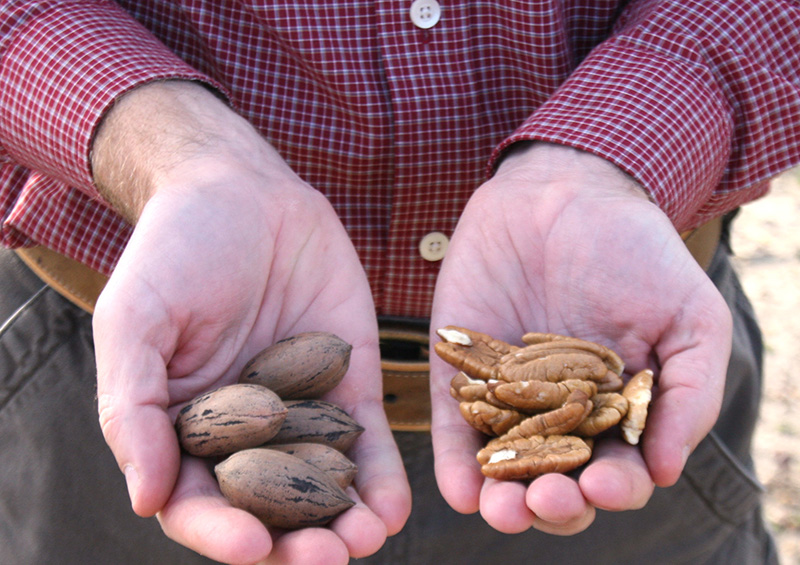
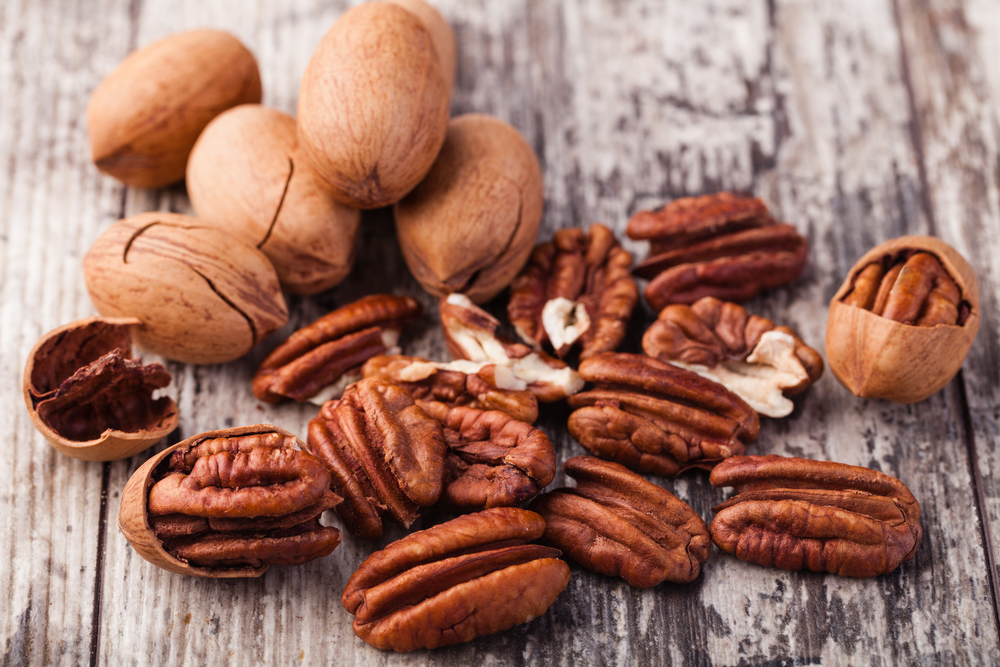
    Photo courtesy of UGA College of Agricultural & Environmental Sciences

    Georgia pecan producers enjoyed a banner production season, according to the USDA National Agricultural Statistics Service. Georgia, which accounts for 47% of the nation’s pecan production, showed a 23% increase in value of production for 2020.

    Georgia produced 142 million pounds, compared to just 73 million in 2019 and 70 million in 2018. Those two years were down because of Hurricane Michael’s impact in October, 2018. The value of Georgia’s utilized production was $168.9 million, compared to $137.2 million in 2019 and $113.4 million in 2018.

    Favorable conditions aided Georgia producers. Utilized production would be the highest since 2007.

    United States’ utilized production in 2020 totaled 302 million pounds, up 18% from 2019.

  • Georgia Pecan Producer: Cautiously Optimistic About Future Market Prices

    georgia pecan

    One South Georgia pecan producer is cautiously optimistic farmers will soon experience an increase in market prices. Coming off a season where pecan yields were the best in years and prices were the worst in some time, growers like Randy Hudson are hopeful prices will soon rebound.

    “The old saying about the cure for low prices is low prices. The cure for high prices is high prices. When prices are low, people come in the market and buy a lot of pecans. Supply goes down. Demand goes up because the prices are cheaper. On the other hand, when prices are really high, demand has a tendency to really taper off. Supermarket sales, retail sales begin to go down. As a result of high prices, we typically follow it with low prices. It’s all kind of cyclic in nature any way,” said Hudson, who also works with the American Pecan Council, serves on the Pecan Export Trade Committee and member of the Georgia Pecan Growers Association

    “It’s not a good year for growers, it’s a really good year for processors. I hope next year is a really good year for growers, and it may not be quite as good of a year for processors.”

    The recent surge in interest from other countries has Hudson excited about the future market prices. Price increase is desperately needed considering the amount of Georgia crop that is in storage. Hudson estimates between 25 million and 35 million pounds are currently being stored.

    “We’re already beginning to see in the last several days, we’re seeing some real interest in China, specifically, but around the world in general. Getting China back into this market is going to be a real positive. They’re back into, particularly, the Georgia market. They’re out here now competitively bidding on loads. We’re beginning to see the prices increase,” Hudson said.

    “I’m very cautiously optimistic about the remainder of this market season. I know there’s a lot of growers in Georgia that have a lot of inventory on hand. I think it’s going to bring a little higher price than back during harvest season.”

    High Yields

    According to the latest USDA numbers, Georgia was projected to produce approximately 135 million pounds in 2020. It was amazing production and one growers were looking forward to following Hurricane Michael in 2018. However, prices were devastatingly low which hampered producers’ optimism and forced many to store their crop.

    “It’s the best of times, it’s the worst of times. It was the best of times harvesting because we just had a great harvest season. We had outstanding yields. The quality was superb, probably the best quality we’ve seen in years. The weather was very important because the quality sustained itself all the way through second harvest. That was the best of years,” Hudson said. “The worst of years as a grower, though, when we started having to price this and getting paid for the crop, prices in some cases were half of what they were a year ago.”

    Alabama Production

    It was a devastating year for Alabama producers as well. Not just because of low prices but of two hurricanes that wiped out a substantial amount of this year’s crop. Winds from Hurricanes Sally and Zeta also uprooted many trees, creating countless future losses for the state’s producers.

  • Crop Rotation in SE Vegetable Production

    File photo shows a field of eggplant.

    According to the Southeastern U.S. 2021 Vegetable Crop Handbook, crop rotation is key in preventing the buildup of soil-borne pathogens. Specialists from universities across the Southeast implore producers to consider an effective rotation sequence that consists of crops from different families that are poor or non-hosts of these pathogens.

    The longer the rotation the better the results will be. A 3-to-5-year rotation is recommended.

    However, growers must weigh the practicality of rotating their crops on the availability of land, the markets, what alternate crops that are able to grow in the area, the pathogens and the purpose of the rotation.

    Crop specialists from across the Southeast, including the University of Georgia and Auburn University, collaborated on the Southeastern U.S. 2021 Vegetable Crop Handbook.