Category: Fumigation

  • Supplemental Fumigation Strategies for Tomato Production

    © Matthew Dicker / shutterstock.com

    By G.E. Vallad, J. Desaeger, J. Noling and N. Boyd

    Vegetable and strawberry growers have long relied on soil fumigants to contend with various soilborne pathogen and pest complexes, as part of an integrated management strategy that includes crop resistance, cultural control and pesticides. However, with the loss of methyl bromide (MBr), many growers have struggled to maintain consistent soilborne pathogen and pest control with the available fumigants.

    Much of this relates to the inability of available fumigants to disperse throughout the soil in the same manner as MBr. This is due to the physical differences in volatility, as revealed by comparing the vapor pressure and boiling points (see Table 1) of currently available fumigants to MBr and water. Volatility is the tendency of any substance to convert to a gas at a given temperature and is directly related to the substance’s specific vapor pressure, which is inversely related to boiling point.

    Figure 1. The Yetter Avenger Coulter system has a pair of coulters straddling the raised bed. Final application depth is greater than 8 inches below the soil.

    By comparing vapor pressure and boiling point values of fumigants to water, it is easier to understand why the current fumigants are referred to as volatile liquids. Vapor pressure values for Pic and 1,3-D are on average 70-fold less than MBr at 20° C (68° F), and the ITC generators are even less volatile with physical characteristics more similar to water. MBr, as a true gas, would rapidly volatilize from a liquid once applied to the soil and quickly fill available airspace within the soil profile. In comparison, all the current alternatives remain liquid following application and then slowly volatilize. These physical characteristics limit fumigant movement within the soil of the prepared, raised bed.

    Figure 2. Roots are emerging below the plastic tuck from the side of the bed.

    Unfortunately, threats from soilborne pathogens and pests are not always limited to the immediate raised bed. For example, research previously demonstrated that supplemental applications of chloropicrin along bed edges below the tuck (Figure 1) protected tomato roots emerging from the fumigated bed into non-fumigated soils (Figure 2), which subsequently reduced the incidence of fusarium wilt (Figure 3). Similarly, research demonstrated that deep-shank soil applications of 1,3-dichloropropene (Telone) (Figure 4) were necessary to manage nematode populations deeper in the soil, below raised beds, that were beyond standard in-bed fumigant applications (Figure 5).

    Figure 3. A field trial demonstrates the supplemental application of Pic 100 to bed edges compared to the grower standard of Pic-Clor 60 alone.

    FIELD TRIALS
    Many operations have problematic fields with a complex of soilborne pests and pathogens. Large replicated field trials were recently conducted to address such situations, combining both supplemental approaches in tomato fields affected by root-knot nematodes and fusarium wilt. Combinations of deep-shank Telone II, with in-bed fumigation, supplemental chloropicrin and plastic mulch [virtually impermeable film (VIF) vs. totally impermeable film (TIF)] were evaluated.

    Figure 4. A broadcast, deep-shank application of Telone II (inset shows applicator). The tractor at top is making a 16 to 18-inch application at 12 gallons per acre, followed by a disk to disrupt chisel traces (center pass) and then packed with a roller to seal the fumigant (bottom pass).

    Two fields received deep-shank applications of Telone II (12 gallons per acre) in 600-foot by 50-foot strips alternated with 50-foot non-fumigated strips across the entire field. A month later, raised beds prepared over the Telone II strips received in-bed applications of either Pic-Clor 60 (300 pounds per acre), Pic-Clor 80 (225 pounds per acre) and Pic 100 (180 pounds per acre) with supplemental application of Pic 100 along the bed edge (150 pounds per acre).

    Raised beds prepared over the non-Telone II strips received Pic-Clor 60 (300 pounds per acre) either with or without the supplemental Pic 100 along the bed edge as additional controls. Each of the described combinations were covered with both TIF and VIF plastic mulch (for a total of 10 treatments) and then planted accordingly. Each treatment plot consisted of three beds (approximately ¼ acre) and was replicated five times in each field.

    RESEARCH RESULTS
    Two weeks after deep-shank applications of Telone II, deep soil cores pulled across fumigated and non-fumigated portions of the field found total nematode levels (including parasitic Meloidogyne species) were reduced by 82 percent, from an average of 8.3 nematodes per 100 cubic centimeters of soil to 1.1 nematodes. The reduced nematode counts were further reflected at the end of the season with a 97 percent reduction in root-knot galling between deep-shank Telone II and non-deep-shank fumigated plots.

    Figure 5. A demonstration of deep-shank applied Telone II on root-knot nematodes in cucumber. Telone was applied perpendicular to raised-bed preparation. The image shows a strip where the deep-shank applicator was turned off.

    Supplemental Pic applications reduced average root gall ratings 24 percent and reduced average fusarium wilt incidence by 47 percent. Unexpectedly, deep-shank Telone II applications had the greatest statistical effect on fusarium wilt, reducing disease incidence by 66 percent, from 19.4 to 7.5 percent average incidence across all treatments. In-bed fumigants also had a significant but minor effect on average root gall ratings and fusarium wilt, with in-bed Pic-Clor 60 and Pic-Clor 80 performing better than Pic 100.

    Statistically, mulch had no effect on nematode gall ratings, fusarium wilt or yields. In-bed fumigation had numerical but no statistical effect on tomato yields. A replicated lab study further demonstrated the fungicidal activity of 1,3 dichloropropene (Telone II) against Fusarium oxysporum f. sp. lycopersici. Several other studies have reported similar findings for 1,3 dichloropropene against soilborne pathogens and for chloropicrin against nematodes.   

    CONCLUSION
    These findings further support the notion of developing supplemental fumigation strategies that target soilborne pests and pathogens at their source. These supplementary approaches are meant to be prescriptive in nature, based on the specific soilborne pest or pathogen problems observed in fields.

    Current and future research will address the frequency of supplemental fumigation and the use of other fumigants, as well as reducing in-bed application rates to help offset the cost of supplemental fumigation. Improvements in available post-plant fungicides and nematicides may also change fumigation strategies, as well as the availability of crop varieties with improved tolerance to soilborne pathogens and pests. Parties interested in participating in such studies are welcome to contact Gary Vallad at gvallad@ufl.edu or 813-419-6577.

  • Fumigants for Nematode Management in Vegetables

    Bell pepper roots (left) show severe galling caused by the southern root-knot nematode compared with healthy roots (right) treated with Pic-Clor 60.

    By Abolfazl Hajihassani and Chinaza Nnamdi

    The majority of vegetable production in Georgia is located in multiple counties in the southern region of the state. Vegetables are grown year-round on both raised beds covered with polyethylene plastic mulch and on bare ground.

    Using a comprehensive survey conducted in 2018, we have documented that root-knot nematodes, Meloidogyne spp., are the No. 1 nematode pest in vegetable crops in Georgia, infecting 67 percent of the fields surveyed. Therefore, proper management practices need to be developed or optimized for successful control.

    CONTROL OPTIONS

    Chemical control is currently the best option for managing nematodes in vegetable-producing systems. Optimizing chemical control methods is a must for vegetable growers in the Southeast. Growers often fumigate the soil prior to planting the first crop in the spring or in the fall, but the issue with root-knot nematodes is particularly important in the second, third or fourth crop grown on the same plastic mulch. Reusing mulch favors nematode buildup in coarse-textured soils.

    In Georgia, 1,3-dichloropropene (Telone II), chloropicrin, mixtures of 1,3-dichloropropene and chloropicrin (e.g. Pic-Clor 60), metam sodium (Vapam) and dimethyl disulfide (Paladin) have been the common fumigants for the control of soilborne pathogens, weeds and nematodes in vegetable-production systems.

    In a field study conducted at the University of Georgia Tifton campus in 2019, we evaluated the effects of different soil fumigants on the southern root-knot nematode and yield of bell pepper. Treatments included Telone II (125 pounds per acre), Dominus (250 pounds per acre), Pic-Clor 60 (175 pounds per acre), Paladin (167 pounds per acre) and an M. incognita-resistant pepper cultivar (Carolina Wonder).

    RESEARCH RESULTS

    Results showed that all soil fumigants and the resistant cultivar reduced root galling compared to the untreated check at harvest. Pic-Clor 60 had numerically better control of root galling compared to the other fumigants. At the end of the season, second-stage juveniles of the nematode in the soil were only lower than the untreated check in the resistant pepper treatment. Among the fumigant treatments, Paladin had numerically lower nematode numbers in comparison with the other fumigants. We also found that Pic-Clor 60 and the resistant cultivar had the highest and lowest pepper fruit yield, respectively.

    Based on our data, treatments with Dominus and the resistant variety had the highest weed density. Plots treated with Pic-Clor 60 had the lowest weed density. There was no difference in weed density among Paladin, Telone II and the untreated check. The weed population in the Dominus treatment was higher than the check plot. Soil fumigation with Pic-Clor 60 reduced southern blight disease, caused by the fungus Athelia rolfsii, as compared to other treatments.

    Paladin, though effective in suppressing nematode juveniles in the soil, was withdrawn from the market in 2019, further restricting the already limited number of tools for managing nematodes. Pic-Clor 60 is likely an ideal fumigantfor control of root-knot nematodes and other soilborne pathogens in multi-cropping systems of vegetables. However, root-knot nematode population densities in plots treated with Pic-Clor 60 were increased by the end of the growing season. This may suggest that combined use of fumigants and post-plant nematicides through drip irrigation could provide enough root protection against high densities of root-knot nematodes in the first and subsequent crops grown on the same plastic mulch.

    In collaboration with county Extension agents, two on-farm trials are currently being conducted in Brooks and Lowndes counties in Georgia. The objective is to examine whether the combined application of both fumigant and non-fumigant nematicides in the first crop can result in a more effective control of root-knot nematodes and higher crop yield, compared to the use of only fumigants in the first crop and only non-fumigant nematicides in the second crop grown on the same plastic mulch.

  • Supplemental Fumigation Strategies for Soilborne Pests, Diseases

    By Ashley Robinson

    The phaseout of methyl bromide continues to stimulate research into the use of other soil fumigants for controlling soilborne pathogens, nematodes and weeds to an acceptable level for production.

    Gary Vallad

    Researchers at the University of Florida Institute of Food and Agricultural Sciences (UF/IFAS) are looking at ways to modify the current fumigation system to better reflect the distribution growers once saw with methyl bromide.

    “The phaseout from the loss of methyl bromide from where we are now, was not a short one. It’s been going on for decades and I think we’re still in that process,” says Gary Vallad, professor of plant pathology at UF/IFAS. “And of course, this has been kind of a costly process, it’s been a hard process for a number of growers throughout the state and throughout the southeast United States.”

    Improving Current Fumigation Systems

    In the absence of methyl bromide, tomato diseases have been on the rise, specifically fusarium wilt, caused by Fusarium oxysporum. Since then, growers have been looking to find alternatives to control the disease.

    According to Vallad, methyl bromide alternatives are limited in the way they move in the soil.

    The biggest weakness that researchers have found with the alternative fumigants is that the fumigant doesn’t reach the soil zones along the edge of the bed and under the tuck of the plastic.

    Researchers have developed strategies to improve current fumigation systems using Pic-Clor 60. With the additional of supplemental Pic, researchers saw a 77% decrease in fusarium wilt incidence and yield increase of approximately 21%.

    In addition to looking at how to control soilborne pathogens, they also wanted to evaluate strategies to control nematodes.

    “In a lot of cases where we run into pest problems, it’s not just one pathogen or nematode. Typically, it’s a mixture of the two,” Vallad says. “So really what we wanted to do is investigate what happens when we put both of these systems together.”

    After collecting results from research trials, it was discovered that deep shank Telone applications reduced nematode counts and gall ratings. Also, Pic-Clor 60 or 80 with supplemental Pic and deep shank Telone application was the most effective strategy to reduce fusarium wilt, which actually shocked researchers.

    Through further research, they found that Telone is fungicidal to fusarium oxysporum, and by combining both strategies researchers saw yield increases of 25% or more.

  • Diversification Key for Nutsedge Control in Vegetable Fields

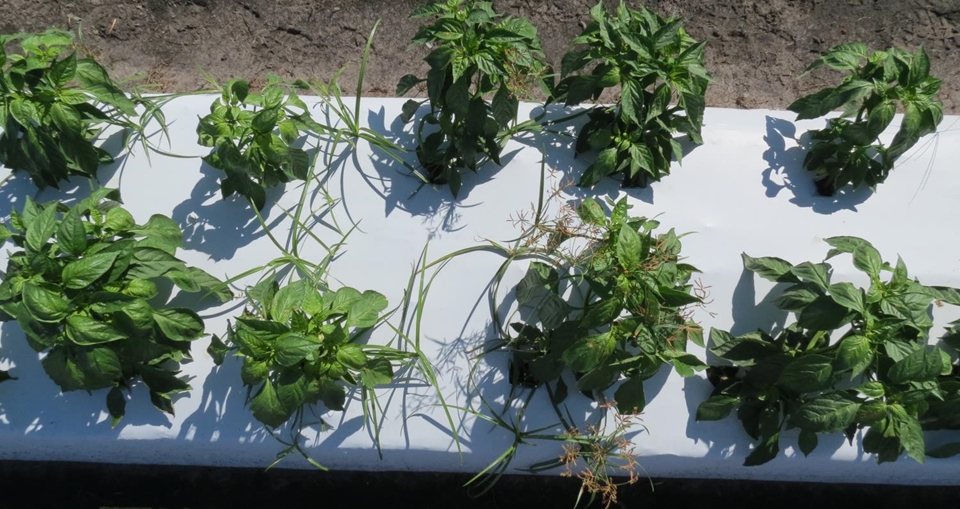
    An overhead view of a plasticulture vegetable bed shows nutsedge weeds emerging through the plastic.

    By Clint Thompson

    University of Georgia Cooperative Extension weed specialist Stanley Culpepper encourages vegetable growers to diversify their management programs against nutsedge. This protects against potential resistance and provides adequate control.

    “In general, I would say with our guys, I’m not overly concerned because our fields with our most nutsedge, they get fumigation, they get tillage and they get herbicides,” Culpepper said. “My guys are quite diverse. Will we have resistance one day? Sure, we will, but we are quite diversified in our management approach. We’re not selecting for resistance, say compared to an agronomic guy who goes out and sprays roundup or dicamba three times.”

    According to Alabama Cooperative Extension, purple nutsedge and yellow nutsedge are prevalent in most areas where vegetables are grown. Both are perennial weeds that propagate mainly by the production of tubers. While growers maintain control of nutsedge, it comes at a cost, says Culpepper.

    “That pest is still the most problematic. Doesn’t necessarily mean we’re not controlling it, but we’re spending a lot of money to control it that we wouldn’t have to spend if it wasn’t so problematic,” Culpepper said. “The one that’s causing us the most money without a doubt in the plasticulture system is nutsedge.”

    Why Is It So Problematic?

    Farmers who implement plasticulture still struggle with nutsedge because it can penetrate mulch.

    “Even if you haven’t poked a hole in the mulch, nutsedge can penetrate it itself. It can damage the mulch and be there before you plant. It can come at any time even if your plant is shading out the plant hole. It’s very unique that way,” Culpepper said. “Is it killing us? Is it hurting our guys? No, I think we’re doing a pretty daggum good job. It’s a repetitive challenge and costing us a lot of money to try to manage.”

    Diversification is key since there are very few herbicides that are effective regardless of the vegetable crop being grown. It is not like peanuts where farmers can apply Cadre or cotton where Roundup can be applied. Nutsedge control in vegetables is limited to a couple of products.

    “It’s there and probably in every single field but they’re doing a really good job controlling it. It’s not like some disease that jumped on us last week and is going to wipe us out. That’s not it at all,” Culpepper said. “But that’s the one I still say is most challenging for our vegetable growers in plasticulture systems.”