Category: Fruit

  • Ag Commissioner Gary Black Announces Georgia Grown To-Go Program

    As part of the Georgia Department of Agriculture’s (GDA) “Buy Georgia Grown, Now More Than Ever” campaign, Georgia Grown is partnering with local governments to connect produce farmers directly to consumers in highly populated areas. Georgia Grown To-Go is a series of pop-up markets, primarily in metro Atlanta, that will give customers an opportunity to purchase fresh produce directly from farmers with limited contact, drive-through service. 

    Black

    “We are excited to offer this great opportunity to help bridge the gap between consumers in metro areas and our farmers in South Georgia,” says Georgia Agriculture Commissioner Gary W. Black. “With foodservice channels limited, Georgia Grown To-Go pop-up markets are a great and innovative way to make sure our consumers have access to the Georgia Grown products they crave.  We have enjoyed joining forces with our local government and non-profit partners in an effort to best serve our communities during this unprecedented time.” 

    After testing the markets in Northwest Georgia and Dekalb County, Georgia Grown To-Go is continuing in different communities statewide. The next pop-up style market is in partnership with the City of Marietta, Cobb County Government, Cobb Chamber of Commerce and Cobb Community Foundation. The event is Saturday, May 23 from 10 a.m. to 2 p.m. at Al Bishop Park, 1082 Al Bishop Dr. SW Marietta, Georgia 30008. 

    “Cobb County is pleased to welcome the opportunity to buy Georgia Grown and giving our residents easy, direct access to the best of fresh farm vegetables, Georgia grown,” says Marietta Mayor Steve Tumlin. “We are bringing the best in farm harvest direct from the farm to our front porch with Marietta’s own Tip Top Poultry as a participant in this pop-up market. Additionally, our charities will be well supported thanks to Cobb neighbors who have the opportunity to make Georgia Grown available to our local food banks during these challenging times.”   

    While supplies last, customers can drive through and have produces boxes placed directly in their trunks. For payment, cash, credit and debit cards will be accepted. Customers can also pre-order boxes for a reduced rate until Thursday, May 21 at noon.  

    In addition to purchasing personal boxes, customers can support their local community by donating boxes to a neighbor or local charity. Several nonprofits will receive produce boxes through the Cobb Community Foundation, including MUST Ministries, Sweetwater Mission, Family Life Restoration Center, Reflections of Trinity, Storehouse Ministries, and Noonday. 

    Following the Cobb County event, more Georgia Grown To-Go events will be announced.  

    For more information on produce offerings, pricing and upcoming events, please visit www.GeorgiaGrownTo-Go.com.    

  • More Questions Than Answers With Respect to CFAP

    By Clint Thompson

    The Coronavirus Food Assistance Program (CFAP) has brought more questions than answers with respect to financial aid for growers in response to the ongoing coronavirus pandemic.

    The $19 billion program includes $16 billion in direct payments for farmers and ranchers. CFAP has payment restrictions of $125,000 per commodity and a total of $250,000 per applicant for all commodities. Growers and industry leaders hope that cap on payment restrictions gets removed.

    “For specialty crop growers, $125,000 is a drop in the bucket for most of their losses,” said Charles Hall, executive director of the Georgia Fruit and Vegetable Growers Association.

    Florida vegetable farmer Paul Allen, talked about the financial toll the pandemic had on him and his farming brethren.

    “The biggest thing right now is the government allocated per crop a cap of $125,000, which is nothing. We’re really working trying to get the USDA to see and understand the massive hit that Florida is taking and raise the direct payment caps,” Allen said. “What is fair is not always equal.

    “It costs 10 times to grow vegetable crops what it does regular commodity crops.”

    Pandemic Punishes Producers

    In a previous interview in early April, Allen said he left about 2 million pounds of green beans in the field and about 5 million pounds of cabbage. All due to the coronavirus pandemic that shut restaurants down and closed off a major supply chain to foodservice industries.

    Perdue

    According to an AgNet West story, a group of lawmakers, which included 28 members of the U.S. Senate and 126 members of the U.S. House of Representatives, issued a letter to President Donald Trump and USDA Secretary Sonny Perdue. They asked for the removal of payment caps from CFAP before the final program details are announced.  The letter points out that the payment restrictions would limit the effectiveness of the program. This is especially true for livestock, dairy and specialty crop producers.

    Another concern is how payments will be divided between losses sustained before and April 15. An 85% payout will be issued for losses sustained from January 1 to April 15 but only 30% after April 15.

    “Our concern was what’s the difference in a loss after April 15 and before April 15. After April 15, that grower has got the same loss as before April 15. Most of our growers’ losses will come after April 15,” Hall said. “We’ve been told that’s going to be fixed, too. I haven’t seen anything firm from the USDA on that.”

  • Produce Market Ripening With Success for Some Vegetables

    Cabbage is a strong commodity right now, selling for $20 per box, says farmer Bill Brim.

    By Clint Thompson

    The produce market is ripening with success for some commodities. Prices are incredibly high for some vegetables, while others are still struggling to compete with imports from Mexico, says Tift County farmer Bill Brim. The co-owner of Lewis Taylor Farms said watermelons, round tomatoes and cabbage are three commodities really doing well for farmers right now.

    “I think watermelon prices are pretty good. We don’t have any ready yet. It’ll be two or three weeks before we’ll be ready,” Brim said. ““Tomatoes were $33 per box (Wednesday), I think for rounds. Romas are really bad. They’re terrible price because Mexico is pouring them in here. Grapes are bad too. Rounds, they must not have many because they’re like $33 per box. Of course, they won’t last that long or stay there. But if we could stay in the high 18s to the 20s, we’d be tickled to death.”

    Brim expects to start picking his tomato crop in two weeks. Cabbage is also selling well at $20 per box.

    Watermelon Shortage?

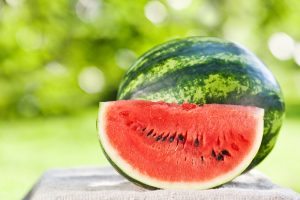
    Watermelons are a hot commodity right now. Carr Hussey, a watermelon farmer in Alabama and Florida and chairman of the board of the Florida Watermelon Association, said the crop is already in short supply and that a watermelon shortage is likely by Memorial Day weekend next week.

    Brim said he’s heard that the crop in Georgia is going to be way down compared to last season.

     “I think it was such a bad deal last year, everybody lost their heinies,” Brim said. “They couldn’t even hardly give a watermelon last year. I got like 7 and 8 cents per pound. You can’t even grow them for that; 12 cents per pound is probably break even. It’s just so bad people said, I can’t lose any more money or I’m going to be out of business. If I do, I’m just going to go with my row crops and forget the watermelons.

    “North Carolina’s going to be late too, because a lot of them got killed out in that last freeze. It might be pretty fair for us, hopefully, anyway.”

    The watermelon market is ripening with success for farmers who have the crop to sell. Hussey said prices are around 20 cents per pound right now but could improve to 22 or 24 cents around Memorial Day weekend.

    Brim also believes watermelon farmers in north Florida are going to be done harvesting earlier than they believed they would.

    “They started pretty early down there; a bunch of them,” Brim said. “In the next two weeks, they should be done at about the time we’ll start.”

  • Sweet Grown Alabama Connects Growers to Consumers

    By Clint Thompson

    Alabama fruit and vegetable farmers have an outlet to market their produce statewide. Thanks to Sweet Grown Alabama, a non-profit foundation that connects farmers in the state to retailers and consumers, growers can market their produce anywhere in the state.

    Thanks to the Sweet Grown Alabama website, vegetables are marketed across the state.

    “This database launch is the culmination of many months of work,” said Ellie Watson, Sweet Grown Alabama director. “We have been focused since September on recruiting farmers and just spreading the word about our program to the folks in the agricultural community, so we can build a database of members and a network of folks that have product available.”

    Consumers can go to the Sweet Grown Alabama website and find local farms in their area. It also lists a harvest calendar so consumers can know when specific fruits and vegetables are ready to be picked. Anything from satsumas and watermelons on the fruit side to bell peppers and kale on the vegetable side are listed.

    Perfect Timing

    It is perfect timing for the website’s release. A push to support American farmers has been made during the coronavirus pandemic. Consumers are wanting to purchase fresh, local produce.

    “Consumers, now more than ever, desire to know whose hands have been handling the product that they’re eating and where it’s been and where it’s been grown and how it’s been grown. COVID-19 has really given folks a heightened sense of awareness about the supply chain,” Watson said. “Sweet Grown Alabama can really meet a need to connect Alabama farmers and families who are looking for high quality, safe, healthy products. This database launch timing was perfect. It was something we wish could have been launched at the beginning of COVID-19. But we’re thrilled it’s at least up and running now.”

    Sweet Grown Alabama is a membership organization. Watson said there are more than 130 completed applications that have been submitted.

  • Florida Farmer: People Are Buying and Supporting Us

    itc
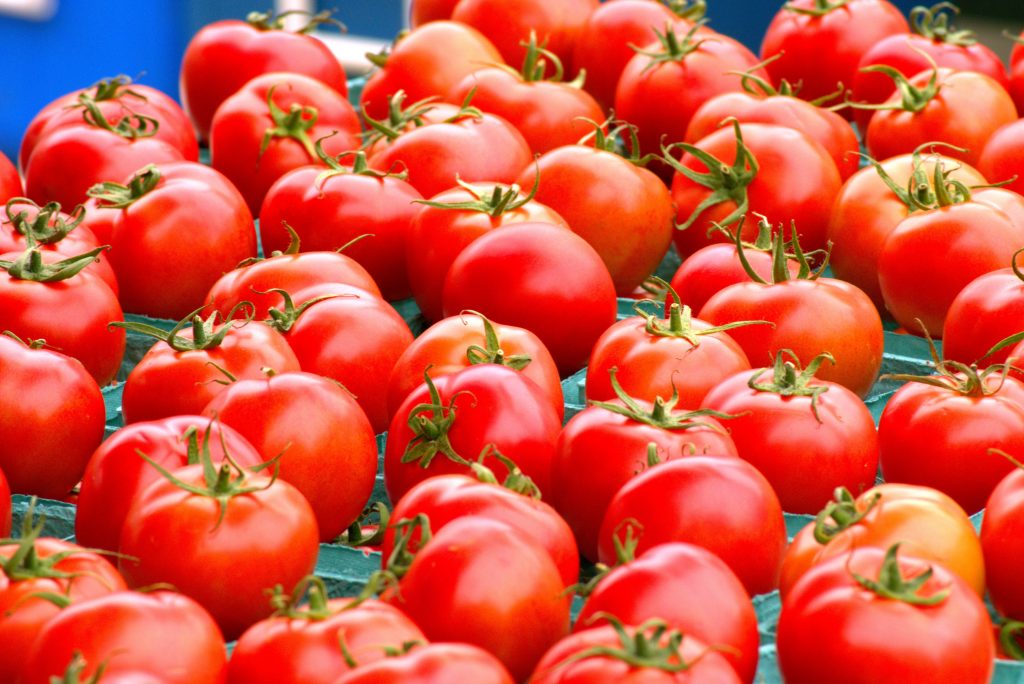
    Tomatoes are a hot commodity again.

    By Clint Thompson

    Paul Allen’s point of emphasis has been clear recently: Support the American farmer. He believes the message has been received loud and clear.

    “We’re thinking all of the local and national attention we’ve gotten about us destroying our crops has brought the American public to the forefront to supporting the American farmer. I really believe that,” said Allen, president of R.C. Hatton Farms in Belle Glade, Florida and chairman of the Florida Fruit and Vegetable Association. “The American people have heard everything that’s been on the national media all about Mexico. They’ve stopped buying Mexican produce. They’re buying American produce. It’s a big part of it.”

    He thinks that is a reason watermelons are in short supply and there could be a major shortage by Memorial Day weekend. It also could be attributed to strong demand for tomatoes with prices improving.

    “It’s everything. It’s sweet corn, watermelons; people are buying. It’s not that we’re short. People are buying and supporting us,” Allen said. “There’s a lot of product being moved. And in a lot of cases restaurants are starting to open back up. People are starting to get out. It’s a big part of it.

    “Thankfully, it looks like the American people are going to have their say in it. They’ve heard our cry because there’s been a hard run on national media, local media about this whole thing.”

    Tough Start to Season

    Unfortunately, it was not always this way this season. In a previous interview in early April, Allen said he left about 2 million pounds of green beans in the field and about 5 million pounds of cabbage. All because of the coronavirus pandemic that shut restaurants down and closed off a major supply chain to foodservice industries.

    “We had a devastating March and April for all crops. When the country was shut down, it was the worst we’ve ever seen it,” Allen said. “When the pandemic hit, there was a buying frenzy for a week to 10 days. Then everybody went lockdown. When we farm, we plant, cultivate, grow, harvest and ship every day for it to be consumed every day. When (the pandemic) hit us, we were the sacrificial lamb.”

    Allen believes more financial aid could still be provided by the federal government.

    “The biggest thing right now is the government allocated per crop a cap of $125,000, which is nothing. We’re really working trying to get the USDA to see and understand the massive hit that Florida is taken and raise the direct payment caps,” Allen said. “What is fair is not always equal.

    “It costs 10 times to grow vegetable crops what it does regular commodity crops.”

  • Sweet Results for Florida Peach Farmer

    By Clint Thompson

    Florida’s peach season has come and gone. David Wheeler, peach farmer in Lake Placid, Florida, said his season started early and finished earlier. From a marketing standpoint, that was as good as he could have hoped for.

    Peach season is underway in Georgia and Alabama.

    “The marketing window, that was very good this year, yes,” Wheeler said.

    Wheeler produces 120 acres of peach trees and had success this year selling retail.

    “Walmart was very supportive of the Florida peach program. That really helped us. They took a lot of our volume,” Wheeler said. “They were very good to us.”

    In a previous interview, Wheeler confirmed that the high temperatures in March spurred the peaches to ripen earlier than normal. With hot and dry conditions felt throughout the state the past in March and April, peach season closed sooner than normal.

    Since Wheeler’s harvesting window closed sooner than normal, he didn’t have to compete against growers in Georgia or Alabama for marketing supremacy. Both states have just now started harvesting their peach crop. Wheeler didn’t have to compete for the market against larger-scale operations. The result was a good year despite a decrease in production.

    “I think overall (it went) pretty well. Production was down about 25% but we had a very heavy crop last year so that’s not a big surprise,” Wheeler said. “The fruit quality was outstanding. The best way I have to judge that is when I take peaches to friends; everybody raved about them this year. I know they were a good quality peach. Overall, I would say (it was) a good season, even though production was down and packouts were down.”

    Primarily a citrus grower, Wheeler, a peach farmer for nine years, began producing peaches when citrus greening disease became problematic in Florida and has since wiped out a bulk of citrus production in the state. He mainly produces a pair of varieties, UF Best and the UF Sun. Wheeler says he has had the most success producing UF Sun.

    To learn more, read about University of Florida peach breeding efforts.

    To learn more about peaches, see University of Georgia peaches.

  • Watermelon Shortage by Memorial Day?

    By Clint Thompson

    Watermelons are already in short supply. There soon could be a watermelon shortage, said Carr Hussey, a watermelon farmer in Florida and Alabama and chairman of the board of the Florida Watermelon Association.

    “It’s drying up by the minute. There’s going to be shortage for Memorial Day, I do believe,” Hussey said. “The kicker is, how fast can North Florida come in? Right now, today’s it’s 91 degrees here right now. North Florida can’t be too far behind. A few days like that will bring them ahead a little bit.

    “I can tell you this weekend, South Central Florida is going to be done. When I say done, there will be a few loads come. But they’re going to be done with any volume shipping. I think in my mind the bigger part of next week is going to be a shortage. They won’t be out completely, but there will be a shortage. It’ll drive the price up pretty good.”

    Hussey farms between 500 and 600 acres in the Southeast under Sweet Mama Produce. His Florida crop is done, though he’s helping other farmers in Lake Placid and Wauchula, Florida. Hussey also has about 300 acres in Cottonwood, Alabama. He expects to be shipping the last week of the May.

    Positive Prices for Producers

    He said prices are around 20 cents per pound right now but could improve to 22 or 24 cents around Memorial Day weekend. He said the reason Florida is running out of melons is due to three straight weekends of rain events. Heavy rains on mature vines led to a quick harvest season.

    “It’s going to be short supply next week, I don’t know what it’s going to be like after that. I don’t know how fast they’ll come on (elsewhere) and with what kind of volume,” Hussey said. “I understand that Georgia’s late. That’s what I’m hearing. There’s going to be a small gap next week and it could be another gap going into the fourth of July if Georgia’s late.”

    Another reason there could be a watermelon shortage is due to an extreme low supply in Mexico. They’ve had poor weather conditions in Mexico.

    “Their quality’s all shot to pieces right now,” Hussey said.

  • Watermelon Supply Down; Prices Stay High for Farmers

    By Clint Thompson

    The watermelon supply chain is currently down. As a result, prices are up. It’s a pleasant surprise for Florida growers who are currently harvesting this year’s crop, according to Gene McAvoy, University of Florida/Institute of Food and Agricultural Sciences Extension agent emeritus.

    The watermelon supply line is currently decreased, due in large part to less imports from Mexico.

    “(The farmers) were a little bit apprehensive that with all of this COVID-related decline in demand that there might not be a demand for the (watermelon) product. They’ve had poor weather growing conditions in Mexico, so supplies are down from that side,” McAvoy said. “Even here in Florida, we had a really hot and dry March and April which affected pollination. The fruit set is less than what we would consider to be normal.”

    Other Florida produce farmers have struggled with selling this spring’s crop amid the coronavirus pandemic. The pandemic has shut down the country since the second week in March. The resulting shutdown led to closures of restaurants across the U.S.

    Positive Prices

    But as businesses begin to open up and states begin loosening the restrictions on self-quarantining, demand for fresh fruits and vegetables is improving. The same appears to be true for watermelons.

    “The supply is down a bit, kind of lining up with demand. Prices are good. They’re getting 20 cents, 19 cents per pound, which is decent for starting out the season. Sometimes it’s a little higher. But things are moving,” McAvoy said.

    The bulk of Florida is still harvesting or nearing harvest of watermelons. McAvoy said farmers in the extreme South Florida area, around Immokalee, Florida, are done harvesting this year’s crop. He added that watermelon harvests are continuing in Glades County, Charlotte County, Desoto County and up into Hillsborough.

    Georgia and Alabama should start picking in early-to-mid June.

  • Frost and Freeze Protection for Vegetable Crops

    Written By Chris Gunter, N.C. State Extension Vegetable Production Specialist

    Weather predictions for this weekend include clear skies with minimal or calm winds, which are conducive to cold temperatures and could lead to freeze or frost conditions in North Carolina.

    On Sunday morning, May 10,  low temperatures are predicted to drop into the 30s with some temperatures possibly below freezing in low lying rural areas. Record low temperatures for May 10 are in the lower 30s at the Greensboro and Raleigh-Durham locations, and 39 ºF at Fayetteville. Not only are daily low-temperature records threatened, but the latest spring freeze on record is May 10 for Raleigh (31 ºF) and May 8 for Greensboro (32 ºF).

    Frost

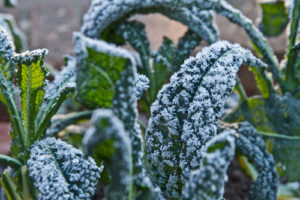
    As cold temperatures are threatening, agents and specialists are getting calls from concerned vegetable growers worried about potential damage on their crops. A frost occurs when temperatures dip to 32 ºF and water starts to freeze on low lying surfaces. If water within the plant cell or between the plant cells freeze, this can result in damage to plant tissue. The following vegetable crops can be grouped according to their cold tolerance based on their physiology. It is important to remember that cold damage results from the actual temperature and the duration of that temperature.

    We usually think of frost as occurring at temperatures from 31-33 ºF and this will result in damage or killing the foliage of warm-season plants like beans, corn, cantaloupe, cucumbers, eggplant, okra, southern peas, peppers, potatoes, sweet corn, sweetpotatoes, squash, tomatoes, and watermelon.

    When temperatures dip below 26-31 ºF, this is a hard frost or freeze. There are cool-season crops that will tolerate a temperature dip to these temperatures for a limited period of time. These include broccoli, cabbage, cauliflower, chard, English peas, lettuce, mustard, onion, radishes, and turnips. They will likely show foliage damage due to the cold and this may result in a yield reduction later in the season, but the plant will survive.

    In the event that the temperature drops below 26 ºF during a hard freeze for a longer period of time, there are some vegetables that will survive these temperatures. Cold season crops like Brussels sprouts, beets, collards, kale, parsley, and spinach should survive.

    Charlotte Glen wrote a great article about seeds and seedlings surviving cold temperatures. We encourage you to check it out here:

    Will My Vegetable Seedlings Survive This Weekend’s Cold

    Protecting from these cold temperatures can be a little more difficult to answer. Growers who have solid set irrigation in place and have experience with frost protection using overhead water applications, may be planning to use this method. This requires large volumes of water and continuous applications throughout the cold event. For most vegetable growers however, overhead solid set sprinkler irrigation is less common than drip irrigation or travelling guns and pivot irrigation systems.

    Usually maintaining good soil moisture prior to the event can be helpful, as the water in the soil retains heat longer and releases it slowly during the cold event. For this reason, it is also recommended not to cultivate just prior to a frost or freeze, so that as much water can be retained in the soil as possible. The cultivation can damage plant roots and increase stress on the plants. In addition, cultivation opens additional spaces in the soil, allowing cool air to penetrate deeper into the soil profile.

    Other methods for frost protection include using row covers, which come in various lengths and thicknesses depending upon the level of protection needed. Growers can also use waxed paper cups, to cover the transplants in the field, during an overnight cold period. These are labor-intensive methods, but may be an option if areas are small enough and the farm has sufficient labor to put on and remove the covers as temperatures warm back up. If coverings are used, it is important to monitor temperatures under the covers. Be prepared to remove the covers before temperatures under the cover rise too high and result in heat stress.

    For full story, see freeze protection for vegetable crops.

  • Ag Industry Hopes Georgia Grown Message Reaps Bountiful Harvest

    blueberry
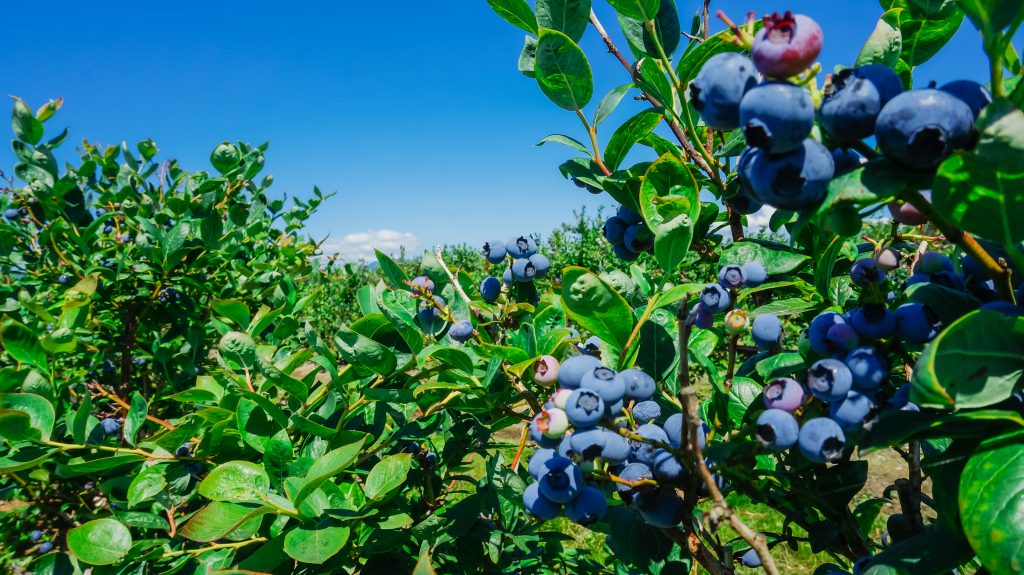
    File photo of blueberry production in Georgia.

    By Clint Thompson

    Now more than ever, buy Georgia Grown. Georgia’s agricultural industries are highlighting this message during the state’s peak season of harvesting produce. Georgia Farm Bureau, University of Georgia Cooperative Extension and Georgia Fruit and Vegetable Association are promoting Georgia Grown produce at a time when the state’s farmers need them the most.

    “We need folks asking their produce managers, if they go into a grocery store and there’s not Georgia Grown or American Grown produce in there, they need to ask where is it at,” said Charles Hall, executive director of the Georgia Fruit and Vegetable Association. “We need for consumers to support the American farmer, to get American Grown, Georgia Grown produce. Because, as that slogan says it’s, ‘Now, more than ever.’”

    The impact of the ongoing coronavirus pandemic has devastated markets for fruit and vegetable farmers across the country. The absence of the foodservice industry for almost two months derailed producers’ bid for a productive season. Farmers in Florida have had to leave produce in the field just because of the lack of potential buyers.

    Alternate Way of Doing Business

    Georgia farmer Bill Brim, co-owner of Lewis Taylor Farms in Tifton, Georgia said he’s lost thousands of boxes of orders due to the pandemic. But he’s found a way to sell part of his excess produce. He’s boxed up produce with different fruit and vegetables and sold directly to consumers for $20 each the last three weeks. Last week, Brim sold between 1,300 and 1,400 of boxed produce. It’s lessened the sting a bit. It also helps consumers become more aware of buying local produce.   

    “I think that growers are looking at alternatives. Boxing up and having a direct farm sale is not going to replace tractor trailers that are going out of the packing shed packed with produce. That’s not going to replace the need for getting produce into the produce chain,” Hall said. “Most of our growers are shipping to the north of us, into South Carolina and North Carolina, into the Midwest and Northeast. Direct sales off the farm is not 100% of the solution. But it certainly helps, when you can move 1,000, 500, 300, whatever it might be. Boxes of produce to your friends and neighbors. They are able to get it fresh. They know it’s fresh coming off land near them.”

    Quick Turnaround?

    While market prices are less than ideal, they could make a turnaround as businesses and restaurants begin to open back up. This could benefit Georgia farmers as they hit their peak season.

    “I think it’s cautious concern to what the market is going to do. The movement on the market right now is slow,” Hall said. “If some of the restaurants and foodservice chains begin to open back up, we are just getting into our peak season, so we could see additional markets there. It’s slower than we want it to be right now, but it could pick up.”