Category: Fruit

  • UGA Extension helps Georgia Grown connect to consumers

    UGA photo/UGA Extension staff joined Georgia Grown staff to load boxes of produce into hundreds of waiting cars at the Gwinnett Georgia Grown to Go event on May 27.

    By Maria M. Lameiras for UGA CAES News

    Like the moments before a race begins, dozens of staff with Georgia Grown and University of Georgia Cooperative Extension prepared to load thousands of pounds of fresh fruit and vegetables into hundreds of waiting cars and trucks stretched out in long lines at the Gwinnett Georgia Grown To Go event in Lawrenceville, Georgia, on May 27, even before the 3 p.m. start time.

    Held at Coolray Field, the event was the third in a series of events being held around metro Atlanta to give consumers a chance to purchase produce straight from the farm — and to give farmers the opportunity to sell crops that have seen the marketplace narrow due to the COVID-19 crisis.

    “There is food that is growing in Georgia that is just going to rot in the fields if the farmers can’t find buyers, and we have hunger on the other end,” said Mary Black, county coordinator and Family and Consumer Sciences agent with the Gwinnett County UGA Extension office. “We hope this will help connect the farmers with the people who need the food.”

    In addition to helping coordinate the event with county officials, Gwinnett County Extension provided each customer with information packets that included recipes, nutrition information, and tips on food preservation and food safety, as well as links to UGA Extension resources available at extension.uga.edu/topic-areas/food-health.

    The event’s online presale orders totaled $82,733 for mixed vegetable boxes, flats of blueberries, cases of peaches, bags of Vidalia onions, as well as artisan cheeses and gourmet cooking sauces; all from Georgia producers, said Paul Thompson, deputy director of marketing and promotion with Georgia Grown. It’s a division of the Georgia Department of Agriculture focused on promoting agribusinesses. Day-of sales generated another $21,146.

    Tina Fleming, director of community services with Gwinnett County, said that the event served as an opportunity to bring fresh produce to the county’s residents and to assist disadvantaged members of the community. Those who ordered online ahead of the event were given the option to pay to donate a box of produce to local service organizations, resulting in the donation of 118 boxes of produce. After the event, farmers donated another 1,004 boxes of vegetables, 218 flats of blueberries, 10 boxes of peaches and 120 pounds of onions for food-insecure Gwinnett citizens. 

    “This has been a multi-agency event and a great partnership for us,” said Fleming. “There was a lot of talk about the event on social media and it has been a benefit for our county residents, as well as generating donations for 11 community nonprofit agencies that serve the county.”

    Coolray Field, where the event was held, is a Gwinnett County-owned venue that is the home of the minor league Georgia Stripers baseball team. The setting offered an ideal location, with nearby access to I-85 and the space to accommodate the trucks needed to deliver the produce as well as customer traffic.

    “We hope to be able to do this again this year,” Fleming said.

    Corbett Brothers Farms from Lake Park, Georgia, and Southern Valley Fruit and Vegetable from Norman Park, Georgia, worked together to bring 2,750 boxes of mixed vegetables to Gwinnett for the event.

    Ken Corbett, founder of Corbett Brothers Farms, said the Georgia Grown to Go events have helped fill a void left when revenues from food service and restaurant customers dropped due to COVID-19 restrictions.

    “I have been pleasantly surprised in the amount of interest we’ve seen and, just as important, is educating consumers on what Georgia farmers grow,” said Corbett, whose family farm started in 1987 with 1 acre of bell peppers and now primarily grows bell peppers, cucumbers, zucchini and yellow squash, along with about a half dozen smaller scale crops, on 3,000 acres. “As farmers, we help each other out all the time, and it has been good to have Georgia Grown on our side in this.”

    Customers were encouraged to post about their experience on social media using #GeorgiaGrownToGo.

    “Great event in Gwinnett yesterday! Well run and very organized, even with long lines and rain. My fridge is stocked with wonderful fresh veggies and fruits! So happy to support our Georgia farmers,” wrote Gwinnett County consumer Debbie Holmes Martin on Facebook.

    Information on upcoming Georgia Grown to Go events is available at georgiagrowntogo.com and additional resources for producers and consumers are available at extension.uga.edu.
  • In COVID-19 Era, UF/IFAS Research Adapts

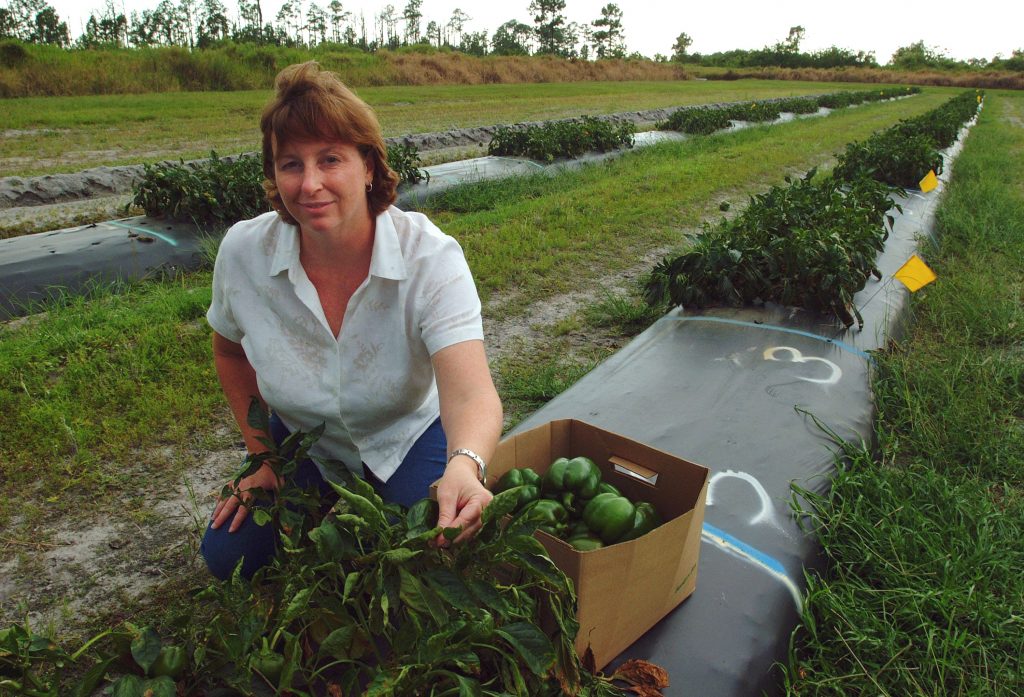
    pepper
    Pam Roberts checks pepper plants for bacterial leafspot at UF’s Southwest Florida Research and Education Center in Immokalee. (Photo by Eric Zamora UF/IFAS)

    By: Kirsten Romaguera, 352-294-3313, kromaguera@ufl.edu

    As Florida moved to “safer at home” measures, not all work could be put on pause.

    When it came to University of Florida research, many UF/IFAS projects could not wait. There are living plants, animals and insects to feed and maintain; some projects have regular monitoring procedures for which postponement could have broader environmental consequences.

    “We are very proud of our faculty, staff and students for continuing their essential research safely during the COVID-19 crisis,” said Robert Gilbert, dean for UF/IFAS Research and director of the Florida Agricultural Experiment Station. “We have approved many critical and time-sensitive research projects as this situation has evolved, and we continue to do so, with the number of approved projects well over 1,000 at this point. We expect other ongoing projects to ramp up in the near future.”

    The UF/IFAS research portfolio includes thousands of projects totaling millions of dollars in funding.

    “Our projects are continuing, but we have adapted to reflect COVID health and safety concerns to keep our research teams safe,” said Damian Adams, interim associate dean for UF/IFAS Research. “Some programs were able to transition very well to remote work and were largely uninterrupted or even accelerated.”

    Below is just a sampling of the projects that have continued during the pandemic.

    georgia
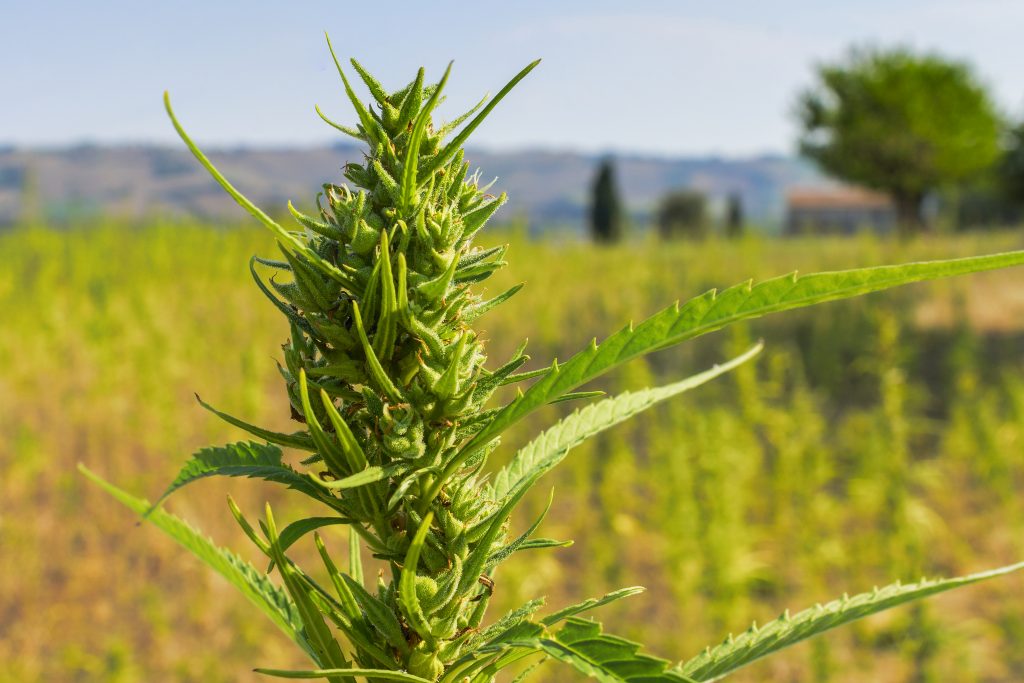
    On-farm hemp trials around Florida are slated to begin soon.
    • Out of the Citrus Research and Education Center (CREC) in Lake Alfred, Florida, professor of nematology Larry Duncan leads a study for citrus grove nematode management. Florida citrus growers, whose success is already being challenged by widespread citrus greening, rely on UF/IFAS research to recommend best practices for a productive fruit yield. Disrupted continuity of Duncan’s project would have caused a two-year delay in recommendations as well as potential productivity losses in CREC’s citrus groves.
    • From the Fort Lauderdale REC in Davie, Florida, a team led by algae expert Dail Laughinghouse, an assistant professor, keeps tabs on the quality of several water bodies: Lake Okeechobee, Lake Tohopekaliga, St. Lucie Canal and St. Lucie Estuary. The project conducts monthly sampling to remain on the forefront of the fight against harmful algal blooms and their toxins, which present a constant threat to environmental and public health. During an active bloom, the consequences have proven to be far-reaching, with every Florida industry depending on our water resources in some direct or indirect way, from tourism to healthcare. Long-term data and continuous monitoring are necessary to support the understanding of triggers and dynamics of these toxic blooms.
    • At the Florida Medical Entomology Laboratory (FMEL) in Vero Beach, molecular biologist Chelsea Smartt, an associate professor, has a living Culex mosquito population that can salivate Zika virus. As one of few such populations in the world, continuous maintenance is required, as the loss of these insects would mean this critically important research is unable to continue. The work done at FMEL has implications for populations around the world, as mosquito-borne diseases are easily spread and kill many people each year.
    • The university’s main campus in Gainesville, Florida has greenhouses that are home to the blueberry breeding program, the basis of the state’s successful blueberry industry, which was valued at $82 million in 2015 (USDA-NASS, 2016). Patricio Munoz, horticultural sciences assistant professor, and his team must continue maintenance of the living plants, without which irrecoverable losses could occur.
    • Work at the Range Cattle REC in Ona proves the ability for some projects to continue virtually. Maria Silveira, soil and water sciences professor, is leading a project that investigates phosphorous (P) inputs and outputs for cow-calf operations in the state of Florida. As part of this effort, an online survey has been administered to beef cattle producers statewide. The project, developed in collaboration with the Florida Cattlemen’s Association and funded by the Florida Cattle Enhancement Board, is expected to provide a better understanding of role that beef cattle industry plays in the overall P inputs and outputs throughout the state.
    • With the UF/IFAS hemp program beginning its second year, a delay could affect future plantings and research. The program, led by Zachary Brym, agronomy assistant professor at the Tropical REC in Homestead, requires continuous maintenance of the fields to remain in a cultivatable status, which are now in the process of being planted with hemp. In addition, on-farm trials around the state are slated to begin soon. This critical work will help the fledgling industry by providing growers with guidance for success.
    • Robert Fletcher, a wildlife ecology and conservation professor based in Gainesville, leads an ongoing project to monitor the federally endangered snail kite for several Florida agencies. The species has broader legal implications, factoring into water management decisions in central and south Florida.

    “This crisis has highlighted the importance of Florida agriculture more than ever,” Gilbert said. “The pandemic has presented difficult conditions for our researchers to adapt to professionally and at home, but working as a team has made us well-positioned to ramp up research quickly and safely to serve our stakeholders around the state. We value our partnerships with funding agencies and grower groups to perform this impactful research.”

    Gilbert adds that UF/IFAS is investing in new research that will kick-start new interdisciplinary studies, as well as research into emerging opportunities for Florida agriculture.

  • UF/IFAS Researchers Try to Reduce Fruit Drop, Increase Yield in Valencia, Hamlin Oranges

    UF/IFAS photo/Dr. Tripti Vashisth examining citrus fruit in a lab at the Citrus Research and Education Center in Lake Alfred. Photo taken 03/08/16.

    By: Brad Buck 813-757-2224 (office); 352-875-2641 (cell); bradbuck@ufl.edu

    UF/IFAS citrus scientists Tripti Vashisth and Fernando Alferez are trying to reduce the amount of fruit that drops from Hamlin and Valencia trees prior to harvest. If fruit drops, growers can’t harvest it, and that leads to losses for farmers and less fruit at the market for consumers.

    Normally, about 10% to 15% of citrus fruit drops from a healthy tree, said Alferez. With citrus greening now prevalent throughout Florida’s citrus growing regions, scientists and growers have seen pre-harvest fruit drop increase in the last decade, he said. In the 2012-2013 season, researchers and citrus farmers noticed about 25% of their crop lost because of greening-associated pre-harvest fruit drop. Now, depending on the citrus variety, growers may see a pre-harvest drop, and it could be up to 50%.

    Fruit-Drop Issues

    The two UF/IFAS scientists are studying many fruit-drop issues. For example, they’re looking into the effect of removing “fruitlets’’ – fruit that’s less than 2 centimeters in diameter – from so-called “off-blooms.” 

    “Typically, healthy citrus trees bloom early in spring, and they may have another wave of flowers later in the spring, but it is atypical for the tree to bloom in late summer,” said Alferez. Those would be an example of “off-bloom” fruit.

    Preliminary experiments from the two UF/IFAS researchers show that removing “fruitlets” from off-blooms when Hamlin oranges are mature results in more mature fruit hanging onto citrus trees – as opposed to dropping — Alferez said. This may increase yield because the mature fruit drops less.

    Valencia oranges are more complex, as several blooms occur during the last part of fruit maturation, he said.

    “Also, we have found that fruit drop is associated with fruit development,” said Alferez, an assistant professor at the UF/IFAS Southwest Florida Research and Education Center in Immokalee, Florida. “Small fruit are more likely to drop.”

    Another Finding

    Another preliminary finding? Insufficient carbohydrates do not cause fruit drop. Therefore, the researchers recommend growers use good irrigation and nutrition practices during the fruit-development period. Vashisth and Alferez also say if growers apply gibberellic acid during the fruit-development period, it can help reduce fruit drop.

    “Our preliminary findings are important because they show that the fruit drop related to HLB is not a simple process,” said Vashisth, an assistant professor at the UF/IFAS Citrus Research and Education Center in Lake Alfred, Florida. “There is no single cause for the fruit to drop. There have to be more causes, and that is what we are trying to understand now.”

    In healthy trees, competition for resources between mature and “fruitlets” causes some ready-to-harvest fruit to drop.

    Citrus Greening Disease

    Citrus greening disease – known to scientist as huanglongbing (HLB) — may contribute to fruit dropping from trees. HLB has caused tremendous damage to citrus in Florida.

    “In general, trees displaying fewer HLB symptoms or that are relatively healthy tend to have less pre-harvest fruit drop and can hold on to fruit for a longer time,” said Vashisth.

    Usually, these  “off-blooms” are not abundant; they’re only on a few branches, but it may affect tree performance if it is sick with HLB.

    “In Hamlin and Valencia oranges, we have observed several off-blooms resulting in new fruit as the current crop is already developing,” Vashisth said. “This is normal in healthy trees growing in tropical or subtropical regions, such as Florida. However, in an HLB-affected tree, this may compromise the tree’s ability to keep fruit. It may also reduce yield, because the new fruitlets and mature citrus compete for carbohydrates.”

    Funding for this research is possible by state legislative funding for the UF/IFAS Citrus Initiative and UF/IFAS new faculty funding.

  • Georgia Grown To-Go Sizzles With Local Products

    By Clint Thompson

    The Georgia Grown To-Go program generated excitement last weekend for consumers in Marietta and provided a boost in sales for some of the state’s farmers, including Bill Brim.

    Pictured by Clint Thompson/Boxes are prepared at Lewis Taylor Farms in Tifton, Georgia to be sold directly to consumers. Similar boxes were sold last Saturday at the Georgia Grown To-Go event in Marietta, Georgia.

    As part of the Georgia Department of Agriculture’s (GDA) “Buy Georgia Grown, Now More Than Ever” campaign, Georgia Grown partners with local governments to connect produce farmers directly to consumers in highly populated areas throughout the state. Last Saturday, Lewis Taylor Farms, along with about other semi-loads that included chicken, beef, blueberries, sweet corn, and dairy, were represented in Marietta, Georgia.

    Brim, who co-owns Lewis Taylor Farms in Tifton, Georgia, complimented Georgia Ag Commissioner Gary Black in his efforts of connecting Georgia producers with a consumer base yearning to purchase Georgia Grown products.

    “I think he was trying to help us as farmers and move some of our product and let people know that with the coronavirus, we’re still in business. We’re still trying to do everything we need to do for Georgia Grown and American Grown,” said Brim. “Of course, Georgia Grown is important to us but we want people to buy American Grown if they’re not from Georgia. Commissioner’s really pushed that really hard.”

    Quite the Response

    Brim said they prepared 1,540 produce boxes that included beans, blueberries, onions, cabbage and zucchinis. Boxes costs $36 presale and $40 on site. Brim estimated there was about 70% pre-ordered. Brim said there were between 7,000 and 10,000 cars in line to purchase products.

    “They’re looking for (Georgia Grown), I think. Gary has done a good job of pushing the media to let them know. Jessica (Kirk) got interviewed and she talked about Georgia Grown and American Grown,” said Brim about his daughter, who helped represent Lewis Taylor Farms last Saturday. “It’s been pushed out there in the media pretty hard.”

    What is Georgia Grown To-Go?

    Georgia Grown To-Go is a series of pop-up markets, primarily in metro Atlanta, that provides customers an opportunity to purchase fresh produce directly from farmers with limited contact, drive-through service. 

    In a press release, Black said, “We are excited to offer this great opportunity to help bridge the gap between consumers in metro areas and our farmers in South Georgia. With foodservice channels limited, Georgia Grown To-Go pop-up markets are a great and innovative way to make sure our consumers have access to the Georgia Grown products they crave. We have enjoyed joining forces with our local government and non-profit partners in an effort to best serve our communities during this unprecedented time.” 

    Lewis Taylor Farms Background

    Brim established himself as an industry leader when he, along with Ed Walker, purchased Lewis Taylor Farms in 1985. Over the next five years, Brim helped transform Lewis Taylor Farms into a diversified transplant and vegetable production farm operation.

    When Brim became a co-owner of Lewis Taylor Farms, it had only 87,000 square feet of greenhouse production space. The farm now boasts 81 greenhouses with more than 649,000 square feet of production space.

  • UGA Extension Offers Webinar on Backyard Fruit Production

    Backyard peaches sound good don’t they?

    By Maria M. Lameiras for UGA CAES News

    Home gardeners who want to expand their edible backyard bounty to include fruits are invited to participate in the University of Georgia Cooperative Extension Backyard Fruits webinar series that runs through June 5.

    The series was born out of an idea for a short course on fruit production that was sidelined by the COVID-19 crisis, said Ashley Hoppers, Agriculture and Natural Resources agent for UGA Extension in Fannin and Gilmer counties.

    “As the COVID-19 crisis began to stretch out, it sparked a lot of interest among homeowners in using their backyards for food production,” Hoppers said. “We have had many webinars on growing vegetables, but with my background in fruit production, I thought it would be useful to do a series on backyard fruits.”

    Unlike growing vegetable crops, most of which are annuals, nearly all fruit crops are perennial and need special attention to establish properly.

    “With fruit crops, you’ve got to get off to a good start and it is a bit more complicated,” Hoppers said. “We decided to break the sessions out by commodities based on what could be grown throughout the Southeast to make it a more comprehensive, wide-reaching program for those looking to grow fruit in their backyards.”

    Sessions have already been held on blackberries, blueberries and muscadines, with a session on strawberries scheduled for today. Twice-weekly sessions are held at noon on Wednesdays and Fridays through June 5 and will cover apples and pears, peaches and plums, specialty fruits and citrus.

    “Specialty fruits will give a snapshot of lesser-grown fruits like figs, Asian persimmons and pomegranates,” Hopper explained.

    “All of the sessions will be recorded, as we have had an overwhelming interest, with more than 1,000 people registered to attend and about 300 people attending per session,” Hoppers said. Recorded sessions will be available on the UGA Extension YouTube channel at youtube.com/user/ugaextension.

    Visit tinyurl.com/UGAbackyardfruits for the full schedule and a link to register for upcoming sessions.

  • Mexican Imports Still a Concern for American Farmers

    By Clint Thompson

    Mexican imports of blueberries were a big problem for American blueberry farmers as prices dropped.

    Mexican imports of produce into the United States continues to be a problem for American farmers. They especially felt the sting this year amid the ongoing coronavirus pandemic.

    Southeast growers had to overcome a declining market when restaurants and schools closed in March for fears of COVID-19. They also were overshadowed by the constant influx of Mexican produce.

    “It’s insulting to the specialty crop growers who are suffering with COVID-19. It’s taken away markets. Then on top of that, we’ve got Mexican products coming in on top of us to drive the prices even further down,” said Charles Hall, executive director of the Georgia Fruit and Vegetable Association.

    Charles Hall comments on Mexican imports into the U.S.

    Further Evidence

    Florida blueberry farmer Ryan Atwood attributed blueberry’s declining prices to Mexico. In a previous VSCNews story that was published on April 30, Atwood said Mexico had just shipped in 5 million pounds of blueberries the prior week.

    Ironically, poor weather conditions in Mexico this year led to a low watermelon supply, which was confirmed by watermelon farmer Carr Hussey. This has led to a current watermelon shortage and higher prices for American watermelon farmers.

    Unfair Trade

    American farmers have voiced their concerns about unfair trade with Mexico. Blueberry farmer Russ Goodman said hourly pay in Mexico is around $1, much lower than the rate outlined in H-2A that American producers are on the hook for. Hopefully, that will soon be a thing of the past.

    USMCA

    senate
    The USMCA will be implemented July 1. Hopefully, unfair trade practices with Mexico will soon be a thing of the past.

    According to a prior AgNet West story, United States Trade Representative Robert Lighthizer announced that the U.S.-Mexico-Canada Agreement (USMCA) will be ready to be put into effect on July 1.

    “The crisis and recovery from the COVID-19 pandemic demonstrates that now, more than ever, the United States should strive to increase manufacturing capacity and investment in North America,” Lighthizer said in a press release. “The USMCA’s entry into force is a landmark achievement in that effort.”

    However, specialty crops groups have voiced their concern about the lack of support for the sector in the USMCA. Read more here.

  • UGA Helps Produce Growers With Water Quality Calculations and Education

    Drip irrigation lay in a tomato field.

    By Josh Paine for UGA CAES News

    An online tool developed by the University of Georgia College of Agricultural and Environmental Sciences is helping produce growers assess their water quality and prepare for increased testing requirements.

    Uttam Saha, a program coordinator at the UGA Agricultural and Environmental Services Labs, developed an online calculator and simulator to help educate farmers and Extension agents with necessary actions related to the water quality component of the Produce Safety Rule (PSR) in the Food Safety Modernization Act (FSMA).

    The water quality subpart of the rule covers produce types that are frequently consumed raw to ensure growers use water that does not contribute pathogen contamination — like E. coli, norovirus or parasites — to produce so that it is ultimately safe for human consumption.

    “The rule requires a lot of technical knowledge to understand the water-testing needs and to determine whether a farm is in compliance,” said Saha.

    The PSR requires farms to establish a Microbial Water Quality Profile (MWQP) for each untreated water source used on the farm, as well as conduct annual microbial water quality surveys. This MWQP is based on the levels of generic E. coli measured in a water source over time, and testing frequency varies depending on the source of the water.

    The program, available at aesl.ces.uga.edu/calculators/FSMA, also provides various model situations to train users.

    “The biggest change for most farmers is the production (preharvest) water requirements, due in part to increased testing frequencies and the required calculations to determine water microbial quality,” said Laurel Dunn, an assistant professor of food science. “These calculations are not intuitive, so a tool was needed to assist farmers interpreting the results of their water tests.”

    Dunn and her colleagues produced an instructional video on preharvest sample collection available at t.uga.edu/5Zj and another on postharvest sampling at t.uga.edu/5Zi.  

    Requirements for the smallest and final group of farms covered by the PSR began in January 2020. However, the water requirements don’t go into effect until January 2022 for large farms (more than $500,000 in average sales), January 2023 for small farms (between $250,000 to $500,000 in average sales), and January 2024 for very small farms (between $25,000 and $250,000 in average sales).

    “Farms aren’t required to even begin taking water samples until 2022, but are strongly encouraged to do so, and many third-party audits require them to do it already,” said Dunn. 

    Fruits and vegetables grown for the fresh market are Georgia’s third-largest agricultural sector, with a combined farm gate value of more than $1.8 billion, according to UGA agricultural economists.

    In addition to testing, at least one person on each farm covered by the PSR must have attended a Produce Safety Alliance Grower Training by the compliance date. The Georgia Department of Agriculture and UGA Department of Food Science and Technology have partnered to offer courses. Learn more about the trainings and more at agr.georgia.gov/produce-safety-program.aspx.

    Georgia produce growers can contact their local UGA Cooperative Extension office for more information about testing frequency and requirements, for submitting water samples for testing by UGA Agricultural and Environmental Services Labs, and for interpretation by UGA experts including Saha and Dunn.

    To learn more about UGA Extension food science programs, visit extension.uga.edu/programs-services/food-science.

  • Challenging Season for South Georgia Agriculture

    By Ashley Robinson

    South Georgia farmers have been on edge as weather and impacts from the coronavirus pandemic (COVID-19) have taken a toll on their crops.

    “2020 has been a tough year overall for our growers,” says Andre da Silva, University of Georgia (UGA) Cooperative Extension vegetable specialist.

    COVID-19 Impacts

    South Georgia farmers have had their fair share of difficulties over the last few years. Hurricane Michael hit Georgia in 2018 causing $2.5 billion in crop damage, and 2019 brought Chinese tariffs that damaged trade and prices. Now, farmers are facing even more devastating impacts with COVID-19.

    According to da Silva, some growers have had to leave their ready-to-harvest produce sitting in the field.

    “Farmers weren’t able to get enough labor to harvest their crop or they weren’t able to sell their produce because there wasn’t a market to sell to. A lot of our farmers sell to restaurants and schools, so they saw the greatest impact once everything shut down. Our sweet corn growers’ biggest markets were schools, so when schools completely shut down due to COVID-19, they were greatly affected,” da Silva says.

    watermelon
    Watermelons have been a crop impacted by the cooler temperatures in May.

    Unusual Weather Impacting Crops

    In addition to seeing impacts from COVID-19, Georgia has endured unusual weather this Spring.

    “We had very warm conditions in March, but the past three or four weeks we have had some impacts from the cold front. We’ve had nighttime temperatures of 47 to 49 degrees F, which isn’t good, especially for our watermelon growers,” da Silva says.

    According to da Silva, watermelon growers planted their crop at the end of March or early April, thinking the crop would do fine because of the higher temperatures. However, when the cold front arrived, the cool nighttime temperatures didn’t allow plants to bloom. While plants should be blooming and fruit should be setting right now to target the 4th of July market, this isn’t the case.

    “Watermelons are tough plants though. With warmer temperatures ahead, they will make a comeback. But I do predict that watermelon harvest will be delayed about a week or two this year because of the cold temperatures we received,” da Silva says.

    In addition to uncommon temperatures, South Georgia has experienced other unfavorable weather events.

    South Georgia has endured two tornadoes this spring. One of which crossed through the middle of a UGA Extension trial evaluating cabbage varieties. It caused significant damage. Additionally, they’ve also experienced a lot of rain accompanied by wind that has damaged crops.

    “We’ve also seen a lot of damage from sand blasting, cracking the plant’s leaf, leaving openings for diseases to enter. Also, the rainfall accumulation induced nutrient leaching, so growers have had to bump up their fertility program to reduce the impact on yield,” says da Silva.

  • CFAP Coverage Dates Exclude Bulk of Specialty Crop Farmers in Alabama, Georgia

    By Clint Thompson

    The United States Department of Agriculture released details of the Coronavirus Food Assistance Program (CFAP) on Tuesday. It will provide up to $16 billion in direct payments to provide relief for farmers and ranchers impacted by COVID-19. It includes relief for livestock, dairy and specialty crops.

    Cabbage producers will be covered under the CFAP program.

    But according to Charles Hall, executive director of the Georgia Fruit and Vegetable Association, the bulk of Georgia and Alabama growers will not be eligible just due to the timing restrictions detailed in the program.

    “This particular package, the problem is the dates of the loss. This package puts January 1 to April 15, which excludes 90% of Georgia’s specialty crop growers. At that point, as of April 14, we’ve had little product on the market at that point. When you’re looking at peaches, blueberries, vegetables, we’re not covered in that,” Hall said. “From January to April, we had broccoli on the market. We had greens, turnip greens, cabbage; some of those cole crops were on the market then and would be eligible to be covered under that. It’s going to help some growers.

    “Georgia blueberries may have been on the market a week or two at that point.”

    CFAP will benefit mostly Florida farmers who have had to overcome produce loss and low market prices  as a result of the pandemic striking the U.S. in mid-March.

    CFAP Background

    According to the USDA press release, CFAP provides financial assistance to producers of agricultural commodities who have suffered a 5%-or-greater price decline due to COVID-19 and face additional significant marketing costs as a result of a drop in demand, excess production, and disruptions to shipping patterns and the orderly marketing of commodities.

    CFAP also includes the USDA’s Farmers to Families Food Box program. It is partnering with regional and local distributors, whose workforces have been significantly impacted by the closure of many restaurants, hotels, and other food service entities, to purchase $3 billion in fresh produce, dairy, and meat and deliver boxes to Americans in need.

    Beginning May 26, the U.S. Department of Agriculture (USDA), through the Farm Service Agency (FSA), will be accepting applications from agricultural producers who have suffered losses.

    For eligible specialty crops, the total payment will be based on the volume of production sold between January 15 and April 15, 2020; the volume of production shipped, but unpaid; and the number of acres for which harvested production did not leave the farm or mature product destroyed or not harvested during that same time period, and which have not and will not be sold. Specialty crops include, but are not limited to, almonds, beans, broccoli, sweet corn, lemons, iceberg lettuce, spinach, squash, strawberries and tomatoes. A full list of eligible crops can be found on farmers.gov/cfap. Additional crops may be deemed eligible at a later date.

    Another Stimulus Package?

    Hall is hopeful that if Congress passes another stimulus package, his growers would be sufficiently covered. It would provide a boost to farmers as the economy tries to recover from the current recession.

    “The bill that passed the House last week would cover Georgia specialty crop growers because it covered the first two quarters of the year. Most of our growers’ harvest will be through the end of June. That will be helpful from that standpoint,” Hall said.

  • CFAP Includes Specialty Crops

    Broccoli is one of the specialty crops covered under CFAP.

    Details of the Coronavirus Food Assistance Program (CFAP) were announced this week. It’s a program that will provide up to $16 billion in direct payments to deliver relief to America’s farmers and ranchers impacted by the coronavirus pandemic. In addition to this direct support, USDA’s Farmers to Families Food Box program is partnering with regional and local distributors to purchase $3 billion in fresh produce, dairy, and meat and deliver boxes to Americans in need.

    According to Under Secretary of Agriculture for Marketing and Regulatory Programs Greg Ibach, CFAP does include specialty crops. 

    For eligible specialty crops, the total payment will be based on the volume of production sold between January 15 and April 15, 2020; the volume of production shipped, but unpaid; and the number of acres for which harvested production did not leave the farm or mature product destroyed or not harvested during that same time period, and which have not and will not be sold. Specialty crops include, but are not limited to, almonds, beans, broccoli, sweet corn, lemons, iceberg lettuce, spinach, squash, strawberries and tomatoes. A full list of eligible crops can be found on farmers.gov/cfap.  

    Beginning Tuesday, May 26, USDA’s Farm Service Agency (FSA), will be accepting applications from agricultural producers who have suffered losses.