Was your crop not eligible for the Coronavirus Food Assistance Program (CFAP), or COVID-19? There is still a chance to try to get that crop on the list of eligible commodities. (Stephanie Ho and Latrice Hill, FSA Director of Outreach)
With limited to no in-person contact with customers during the COVID-19 pandemic, for many growers, expanding online capabilities is crucial to business continuity. Join Georgia Grown and UGA Extension on June 17 for an e-commerce workshop featuring experts from the UGA Small Business Development Center.
By Kelly Simmons for UGA CAES News
The University of Georgia is partnering with the Georgia Department of Agriculture to present a free digital marketing webinar for agribusiness owners looking for alternate ways to sell their products.
The webinar will be held on Wednesday June 17 at 10 a.m. by the UGA Small Business Development Center (SBDC), the Department of Agriculture’s Georgia Grown division and UGA Cooperative Extension.
Agriculture-related businesses from across the state have had trouble getting their fresh produce, meat and seafood to market during the COVID-19 pandemic.
The webinar will introduce participants to e-commerce, best practices for social and email marketing, and suggestions for packaging products for shipping.
“We’ll provide good takeaways on ways to market their business online,” said Bill Boone, SBDC entrepreneur outreach specialist. “If they need additional help or resources to implement the techniques covered in the class, the SBDC is available to assist.”
Additional webinars may be scheduled as needed, he said.
Georgia Grown helps agribusiness thrive by bringing producers, processors, suppliers, distributors, retailers and agritourism together to increase their exposure to customers suppliers and partners through an online searchable database. Find out more at georgiagrown.com/find-georgia-grown.
UGA Extension assists producers and consumers with information and resources through its network of county agents and specialists throughout the state. Visit the Extension website for more information at extension.uga.edu or call 1-800-ASK-UGA1.
Photo by Phil Brannen-UGA/Shows powdery mildew disease.
According to UGA Extension Viticulture blog, University of Georgia Cooperative Extension Fruit Disease Specialist Phil Brannen says powdery mildew is just starting to show up on untreated plants in the research grape vineyard at Blairsville, Georgia.
“I hope you will not see it yet in well managed vineyards, but recent rains and other difficulties may have hampered spray programs,” Brannen said.
Spray programs need to be applied on a 7-to-10 day interval when rain events occur as often as they are. Growers also need to use the more efficacious materials at critical infection periods such as bloom and early cover sprays.
It’s important to scout your vineyards and make sure to contact your local county agent should you have questions concerning this disease or others. The 2020 Southeast Regional Bunch Grape Integrated Management Guide can be found at small fruits. It contains valuable information related to the timing and efficacy of fungicides for powdery mildew.
The University of Florida/IFAS will host a Produce Safety Alliance Grower Training on July 21 through July 23 via Zoom. The trainings will be held from 2:30 p.m. to 5:30 p.m. each day. The cost to attend is $25. Those interested can click here to register.
Per the Food Service Modernization Act, every farm must have at least one Produce Safety Alliance Grower Training certified individual.
Seats are limited. For general registration questions, email Sarah McCoy at sarahmccoy@ufl.edu.
This training is being offered temporarily via remote delivery amid the coronavirus pandemic. In order to participate, individuals must have video and audio capabilities and will be required to have both operating during the entire training.
Unless changes are made by the Georgia Legislature to the Department of Agriculture’s proposed budget cuts, five state farmers market locations could soon become business casualties.
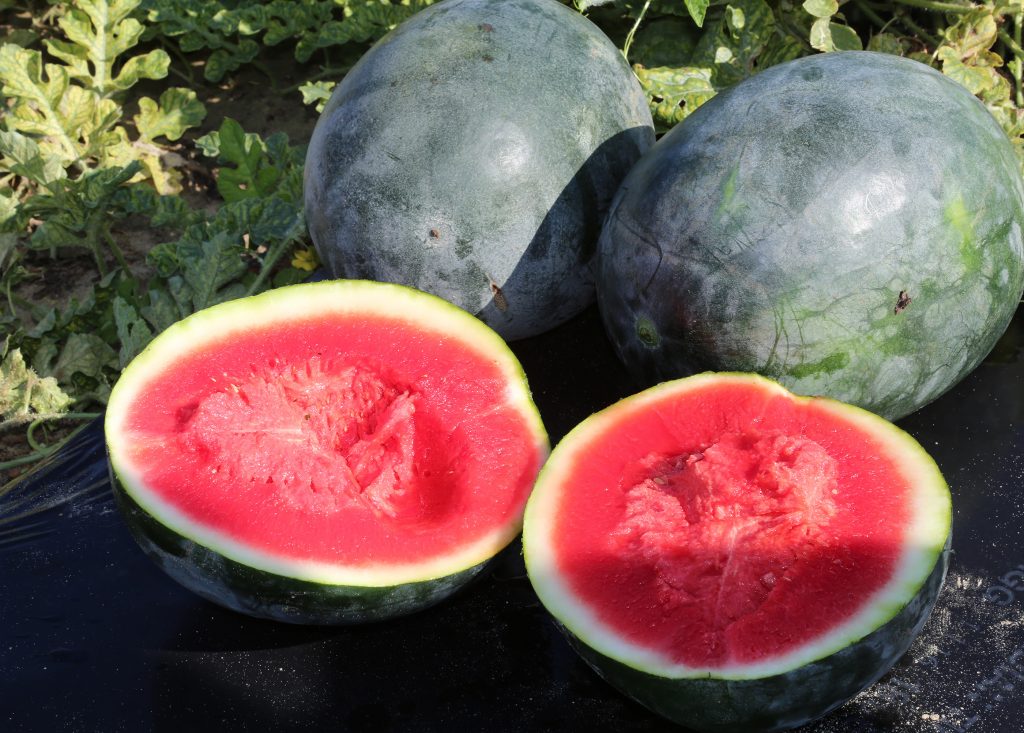
Watermelons on display at a farm on the UGA Tifton campus. Watermelons are a main commodity sold at the Cordele Farmers Market.
Locations in Augusta, Cordele, Macon, Savannah and Thomasville are on the list to be cut. Julie McPeake, Georgia Department of Agriculture Chief Communication Officer, said the proposal has been sent to the Legislature. It’s up to its members to either accept or make any necessary adjustments.
Budget cuts are unfortunately a necessary evil that must be done during this recession which is a result of the coronavirus pandemic.
“With the 14% budget cuts that were requested, you’ve got to make some decisions. Unfortunately, some of those tough decisions require looking at hard numbers. When you have some markets that are having trouble to turn a profit, that’s one of the first places you’ve got to turn to, to save that money,” said Paul Thompson, marketing director for the Georgia Department of Ag.
11% Budget Cuts Instead
Multiple media outlets reported this week, though, that Kemp informed government agencies that they only had to cut the fiscal year 2021 budget by 11%.
“That would be good if that does indeed come to pass. That’ll be wonderful,” Thompson said. “There’s a lot to be determined yet and worked through, but certainly anything would help. It absolutely could have some effect.”
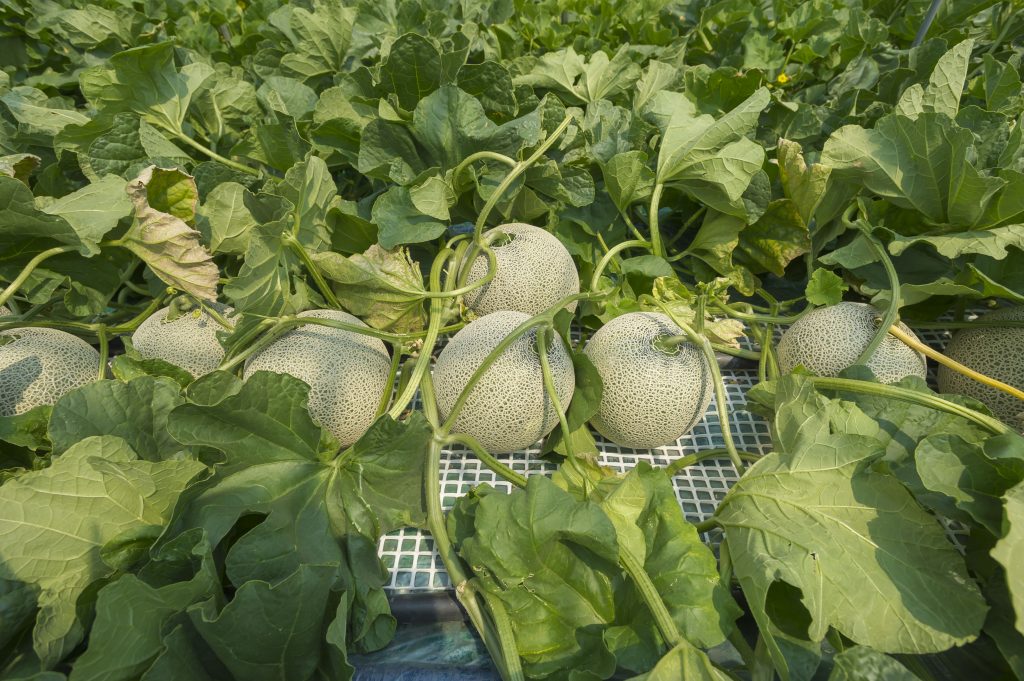
The different farmers market locations vary in what commodities are mainly sold there. In Cordele, the “Watermelon Capital of the World,” it is known for watermelons and cantaloupes being bought and sold this time of year through the early part of July.
“The Cordele Market is most definitely in its season as we speak. It’s a very busy market for the melon season, and we are in that now. Thankfully, we’ve got time to work through this. I don’t see any impact as far as the market for this melon season,” Thompson said. “We will be able to get through this season. Again working with those folks, hopefully, there’s a way everybody can come to the table and some interested parties can get together and we can make it work out in the end.”
July 1 begins the next fiscal year. Thompson said they should know something in the next few weeks as to the future of each of the markets.
The United States-Mexico-Canada Agreement (USMCA) will enter into force July 1. Unfortunately, it’s still without much protection for vegetable and specialty crop producers, according to economists and industry leaders.
Joyner
Florida Fruit and Vegetable Association President Mike Joyner hopes that will change soon.
“When Congress passed USMCA, we unfortunately did not get the provisions we were hoping for in USMCA. The Florida delegation, to the person, hung together. Because they hung together, we were able to get a commitment from Ambassador (Robert) Lighthizer to come up with a plan as to how we’re going to address this issue,” Joyner said. “We felt like that was a strong commitment. It’s in writing. We trust Ambassador Lighthizer. Right now, all indications are USMCA will go into effect July 1.
“If you go back and look at the letter, the commitment that the delegation was able to get, that within 60 days of entry into force, Ambassador Lighthizer has to have a plan. Probably within the next few weeks, we’ll present some information to the U.S. trade Representatives Office that they need to consider. It’s data that clearly shows what’s happening with Mexican produce. We’re hoping that over the next two or three months, we can work with Ambassador Lighthizer and his team and come up with something that will help solve this issue.”
USMCA Background
According to the USMCA press release, the agreement marks the beginning of a historic new chapter for North American trade by supporting more balanced, reciprocal trade, leading to freer markets, fairer trade, and robust economic growth in North America. However, Southeast farmers still will compete against imports of Mexican produce.
“The concern with the USMCA, in terms of specialty crops, is that there are a lot of lower priced crops, low cost labor in Mexico that are coming into the U.S. and competing with southeast fruits and vegetables,” UGA Cooperative Extension Ag Economist Adam Rabinowitz said. “There was hope that there would be some restrictions or some assistance that would help with the ability to compete with those Mexican imports. But there was nothing within that. As a result, it’s looking like there’s going to be a challenge in terms of being able to compete on price with the southeast fruits and vegetables with the imports from Mexico.”
The influx of Mexican produce was especially discouraging this year for farmers. They had to deal with the aftermath of the coronavirus pandemic at a peak time of spring harvest.
In a prior VSCNews story, Charles Hall, executive director of the Georgia Fruit and Vegetable Association, said “it’s insulting to the specialty crop growers who are suffering with COVID-19. It’s taken away markets. Then on top of that, we’ve got Mexican products coming in on top of us to drive the prices even further down.”
The Coronavirus Food Assistance Program (CFAP) will bring much-needed relief to farmers impacted by COVID-19. Unfortunately, the funds allocated per farmer is not enough, says Florida Fruit and Vegetable Association (FFVA) President Mike Joyner.
Joyner
“Florida agriculture was just crushed by the pandemic. A lot of our members have had some really, really big losses. When that direct payment was first mentioned with that $250,000 cap, we were extremely disappointed. We are very appreciative that the cap has been raised,” Joyner said. “We’re grateful for the increase. But it still falls short because we did have members that lost millions. These are family farms.
“We still wish we could get a little bit more. We might try to do that as they begin to talk about a CARES (Act) 4 package. We’ll push to see if we can get that cap raised a little bit more and some more money into Florida.”
CFAP Background
According to https://www.farmers.gov/cfap, CFAP provides vital financial assistance to producers of agricultural commodities who have suffered a 5%-or-greater price decline or who had losses due to market supply chain disruptions due to COVID-19 and face additional significant market costs. Many of the fruits and vegetables, including tomatoes, watermelons and strawberries are covered under CFAP and were in production in Florida when the coronavirus struck in mid-March.
Much of the produce season for this year is completed in Florida, especially in the southern portion of the state. Many are already thinking about next season and need CFAP funds in place so they can proceed accordingly. Thankfully, CFAP payments are already being issued.
“We just hope they turn those checks around pretty quickly because these growers in south Florida are going to make decisions on inputs into July, first part of August.That’s when they’ll start ordering seed and fertilizer and all that kind of stuff,” Joyner said.
With growing season in and home schooling out, NWPB is meeting an essential need for parents working from home and teachers preventing the summer slide
WINTER SPRINGS, FL — June 3, 2020 — The National Watermelon Promotion Board (NWPB) is realigning resources to adapt to a new climate while focusing on summer sales.
Watermelons are very nutritious.
Unlike years past when summer months meant in-person events, the socially-distanced approach adjusts marketing and promotional efforts to continue to position watermelon as the go-to choice for kids and families. NWPB has been partnered with the world’s only rock & roll nutrition show Jump with Jill for over eight years, with a national live tour partnership as the leading line item. With stay-at-home orders in place, Jump with Jill and NWPB are teaming up to bring consumers a digital version of the program called the Jump with Jill Digital Tour with unplugged songs, dances, workouts, activities, and tutorials.
“Jump with Jill is our longtime partner for kids content and in-school outreach and their primary delivery mechanism was through a powerful live musical show,” says Stephanie Barlow, Senior Director of Communications. They have realigned so that songs about eating fruit like Nature’s Candy and The Sweet Beat can still reach kids even when they are distance learning.”
Just as the watermelon domestic growing season hits its peak, these free resources and tools serve an important need useful while families are at home. Parents are craving content that can hold their kids’ attention while they work from home and teachers need summer study materials they can use to prevent the summer slide, or the slide backwards that many children make in reading and math skills over the summer.
“From our homes to families everywhere, we are thrilled to be able to perform and teach,” says Jump with Jill creator, Jill Jayne, who brings her credentials as a Registered Dietitian and singer into everything she touches. “When they announced school closures, we were forced to accept that a screen would be a mandatory feature in our relationship with our audience. So we wanted to use it to communicate to kids in a powerful way letting them know that – we are still here, we are still singing, and we still love you.”
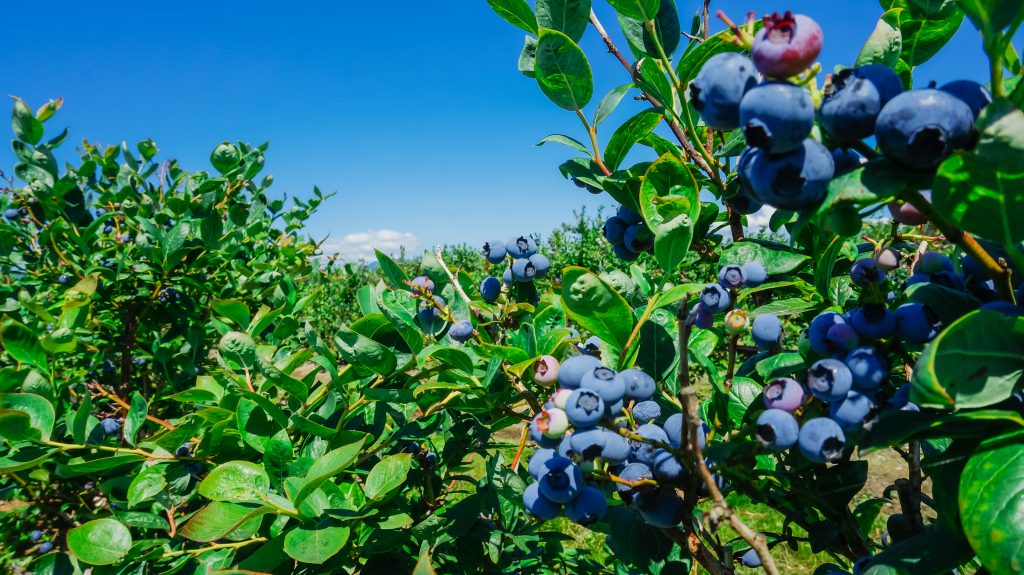
Blueberries are one of the many commodities covered by CFAP. File photo of blueberry production.
By Clint Thompson
One agricultural economist fears there might be insufficient funds to cover farmers who apply for the Coronavirus Food Assistance Program.
Max Runge
Max Runge, Extension specialist in agricultural economics and rural sociology at Auburn University, believes the 80% of maximum total payment allotted for applicants will not be enough considering the number of producers impacted by the coronavirus pandemic.
“I don’t think that will be enough. I think it’ll be short. Agriculture’s big across the U.S. The program covered a lot of it,” Runge said. “I hadn’t sat down and tried to put any kind of numbers to it. But I would be surprised if there’s enough money there to cover it.”
CFAP Background
According to www.farmers.gov, CFAP will provide $16 billion in direct support for agricultural producers where prices and market supply chains have been impacted and will assist producers with additional adjustment and marketing costs resulting from lost demand and short-term disruptions for the 2020 marketing year caused by COVID-19.
To ensure funds will be available throughout the application period, producers will receive 80% of their maximum total payment upon approval of the application. The remaining portion of each payment, not to exceed the payment limit, will be paid at a later date as funds remain available.
“I know that it was a daunting task to try to come up with something to cover everything. I thought it was a good effort. It’s like everything else, you can always look back and say, ‘They should have done this.’ Or ‘This should have been done differently,’” Runge said. “It’s not perfect, but it is something.”
While the program will largely aid vegetable and specialty crop producers in Florida, Georgia and Alabama farmers are hurt by the timeframe. Charles Hall, executive director of the Georgia Fruit and Vegetable Association, says the program’s end date of April 15 doesn’t help his farmers much. Not much is on the market then. The same is true for Alabama farmers.
“We don’t have that much produce maturing at that time and ready for market during that time frame,” Runge said.
United Fresh Produce released its first quarter of 2020 issue of Fresh Facts on Retail report that details the rising number of fresh produce purchases in 2020. The unprecedented rise in food and beverage consumption at home was brought about by shelter-in-place orders issued to slow the spread of the coronavirus.
“Those closures have led to consumers drastically restructuring their eating habits, especially increasing their consumption of meals and snacks at home,” says Miriam Wolk, Vice President of Member Services with United Fresh. “Our current and future Fresh Facts reports will help the produce industry in leveraging current consumer behaviors and fresh produce purchasing trends.”
First-quarter data highlights show that with health as a top concern, consumers continued to buy fresh food with immune-boosting properties, while also supplementing with shelf-stable and frozen food options. Strawberries and raspberries benefited by extending their reach into more U.S. households. Among vegetables, potatoes, tomatoes, and cucumbers were purchased in higher amounts by U.S. consumers. The report also shows a variety of fruits and vegetables continue to influence overall organic growth, presenting many opportunities to innovate and attract health-conscious consumers.
(From the National Association of Farm Broadcasters)