Category: Fruit

  • Clemson Extension Provides Crop Updates

    Clemson Extension agents provided updates in The South Carolina Grower this week about the status of various crops being produced throughout the state.

    Coastal

    Zack Snipes reports, “Summer crops are all but about done. The afternoon thunderstorms, humidity, and heat have just about finished off the tomato and watermelon crops. Growers are getting fields ready for the fall season now. Consider putting up deer fencing now before crops are planted.”

    Midlands

    Justin Ballew reports, “We got some more rain early in the week, and the sky was overcast most of the week. Downy mildew finally showed up here in cucumbers. Even though it’s been found all over the coast, it took a while to make it this far inland this year. The dry weather we had most of June may have had something to do with that. Anyone growing cucurbits from now through the fall definitely needs to be applying preventative fungicides. Lots of fields are transitioning from spring crops to fall crops right now. We’re still picking sweet corn, tomatoes, peppers, eggplant, squash, zucchini, cucumbers, etc.”

    File photo of hemp.

    Lalo Toledo reports, “Sweet potatoes are in the ground and thriving. Please be aware of any pest activity and disease activity. Weeds are becoming a problem, especially in organic operations. However, there are several options to suppress weeds. Please contact your extension agent for information on chemical and cultural practices. Hemp is having trouble taking off with so much heat, and weeds are gaining ground on it. Peppers are doing great with some minor bacterial lesions.”

    Pee Dee

    Tony Melton reports, “Poured rain every day last week – awful.  Processing peas are ready to harvest but cannot get a dry period to burn down to harvest. Need to get second crop processing peas planted before August if fields will ever dry out – don’t forget to control thrips early and do your best to keep deer out of fields. Processing tomatoes & peppers are being harvested. Pickling cucumbers are continually being harvested and replanted. Sweet potatoes are planted, most have been laid-by, many have vines covering beds, and some are starting to size potatoes. We may have some insect damage on roots since it is difficult to get bifenthrin applied and plowed-in. Hopefully, the Lorsban will control insects, and since it is too wet to plow until the rain can wash the bifenthrin into the soil to keep the sun from degrading it. Don’t forget the boron on sweet potatoes.”

    Upstate

    File photo of peaches.

    Kerrie Roach reports, “Peaches are the showstopper this week in the Upstate! Even with what appears to be late cold damage causing split pits and some varieties not to ripen, the peach crop is still booming. Apples are maturing on schedule and growers should begin harvesting early varieties over the next few weeks. With limited and spotty rain events over the last seven days, irrigation has been vital for vegetable producers…. but heat and humidity (despite the overall lack of rain) have increased the need for fungicide cover sprays, as we’ve seen various fungal activity picking up across the board.”
  • Additional Fruits, Vegetables Eligible for CFAP

    Washington, D.C., July 9, 2020 – U.S. Secretary of Agriculture Sonny Perdue announced an initial list of additional commodities that have been added to the Coronavirus Food Assistance Program (CFAP) on Thursday, and that the U.S. Department of Agriculture (USDA) made other adjustments to the program based on comments received from agricultural producers and organizations and review of market data. Producers will be able to submit applications that include these commodities on Monday, July 13, 2020. 

    USDA’s Farm Service Agency (FSA) is accepting through Aug. 28, 2020, applications for CFAP, which helps offset price declines and additional marketing costs because of the coronavirus pandemic. USDA expects additional eligible commodities to be announced in the coming weeks.

    “During this time of national crisis, President Trump and USDA have stood with our farmers, ranchers, and all citizens to make sure they are taken care of,” said Secretary Perdue. “When we announced this program earlier this year, we asked for public input and received a good response. After reviewing the comments received and analyzing our USDA Market News data, we are adding new commodities, as well as making updates to the program for existing eligible commodities. This is an example of government working for the people – we asked for input and we updated the program based on the comments we received.”

    Changes to CFAP include:

    Adding the following commodities: alfalfa sprouts, anise, arugula, basil, bean sprouts, beets, blackberries, Brussels sprouts, celeriac (celery root), chives, cilantro, coconuts, collard greens, dandelion greens, greens (others not listed separately), guava, kale greens, lettuce – including Boston, green leaf, Lolla Rossa, oak leaf green, oak leaf red and red leaf – marjoram, mint, mustard, okra, oregano, parsnips, passion fruit, peas (green), pineapple, pistachios, radicchio, rosemary, sage, savory, sorrel, fresh sugarcane, Swiss chard, thyme and turnip top greens.

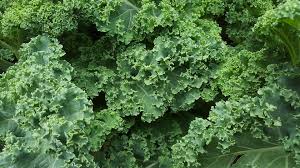
    Kale is one of the commodities included in the CFAP revision.

    Expanding for seven currently eligible commodities – apples, blueberries, garlic, potatoes, raspberries, tangerines and taro – CARES Act funding for sales losses because USDA found these commodities had a 5% or greater price decline between mid-January and mid-April as a result of the COVID-19 pandemic. Originally, these commodities were only eligible for marketing adjustments.

    Determining that peaches and rhubarb no longer qualify for payment under the CARES Act sales loss category.

    Correcting payment rates for apples, artichokes, asparagus, blueberries, cantaloupes, cucumbers, garlic, kiwifruit, mushrooms, papaya, peaches, potatoes, raspberries, rhubarb, tangerines and taro.

  • USDA CFAP Revision “Big Deal” For Blueberry Growers

    Pictured are highbush blueberries.

    By Clint Thompson

    Thursday was a win for blueberry farmers, especially in Georgia. The crop was one of seven currently eligible commodities to be added to Category 1 of the Coronavirus Food Assistance Program by the United States Department of Agriculture.

    According to the USDA press release, the USDA found these commodities had a 5% or greater price decline between mid-January and mid-April as a result of the COVID-19 pandemic. Originally, these commodities were only eligible for marketing adjustments, which Florida blueberry farmer Ryan Atwood believes would not have helped growers like himself at all.

    “Not many individuals qualified for 2 or 3. But everyone in Florida is going to qualify, just about for Category 1. That’s why it is a big deal,” Atwood said.

    According to https://www.farmers.gov/cfap/specialty, eligible specialty crops in CFAP are broken down into three categories:

    1. Had crops that suffered a five percent-or-greater price decline between mid-January and mid-April as a result of the COVID-19 pandemic,
    2. Had produce shipped but subsequently spoiled due to loss of marketing channel, and
    3. Had shipments that did not leave the farm or mature crops that remained unharvested.

    Atwood, who lives in Mount Dora, Florida is one of the state’s blueberry leaders. He farms 56 acres of blueberries, manages another 350 acres and is part-owner of the largest packing house in the Southeast United States.

    Early Crop This Year

    Atwood’s and other farmers’ blueberry crops were early this year due to a mild winter, and high temperatures in January and February accelerated growth. However, when he started picking high volumes of blueberries, which was around March 18, that is when the pandemic shut down the country.

    Market prices reflected the pandemic’s impact. Atwood said in late April that the market was 50% of the historical average price, so half of the money of what you would typically get because of the coronavirus.

    That is why the USDA’s revision to include blueberries in Category 1 was a major win for the industry.

    “There’s a lot of people that are going to need that. It’s going to help them make it to next season. I know people that are getting loans and doing what they can and getting by, but every little bit helps get you there,” Atwood said.

    USDA is accepting CFAP applications through August 28, 2020. Learn more at farmers.gov/cfap.

  • Blueberry Growers Qualify for CFAP Category 1 Payments

    The USDA announced today that blueberry growers are now eligible for Category 1 Coronavirus Food Assistance Program (CFAP) payments. 

    Based on the USDA’s original assessment of the impact of coronavirus on the industry, blueberries were eligible only for Categories  2 and 3 for CFAP relief payments. USDA’s original market analysis had determined that blueberries did not demonstrate a 5% decline in price between January 15 and April 15. However, in response, the North American Blueberry Council (NABC) worked collaboratively with industry leadership to advocate for inclusion and provided the USDA with the data and analysis necessary to reverse the original eligibility assessment. 

    As a result, blueberry growers that qualify are now eligible for Category 1 CFAP payments.

    Take Action

    Growers that believe they qualify for Category 1 are encouraged to contact their local FSA office immediately to begin the application process. 

    The program is based on self-certification; growers should retain documentation for future claim substantiation.

    To learn more about the CFAP program and Category 1 eligibility requirements, visit farmers.gov/cfap/specialty.

  • GFVA Executive Director: It Was a Pretty Good Season

    By Clint Thompson

    Photo by Clint Thompson/Watermelons on sale at the farmers market in Cordele, Georgia. Watermelon producers in Georgia had a good year with strong prices.

    Georgia’s fruit and vegetable growers had their share of obstacles this growing season but emerged mostly unscathed with a productive season, according to Charles Hall, executive director of the Georgia Fruit and Vegetable Association (GFVA).

    He credits alternative marketing outlets for helping products get sold in a timely fashion.

    “Because of the Food Box program that the USDA had and the Georgia Grown to Go, there was a lot of product that was taken off the market,” Hall said. “Mexico had problems weather wise and production wise, so we did not have as heavier imports as we normally have. There was Mexican product on the market. They did not have the quantity of product coming in as they normally do.

    “Prices stayed good most of the season, and demand stayed strong most of the season. Overall, it was a pretty good season.”

    Pleasant Surprise

    A good season was not always a guarantee, especially after Florida growers struggled during the early part of harvest season to sell their produce amid the coronavirus pandemic. And they also struggled with Mexican imports.

    “Somebody told me that it’s very, very unusual when your prices in June are better than your prices in April. That’s the trend we would like to see to continue,” Hall said. “This has just been a strange year. If you had told me in March that I would have made the statement I just made, that growers had a pretty good year, I would have said you were crazy. Things coming out of Florida in March and early April, it looked bad. It really did.”

    Prices stayed up and supply stayed strong for Georgia farmers, who needed a year like this season.

    “We needed to have a decent year. Our guys for the last, two, three years, they’ve been devastated. Having a better year in 2020 has certainly been good for folks,” Hall said.

  • Three Georgia Farmers Market Locations Could Be Spared

    UGA picture/Watermelons being researched on the UGA Tifton Campus. 6–6-17

    By Clint Thompson

    The revised budget cut requirements from the Georgia Governor’s Office of Planning and Budget and the State Legislature may have spared the state farmers market locations in Cordele, Thomasville and Savannah.

    Julie McPeake, Georgia Department of Agriculture Chief Communications officer, confirmed that as a result of the budget cut requirement from 14% to 10%, the State Legislature provided funds to support the transition of ownership of the Cordele, Thomasville and Savannah farmers markets to their respective local governments.

    “In May, the Governor’s Office of Planning and Budget (OPB) requested that state agencies present a plan to cut 14% of their budgets for fiscal year 2021. The Georgia Department of Agriculture (GDA) operates with a very efficient budget, forcing very difficult decisions to reach the requested budget cuts, including a proposal to close multiple state farmers markets,” McPeake said. “However, following a revision of revenue estimates, OPB and the State Legislature reduced budget cut requirements from 14% to 10%. As a result, the Legislature provided funds to support the transition of ownership of the Cordele, Thomasville, and Savannah farmers markets to local governments effective April 1, 2021.” 

    Impact From Coronavirus Pandemic

    Locations in Augusta, Cordele, Macon, Savannah and Thomasville were on an initial list to be cut. McPeake said the locations in August and Macon are still scheduled to be off the GDA’s books for 2021, but she didn’t have a timeline for any transition.

    It is unfortunately a necessary evil that had to be considered during this recession which is a result of the coronavirus pandemic.

    “With the 14% budget cuts that were requested, you’ve got to make some decisions. Unfortunately, some of those tough decisions require looking at hard numbers. When you have some markets that are having trouble to turn a profit, that’s one of the first places you’ve got to turn to, to save that money,” said Paul Thompson, marketing director for the Georgia Department of Ag, in early June.

    The different farmers market locations vary in what commodities are sold there. In Cordele, the self-proclaimed “Watermelon Capital of the World,” it is known for watermelons and cantaloupes being bought and sold this time of year.

    July 1 began the new fiscal year.

  • UF’s Angle: We need to have a more resilient marketing system

    By Clint Thompson

    A second wave of the coronavirus pandemic is inevitable. Perhaps we are already in it, just a few months ahead of the fall forecasts that most projected would coincide with flu season.

    J. Scott Angle, NIFA portrait, Oct. 31, 2019. USDA Photo by Preston Keres

    But you can pencil in COVID-19 as another challenge farmers will have to face this fall, especially as preparations are already underway for the fall crop which will be planted in a few months.

    Scott Angle, the newly-named vice president for agriculture and natural resources at the University of Florida/IFAS, believes growers can learn a lot from their first bout with this pandemic, which occurred in the midst of fruit and vegetable harvests in March and April.

    “Whether this fall in the next phase or the next pandemic, we better make sure we’re ready. We certainly have learned a lot of lessons. We learned a lot of lessons about how to social distance. I still think we need more research in that area because we don’t have all the answers, but we understand that’s where disease transmission can occur,” Angle said. “We have some ways of protecting workers. Whether or not those are the best methods, I don’t know if anyone knows at this point. Most of our social distancing and protective methods at least on some level are just common sense. We certainly need some research for that.

    “I think we all understand that our economies have to keep running and mostly we just have to keep producing food. We don’t really have a choice, to say we’re going to shut down the farm for a year or two years or until we get a vaccine. We’re going to have find smarter ways to do the things we did last year.”

    One Adjustment

    Angle admits a big adjustment must be how farmers can adjust their marketing strategies when the demand for produce is disrupted. For example, when the coronavirus pandemic struck in mid-March, it forced restaurants to shut down across the country. These are major buyers for farmers in Florida and Georgia. When restaurants were not buying produce, farmers in Florida struggled to find a home for their fruits and vegetables.

    In early April, Paul Allen, president of R.C. Hatton Farms, said he left about 2 million pounds of green beans and about 5 million pounds of cabbage in the field. Florida farmer Kim Jamerson said in late March that her produce business would lose 100% of their production costs, along with packing and shipping costs if things did not improve.  

    “I was on a conference call with some food manufacturers and they were joined by farmers who were saying the exact same thing, when the markets dried up, they had to pivot very quickly and sometimes would be in a matter of days. In fact, some of them said, ‘I just want to donate my food to a food bank or pantry,’ and even that they weren’t able to do very easily,” Angle said. “We need to have a more resilient marketing system that can pivot a lot more quickly.

    “One good example would be, these food pantries need it and need it now more than ever because their needs have gone way up. Could there be an intermediary to step in and pay the farmers and get that food over to the food pantries for these charities?”

    Similar Idea

    Jamerson had a similar idea right after the pandemic became problematic for Florida growers. She reached out to the office of U.S. Senator Marco Rubio (Fla.) and spoke to one of his aides about the government helping its farmers by purchasing their crops and distributing the food to its citizens since many are unemployed. Back in March, she had not heard back from Rubio’s office.

  • Nikki Fried: Our Growers Cannot Compete

    Florida Ag Commissioner Makes Comments on USMCA

    commissioner

    By Clint Thompson

    Not every leader in the agricultural community believes the United States-Mexico-Canada Agreement (USMCA) was the right move for American farmers.

    Even after the USMCA entered into force on Wednesday, Nikki Fried, Florida Ag Commissioner, remained vocal to her opposition to the agreement, mainly due to its impact on specialty crop producers.

    commissioner
    Nikki Fried
    Florida Agriculture Commissioner

    “Florida’s farmers, who have always faced challenges like hurricanes, droughts and so much more, have always been able to be adaptable in the face of all of that adversity. Now, as they face COVID-19 with disruptive supply and market chain which caused major crop losses of over half a billion dollars, they’re also facing increased and unfair foreign competition,” said Fried during a virtual press conference on Thursday. “I’ve been outspoken on this, spoke out against NAFTA and fought against USMCA, which could cost Florida another 8,000 jobs and almost $400 million. For years NAFTA allowed Mexico to tilt the playing field with unfair advantages. Our growers cannot compete like that.”

    New Study

    Fried said the Florida Department of Agriculture and Consumer Services (FDACS) sent a new research study to the U.S. Trade Representatives to show how negatively seasonal producers have suffered from unfair trade.

    1. Mexico has expanded its share of US domestic markets by 217% since 2000, while Florida lost market share by 40%.
    2. There has been a 551% increase for seasonal crop imports from Mexico from 2000-2019. An $11 billion gap exists between Mexican Ag exports and Florida’s total Ag value.
    3. Florida producers lost sales of up to 20% due to Mexican Ag export expansion since 2000. This resulted in $3.7 billion in total economic losses in Florida’s economy along with 37,180 lost jobs.

    Florida farmers voiced their displeasure with Mexican imports this year, amid the coronavirus pandemic that already impacted a huge chunk of the market. Blueberry farmer Ryan Atwood said, “he is a fan of having his own domestic supply of food.”

    Florida vegetable farmer Sam Accursio believes the only solution is for “people to vote and get people that are like-minded and want to support our nation in office.”

    Lack of Support

    Fried also expressed her displeasure with fellow Florida leaders for lack of support in opposition to USMCA.

    “Of course, I’m disappointed that we couldn’t get some of the other members of the leadership in the Senate or the House as well as the governor to speak up united on this issue. The agriculture commissioners across the country meet on a pretty normal basis. We had a meeting probably about six months ago where USMCA was brought up. I was the only one who voted no. Because everyone has their own benefits that they’re seeing, the problem is these specialty crops are the ones who have been hit the most,” Fried said. “You’re starting to see it trickle it down (though). Bud (Chiles of Demand American Grown) hosted a meeting, felt like forever ago, last year with growers from Georgia, who are starting to experience it.

    “It’s been hit heaviest by Florida. But now you’re starting to see expanding into Alabama, Georgia and the Southeast and a little bit in California. We were really kind of hopeful that we were going to get some more support on the opposition to USMCA and certainly would have loved some assistance from other statewide leaders. But unfortunately, we did not get them.”

    According to the USMCA press release, the agreement marks the beginning of a historic new chapter for North American trade by supporting more balanced, reciprocal trade, leading to freer markets, fairer trade, and robust economic growth in North America. However, Southeast farmers still will compete against imports of Mexican produce.

  • Root Borers a Danger to Grapes in the Southeast

    University of Georgia Extension/Pictured is a grape root borer.

    By Clint Thompson

    The time is now for grape producers to protect their crop against the grape root borer, said Brett Blaauw, assistant professor in the Department of Entomology at the University of Georgia. He said usually in north Georgia, the grape root borers will emerge in early July.

    According to the UGA Extension Viticulture Blog, if farmers have not deployed their pheromone dispensers as part of the mating disruption tactic, it is time to get those distributed.

    University of Georgia Extension/Pictured is a grape root borer monitoring trap.

    “Our mating disruption is probably our best option. That’s using a pheromone that basically confuses the male moths. It blocks them from finding the female moths so they can’t mate. No mating, no mates, no eggs, no larvae and then, hopefully, no disruption of the roots,” Blaauw said. “But because of its two-year life cycle, it takes a least two years for the mating disruption to start to show that it’s working in a vineyard. That can be tough because when you use something management you want to see it working right away. But the main disruption takes a couple of years to see any benefit.”

    What Impact Does Grape Root Borers Have?

    As the name implies, the grape root borer larvae feed on the roots. Blaauw said they have a two-year life cycle and will feed underground on the roots for almost 22 months. Unfortunately, it is out of sight, out of mind for many grape producers. Being underground, the borers go unnoticed until the vine begins to deteriorate.

    “Previous research has shown that by having these larvae feeding on the roots it can reduce the vine’s yields by 50%. That’s just having one larvae,” Blaauw said. “The mature larvae are almost an inch long so they’re pretty good size larvae, a little bit like root boring caterpillars feeding for two years. Just having one can reduce yield by 50%. If you have more than one feeding on a vine, that could easily significantly reduce the survivability of the vine; it can reduce the fruit quality and eventually lead to vine death.

    “Growing fruit in the Southeast is tough enough with diseases and other insects. Growing grapes is really tough. Grape vines, at least the vonifera type grapes are often subject to different diseases. One is Pierce’s Disease. Pierce’s Disease can take down vines pretty quickly, too. A lot of growers, when they have a vine that dies, they kind of assume it’s due to a disease. They’re not usually thinking about grape root borer just because it’s underground. You don’t really see what’s going on until you pull that vine out and see the roots all chewed up. Then it’s obviously too late.”

    Effective Management Tool

    Another effective way to manage grape root borers is to suppress the weeds under the vines. This can significantly reduce the success rate of the eggs hatching and the larvae making it to the roots. If weeds are present, they serve as protective barriers for the little caterpillars. They protect them from the sun and protect them from other insects that are going to be feeding on them.

    “If you get rid of those weeds, you create a pretty harsh environment. Bare soil is not a good place for an insect, especially if you’re a tiny little caterpillar,” Blaauw said.

  • Shriveled blueberries could signal “mummy berry” disease

    “Mummy berry” disease is easily recognized when the fruit begins to ripen, as infected berries become dry, shrivel and drop prematurely. (UGA Plant Pathology/Bugwood.org)

    By Paul Pugliese for CAES News

    Blueberries are one of the most popular backyard fruits for Georgia because they are relatively low maintenance compared to other fruit species. However, there is one particular disease issue known as “mummy berry” that can be problematic for blueberry growers.

    The disease is easily recognized when the fruit begins to ripen, as infected berries become dry, shrivel and drop prematurely. These infected berries are a pinkish color rather than the normal blue. This is caused by a fungus that can survive over the winter inside the fruit mummies that lay on the ground. Spores within infected berries can remain viable for several years.

    Mummy berry can cause crop yield losses as high as 25% to 50% are not unusual if left untreated. Blueberry varieties differ in their susceptibility to the disease. Unfortunately, some of the most popular varieties for Georgia are known to be highly susceptible.  

    This year has been a terrible year for mummy berry disease due to the unusually cool, wet spring weather. Late freezes also predisposed leaves and flower buds to infection.

    Mummy berry actually infects blueberry plants in two stages. The first stage occurs when spores (ascospores) are released from the fruit mummies on the ground. Wind spreads the spores to nearby plants, infecting emerging shoots and leaves. Newly infected leaves, buds, stems and flower clusters suddenly wilt, turn brown and eventually become covered in a powdery mass of spores. Secondary spores (conidia) from these blighted shoots are then carried to open flowers along with pollen. In fact, bees and other pollinators inadvertently spread the spores during pollination. During the second stage, the spores infect developing berries by growing into and colonizing the ovaries of the fruit.

    Unfortunately, by the time most people notice the problem — normally close to harvest — it’s too late to do anything to salvage your blueberries for the current season. This is true of most plant disease issues. Once you’ve seen this disease in your blueberry planting, you can anticipate it will return the following year. The good news is that there are effective fungicide options that can be sprayed to prevent this disease early in the growing season. A few properly timed fungicide applications can effectively control this disease.   

    Sanitation is an important tactic for managing mummy berry disease with backyard blueberry growers, since fungicide options for home gardeners are limited. Burying or mulching the mummies during the winter can help prevent future infections. Rake or use a leaf blower to move mummies into row centers and bury 2” deep by disking the soil between rows or adding 2” of mulch. A bagging mower could be used to collect and remove the mummies. Shallow cultivation between rows before bud break can also kill any exposed fungal fruiting bodies. It is difficult to ensure that all mummies will be buried or removed, so chemical control is also necessary.  

    Fungicides should be applied soon after bud break when green tip occurs on leaf buds or less than 5% open bloom occurs on the flowers, whichever comes first. Continue sprays until all blooms have fallen. Once the flowers have been pollinated, no further infection can take place.

    One control option that provides fair control is a product containing the natural bacterium Bacillus subtilis, sold under the brand name Serenade. This has been shown to reduce mummy berry infection if applied at the shortest labeled intervals during bloom.  

    Another good fungicide option is Captan 50WP applied every 7 to 10 days through bloom. Be sure to get a standalone fungicide that is not combined with any insecticides. Insecticides should never be applied during bloom as they will harm bees that are necessary for pollination.

    For more information about growing blueberries, check out University of Georgia Cooperative Extension Circular 946, “Home Garden Blueberries,” at extension.uga.edu/publications.