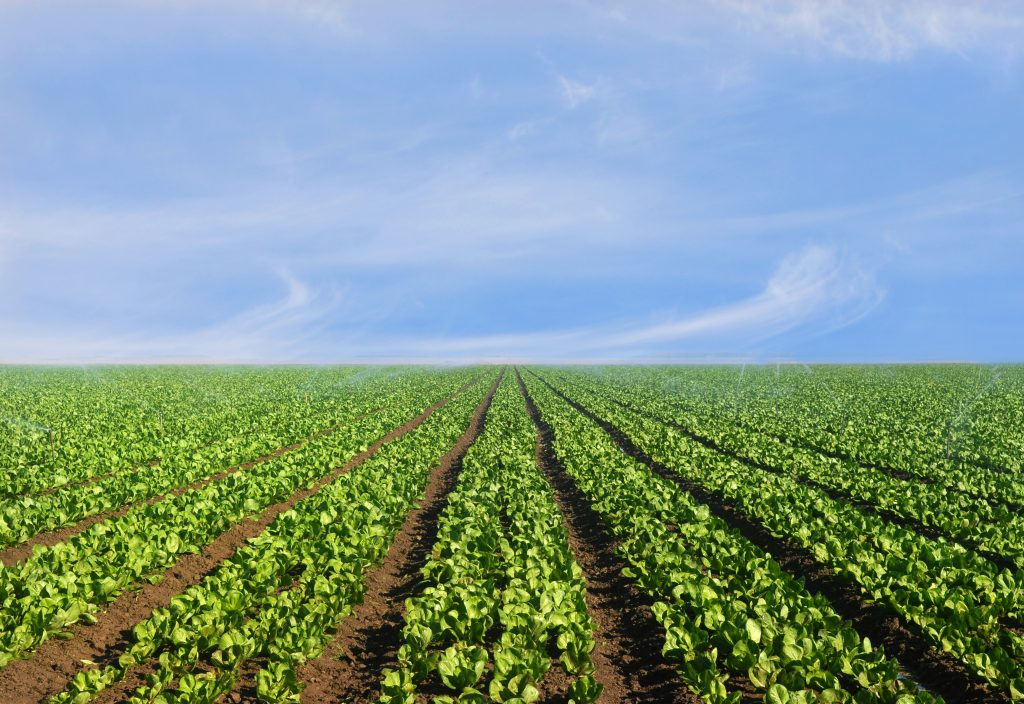
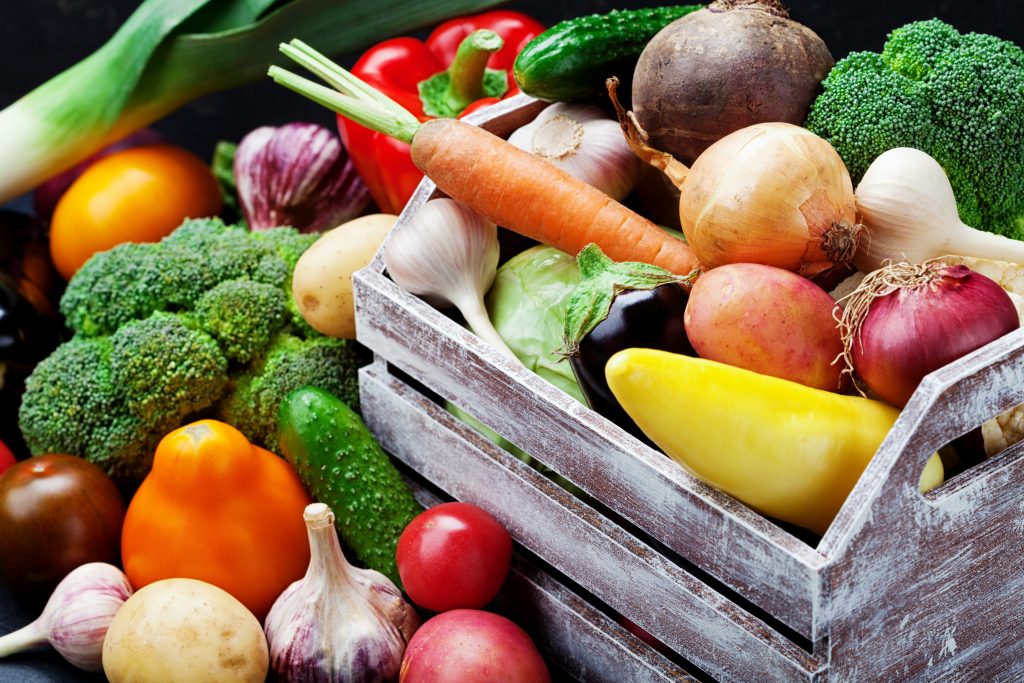
During the Florida Farm Bureau Federation (FFBF) and Florida Department of Agriculture and Consumer Services (FDACS) Town Hall last week concerning COVID-19 and its effects on Florida agriculture, one issued discussed was how fresh produce growers were having difficultly moving their products. But foreign produce continues to be prevalent in stores. Florida Agriculture Commissioner Nikki Fried said this is something they work on every day.
For more information go to the FDACS website . To hear more comments made during the Town Hall event, click here.
One University of Georgia Extension economist is concerned about labor availability this year.
By Sharon Dowdy, University of Georgia, College of Agricultural and Environmental Sciences
Georgia produce farmers are used to fighting plant diseases on their crops, but planting resistant varieties or spraying pesticides won’t keep Coronavirus (COVID-19) away. This disease has shut down borders and reduced access to the markets where farmers sell their crops, is keeping essential farm labor out of the country, and prevents produce from being imported, too, according to University of Georgia Cooperative Extension experts.
“The difference between Covid-19 and plant diseases, thrips, tariffs and hurricanes, is that, while the others affected the specialty crop industry directly, COVID-19 will indirectly affect the entire industry,” said Greg Fonsah, UGA Extension agricultural economist for vegetables, fruit and pecans. “Since COVID-19 became a pandemic, most countries including the United States have shut down their borders and imposed travel restrictions.”
Georgia agriculture has a farm gate value of about $14 billion. Most of the state’s fruits and vegetables are handpicked by seasonal, migrant or immigrant labor.
On March 20, the U.S. Department of Homeland Security, U.S. Customs and Border Protection placed restrictions on travel to land ports of entry and ferry services between the U.S. and Mexico until April 20, 2020.
“The announcement that the U.S. Embassy in Mexico will stop interviews of seasonal workers has sent another wave of panic to the existing COVID-19 pandemic fear,” Fonsah said. “Common sense tells us that if this happens, chances are that there will be huge labor shortages, not only for Georgia farmers but for the Southeast region and the entire country, especially if the decision is not reversed or relaxed in a timely manner.”
Fonsah and his colleague, Justin Shealey, UGA Extension coordinator in Echols County, have determined that a shortage of migrant and/or immigrant seasonal workers would result in the following:
Huge field crop loss for some handpicked fruits and vegetables as some growers may not have enough seasonal or permanent labor force to harvest their crops.
Social distancing, although necessary for safety reasons, will also delay the harvesting process and increase the loss incurred since these are mostly perishable food crops.
Georgia could lose over a billion dollars if hypothetically, only 50% of its specialty crops are harvested. Nationwide, the entire fresh food industry may lose billions of dollars in crop loss.
Although the U.S. exports significant amounts of specialty crops to Mexico and Canada, the U.S. also imports more from these two countries than it exports to them. Thus, shutting down the boarders and restricting visas to migrant labor deprives entry of fresh imported food from Mexico and Canada to subsidize what the U.S. produces.
The huge shortage of both domestic and imported food would affect the entire fresh food value supply chain and result in a nationwide food crisis.
Price could exponentially spike due to the limited domestic quantity.
The lack of seasonal and/or permanent labor force needed for harvesting might put enormous financial pressure on farmers and may put some out of business without any form of government assistance, and;
The U.S. Department of Labor relaxed the rigidity of some provisions of the H-2A program requirement on April 1, including contract possibilities, workers who arrive after the start date and application fees. The policies of origin of migrant labor may still deprive qualified workers from entering the U.S., Fonsah said, and others may be afraid to apply given the number of COVID-19 infections and deaths reported in the U.S.
For more information on the economics of Georgia agriculture, go to www.agecon.uga.edu/extension. Sharon Dowdy is a news editor with the University of Georgia College of Agricultural and Environmental Sciences.
Submitted by Gene McAvoy, Regional Vegetable Extension Agent IV Emeritus with UF/IFAS
“Up to the end of Feb our growers were having a banner year and it looked like this season would be one of those homeruns that come around every 5-6 years.”
Here is a report that I prepared on the state of S Florida ag and shared with officials. (Long read but may shed some light on how COVID-19 is impacting agriculture in our area.)
Markets
On Tuesday, March 24, a local broker says, everything changed. From brokers, orders stopped and everything got quiet. On Wednesday, March 25, it got super quiet.
Since then tomato volumes are down 85%, green beans are like 50% and cabbage is like 50%.
R.C. Hatton has plowed under 100 acres of green beans, around 2 million pounds, and 60 acres of cabbage, or 5 million pounds.
Florida’s tomato growers target 80% of their production to restaurants and other food service companies, rather than to supermarkets. In this sector, growers are walking away from big portions of their crop.
Tony DiMare estimates that by the end of the growing season, about 10 million pounds of his tomatoes will go unpicked.
Some crops like potatoes and oranges are faring well, whileother produce isn’t selling like it used to.
With a lot of people staying home and buying mostly comfort foods, products like peppers, tomatoes and cucumbers have actually slowed down incrementally,” said Chuck Weisinger, president of Weis-Buy Farms, Inc.
“The biggest challenge we have right now is getting the stores to start buying,” said John Stanford, farm manager at Frey Farms.
As you know. produce is highly perishable and three weeks into this, many companies around Immokalee, Florida have already had to empty their coolers and dump produce. One dumped 20,000 pounds a day last week, let that sink in… 20,000 pounds of tomatoes a day. They dumped a total of 100,000 pounds so far. This is from one farm.
Three weeks in, most farms have exercised triage dumping and emptying coolers and are terminating fields for which they have no foreseeable markets. They are concentrating on maintaining fields that they still have demand for, unfortunately, depending on the crop – this is only 20-50% of the total planted.
Impacts on Ranchers
The cash market and futures prices are lower than anyone can remember. One local rancher sold calves this week and averaged $250 per head at the Arcadia auction barn. A few weeks ago he would have received $450 per head average, and that constitutes below breakeven.
In normal times, strategy would be to hold calves until the crisis is over, and hope prices will take an upswing. But there is huge uncertainty about how long this will last. A major compounding problem is the dry conditions, and lack of reserve forage. These weather patterns would normally dictate early weaning of calves. Hay costs, when available, and low market prices are a formula for hardship.
The extended impact on ranchers will be the cows not breeding back on schedule. Holding calves longer in hot and dry conditions puts a strain on a cow’s reproductive system. This has been well-documented by University of Florida researchers.
Many growers are exploring alternative methods of moving product.
Sam S. Accursio and Sons Farms’ in Homestead packing house opened direct sales to consumers, selling boxes at $10 in each of the past two weekends. They had cars stretched for half a mile in front of the packing house and were able to move 120,000 pounds of Redland-raised squash, tomatoes, beans and cukes. They also partnered with a farmer out of Mount Dora, Florida who had 30,000 flats of unsold blueberries and sold these at 12 pints for $20. Similar efforts were conducted by Alderman Farms in Bonita Beach, Florida, Farmers Alliance in Immokalee and others.
Martin County, Florida opened a pop-up drive-thru market that saw 500 cars in one day. Traditional commercial farms in South Florida have been overwhelmed by the support for the sales at their packinghouses – all fruit that would have otherwise gone unsold if waiting on traditional markets to purchase.
Growers are still concerned that a large amount of produce seen in the supermarket comes from Mexico.
According to Bill Braswell, since March 1, the start of the Florida blueberry season, Florida has produced 6.1 million pounds through last Thursday April 2. In that same time period, Mexico has imported 17.4 million pounds into the U.S., according to a USDA report. Mexico market price is $12 for a 6-ounce flat delivered to Chicago which translates to $2.60 per pound.
Labor
Growers are taking aggressive steps to protect workers from COVID-19, including keeping truckers separate from on-farm labor.
They have been taking advantage of training resources and posters supplied by IFAS Extension and others.
Agents have also shared information on essential services exemption and supplying growers with template essential services exemption letters to facilitate movement of their essential staff and labor.
Labor shortages – reports indicate that COVID-19 has delayed the U.S. government’s processing of H-2A work visas. This will impact growers in central and north Florida and up the coast.
Food banks
Last week, growers in Immokalee alone donated more than 3 million pounds of vegetables to Harry Chapin food bank, overwhelming their ability to store, transport and distribute the produce – they had to call a halt.
Farm Share, which partners with more than 2,000 food pantries, churches, schools and other nonprofits throughout Florida, is running at maximum capacity, despite having 25 refrigerated trucks, six warehouses of between 10,000 to 35,000 square feet and 40 to 50 drop sites from Jacksonville, Florida to Florida City, Florida. They usually help more than seven million pounds of food reach the hungry and now are faced with moving a lot more.
Over the past two weeks, Wish Farms has donated 220,000 pounds of fresh strawberries — equivalent to 241 pallets or nine semi-trailer loads — to feeding Tampa Bay.
Growers are having a tough time adapting because everything is happening so quick. Faced with a highly perishable product, growers are struggling to survive right now, with picking, packing and shipping everything that they can. Because of the coronavirus, things have changed. Buyers are demanding tight security, heavier sanitation, distancing and more.
We have heard many ideas and suggestions from the public and even local officials – what many people fail to realize is that picking, packing, cooling, storing and transporting vegetables costs money, and growers who have already lost millions of dollars are understandably reluctant to throw good money after bad. It also costs money to maintain fields with no hope of sales in sight. Growers are disking up fields and maintaining just what they feel they have markets for. Unfortunately, this is only about 20% to 30% of the total acreage. Each acre of tomatoes costs $10,000 to $12,000 to grow and $5,000 to $6,000 to pick and pack. Unmaintained fields rapidly succumb to pests and diseases and soon become a breeding ground threatening the health of nearby fields that growers are trying to save for their remaining markets.
It is not only veggies, as of yesterday about 7.7 pounds of milk has been dumped by one Central Florida co-op (there are a few in Florida). Milk is sold by the pound so that is 900,000 gallons.
While I don’t have the exact amount from the other co-op I would expect their numbers to match ours in north Central Florida and South Georgia. Unfortunately, we can easily say that 10 million pounds of milk has been dumped throughout Florida.
There are efforts to help farmers all over our state. In the dairy industry, there is a grassroots group of passionate producers, processors, promotion people, school representatives and Extension agents trying to get more milk moving. This group includes people from Florida and Georgia, that in normal times might view each other as the competition (different co-ops and different promotion boards). These efforts range from delivering school lunches, buying and delivering milk to food banks and those in need; contacting schools to increase their milk in each meal, contacting legislators to allow whole milk in school lunches (we need help with this), and asking stores to stop limiting the purchase of milk.
People really have no concept of the amount of food we are taking about – Immokalee alone ships approximately 400 to 500 semis of vegetables a day from March through mid-May. This is 15,750,000 pounds of vegetables headed to market every day. Add to this Belle Glade, Palm Beach Co, Homestead and the amounts are staggering. I know of one grower in Belle Glade who is disking up 1 million pounds of green beans every three days.
South Florida vegetable growers supply more than 150 million people in the eastern U.S., from Miami to Chicago, from late October to mid-May.
Here is a resource a producer may be interested in sharing – this is a clearing house for finding food – donating food etc.
By Dr. Ayanava Majumdar, Extension Professor, Alabama Cooperative Extension System, Department of Entomology and Plant Pathology, Auburn University
A tour of the research vineyard at the Clanton Research and Extension Center in Chilton County at the Alabama WIneries and Grape Growers Association meeting in September 2019. Grapes are grown by Elina Coneva and the staff at the CREC. Grape varieties are developed by Dr. Andy Walker, a grape breeder at UC Davis.
The Alabama Extension Commercial Horticulture Team is comprised of 27 members in the horticulture and food production industry.
Amid the ongoing coronavirus pandemic, we have to remember that food production or farming doesn’t stop; therefore, we have started some educational activities that anyone can watch from the comfort of their home.
We have recently started a weekly ‘Virtual Farm Tour’ on Thursdays through the Alabama Farmer Connection page on Facebook; the recordings of the farm tour are posted on the channel and participants can ask questions during this Facebook Live event.
The horticulture Extension team members are also available to interact on Fridays through the ‘Q&A Friday!’ on Alabama Extension Commercial Horticulture page on Facebook. This is a great way to get your farming or gardening questions answered directly by subject matter experts. You can directly go to the Extension Facebook page from the Farming Basics Mobile App that can be installed freely on Apple and Android devices.
The app also has a library of popular horticultural crops and pest pictures. You can call your regional Extension agents directly from the app.
If you are a beginning farmer or thinking of starting a farm-related business, then the four-hour Farming Basics Online Certificate Course is a valuable resource before starting out. This is a free module-based learning system with built-in interactive quizzes that generates a custom certificate at completion.
The Alabama IPM Communicator E-newsletter is another great resource to receive timely crop production and pest alerts on your phone. The pest alerts are sent twice per month (at a minimum) year-round in the form of weblinks to blog articles and educational events in a mobile-friendly email. You can self-subscribe to the newsletter from the link mentioned before.
Last but not the least, bookmark Alabama Beginning Farmer as your go-to website for learning about print resources and other resources, like the Beginning Farm Project Video Playlist on YouTube.
The Farming Basics App also connects to the YouTube playlist so you can watch short videos and webinars on a variety of farming topics like food safety, marketing, integrated pest management (IPM), grafting techniques and much more. Several new food safety and marketing videos related to coronavirus are timely for new and experienced producers, gardeners, educators, and consumers.
Among the print resources, remember to get the latest copy of the Southeastern Vegetable Crop Production Handbook. the High Tunnel Crop Production Handbook (also a free iBook) and IPM slide charts for reference as you get started.
Various educational resources mentioned in this article have been developed with numerous grants from the USDA National Institute for Food and Agriculture (USDA-NIFA), Beginning Farmer and Rancher Development (BFRD) Program, Sustainable Agriculture Research and Education (SARE) Program, Alabama Department of Agriculture and Industries (ADAI) Specialty Crops Block Grant, and Crop Protection and Pest Management Program. Contact an Extension office near you to learn about local education initiatives and develop a suitable farm plan.
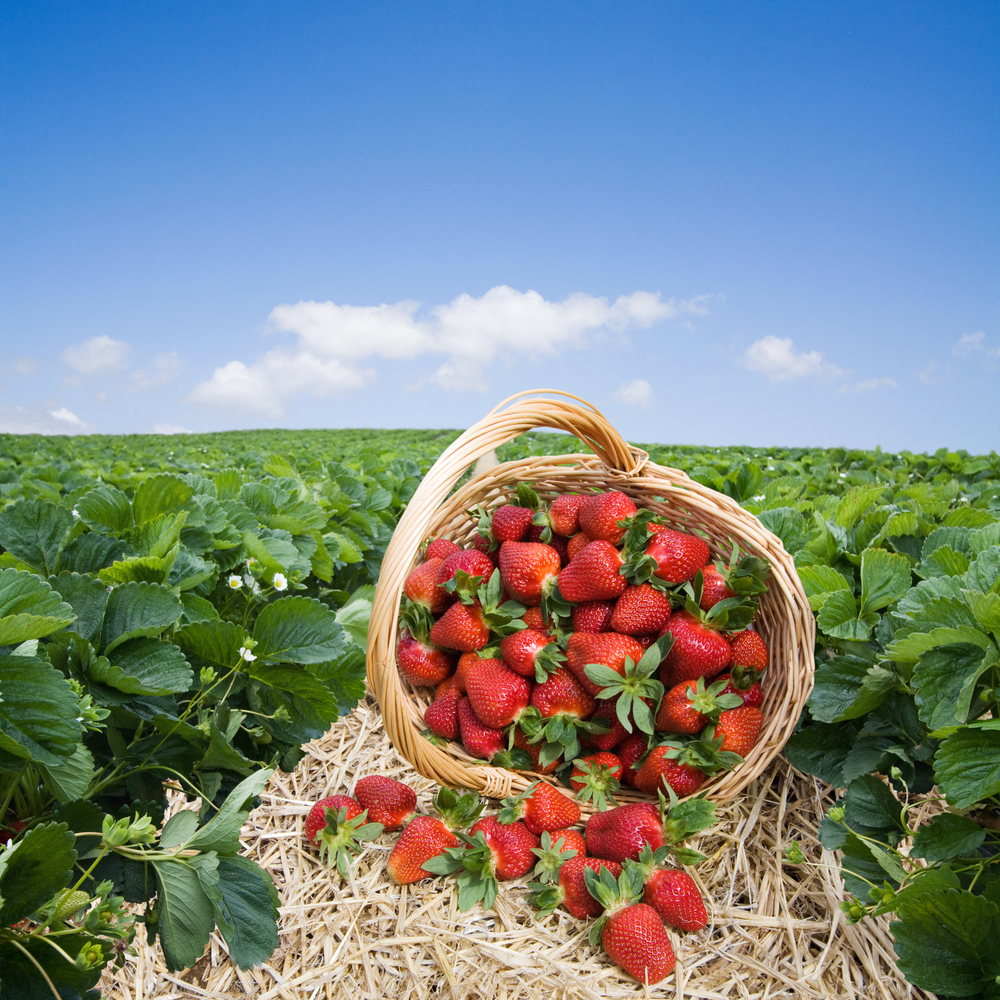
Strawberries sit in a basket in this 2016 photo. U-pick farms are being impacted by the ongoing coronavirus pandemic.
Agribusinesses that offer U-pick farms are not immune to the devastating impact of the ongoing coronavirus pandemic.
Cassie Young and sister Allie Logan own Backyard Orchards in Eufaula, Alabama. Backyard Orchards has closed the U-pick part of its operation but continues to sell strawberries via social media, mainly Facebook. It also has a store with a commercial kitchen that normally sells fudge, ice cream, fried pies and homemade jams and jellies. But since zero customers are allowed in the store, that is another source of revenue that is non-existent right now.
“That’s what is really hurt is because none of that is going. I have field trips that come in the spring and the fall because we do pumpkins. I’m missing all of that field trip revenue,” Young said.
Young said she just hopes people in Alabama and other states will continue to support their local farmers during this unprecedented time.
“We’ve definitely taken a huge hit,” Young said. “Ice cream, other than produce, is our best seller. People would stop just for that as well. We’re definitely hurt. But if I can just keep paying the bills, keep us open, I’ll be happy.”
She said customers pay ahead of time and pick up the strawberries that are already set out on a table in front of the store. Young also has set up deliveries to customers in Eufaula and the Fort Benning and Fort Mitchell area.
Backyard Orchards operates on 50 acres of produce, which includes strawberries, peaches, blueberries, watermelons, squash, zucchinis, potatoes, onions.
But the farming operation could present another challenge once those other crops become ready for harvest.
“When my potatoes and other vegetables and other things come in, peaches, it’s going to be a nightmare. It’s already very difficult answering messages and keeping up with who’s who and where it goes. That would even be more of a challenge,” Young said.
Young said in previous years, once Backyard Orchards opened in the spring, there would easily be several hundred people on the weekend. That number would grow to more than a thousand over the course of a week during the summer. If this pandemic drags out, the longer businesses like Backyard Orchards suffer.
“It’s a difficult scary situation. I know I’m not going to come out making the same amount of money but if we can just keep our doors open so that we can have another year,” Young said.
The Florida Fruit and Vegetable Association (FFVA) wants to help farmers sell their crops while provide consumers with options on where to buy fresh, local produce. In doing so, consumers will support an industry that’s been decimated amid the coronavirus pandemic.
Farmers and farming operations are asked to email information@ffva.com as soon as possible with the following information: Company name; address of sales location; phone number; facebook page; twitter; produce available for sale and sales hour.
The FFVA will share on social media and on its website.
“We’ve been hearing about different growers in south Florida who, for lack of any other options, have begun boxing up their produce and making it available directly to consumers who can just drive up and purchase it,” said Lisa Lochridge, director of the association’s Public Affairs Division. “We kept hearing about different farms doing this and decided to try to gather that information as best we could, put it on our website and also share those opportunities on social media so people who are following us on social media would know that there’s a grower in their area where they can go and get fresh local produce.”
Florida growers are forced to sell directly to the public to move their produce, as restaurants are closed nationwide. This is a great way to support local farmers who are struggling to sell their usual quantity of fresh fruits and vegetables.
“It’s certainly not the way they would like to be distributing their product but given the fact that the food service part of the supply chain has literally shut down, this is a good option for growers. It drives home the importance of local produce,” Lochridge said. “I think it also makes it more top of mind for consumers to know that there’s fresh, local, nutritious produce available to them. Hopefully, when all of this is over and people are back in the grocery store and produce aisles, they will look for Florida produce.”
(HCCGA) — FDACS has created the attached form for producers to fill out with their product availability. Once submitted, FDACS will utilize to forward to their Fresh From Florida contacts, as well as the Florida Department of Corrections, food banks and make connections with other State Departments of Agriculture in hopes of providing market opportunities to move product during the Coronavirus pandemic.
One of the largest produce farmers in the Southeast has already lost quite a bit of his spring crop and fears what the future might hold amid the ongoing coronavirus pandemic.
Cabbage growing in a field.
“We’ve left about 2 million pounds of green beans already (in the field) and about 5 million pounds of cabbage,” said Paul Allen, president of R.C. Hatton Farms in Belle Glade, Florida and chairman of the Florida Fruit and Vegetable Association. “Hopefully the (government is) going to help us some. They’ve done a good job and allocated money to help specialty crops. We’re going to need it. Here we are harvesting in Florida but we’re planting in Georgia. We don’t know what that’s going to look like.”
R.C. Hatton Farms produces 12,000 acres of vegetables and specialty crops, including sweet corn, green beans, cabbage, sugar cane and corn silage. While most crops are produced throughout Florida, some are grown in Poulan, Georgia, which is in Worth County.
Like other fruit and vegetable farmers in Florida, Allen’s spring crop was dealt a devastating blow when restaurants closed across the country and took away a substantial amount of business following concerns of the COVID-19 outbreak.
“The food service sector of our business has really taken a hit. A lot of our crops we grow, especially our beans and cabbage, we grow specifically for food service because it’s about 50% of that market. It’s been shut down,” Allen said. “The supermarkets can’t absorb that much. They can absorb some of it but just not that much.”
It’s been nearly a month since the country was turned upside down, and agriculture has been one of the sectors impacted the most. Like many other farmers, Allen didn’t see this coming at all.
“Nobody’s ever dealt with this before so how would you know? We had no idea. Hopefully it’ll get turned around. We’ll see,” Allen said. “We’re dependent on all supermarkets to buy hopefully, 100% US-grown products. If we can get 100% support, that’ll go a long way.”
Lancaster Foods’ President John Gates joined United Fresh’s President & CEO Tom Stenzel delivering 1,000 3-pound bags of apples to the ALIVE community feeding program in Alexandria, Virginia on Saturday, April 4.
WASHINGTON, DC (April 6, 2020) – In response to the COVID-19 pandemic, the United Fresh Start Foundation is offering a new grant program — COVID-19 Rapid Response FRESH Grants — to increase access to fresh fruits and vegetables for children and families in need, while also creating opportunities for foodservice distributors who face the loss of markets due to the restaurant and hospitality industry shutdown.
“These are two pressing needs facing our country today that are interconnected,” said United Fresh Start Foundation Chair Lisa McNeece, Vice President, Foodservice and Industrial Sales, Grimmway Enterprises, Inc. “Kids are out of school and families are out of work. We need to make sure they have access to fresh produce through remote feeding sites or community programs. And at the same time, our foodservice distributors have been devasted by the immediate shutdown of their markets. This is an attempt to inspire our greater industry to recognize both needs and do what we can to help.”
The United Fresh Start Foundation will fund (25) $1,000 grants to produce companies and foodservice distributors who can provide fresh fruits and vegetables to schools, community groups, and other emergency feeding sites for those in need. If a distributor can donate at least $1,000 worth of produce, or more, the Foundation will reimburse them $1,000. The goal is to break down the barriers that impact access to fresh produce, and bring community members and the supply chain together during this extraordinary time.
The first grant was used to support a donation of 1,000 3-pound bags of apples by Lancaster Foods to the ALIVE community feeding program in Alexandria, Virginia on Saturday, April 4. Lancaster Foods’ President John Gates joined United Fresh’s President & CEO Tom Stenzel in delivering the fresh produce to ALIVE for distribution to needy residents in the community. “I thank John and the Lancaster team for going above and beyond to help our community,” Stenzel said. “And, for me personally, this feeds my own neighbors in need.”
This program is funded through the generosity of those individuals who have agreed to donate their prepaid registration fees for the United Fresh 2020 Convention in San Diego to the United Fresh Start Foundation. “I want to thank each of those individuals for inspiring us with their generosity and making this program possible,” McNeece said.
“In addition, we encourage individuals to consider making a tax-deductible donation directly to the United Fresh Start Foundation so we can continue to serve kids everywhere as best we can. And, of course, company contributions are welcome! Make your donation here to ensure kids are growing up fresh!”
Interested produce distributors should complete this simple form to request a grant from the United Fresh Start Foundation. We ask that you immediately implement community feeding programs and we will get back to you on a first-come, first-served basis as long as funds are available.
Visit www.unitedfreshstart.org for complete details on the COVID-19 Rapid Response FRESH Grants program.
For more information, contact Mollie Van Lieu, Senior Director of Nutrition Policy at 202-303-3403 or mvanlieu@unitedfresh.org.
Wash hands with soap and water for at least 20 seconds.
While there is no evidence that the COVID-19 virus is a food safety concern, it is a worker health concern as it spreads via close person-to-person contact or by contact with contaminated surfaces.
Food does not appear to be a likely cause of COVID-19 transmission, but many of the same practices used to prevent foodborne illness on foods should be used to reduce the likelihood of COVID-19 contamination on fresh produce and the risk of COVID-19 spreading among workers.
Producers should educate workers on COVID-19 symptoms, how it spreads and how to reduce the spread of the disease.
Following are some guidelines from University of Georgia Cooperative Extension to share with employees:
Instruct workers to stay home if they are sick (coughing, sore throat, fever, diarrhea, vomiting, etc.).
Reassure employees that they will not be punished for missing work due to illness.
Have a plan in place and communicate in advance how you will address workers who do not want to miss a paycheck (paid sick leave, etc.).
All employees must wash their hands frequently throughout the day with soap and water for at least 20 seconds. This includes when employees arrive to work, before they handle food, after breaks or after using the restroom, etc.