Category: Fruit

  • West: Hope to be Stabilizing Influence During Time of Uncertainty

    By Clint Thompson

    Effective July 1, the University of Georgia (UGA) College of Agricultural and Environmental Sciences (CAES) will have a familiar face to serve as interim dean.

    Joe West

    Joe West, who recently retired as assistant dean from the UGA Tifton campus, just hopes he can be a stabilizing influence during a time of uncertainty in the Ag industry in Georgia.

    “People know me. I’m fortunate enough over my career that I’ve been in several different jobs and worked in Athens, so I know a lot of the key folks at the University of Georgia,” West said. “Already having that network of University of Georgia leadership and having their support is important. Talking with the leadership in Ag. We’ve got so much uncertainty in our industry. It’s really, really suffering right now. We as a college need to figure out what’s our role, what we can do to try to help this industry and help our farmers.”

    West will take over for Sam Pardue, who will retire June 30. West has also agreed to work half time in May and June in preparing for his new role.

    Georgia’s state colleges and universities have been impacted by the ongoing coronavirus pandemic. All have moved to online instruction for the rest of the semester. But West said research remains a priority and will continue to be under stricter guidelines.

    “Social distancing and things like that, we’re certainly observing,” West said. “As I understand it, our vice president for research, David Lee, has been, to the extent he can in keeping our people safe, he’s been very helpful in letting our field people get their research plots in. He’s come to understand how important timing is and that if we don’t get a crop in by a certain time, it’s a loss for us from a research standpoint. We’re not totally shut down. We’re getting some research in the fields, and again, ensuring that our people are safe. You can be in a tractor by yourself and be socially isolated.”

    UGA CAES coordinates research on three experiment stations and eight research and education centers throughout the state on various crops, including fruit and vegetables.

    For more information, see UGA CAES Newswire.
  • Why Are the Grocery Store Shelves Empty?

    coronavirus
    Courtesy: Sharkshock/Sutterstock.com

    By Gopinath (Gopi) Munisamy for UGA CAES News

    While all industries have been seriously affected by the COVID-19 pandemic, food and agriculture have been among the hardest hit segments of the U.S. economy. The primary reason lies in the composition of household food expenditures.

    The impacts of the pandemic appear to vary by commodity based on two critical issues: perishability and labor use. Perishables like fruits, vegetables and milk are among the hardest hit. Many of these industries also depend on labor for growing and harvesting.

    There is no immediate shortage of food in the U.S., according to the U.S. Department of Agriculture (USDA). However, the current demand for items such as grocery-size products and on-demand delivery is greater than what is in abundant supply – bulk, large-sized products and processed shipments to restaurants that remain open.

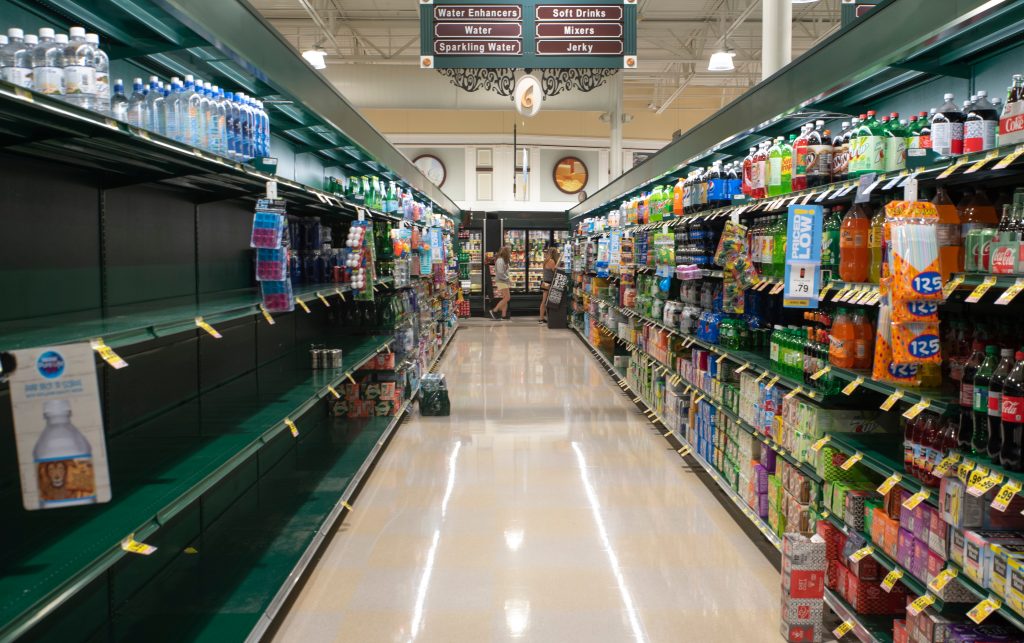
    This demand-supply mismatch appears to mimic anecdotal evidence of price spikes and empty store shelves on the consumer side and the collapse of demand and dumping of food on the farm side, with a range of linked effects in the middle.

    Wholesale food demand reduced, supply chain shifts

    Households spent $1.7 trillion on food in 2018, 54% of which was spent on food away from the home at restaurants, bars, sports venues and other establishments, according to the USDA Economic Research Service. A dramatic drop in foot traffic at all types of restaurants began in the second week of March.

    Supermarkets and grocery outlets have also experienced a significant reduction in foot traffic. But delivery and on-demand services have been strained by the sudden surge in demand from people under stay-at-home orders and social distancing guidelines, which includes nearly 90% of the U.S. population.

    With the drastic fall in food demand away from home, multiple forces were unleashed rapidly, causing ripples that stretched farther into every food and agricultural commodity.

    First, the supply chain serving food service industries did not have many buyers. A case in point is cheese, where the major supplier, Wisconsin, found two-thirds of its demand fall to near zero within a week or two.

    Second, social distancing guidelines and shuttered non-essential businesses affected supply chains serving both food services and retail grocers.

    The results include a significant slowdown in the operations of processing and distribution, shortage of workers at farm, processing and distribution (trucking) facilities, and a shortage of cleaning and sanitizing supplies. Compounding these effects are the resources spent in contact tracing and quarantine if and when a worker tested positive for COVID-19.

    Third, is the urgent need to transition products run through food services into those that consumers need at the grocery store. For example, restaurants usually buy diced vegetables, like onions, in 60-pound bags, but consumers at grocery stores usually buy 3- to 5-pound bags of unpeeled onions. Also, large cheese blocks sold to food services, which generally have sizable storage space, cannot be chopped overnight into packs of ounces and pounds to sell at grocery stores.

    (The author is a professor of agricultural and applied economics in the University of Georgia’s College of Agricultural and Environmental Sciences. Chen Zhen, associate professor in the department of agricultural and applied economics, contributed to this story.)

    To read the rest of the story, see UGA CAES Newswire.

  • South Carolina Strawberries Looking Good Despite Rainy Winter

    By Clint Thompson

    florida
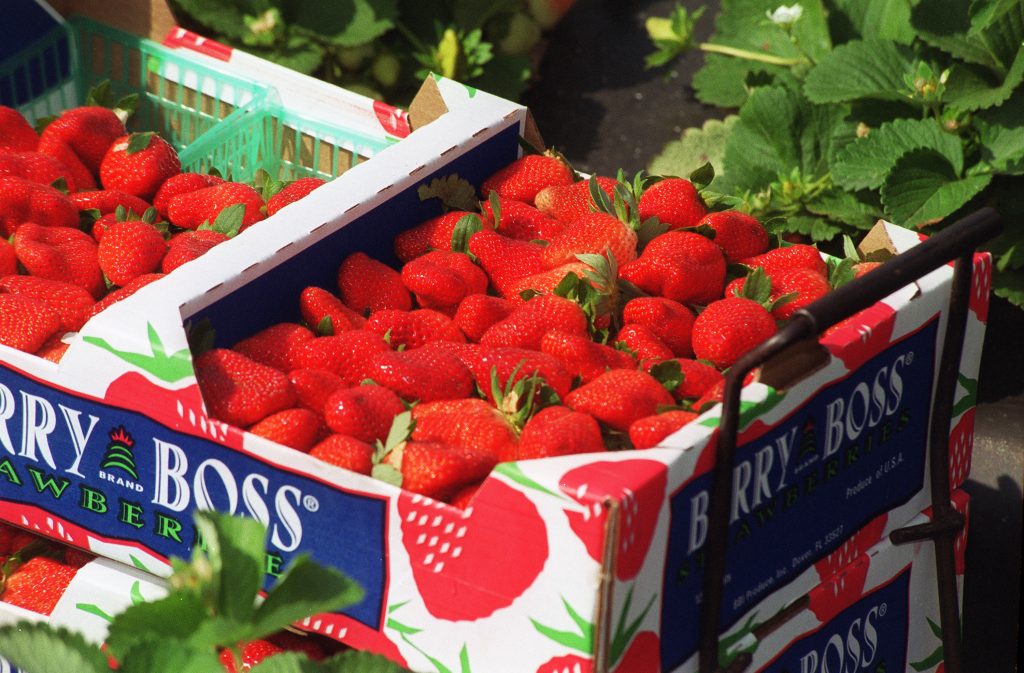
    Pictured is a file photo of fresh strawberries.

    A wet winter in South Carolina has presented challenges to the state’s strawberry producers. But South Carolina’s strawberry production is looking good this year despite the rainy winter, according to Bruce McLean, Jr., Clemson (S.C.) Extension area commercial horticulture agent for Dillon County, Horry County, Marion County and Malboro County.

    He said production this season is starting to pick up despite some disease issues associated with excessive moisture.

    “The quality looks really good,” McLean said. “Because of the wet weather that we’ve had; we’ve had some (disease) issues with botrytis (gray mold); angular leaf spot, we’ve seen in a couple of different areas; and also some anthracnose. For the most part, it seems like we were able to control it pretty well.”

    McLean said in his four-county area located in the northeastern part of the state, strawberry acreage is limited to smaller scale operations. He said there are approximately 10 to 12 strawberry farmers who tailor their crop to the retail market. All have had to deal with weather-related issues with this year’s crop. McLean said the rainfall totals have been “above normal.”

    “We’ve just had an excess of water and it’s really flared up the gray mold and anthracnose and angular leaf spot,” said McLean. He pointed out his area in South Carolina is not alone with production challenges.

     “Seems like everybody’s had very similar problems. The only other problem that we’ve really seen to any degree has been spider mites. It’s always kind of a perennial issue with strawberry production. It’s something that we are scouting for. Every time it seems like we have a hot spot, we identify it and make some recommendations and it quells it down a little bit,” McLean said.

  • UF/IFAS Extension Veteran: Farmers Give to Food Banks in Time of COVID-19

    University of Florida: A woman shopping for food at a food pantry.

    By: Brad Buck, bradbuck@ufl.edu

    With the COVID-19 shutdowns increasing people’s need for food, some consumers rely on nonprofits for a bite to eat. To help, farmers in Florida and elsewhere are donating excess produce to food banks, said a UF/IFAS expert.

    In fact, some food banks are helping farmers by offsetting some of their costs, thus incentivizing growers to harvest food they can’t sell, said Gene McAvoy, a UF/IFAS Extension agent emeritus.

    “There is no shortage of food, but the majority of vegetables grown in Florida are targeted at the food service industry — hotels, restaurants, schools, cruise ships, etc.,” said McAvoy.

    Food service represents 60% to 80% of normal demand for Florida-grown vegetables. 

    “When this source of customers dried up, growers were faced with a huge oversupply for the remaining retail demand,” said McAvoy. “With no market, it makes little business sense to harvest because that adds expenses like picking, packing and storing, on top of what farmers have already invested in the crop.

    “Growers feel bad when the crops they have worked so hard to grow go to waste, and they’re interested in helping feed hungry Americans,” McAvoy added. “But they also need help to be able to do so.”

    McAvoy, UF/IFAS Extension agent emeritus for Hendry County and a regional vegetable Extension specialist for Southwest Florida, said he has received multiple calls and emails from farmers wishing to donate and from food banks and facilities, who are looking for food.

    He gives several examples of farms that are giving to food banks. Here are four:

    • Over the past few weeks, Wish Farms in Hillsborough County has donated 220,000 pounds of fresh strawberries — equivalent to 241 pallets/nine semi-trailer loads — to Feeding Tampa Bay and the United Food Bank in Plant City.
    • Nearly two weeks ago, growers in Immokalee donated more than 3 million pounds of vegetables to the Harry Chapin Food Bank of Southwest Florida, “overwhelming their ability to store, transport and distribute the produce. They had to call a halt,” said McAvoy.
    • Farm Share, a food-distribution nonprofit, works with more than 2,000 food pantries, churches, schools and other nonprofits throughout Florida. The agency is running at maximum capacity, despite having 25 refrigerated trucks, six warehouses between 10,000 and 35,000 square feet and nearly 50 drop sites from Jacksonville to Florida City.
    • U.S. Sugar provided more than 120,000 servings of fresh, locally grown green beans to South Florida churches, healthcare providers and food banks. 

    “Farmers work hard to grow this food, putting in a lot of time, money and sweat equity, and nothing breaks their hearts more than to see their efforts go to waste,” McAvoy said. “Unfortunately, it costs money to pick, pack and transport produce for which there is currently no market. People can help in the recovery effort by donating to food banks so that they can finance efforts to recover this food before is spoils.”

  • Whiteflies Already a Problem for Florida Farmers

    This file picture shows whiteflies on a squash leaf.

    By Clint Thompson

    Between the coronavirus pandemic and decreased demand for their product, Florida’s vegetable farmers have had their share of challenges this past month. Add whiteflies to the list.

    According to the South Florida Vegetable Pest and Disease Hotline, the Immokalee, Florida area in South Florida has seen hundreds of acres abandoned. This is due to irregular ripening and high incidences of tomato yellow leaf curl virus disease (TLCVD).

    There’s been some reports of 50% to 80% of the disease being seen in several vegetable fields. According to Gene McAvoy, University of Florida/IFAS Regional Vegetable Extension Agent IV Emeritus and President of the National Association of County Agricultural Agents, whiteflies have been problematic in tomatoes, watermelons and other cucurbits.

    “We’ve had a number of growers destroy substantial amount of acreage, even before this whole COVID-19 thing blew up. We’ve had a lot of irregular ripening because of high levels of whiteflies. Most of our growers are using a resistant (tomato) variety so that’s not an issue in the round tomatoes. But especially with the Romas that have no resistance, they’re getting tore up,” McAvoy said.

    According to the South Florida Vegetable Pest and Disease Hotline, farmers have pulled up entire first plantings due to very high incidence of TYLCV.

    The whiteflies’ impact on tomatoes is felt across Central Florida and on the East Coast where pressure is higher in older tomatoes. Whiteflies are also problematic in cucumber and pepper and are increasing in melons.

    High incidences of whiteflies may be attributed to the mild winter. While colder temperatures don’t eliminate whiteflies, they do kill many of their wild hosts and slow population development in cultivated hosts. Warmer temperatures allow for larger whitefly populations to overwinter and become mobile earlier.

    “Down here our strategy is to try to have clean fallow in the summer and not have anything for them. We usually start off pretty low but if we have a warm, mild winter like we’ve had the past couple of years where they start building in the fall, they just continue going this time of year. They basically become unmanageable,” McAvoy said.

  • Florida Farmer: It’s Demand and it’s Competition With Foreign Products That’s Beating us up

    By Clint Thompson

    Count Daren Hanshaw in as one of the numerous Florida fruit and vegetable growers impacted by the coronavirus pandemic and the continued imports of produce from other countries.

    Hanshaw Farms: Pictured are cucumbers left in the field.

    Hanshaw who owns Hanshaw Farms in Immokalee, Florida, grows cucumbers, tomatoes, watermelons and cantaloupes on about 500 acres. He’s experienced the negative impact of the past month with all his crops.

    “We’ve had a variety of ways that this thing has hit us. Obviously, we’re still waiting on about a $1.5 million of receivables of tomato money from the fall that these food service companies are not paying their bills,” Hanshaw said. “That hiccup started at the beginning of this before we really knew what it was going to do to our current crop. Our first problem was cash flow. The first problem was noticing that people were slowing down on paying their bills. That money is trickling in but obviously that money is what keeps this watermelon crop and this cantaloupe crop going and pays the labor every week for that.”

    Hanshaw had about a 10-day period where he was harvesting cucumbers at $35 or $40 per box. That price dropped to $10 in the span of three days.

    “It went from, everybody needing whatever you can harvest to well we better not harvest because we’re not even getting our labor and box back. The decision we had to make was to pull the plug rather than delivering them to the packing house basically just to trade money or to lose,” Hanshaw said.

    “You had off-shore stuff still coming in to Pompano. You had Mexican stuff that was surging. It just seemed like the volume picked up just exactly at the least perfect time for us. On top of the fact, our customers were telling us they couldn’t take the product,” Hanshaw said.

    Hanshaw said he has a fresh cut contract with two major companies, but just Monday did he receive the first three POs (purchase orders), where normally he should have had 15 loads per week. The demand for watermelons has dropped significantly and it shows in the market price. Hanshaw said the prices are 45% off of what they have been the past three years.

     “I can’t disagree that there are more important things to get on somebody’s shopping list than watermelons. Obviously for us, in our world, they’re the most important thing going right now,” Hanshaw said. “I don’t believe that there is a surplus of fruit. It’s not like everybody down there has got a stellar crop. It’s demand and it’s competition with foreign product that’s beating us up.”

  • Weather Impacting Alabama Vegetable Production

    By Clint Thompson

    U.S. Drought Monitor: The latest map of Alabama abnormally dry and modertately dry areas in yellow and light brown.

    Farmers in South Alabama are in desperate need of rain. Producers in North Alabama need field conditions to dry so they can plant their crop. It’s been an unpredictable winter and early part of spring for the state’s vegetable growers.

    “It’s been wet in the central and northern part of the state and it has been impressively dry on the Gulf Coast. (Even) with this last storm we had (Sunday), things are very dry,” said Joe Kemble, Auburn University Extension vegetable specialist. “Most of the plantings, I think things have been going okay. We’re still pretty early right now. There’s still a lot of brassicas, collards, cabbage, broccoli and other cole crops out there in the field and look good.”

    Alabama farmers produce a substantial amount of tomatoes, melons, cantaloupes, sweet corn, southern peas, greens, squash, zucchini and sweet potatoes every year. The state’s vegetable production is located as far south as Mobile on the Gulf Coast, all the way to Huntsville, which is located near the Tennessee border. But as vegetable crops try to grow, they continue to experience vastly different weather conditions throughout the state.

    “Last night, I think in the Huntsville area, they got over 5 inches of rain. Where down on the coast, they got less than an inch and a half to two inches. Unfortunately, that wasn’t even enough to do a lot in the Gulf Coast area,” Kemble said. “It’s something with how dry it is in the southern part of the state. Most of our vegetable crops are irrigated. In the long term, it is a concern. Wells can only get you so far. It’s also a bigger expense associated with having to provide well water.”

    Kemble said growers are still trying to plant crops in the central and northern parts of the state amid the wettest winter on record.

    “I think things are pretty well on schedule. There was a lot of concern in March just with the incredible amount of rain we received. That was more of a problem for crops that were already in the field. The weather’s been sort of decent the past couple of weeks,” Kemble said. “I think a lot of people have been able to get out there and prep their fields and get plastic laid and things like that. I think they’re sort of right on schedule, maybe a little bit behind in planting. From the folks I’ve spoken to, I don’t think they’re weeks behind, I think they’re a week behind, in some cases.”

  • Farmers Markets Still Option for Produce Growers

    desantis
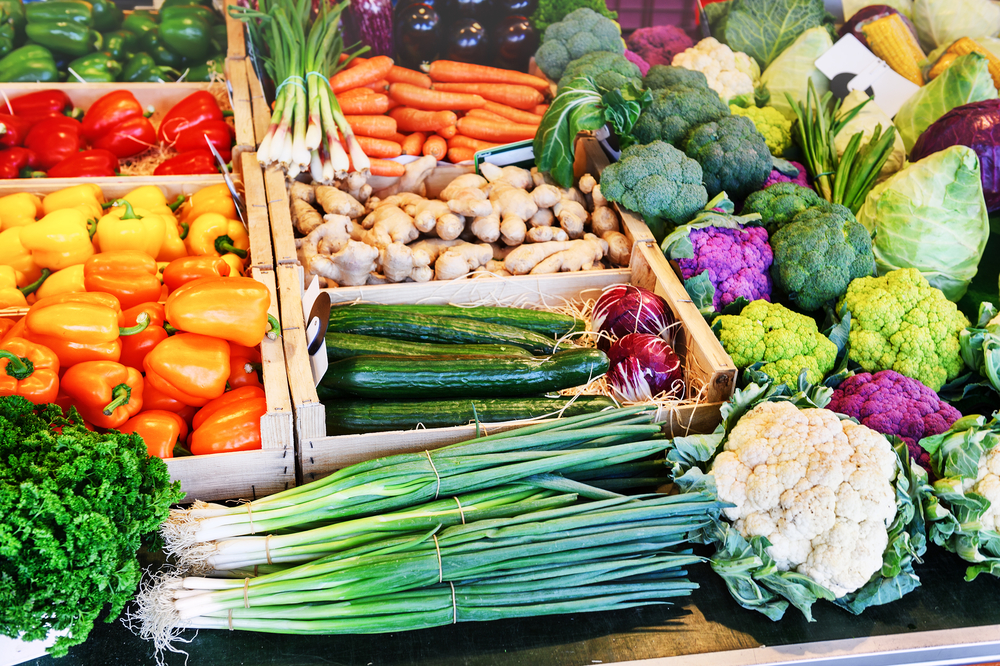
    Fresh produce on sale at a farmers market in this file photo.

    By Clint Thompson

    Produce farmers in the Southeast are struggling with markets that have disappeared because of the loss of restaurants and closure of schools amid the ongoing coronavirus pandemic. But Max Runge, Extension specialist in agricultural economics and rural sociology at Auburn University, believes farmers markets remain a viable option for fruit and vegetable growers, especially those who operate on a lower scale.

    “We’ve had pretty good farmers’ markets across Alabama. A number of producers sold through those. I think those are still going to be strong,” Runge said. “I think the market that we have lost is the farm-to-table where the farmers are selling directly to restaurants. We’ve lost that market, at least for now. But I think the smaller production to farmers market that are selling locally, I think those will be okay.”

    Florida fruits and vegetables farmers have struggled over the past month with their food service market drying up, amid restaurants across the U.S. being forced to closed. Many had to leave perfectly good produce in the field just because they didn’t have a buyer to sell to.

    Runge believes, though, that his state’s smaller produce farmers could still reap the benefits at area farmers markets.

    “We don’t nearly have the large commercial operation that there is in Southwest Georgia. We’ve got some. But the majority of them are smaller producers and I think those will hold on,” Runge said. “A lot of those have customers that they’ve sold to for years at these farmers’ markets, and they come back year after year. I think that’ll continue. I think there may be some more interest from people that maybe haven’t purchased from them in the past. And they’re certainly taking advantage of the farmers’ markets.”

  • UF/IFAS Participates in Farm Share Event

    Picture taken by Tyler Jones,UF/IFAS. A UF/IFAS-wrapped vehicle is loaded with several stops’ worth of food deliveries in the Alachua County Farm Share event on April 8, 2020.

    By Clint Thompson

    The University of Florida/IFAS participated in a Farm Share event on Wednesday that led to more than 40,000 pounds of food being distributed to 802 households in Alachua County, Florida.

    Picture taken by Tyler Jones,UF/IFAS. Jeanna Mastrodicasa, UF associate vice president for agriculture and natural resources, unloads a delivery for an Alachua County home during a Farm Share event on April 8, 2020.

    UF Associate Vice President for Agriculture and Natural Resources Jeanna Mastrodicasa said UF deployed 19 vehicles, including Elaine Turner, dean of the UF/IFAS College of Agricultural and Life Sciences.

    “I think for everybody that works at IFAS, every day our work is helping people in some capacity. But in this particular case, what I think it really gave everybody an opportunity to do was formally partner with our local government and our local community on a specific mission and to go out and support this project,” said Mastrodicasa. “For many of the folks who participated, some are typically in the office all day and never really get to interact with citizens. I think for them it was a bit of a treat to get out on the front lines. I also know for pretty much everybody involved, they were just happy to be out doing something that they felt was contributing positively. With all of our folks pretty much working from home right now, I think people were just happy to have a change to do something productive.”

    Mastrodicasa said the Farm Share event encompassed 130 volunteers. They drove to different homes in Alachua County. She said the food, which included potatoes and orange juice, was donated by Farm Share and other entities.

    “What we did was went out to the Alachua County Fairgrounds and picked up food. They put in our car with no contact,” Mastrodicasa said. “We drove to people’s houses, no contact, and left it at their porch. It was very well organized. We helped a lot of people.”

    She added that there are approximately 250,000 people in Alachua County.

  • List of Farms Selling Produce Directly to Consumers Found on FFVA Website

    The Florida Fruit and Vegetable Association (FFVA) is trying to help consumers who are still interested in buying fresh, nutritious produce. The FFVA has compiled information about farms in Florida that have opened to selling their produce directly to consumers.

    A list of farms can be found on the FFVA website.

    Support for farmers and farming operations is essential during a time when the agricultural industry has been devastated amid the coronavirus pandemic.

    Farmers and farming operations are asked to email information@ffva.com as soon as possible with the following information: Company name; address of sales location; phone number; facebook page; twitter; produce available for sale and sales hour.

    The FFVA will share on social media and on its website.

    Florida growers are forced to sell directly to the public to move their produce, as restaurants are closed nationwide. This is a great way to support local farmers who are struggling to sell their usual quantity of fresh fruits and vegetables.