Wash hands with soap and water for at least 20 seconds.
While there is no evidence that the COVID-19 virus is a food safety concern, it is a worker health concern as it spreads via close person-to-person contact or by contact with contaminated surfaces.
Food does not appear to be a likely cause of COVID-19 transmission, but many of the same practices used to prevent foodborne illness on foods should be used to reduce the likelihood of COVID-19 contamination on fresh produce and the risk of COVID-19 spreading among workers.
Producers should educate workers on COVID-19 symptoms, how it spreads and how to reduce the spread of the disease.
Following are some guidelines from University of Georgia Cooperative Extension to share with employees:
Instruct workers to stay home if they are sick (coughing, sore throat, fever, diarrhea, vomiting, etc.).
Reassure employees that they will not be punished for missing work due to illness.
Have a plan in place and communicate in advance how you will address workers who do not want to miss a paycheck (paid sick leave, etc.).
All employees must wash their hands frequently throughout the day with soap and water for at least 20 seconds. This includes when employees arrive to work, before they handle food, after breaks or after using the restroom, etc.
As COVID-19 continues to impact and alter the southeastern produce industry and world, there is an increase in questions from growers, packers, and shippers of fresh produce. Some issues that have surfaced this week include:
How can the 6-foot rule apply to harvest and packing crews?
What do I do when employee housing meets US DOL guidelines but employees are less than 6 feet apart?
What do I do when an employee tests positive for COVID-19?
University of Georgia Extension food safety specialist Laurel Dunn offers her take on the current pandemic.
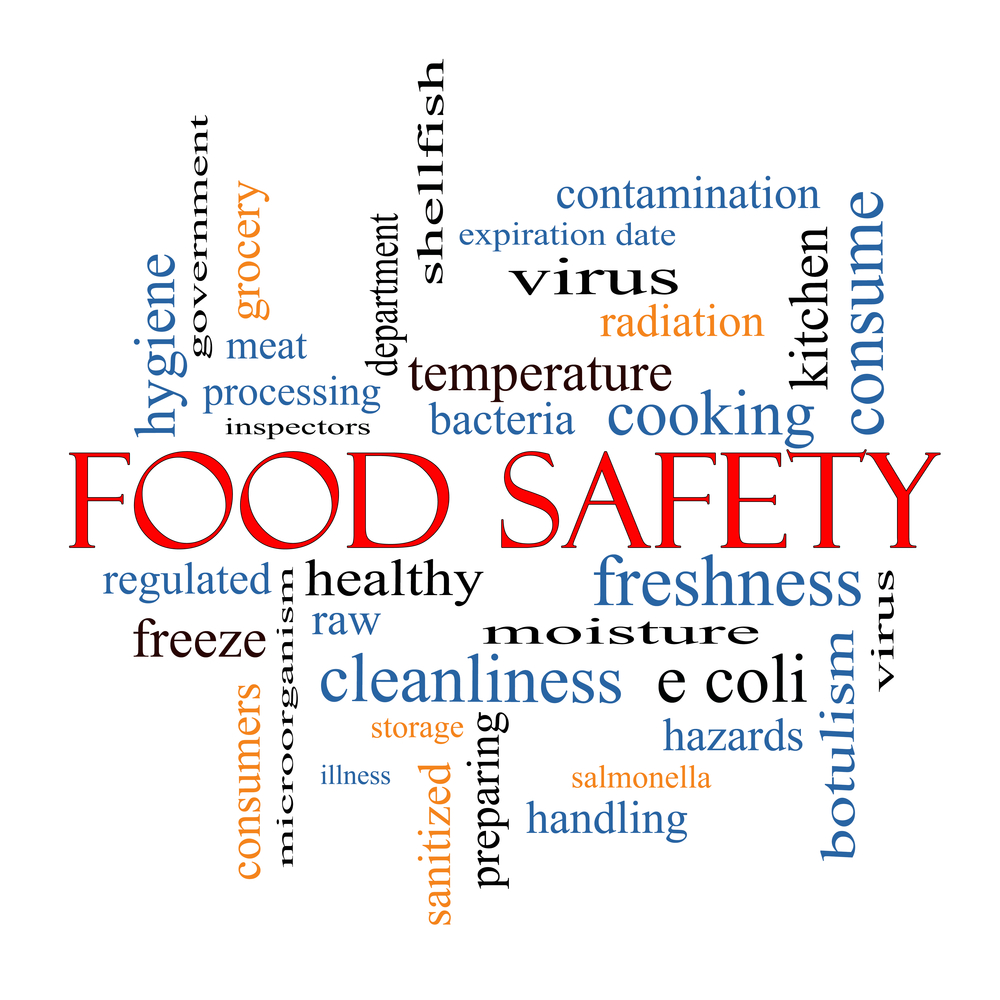
Food Safety Word Cloud Concept with great terms such as hazards, e coli, cooking and more.
With Alabama’s production season getting into full swing, it is important to know that our growers and industry leaders are making sure that safety is not affected by the COVID-19 pandemic. Because COVID-19 is a respiratory disease, there is no indication that it is infectious through food or food packaging.
The highly trained food system workers (harvesters, packers, processing line workers, retailers, grocers, and even trainers like me) are critical to ensuring a safe and consistent food supply in the U.S. In fact, the Department of Homeland Security has issued guidance that states agricultural production, food processing, distribution, retail and food service and allied industries workers are essential critical infrastructure workers.
The health of these workers is extremely important to all of us. Our farms already have food safety protocols in place to preserve the safety of freshly harvested products, but now they have enhanced procedures in place to help protect employees from the spread of the virus during harvest or in a packinghouse so that we can keep food flowing from farm to fork.
Some things we should all know about the produce industry:
Food system workers are highly skilled and trained to prevent the hazards that cause foodborne illness. They know how to assess risks on the farm, during processing, at retail, and in the kitchen; and they know how to prevent hazards from causing foodborne illness when they see them. Food system workers truly are our heroes daily, but especially now. However, there is no evidence that COVID-19 can spread in food.
If a worker tests positive for COVID-19, they go home to rest and recover fully. If they have been in contact with others at work, then those individuals are advised to self-quarantine. The diagnosed person must test negative before returning to work or be symptom free for several days.
Processing facilities have enhanced procedures in place to frequently clean and sanitize surfaces that workers touch. Like all viruses, they need a host (human or animal) to survive and multiply. This virus, as well as others, can survive on surfaces for limited amounts of time, so cleaning and sanitizing is always important.
Overall, there is no food shortage in the U.S., however, you may see some empty grocery store shelves in the short term. Many packinghouses are in the middle of shifting gears from serving food service accounts to retail accounts.
Of course, we want you to support our local farmers here in Alabama, but you should know that because this virus does not appear to be foodborne, produce imported from abroad remains as safe as ever. This is especially good news for those of us that are fond of tropical fruits like pineapples, bananas, and papayas that are not grown in Alabama.
The next time you venture away from home for supplies, notice all the hard-working people out there who keep the food supply going: farmers tending row crops; ranchers tending cattle; poultry producers tending their chickens; fruit and vegetable growers prepping, planting, and harvesting crops; farm store workers keeping their stores open to support our farmers; truck drivers hauling livestock, commodities, and finished food products; grocery store workers, farmers market vendors; and restaurants staying open for takeout service. It truly is amazing to think about all that is necessary to keep food on our tables these days. We might be able to do without a new pair of earbuds, but we must have these critical industries, these heroes, for our daily existence.