A devastating hit to the South Florida’s produce industry by COVID-19 has not deterred Toby Basore from looking forward to next season with optimism.
“I don’t care where you’re at, if you went into your grocery stores during this, there wasn’t any toilet paper on the shelves. There wasn’t any Lysol or hand wipes. The cheaper meats were gone, poultry; you couldn’t find chicken or ground beef for a while. But if you went into the produce section, it was stocked,” said Toby Basore, co-owner of TKM Bengard Farms in Belle Glade, Florida, during a Farm Credit webinar on Thursday. “The farmers, we’ve done our part. I think that the worst thing that could happen is we all cut back on our acreage. There could be shortages. I’m an optimist. I’m hoping for things to get back to normal. Right now, our plan is to continue and look forward.
“Of course we’re going to meet with our customers and get with them right after Father’s Day. They tell us their needs. If they have cutbacks, we’ll cut back. We pre-sell everything so if our customers want more or less, that’ll be our business model.”
Pandemic Hits During Peak Harvest of Florida Crops
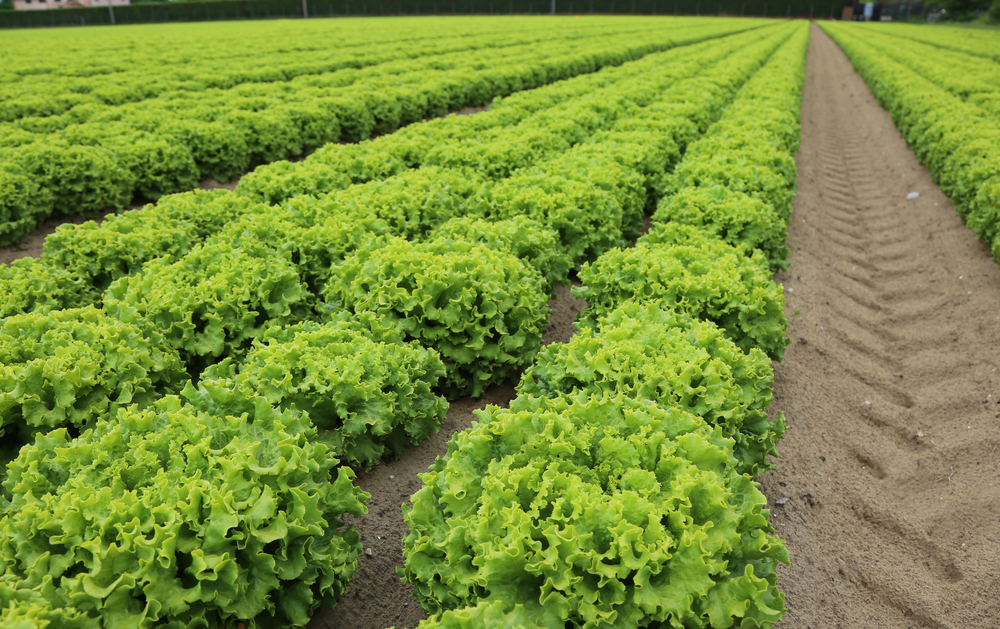
Basore is an optimist despite enduring the coronavirus pandemic at the peak of Florida’s harvest season. He said the farm produces of 8,000 acres, which includes lettuce, broccoli and cauliflower. It is the largest lettuce producer east of the Mississippi. But like fellow Florida farmers, Basore suffered during the pandemic.
“March April and May are huge months for Florida so it hit at a bad time. “A lot of the growers here were impacted by COVID-19, including ourselves,” Basore said. “We probably passed 400 acres of lettuce due to the outbreak of the pandemic.”
He estimates 60% of his crop goes to processors, which in turn is shipped to schools and restaurants; two outlets that were nonexistent during the pandemic. The rest goes to retail, which Basore said was a “lifesaver.”
Basore is hopeful for brighter days ahead.
“Hopefully, the president is right and we’re going to have a better third and fourth quarter and a great year next year. It’s an unknown. We think that our business model should be the same next year,” Basore said.
BELLE GLADE, Fla. – Lettuce is one of the top 10 vegetables cultivated in the United States and for good reason. Romaine, iceberg, leaf and butterhead types of lettuce are staples in refrigerators around the world. Used as a basis for salads, as a topping for burgers and sandwiches, as a bread substitute for wraps, and even as a garnish for elegantly plated cuisines, lettuce serves as a recommended source of extra nutrition, much-needed fiber and fewer added calories to diets.
But the crop has experienced devastation nationwide with the emergence of the deadly Bacterial Leaf Spot (BLS). It’s a disease caused by a pathogen known as Xanthomonas campestris pv. vitians (Xcv). This unpredictable disease can cause severe economic losses and devastate entire harvests. Currently, there is no control method.
University of Florida scientists at Everglades Research and Education Center in Belle Glade, along with other land grant universities and federal agencies, have been at the forefront of research since the disease emerged. Focus has been on studying BLS and how it destroys lettuce.
An $850,816 grant will fund the continuation of research led by UF/IFAS scientists in a multistate endeavor with Pennsylvania State University and the United States Department of Agriculture – Agricultural Research Services (USDA-ARS) in Salinas, California. The grant, managed by the Florida Department of Agriculture and Consumer Service (FDACS) through the Specialty Crop Multistate Program of the USDA-AMS to UF/IFAS, is designated for the study of disease resistance in lettuce, to boost cultivar variations that are BLS-resistant through breeding and genetics, and to research BLS-lettuce interaction.
Germán V. Sandoya-Miranda, assistant professor of lettuce breeding and genetics at Everglades Research and Education Center, and overseer of the project as principal investigator, has been researching BLS since 2016.
Sandoya is joined by UF’s Calvin Odero, UF/IFAS associate professor of agronomy specializing in weed science as co-lead; UF/IFAS Extension Palm Beach staff; Pennsylvania State University’s Carolee Bull, a professor and department head of Department of Plant Pathology; Maria GorgoGourovitch, an Extension educator and Plant Pathology affiliate instructor at Pennsylvania State University; and lettuce plant breeder and geneticist Ivan Simko of the USDA-ARS in California.
“This is the first time that experts in plant breeding, genetics, bacteriology, and weed science partner to develop sustainable and long-term solutions to battle an unpredictable and devastating disease in lettuce”, said Sandoya. “I have intentionally brought together the leading experts representing the strongest possible group to work on this disease for a variety of geographic impacted areas and assorted farm-size growers.”
File photo shows a watermelon in a field ready to be harvested.
Winter Springs, FL — May 20, 2020 – The new National Watermelon Promotion Board (NWPB) Watermelon Supplier Database is the perfect platform to connect retail and foodservice buyers with suppliers as the summer season takes off for America’s favorite melon.
Each year the NWPB staff promotes watermelon to retail and foodservice audiences, both in person and digitally. When a contact asks where they can get watermelon, this new database with help connect the dots. The new Watermelon Supplier Database is based on the new watermelon.org in the Industry, Retail and Foodservice sections and at watermelon supplier database, so all interested groups can easily access the database.
The Board is still working to populate the database so if a member of the watermelon industry is interested, please visit watermelon supplier database. Multiple roles in the industry are encouraged to be a part of the database including wholesalers, growers, importers, brokers, processors, seed, transportation companies and more. Please reach out to supplierdatabase@watermelon.org with any questions.
Tallahassee, Fla. — Following Tuesday’s announcement by the U.S. Department of Agriculture on the Coronavirus Food Assistance Program (CFAP), which will provide $16 billion in direct payments to support American farmers impacted by COVID-19, Agriculture Commissioner Nikki Fried is advising Florida farmers and ranchers to fill out forms in advance of applications being accepted starting May 26 through county Farm Service Agency (FSA) offices.
Nikki Fried Florida Agriculture Commissioner
“As our nation’s farmers suffer monumental losses due to COVID-19, this CFAP assistance is a crucial first step towards helping agriculture producers recover from this pandemic,” said Commissioner Nikki Fried in apress release. “But making sure Florida’s farmers get the assistance they need will require more federal support — many of our seasonal crops, nursery operations, and non-marine aquaculture were not included in this initial round of assistance, and the direct payment limits will cover a fraction of the losses they’ve suffered. I will continue working with the USDA and Congress to ensure the needs of our producers are communicated and the magnitude of their losses are understood. Because these funds are available on a limited basis to all of our nation’s farmers, I’m urging Florida agricultural producers to immediately gather information and begin filling out the necessary paperwork to apply.”
Details: CFAP will provide up to $16 billion in direct payments to agricultural producers who have suffered a five percent or greater price decline due to COVID-19 and face additional significant marketing costs. From May 26 through August 28, producers can submit applications through their county FSA office. Because of the limited nature of the funds, Commissioner Fried is urging producers to begin preparing information and documentation required to submit an application.
Eligibility: To be eligible, a person or legal entity must have an average adjusted gross income of less than $900,000 for tax years 2015, 2016, and 2017. If 75 percent of their adjusted gross income comes from farming, ranching, or forestry, the limit of $900,000 does not apply. Additional eligibility requirements are listed at farmers.gov/cfap.
Payment Limitations: Payments are subject to a per person and legal entity payment limit of $250,000. Corporations, limited liability companies, and limited partnerships (corporate entities) may receive up to $750,000 based on the number of shareholders (not to exceed three) who contribute at least 400 hours of active person management or personal active labor. For specific limits on corporate entity payments, click here.
Payment Structure: To ensure availability of funding through the application period, producers will receive 80% of their maximum total payment upon application approval. The remaining portion, not to exceed the limit, will be paid at a later date as funds remain available.
How to Prepare: While the application process does not open until May 26, producers should start gathering and understanding their recent sales and inventory. Local FSA staff will work with producers to apply for the program. Forms will ask for the following:
Name and address
Personal information, including your Tax Identification Number
Farm operating structure
Adjusted Gross Income compliance certification to ensure eligibility
Direct deposit to enable payment processing
The following forms will be needed to complete a CFAP application:
CCC-901[ ]: Identifies members of a farm or ranch that is a legal entity. Member Information will be completed by legal entities and joint operations
CCC-941[ ]: Reports average adjusted gross income for programs where income restrictions apply
CCC-942[ ]: If applicable, this certification reports income from farming, ranching, and forestry for those exceeding the adjusted gross income limitation
AD-1026[ ]: Ensures a conservation plan is in place before lands with highly erodible soils are farmed, identified wetland areas are protected, and conservation compliance provisions are met
AD-2047[ ]: Provides basic customer contact information
SF-3881[ ]: Collects banking information so payments can be made via direct deposit
Existing customers will likely have this information on file at the local Service Center. In addition to the application form, FSA staff will work with producers to complete portions of the CCC-902 Farm Operating Plan form if necessary. FSA has streamlined the signup process to not require an acreage report at the time of application and a USDA farm number may not be immediately needed.
How to Apply Once Signup Begins: USDA Service Centers are open for business by phone appointment only. Once the application period opens, producers should call their local FSA office to schedule an appointment. FSA staff at local USDA Service Centers will work with producers to file applications. USDA anticipates releasing payments 7-10 days after applications are received.
Specialty Crops
For eligible specialty crops, the total payment will be based on the volume of production sold between January 15 and April 15, 2020; the volume of production shipped, but unpaid; and the number of acres for which harvested production did not leave the farm or mature product destroyed or not harvested during that same time period, and which have not and will not be sold. Specialty crops include, but are not limited to, almonds, beans, broccoli, sweet corn, lemons, iceberg lettuce, spinach, squash, strawberries and tomatoes. A full list of eligible crops can be found on farmers.gov/cfap. Additional crops may be deemed eligible at a later date.
The United States Department of Agriculture released details of the Coronavirus Food Assistance Program (CFAP) on Tuesday. It will provide up to $16 billion in direct payments to provide relief for farmers and ranchers impacted by COVID-19. It includes relief for livestock, dairy and specialty crops.
Cabbage producers will be covered under the CFAP program.
But according to Charles Hall, executive director of the Georgia Fruit and Vegetable Association, the bulk of Georgia and Alabama growers will not be eligible just due to the timing restrictions detailed in the program.
“This particular package, the problem is the dates of the loss. This package puts January 1 to April 15, which excludes 90% of Georgia’s specialty crop growers. At that point, as of April 14, we’ve had little product on the market at that point. When you’re looking at peaches, blueberries, vegetables, we’re not covered in that,” Hall said. “From January to April, we had broccoli on the market. We had greens, turnip greens, cabbage; some of those cole crops were on the market then and would be eligible to be covered under that. It’s going to help some growers.
“Georgia blueberries may have been on the market a week or two at that point.”
CFAP will benefit mostly Florida farmers who have had to overcome produce loss and low market prices as a result of the pandemic striking the U.S. in mid-March.
CFAP Background
According to the USDA press release, CFAP provides financial assistance to producers of agricultural commodities who have suffered a 5%-or-greater price decline due to COVID-19 and face additional significant marketing costs as a result of a drop in demand, excess production, and disruptions to shipping patterns and the orderly marketing of commodities.
CFAP also includes the USDA’s Farmers to Families Food Box program. It is partnering with regional and local distributors, whose workforces have been significantly impacted by the closure of many restaurants, hotels, and other food service entities, to purchase $3 billion in fresh produce, dairy, and meat and deliver boxes to Americans in need.
Beginning May 26, the U.S. Department of Agriculture (USDA), through the Farm Service Agency (FSA), will be accepting applications from agricultural producers who have suffered losses.
For eligible specialty crops, the total payment will be based on the volume of production sold between January 15 and April 15, 2020; the volume of production shipped, but unpaid; and the number of acres for which harvested production did not leave the farm or mature product destroyed or not harvested during that same time period, and which have not and will not be sold. Specialty crops include, but are not limited to, almonds, beans, broccoli, sweet corn, lemons, iceberg lettuce, spinach, squash, strawberries and tomatoes. A full list of eligible crops can be found on farmers.gov/cfap. Additional crops may be deemed eligible at a later date.
Another Stimulus Package?
Hall is hopeful that if Congress passes another stimulus package, his growers would be sufficiently covered. It would provide a boost to farmers as the economy tries to recover from the current recession.
“The bill that passed the House last week would cover Georgia specialty crop growers because it covered the first two quarters of the year. Most of our growers’ harvest will be through the end of June. That will be helpful from that standpoint,” Hall said.
Broccoli is one of the specialty crops covered under CFAP.
Details of the Coronavirus Food Assistance Program (CFAP) were announced this week. It’s a program that will provide up to $16 billion in direct payments to deliver relief to America’s farmers and ranchers impacted by the coronavirus pandemic. In addition to this direct support, USDA’s Farmers to Families Food Box program is partnering with regional and local distributors to purchase $3 billion in fresh produce, dairy, and meat and deliver boxes to Americans in need.
According to Under Secretary of Agriculture for Marketing and Regulatory Programs Greg Ibach, CFAP does include specialty crops.
For eligible specialty crops, the total payment will be based on the volume of production sold between January 15 and April 15, 2020; the volume of production shipped, but unpaid; and the number of acres for which harvested production did not leave the farm or mature product destroyed or not harvested during that same time period, and which have not and will not be sold. Specialty crops include, but are not limited to, almonds, beans, broccoli, sweet corn, lemons, iceberg lettuce, spinach, squash, strawberries and tomatoes. A full list of eligible crops can be found on farmers.gov/cfap.
Beginning Tuesday, May 26, USDA’s Farm Service Agency (FSA), will be accepting applications from agricultural producers who have suffered losses.
UF/IFAS picture of Industrial hemp. Photo taken 06-12-19.
By: Tory Moore, 352-273-3566, torymoore@ufl.edu
As the UF/IFAS Industrial Hemp Pilot Project moves into its second year, on-farm research trials begin with commercial growers across the state. Twenty farms across 12 Florida counties were selected for the UF/IFAS on-farm trials. These farms are in different agricultural regions to provide a variety of conditions to study the growth and success of hemp across the state.
The UF/IFAS Industrial Hemp Extension team and the UF/IFAS Industrial Hemp Pilot Project Advisory Group made up the 20-member panel that reviewed grower applications. Reviewers looked for farmers that could plant a hemp field, execute a coordinated field experiment, and share their farming knowledge to support the establishment of a hemp industry in Florida.
“When choosing growers, we looked carefully at each application to evaluate what each grower could bring to the project and if they could satisfy the objectives of the coordinated trial while meeting the required security measures,” said Zachary Brym, UF/IFAS agronomy assistant professor and hemp pilot project coordinator.
“The selected farms will work on a coordinated research trial on two acres per farm to understand the impacts of the environment, or their soil and access to water, on how hemp grows,” Brym said “Growers have the option to include another three acres for an independent research trial focused on industry development.”
If growers choose to add the additional three acres, they were asked to submit a plan that states a clear research topic, achievable goals and detailed methods for those three acres in the application, according to Brym. Examples of acceptable topics include variety trials, fertilizer trials, irrigation system design, equipment tests and others. Farmers will submit an annual report to the UF/IFAS Industrial Hemp Pilot Project of all activities pertaining to the UF/IFAS on-farm trial.
Hemp varieties will be planted at each farm to see how they perform under the differing conditions across the state.
“This is an excellent opportunity to grow our community with farmers that share the UF/IFAS mission to make information available broadly on growing hemp,” Brym said. “UF/IFAS Extension agents play a major part in this effort to work with the farmers in their area and help share the information we gain from this research.”
On-farm trials with growers are just one of the new additions to the research. Experiments alongside industry supporters develop and expand as the project moves into its next phase.
“Our relationship with each industry partner is founded on the common goal of increasing hemp knowledge for growers across Florida,” said Jerry Fankhauser, lead oversight manager of the UF/IFAS Industrial Hemp Pilot Project.
With the on-farm trials focused on the performance of different hemp varieties at farms around the state, the research with industry partners focuses on propagation, accumulation of cannabinoids during plant growth and commercialization of hemp genetics.
“The goal alongside our industry partners is to better understand propagation and commercialization of the crop in the state of Florida,” Fankhauser said. “With commercial licenses to cultivate hemp being issued by FDACS, we are in an exciting next phase of the program because we have the opportunity to learn by working together.”
(Washington, D.C., May 19, 2020) – U.S. Secretary of Agriculture Sonny Perdue today announced details of the Coronavirus Food Assistance Program (CFAP), which will provide up to $16 billion in direct payments to deliver relief to America’s farmers and ranchers impacted by the coronavirus pandemic. In addition to this direct support to farmers and ranchers, USDA’s Farmers to Families Food Box program is partnering with regional and local distributors, whose workforces have been significantly impacted by the closure of many restaurants, hotels, and other food service entities, to purchase $3 billion in fresh produce, dairy, and meat and deliver boxes to Americans in need.
“America’s farming community is facing an unprecedented situation as our nation tackles the coronavirus. President Trump has authorized USDA to ensure our patriotic farmers, ranchers, and producers are supported and we are moving quickly to open applications to get payments out the door and into the pockets of farmers,” said Secretary Perdue. “These payments will help keep farmers afloat while market demand returns as our nation reopens and recovers. America’s farmers are resilient and will get through this challenge just like they always do with faith, hard work, and determination.”
Beginning May 26, the U.S. Department of Agriculture (USDA), through the Farm Service Agency (FSA), will be accepting applications from agricultural producers who have suffered losses.
Background:
CFAP provides vital financial assistance to producers of agricultural commodities who have suffered a five-percent-or-greater price decline due to COVID-19 and face additional significant marketing costs as a result of lower demand, surplus production, and disruptions to shipping patterns and the orderly marketing of commodities.
Farmers and ranchers will receive direct support, drawn from two possible funding sources. The first source of funding is $9.5 billion in appropriated funding provided in the Coronavirus Aid, Relief, and Economic Stability (CARES) Act to compensate farmers for losses due to price declines that occurred between mid-January 2020, and mid-April 2020 and provides support for specialty crops for product that had been shipped from the farm between the same time period but subsequently spoiled due to loss of marketing channels. The second funding source uses the Commodity Credit Corporation Charter Act to compensate producers for $6.5 billion in losses due to on-going market disruptions.
Non-Specialty Crops and Wool
Non-specialty crops eligible for CFAP payments include malting barley, canola, corn, upland cotton, millet, oats, soybeans, sorghum, sunflowers, durum wheat, and hard red spring wheat. Wool is also eligible. Producers will be paid based on inventory subject to price risk held as of January 15, 2020. A payment will be made based 50 percent of a producer’s 2019 total production or the 2019 inventory as of January 15, 2020, whichever is smaller, multiplied by the commodity’s applicable payment rates.
Livestock
Livestock eligible for CFAP include cattle, lambs, yearlings and hogs. The total payment will be calculated using the sum of the producer’s number of livestock sold between January 15 and April 15, 2020, multiplied by the payment rates per head, and the highest inventory number of livestock between April 16 and May 14, 2020, multiplied by the payment rate per head.
Dairy
For dairy, the total payment will be calculated based on a producer’s certification of milk production for the first quarter of calendar year 2020 multiplied by a national price decline during the same quarter. The second part of the payment is based a national adjustment to each producer’s production in the first quarter.
Specialty Crops
For eligible specialty crops, the total payment will be based on the volume of production sold between January 15 and April 15, 2020; the volume of production shipped, but unpaid; and the number of acres for which harvested production did not leave the farm or mature product destroyed or not harvested during that same time period, and which have not and will not be sold. Specialty crops include, but are not limited to, almonds, beans, broccoli, sweet corn, lemons, iceberg lettuce, spinach, squash, strawberries and tomatoes. A full list of eligible crops can be found on farmers.gov/cfap. Additional crops may be deemed eligible at a later date.
Eligibility
There is a payment limitation of $250,000 per person or entity for all commodities combined. Applicants who are corporations, limited liability companies or limited partnerships may qualify for additional payment limits where members actively provide personal labor or personal management for the farming operation. Producers will also have to certify they meet the Adjusted Gross Income limitation of $900,000 unless at least 75 percent or more of their income is derived from farming, ranching or forestry-related activities. Producers must also be in compliance with Highly Erodible Land and Wetland Conservation provisions.
Applying for Assistance
Producers can apply for assistance beginning on May 26, 2020. Additional information and application forms can be found at farmers.gov/cfap. Producers of all eligible commodities will apply through their local FSA office. Documentation to support the producer’s application and certification may be requested. FSA has streamlined the signup process to not require an acreage report at the time of application and a USDA farm number may not be immediately needed. Applications will be accepted through August 28, 2020.
Payment Structure
To ensure the availability of funding throughout the application period, producers will receive 80 percent of their maximum total payment upon approval of the application. The remaining portion of the payment, not to exceed the payment limit, will be paid at a later date as funds remain available.
USDA Service Centers are open for business by phone appointment only, and field work will continue with appropriate social distancing. While program delivery staff will continue to come into the office, they will be working with producers by phone and using online tools whenever possible. All Service Center visitors wishing to conduct business with the FSA, Natural Resources Conservation Service, or any other Service Center agency are required to call their Service Center to schedule a phone appointment. More information can be found at farmers.gov/coronavirus.
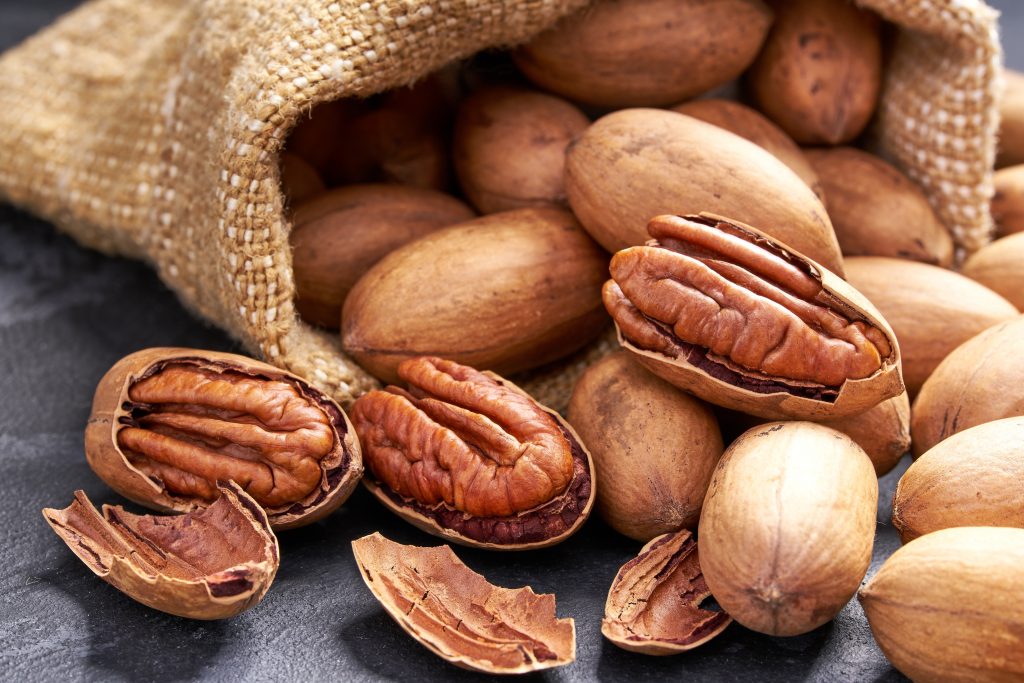
Pecans appear to be in good shape right now, thanks to light scab disease pressure.
By Clint Thompson
It is only May, but University of Georgia Extension pecan specialist Lenny Wells is optimistic about this year’s crop.
“It looks great right now as far as crop load and the light disease pressure. Everything’s pretty clean. Everything looks great so far,” Wells said. “I just hope we can get them to harvest. We’ve got a long way to go. Hope we have a decent market when we get there.”
The relatively dry weather throughout for most of the Southeast has also led to low scab disease pressure in pecan trees.
“It’s been pretty light, been really light here since we got started spraying back in April,” Wells said. “So far, pressure has been very light, and I haven’t seen much problem at all with scab.
“Early in the spring, it stayed cool a good while and that probably helped some too. But yeah dry weather more than anything. And when we have had rains, they were quick rains. It may have rained one day and then it cleared out and we’d have sunshine and wind several days to a week and then get another rain.”
What is Scab?
Scab is a fungal disease that infects the leaves or nuts of pecan trees. If it hits the nut early enough, scab can cause the pecan to blacken and fall from the tree. Some growers spray between 10 and 12 times during an average year to fight scab, Wells said. Scab thrives on trees that have received moisture. That is why a quick rain event is important and not prolonged rainy weather of several days in a row.
“If we have rain events that kind of move in and out, those don’t cause us much problems. But it’s where we have these long sustained several days in a row of rain, that’s really when scab will get going,” Wells said.
A tour of the research vineyard at the Clanton Research and Extension Center in Chilton County at the Alabama WIneries and Grape Growers Association meeting in September 2019. Grapes are grown by Elina Coneva and the staff at the CREC. Grape varieties are developed by Dr. Andy Walker, a grape breeder at UC Davis.
By Clint Thompson
The time is now for grape producers to tissue sample their crop, says Phil Brannen, University of Georgia Cooperative Extension fruit disease specialist. In doing so, growers can make any modifications to impact this year’s crop.
“If you go ahead and get the sample now, you can do something about it. You can actually impact this year’s crop,” Brannen said. “If you wait until the (veraison) which is when the grapes start turning color, which is the other time you can sample, that is much less meaningful for this year. It may indicate more with what you need to think about with fertilization for the following year. For right now, you can get information on what you put out in the way of micronutrients or macronutrients to impact this year’s crop.
“(Tissue sampling) gives you a really good idea about what’s going on, specifically in the tissues of the plant. It’s a better indicator than even a soil sample would be, of what you actually need. You still need to get soil samples. I’m not saying don’t get them. But the tissue samples are much more valuable to you.”
How To Sample
Brannen said the tissue samples can be taken from the petioles or the leaf itself. For wine grapes, vinefera grapes and hybrid grapes, take petiole samples. For muscadine producers, you need to sample from the leaves.
“Generally, you don’t want to take more than two per plant. You want to do it randomly throughout a vineyard. You’re really talking about a single block, so it would be one variety that you would sample,” Brannen said. “You can’t really go across different varieties and get a good understanding. Each sample has to be a variety within a specific area. That could be up to about 10 acres for a sample.”
Brannen estimates that a total of 50 to 75 petiole samples is needed.
Grapes will be harvested in early August through September.


 ]: Identifies members of a farm or ranch that is a legal entity. Member Information will be completed by legal entities and joint operations